Atlas has launched AI agents that build 3D and other assets for game studios.
The platform has moved from closed beta to global availability on Google Cloud Marketplace.
CEO Ben James said AI should automate technical tasks rather than replace artists.
Vienna-based startup Atlas announced on Monday the launch of a new AI tool to automate the game development process, as game developers increasingly turn to the technology.
The new Atlas AI Studio uses multiple AI agents to automate tasks such as generation, texturing, optimization, and engine integration, allowing artists to describe tasks in natural language. At the same time, the system builds the assets using different AI models.
“What we’ve built now, and what we are releasing, is an agentic kind of workflow builder,” Atlas founder and CEO Ben James told Decrypt. “What it does is you’re able to describe what you’re looking to build. It will go ahead and assemble a combination of different AI models to make that.”
Atlas AI Studio is now moving from closed beta to global availability through Google Cloud Marketplace. Studios including Square Enix, PARALLEL, and Ego have used the system during the beta, Atlas said.
The launch comes as developers continue to experiment with AI across game production, while players continue to push back against its use. James argues that despite the negative view of gamers towards AI, its benefits are often overlooked.
“I think oftentimes what’s not appreciated is AI can do a lot of the non-creative aspects of game development,” James said. “Think of generating different levels of detail for an object that’s created by a human artist, but for a game to run effectively, it still needs different levels of detail, or optimizing material builds for different objects, or setting up collisions and pivot points. There’s a lot of work that AI can do in this space.”
In 2023, Cyan Worlds faced criticism after players discovered its adventure game, Firmament, used AI-assisted content, while voice actors protested the use of AI-generated voices in the shooter The Finals.
The debate has prompted some companies to publicly reject the use of AI. In January, Warhammer 40K maker Games Workshop said it would not use generative AI in its creative design process.
James said much of the criticism centers on visible AI-generated art rather than the technical work required to prepare assets for games.
“I don’t think a gamer would have that sort of visceral reaction to knowing AI was used so that this game could run in a more performant way, or that these assets could be used in a more optimized setting,” James said.
Copyright concerns remain central to the debate over AI in the gaming industry. James said responsibility lies with the developers using the technology.
“The onus still, to some extent, when you’re creating with AI, does fall on the creator,” James said. “So, you shouldn’t introduce IP into the system that you don’t have ownership or authority to introduce into the system.”
Daily Debrief Newsletter
Start every day with the top news stories right now, plus original features, a podcast, videos and more.
WHY THIS MATTERS: The integration of a full mobile plan, complete with a UK phone number, directly into a business management platform like Tide marks a significant progression in embedded finance for the SME sector. Previously, the concept was limited to embedding core financial products—like lending or banking—into non-financial apps. This move, leveraging Gigs’ expertise in embedded connectivity, demonstrates a new frontier: incorporating essential business infrastructure outside of payments and credit directly into the financial workflow. For the 14% of the small business market Tide serves, this is about eliminating administrative drag, simplifying vendor management, and drawing a crucial boundary between personal and professional life via eSIM technology.
This innovation sets a high bar for competitor neobanks, proving that consolidation of vital, non-financial services is the next battleground for retaining and growing the small business market
Tide, the UK’s leading business management platform, and Gigs, the leader in embedded connectivity, today announced the launch of Tide Business Phone Number (BPN), a mobile service built for small businesses and fully embedded in the Tide app. This marks the first time a business banking provider has integrated a full mobile plan with UK phone number directly into its platform.
The launch is designed to help Tide’s nearly 800,000 UK members (14% of the small business market), better separate their personal and professional lives. For many founders, running a business still means juggling personal phones, contracts, and suppliers alongside their work. Tide BPN removes that friction by giving business owners a simple and affordable way to manage communications separately on a single device, without compromising their privacy or credibility.
Tide BPN is available for free to members on Smart, Pro, and Max plans, offering a business number with unlimited calls and texts. For those wanting data in addition to the BPN, the Unlimited Boost plan provides unlimited 5G data, plus 10GB of EU roaming data for a highly competitive £15 per month. Unlike comparable plans, Tide BPN does not impose annual price increases or credit checks and users can cancel at any time in the Tide app.
Heather Cobb, UK Managing Director at Tide, said: “Small business owners tell us time and again that admin gets in the way of doing what they actually set out to do – running and growing their business. Tide BPN is a natural extension of our mission to save small businesses time and money. By bringing business phone numbers directly into the Tide app, we are removing yet another task from their to-do list and helping founders keep their business and personal lives clearly separate.”
Tide BPN allows members to set up a dedicated business number directly within the Tide app via eSIM (no additional device required), either by transferring an existing number or activating a new one. Members and their teams can easily switch between personal and business numbers when making or receiving calls. Incoming calls clearly show whether they are coming through a business or personal line, while outbound calls can be made from the business number, helping protect personal details and maintain professional boundaries.
Everything is managed in one place, with a single bill and no need to deal with multiple providers or contracts.
Rafa Plantier, VP Go-To-Market at Gigs, said: “Every new business requires the same essentials. Tide brings them together in one digital experience, combining company formation, a business account and now a mobile plan to help entrepreneurs get up and running faster and at lower cost than ever before. Gigs is proud to partner with Tide to power the UK’s first fully embedded mobile plan designed for small businesses.”
FF NEWS TAKE: This launch is more than a novelty; it signals that the ‘platformification’ of SME financial services is accelerating. By bundling a core utility like a business number directly into the banking app, Tide is locking in user engagement and increasing switching costs for competitors. We believe this move strongly shifts the needle, challenging other platforms to integrate similarly complex, non-financial utilities. The next critical development to watch is how quickly Tide expands this model, potentially adding other professional services, and whether telecom providers feel pressure to partner or launch their own simplified, business-centric offerings.
As Cointelegraph reported, the 200-week exponential moving average (EMA) is particularly significant during bear markets, as its loss as support implies further market downside.
“Bitcoin has since almost entirely cancelled out its recovery from earlier this week,” trader and analyst Rekt Capital responded in an X post on the topic.
“The 200-week EMA continues to act as a ceiling for price until proven otherwise.”
BTC/USD one-week chart with 200 EMA. Source: Rekt Capital/X
Rekt Capital referred to Bitcoin’s trip to $74,000 amid broad risk-asset volatility thanks to the Middle East conflict.
“Deviation resulted in a quick sell-off over the weekend as expected. $BTC outlook remains unchanged; it’s a boring bear market until proven otherwise,” trader Jelle continued.
BTC/USD four-hour chart. Source: Jelle/X
As market participants wait for cues, crypto trader, analyst and entrepreneur Michaël van de Poppe sees the overall BTC price action being far from the worst-case scenario.
“Bitcoin is still stuck in the range. That’s not bad, that’s actually quite strong, given: – Oil up 15% again on this Monday morning, highest level since ’22. – Gold and commodities are down – Nasdaq down substantially,” he told X followers on Monday.
BTC/USDT four-hour chart. Source: Michaël van de Poppe/X
As Cointelegraph reported, longer-term BTC price predictions continue to favor a macro bottom at $50,000 or lower.
Oil volatility puts focus on US inflation
This week’s US macro data will no doubt attract more attention than usual as geopolitical upheaval sparks inflation warnings.
The February print of the Consumer Price Index (CPI), along with delayed Personal Consumption Expenditures (PCE) data from January, are both due, together with revised US Q4 GDP.
While PCE is known as the Federal Reserve’s “preferred” inflation gauge, it is CPI that is currently in the spotlight thanks to its susceptibility to oil prices.
The ongoing oil supply shock focused on the Strait of Hormuz may not be reflected in February’s CPI reading, while the index’s January print came in lower than expected.
CFDs on WTI crude oil one-hour chart. Source: Cointelegraph/TradingView
Commenting, trading resource The Kobeissi Letter said that the Hormuz closure was the largest supply disruption ever.
“The current supply shock is roughly the same size as the top 2-6 COMBINED,” it calculated, with the daily reduction at more than 20 million barrels.
Oil prices nonetheless cooled their rapid rise on Monday after G7 countries suggested an emergency oil reserve release that could total 400 million barrels.
BREAKING: US oil prices are currently attempting one of their biggest reversals in history.
At 10:30 PM ET, US oil prices were up as much as +30% on the day.
Then, FT reported that G7 countries are considering releasing 400 million barrels of crude oil from reserves.
— The Kobeissi Letter (@KobeissiLetter) March 9, 2026
Continuing, trading resource Mosaic Asset Company stressed the oil crisis’ longer-term implications for the Fed.
“Rising oil and gas prices threaten to crimp consumer spending and adds inflationary pressures. The prospect for higher inflation is causing uncertainty over the outlook for monetary policy,” it wrote in the latest edition of its regular newsletter, “The Market Mosaic.”
Mosaic noted that a previous spike in commodities coincided with the 2022 CPI top of 9%.
“The rally in other inflation-sensitive sectors like energy producers is sending a signal on the prospect for rising inflation as well,” it added.
Bitcoin death crosses start to mount
Not only did Bitcoin fail to rescue its 200-week EMA trend line as support during the weekly close, but it also saw a new “death cross.”
The 21-week simple moving average (SMA) fell below its 100-week equivalent as the week ended, marking a classic bearish signal that strengthens the prospect of further BTC price downside.
BTC/USD one-week chart with 21, 100 SMA. Source: Cointelegraph/TradingView
Last week, Keith Alan, cofounder of trading resource Material Indicators, suggested that the looming death cross would override any relief bounce toward the top of the local trading range.
Specifically, Alan said that the cross would “likely be a precursor to the next leg down unless we get a major bullish catalyst.”
Elsewhere, market participants are concerned by a death cross involving lower time frames: the 50-period and 200-period SMA on the three-day chart.
In recent analysis, trading platform TradingShort warned that bear-market death crosses on three-day time frames have resulted in 50% BTC price drops.
“Given that it has also tested on two out of three past Bear Cycles the 1.618 Fibonacci extension from the level of that Death Cross, Bitcoin should be targeting the $40000 – $36000 Zone,” it told X followers.
BTC/USD three-day chart. Source: TradingShot/X
Derivatives tease bullish relief
Looking for signs of a market turnaround, onchain analytics platform CryptoQuant has some potential good news for Bitcoin bulls this week.
In some of its latest research, CryptoQuant reveals a reversal pattern playing out on major exchange Binance’s derivatives market.
The Binance Derivatives Market Index, which combines various market metrics to produce a view of overall momentum, is currently mimicking local BTC price bottoms in 2024 and 2025.
“The index recently dropped to around 0.35, a level similar to what was seen in July–August 2024, and below the 0.43 recorded in April 2025,” contributor Amr Taha summarized in a “Quicktake” blog post.
“Historically, readings near these levels have often appeared during major Bitcoin market bottoms, before price later moved toward new highs.”
Binance Derivatives Market Index (screenshot). Source: CryptoQuant
Taha acknowledged that the trend may not play out like before, but stressed that derivatives momentum had “weakened significantly.”
Whales stay on the sidelines above $70,000
Panic selling Bitcoin appears to be a speculator’s game at current prices as whales send less and less BTC to exchanges.
Related: Bitcoin correlation with tech stocks overblown: NYDIG
CryptoQuant reveals that on March 7, a spike in inflows to Binance came overwhelmingly from coins that had previously moved during the week prior.
This contrasts with an inflow event from February, during which coins dormant for the past six to 12 months returned to Binance accounts.
“Such movements are often interpreted as a potential shift in sentiment among certain investor groups, where some holders may be preparing to sell or hedge their positions,” Taha explained.
“In many cases, deposits from older coins may reflect a growing level of caution or pessimism in parts of the market.”
Binance BTC inflows by holder age (screenshot). Source: CryptoQuant
As BTC/USD passed $70,000 last week, however, Bitcoin whales held off on their urge to take profit, as evidenced by their Binance inflows.
From March 1 to March 8, whale inflows declined from $8.8 billion to $6.6 billion, per CryptoQuant data.
“Interestingly, this reduction occurred while Bitcoin price fluctuated between $65,000 and $72,000, indicating that large investors were not increasing exchange deposits despite ongoing market volatility,” Taha added.
Bitcoin whale inflows to exchanges (screenshot). Source: CryptoQuant
This article does not contain investment advice or recommendations. Every investment and trading move involves risk, and readers should conduct their own research when making a decision. While we strive to provide accurate and timely information, Cointelegraph does not guarantee the accuracy, completeness, or reliability of any information in this article. This article may contain forward-looking statements that are subject to risks and uncertainties. Cointelegraph will not be liable for any loss or damage arising from your reliance on this information.
KAST, a stablecoin-powered financial platform focused on cross-border payments, raised $80 million in Series A funding led by QED Investors and Left Lane Capital, the company announced on Monday.
The company said it plans to use the funding to expand its product, invest in licensing and compliance and grow its team. KAST is building a platform that helps people and businesses move money across borders using stablecoins, allowing users to earn income globally, hold funds digitally, and spend locally through a single system.
Stablecoin activity has surged in recent years, with more than $35 trillion in transactions last year. However, only about 1% represented real-world payments such as remittances or payroll, according to McKinsey and Artemis Analytics, leaving significant room for new payment platforms to grow.
Peak XV Partners, HSG, and DST Global Partners also joined the early-stage funding round, which valued the company at $600 million, according to sources cited by Bloomberg.
In its press release, the company said it has reached more than 1 million users and processes about $5 billion in annualized transaction volume since launching 18 months ago. Revenue has doubled since the end of September 2025, it added.
KAST connects digital dollars with local payout systems in supported markets. The platform aims to reduce the time, cost and number of steps involved in sending money across borders.
“The latest funding reflects the confidence of leading investors in the stablecoin thesis and in KAST’s ability to execute it at global scale,” said Raagulan Pathy, founder and CEO of KAST.
KAST plans to expand across North America, Latin America and the Middle East. The company also plans to roll out KAST Business for payouts, payroll and cross-border spending.
“Stablecoin technology holds the potential to reshape the future of finance. We are thrilled to lead this round at KAST,” said Nigel Morris, co-founder and managing partner at QED Investors.
Reform UK party leader Nigel Farage has invested 215,000 pounds (around $286,000) in Stack BTC, a London-listed Bitcoin treasury company chaired by former UK Chancellor Kwasi Kwarteng, as the Reform UK leader deepens his ties to the crypto sector.
The investment gives Farage a 6.31% stake in the company through his media vehicle Thorn In The Side, according to a Monday release.
Stack said it raised $346,000 by issuing 5.2 million new shares at $0.65 each in a strategic funding round that included Farage and Blockchain.com. The company said Blockchain.com also entered a partnership to help deliver institutional-grade services for Stack’s planned Bitcoin (BTC) treasury.
“I have long been one of the UK’s few political advocates for Bitcoin, recognising the role digital currencies will play in the future of business and finance,” Farage said. “London and the UK has historically been the centre of the world’s financial markets, and I believe that we can and should be a major global hub for the crypto industry.”
Source: Stack BTC
He said he is “excited about Stack’s plans to acquire and grow British businesses, representing permanent, supportive and long-term capital.”
Stack raised $2.9 million in February
Stack, which trades on London’s Aquis exchange, said it raised about $2.9 million in February and holds 21 Bitcoin worth around $1.4 million at current prices, according to its website. The company purchased the BTC in one tranche on March 5. Kwarteng and his wife control about a 5.88% stake.
Farage has increasingly cast himself as one of the UK’s most outspoken political supporters of digital assets. In May 2025 at the Bitcoin conference in Las Vegas, Farage said Reform UK would accept crypto donations and introduce a “Cryptoassets and Digital Finance Bill” if the party wins control of government in the next general election, expected before August 2029.
Related: UK widens crypto reporting rules to cover domestic transactions
That push has coincided with growing controversy around crypto’s role in UK politics. Cointelegraph reported Thursday that Reform UK received another $4 million from Thailand-based crypto investor Christopher Harborne in late 2025, after an earlier $12 million donation that helped make him one of the party’s most significant financial backers.
The investment comes as the UK debates whether political parties should be allowed to accept crypto donations. On Dec. 2, officials were reported to be considering a ban, and on Feb. 26, security committee chair Matt Western called for a temporary moratorium until the Electoral Commission issues formal guidance.
Magazine: Did a Hong Kong fund kill Bitcoin? Bithumb’s ‘phantom’ BTC: Asia Express
Cointelegraph is committed to independent, transparent journalism. This news article is produced in accordance with Cointelegraph’s Editorial Policy and aims to provide accurate and timely information. Readers are encouraged to verify information independently. Read our Editorial Policy https://cointelegraph.com/editorial-policy
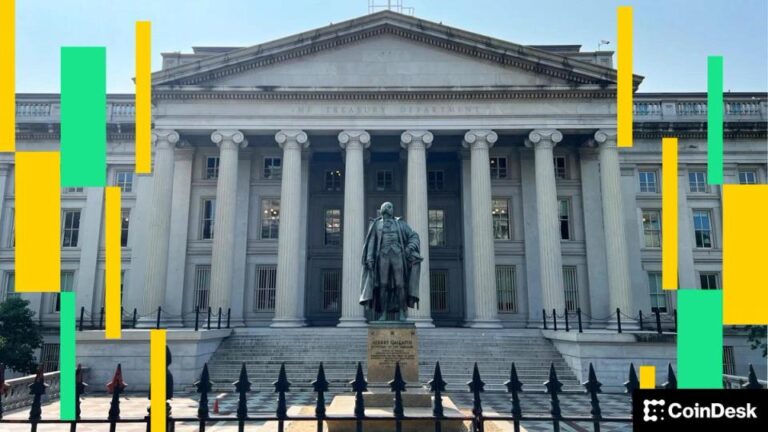
After years of opposition to crypto mixers, the onchain services that obfuscate digital asset transactions, the U.S. Treasury Department now says they may have legitimate privacy uses as well as their much-trumpeted criminal applications.
In a report related to the implementation of the Genius Act, the Treasury acknowledged that mixing services can serve lawful purposes on public blockchains. These include shielding personal finances, business transactions and charitable donations from being publicly traceable. The department noted that privacy tools can coexist with compliance when properly designed, for example, through record-keeping or other safeguards.
“As consumers increase their use of digital assets for payments, individuals may want to use mixers to maintain more privacy of their consumer spending habits,” the Treasury noted in the report.
The mixers, which obscure the origin and destination of digital asset transactions by pooling users’ funds together, have long been controversial in Washington. In 2022, the Treasury’s Office of Foreign Assets Control (OFAC) blacklisted the Ethereum-based mixer Tornado Cash, accusing it of facilitating the laundering of billions in illicit crypto tied to North Korea’s Lazarus hacking group. The sanctions effectively barred Americans from using the tool and ignited one of the most contentious regulatory fights in crypto.
In 2025, the government removed Tornado Cash from the list following legal challenges and an appellate court decision questioning the Treasury’s authority to impose sanctions on open-source smart contracts. Although released on bail, Tornado Cash co-founder and developer Roman Storm still faces legal issues as prosecutors claim they have sufficient evidence to demonstrate he built features into the mixer knowing they would aid cybercriminals.
The report doesn’t abandon concerns about illicit finance. It highlights mixers as tools often used to obscure stolen funds and emphasizes the need for stronger anti-money laundering (AML) controls across digital assets. But it also states that privacy technology itself isn’t inherently illegal.
Beyond mixers, the report signals broader policy shifts. Treasury encourages Congress to clarify which decentralized finance (DeFi) actors should fall under AML obligations, explore digital-identity tools that enable compliance without excessive data collection, and consider new authorities allowing institutions to temporarily freeze suspicious digital assets.
Bitcoin (BTC) displayed strength as it traded above $67,000 on Monday, after producing the first bullish weekly close in seven weeks. Meanwhile, oil prices exploded as the Middle East conflict prompted fears of a major supply shortage.
Key takeaways:
Bitcoin holds firm above $67,000 as oil prices surge to the highest level since 2022.
The biggest oil supply shock in history triggers global inflation worries.
A bullish inverted hammer on the weekly chart suggests a potential BTC bottom.
Global oil supply shock sparks inflation worries
Data from TradingView showed oil futures rose to $119 during early Asian trading hours on Monday, as the escalating Middle East conflict raised fears of supply disruptions.
This is the highest price oil has reached since Russia invaded Ukraine in 2022.
Oil prices per barrel, $. Source: Cointelegraph/TradingView
The latest surge in oil prices came as Iraq warned that roughly 3 million barrels per day of production could be disrupted due to Iranian threats against tankers in the Strait of Hormuz.
Related: Bitcoin preps fresh trend line showdown as weekly close sparks $60K target
Capital markets commentator The Kobeissi Letter said the world is now experiencing the “largest oil supply shock in history,” losing nearly 20 million barrels of oil supply daily.
Source: The Kobeisii Letter
Despite the exploding oil prices, US President Donald Trump said it’s a “small price” to pay for peace.
“Short-term oil prices, which will drop rapidly when the destruction of the Iran nuclear threat is over, is a very small price to pay for U.S.A., and world, safety and peace.”
Meanwhile, the sharp rise in oil prices and the imminent supply shock have revived global inflation concerns, with markets seeing few chances of rate cuts in 2026.
Polymarket bettors are pricing in a roughly 99% probability that the Federal Reserve leaves rates unchanged at its March 18 meeting, with only about a 27% chance of a 25-basis-point cut in 2026.
Fed interest rate cut odds for March 18 FOMC meeting. Source: Polymarket
Leaving rates unchanged tightens financial conditions, boosts the dollar, and pressures Bitcoin, which often sees short-term volatility as investors rotate capital into safe havens like gold.
Has Bitcoin price already bottomed?
At the time of writing, Bitcoin traded around $67,000 with little sign of panic selling, suggesting that traders treated the spike as an energy-specific shock rather than a broad risk-off event.
“Bitcoin’s refusal to go down when the rest of the market is burning is one of the strongest indications I’ve seen yet that the bottom could be in,” analyst Brian Brookshire said in an X post on Monday, adding:
“If there were even the slightest hint of froth in Bitcoin, it would have panic-sold off 10% into the futures open.”
Despite being rejected from the $74,000 resistance level, the BTC/USD pair still produced the “first positive weekly candle in 7 weeks,” founder and CEO at CoinBureau Nic said on Monday.
The price action has also formed an “inverted hammer, which could indicate a potential bullish reversal,” Nic added.
BTC/USD weekly chart. Source: NIC
An inverted hammer weekly candle is a bullish reversal pattern found at the end of a downtrend. It features a small body at the lower end, little to no lower wick, and a long upper wick at least twice the size of the body. It signals that buyers are challenging sellers, potentially reversing the trend.
Thus, Bitcoin could move higher if this pattern is confirmed by a strong bullish follow-through candle this week, with higher volume to break overhead resistance.
As Cointelegraph reported, spikes in oil prices immediately after conflicts tend to be short-lived, with Bitcoin outperforming over the longer term.
This article does not contain investment advice or recommendations. Every investment and trading move involves risk, and readers should conduct their own research when making a decision. While we strive to provide accurate and timely information, Cointelegraph does not guarantee the accuracy, completeness, or reliability of any information in this article. This article may contain forward-looking statements that are subject to risks and uncertainties. Cointelegraph will not be liable for any loss or damage arising from your reliance on this information.
The outbreak of war in the Middle East has rattled global markets, yet bitcoin BTC$67,523.53 has been doing something unexpected: outperforming stocks.
Bitcoin has risen about 3.5% to $68,000 since the conflict between Iran, Israel and the U.S. began just over a week ago, according to CoinDesk data. Over the same period it has outperformed most major assets. Gold has fallen roughly 5%, silver is down 12%, the Nasdaq 100 has declined about 1% and the S&P 500 is lower by around 1.5%.
The divergence has widened over the past 24 hours, with bitcoin up more than 2.5% while U.S. equity futures remain in the red. WTI crude briefly surged to around $116 per barrel early on Monday, at one stage up about 60% since the conflict began. However, comments from G7 leaders about potentially releasing oil reserves helped cool the rally, with crude retreating to roughly $100 per barrel.
Meanwhile, the U..S dollar has strengthened, with the DXY index rising more than 1% to just above 99. Treasury yields have also climbed, with the US 10 year yield moving from just below 4% before the conflict to around 4.2%.
Bitcoin’s outperformance comes after weeks of a brutal sell-off that saw prices nearly halve to around $60,000 from the record high above $126,000 in October. With sentiment already fragile when the conflict began, many expected the downturn to deepen rather than reverse. Instead, the market has done what it often does best: catch the consensus off guard.
Tracking tech stocks
Despite bitcoin’s relative strength, it still shows correlation with technology stocks. The iShares Expanded Tech Software ETF (IGV), a widely followed software sector benchmark, has gained about 7% since the conflict began after rebounding from roughly $76 to close Friday near $88.
Derivative market signals may point to stabilization. Open interest in coin margined futures, which measures the total value of outstanding contracts settled in bitcoin rather than dollars, has declined, indicating leverage is being flushed from the system. Funding rates, periodic payments between long and short traders in perpetual futures, remain negative at around -3.5%, meaning short sellers are paying longs, a sign bearish positioning remains crowded.
At the same time, the Coinbase premium has returned. This measures the price difference between bitcoin on Coinbase and offshore exchanges and is often used as a proxy for US institutional demand. Its reappearance, alongside spot ETF inflows, suggests institutional buyers may be returning to the market and finding demand at these oversold levels.
HIVE Underwriters has announced the addition of Dragonfly Intelligence, part of Dow Jones Global Risk Insights and leading global intelligence and security risk advisory firm, to its network of intelligence partners to enhance its knowledge-led underwriting approach and deliver greater value to insurers and airline clients.
The combination of HIVE’s deep sector underwriting expertise with Dragonfly’s intelligence-led risk monitoring and assessment capabilities creates a more robust framework for managing aviation security risk. In support of the value proposition and resilience-focused service HIVE delivers to its clients, accounts that subscribe to the Dragonfly’s Security Intelligence & Analysis Service as a tool to better manage security risk will be offered a discount to their insurance premium where HIVE holds the lead underwriting position.
Dragonfly is an established geopolitical and security intelligence service for the aviation sector. It is recognized by the IATA as a strategic partner and has received the top ranking by Chambers & Partners for the last four years. Dragonfly counts several of the world’s largest airlines amongst its clients.
Dragonfly joins HIVE’s growing ecosystem of intelligence partners – a collective of expert organisations that bring specialist data, analysis, and insight to strengthen HIVE’s knowledge-led underwriting. Together, these experts help clients better understand and manage complex operational and geopolitical risks, while improving the quality and depth of information available to insurers.
For airlines without dedicated security risk monitoring capabilities, HIVE’s collaboration with Dragonfly provides a practical solution to strengthen oversight and build more informed, forward-looking risk management frameworks.
David Langran, Class Underwriter at HIVE Underwriters, said:“At HIVE, we are constantly seeking new ways to enhance the value we offer our clients and broker partners. Adding to our ecosystem of intelligence partners with the expertise and technology of the Dragonfly team enables us to offer advanced forward-looking security risk mitigation support to those accounts where we take a lead position on risk. This collaboration supports airlines, particularly those without in-house security analysis, in building more robust, data-led risk management programmes. It’s another way we help our clients operate with greater confidence in an increasingly complex world.”
Henry Wilkinson, Chief Intelligence Officer at Dragonfly, commented: “This closer collaboration marks a step forward in helping our airline clients. By aligning Dragonfly’s forward-looking intelligence with HIVE’s underwriting leadership, we’re enabling airlines and their insurers to implement more robust, data-informed risk management programmes. The aviation sector faces an increasingly complex threat environment, and through this collaboration with the Hive team, we’re helping clients stay ahead of emerging risks.”
U.S. inflation data is the major catalyst to watch this week, as it could move the needle on market sentiment and Federal Reserve interest-rate expectations.
The war in the Middle East and other geopolitical risks have kept commodity markets volatile, with bitcoin BTC$68,153.83 last week failing to remain above the $70,000 mark.
The U.S.-Israel conflict with Iran is escalating, and the odds of a near-term ceasefire on prediction markets appear slim. Traders will be monitoring the price of crude oil for potential signs of its impact on inflation.
Against that background, there are some specific crypto events to catch the eye. Solstice and Kamino have teased a new product announcement, without giving any details, and Succinct also said it will make an announcement.
What to Watch
(All times ET)
Crypto
March 9: Solstice and Kamino to announce a new product or feature. No details were provided.
March 10: Succint will make an announcement. No details were provided.
March 12: Polakdot’s economic upgrade to start rolling out, featuring a DOT supply cap, an emissions cut and unbonding reduction.
March 12: BOB mainnet to undergo its Jovian hardfork.
Macro
March 9, 6:50 p.m.: Japan GDP growth annualized final for Q4 est. 1.2% (Prev. -2.6%)
March 9, 10:00 p.m.: China balance of trade for January-February (Prev. $114.1B)
March 11, 7:30 a.m.: U.S. inflation rate YoY for February (Prev. 2.4%); core rate YoY (Prev. 2.5%)
March 11: OPEC monthly report
March 12, 7:30 a.m.: U.S. initial jobless claims for week ending March 7 (Prev. 213K)
March 12, 7:30 a.m.: U.S. balance of trade for January (Prev. -$70.3B)
March 12, 3:30 p.m.: Fed balance sheet for week ending March 11 (Prev. $6.63T)
March 13, 7:30 a.m.: U.S. GDP growth rate QoQ second estimate for Q4 (Prev. 4.4%)
March 13, 7:30 a.m.: U.S. core PCE price index MoM for January (Prev. 0.4%)
March 13, 9:00 a.m.: U.S. JOLTS job openings for January (Prev. 6.542M)
March 13, 9:00 a.m.: U.S. Michigan consumer sentiment preliminary for March (Prev. 56.6;)
Earnings (Estimates based on FactSet data)
March 9: Sharplink (SBET), pre-market, $0.31
March 11: Exodus Movement (EXOD), pre-market, $0.14
March 12: Cango (CANG), post-market, -$0.34
March 13: Bit Digital (BTBT), pre-market, -$0.01
Token Events
Governance votes & calls
Convex Finance is voting on Curve Ownership DAO Vote ID: 1358, which would onboard GHO as a Pegkeeper with a 3 million crvUSD debt ceiling. Voting ends March 9.
Lido DAO is voting to make the delegate incentivization program (DIP 2.0) a permanent governance mechanism. Voting ends March 9.
Lido DAO is voting to authorize a one-time $5 million DAO Treasury allocation into the Lido Earn ETH and USD vaults. Voting ends March 9.
Lido DAO is voting on whether Stakin (recently acquired by The Tie) should continue operating as a node operator and whether to approve updating Stakin’s onchain name and reward address. Voting ends March 9.
Aavegotchi DAO is conducting ballots 1 and 2 of a multi-sig signer election, asking token holders to choose one signer from among the nominees. Voting ends March 10.
Ssv.network DAO is voting to cancel DIP-46 and reallocate the originally approved $15 million development budget, splitting it into $14.9 million for DVT and $100,000 as a retroactive research grant. Voting ends March 10.
Realtoken Ecosystem Governance DAO is voting to temporarily drop interest rates on the RMM (Real Estate Monetary Fund) to zero for 15 days. Voting ends March 10.
Unlock DAO is voting to approve the Unlock Protocol DAO budget for Q1–Q2 2026, totaling approximately $30,768. Voting ends March 11.
Arbitrum DAO is voting to establish an operational directive that automatically consolidates idle and surplus non-ARB funds from DAO initiatives directly into the Arbitrum Treasury Management Company (ATMC) portfolio. Voting ends March 12.
CoW DAO is voting on a CoW Swap Affiliate Program to reward affiliates who refer new retail traders and those traders upon reaching qualifying volume milestones, with up to 500,000 USDC allocated over a six-month pilot. Voting ends March 12.
World Liberty Financial DAO is voting to introduce a WLFI governance staking system requiring unlocked token holders to stake (minimum 180-day lock) to participate in governance. Voting ends March 12.
Arbitrum DAO is voting to implement a delegated voting power (DVP) quorum model, update its constitution, and enable onchain proposal cancellation. Voting ends March 12.
Unlocks
March 12: Aptos APT$0.9488 to unlock 0.69% of its circulating supply worth $11.21 million
March 13: WhiteBit Coin (WBT) to unlock 27.77% of its circulating supply worth $4.59 billion.
March 15: Connex (CONX) to unlock 1.54% of its circulating supply worth $15.79 million.
Token Launches
March 9: Nexira’s (NEXI) token generation event occurs. Token to be listed on KuCoin.
March 12: ForU AI’s (FORU) token generation event occurs.