Home Blog Page 365

Banma Intelligence and Alipay launch AI cockpit solution powered by Alipay AI Pay, enabling seamless and secure in-car transactions by voice

0

At the 2026 Beijing International Automotive Exhibition (“Auto China 2026”), OS and AI technology company Banma Intelligence and Alipay today launched a new AI cockpit solution integrating Alipay AI Pay, enabling drivers to complete purchases by voice command directly from their vehicle.

“In the past two years, smart cockpits have achieved rapid advances in perception and decision-making,” said Ming Cai, Banma Intelligence Chief Product Officer. “With large models onboard, vehicles can understand user intent and make recommendations. By integrating Alipay AI Pay into our AI cockpit solution, we are removing the last friction point in the in-car smart cockpit experience – drivers simply speak to pay, no phone required.”

The new AI cockpit solution initially covers two high-frequency use cases: entertainment and travel. With just a voice command, drivers can seamlessly access AI-powered services to purchase tickets, book hotels, and order food. For example, utilizing Banma Intelligence’s Yan AI and Alipay AI Pay’s capabilities, drivers can initiate a transaction by saying “help me buy two movie tickets.” The AI cockpit system can select showtimes and seats, with drivers able to complete payment by voice confirmation.

Alipay’s security capabilities, including multi-layered risk management and real-time anti-fraud measures, also safeguard every transaction.

The solution comes at a time when intelligence has become a key focus area for major automakers. As a key component of in-car services, payment plays a crucial role in enhancing the intelligent user experience, with both automotive system providers and automakers able to integrate their services with Alipay AI Pay. The new AI cockpit solution has completed technical integration testing with major automotive OEMs, who plan to roll out this feature in their new models in the second half of 2026.

Alipay AI Pay is an AI-native payment solution introduced in 2025 that enables secure, seamless transactions through AI agents via voice command. Alipay AI Pay surpassed 100 million users in February 2026, becoming the world’s first AI-native payment product to reach this milestone. During the week of February 5-11, 2026, it processed over 120 million transactions.

As agentic commerce grows in China, Alipay AI Pay has expanded across a range of use cases — from AI agents embedded in apps and mini programs for traditional retailers such as Luckin Coffee, to AI smart glasses such as Rokid’s, consumer-facing AI applications like Alibaba’s Qwen and OpenClaw-type AI agents.

As the BTC price rises, perpetual futures may look bearish. They’re not, analyst 10x says.

0

Bitcoin has rallied roughly 14% this month, its best monthly performance in a year, and the consensus is that the price could soon push past $80,000, a level not seen since January.

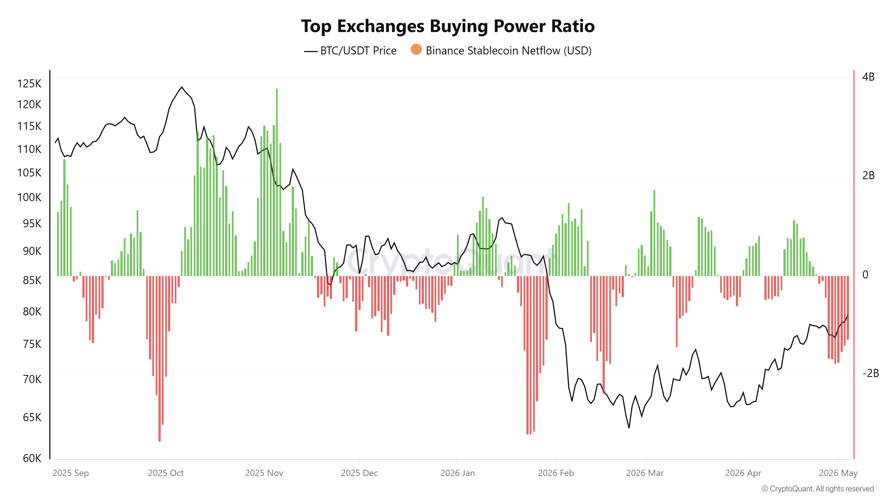
Yet the perpetual futures market, which is typically in sync with spot price action, is behaving as if the opposite is true. Specifically, the funding rate — a figure that’s positive when the futures are positioned for a bitcoin price increase and negative when positioned for a drop — is currently below zero.

That has left market participants searching for an explanation. While many read the divergence as a signal that traders lack confidence in bitcoin’s recent performance and are positioned for a drop, that’s not the only explanation.

According to 10x Research’s Founder Markus Thielen, who predicted a rally to $125,000 way back in early 2023, the situation is, in fact, being driven by hedging activity from institutions. Instead of the shots being called by retail traders, the negative funding rate represents a structural change in the market brought on by the increasing participation of sophisticated players.

Why the funding rate matters

Perpetual futures are contracts that track bitcoin’s price without ever expiring, unlike standard futures listed on an exchange like the CME. To keep futures prices tethered to spot prices, exchanges charge a periodic fee, the funding rate.

When the futures prices are higher than spot, meaning buyers are more aggressive in the futures market, longs (investors who own the futures) pay shorts (who’ve sold contracts they didn’t own in expectation they will be able to buy them back at a lower price). In that case, the funding rate is positive.

When futures trade below spot, it’s a sign short pressure is dragging futures down relative to actual bitcoin, shorts pay longs and the rate goes negative.

The funding-rate mechanism acts as a real-time gauge of market sentiment.

In recent weeks, funding rates have been consistently negative, meaning the shorts are in charge and perpetual futures have traded at a discount to spot price.

Bitcoin’s 30-day average funding rate is negative 5%, compared with the historical norm of positive 8%, according to 10x Research. That is a 13 percentage point discount to baseline, and it is getting more negative even as the price climbs.

“The Bitcoin funding rate is sending an unusual signal,” Thielen wrote in a note to clients on Saturday. “At minus 5% on a 30-day average against a historical norm of plus 8%, and turning more negative even as Bitcoin rallies 15% and the options skew recovers, something structural is happening in the futures market, not a sentiment shift.”

Structural pressures

Thielen identified three sources for the short pressure in the futures market.

The first is hedge fund redemptions. Crypto hedge funds have underperformed bitcoin by 140% over five years, and investors have been pulling money out. That takes time, and during redemption notice periods, funds have been shorting bitcoin futures to neutralize their price exposure while they wait for their capital to return to their bank or trading accounts. These are mechanical risk-management trades, not bearish bets, Thielen said.

The second involves two separate institutional trades, both of which require shorting bitcoin futures as a hedge. One bets that shares of Strategy (MSTR), the largest publicly traded bitcoin treasury company, will outperform bitcoin directly while shorting futures. The other is aimed at capturing the 11% yield on MSTR preferred shares (STRC) while shorting futures to strip out crypto price volatility risk. Strategy raised $3.5 billion in April alone, scaling both trades simultaneously.

The third is the growing trend of bitcoin miners to pivot to artificial intelligence. Miners like Hut 8, up 48% since April 6, are reducing their bitcoin production and adding to their support for AI computing. Funds buying these stocks are simultaneously shorting bitcoin futures to remove crypto correlation from the trade. Again, this is risk management, not an outright bearish play in bitcoin futures.

Bitcoin Whale Holdings Hit 5 Month High At 3.09M BTC

0

Bitcoin (BTC) whales holding between 1,000-10,000 BTC have increased their BTC exposure over the past five months, with the total balance reaching 3.09 million, a level last seen on November 11, 2025.

Short-term data suggest that Bitcoin traders may move toward existing liquidity at $73,700, but futures market activity and the longer-term market structure hint at higher levels above $80,000. 

Bitcoin whales and institutions rebuild BTC exposure

Bitcoin wallets holding between 1,000 and 10,000 BTC have been steadily accumulating since December, adding approximately 240,000 BTC to their balances.

This brings the cohort’s total holdings to around 3.09 million BTC, recovering to pre-correction levels last seen before Bitcoin’s 18% pullback in November 2025, when the price declined to $85,000 from $103,500.

Total BTC balance of large holders. Source: CryptoQuant

The long-term holders (LTHs) continue to absorb supply at a steady pace. LTHs’ balance has reached 14.57 million BTC, aligning with the prior accumulation peaks. The distribution activity was 42,100 BTC sold over the past 30 days, one of the lowest readings in 2026.

BTC long-term holder flow. Source: CryptoQuant

The Crypto Market Compass report from Bitwise highlights a similar trend across institutional flows. Over the last month, the institutional investors have added about 92,900 BTC.

The onchain realized cap flows show only 14,900 BTC in net selling during the same period. This report indicates that the demand from larger players has outpaced sell-side pressure, tightening the available BTC supply.

Rise in BTC institutional demand. Source: Bitwise

Related: First 21-week trend line reclaim since October 2025: Five things to know in Bitcoin this week

BTC double top pattern indicates a short-term liquidity sweep at $74K

The four-hour chart shows a potential double top forming near $79,400 after two quick rejections for BTC over the past week. The second pullback came late Sunday night, with weaker buy volumes, pointing to fading short-term momentum.

Currently at $77,731, the price may rotate toward liquidity pockets near $74,700 and $73,700.

BTC/USDT on the four-hour chart. Source: Coinelegraph/TradingView

The $74,700 level aligns with a prior consolidation range and sits just above the 100-period exponential moving average (EMA). A deeper move into $73,700 would test key higher-time-frame support and a prior higher-low range.

Holding above this zone keeps the broader trend intact and maintains room for a bullish continuation.

The derivatives market activity is adding short-term pressure to Bitcoin price. Crypto analyst Darkfost noted that over $1.2 billion in sell volume hit Binance within an hour, contributing to a sharp intraday decline on Sunday.

The funding rates have also stayed deeply negative, reaching -7% on a 30-day basis, one of the lowest readings ever recorded. 

Bitcoin: taker sell volume on Binance. Source: CryptoQuant

However, such positioning may create conditions for a short squeeze, in which crowded short positions unwind, driving the price higher. A move above $80,000 would invalidate the double-top signal and turn short-term momentum bullish again.

According to MN Capital founder Michaël van de Poppe, the price continues to hold key levels, with upside targets of $85,000-$88,000 still valid for May. The liquidity range between $74,700 and $73,700 now serves as a reset zone, where BTC demand could be tested ahead of another breakout attempt above $80,000. 

Related: Michael Saylor’s Strategy adds 3.2K Bitcoin at nearly $78K per BTC

Ethereum Backers Commit 30,000 ETH to rsETH Recovery After Exploit

0

Consensys and Ethereum co-founder Joe Lubin have joined DeFi United, committing as much as 30,000 ETH to a recovery effort aimed at restoring rsETH backing after a $290 million bridge exploit triggered widespread disruptions across DeFi.

The initiative, led by participants in Aave DAO, aims to support affected users and stabilize rsETH markets, with governance approvals still pending across involved protocols.

The funding is intended to provide immediate liquidity while governance processes continue, with an eye on limiting disruption across DeFi protocols. Sharplink, a publicly traded Ethereum treasury company, has joined in an advisory role to help structure the recovery plan.

Source: Aave

Source: Aave on X

DeFi United was announced April 23 by service providers to Aave DAO, with participants including Lido, EtherFi, Ethena, Mantle and Frax, among others.

The recovery effort follows an April 18 exploit that drained roughly 116,500 rsETH, worth about $290 million, from a LayerZero-based bridge operated by Kelp DAO.

The incident triggered disruptions across the DeFi ecosystem, with dozens of protocols pausing some functions. On Aave, the attacker used rsETH as collateral to borrow liquidity, contributing to as much as $200 million in bad debt and forcing the protocol to freeze rsETH markets.

According to LayerZero Labs, the exploit was linked to a configuration issue in Kelp’s setup that relied on a single verification path for cross-chain messages.

Separately, Circle said Monday that its venture arm is purchasing AAVE tokens to support the protocol and broader DeFi ecosystem.

Source: Circle
Source: Circle

Source: Circle on X

Related: Aave asks Arbitrum to send 30K ETH from Kelp exploiter to ‘DeFi United’

DeFi hacks surge in April

The incident comes amid a wave of recent attacks targeting DeFi protocols. According to DefiLlama, about $729 million has been lost to crypto hacks over the last 90 days, with roughly $623 million occurring in April alone.

The month began with a roughly $280 million exploit of Drift Protocol on April 1, carried out through a social engineering attack by an attacker suspected to have ties to North Korea.

DeFi hacks, February-April 2026. Source: DefiLlama

Two weeks later, Rhea Finance said an attacker exploited a vulnerability in its margin trading feature to manipulate liquidity pools, resulting in roughly $7.6 million in losses, according to CertiK. The protocol has since paused operations and is undergoing a phased recovery, with most funds recovered and some USDT still frozen pending release by Tether.

The string of attacks also includes smaller exploits earlier in the month, such as a $410,000 loss at Dango on April 13, a $392,000 oracle-related incident at Silo Finance on April 3 and a $423,000 access control exploit at Aethir on April 9.

While none of the recent attacks have been conclusively linked to artificial intelligence, researchers say advances in the technology are making it easier to identify and exploit vulnerabilities in DeFi systems. 

In late 2025, researchers at Anthropic found that AI models could identify more than half of known smart contract exploits, highlighting how the technology could accelerate future attacks.

Data from Polymarket shows traders are pricing in a high likelihood of another major crypto hack this year, with odds at 84% by the end of 2026.

Source: Polymarket
Source: Polymarket

Odds of another crypto hack over $100 million. Source: Polymarket

Magazine: AI-driven hacks could kill DeFi — unless projects act now

Cointelegraph is committed to independent, transparent journalism. This news article is produced in accordance with Cointelegraph’s Editorial Policy and aims to provide accurate and timely information. Readers are encouraged to verify information independently.

AI integration accelerates U.S. Salesforce adoption

0

Firms implement data integration and automation to accelerate processes, deliver measurable results, ISG Provider Lens® report says

Enterprises in the U.S. are adopting Salesforce platforms built on unified data architectures and autonomous workflows powered by AI to improve operational efficiency, according to a new research report published today by Information Services Group (ISG) (Nasdaq: III), a global AI-centered technology research and advisory firm.

A shift to an AI-enhanced operating model is reshaping the U.S. Salesforce market. As U.S. enterprises adopt the Salesforce agentic vision, they are looking for evidence of governed AI, data foundations, compliance and accelerated time to value.Share

The 2026 ISG Provider Lens® Salesforce Ecosystem Partners report for the U.S. finds that organizations are transitioning from isolated customer relationship management (CRM) systems to integrated, cross-cloud, API-based integration strategies, enabling real-time insights and more coordinated enterprise operations.

“A shift to an AI-enhanced operating model is reshaping the U.S. Salesforce market,” said Bill Huber, ISG partner, Digital Platforms and Solutions. “As U.S. enterprises adopt the Salesforce agentic vision, they are looking for evidence of governed AI, data foundations, compliance and accelerated time to value.”

Enterprises in the U.S. are standardizing on Salesforce’s Agentforce 360 AI system for autonomous workflows, with the Data 360 platform for governance. Organizations are building decision-making architectures with governed first-party data, identity resolution and minimal data replication. This strategy helps to ensure accuracy and compliance, enable continuous updates and contextual insights and improve coordination across business functions.

Evolving regulations in the U.S., including state-level privacy regimes, are changing how U.S. enterprises deploy AI and Salesforce solutions. Organizations in highly regulated industries such as healthcare and financial services are embedding governance, risk and compliance frameworks into development and operations. Many are also instituting audit trails, human oversight and policy guardrails for accountability and to reduce the risks associated with AI-driven processes.

In Salesforce provider engagements, U.S. enterprises are shifting from time-and-materials deals toward models tied to measurable performance improvements. They seek fixed-price and outcome-based approaches that will align technology investments with business results such as reduced cycle times and improved service efficiency. Their preferred operational models include proactive monitoring, automated remediation and cost optimization to demonstrate clear value, ISG finds.

Midmarket enterprises in the U.S. are adopting Salesforce solutions through modular and cost-controlled deployment approaches. They favor phased rollouts, often using accelerators, that allow use cases to scale over time without large upfront investments. Midsize companies seek flexible delivery models that combine onshore oversight with scalable nearshore and offshore execution to steadily expand automation and platform capabilities.

“U.S. enterprises expect Salesforce ecosystems to connect agent outcomes to measurable KPIs and scale from one use case to a mesh of agents,” said Ashwin Gaidhani, lead author of the report. “Over the next 12 to 18 months, the center of gravity in the U.S. will continue to shift from build completion to verifiable value realization and governance.”

The report also explores other trends affecting Salesforce adoption in the U.S., including the use of zero-copy and limited-replication data access to contain costs and the growing adoption of FinOps, AgentOps and RiskOps frameworks.

For more insights into the challenges faced by enterprises using Salesforce in the U.S., along with ISG’s advice for addressing them, see the ISG Provider Lens Focal Points briefing here.

The 2026 ISG Provider Lens Salesforce Ecosystem Partners report for the U.S. evaluates the capabilities of 40 providers across three quadrants: Professional Services, Value Realization and Optimization Services and Innovation on Salesforce/Agentforce.

The report names Accenture, Capgemini, Cognizant, Deloitte, HCLTech, IBM, Infosys, PwC, TCS and Wipro as Leaders in all three quadrants. It names Coastal, LTM, NTT DATA, Slalom and Tech Mahindra as Leaders in two quadrants each. Perficient and Persistent Systems are named as Leaders in one quadrant each.

In addition, Genpact, LTM, NTT DATA and Persistent Systems are named as Rising Stars — companies with a “promising portfolio” and “high future potential” by ISG’s definition — in one quadrant each.

In the area of customer experience, Hexaware is named the global ISG CX Star Performer for 2026 among Salesforce ecosystem providers. Hexaware earned the highest customer satisfaction scores in ISG’s Voice of the Customer survey, part of the ISG Star of Excellence™ program, the premier quality recognition for the technology and business services industry.

Canada’s ban on political crypto donations clears key vote with Conservative support

0

Canada’s proposed ban on crypto political donations moved a step closer to becoming law on Friday, advancing through Parliament with cross-party support and little opposition.

Bill C-25, the Strong and Free Elections Act, passed second reading in the House of Commons and was referred to committee for further review. In Canada’s system, that vote signals lawmakers broadly agree with a bill’s core principles before it faces detailed scrutiny and possible amendments.

The legislation would prohibit political contributions made in crypto, alongside money orders and prepaid payment products, grouping them as funding methods that are difficult to trace.

The ban would apply across the federal system — registered parties, electoral district associations, candidates, leadership and nomination contestants, and third parties that run election advertising.

Recipients would have 30 days to return illegal crypto contributions or remit them to the Receiver General, Canada’s equivalent of the U.S. Treasury.

The bill’s lead defender on the floor was Kevin Lamoureux, the Liberal parliamentary secretary to the government’s House leader, a junior official who helps manage the ruling party’s legislative agenda and acts as a floor spokesperson during debate.

His opening speech walked through AI deepfakes, foreign interference, and administrative penalties. Crypto did not come up, according to an official transcript. Asked by a Liberal colleague to pick from three priorities — foreign interference in nominations, political financing transparency or artificial intelligence — Lamoureux picked AI.

Several Conservative Members of Parliament — the party is led by Pierre Poilievre, who marketed himself as crypto-friendly during the last election — raised questions about political financing rules and how new restrictions would be applied.

But the issue never became a central point of contention.

Conservatives backed sending the bill to committee, while other opposition parties raised concerns about different elements of the legislation, but did not center their arguments on crypto.

The limited resistance also reflects how little crypto has been used in Canadian politics.

Canada has technically allowed crypto donations since 2019, when Elections Canada classified them as non-cash, in-kind contributions similar to property. But no major federal party has publicly accepted crypto, and no contributions have been disclosed in recent elections.

C-25 is itself a re-run. Its predecessor, Bill C-65, contained identical crypto language and died when Parliament was prorogued — suspended without dissolving — in January 2025.

Canada’s Chief Electoral Officer recommended tighter regulation of crypto donations in 2022, then, in November 2024, shifted to recommending an outright prohibition, citing pseudo-anonymity and the difficulty of verifying contributors’ identities.

The U.S. is moving in the opposite direction. The Federal Election Commission has permitted crypto donations to American campaigns since 2014.

Earlier this year, the U.K. passed a law banning crypto donations, citing concerns that digital assets could be used to hide the origins of foreign money in British politics.

Israeli Regulators Approve Shekel-Pegged Stablecoin

0

Israel’s Capital Market, Insurance and Savings Authority has greenlit the launch of a shekel-pegged stablecoin by the virtual exchange exchange Bits of Gold.

In a Monday notice, the Israeli regulator said that it had granted approval of the BILS stablecoin after a two-year pilot program of the stablecoin on the Solana blockchain.

Source: LinkedIn

According to the announcement, the stablecoin’s reserve assets will be held in Israel in “designated and separate accounts.” The project was part of a larger effort by the Israel Tax Authority and the country’s Finance ministry to regulate the crypto industry, including by allowing certain stablecoin activities.

“BILS creates a direct bridge between the Israeli shekel and the global digital assets economy, enabling real-time payments, on-chain trading and programmable financial applications based on a regulated local currency,“ said Bits of Gold founder and CEO Youval Rouach.

Related: Zondacrypto CEO goes off radar as Poland probe deepens

As of Monday, the global stablecoin market capitalization was more than $320 billion, dominated by US dollar-pegged stablecoins like Tether’s USDt (USDT).

The launch of BILS, as one of the first Israeli shekel-pegged coins, came as the fiat currency was at a 30-year high against the US dollar, at 1 ILS to 0.34 USD at the time of publication.

Stablecoin yield under scrutiny in US amid market structure debate

In the United States, lawmakers continue to debate provisions within a digital asset market structure bill over stablecoin yield, tokenized equities, and ethics concerns related to US President Donald Trump’s potential conflicts of interest with the industry. The legislation, effectively stalled in the US Senate since July 2025, requires a markup by the chamber’s banking committee before a potential vote.

Magazine: Should users be allowed to bet on war and death in prediction markets?

Cointelegraph is committed to independent, transparent journalism. This news article is produced in accordance with Cointelegraph’s Editorial Policy and aims to provide accurate and timely information. Readers are encouraged to verify information independently.

Ripple Scores New Korea Banking Deal With K Bank Partnership

0

Trusted Editorial content, reviewed by leading industry experts and seasoned editors. Ad Disclosure

South Korea’s internet-only lender K bank has signed a strategic partnership with Ripple to test blockchain-based overseas remittances, marking another bank-facing expansion for Ripple’s payments infrastructure in Asia.

The agreement, announced Monday by K bank and first reported by The Korea Herald, was signed at the lender’s headquarters in Seoul. K bank CEO Choi Woo-hyung and Ripple Asia-Pacific Managing Director Fiona Murray attended the ceremony alongside officials from both companies.

K Bank Taps Ripple For Blockchain Remittance Tests

The partnership centers on whether Ripple’s global network and blockchain infrastructure can improve the speed, cost efficiency and transparency of K bank’s overseas remittance system. For Ripple, the deal extends its long-running institutional payments strategy into South Korea’s digital banking market. For K bank, it gives the lender a live testing track for blockchain-based cross-border settlement at a time when stablecoins and tokenized payment rails are becoming a more serious part of bank-level infrastructure discussions.

“We are pleased to partner with K bank, which has helped set the standard for digital banking in Korea and continues to drive innovation,” Murray said. “This partnership will help strengthen K bank’s competitiveness in blockchain-based overseas remittance technology,” Choi said.

K bank is already conducting a proof of concept with Ripple for overseas remittances. According to the bank, the first phase tested transfers through a separate application, while the second phase is now assessing transaction stability by virtually linking customer accounts with internal systems. That detail is notable because it suggests the project is moving beyond a standalone test environment and toward a model that examines how blockchain-based remittance infrastructure could interact with bank-side account architecture.

The second phase will also test on-chain transfers with partners in the United Arab Emirates and Thailand. K bank has signed memorandums of understanding in both markets for stablecoin-based transactions, according to the report. That gives the Ripple partnership a broader regional angle: the work is not only about improving a domestic Korean bank’s remittance stack, but also about testing how blockchain rails may function across specific cross-border corridors.

The wallet component is also part of the experiment. K bank used an in-house wallet in the first phase of the proof of concept, but plans to use Ripple’s SaaS-based digital wallet, Palisade, in the second phase. The goal is to test a faster and more scalable model for compliance and deployment, according to the bank.

Notably, Ripple has expanded deeper into stablecoin infrastructure after launching RLUSD in 2024. It has applied for a US trust bank charter, with the approval process still underway.

At press time, XRP traded at $1.41.

XRP price chart
XRP closed above the 200-week EMA, 1-week chart | Source: XRPUSDT on TradingView.com

Featured image created with DALL.E, chart from TradingView.com

Editorial Process for bitcoinist is centered on delivering thoroughly researched, accurate, and unbiased content. We uphold strict sourcing standards, and each page undergoes diligent review by our team of top technology experts and seasoned editors. This process ensures the integrity, relevance, and value of our content for our readers.

Fidelity Digital Assets sees early stabilization signals in crypto market

0

The digital assets market entered the second quarter in consolidation mode, but Fidelity Digital Assets said underlying data points to early signs of stabilization beneath the surface.

In its Q2 2026 Signals Report published Monday, the crypto trading firm highlighted improving conditions across a number of key metrics, including unrealized profitability, momentum and network usage.

Rather than focusing solely on prices, the report is framed through a broader lens of risk, positioning and cycle dynamics across bitcoin , ether (ETH) and solana (SOL).

Bitcoin, the largest cryptocurrency, continues to serve as the market’s primary source of resilience, with unrealized profit levels and dominance metrics indicating that capital remains concentrated in the most established and liquid asset during the consolidation phase.

“BTC’s dominance continues to gradually increase after declining throughout the latter half of 2025,” wrote analysts led by Daniel Gray.

The digital asset was trading around $77,000 at publication time.

Crypto markets have turned in a choppy performance in recent months, with bitcoin and other major tokens largely range-bound as investors navigate a complex macro backdrop.

Sticky inflation, shifting expectations around central bank rate cuts and periodic volatility in global equities have weighed on risk appetite, while ongoing regulatory scrutiny in the U.S. and abroad has added another layer of uncertainty.

At the same time, conflicts in Eastern Europe and the Middle East and trade frictions between major economies have contributed to bouts of risk-off sentiment, limiting sustained upside across digital assets.

At the same time, the analysts noted that momentum and profitability indicators are consistent with a corrective period, one that may be laying the groundwork for a more stable market structure.

A notable divergence is emerging between price and network activity. The analysts pointed to sustained usage across Ethereum and Solana, suggesting that demand at the protocol level remains intact even as valuations lag.

Taken together, these signals reflect a market still in recovery, but with structural improvements underway that may not yet be fully reflected in prices, the report said.

Read more: Bitcoin faces near-term pressure as liquidity tightens, Hilbert Group CIO says

BTC rally showing lack of conviction, says analyst

0

Bitcoin’s recent climb toward $80,000 is showing signs of strain, with low trading volume and muted derivatives activity raising questions about how durable the rally may be.

In a weekly report, 10x Research head Markus Thielen pointed to a disconnect between price action and underlying market participation. “Bitcoin rallied 4.7% over the past week, yet the accompanying data tells a cautious story beneath the surface,” he wrote.

Trading volumes have dropped sharply. Bitcoin weekly volume came in 17% below average, while ether (ETH) volume fell 20%. At the same time, funding rates — a measure of leveraged positioning — remain deeply negative. “Funding rates fell 6.8% to the 3rd percentile and volumes collapsed 33% to the 4th percentile,” Thielen said, adding that the move higher “was driven by spot buying or short covering rather than leveraged long conviction.”

That distinction matters. Spot buying, often linked to institutional demand, tends to be steadier but less explosive than leveraged trades. It also leaves the market without the kind of momentum typically seen in strong bull runs.

Institutional flows have been a bright spot. Bitcoin ETFs have recorded nine consecutive days of inflows, helping push total April inflows to $2.5 billion. Bitcoin dominance has also climbed to 60%, signaling capital is concentrating in the largest cryptocurrency rather than spreading across the market.

Still, Thielen cautioned that the rally’s structure remains fragile. “The market has shifted from a more actively traded environment to one where participants are largely on the sidelines,” he wrote, describing a “low-funding, low-volume regime that historically reflects hesitation rather than momentum.”

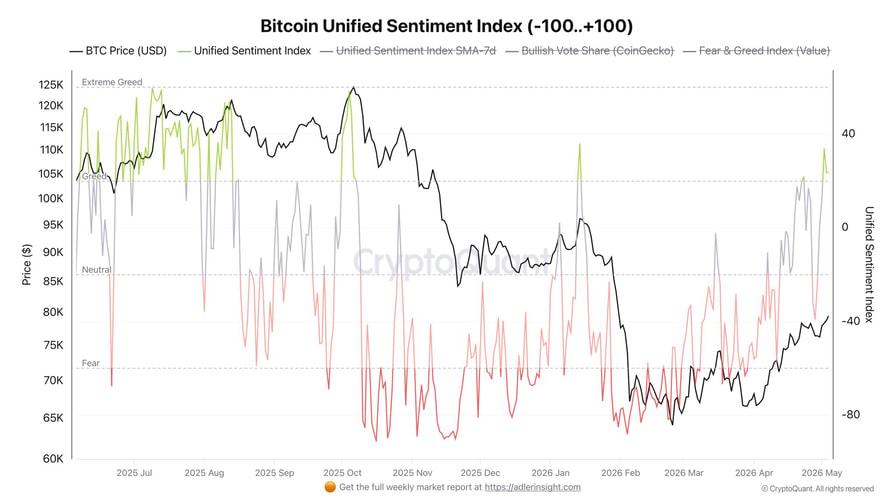
Options markets reinforce that view. Volatility has fallen into the lower quartile of its historical range, and traders are pricing in relatively modest price swings over the coming week. “The market is pricing in a relatively calm environment,” the report noted, even as sentiment gauges approach elevated levels.

Ethereum paints a similar picture, though with even weaker participation. Volumes have dropped more than 50%, and derivatives positioning shows limited appetite for risk. “The volume implosion points to a market where conviction remains low, and participants are largely disengaged,” Thielen said.

Despite these signals, the setup is not outright bearish. With leveraged long positions limited, the risk of forced liquidations on the downside is reduced. “Near-term risk/reward is asymmetric to the upside if a catalyst emerges,” Thielen wrote.

That catalyst may come from outside the crypto space. The report highlights macroeconomic developments as the key factor that could determine direction in the days ahead. For now, bitcoin’s rally appears intact, but without stronger participation, it may struggle to hold unless broader market conditions provide support.