Home Blog Page 1192

Humanoid Robot Actuator Market Could Approach $10B by 2031

0

The global humanoid robot actuators market is set to reach just under $10 billion by 2031, according to new research from Valuates Reports.

The report suggests the market will see a huge boom, rising from approximately $150 million in 2024 to nearly $9.9 billion by 2031, reflecting the rapid transition of humanoid robots from pilot programs to practical commercial deployments.

Actuators form the core components of humanoid robots’ physical capabilities, translating software intelligence into motion and determining everything from the robot’s dexterity and balance to strength and reliability.

Demand for increasingly advanced actuators is on the rise as humanoid robot deployment expands into sectors such as manufacturing, logistics, healthcare assistance, research and service environments, calling for more dexterous and capable humanoids.

Strong demand is particularly being seen across the Asia Pacific region, with marked growth in manufacturing automation and robotics innovation. 

North America was also highlighted as a key growth market, with the region’s increased focus on advanced robotics research, healthcare assistance and service robots.

Industrial humanoid robots were identified as a major growth driver for the actuator market. With increased use cases across factory and warehouse settings, robots are required to sustain higher loads, longer duty cycles and continuous mechanical stress.

Related:Arm Launches Physical AI Unit

“As humanoid robots move beyond experimental prototypes into functional deployments, actuator performance expectations continue to rise,” the report reads. “Manufacturers emphasize precision control, compact design, energy efficiency, durability, and smooth motion output.”

Looking ahead, the report said customization, scalability and integration compatibility will be key considerations for robot manufacturers looking for actuator suppliers.

Kaito to sunset 'Yaps' as X cracks down on InfoFi apps, token falls 17%

0

The crypto analytics firm is replacing its reward-driven social product with a more selective creator marketing platform after X revised its API policies to curb spam.

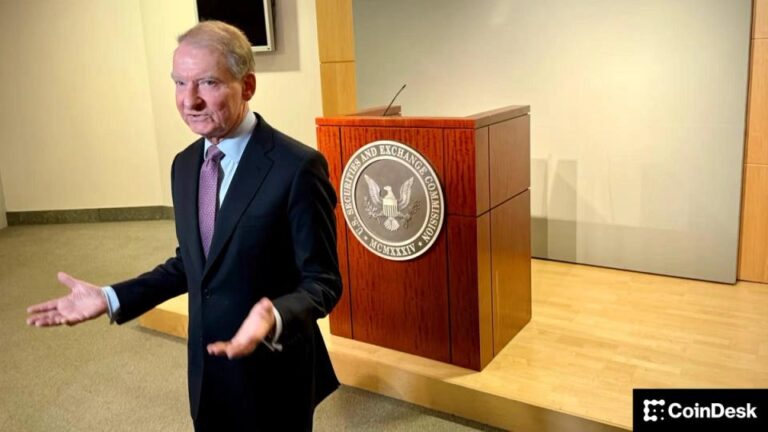
House Democrats slam SEC for dropping crypto cases with Trump ties

0

In a letter on Thursday, lawmakers accused the SEC of enabling a “pay-to-play” dynamic after dropping cases against Binance, Coinbase, Kraken and Justin Sun.

After Coinbase Reversal Forces Delay on Crypto Bill, Is There a Path Forward?

0

In brief

  • Coinbase’s last-minute pullback forced the Senate to delay a key vote on its crypto market structure bill.
  • The fight centers on stablecoin yield limits, with Coinbase balking as bank-backed amendments gained traction.
  • Industry unity is fracturing, leaving the bill’s path forward—and chances of passage—uncertain.

Less than a day after Coinbase dramatically pulled support for the Senate’s crypto market structure bill, derailing a vote that would have sent the legislation to the Senate floor, the crypto industry is reeling—and wondering whether their coveted legislation now stands any chance of passage.

Coinbase CEO Brian Armstrong announced on Wednesday his company would no longer support the bill as written, less than 24 hours before the Senate Banking Committee was due to vote on it. After a chaotic evening, pro-crypto senators ultimately opted to delay the vote—and have yet to reschedule it.

“Today’s response from some in the industry proves they are just not ready, and while I am deeply disappointed, I am committed to taking this feedback and partnering with the industry to deliver a product that helps them thrive,” Sen. Cynthia Lummis (R-WY), one of the bill’s key architects,” said Wednesday night.

Crypto policy leaders have scrambled Thursday to voice their commitment to the bill and mitigate what some see as the damage done to its chances of passage by Coinbase’s abrupt about-face.

“They’re on an island here,” one crypto policy insider told Decrypt, speaking of Coinbase.

“Inaction is unacceptable,” Cody Carbone, CEO of crypto nonprofit The Digital Chamber, said in a statement Thursday. “We cannot afford to walk away from the table at a moment when clarity is within reach.”

If Coinbase is on an island, though, it is quite a powerful one. The company, one of the crypto industry’s most formidable forces in Washington, managed to singlehandedly force the Senate Banking Committee to punt a vote that both GOP leadership and the White House backed.

Coinbase’s last-minute decision to protest the bill likely centered on an ongoing battle between crypto companies and the banking lobby over stablecoin yield—one Coinbase appears to have felt it was starting to lose.

The banking industry has pushed hard to add language to the market structure bill limiting the ability of crypto companies to offer yield, essentially rewards similar to interest payments, on stablecoin holdings. Stablecoins are crypto tokens generally pegged to the value of the dollar, formally legalized in July with the passage and signing of the GENIUS Act. As of Tuesday, Decrypt reported, Coinbase signaled it was willing to accept the latest bill language on the issue.

But by Wednesday, it looked likely that bipartisan amendments to the bill supported by the banking lobby—which would have made stablecoin yield language more restrictive—were going to pass at Thursday’s markup, sources familiar with the matter told Decrypt

“Coinbase had a red line and made a judgement call,” one top crypto lobbyist told Decrypt.

Coinbase CEO Brian Armstrong showed up on Capitol Hill on Thursday, in an apparent attempt to signal that the company was ready to get back to the negotiating table. But some think the damage done by the company to bill negotiations will be difficult to undo.

“Members of Congress don’t like getting played and don’t like having their time wasted,” one D.C. insider told Decrypt. “Maybe [Armstrong] gets one more chance, but he burned an enormous amount of capital and credibility.”

Already, fractures are beginning to show in the delicate coalition required to get the bill over the finish line. On Thursday, Patrick Witt, one of the White House’s top crypto advisors, accused pro-crypto Democrats—whose votes are needed to get the bill passed—of operating in “bad faith.” He called the markup’s postponement “disappointing.”

As Coinbase navigates the bill’s negotiations, its leadership has also made a point of emphasizing its influence over an enormous super PAC network—one that has already amassed over $116 million to spend on the 2026 midterm elections.

But even the backers of that initiative appear to be splintering over Coinbase’s approach to the market structure bill. Fairshake, the industry’s top super PAC, is funded principally by Coinbase, Andreessen Horowitz, and Ripple.

On Thursday, Andreessen’s top crypto executive, Miles Jennings, said that while the bill “isn’t perfect,” it must be passed—a direct counter to Brian Armstrong’s contention Wednesday that “no bill” is better than “a bad bill.”

And earlier today, speaking at a swanky investor summit in St. Moritz, Switzerland, Ripple CEO Brad Garlinghouse signaled his lack of prior warning about Coinbase’s moves against the bill.

“I was surprised how vehemently they came out and said ‘look we can’t support this’,” Garlinghouse said of Coinbase. “The rest of the industry really is still leaning in and supporting it and I think constructively trying to work through.”

The next step for the market structure bill would likely be a scheduled markup of the bill in the Senate Agriculture Committee, which is dealing with the portion of the legislation under the CFTC’s purview.

But the Senate Banking Committee, which oversees the SEC, has generally been leading the push for the legislation—and Capitol Hill sources told Decrypt they would not be surprised if the Agriculture markup, penciled for January 27, is also delayed, as Senate Banking determines what to do next.

One crypto policy leader, who was already skeptical of the bill’s chances prior to Coinbase’s surprise move, doesn’t see how the play makes passage any more likely.

“I still don’t know what the path forward is,” they told Decrypt.

Daily Debrief Newsletter

Start every day with the top news stories right now, plus original features, a podcast, videos and more.


Fogo Launches Public Mainnet After Binance Token Sale

0

The Solana-compatible Layer 1 blockchain launched Thursday with live apps, exchange listings, and a token airdrop.

Fogo, a Solana Virtual Machine-compatible Layer 1 blockchain built for onchain trading, launched its public mainnet on Thursday, Jan. 15.

Its native FOGO token, which launched alongside the network’s mainnet, is currently trading around $0.053, down about 12%, with over $208 million in 24-hour trading volume and a market cap near $198 million, according to CoinGecko. The token’s fully diluted valuation (FDV) stands at about $527 million.

FOGO Chart

Fogo said its network is currently running 40-millisecond block times and has delivered throughput of more than 1,200 transactions per second with its first mainnet application.

The mainnet launch follows a token sale through Binance, which offered 2% of the FOGO supply at a $350 million valuation, raising roughly $7 million for the Fogo Foundation.

“Fogo exists because infrastructure bottlenecks are the enemy of innovation,” Doug Colkitt, founding contributor at Fogo, told The Defiant. “Dozens of builders will begin deploying applications on Fogo over the coming weeks, and each of them have uniquely benefited from industry-leading block times, near-instant finality, and frictionless UX.”

More than 10 dApps are live at launch, including Valiant (DEX), Pyron and Fogolend (lending), Brasa (liquid staking), and Moonit (token launchpad), according to a press release. The team added that it plans to double its current dApp count over the next few months.

The token is listed on several centralized exchanges, including Binance, OKX, Bybit, and Bitget.

According to Hyperliquid data, FOGO-USDC traded near $0.053, down about 4.7% over 24 hours, with roughly $7.6 million in volume and around $3.7 million in open interest.

Fogo previously ran a public testnet beginning in July 2025, following a private testnet in March, and raised $8 million in a community funding round via Echo in January 2025.

DeFi community sees ‘bad’ crypto bill’s collapse as win, not setback

0

The latest push to establish a comprehensive U.S. crypto market structure framework hit a snag this week, but leaders in DeFi don’t seem alarmed by the collapse.

LSEG launches blockchain-based Digital Settlement Network

0

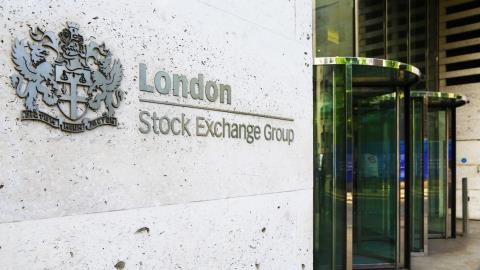
The London Stock Exchange (LSEG) has launched a blockchain-friendly settlement service, enabling the movement of commercial bank money for digital asset transactions.

Editorial

This content has been selected, created and edited by the Finextra editorial team based upon its relevance and interest to our community.

The new Digital Settlement House (LSEG DiSH) is an open-access platform which enables programmatic and instantaneous settlement between independent payment networks, both on and off chain. Through commercial bank deposits held on the DiSH ledger (DiSH Cash), the service will enable the 24/7 instantaneous movement of commercial bank money in multiple currencies and jurisdictions, PVP and DVP, providing a real cash leg for FX and digital asset transactions and settlements.

DiSH Cash will operate accounts at commercial banks, providing members with instant ownership of a commercial bank deposit at any bank within the network, and a mechanism for the 24/7 movement of commercial bank money. LSEG DiSH can facilitate settlement on its own ledger, or act as notary for settlement in other networks and assets.

The launch follows a successful Proof of Concept (PoC) in collaboration with Digital Asset and a consortium of financial institutions, completing transactions on the Canton Network. Deposits were tokenised on the Canton Network for use as a true cash leg of the transactions.

Daniel Maguire, group head, LSEG Markets and CEO, LCH Group, says: “LSEG DiSH expands the tokenised cash and cash like solutions available to the market, and for the first time, offers a real cash solution tokenised on the blockchain utilising cash in multiple currencies held at commercial banks. This innovative service will enable users to reduce settlement risk, and integrate existing cash, securities and digital assets across new and existing market infrastructure.”

BTC Whales Turn Net Positive After Fastest Selloff In Years Ends

0

Data shows Bitcoin’s (BTC) largest holders reaccumulating coins after a period of heavy distribution. Data indicates that whale balances have turned higher following the sharpest selloff since early 2023, while the mid-sized holders continue to reduce exposure.

Key takeaways:

  • Whale addresses added 46,000 BTC this week, turning the one-year net change positive for the first time since Q4 2025.

  • Dolphin addresses, including ETFs and treasury entities, cut holdings further to 589,000 BTC, extending a multi-month slowdown in demand.

  • Dolphin flows have dominated price impact this cycle, but whale accumulation has historically preceded key rallies.

Bitcoin whale balances turn positive after record drawdown

Last week, CryptoQuant’s report showed that the one-year net change in total holdings for BTC addresses, or “whales,” holding between 1,000 and 10,000 BTC, declined by 220,000 BTC.

Bitcoin whale holdings one-year change. Source: CryptoQuant

This means whale balances fell by that amount compared to the same period a year earlier. The drawdown followed a cycle high in net accumulation of 400,000 BTC recorded in December 2024 and marked the steepest negative shift in the one-year change since early 2023.

The trend shifted this week. Whale addresses registered an uptick of 46,000 BTC in one-year change for total holdings, i.e., a 21% increase, pushing the metric back into positive territory for the first time since November 2025. While the rebound remains modest, the timing is notable following the fastest distribution phase of the current cycle.

The outlook is less constructive for the “dolphin” cohort, defined as addresses holding 100–1,000 BTC, including exchange-traded funds (ETFs) and corporate treasuries. One-year change in total dolphin holdings peaked at a net increase of 972,000 BTC on October 4, 2025, before falling to 634,000 BTC last week.

This week, balances declined further to 589,000 BTC, extending the drawdown to nearly 38% from the peak and confirming a sustained slowdown in demand.

Related: Bitcoin’s $100K comeback hinges on $98K breakout and spot demand

Who has the most impact on Bitcoin price?

Whale and dolphin accumulation cycles have remained structurally misaligned. In the current bull run, the highest positive one-year change in total whale holdings peaked in June 2024 at roughly 260,000 BTC, when the dolphin balances had stood near 11,000 BTC.

Cryptocurrencies, Bitcoin Price, Adoption, Markets, United States, Price Analysis, Market Analysis, Whale, Bitcoin ETF, ETF
Bitcoin vs Dolphin holdings one-year change. Source: CryptoQuant

Since then, the dolphin holdings, driven largely by ETFs, expanded sharply to 970,000 BTC by October 2025 before entering a steep contraction.

From a price-impact perspective, dolphin flows have exerted greater influence this cycle due to their scale.

However, whale accumulation has historically initiated key upside moves, positioning the recent whale rebound as a potential early structural signal rather than a short-term price catalyst.

Related: Bitcoin prints classic bottom signals as BTC nears $101K reclaim