The Gas Town token has plunged to a $1.1 million valuation just four days after peaking above $60 million.
Last week, the Gas Town (GAS) token briefly ignited an artificial intelligence (AI) token frenzy as traders flocked to Bags, a Solana-based token launchpad that touted yet another iteration of creator-linked coins.
GAS surged to a $60 million valuation on Jan. 15 after software engineer Steve Yegge, creator of the experimental Gas Town AI coding-agent orchestrator, published a viral Medium post endorsing the token.
Just four days later, Yegge penned another post in which he distanced himself from GAS, citing unsustainable expectations from the crypto community.
Predictably, this sent GAS tumbling, and the token currently trades at a valuation of just $1.1 million, down 98% from its all-time high.
GAS Chart
“I must reiterate my sincere regrets to the CT/BAGS crowd, who so generously funded me to the tune of just shy of $300k last week. That money was hard to duck, and the funds are deeply appreciated. They will help Gas Town be a big success this year. But Gas Town itself needs my full attention,” Yegge wrote on Jan. 18.
Meanwhile, other Bags tokens aren’t faring much better.
Ralph Wiggum (RALPH) is down to a $12 million valuation after peaking at nearly $50 million on Jan. 16, and RedwoodJS has plunged to near zero after the developers said that they “do not endorse crypto.”
According to Jupiter’s launchpad tracker, Bags’ market share has fallen to 16% as of Jan. 18 after reaching as high as 42% on Jan. 15.
The top crypto asset opened the week on the back foot, sliding 2.5% against the greenback since Sunday evening, yet it’s still nursing a roughly 1.5% gain over the past seven days. Meanwhile, traders and onlookers alike are holding their breath as U.S. President Donald Trump dusts off tariff threats aimed at several European countries. […]
One year ago Tuesday, Gary Gensler resigned as chair of the US Securities and Exchange Commission (SEC) amid the inauguration of President Donald Trump.
Many in the crypto industry had heavily criticized the former SEC chair for his approach to digital asset regulation and enforcement. Gensler’s position on cryptocurrencies likely contributed to companies like Ripple Labs funding political action committees (PACs) and backing many candidates in the 2024 US elections who had expressed views favorable to the industry and opposing those who didn’t.
Shortly after Gensler’s resignation, Trump appointed SEC Commissioner Mark Uyeda as acting chair of the agency. What followed was a complete about-face of SEC policy on digital assets under Gensler, with the dismissal of many yearslong investigations and enforcement actions and the restructuring of the agency’s leadership to include only Republicans.
Dismissing crypto investigations and lawsuits
In February, just over a month after Uyeda assumed control of the SEC under Trump, the agency announced that it would drop a civil enforcement action against Coinbase, initially filed in 2023. The case would be the first of many the SEC would drop against crypto companies, some of which like Coinbase that had contributed to PACs that supported pro-crypto candidates.
Following the Coinbase case, the SEC ended investigations into Robinhood Crypto and Uniswap Labs. One of the agency’s most significant policy changes, however, occurred in March when Ripple CEO Brad Garlinghouse said the SEC would drop its appeal stemming from a 2020 enforcement action against the payments company.
Related: SEC crypto cases will be ‘dismissed or settled’ under Trump: Consensys CEO
More dismissals followed in the months under Uyeda and after Trump’s pick to chair the agency, Paul Atkins, was confirmed by the Senate in April. Many lawmakers questioned whether the agency had dropped the actions as a result of Trump’s close ties to the crypto industry.
The president and his family have backed the crypto company World Liberty Financial, which launched its own stablecoin amid consideration of crypto legislation in the US Congress. Trump also has his own memecoin, Official Trump (TRUMP), and his sons launched American Bitcoin, a crypto mining venture.
Some estimates suggested that the president and his family had profited by more than $1 billion from their crypto businesses as of June 2025.
In 2025, the SEC held a series of crypto roundtables bringing together industry, legal and policy experts. The discussions covered topics including financial privacy, digital asset custody, tokenization and decentralized finance, as the agency sought input on how securities laws should apply to the sector.
However, many of the points SEC officials discusses could be moot amid members of the US Congress working to pass a comprehensive crypto structure bill. The bill, called the Digital Asset Market Clarity (CLARITY) Act, is intended to establish clear guidelines under which financial regulators including the SEC will operate.
The bill passed the House of Representatives in July, but has been delayed in the Senate and awaits passage in the banking and agriculture committees. Although members of the Banking Committee had been scheduled to consider a markup on the bill on Thursday, the event was delayed after Coinbase CEO Brian Armstrong pulled his support for the legislation.
All Democratic commissioners depart the SEC
Gensler and former SEC Commissioner Jaime Lizárraga were among the first to leave the agency in January 2025 amid Trump’s inauguration, leaving Caroline Crenshaw as the body’s sole Democratic commissioner.
For months, Crenshaw remained the only Democratic representation in the SEC’s leadership and its only crypto skeptic. She left the agency in January 2026 after serving 18 months beyond the official end of her term. At the time of publication, Trump had not announced any plans to nominate additional commissioners to maintain its bipartisan balance.
After leaving public office, Gensler returned to the MIT Sloan School of Management, where he is a professor of finance and practice of global economics and management. He continues to speak publicly and give interviews about cryptocurrencies such as Bitcoin (BTC) being “speculative” assets.
Magazine: How crypto laws changed in 2025 — and how they’ll change in 2026
Cointelegraph is committed to independent, transparent journalism. This news article is produced in accordance with Cointelegraph’s Editorial Policy and aims to provide accurate and timely information. Readers are encouraged to verify information independently. Read our Editorial Policy https://cointelegraph.com/editorial-policy
Well, the bitcoin price action was looking quite bearish after last week’s close, but the bulls managed to maintain the bullish structure around the $90,000 level and made that push up to $98,000 resistance. The price retreated from there and closed the week out at $93,638. Expect the bulls to take another run at the $98,000 resistance level this week and aim for the upper end of this resistance zone at $103,500 if they can sustain price action above $98,000. Early in the week, support at $91,400 may be tested and must hold for the bulls to continue their charge.
Key Support and Resistance Levels Now
The bulls have finally made some progress, chipping away at overhead resistance. The bulls will look to regain the $94,000 level as short-term support this week. If they can keep the momentum going, they will once again challenge the $98,000 resistance and try to push to the upper end of this zone at $103,500. Closing days at the upper end of this zone should usher in a move up to the next major resistance zone at $106,000 to $109,000. This area should be very strong resistance, but $116,000 lies beyond this range at the 0.786 Fibonacci retracement if the bulls’ strength can persist.
Look for bulls to defend the $91,400 level with authority, as losing this level would give the bears some renewed confidence to push the price down even lower. $87,000 would look to contain price action below there, and act as a doorway to the major $84,000 support level. Breaking $84,000 support opens up the low $70,000 area for a test.
Outlook For This Week
Bulls should attempt to capitalize on their recent resolve heading into this week. Look for another test of $98,000 if they can manage to regain $94,000 early this week. However, a more bearish test of the $91,400 support is possible here as well, but as long as bulls can hold this level, bullish bias remains, and re-challenging $98,000 is in the cards. Closing a day above $98,000 should lead the price towards $103,500.
Market mood: Slightly Bullish – The bulls finally managed to show some resilience here as they defended the $90,000 area last week. Price action leans in their favor heading into this week.
The next few weeks The bulls have held onto some momentum over the past week, but they are entering some heavier resistance areas now. If bulls can push even higher, above $100,000, they will start entering an area where we could see a major price reversal. $103,500 to $109,000 should be a tough zone to conquer, and we should not be surprised to see price kicked back down with authority from this area over the coming weeks. Holding support from there would be critical in determining whether this rally can keep going to new highs or if it finally gives way to new lows below $80,000.
Terminology Guide:
Bulls/Bullish: Buyers or investors expecting the price to go higher.
Bears/Bearish: Sellers or investors expecting the price to go lower.
Support or support level: A level at which the price should hold for the asset, at least initially. The more touches on support, the weaker it gets and the more likely it is to fail to hold the price.
Resistance or resistance level: Opposite of support. The level that is likely to reject the price, at least initially. The more touches at resistance, the weaker it gets and the more likely it is to fail to hold back the price.
Fibonacci Retracements and Extensions: Ratios based on what is known as the golden ratio, a universal ratio pertaining to growth and decay cycles in nature. The golden ratio is based on the constants Phi (1.618) and phi (0.618).
Update Jan 19, 1:44 pm UTC: This article has been updated to add information from Paradex’s Telegram channel.
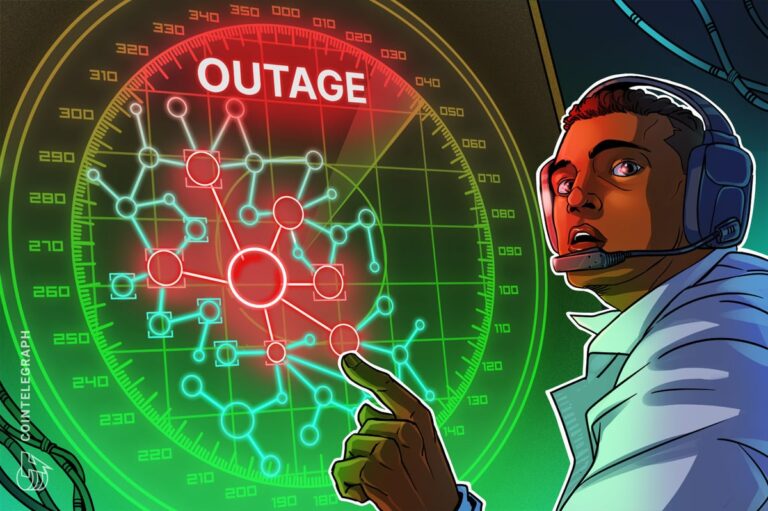
Crypto derivatives exchange Paradex reported a platform-wide service outage on Monday, leaving its trading interface and supporting infrastructure unavailable as the team investigates the issue.
According to its public status page, the disruption affected multiple business services, including its user interface, cloud and API services, blockchain components, bridge, block explorer and remote procedure call proxy.
Paradex said was working through a rollback and recovery process, but did not provide a cause for the outage or a timeline for full restoration.
As part of the recovery effort, Paradex said it would force-cancel all open orders except take-profit and stop-loss (TPSL) orders. The exchange said it would provide further updates as the investigation continues.
Cointelegraph reached out to Paradex’s official X account for comment, but had not received a response by publication.
Paradex’s official status page. Source: Paradex Status
Paradex operates as a decentralized perpetual futures exchange, which allows users to trade leveraged crypto derivatives without giving custody of funds to a centralized intermediary.
It has grown into a significant venue for onchain derivatives trading. Data from DefiLlama shows that the exchange ranks eighth in 30-day trading volume across the space, with more than $37 billion in reported trading activity during the past month.
Related: Decentralized exchange volumes soar on memecoin trading rush: CoinGecko
Paradex warns users of fake support accounts
During the outage, Paradex posted an official warning against fake support accounts impersonating its team. The DEX advised traders to rely only on its official communication channels.
Paradex reiterated that it will never ask users for private keys and said that unsolicited messages claiming to offer support should be treated as scams.
Source: Paradex
At the time of writing, Paradex had not disclosed the cause of the outage and said updates would be shared via its official status page and verified accounts.
Community members went on X to respond to the outage, with one X user urging the platform to share an official post about the exchange being down.
Another user expressed concern over the duration of the outage, citing the presence of open leveraged positions on the platform.
In a Telegram post, Clement Ho, Paradex’s director of engineering, said that the team has identified the issue and will be rolling back their chain’s state to block 1604710.
In an update posted at 10:14 am UTC, the Paradex team said recovery efforts were ongoing and confirmed that all the user funds remained safe.
In a subsequent update at 1:24 pm UTC, Paradex said its platform and vault withdrawals had been re-enabled as part of its post-incident recovery procedures. However, the exchange noted that Gigavault deposits and withdrawals would remain temporarily paused for up to 24 hours.
Magazine: Chinese users turn to ‘U cards’ to get around crypto rules: Asia Express
Cointelegraph is committed to independent, transparent journalism. This news article is produced in accordance with Cointelegraph’s Editorial Policy and aims to provide accurate and timely information. Readers are encouraged to verify information independently. Read our Editorial Policy https://cointelegraph.com/editorial-policy
On Monday, the U.S. dollar is sliding, with the Dollar Index (DXY)—which pits the greenback against a mix of heavyweights like the euro, yen, onshore yuan, and pound—tilting lower. Market watchers chalk it up to the “Sell America” trade, a strategy getting extra fuel from U.S. President Donald Trump’s run-ins with the Federal Reserve and […]
Trusted Editorial content, reviewed by leading industry experts and seasoned editors. Ad Disclosure
Bullish sentiment is gradually returning to the broader cryptocurrency space, and Cardano (ADA) is seeing growing institutional interest and adoption. Even though its price remains in a consolidation phase, several moves are being made to showcase Cardano’s relevance in the global finance sector.
CME To Broaden Crypto Offering With Cardano Futures
One of the most recent announcements making the headlines in the cryptocurrency sector is the Chicago Mercantile Exchange (CME) Group’s move to expand its crypto portfolio, choosing Cardano as one of the major coins. The CME is preparing to increase the scope of its crypto derivatives offering and take a further step toward the institutionalization of digital asset markets, with the introduction of futures contracts for Cardano (ADA) and Chainlink (LINK).
By adding ADA and LINK futures to its platform, CME is strengthening the function of regulated derivatives as an entry point for institutional involvement in the developing cryptocurrency ecosystem. This action demonstrates the rising significance of other blockchain networks in global finance. It also reflects the growing demand from professional traders seeking regulated exposure outside of Bitcoin and Ethereum, the two largest crypto assets.
According to Lucas Macchiavelli, a Cardano ambassador and blockchain strategist, this could be the strongest institutional validation in ADA’s history, and it might be the largest sign of approval the leading altcoin has ever gotten. Macchiavelli added that this is not just another listing since the move expands the network’s role in digital finance operations.
The strategist’s claims major hinges on the fact that the CME Group is the largest derivatives exchange in the world, which is increasingly used by banks, hedge funds, asset managers, and institutional investors across the globe. Currently, this goes beyond Cardano.
Macchiavelli stated that this kind of action sends a signal to the entire cryptocurrency market, improving price discovery, deepening capital access, increasing institutional visibility, and making it easier for traditional finance to participate. “This is how crypto keeps moving into the financial mainstream,” the expert added.
Data On The ADA Stays Written
Crypto expert Dave stated that Cardano is exceptionally well-suited to real-world use cases like traceability because once data is written on the network, it stays written. There is no rewriting history, no ambiguity, just facts that are retained exactly as they were recorded.
Such performance underscores its immutability, which is backed by over 8 years of continuous reliability. Cardano network has been continuously operating, developing, and securing genuine worth while being enhanced between. This is key when trust, verification, and accountability are required in real-world governance by compliance and regulation.
According to the expert, the network quietly stands apart in a world of transparency and reliability. With this, ADA goes beyond the status of a store of value. It is also considered a store of truth, continuity, and real utility.
ADA trading at $0.3 on the 1D chart | Source: ADAUSDT on Tradingview.com
Featured image from Unsplash, chart from Tradingview.com
Editorial Process for bitcoinist is centered on delivering thoroughly researched, accurate, and unbiased content. We uphold strict sourcing standards, and each page undergoes diligent review by our team of top technology experts and seasoned editors. This process ensures the integrity, relevance, and value of our content for our readers.
Ether’s (ETH) price had dropped 7% since being rejected from the $3,400 mark last week, falling to key support levels. Data suggested that increased staking demand, coupled with renewed ETF inflows and strong technical support, could lead to a sustained recovery.
Key takeaways:
Ether queued for staking goes parabolic, with a 44-day wait time.
Ethereum institutional demand is recovering along with ETF inflows.
ETH bulls must defend the support at $3,100 to set the stage for sustained gains.
Ethereum staking demand soars to 30-month highs
Ethereum’s entry queue has surpassed 2.6 million ETH worth $8.3 billion at current rates, with a 44-day wait time.
This marks the highest amount of Ether set for staking by the network’s validators since July 2023.
Related: Why Ethereum’s ‘walkaway test’ and quantum readiness matter more than ever
Data from ValidatorQueue notes that the current number of active validators is 978,657, with 29.76% of the total ETH supply staked, around 36.1 million ETH.
“Ethereum’s entry queue is at the highest level in 2.5 years,” said analyst Ted Pillows in a post on Sunday, adding:
“Insane demand for staking Ethereum.”
ETH validator queue. Source: ValidatorQueue.com
The massive staking inflows are strengthening ETH’s supply-demand dynamics, potentially setting the stage for upward price momentum this year.
Meanwhile, the Ethereum staking validator exit queue has dropped to zero, signaling a significant drop in selling pressure and boosting confidence in the yield-bearing feature of ETH’s tokenomics.
“Ethereum’s validator exit queue has been completely cleared,” said crypto investor Langerius in an X post on Sunday, adding that it is a bullish signal when people choose to stake ETH instead of selling.
Head of Research at Onchain Foundation, Leon Waidmann, said the last time Ethereum’s validator exit queue cleared was in July 2025, which was followed by a sharp rally later that summer, with ETH eventually reaching its current all-time high of $4,950 on Coinbase on Aug. 24, 2025.
Ethereum ETF demand shows recovery signs
Increasing accumulation and buying from Ether treasury companies and spot ETH exchange-traded funds (ETFs) provided the demand-side pressure required to keep ETH above $3,000.
Data from Capriole Investments reveals that collective holdings of strategic reserves and ETFs have jumped by 10% since Nov. 22, 2025, climbing to 12,227,531 ETH from 11,594,738 ETH.
The chart below shows that strategic ETH reserve entities and ETFs now hold 9.72%, worth roughly $40.1 billion, of the total ETH supply.
The sharp increase underscores a swift consolidation of Ether into the hands of major institutional and corporate players.
Ether treasuries and ETF holdings reserve. Source: Captiole Investments
The majority of these entities have or will stake ETH for additional yields as part of trading strategies, which may have helped expand the entry queue in recent weeks.
Tom Lee-chaired BitMine Immersion Technologies, the largest corporate Ether treasury holder, continued to aggressively stake its ETH holdings, adding 186,560 ETH (worth around $625 million) to its staking address last week.
This brings the total amount staked by the company to 1,530,784 ETH, worth approximately $5.13 billion, or 4% of the total 36 million ETH staked on the Beacon Chain.
Meanwhile, spot Ethereum ETF buying continues, with these investment products recording inflows every day of last week, totaling $479 million, according to data from SoSoValue.
The inflows followed a three-day outflow period, when these Ethereum funds shed a combined $351 million between Jan. 7 and Jan. 9.
Investors acquired about 3.27 million ETH at an average cost of between $3,100 and $3,170, creating a potential support zone, according to Ether’s cost basis distribution data.
This makes this price level important as it can serve as a potential launchpad for the next leg up.
Ethereum cost basis distribution chart. Source: Glassnode
Analysts say ETH must hold the support at $3,170, coinciding with the 21-day simple moving average (SMA), for the bulls to regain their footing.
“21-Day MA is a crucial level to hold onto, and ETH has held that level nicely,” MN Capital founder Michael van de Poppe said in a recent post on X, adding:
“Now, it’s ready to make new highs and continue the uptrend.
ETH/USD daily chart. Source: Michael van de Poppe
As Cointelegraph reported, holding above the $3,050- $3,170 demand zone is crucial to ETH’s upside prospects and sets the stage for a possible rally above $4,000.
This article does not contain investment advice or recommendations. Every investment and trading move involves risk, and readers should conduct their own research when making a decision. While we strive to provide accurate and timely information, Cointelegraph does not guarantee the accuracy, completeness, or reliability of any information in this article. This article may contain forward-looking statements that are subject to risks and uncertainties. Cointelegraph will not be liable for any loss or damage arising from your reliance on this information.
We’ve all been there: you spend a beautiful day hiking or overlanding, only to wake up the next morning feeling like you’ve aged twenty years. It’s a sign that your sleep system is failing your anatomy. When you sleep on uneven ground or a collapsing pad, your spine loses its natural curve, forcing your muscles to work overtime all night.
You need to fix your spinal alignment. Here are three proven ways to do it.
The Support Hack: Master Your Pillow Placement
The first step to a pain-free morning doesn’t cost a dime. It’s about maintaining a neutral spine. When you are in the wild, your body often compensates for the hard ground by twisting into awkward positions.
For Side Sleepers: Your top leg tends to slide forward, rotating your lower spine. The Solution: Place a small pillow or a rolled-up jacket between your knees. This keeps your hips square and your lumbar spine neutral.
For Back Sleepers: Gravity pulls your lower back toward the ground, flattening your natural curve.
The Solution: Slide a bolster or a piece of gear under your knees. This reduces the stress on your pressure points instantly.
The Foundation: Why an Inflatable Mattress is the Ultimate Fix
While pillow hacks help, they can’t fix a bad foundation. If your sleeping surface is too thin or uneven, your heaviest parts, the hips and shoulders will bottom out against the hard ground. Inflatable mattresses have become the
leading trend for their superior pressure distribution.
SUV & Car Campers: It levels out the irregular gaps between folded seats, turning a rugged cargo area into a flat, orthopedic sleeping surface.
Rooftp Tent (RTT) Owners: Most RTTs come with thin foam pads. Adding an inflatable layer provides that extra give needed for deep REM sleep.
Ground Tents: It creates a significant buffer between you and the rocks, roots, or sloping terrain that typically ruin a night’s rest.
Beat the “Cold Tightness”: Manage Your Thermal Environment
There is a physiological reason why you feel stiffer when it’s cold. When your body temperature drops, your muscles contract to generate heat. This constant micro-tension throughout the night leads to muscle fatigue and morning stiffness.
To keep your muscles supple, you must isolate yourself from the cold ground. Look for a sleep system with a high R-value or layer your mattress with a thermal blanket. By staying warm, your muscles remain relaxed, allowing your spine to stay in its corrected position throughout the night.
Conclusion:
Camping is about recharging, not waking up in pain. By mastering your pillow placement, upgrading to a supportivemattress, and staying warm, you can ensure that the only thing you feel the next morning is the excitement for the day’s adventure.
Blockspace Media has acquired Bitcoin Layers, an independent data platform tracking metrics across Bitcoin’s layer-2 and scaling ecosystem, as the company expands beyond journalism into data and intelligence products.
The acquisition brings Bitcoin Layers’ research and on-chain analytics directly into Blockspace’s content and product suite, including a forthcoming data dashboard designed to track adoption, total value locked (TVL), and activity across Bitcoin L2s and other scaling platforms, the company wrote to Bitcoin Magazine.
Bitcoin Layers will serve as Blockspace’s first proprietary data product, with plans to expand coverage to bitcoin-related equities, ETFs, and additional market intelligence offerings in the coming year.
Bitcoin Layers maintainer Janusz will remain involved as an advisor following the acquisition.
“Blockspace is more than a Bitcoin publication,” said William Foxley, co-founder of Blockspace. “We’re building a platform to cover the investable landscape of Bitcoin-related assets. With Bitcoin Layers joining Blockspace, we’ll be working directly with investors, token foundations, and Bitcoin startups to better understand real on-chain user metrics.”
According to Bitcoin Layers data as of January 14, more than 361,830 BTC, worth over $34.5 billion, is currently locked across Bitcoin bridging protocols, layer-2 networks, and other scaling solutions.
While the market has grown rapidly, it remains fragmented, with “L2” often used as a catch-all term for a wide range of architectures and trust models.
“Bitcoin Layers established itself as the premier research platform for Bitcoin layer-2s and bitcoin-backed assets across chains,” Janusz said. “By integrating with Blockspace, we can expand our data platforms to help investors and protocol developers deeply understand user trends, while continuing to educate users on the architectures behind the protocols they interact with.”
Blockspace’s use of Bitcoin Layers tech
The company said they plan to use Bitcoin Layers data to better differentiate the growing L2 ecosystem for both retail and institutional investors, highlighting distinctions between rollups, sidechains, federated models, and other scaling approaches.
Additional metrics covering bitcoin-adjacent public companies and financial products are expected to roll out in 2026.
The acquisition also reinforces the company’s focus on technical infrastructure and scaling research. Many of the projects tracked by Bitcoin Layers have been featured at OPNEXT, Blockspace’s technical conference, with the next event scheduled for April 16, 2026, in New York.
The company said it will build on its existing studio and research initiatives while developing new data-driven products for investors and builders across the Bitcoin ecosystem.