

BitMine Chair Tom Lee told investors that the company could generate over $400 million income on its $13 billion worth of ether holdings, primarily via staking.
Keye launches AI co-pilot for private equity due diligence

Private equity due diligence company Keye has launched Odin, an AI co-pilot built specifically for investment teams.
Editorial
This content has been selected, created and edited by the Finextra editorial team based upon its relevance and interest to our community.
Odin enables deal teams to ask questions in plain English and receive deterministic, audit-ready analysis instantly, claims Keye, adding that users can now eliminate the trade-off between speed and rigor.
The co-pilot is powered by Keye’s proprietary technology, Deterministic Creativity. Rather than acting as a thin wrapper around a large language model, Odin combines natural-language understanding with code-based execution.
In practice, that means Odin uses AI to understand investor intent, but performs all analysis deterministically through auditable logic and formulas. This means – according to the startup -zero hallucinations, complete transparency, and repeatable outputs.
Keye has also codified “investor intuition” directly into the platform. The heuristics, pattern recognition, and risk-assessment logic used by experienced deal professionals are embedded in the software.
Rohan Parikh, CEO, Keye, says: “Odin gives investors the freedom to explore complex diligence questions naturally, while guaranteeing audit-grade outputs every time. It doesn’t summarize data or guess. It reasons like an investor and executes like an analyst.”
Tim Draper Sides With Brian Armstrong, Says Senate Crypto Compromise Worse Than No Bill

Coinbase CEO Brian Armstrong and venture capitalist Tim Draper are pushing back against a Senate crypto market structure compromise they warn could curb innovation, undermine privacy, and weaken U.S. leadership in digital assets. Armstrong and Draper Align Against Senate Crypto Market Structure Compromise Coinbase CEO Brian Armstrong shared on social media platform X on Jan. […]
Citrea unveils U.S. Treasury-backed stablecoin for its Bitcoin ecosystem
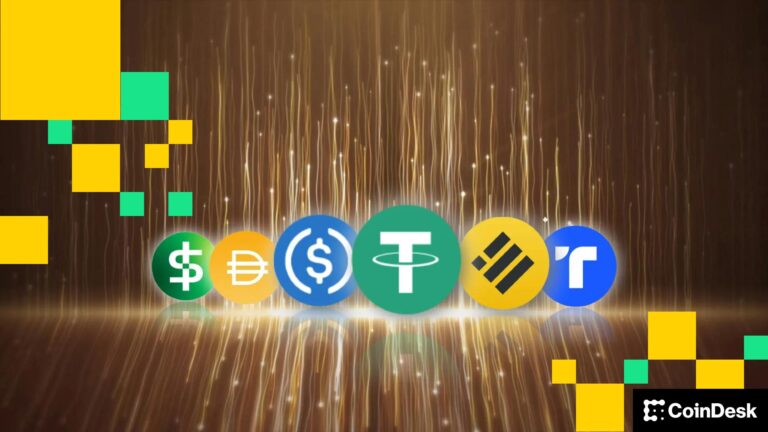
The first stablecoin issued through MoonPay’s launchpad aims to solve liquidity fragmentation by issuing natively on Citrea.
Tokenization firms reject Coinbase's crypto bill equities claims
While Coinbase said that the crypto market structure bill would essentially ban tokenized securities, companies in that sector say that’s not the case.
Senate Democrats, Crypto Reps Resume Talks After Bill Delay

U.S. Senate Democrats are reportedly set to reopen talks with representatives from the cryptocurrency industry on Friday, according to people familiar with the plan speaking to CoinDesk.
All this comes less than two days after a last-minute postponement of a key Senate Banking Committee hearing on sweeping digital asset legislation.
The call follows Wednesday night’s abrupt cancellation of the committee’s planned markup of the long-negotiated crypto market structure bill, which had been expected to divide regulatory oversight of digital assets between the Securities and Exchange Commission (SEC) and the Commodity Futures Trading Commission (CFTC).
The delay came after Coinbase, the largest U.S.-based crypto exchange, withdrew its support for the draft legislation, citing concerns over stablecoin rewards programs and what it viewed as excessive authority granted to the SEC.
Coinbase CEO, Brian Armstrong, said that banks are trying to “kill their competition” with the crypto market structure legislation. “Crypto companies should be allowed to compete and offer loans just like banks,” Armstrong said.
Thursday marked a pause in public activity after the cancellation, but lawmakers and industry participants say negotiations are far from over.
Democrats from both the Senate Banking Committee and the Senate Agriculture Committee — which oversees the CFTC — are expected to join Friday’s call, along with representatives from crypto policy advocacy groups in Washington, according to reports.
The Banking Committee had been scheduled to hold an all-day session Thursday to debate amendments and vote on whether to advance the bill.
That plan unraveled late Wednesday after Coinbase CEO Brian Armstrong said the company could not support the current version of the legislation. Shortly thereafter, Senate Banking Committee Chair Tim Scott, R-S.C., postponed the hearing.
Lummis: Senate is closer than ever
Despite the setback, several lawmakers involved in the negotiations said discussions will continue. In a post on X, Sen. Cynthia Lummis, R-Wyo., a leading crypto advocate in the Senate, said lawmakers were “closer than ever” to reaching agreement.
“Everyone is still at the negotiating table, and I look forward to partnering with [Chairman Scott] to deliver a bipartisan bill the industry — and America — can be proud of,” Lummis wrote Thursday.
Sen. Bill Hagerty, R-Tenn., echoed that optimism, saying he remained “confident” that lawmakers could reach a consensus “in short order.”
“I am fully committed to continuing this important work with my colleagues on market structure and look forward to passing legislation that ensures this innovative technology flourishes in the United States for decades to come,” Hagerty said.
Industry reaction to Coinbase’s withdrawal has been mixed. While Armstrong’s comments intensified scrutiny of the bill, other crypto executives and advocacy groups urged lawmakers to keep pushing forward.
Kraken co-CEO Arjun Sethi said abandoning negotiations now would worsen regulatory uncertainty for U.S. crypto firms. “Walking away now would not preserve the status quo in practice,” Sethi said in a post on X. “It would lock in uncertainty while the rest of the world moves forward.”
A major point of contention in recent negotiations has been whether stablecoin issuers should be permitted to offer rewards or yield programs — an issue that has drawn pushback from bank lobbyists and some Democrats concerned about consumer protection and competition with traditional deposits.
While the Banking Committee’s markup has been postponed, the Senate Agriculture Committee is still expected to hold a hearing on the legislation on January 27, after previously pushing back its own earlier session. Ultimately, both committees’ work would need to be merged before the bill could advance to the full Senate.
Some analysts see the delay as a strategic pause, with Benchmark’s Mark Palmer saying it could help lawmakers build broader bipartisan support and ultimately strengthen what he called a potentially historic overhaul of U.S. financial regulation.
Others are more doubtful: TD Cowen warned that bridging Democratic demands and Coinbase’s objections may be difficult, especially since some disputed provisions were already concessions to Democrats, while election-year timing and the Senate’s 60-vote threshold add further hurdles.
Senate Democrats pursuing a Friday call with crypto industry on market structure bill
A call is being planned to discuss the state of the legislation that’s now been postponed in the Senate Banking Committee, sources say.
Top Crypto Coins 2026: XRP Counts on Legal Wins, ADA Drops 60%, and Zero Knowledge Proof Creates a 1000x Framework

People searching for the top crypto coins 2026 face a common divide: some projects climb on rules and mood shifts, while others lose power despite strong basics. XRP is rising because of fresh hope around U.S. laws, but Cardano is watching its price and buzz fall sharply.
Yet above both sits a structure-first option called Zero Knowledge Proof (ZKP). Rather than responding to law changes or drops in hype, ZKP finds its price through a live presale auction. With zero private unlocks, zero venture fund cuts, and complete infrastructure already running, it bases its future on system design and fair distribution—not stories or trends.
XRP: Quick Gains Linked to Clarity Act Movement
XRP has always shown how rules shape crypto prices. After recent progress on the Clarity Act vote in the U.S. House, as crypto.news reported, XRP felt a quick lift in market mood. Traders liked what seemed like a step toward ending the long battle between Ripple and U.S. authorities. Many believe legal clarity could pull XRP out of its gray zone and bring back big-money flows that uncertainty has blocked.
But price swings still depend on outside events. The XRP price prediction story stays shaky because its coin value moves more on legal news than network use or real adoption. Until full answers come, price shifts will likely stay binary—hopeful on good headlines, weak during slow policy times. This makes XRP a reactive asset, not one that grows by design. While rule changes could push more gains, the base still relies heavily on events.
Cardano (ADA): Drop Caused by Image, Not Technology
Cardano (ADA) has suffered a hard blow in recent months. CoinPaper reports the coin sits nearly 60% below its earlier range, and Google search interest has sunk to its lowest point in five years. This fall doesn’t come from broken code or failed smart contract releases—Cardano keeps shipping updates. But the gap lies in market patience. ADA’s long roadmap hasn’t turned into strong short-term action, and that now shows in its price and visibility.
Cardano’s problem is no longer about tech. It’s about keeping user focus and staying relevant. Without daily action or big DeFi numbers, its use is hard to measure in ways that excite new buyers. Even solid partnerships or upgrades pass quietly, failing to spark steady price moves. The Cardano (ADA) price update points to deeper market tiredness—something code alone can’t fix. So ADA’s path into 2026 depends not just on building, but on finding its core story and user community again.
Zero Knowledge Proof (ZKP): Price Shaped by Demand, Not Wishes
Zero Knowledge Proof (ZKP) joins this discussion from a totally different place. It doesn’t need laws to create value, and it doesn’t rely on staying popular in attention cycles. Instead, it’s locked into a live, demand-based pricing system through its Initial Coin Auction. Every day, a set number of coins goes out based on real buyer action. This means price discovery happens constantly, naturally, and responds to the market—without wild guessing.
The project got funded from inside, with more than $100 million spent before the coin went live. This covers systems, validator setup, compute layers, and a four-level network design. Nothing here is just theory. No venture capital groups hold discounts. No insider coins wait to unlock. The pricing system runs on contribution-based bidding, where every buyer gets a fair share. This removes many supply risks that hurt early coin entries.
For those scanning the field of top crypto coins 2026, ZKP brings a new model: one where coin price isn’t a gamble on future events but a mirror of current demand. And because the system works and runs from day one, any growth ties to use and adoption—not hopes or guesses. No outside pressure means the market can grow on its own. If demand keeps coming, price follows. If demand slows, no flood of coins cuts into it.

This gives ZKP something rare at early stages: a clean start profile with long-term return potential. While others chase headlines or fix broken stories, ZKP runs on pure mechanics. That’s the heart of its 1,000x+ potential. It’s not about timing a spike. It’s about buying into a system where demand builds value directly.
Final Thoughts: Reaction vs Preparation in the 2026 Crypto Space
XRP is gaining because rules might finally work in its favor. Cardano is losing grip because traders are tired of waiting for energy to return. Both show a key pattern in crypto: value tied to how people feel.
Zero Knowledge Proof (ZKP) sits outside that cycle. Its value comes through action—buyers funding the network through a daily auction with no locked insiders or delayed features blocking the way. For anyone focused on the top crypto coins 2026, the difference is obvious. XRP might climb on news. Cardano might win back attention. But ZKP already moves, every single day, through a system that doesn’t need mood swings to work. And that’s exactly why the upside isn’t just a maybe—it’s mathematically wired into how the coin sells.
Find Out More about Zero Knowledge Proof:
Website: https://zkp.com/
Auction: https://auction.zkp.com/
X: https://x.com/ZKPofficial
Telegram: https://t.me/ZKPofficial

Coinbase CEO Brian Armstrong says company opposed crypto bill to protect consumers
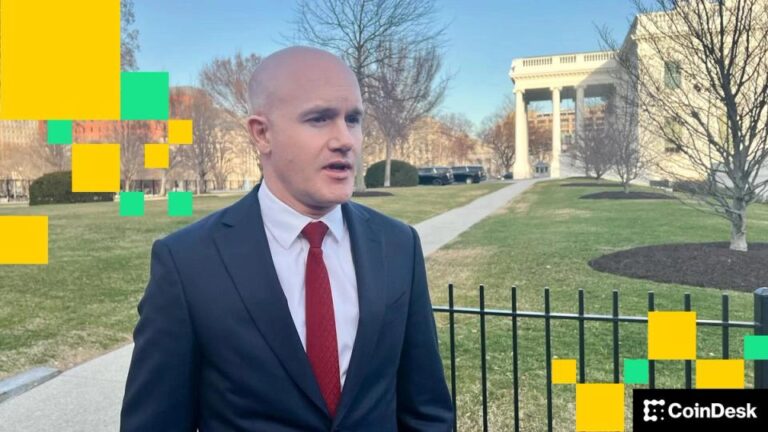
Armstrong told CNBC that his firm pulled support for a sweeping digital assets bill after finding provisions that could have harmed consumers and stifled competition.
DTCC aiming to make all 1.4 million securities in its custody digitally eligible

The company’s Brian Steele suggests the industry giant aims to redefine the limits of tokenization in capital markets.