Home Blog Page 985

Jump raises $80m for AI operating system for financial advisors

0

Jump has raised $80 million in a Series B funding round to expand its AI operating system for financial advisors.

Editorial

This content has been selected, created and edited by the Finextra editorial team based upon its relevance and interest to our community.

The round was led by Insight Partners, with participation from F-Prime, Allianz Life Ventures, TIAA Ventures, Peterson Partners, Battery Ventures, Sorenson Capital, Pelion Venture Partners and Citi Ventures, as well as angels Hans Tung, Ryan Anderson and Aaron Skonnard.

Founded by repeat fintech entrepreneurs in 2023, Jump is an AI assistant and intelligence engine built for financial advisors and other financial services professionals. The firm provides more than 20 AI-powered features designed to reduce busywork, including automating meeting prep, note-taking, recaps, follow-ups and CRM updates.

More than 27,000 advisors now use the platform, with 2000 added each month and Jump is planning to use its new funding to hit a new phase of growth, expanding into a comprehensive intelligence and AI orchestration layer tailored for modern advisory firms.

This means moving beyond automation toward a broader suite of agentic, insight-driven AI capabilities that can proactively identify opportunities, risks and next best actions for advisors.

Parker Ence, chief executive officer, Jump, says: “This new funding will allow us to invest aggressively in product research and development as we accelerate our vision for an AI-native operating system.”

Anchorage Digital offers non-U.S. banks a stablecoin stand-in for correspondent banking

0

Anchorage Digital, the first crypto firm to get a U.S. banking charter, wants international banks to swap out correspondent banking relationships with a new service that offers U.S.-regulated stablecoin rails for non-U.S. institutions.

The bank is launching what it calls “Stablecoin Solutions” to permit easy, cross-border movement of dollar-tied assets, combining “minting and redemption, custody, fiat treasury management, and settlement” into one service, it said in a Thursday statement.

“Stablecoins are becoming core financial infrastructure,” said Nathan McCauley, co-founder and CEO of Anchorage Digital, in a statement. “Stablecoin Solutions gives banks a federally regulated way to move dollars globally using blockchain rails, without compromising custody, compliance, or operational control.”

Now that the U.S. has a new law governing stablecoin issuers under last year’s Guiding and Establishing National Innovation for U.S. Stablecoins (GENIUS) Act, Anchorage Digital — already regulated under a federal charter by the Office of the Comptroller of the Currency — is moving to offer the stablecoin services. While it’s ready to handle any brand of stablecoin, a field currently dominated by Tether’s $USDT and Circle $USDC, the company said institutions can natively mint and redeem tokens “issued by Anchorage Digital Bank, including Tether’s USA₮, Ethena Labs’ USDtb, OSL’s USDGO and upcoming issuances such as Western Union’s USDPT.”

Correspondent banking allows foreign banks to tap another institution to handle their cross-border activities, such as wire transfers, currency exchange, taking foreign deposits and otherwise acting as a third-party proxy. But it can be expensive and time-consuming. Anchorage Digital is suggesting it can use stablecoin rails to cut settlement delays and simplify the complexity of the existing system.

The GENIUS Act that will govern this business isn’t yet implemented by the federal agencies involved in regulation and oversight, such as the OCC and other banking watchdogs. Those agencies have begun proposing some of the future regulations.

Some provisions on stablecoin yield are now being reopened in the ongoing Senate negotiation over the Digital Asset Market Clarity Act.

Read More: Tether invests $100 million in U.S. crypto bank Anchorage, valued at $4.2 billion

Coinbase CEO ‘Extremely Bullish’ on Stablecoins as Default Payment for Billions of AI Agents

0

Stablecoins are rapidly emerging as the default payment layer for AI agents, with Coinbase and top crypto leaders positioning them as the backbone of autonomous, machine-driven commerce and the next evolution of global digital finance. Crypto Leaders Bet on Stablecoins as AI Agents Move Onchain The convergence of artificial intelligence and digital payments is accelerating […]

Kraken Acquires Magna for Early Token Support

0

The acquisition closed on Friday and should enable Kraken to work closely with token teams early in development.

U.S.-based centralized exchange (CEX) Kraken announced its acquisition of token management platform Magna yesterday.

The deal closed on Friday and marks the CEX’s latest strategic move as it prepares for an initial public offering (IPO).

The move was reported by Fortune, which said Kraken declined to disclose the deal terms, but Kraken’s co-CEO Arjun Sethi told the news outlet that the acquisition will allow Kraken to support token issuer teams “early on in their life cycle,” indicating that it may provide Kraken a strategic leg up in terms of token listings.

While it is unlikely there is any connection, Kraken also moved to list and promote a memecoin from 2016, PEPECOIN, yesterday, which trades at just a $15 million market capitalization, and should not be confused with PEPE, which launched in 2023 and trades at a $1.7 billion market capitalization.

PEPECOIN is only up 7.6% since the announcement, indicative of the market’s risk-off environment.

PEPECOIN Chart – CoinGecko

Despite the market’s lack of enthusiasm for the listing, the Magna acquisition and the listing of a micro-cap token on the same day may indicate continued aggression from Kraken in expanding asset diversity on the exchange.

Coinbase Integrates XRP, DOGE, ADA, LTC for Crypto Loans

0

Coinbase is expanding crypto-backed loans, adding XRP, DOGE, ADA, and LTC as collateral and unlocking up to $100,000 in USDC borrowing, accelerating digital asset utility as onchain lending demand surges. Coinbase’s Loan Expansion Turns XRP, ADA, DOGE & LTC Into Liquid Assets Crypto lending services are expanding as digital assets gain broader financial utility. Coinbase […]

Revolutionizing Digital Marketing through AI

0

The impact of AI on Digital Marketing cannot be overstated. We have moved beyond the era of mass broadcasting into the era of hyper-individualization. The goal of modern marketing is to deliver the right message to the right person at the exact moment they are most likely to engage.

  1. Generative Content and Creative Scaling: AI now allows marketing teams to produce high-quality, professional content at a scale that was previously impossible. By using Artificial Intelligence to generate initial drafts for blogs, social media posts, and email newsletters, human creatives can focus on high-level strategy and brand voice. This ensures a consistent digital presence across all platforms without the need for massive internal teams.

  2. Predictive Customer Journeys: In 2026, Digital Marketing is no longer about reacting to customer behavior; it is about predicting it. AI models can track a user’s digital footprint to determine where they are in the buying cycle. If a customer is in the “consideration” phase, the AI can automatically trigger a personalized case study or testimonial. If they are in the “intent” phase, it can offer a time-sensitive discount. This automation ensures that no lead is left unattended.

  3. Advanced Sentiment Analysis: Understanding how the public feels about a brand is vital. AI-powered sentiment analysis tools scan the entire web—social media, review sites, and news articles—to provide a real-time “health check” of a company’s reputation. This allows a Business to address potential PR issues before they escalate, maintaining a professional and positive public image.

Operational Efficiency and the Bottom Line

The ultimate goal of integrating Technology and AI is to improve the bottom line. By automating routine administrative tasks, businesses can reallocate their most valuable resource—human talent—to innovation.

For example, AI-driven chatbots in customer service are now capable of handling complex inquiries with professional nuance. This doesn’t just save money; it improves the customer experience by providing instant, 24/7 support. In finance, AI algorithms detect anomalies and potential fraud with far greater accuracy than manual audits. These efficiencies accumulate, creating a leaner, more profitable, and more resilient Business.

The Ethical Imperative and Data Governance

As Artificial Intelligence takes a more prominent role, the professional community must prioritize ethical data governance. Customers in 2026 are highly protective of their digital privacy. A business that fails to treat data with respect will quickly lose its market standing.

Professionalism in the digital age requires transparency. Companies must be clear about how they use AI and what data they collect. Implementing “Privacy by Design” ensures that security is not an afterthought but a core feature of every technological rollout. This builds “Digital Trust,” which is the most valuable currency in the modern economy.

Future Outlook: The Human-AI Partnership

Looking toward the future, the successful Business will be one that views AI not as a replacement for human workers, but as a partner. The “Human-in-the-Loop” model is essential. While AI handles the data and the automation, humans provide the vision, the ethics, and the emotional connection.

In Digital Marketing, this means using AI to handle the distribution and optimization while humans craft the stories that resonate on a deep, emotional level. In general business operations, it means using AI to identify opportunities while human leaders decide which paths align with the company’s long-term mission and values.

Conclusion

The convergence of Technology, Business, Digital Marketing, and Artificial Intelligence represents the most significant economic opportunity of our time. By embracing these forces, organizations can achieve levels of efficiency and engagement that were once the stuff of science fiction.

As you publish these articles, remember that the core message is one of empowerment. Technology is a tool, and AI is its most powerful iteration yet. When used professionally and strategically, these tools don’t just change how we work; they change what we are capable of achieving. The future of business is intelligent, digital, and infinitely scalable.








A $117 Million XRP Deal Just Happened, And No One Knows Who Did It

0

Trusted Editorial content, reviewed by leading industry experts and seasoned editors. Ad Disclosure

A staggering $117 million worth of XRP has just shifted hands on the Ripple blockchain in a transaction that has left even seasoned crypto watchers wondering about the wallets involved. According to data publicly shared by crypto analyst Ripple Bull Winkle, on-chain records include timestamps, exact amounts, hashes, and transaction fees, but nothing about the identities of the sender or receiver.  

Analyst Reveals Under-The-Radar XRP Transfer

A massive 81 million XRP, valued at roughly $117 million, was transferred on the Ripple network, and the identities behind it remain unknown. Ripple Bull Winkle revealed the move in a post on X, sharing screenshots of on-chain data from Whale Alert showing millions of the token shifting between two crypto wallets with no labels, no exchange involvement, and no public trace. 

Notably, the large-scale transfer took place on Tuesday, February 17, drawing the crypto community’s attention for its sheer scale and anonymity. According to Ripple Bull Winkle, transactions of this size never happen by accident. He suggested that the movement was deliberate, hinting at strategic positioning rather than a routine transfer. 

XRP
Source: Chart from Ripple Bull Winkle on X

The analyst also noted that the lack of identifiable wallets also fuels speculation that a whale may be accumulating XRP ahead of an event or market shift, though nothing is certain yet. He further remarked that “someone knows something,” implying that insiders or large holders may be acting on information not yet visible to the broader crypto market. 

Interestingly, Ripple’s blockchain logs confirm the transfer and provide the wallet addresses involved, but reveal nothing about who orchestrated the substantial transfer. The timing of the transaction amid the broader decline in the XRP price adds another layer of intrigue. Notably, the altcoin has been in a pronounced downtrend for months, dropping from 2025 highs above $3 to under $1.5 at the time of writing. This steep decline has been driven by a combination of market factors, including sell-side pressure. 

Commenters on Ripple Bull Winkle’s post have speculated that the 81 million XRP transfer could signal upcoming selling. At the same time, they also caution that the move may have no deeper significance and could simply be a wallet-to-wallet transfer for security or operational purposes.

The Trend Remains Largely Bearish

In a more price-focused analysis, market analyst Crypto Tony stated that XRP’s current trend is “most certainly bearish.” This assessment comes as the cryptocurrency continues to break key support zones and trade below former resistance levels. 

Crypto Tony indicated that the altcoin’s price could continue its downtrend, potentially declining further toward $1.38. At its current price of 1.42, this would represent a significant correction of approximately 2.8%. Notably, the analyst has highlighted a resistance level above $1.5 on his accompanying chart, suggesting XRP could revisit this area if it regains bullish momentum. 

XRP
XRP trading at $1.41 on the 1D chart | Source: XRPUSDT on Tradingview.com

Featured image from Adobe Stock, chart from Tradingview.com

Editorial Process for bitcoinist is centered on delivering thoroughly researched, accurate, and unbiased content. We uphold strict sourcing standards, and each page undergoes diligent review by our team of top technology experts and seasoned editors. This process ensures the integrity, relevance, and value of our content for our readers.

Willy Woo Issues Stark Warning: BTC Bear Trend Deepens Across 3 Phases

0

Bitcoin remains locked in a strengthening bear market as volatility spikes and liquidity weakens, signaling deeper downside risk ahead, according to on-chain analyst Willy Woo. Willy Woo Warns Bitcoin Bear Market Is Strengthening Market analysts are signaling caution in the digital asset sector as volatility accelerates. On Feb. 17, on-chain analyst Willy Woo shared on […]

Robinhood (HOOD) L2 testnet logs 4 million transactions in first week

0

Robinhood’s (HOOD) testnet has logged four million transactions in its first week that its testnet chain is live, CEO of the investment platform Vlad Tenev said on X on Thursday.

The Robinhood Chain, which focuses on tokenization and trading, comes at a time where centralized exchanges are looking to building their own blockchain infrastructure even as the broader Ethereum ecosystem debates its future.

“Developers are already building on our L2, designed for tokenized real world assets and onchain financial services,” Tenev wrote.

Testnets are risk-free environments for developers to test code and experimental features ahead of its mainnet going live. The two stages of a network’s development could be compared to a flight simulator and a commercial flight.

The Robinhood Chain’s testnet has arrived against the backdrop of a larger reckoning in the Ethereum world.

Earlier this month, Ethereum co-founder Vitalik Buterin declared that the protocol’s long-held layer-2 (L2) rollup-centric roadmap “no longer makes sense,” arguing that many rollups have fallen short of full decentralization and that Ethereum’s base layer is scaling faster than expected.

That philosophical shift has fueled chatter in the Ethereum community about what scaling and meaningful decentralization may look like in 2026. But while some in the developer community push for new frameworks, Tenev and other centralized players appear to be doubling down on proprietary chains and tokenized markets as a way to capture users and liquidity.

The contrast underscores a growing divide in crypto’s direction. While Ethereum’s core architects reassess how scaling should evolve on the base layer, major trading platforms are looking to control more of the stack themselves. For exchanges, owning the infrastructure could mean tighter user capture, new revenue streams and greater influence over how tokenized markets take shape.

Read more: Robinhood starts testing its own blockchain as crypto and tokenization push deepens

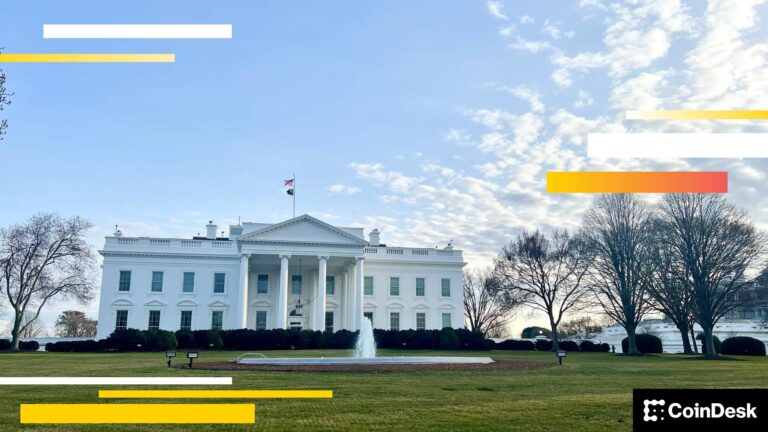
White House favors some stablecoin rewards, tells banks it’s time to move

0

Limited stablecoin rewards are favored by the White House, and if bankers sign off, they’ll be in the next draft of the crypto market structure bill, according to two people familiar with the negotiation.

At a Thursday working session meant to secure common ground on stablecoin rewards between banks and the crypto industry, the White House made it clear that certain rewards programs were going to stay in the next draft of the crypto market structure bill, the people said. Representatives of Wall Street banks that attended the meeting actively worked on that language, and the White House will put together an updated draft to circulate among them, they said.

This section of the U.S. Senate’s Digital Asset Market Clarity Act — the crypto industry’s top policy aim in Washington — is one of the major fault lines for the legislation that would govern the operations of U.S. crypto markets. As it happens, the stablecoin section (404 of the draft bill) has nothing directly to do with market structure, and the revisions being discussed would actually overhaul an earlier crypto effort that became law last year, the Guiding and Establishing National Innovation for U.S. Stablecoins (GENIUS) Act.

This was the third White House sitdown between bankers and crypto insiders, and after the bankers dug in their heels on allowing stablecoin rewards last time, White House negotiators arrived at the table with a position that some rewards must be allowed for certain activities and transactions, but not for holdings of stablecoins that more closely resemble deposit accounts. The White House team — led by President Donald Trump’s crypto adviser, Patrick Witt — urged a quick resolution on this point that allows the legislation to move forward, the people said.

That reflects the fear expressed by bankers: that stablecoin rewards would undermine their bread-and-butter business model that depends on customers making interest-bearing deposits.

Participants at the meeting privately expressed hopes that the compromise they’ve waited for is potentially very close. Spokespeople for the White House didn’t immediately respond to a request for comment.

“Today’s meeting at the White House was a constructive step forward in resolving outstanding issues related to rewards and keeping market structure legislation on track,” Blockchain Association CEO Summer Mersinger, who has been among those at the table, said in a statement after the gathering.

If the banks decline to shake hands on limited rewards, the status quo is the GENIUS Act, which gives crypto platforms a much freer hand with rewards programs than this proposal would. If they instead give this approach a nod, their agreement would be likely to sway reluctant senators back into support.

However, this is just one of several holes in the Clarity Act that need to be filled with negotiated language. The crypto industry also remains very involved in the requests from Democratic lawmakers that the bill ramp up the protections against bad actors in crypto, especially in the decentralized finance (DeFi) space.

Also, Democratic negotiators have insisted on a couple of other points that may put them at odds with the White House. They’ve demanded a ban on senior government officials getting directly involved in the crypto industry — a position targeted most directly at President Donald Trump. They’ve also called for the White House to name a full slate of commissions at the Commodity Futures Trading Commission and the Securities and Exchange Commission, including their Democratic vacancies.

None of the Democrats’ major issues have yet been resolved. If the Senate Banking Committee moves forward with a hearing to advance the bill, as the Senate Agriculture Committee did, the outcome may again be partisan if the parties don’t find answers to those points. That won’t prevent the legislation’s advancement through the next step, but it can’t win approval from the overall Senate without significant Democratic support.

Read More: Latest White House talks on stablecoin yield make ‘progress’ with banks, no deal yet