Home Blog Page 94

The 2036 Issue: Here Come The Sovereigns

0

By the year 2036, Bitcoin mining looks nothing like it did five years ago, much less ten. Long gone is the model of Bitcoin miners that dominated the landscape of the early to mid-2020’s. These large, often publicly traded, mining companies looked for large tranches of cheap power in mostly first-world countries they could monetize at scale. These corporations did not generate their own energy, nor did most design and manufacture their ASICs. They looked for a confluence of attractive power terms from an electric utility, available land near substation infrastructure, and timed the purchase of ASICs for as short a payback period as possible. 

The compressing margins had already strained this business model by the middle of the decade. Then the explosion of artificial intelligence and high-performance compute (AI/HPC) data centers created a more profitable use of grid connected electricity. This effectively ended the availability of power for public Bitcoin miners in the markets they had adapted for. Many simply took their model and altered it slightly to accommodate the AI/HPC data center buildout. The process was similar, and the companies who successfully pivoted were rewarded by their shareholders. The opposite was true for those public mining companies who failed to build more traditional data centers

As the era of public Bitcoin mining companies ended, governments started to notice the advantages of Bitcoin mining for expanding and managing a national grid. Rapid growth in generation commonly outpaced transmission capacity necessary for broader grid connectivity, creating pockets of electricity that could not be delivered and utilized. Several nations possessed surplus energy at off-peak hours, but deficits during peaks in the morning and evenings. Many of the grids throughout the Global South lacked a buyer or high-capacity transmission infrastructure to export surplus energy on day ahead markets. 

There was a growing realization that mining Bitcoin with the excess electricity was akin to exporting the power over the internet, rendering the expensive cross-border transmission infrastructure unnecessary for this specific sales activity. Countries began to use the design of mineral extraction deals as archetypes. In those arrangements, a joint venture or special purpose vehicle was formed between a foreign mining company and the government. The mining company would extract the mineral, but the country received a royalty in the form of a predetermined percentage of profits given it was the resource of the nation.

The sovereign level Bitcoin mining deals were similar. The surplus power was a national asset just like minerals in the ground, but the difference being the temporal aspect of the electricity. Every hour that excess was not monetized, that electricity was unproductive, thus minutely changing the economics of the power plant that generated the electricity. If hours turned into days, months or even years, the finances of the mostly state-owned electric utilities deteriorated. Countries increasingly followed the pioneering nations like Bhutan into similar sovereign level Bitcoin mining deals as they realized they couldn’t afford inaction.

In the late 2020’s, the U.S. and China played tug-of-war with the world economies via their digital currencies. The Americans exported the dollar through stablecoins, while the Chinese offered cheap debt if denominated in the Renminbi and offered swap lines with countries in the Digital Yuan, their central bank digital currency issued directly from the Bank of China. “Middle powers”, or countries with excelling economies and ability to influence their region but were a rung below great power status, sought to extricate themselves from the middle of the American-Sino economic struggle. For many, Bitcoin was such an escape hatch.

Take for instance the Strategic Bitcoin Reserve (SBR) legislative proposal in Brazil in 2026. Not only did it codify the country’s ability to put up to 5% of national reserves into Bitcoin, but it also abolished capital gains tax on Bitcoin and allowed payment of taxes in Bitcoin. Other middle powers followed suit with similar adoption measures. By leaning into alignment at the state or citizenry level with a neutral reserve asset not controlled by either America or China, they were able to avoid the trap of choosing one financial system and boxing themselves out of the other. 

For those countries that assumed this strategy and possessed any measure of energy independence, Bitcoin mining became the most cost-effective method of accumulation. Some energy heretofore exported to neighbors was kept for the purpose of Bitcoin mining. Abundant energy potential without nearby offtake or grid connectivity that was previously deemed nonviable for development was now prioritized. Such projects now became a source of pride as they expanded the energy portfolio of the country while simultaneously creating a measure of economic independence.

Examples of this type of adoption were pockmarked all over the globe. Russia partially pioneered the strategy by turning isolated energy production in Siberia into sanction proof assets during the war with Ukraine. Turkey lessened exports to countries like Bulgaria and Iraq and further developed hydroelectric generation in the eastern part of the nation. Brazil and India similarly developed the plentiful hydroelectric potential in the Amazon and Himalayas respectively, far from population centers along the coast. Indonesia and Malaysia finally found a suitable use for the vast geothermal energy on Borneo Island. Ethiopia turned their private electricity sales to Bitcoin miners into more of a state pursuit with profit share between miners and their sovereign wealth fund. 

These state involved Bitcoin mining operations served as a sandbox to advance grid management practices using curtailable electric load or reserve capacity. While pundits for years argued whether battery energy storage systems (BESS) or Bitcoin mining was the better dispatchable demand, it turned out the answer was a combination of the two because of differing and complimentary characteristics. Bitcoin mining can handle large scale load shedding or absorption for long stretches of time, while batteries can respond in milliseconds with precision but lack long-term management ability due to finite storage capacity and limited cycles over their lifespan.

The combination of economic resiliency and grid improvement that these nations enjoyed from Bitcoin mining created envy in their regional neighbors. In about half a decade, sovereign level Bitcoin mining projects went from viewed as risky to essential. Even countries with expensive electricity tariffs found it more economical to institute Bitcoin mining than to deal with the variability of renewables with BESS alone. ASICs, even ones several generations old, sold at a premium for a time as the sudden FOMO-driven demand took hold. Before long, it was more unique to find a ministry of energy without Bitcoin mining integration than one with such a program.

Now that it is 2036, we will experience the next halving event this year in which the block reward will drop to 0.39 Bitcoin per block. Luckily, Bitcoin becoming extremely valuable as a global macro asset, exceeding the market cap of gold, caused nations to use the digital asset as a neutral reserve asset in trade between different economic and currency blocks. This drove more large transfers to the base chain for immutability, subsequently increasing revenue from fee collection which surpassed the value of block rewards. Still, the margins of mining have continued to compress because of global adoption at the state level and created an area of geopolitical competition. 

Early Bitcoin enthusiasts lament the state capture of the mining industry, but unfortunately it was inevitable from a game theoretical perspective. As Bitcoin gained adoption in the underpinning of the global financial system, the production of the asset became an issue of geopolitical importance. No private industry had the ability to compete with national governments in the aspects of scale, coordination and control of energy. In a sense, the only way to avoid the government concentration of Bitcoin mining would have been for the Bitcoin network to stall in its adoption somewhere short of becoming the most prominent neutral reserve asset on the planet. If that had been the case, Bitcoin mining would have remained a private sector industry, but the network would have never gained significance beyond a niche alternative asset. 

That’s not to say that the mining industry is operated completely by governments. Public private partnerships are the backbone of the space, much like the energy industry of ten years ago. While petrochemical companies are private sector entities, they are heavily reliant on licensed government-owned oil and gas deposits. Similarly, independent power providers build electric generation facilities to sell energy for a profit, but they must jump through regulatory hoops and market to an electric utility that is at a minimum under government oversight, if not owned outright. Bitcoin mining began to operate under a similar paradigm in that private companies built and operated the data centers but with government sanctioned contracts outside of very rare circumstances.

The companies making the most profit in the space are those that design and manufacture ASICs. These companies are highly specialized and export controlled in the ways that chip companies were in the 2020s during the initial AI boom. These corporations are domiciled in either the U.S., China, or countries closely aligned with one of the two. Other countries could not compete with the chip design advances and other technological byproducts of the defense tech race between the two great powers.  

Given that mining efficiency is a source of national advantage, the research and development of machines that provide that edge has been partially funded by government grants and spurred by classified technological information. In exchange for that aid, the government disqualifies or approves foreign sales through legislation that looks similar to International Traffic in Arms Regulations (ITAR) or the CHIPS Act. Access to cutting edge ASICs by countries not sophisticated enough to design and manufacture their own are sweeteners for trade deals much like access to NVIDIA chips were during the AI boom.

While the cypherpunks of the early part of the century would bristle at the nation state involvement of Bitcoin mining, in an odd way the decentralization of the network is as strong as ever. The proliferation of hash rate has guaranteed that no single actor could ever attack the network. Additionally, any emerging threats to the network created by a single nation would quickly supersede disagreements and temporarily unite the rest of the world against that country as a rogue actor threatening the global financial system. While many countries kept their fiat currencies as the backbone of their economies, every country on earth recognizes the value of Bitcoin therefore allowing individuals to live on a Bitcoin standard in every corner of the world. If Satoshi had to choose between decentralization of money or the proof of work algorithm, he likely would have chosen the former. Let’s hope that’s the case at least, because that’s what happened.

This piece is featured in the latest Print edition of Bitcoin Magazine, The 2036 Issue. We’re sharing it here as an early look at the ideas explored throughout the full issue.

Binance Looks Beyond Greece for EU MiCA Authorization

0

[Update 14:47 UTC, June 24: Updates with comments from Binance beginning in first paragraph.]

Crypto exchange Binance is withdrawing its MiCA application with Greece’s Hellenic Capital Market Commission (HCMC) and intends to pursue authorization in another member state just days before the deadline for EU licensing.

“When we are ready to announce that Member State, we will do so publicly,” the company said in a statement on Wednesday.

Earlier, Gillian Lynch, Binance’s head of Europe and the United Kingdom, told Reuters that the exchange is “not leaving Europe” and would pursue authorization in another EU jurisdiction if its application in Greece does not move forward.

Lynch said Binance contacted other regulators but submitted a formal application only in Greece. The exchange reportedly held talks with Ireland, Latvia and Greece but encountered resistance over its past money-laundering penalties, international structure and what officials viewed as a risk-taking culture. 

The move comes days before the Markets in Crypto-Assets Regulation (MiCA) transitional period ends on July 1, a key deadline for crypto firms seeking to operate across the EU. The European Securities and Markets Authority (ESMA) said on Tuesday that crypto service providers that remain unauthorized by the deadline must take “immediate” steps to wind down their EU activities.

On June 16, Binance pushed back against an earlier Reuters report that EU regulators were preparing to reject its MiCA application, saying Greece’s Hellenic Capital Market Commission had reviewed the application and considered it compliant, subject to further review by ESMA. The exchange said at the time that it expected the process to advance toward authorization.

EU customers could see changes

In its statement, Binance said it plans to take the necessary steps before July 1 to remain “compliant with applicable requirements.”

“This means some users may be impacted, and we will communicate directly with affected users to provide clear information on next steps,” the representative said. “All user funds remain safe and secure. Our priority is to minimize disruption, provide clarity to users, and continue building a trusted and compliant digital asset ecosystem globally.”

The representative did not provide additional details.

MiCA deadline puts Binance’s European reach at risk 

On Monday, CryptoQuant analyst Maartunn told Cointelegraph that euro-denominated pairs account for about 1% of Binance’s global spot trading volume, suggesting that a European licensing setback may have a limited effect on the business.

Source: CryptoQuant

However, Binance remains a significant trading venue for European users, handling between about $100 million and $250 million in daily euro-pair volume in 2026, with occasional spikes of about $600 million. 

Binance held an estimated 18.5% share of euro-denominated spot trading during the year, placing it second behind Kraken’s 43.3% share, according to CryptoQuant’s data.

Exchanges emerge as MiCA compliance gatekeepers

Binance’s licensing difficulties could also affect token issuers, as authorized exchanges increasingly prepare and notify MiCA white papers for assets they list.

In a LinkedIn post, Ryan King, creator of the EU Crypto Register, said at least 380 of 867 white-paper entries he tracked were notified by third parties rather than token issuers. He said Kraken, LCX, OKX and Bitstamp accounted for 271 notifications, or about 31% of the total.

Related: Binance’s Yi He warns of alleged impersonation scam, CoinUp denies ties

King told Cointelegraph that the model was “symbiotic” because exchanges employ MiCA-trained compliance teams, maintain regulator relationships and retain large law firms. He added that exchanges increasingly request white papers during onboarding and may offer to prepare them, even for tokens covered by transitional arrangements. 

“They also use standard templates,” King told Cointelegraph, recalling that one exchange told a token project to “fill it in and we’ll handle the rest.”

Magazine: Japanese pension fund tips 1% in crypto, G7 urges action on NK hackers: Asia Express

Ex-FCA policy insider explains the ‘great divide’ in the UK’s crypto ambition

0

Arredondo argues that the industry has spent years building separate blockchain networks, stablecoins and digital money projects, but has spent less time ensuring those systems can work together.

“We need to move the market from everyone doing their own very cool things to actually thinking about standard-setting across the piece.”

The issue has become more important as governments, banks and private companies increasingly experiment with tokenized deposits, stablecoins and central bank digital currencies (CBDCs).

Arredondo pointed to the European Union (EU) as an example of a jurisdiction seeking to accommodate multiple forms of digital money simultaneously.

The EU’s approach allows stablecoins, tokenized bank deposits and central bank money to coexist under the same broad framework, she said.

Wall Street’s crypto role

The growing role of banks, asset managers and large financial institutions in crypto has divided the industry. Some early crypto supporters argue the sector is moving away from its original goals of decentralization and disintermediation.

Arredondo sees it differently. “The early crypto vision raised fundamental economic questions and brought them to the mainstream,” she said.

For Arredondo, the rise of institutional crypto does not mean the industry’s early ideas failed.

Instead, she sees it as evidence that ideas first developed inside the crypto sphere are increasingly being adopted by mainstream finance. “It shouldn’t be disappointing that we are maintaining the pillars that have long anchored trust in money.”

Trump refuses to sign law with U.S. CBDC ban, demands approval of elections bill

0

If congressional Republicans pivot toward further work on the elections-focused legislation, that may squeeze their bandwidth for other legislation. GOP lawmakers were already pushing again for Senate action on Trump’s favored bill on Wednesday.

“There is no path for the SAVE Act becoming law,” said Jaret Seiberg, a policy analyst at TD Cowen, in a Wednesday research note. “Senate GOP would need to eliminate the filibuster, a step they already have rejected. Even absent the filibuster, it is not clear the bill has the support of 50 senators, given worries about have to prove citizenship.”

Before his cancellation of the housing bill signing, Trump had posted on his social-media platform that the housing bill is of “minor importance compared to lower interest rates” and other congressional priorities, and he criticized the involvement of Democratic Senator Elizabeth Warren.

The president has a constitutionally designated 10-day window to weigh approved bills for signature once they land on his desk. If he were to veto it, the bill did pass with enough of a margin to reject that veto, though Republican allies of the president would have to agree to override his sentiment.

UPDATE (June 24, 2026, 16:01 UTC): Adds comment from TD Cowen.

Strategy Craters 10%, Hits 2-Year Low As BTC Falls To $59K

0

Strategy Inc. (NASDAQ: MSTR) shares fell more than 10% Tuesday to $92, a two-year low, as bitcoin cratered below $60,000 and an analyst note from CryptoQuant warned the company has overextended itself and should halt bitcoin purchases before its financial situation deteriorates further.

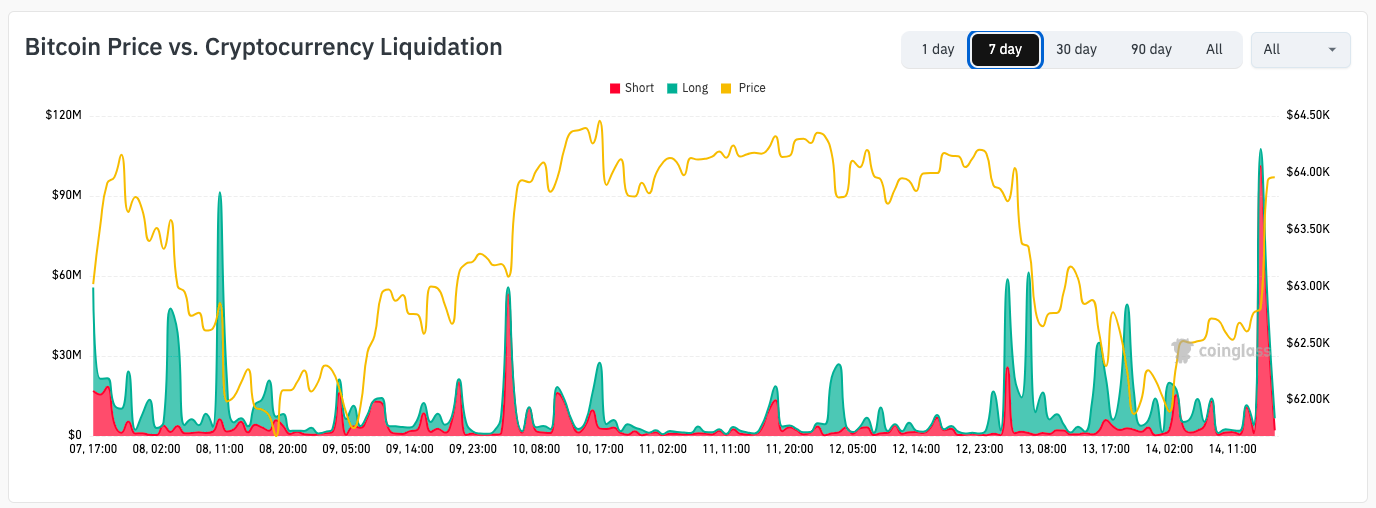
Bitcoin fell to roughly $59,000 on the day, a drop of more than $6,700 or about 5%, its worst single-day loss in months. The selloff sparked a liquidation cascade across crypto derivatives markets, with roughly $1.1 billion in leveraged positions forcibly closed within a 24-hour window. The move pushed bitcoin below the average cost basis for all of Strategy’s purchases made in 2024, 2025, and 2026 — leaving the company sitting on an estimated $10.6 billion in unrealized losses.

Strategy fell alongside bitcoin, as it almost always does. Shares opened near $103 and shed $10.97 from Monday’s close of $103.84 — the first time the stock has traded below $100 since March 2024.

CryptoQuant: Stop buying, rebuild cash

The slide came on the same day that CryptoQuant published a note calling on Strategy to pause its bitcoin accumulation and restore its cash reserves before buying more. The firm’s head of research, Julio Moreno, identified a set of numbers that tell a story of a company whose capital model is under strain.

Strategy’s annual dividend obligations — the payments owed on its stack of preferred instruments including STRC, STRK, STRF, STRD, and STRE — have grown from roughly $300 million at the start of 2026 to approximately $1.2 billion now, a near fourfold increase in under six months. 

Cash reserves have fallen 38% this year. Dividend coverage, once more than seven years, has compressed to around 14 months. CryptoQuant recommends the company restore cash reserves to roughly $2.8 billion before resuming bitcoin purchases.

The preferred shares themselves are flashing a warning sign. STRC, Strategy’s variable-rate perpetual preferred, has been trading near $84, well below its $100 par value.

When preferred shares trade below par, the capital-raise mechanism that funds bitcoin purchases breaks down — the company can’t issue new preferreds at attractive terms if the existing instruments are trading at a discount.

Strategy’s self-reinforcing cycle, in reverse

Strategy’s model was built on a premium. When MSTR shares trade above the value of the bitcoin on its balance sheet, the company can issue stock or preferred instruments, use the proceeds to buy bitcoin, and push the NAV per share higher — a cycle that rewards existing shareholders. The stock now trades at a discount to its bitcoin NAV, an mNAV of approximately 0.80x. That means both capital taps — common equity and preferred issuance — are constrained at the same time.

The company holds 847,363 bitcoin, acquired at an average price of roughly $75,680 per coin. With bitcoin at $59,324, that gap has widened to more than $16,000 per coin across the entire stack.

Peter Schiff, a longtime bitcoin critic who has watched Strategy’s trajectory, said Tuesday that if MSTR shares continue to fall, Saylor could face pressure to sell bitcoin to meet obligations — a scenario that would put further downward pressure on the asset underpinning the entire structure.

Strategy made its first bitcoin sale in nearly four years in early June, offloading 32 BTC. The company framed the sale as a demonstration that it could cover dividend obligations through asset liquidation. The market’s reaction today suggests investors remain unconvinced.

Whether Saylor pauses purchases, as CryptoQuant recommends, or finds another path forward, the central question now is whether a model built to thrive with a premium and a rising bitcoin price can hold together in an environment where both have reversed.

At the time of writing, Bitcoin is trading at $59,300, and Strategy shares are near $92.

Standard Chartered Extends Tokenization Thesis to Aave Lending

0

Banking giant Standard Chartered has identified Aave as a potential beneficiary of tokenized assets as they move into decentralized finance (DeFi), saying the protocol could rebuild its position as a dominant onchain lending platform.

In a Wednesday research note, Geoff Kendrick, the bank’s global head of digital assets research, said active tokenized assets in DeFi could drive more deposits into Aave.

“Despite recent setbacks, we are bullish on the outlook for Aave, the largest [DeFi] lending protocol,” Kendrick wrote.

The bank said Aave’s recent performance had been weighed down by a broader decline in digital asset prices and the fallout from the April cybertheft involving KelpDAO. Standard Chartered said the $292 million incident affected Aave, contributing to a decline in the protocol’s lending market share as assets exited the platform. 

“We think both of those negatives are poised to fade,” Kendrick said. “We forecast significant upside for digital asset token prices into year-end, and we think Aave has moved beyond the April incident.”

According to the research note, Aave’s October 2025 deposit base of about $75 billion would have ranked alongside the 30th-largest US bank by deposits. Kendrick added that Standard Chartered expects Aave to recover part of that scale as tokenized assets become more widely used as collateral and sources of liquidity within DeFi. 

Aave’s total value locked. Source: DefiLlama

Standard Chartered expands tokenization thesis to lending

The Aave forecast extends Standard Chartered’s tokenization thesis from decentralized trading to lending, with the protocol emerging as a potential venue for borrowing against tokenized real-world assets (RWAs).

Standard Chartered said in an earlier research note that assets locked in DeFi could reach $2.7 trillion by 2030, driven by RWAs and other crypto-native assets moving through onchain protocols. 

Related: StanChart says Ethereum price will catch up to bullish internal metrics

Kendrick identified decentralized exchange Uniswap as a possible trading hub for tokenized markets, citing its scale, brand and history of operating through multiple crypto market cycles. 

Magazine: Japanese pension fund tips 1% in crypto, G7 urges action on NK hackers: Asia Express

Cointelegraph is committed to independent, transparent journalism. This news article is produced in accordance with Cointelegraph’s Editorial Policy and aims to provide accurate and timely information. Readers are encouraged to verify information independently.

Bitcoin Chases New Lows As ETF Outflows, Strategy’s Slump Spook Traders

0

Key takeaways:

  • Cooling oil prices and a multi-month high for the US dollar are keeping intense pressure on non yield-bearing assets.
  • Spot Bitcoin ETF outflows paired with Strategy’s slowest buying pace in 18 months signal short-term downside risks.

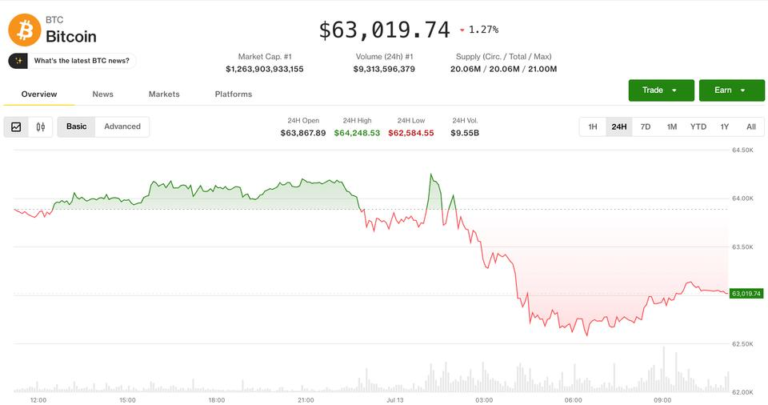
Bitcoin (BTC) traded down to $59,060 on Wednesday despite the sharp retreat in oil prices. Inflationary pressures eased following a memorandum of understanding between the US and Iran, which temporarily reopened the Strait of Hormuz. Bitcoin traders fear that the bounce back to $60,000 might not last long as the US dollar strengthened.

US dollar strength index (left) vs. Bitcoin/USD (right). Source: TradingView

The US dollar jumped to its highest level against a basket of foreign currencies in 13 months, indicating growing confidence in the US economy. Typically, this metric shows a negative correlation with Bitcoin’s price, as some investors view the cryptocurrency as a hedge against inflationary pressures traditionally driven by high oil prices.

Gold (left) vs. Brent Crude oil, USD. Source: TradingView

Gold prices fell below $4,000 for the first time in 7 months as Brent crude oil plummeted below $74, nearing levels seen prior to the conflict in Iran. Investors signaled lower demand for scarce assets despite moderate anxiety about tech-sector cash flows amid increased capital expenditure by AI hyperscalers.

Bitcoin investment thesis weakened by reduced inflation perspectives and AI sector growth

Inflation will take time to cool down to the US Federal Reserve (Fed) target of 2%, leading traders to anticipate interest rates remaining higher for longer, which ultimately favors fixed-income investments. The latest US Labor Department unemployment benefit claims data fell by 4,000 from the prior week, further confirming that the economy is not slowing.

US expanded Monetary Base (M2), USD. Source: Fed St Louis

Regardless of investors’ risk assessments of the profitability of AI infrastructure investments, US government debt has been driving up liquidity over the past 3 years. Data released on Tuesday revealed that the US expanded Monetary Base (M2) increased to $23.05 trillion in May, up from $22.8 trillion the prior month.

Related: Lyn Alden tips Bitcoin outperforming gold over next ‘two to three years’

While there is no short-term correlation between the amount of money in circulation and Bitcoin’s price, investors will eventually seek gains elsewhere if higher demand for fixed income causes diminished yields. For now, the tech sector remains investors’ largest bet, weakening the case for alternative scarce assets such as Bitcoin.

Micron (MU US), the computer memory and data storage manufacturer, reported strong quarterly earnings on Wednesday. Micron’s market capitalization has grown to $1.16 trillion, following a 265% gain over 6 months. More impressively, chipmakers SK Hynix and Samsung now account for 40% of the entire South Korean stock market, according to CNBC.

Strategy (MSTR US) Bitcoin reserve changes, BTC. Source: Strategy

The slowdown in Strategy’s Bitcoin acquisition pace has likely contributed to the weaker market sentiment. The company, led by Michael Saylor, reported adding 520 BTC during the week ending June 21, marking its lowest weekly intake in 18 months. Moreover, $300 million of the net proceeds from MSTR’s stock issuance during the period were used to replenish its cash position.

Bitcoin’s negative performance on Wednesday partly reflects macroeconomic conditions, with gold prices also affected. However, heavy net outflows from spot Bitcoin exchange-traded funds (ETFs) and disappointment that Strategy’s stock trades below its Bitcoin reserve acquisition cost have added significant pressure. Thus, further downside from the $59,000 level should not be ruled out.

FTX Exec’s wife Scheduled for November Trial on Campaign Finance Charges

0

Michelle Bond, the wife of former FTX Digital Markets co-CEO Ryan Salame, who is serving a 7.5-year prison sentence after reaching a plea agreement with prosecutors, is scheduled to stand trial in November following delays stemming from motions related to her husband’s plea deal.

On Wednesday, Judge George Daniels in the US District Court for the Southern District of New York ordered a trial start date of Nov. 9 for Bond, who faces four charges related to campaign finance law violations. The proceedings came a week after the judge denied Bond’s motion to dismiss the indictment, based on claims that prosecutors had promised Salame she would not be charged if she pleaded guilty.

Bond’s case is one of the final criminal proceedings related to the collapse of cryptocurrency exchange FTX, which filed for bankruptcy in 2022. The event led to criminal charges for Salame and other executives, including former CEO Sam “SBF” Bankman-Fried and former Alameda Research CEO Caroline Ellison.

In an August 2024 indictment, prosecutors alleged that Bond and Salame “illegally funded” the former’s 2022 campaign for the US House of Representatives. Salame allegedly used $400,000 of FTX funds as part of a “sham” payment in violation of campaign finance laws. Bond ran as a Republican in New York’s 1st congressional district but lost in the primary to Nicholas LaLota.

2022 campaign post on X (then Twitter) Source: Michelle Bond

Salame, charged in 2022 along with Bankman-Fried and others, was sentenced to 90 months in prison in 2024 after pleading guilty to conspiracy to make unlawful political contributions. He initially attempted to vacate his plea after claiming that prosecutors misled him over charging Bond, but ultimately reported to prison in October 2024 and left the matter to his wife’s case.

Bankman-Fried, angling for a presidential pardon, loses appeal

Salame, Bankman-Fried and Ellison were the only three people tied to FTX to receive prison time. Two other executives, Nishad Singh and Gary Wang, were given time served after testifying against SBF at trial. Ellison, meanwhile, was released early in January after serving less than her two-year sentence.

Related: US lawmakers warn against presidential pardon for Sam Bankman-Fried

Aside from Bond’s expected trial, Bankman-Fried was the only one connected to the crypto exchange to have his day in court. He was found guilty on seven felony charges and sentenced to 25 years in prison in 2024.

Although Bankman-Fried filed to appeal his conviction and sentence, he also recently applied for a presidential pardon from Donald Trump. The Second Circuit Court of Appeals rejected SBF’s appeal earlier this month, leaving the US Supreme Court or a presidential pardon as his only likely path to freedom over the next 20 years.

Magazine: AI is banking the unbanked in Africa… faster than crypto

Kalshi seeks funding at $40 billion valuation, widening lead over rival Polymarket

0

Kalshi is seeking to raise fresh capital at a valuation of about $40 billion, nearly doubling the $22 billion valuation it targeted in its previous funding round, according to a Financial Times report citing people familiar with the matter.

The prediction markets platform could close the fundraising as soon as the third quarter of this year, FT said.

If completed, the deal would widen Kalshi’s valuation lead over rival Polymarket, which was last reported to be seeking funding at $15 billion. The two platforms have emerged as the dominant names in the prediction markets sector, while many other entrants have increased the industry’s competitive landscape.

Kalshi’s previous funding round, which valued the company at $22 billion, attracted a roster of high-profile investors including Philippe Laffont’s Coatue Management, Sequoia Capital, Andreessen Horowitz and Morgan Stanley.

Competition in the sector has intensified as firms race to capture users and expand product offerings.

Kalshi operates as a federally regulated exchange in the United States, a distinction that has helped it attract mainstream investors and institutional backing. Meanwhile, Polymarket, which uses blockchain infrastructure and cryptocurrency-based settlement, has gained popularity among crypto traders and has become widely followed during recent election cycles.

Can Traders Retain the Rally?

0

Hyperliquid’s HYPE token is down 22% from its $75 all-time high, bringing its 2026 uptrend to a key test of support. Market participation has cooled across the derivatives markets, while the spot flows show early signs of stabilization after strong selling pressure in early June. 

The $50-$54 area now stands out as the most important support zone beneath current prices and the first major trend test since January. 

Spot selling begins to ease for HYPE

HYPE fell below $60 on Wednesday after rejecting another retest of its all-time high near $76. The decline has pushed the price toward the 50-day exponential moving average, a level that has acted as trend support throughout the rally from March.

The recent pullback resembles HYPE’s consolidation in May 2025. At that time, the token printed a new high near $40 before entering a multi-week pause that cooled momentum without producing a bearish break on the daily chart. 

HYPE price comparison, July 2026 and May 2025. Source: Cointelegraph/TradingView

The relative strength index is following a similar setup, rolling over from overbought conditions while remaining above the levels typically associated with trend reversals.

However, onchain data paints a cautious picture. Aggregated spot cumulative volume delta (CVD), which measures net buying and selling activity in spot markets, has improved from recent lows during the correction. The recovery has reduced the earlier sell imbalance, though spot CVD remains deeply negative at nearly $95 million.

HYPE price, open interest, spot and futures CVD, funding rate. Source: Velo

The shift suggests selling pressure is easing rather than aggressive accumulation. Spot buyers have started absorbing supply near current levels, though the scale of demand remains modest compared to $110 million in selling recorded during HYPE’s decline from $76 in early June. 

The derivatives activity continues to weaken. Open interest has fallen to $1.73 billion from $2.2 billion, while derivatives CVD has continued trending lower and now sits near negative $389 million, down from $400 million at the beginning of June. Currently, HYPE traders appear to be reducing exposure rather than opening new positions.

Related: Solana grabs 95% of tokenized equity as traders debate if SOL bottom is in

$50 support comes into focus

The next major test lies between $50 and $54, where the rising 50-day exponential moving average aligns with an unfilled daily fair-value gap. The zone represents the first significant support cluster below the current prices.

Holding above the region preserves HYPE’s sequence of higher highs and lows, which has remained intact since January. It also keeps the current pullback consistent with previous consolidations that developed within the broader uptrend.

HYPE/USDT, one-day chart. Source: Cointelegraph/TradingView

A daily close below $53 would mark the first meaningful bearish shift on the daily chart this year. The 100-day EMA near $51.6 becomes the next support level, followed by the lower boundary of the fair value gap near $49. Below that, the next notable support area sits near $38.

For now, the most important signal is the gap between improving spot flows and declining participation across leveraged markets. The strength of demand around the $50-$54 support zone may offer the clearest indication of whether HYPE’s correction is nearing exhaustion or preparing for a deeper retracement.

Speaking in terms of accumulation, crypto trader Altcoin Sherpa said

“HYPE, I think anywhere in the 55-64 area is a pretty good place to accumulate this one. I think it goes to $100 later this year personally and is still the best altcoin…but it’s going to also depend a lot on bitcoin IMO.

Related: Bitcoin crash to $60K opens new $530M demand zone: Will bulls buy in?