
Anton Bukov said that he no longer took an active role at 1inch and had been “fired” in 2025 after pushing for changes to the company’s management and operations.

Anton Bukov said that he no longer took an active role at 1inch and had been “fired” in 2025 after pushing for changes to the company’s management and operations.

Crypto brokerage infrastructure firm Alpaca raised $135 million to expand the rails used by exchanges and tokenization platforms to offer U.S. stocks onchain.
Peak XV led Alpaca’s equity round, with participation from Elefund, BNP Paribas’ Opera Tech Ventures and Unbound, according to an announcement on Thursday. The raise follows a $150 million Series D in January that valued the company at $1.15 billion.
Debt financing, primarily from Kraken parent Payward and BMO, brought the total package to $435 million.
Alpaca clears or custodies roughly 94% of tokenized U.S. equities, including products connected to market leaders Binance, Ondo and Dinari. The company said it has more than $1.5 billion of underlying stocks backing tokenized equities held through its infrastructure.
The funding underscores a central constraint facing tokenized equities, where putting a stock onchain does not remove the need for a regulated firm to hold the underlying shares, process corporate actions and connect blockchain transactions to traditional markets.
Its Instant Tokenization Network allows market participants to mint and redeem tokenized stocks against underlying shares around the clock. The products often pair blockchain-based stock exposure with stablecoin funding or redemption, connecting equities to crypto’s 24/7 settlement rails.

Summer Mersinger, the CEO of the Blockchain Association and a former commissioner at the US Commodity Futures Trading Commission (CFTC), anticipated a vote on a cryptocurrency market structure bill as soon as next week with the window closing for lawmakers before August state work periods.
Speaking at the Injective Summit in Washington, DC, on Thursday, Mersinger said that US lawmakers working to advance the Digital Asset Market Clarity (CLARITY) Act in Congress had a “few little nits that they’re still working out” but were “very close on the main part of the language” around the bill. According to the Blockchain Association CEO, a vote in the Senate could come as early as next week, provided lawmakers reached an agreement on ethics.
“Ethics is the big elephant in the room,” said Mersinger on the crypto bill. “That’s what we hear from every office is that we’ve gotta figure out ethics. Today there’s a meeting at the White House with some Republican senators. We’re hopeful that an agreement comes out of that and that it’s something the Democrats will accept or that they can make some changes but get to an agreement.”
She added:
“For my members and what we are advocating for on the Hill… look, whatever you decide on ethics, that’s really not our concern. That is politics. That’s Congress. That’s elected officials. But please don’t let it kill all the hard work that we put in the rest of the bill.”
Summer Mersinger speaking at Injective Summit on Thursday. Source: Injective
Mersinger’s comments on a White House meeting followed reports that US President Donald Trump planned to discuss CLARITY with a group of Republican senators on Thursday, potentially including his ties to the industry, after Senate Democrats held their own meeting on the bill on Wednesday. Trump disclosed in June that he had earned $1.4 billion from ventures related to digital assets, including his memecoin and his family’s business World Liberty Financial.
Related: US senator blasts AG pick for ‘dismantling’ crypto unit, Trump’s CZ pardon
A former CFTC commissioner, Mersinger departed the agency in 2025 to become the CEO of the Blockchain Association. The organization was involved in discussions with lawmakers over the market structure bill as it passed the Senate banking and agriculture committees.
On Tuesday, three Senate Democrats held a press conference saying that they would not support a crypto market structure bill without clear ethics provisions, citing Trump’s financial disclosures and the potential for corruption by lawmakers and the White House. Republicans hold a slim majority in the Senate and would need several Democrats to vote yay on the bill for it to pass.
At the time of publication, traders on prediction market Kalshi had a 75.1% chance on CLARITY going for a floor vote in the Senate before the August break, up from 47% on July 10.
Magazine: Crypto’s CLARITY Act faces partisan fight over ethics on Senate floor

– Kriti Bansal, vice president finance and accounting, AlphaPoint
Q. Can advisors work with AI to ensure clients are safe against fraud?
A.Yes, but AI should support advisors and not act as autonomous decision-maker. It can flag unusual wallet behavior, suspicious contracts, phishing patterns and risky approvals before damage happens. The biggest vulnerability today is granting AI agents direct, unmitigated wallet permission and this can turn the agent itself into a massive attack vector for social engineering or bad on-chain data.
Q. What security in real time looks like in the age of AI?
A. In the age of AI the real time security needs to be predictive and proactive and not reactive. Real-time security means warnings before signing, continuous wallet monitoring, instant alerts on abnormal activity and blocking risky approvals before funds can move.
Q. How can a money manager automate a defense layer that acts as a continuous threat monitor?
A.Money managers must move away from legacy externally owned wallets and transition to programmable smart accounts such as ERC-4337 or EIP-7702. This transition allows one to write automated, programmatic security guardrails directly at the account level. They can use automated monitoring for wallets, approvals, contract risks, transaction patterns and exposure limits, with human escalation for anything unusual.

Global market maker Citadel Securities has invested $400 million in crypto exchange Crypto.com, giving the platform a $20 billion valuation, according to a Thursday announcement.
Crypto.com, which has a number of digital asset products, said the cash would help the Singapore-based company expand its services to assets such as blockchain-based securities and derivatives.
The cash will help bridge the gap “between digital asset and traditional markets to create a more efficient 24/7 financial ecosystem,” a Thursday announcement read.
“The size of the opportunity in front of us is staggering, as crypto increasingly becomes the rails for finance,” Crypto.com CEO Kris Marszalek said in a statement.
“Having built the right regulatory and tech infrastructure over the last decade, Crypto.com is now perfectly positioned to capture this new wave of growth across all asset classes.”
“The convergence of traditional financial markets and digital asset infrastructure is an exciting evolution with the potential to further improve market efficiency,” added Jim Esposito, President of Citadel Securities.
Esposito’s comment comes as Wall Street interest in blockchain technology piques — despite a market slump.
Back in February, BlackRock, the world’s biggest asset manager, announced that it was working with decentralised exchange Uniswap to bring one of its funds on-chain.
Before that, in January, the New York Stock Exchange said it was building a platform allowing traders to buy and sell tokenised versions of US-listed equities and exchange-traded funds.
And most recently, the S&P 500 gave crypto platform Trade[XYZ] the green light to debut a new derivative contract on decentralized exchange Hyperliquid, allowing traders to gain leveraged exposure to the top index.
Miami, Florida-based Citadel, has for some time been interested in digital assets: Back in 2023, the company helped debut EDX Markets, a “first-of-its-kind exchange” giving investors “safer, faster and more efficient cryptocurrency trading.”
The exchange this year applied for a national trust bank charter with the Office of the Comptroller of the Currency, marking a step toward deeper integration between digital asset firms and the US banking system.
Citadel last year also pumped $200 million into crypto exchange Kraken to help accelerate the company’s strategy of bringing traditional financial products on-chain.

As a former financial regulator, I understand that no law can prevent every market failure or stop every bad actor. Fraud exists in every market, at every scale, but strong rules can mitigate the worst outcomes. They give regulators visibility, set obligations for companies before consumers engage with their products, and require firms to operate with basic and enforceable accountability. The bill is often described as crypto market structure legislation. That description is accurate, but it doesn’t capture the full scale. Market structure is the legal architecture that determines who must register with which agency, who supervises the market, what firms owe their customers, how assets are protected, what disclosures must be made, and what happens when something goes wrong.
Today, millions of Americans already use digital asset exchanges, brokers, dealers, and custodians. They open accounts, buy and sell assets, rely on platforms to execute transactions, and often trust intermediaries to hold their property. If those businesses are going to serve American consumers, they should operate under clear federal rules.
The Clarity Act would create those rules. Digital asset intermediaries would have to register, meet capital and risk-management standards, keep records, disclose material information to retail customers, monitor markets, address conflicts of interest, and follow conduct rules covering fraud, manipulation, marketing, supervision, and fair pricing. Those are basic safeguards in mature financial markets. They should apply here too.

Visa introduced a new platform aimed at making it easier for banks, fintech companies and crypto firms to build products using stablecoins, expanding its push into blockchain-based payments as competition in the sector intensifies.
The company announced on Thursday that it was launching the Visa Stablecoin Platform (VSP), an enterprise service that allows institutions to issue, store, transfer and redeem stablecoins through a single Visa-managed system. The platform launched with support for Open USD (OpenUSD), a recently introduced stablecoin from Open Standard, and includes tools for minting and redeeming the token along with wallet infrastructure for managing onchain assets.
Stablecoins are cryptocurrencies designed to maintain a fixed value, typically by being pegged to the U.S. dollar. Unlike bitcoin or ether (ETH), they are widely used for payments, cross-border transfers and settlement because they combine blockchain’s speed with a relatively stable price.
Visa said the platform provides Wallet-as-a-Service infrastructure, blockchain connectivity and security features such as dual-approval workflows, audit logs and transfer allow lists. The platform is also integrated with Visa’s existing payment network, allowing financial institutions to incorporate stablecoins into treasury management, settlement and payment products without replacing their existing systems.
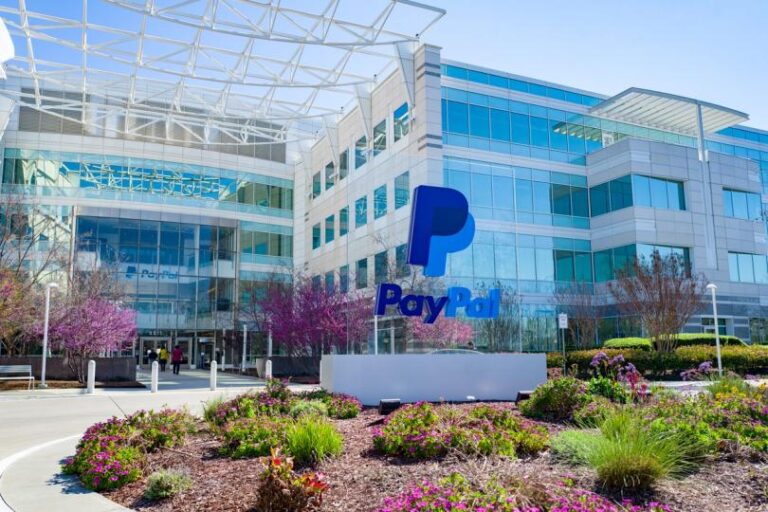
“If Stripe owns PayPal, Bridge becomes the shared infrastructure layer under PYUSD, OpenUSD and Tempo. That’s infrastructure consolidation, not token competition, and it’s a much bigger deal than the acquisition headline suggests.”
That sort of infrastructure scale could allow Stripe to introduce lower settlement fees and checkout incentives for PYUSD, while Tempo could gradually steer users toward OUSD.
“This potentially strengthens Tempo considerably,” said Niamh Byrne, chief commercial officer at digital asset-friendly bank IRACE Digital. “If OpenUSD gains meaningful traction, it could increase the strategic importance of Tempo and position it as more than another blockchain.”
However, even if Stripe does combine multiple prominent stablecoin projects under one roof, commentators do not foresee major disruption to the stablecoin sector in the immediate future.
“Circle’s cross-chain interoperability is operationally proven at institutional scale, whereas Tempo is an unproven layer-1 still in early development,” Citi said in its note. “It is our understanding that Bridge/Tempo relies on third parties for interoperability capabilities.”
Tether’s USDT, meanwhile, holds a 60% share of the stablecoin market, dwarfing even USDC, let alone PYUSD, which is in itself something of a “mic drop” to suggestions of a threat from distant competitors. Notwithstanding that, USDT derives its prominence from the retail sector and emerging markets rather than institutions and corporates.

Asset manager T. Rowe Price on Thursday debuted its first crypto exchange-traded fund, giving investors exposure to Bitcoin and other digital coins.
T. Rowe Price, which with $1.89 trillion in assets is one of the largest U.S. asset managers, said that its Active Crypto ETF is the first actively managed multi-token spot ETF on the market.
The ETF, which trades on the NYSE Arca under the ticker TKNZ, mainly gives investors exposure to Bitcoin and Ethereum, weighed 40.75% and 18.42%, respectively, but includes other assets like Solana, XRP, Hyperliquid, Dogecoin, and BNB.
T. Rowe Price applied to the U.S. Securities and Exchange Commission for the product last October.
“Through the launch of the T. Rowe Price Active Crypto ETF, investors can gain access to a thoughtfully curated, professionally managed multi-coin portfolio that helps eliminate the guesswork of building a crypto allocation on their own,” Blue Macellari, who works as head of digital assets at the firm, said in an announcement.
The announcement added that the product was the “first of the firm’s lineup” for the digital asset space, hinting that more ETFs could soon follow.
Writing on X Thursday, Bloomberg Intelligence’s senior research analyst, James Seyffart, said: “Launching during a bear market and I know for a fact this product was years in the making. Legacy asset managers continue to build in the crypto space despite the pullback in prices.”
In January 2024, the SEC approved Bitcoin ETFs by BlackRock, Fidelity, Grayscale and other asset managers after years of denying applications.
The funds had the most successful debut in the ETF industry’s history, and now manage billions in dollars in assets.
Ethereum funds followed the same year and a number of altcoin products are now on the market for U.S. and European investors.
More traditional investors and Wall Street institutions can now buy crypto via shares that trade on traditional stock exchanges.
Investors were previously put off by some of the harder aspects of crypto management, such as keeping private keys safe and digital coin storage.
The Bitcoin ETFs in particular have helped integrate the asset into traditional finance, making it easier to borrow against or use as collateral.
Under President Trump’s crypto-friendly administration, regulators have become more relaxed towards regulating the digital asset space; many SEC lawsuits and investigations targeting crypto firms have been scrapped since the Republican took office.
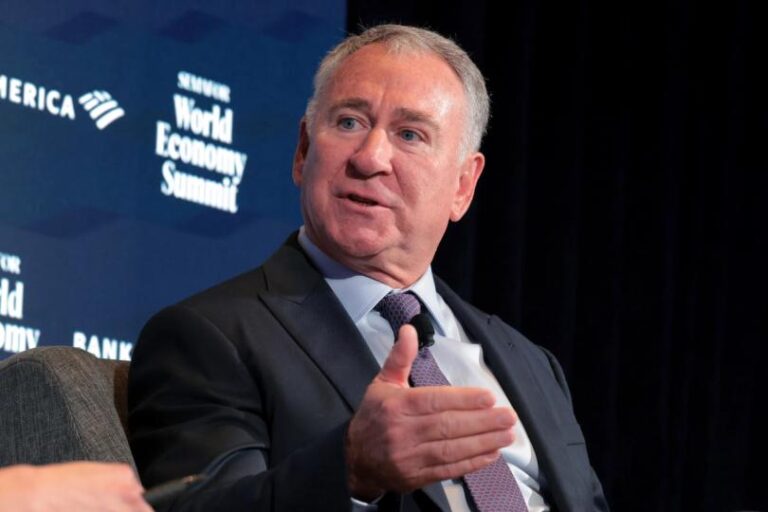
Crypto.com secured a $400 million strategic investment from market maker Citadel Securities in a deal that values the crypto exchange at $20 billion, marking the firm’s first institutional funding round since it was founded a decade ago, the company said in a press release Thursday.
The funding comes as digital assets draw greater participation from traditional financial institutions and as tokenized assets emerge as a growing area of focus for the industry.
The Singapore-based exchange said the capital will accelerate its expansion into tokenized securities, derivatives and other asset classes, as it seeks to bridge traditional and digital markets with around-the-clock trading infrastructure.
The deal reflects a broader shift as traditional finance firms ramp up investments in crypto infrastructure. Since the introduction of spot bitcoin exchange-traded funds (ETFs) in January 2024, Wall Street firms have increasingly expanded into digital asset trading, tokenization and custody, while institutional investors continue to boost planned crypto allocations, according to EY research.
“The size of the opportunity in front of us is staggering, as crypto increasingly becomes the rails for finance,” Crypto.com co-founder and CEO Kris Marszalek said in the release.