Home Blog Page 802

Samourai Letter #4: Notes From The Inside

0

Dear Reader,

As I write this letter to you it is January 19th, 2026. I have been in the custody of the Bureau of Prisons for 31 days. One full month. I figure that is a milestone worthy of penning another letter to you. The time has simultaneously crawled at a snail’s pace and raced by quicker than I can understand. From day to day time moves unbearably slowly. The day crawls by, I feel as if I am walking through quicksand, every step an enormous effort. A minute feels like an hour, and hour feels like a day. But at the same time it feels as if just yesterday I was surrendering myself to FPC Morgantown.

If you have time to read this article, you have time to sign the petition to free Samourai Wallet developers Keonne Rodriguez and William Hill. Every signature counts.

The one month milestone has been able to creep on me surprisingly quickly while I was concerned with how slow time has been passing. I was sentenced by Judge Dusty Coat, excuse me, Judge Denise Cote for a period of 60 months of incarceration. One month down, 59 more to go.

Prison is a totally alien environment. Everything is seemingly backwards and designed to frustrate you. As many prisoners have said to me, “BOP stands for Backwards On Purpose”, and they really aren’t wrong.

Here is a quick example, because the US taxpayer is now responsible for my health and well being I have been placed on the waiting list for a dental check, cleaning, and any basic work that might be needed (filling, extraction, etc…). Being a logical person I concluded that the wait would not be too long considering the population of FPC Morgantown is so low (around 160 inmates when well over 800 can be held here) it wouldn’t take too long for my name to reach the ‘top of the list’.

I was then informed that the waiting list includes all inmates within the entire BOP at every facility. So even though our dentist here only has 160 people to see, I must wait for someone in Oklahoma who is higher than me on the list to receive treatment before I can be seen. Backwards on Purpose. Nothing works logically or as expected.

On my 28th day here I received my A&O – Admission and Orientation – which is mostly a box checking operation as we have all been orientated by the other inmates in the 28 days we have been here.

In any case, we were told that being here is not a punishment. The punishment is the sentence the judge hands down, the time away from family, being here at the Federal prison is just our home for a short time. They tell you this with a straight face while counting you five times a day, forcing you to work for slave wages, and restricting the number of people you can communicate with per month. Not a punishment.

There are vaguely motivational posters placed around the inside of the housing unit. Most are so saccharine they make me queasy, I could do with out the ‘HR-ization’ of prison thank you very much. They are all clearly printed from the internet without permission as they are all pixelated to hell, but there is one that is my favorite. I get a good laugh whenever I walk by it or think about it. There is a vignette of a iron barred cell door with the words “You are only incarcerated by the walls you build yourself”.

What a hilarious thing to put in a prison. I would love to imagine a CO or administrator putting that up because they found it funny, but I know it is more likely someone put it up because they found it inspiring and insightful, which I suppose makes it even funnier.

Over the month I have been here I have somewhat succeeded in finding a routine – something many people who have been to prison have told me is essential – and sticking to it. I wake up every day at 4:00 AM. This suits me greatly because I am the only one awake at that time and getting any sort of alone time in prison is surprisingly difficult (at least while you are in general population. If you are in Solitary Confinement, it is very easy).

Upon waking up I make myself what I have taken to calling a “prison latte” which is a mug of hot milk made from powdered milk with two heaping scoops of Folgers instant coffee added in. I collect my pen, notebook, and my prison latte and find a well lit area. Where that area ends up being tends to change by the day, there is no rhyme or reason as to which overhead lights the COs turn on throughout the week.

Usually I end up in the common room or the computer room, which ever one has lights on or enough light bleeding in from the hallway lights. I sit and write for the next hour. I write these letters to you, a daily journal, or responses to any mail I have received. I return to my bunk to await the 5:00 AM count. At 12:00AM, 3:00AM, 5:00AM, 4:00PM, and 9:00PM (and 10:00AM on weekends) we must be at our bunks as two guards come by our beds and count us to make sure we are all still there.

I await the count by beginning my full body stretching routine. I learnt this routine many years ago – during martial arts training – which focuses on stretching every major muscle group from neck to toe. It has become an essential part of my day since I wake up so sore and stiff from the paper thin mattress on the sheet metal bunk. Stretching makes me feel somewhat normal.

The 5:00 AM count usually takes place around 5:20. Two guards walk briskly by, their chains and keys jingling with their gait, and they presumably count you by shining a bright flashlight in your face – to be fair, only one particular CO does that, the others seem to be a bit more courteous and mindful that people are still trying to sleep.

While stretching I listen to my AM/FM radio. This radio is my prized possession, it connects me to the outside world unlike anything else in here. At 5:00AM I tune to the local public radio station 90.5 which plays the BBC World Service news and documentaries. I look forward to these daily programs greatly.

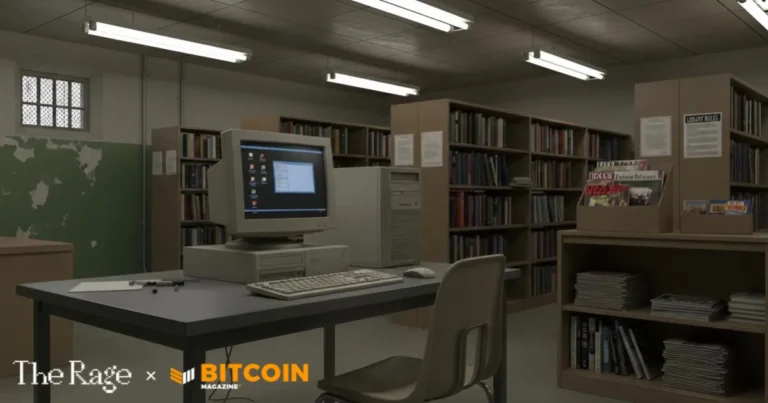
At 6:00AM the telephones and computers turn on. I check my prison email first. The computers aren’t like normal computers, imagine instead a 1990’s PC terminal with extremely limited functionality and designed specifically to be as frustrating as possible.

It costs $0.06/minute to read, reply, and compose emails. So I try to be as quick as possible when reading and responding to any emails I receive from my approved contacts. Right after checking email I call my wife Lauren.

There are 8 payphone style telephones in the housing unit, but only 2 of them work before 5:00 PM. There is no real reason for this restriction. BOP, backwards on purpose. The telephone line is usually quite bad. You often have to yell to be heard and a computerized woman interrupts you often to announce a reminder that this is indeed a call from a Federal Prison, as if we weren’t aware.

Despite the frustrations of the phone system I live for that 6:00AM call. You only are allocated 510 minutes per month, and the most you can spend on the phone in one session is 15 minutes. You then need to wait 30 minutes before you can use the phone again.

However, 510 minutes means you can only make a single 15 minute phone call per day and be left with three 15 minute phone calls extra for the month. So, I call Lauren once per day for 15 minutes and place one 15 minute call to my mother, my father, and my grandmother per month.
Rationing the phone minutes is stressful, making sure I have enough minutes left to make the calls I want to make is something I check and double check every week. But not to worry, being here is not a punishment, rationing my connection to the outside world must be one of those walls I built in my mind.

After my 15 minute call concludes I change into athletic clothing and head towards the recreation building which usually opens around 6:30 to 7:00 AM most days. I have made a friend in here and we play handball together most mornings for about an hour. It is good exercise and a fun game to play. A nice way to kill and hour. If we don’t play handball I try to spend some time doing cardio or strength training in the gym, depending on the day.

By 8:00 AM I am back in the housing unit getting ready to make breakfast. I usually make oatmeal with dried fruit and honey, but sometimes will opt for a vanilla protein shake. I purchase all these items from the commissary weekly. I choose to make both my protein shake and my oatmeal with powdered milk instead of water, for extra protein and because it tastes better and creamier than just using water.

Since I no longer go to breakfast in the chow hall at 6:00AM I do not have access to any milk cartons. I instead buy the powdered milk and either add hot water to it for oatmeal or cold water for the vanilla shake.

I prefer to cook for myself whenever I can now. By this time I have turned off the public radio station, the BBC world service is off air and has been replaced by NPR, which is so self important and out of touch that I cannot stand to listen to it. I switch to 101.9 FM WVAQ where a fun and casual “drivetime” radio show is airing. “Josh and Nikki in the morning” offers a casual and funny morning show that is easy to listen to. They play whatever the hits of the day are, which I do not recognize at all, but most of what they play is quite catchy.

There is one song performed by a female singer going on and on about “Ophelia”. I am not 100% certain but I suspect it may be Taylor Swift. I enjoy the song which I guess makes me a Swiftie? Maybe someone will write me a letter telling me who sings that.

After my breakfast, at around 9:00 AM I like to start my job. I actually have two prison jobs, but one is only on weekends. The one I do daily at 9:00 AM is “Bathroom Orderly”. Orderly is a fancy word for janitor.

At 9:00 AM I close the B-Wing bathroom and begin the grueling and frankly disgusting process of cleaning up after 80 men who seemingly are incapable of cleaning up after themselves. I am provided two rags, a spray bottle of disinfectant, a straw broom, and a musty mop. I have come up with a system that seems to be efficient and the most sanitary.

I sweep the entire bathroom and shower room first, trying to get all the pubic hair and dust into piles I can sweep into the dustbin. Afterwards I spray and wipe down the shelf and sinks using one of the allocated rags. I wipe away any hair or soap scum left in the sinks and ensure they are spotless.

I then move on to the showers, spraying the shelf, bench, and faucet handle and wiping them down. Again, I am aiming to remove errant hairs and dust. Sometimes there are other things I must wipe up that is not fit to discuss in this letter, but you can use your imagination.

Once the showers are complete, I wash out the rag and move on to the urinals. I wipe the top (how in the world does pubic hair get onto the top of a urinal. Please dear reader, I cannot figure it out) and sides, and most importantly the rim. It is not very nice, but it doesn’t take too long and it is satisfying when it is done.

Once the urinals are done I move onto the toilets. Spraying the bowl, the rim, the seat, the flush handle I wipe the underside of the seat and the rim down. I use a toilet brush to scrub inside the bowl. Finally I take the one unused rag and first wipe the handles of the flusher and then the top side of each toilet seat. Once all that is complete I mop the entire floor including the showers and each bathroom stall.

It usually takes about 45 minutes to an hour. I work up quite a sweat but I try to do a good job as I also use that bathroom and I prefer my bathroom to be clean. Once finished I take a shower. One of the only perks of the job of bathroom orderly is that I get to use the bathroom while it is freshly ‘clean’, before anyone else has the opportunity to desecrate it.

By 10:30 I am done with the shower and and the rest of my day is free. I am still working on how to fill this part of my day into my routine. Right now I mostly read and nap, and then read and nap some more.

I hope to become more productive with my time soon. Maybe I will take some classes when some become available to help fill the time. I try to avoid the several TV rooms as it seems mostly filled with people who do nothing else but watch TV and get quite territorial about the remote. Many times each of the TV rooms will be playing the same football game, which I have no interest in watching. So, TV is not a reliable or desired way to pass the time.

I cannot believe it has been one month already. It often feels like I am stuck in a bad dream I cannot wake from. An unending nightmare that me and many others here with me are living. The most we can do is figure out a way to make the time go by as quickly as possible so we can get back to our families and our lives. One month down, 59 left to go.

Thank you for reading,

Keonne Rodriguez

Write to Keonne:

Keonne Rodriguez
11404-511
FPC Morgantown
FEDERAL PRISON CAMP
P.O. BOX 1000
MORGANTOWN, WV 26507

Mailing Guidelines:

Please note: You can only send letters (no more than 3 pages long). No packages or other items are allowed. Books, magazines, and newspapers must be sent directly from the publisher or an online retailer like Amazon. All letters must include a full return address and sender name to be delivered.

This is a guest post by Keonne Rodriguez. Opinions expressed are entirely their own and do not necessarily reflect those of BTC Inc or Bitcoin Magazine.

Crypto’s Next Expansion Will Be Licensed, Not Borderless

0

Trusted Editorial content, reviewed by leading industry experts and seasoned editors. Ad Disclosure

The industry is not entering an era of blanket legalization. It is moving into a phase of permissioned growth, where the winners may be the firms that can operate under real supervision.

The crypto industry has spent years asking the wrong regulatory question. “Which countries are pro-crypto?” sounds useful, but in 2026 it explains less and less. The more relevant question now is whether a serious firm can launch, scale, and keep operating inside a jurisdiction with a visible compliance path, known supervisory expectations, and a realistic licensing process. That is a harder standard, but it is also the one that increasingly matters.

The Market Is Moving From Ambiguity To Permission

A recent BitBullNews Quarter Crypto Regulation Tracker described the shift with a useful phrase: permissioned growth. That framing works because it captures what is actually happening across major jurisdictions. The market is not seeing broad deregulation, and it is not seeing a universal crackdown either. What it is seeing is a more usable environment for firms that are prepared to be governed like financial institutions, paired with a less forgiving environment for operators still relying on offshore ambiguity, weak controls, or aggressive marketing into markets where they lack authorization.

That is why some jurisdictions look more attractive than they did six months ago while also becoming harder to enter casually. The contradiction is only apparent. Clearer rules can be pro-growth for compliant operators and hostile to informal ones at the same time.

The US, UK, And Hong Kong Are Building Controlled Entry Points

In the United States, the Office of the Comptroller of the Currency has moved beyond political debate and into operational rulemaking. The OCC’s February 25, 2026 notice of proposed rulemaking sets out regulations tied to the GENIUS Act for permitted payment stablecoin issuers, foreign payment stablecoin issuers under OCC jurisdiction, and certain custody activities by OCC-supervised entities. That is a meaningful shift because it places stablecoin issuance deeper inside prudential-style supervisory design rather than leaving it in the realm of abstract policy discussion.

The United Kingdom is following a similarly structured path. The FCA says the application period for firms seeking authorization under the new cryptoasset regime is expected to run from September 30, 2026 to February 28, 2027, with the regime expected to come into force on October 25, 2027. In other words, the UK is not offering a free-for-all. It is offering a timetable, a perimeter, and a route. That is exactly the kind of signal institutional operators tend to prefer.

Hong Kong may be the clearest example of the “more legitimate, more constrained” tradeoff. The HKMA’s stablecoin issuer regime is already in place, with licensing guidance, supervisory expectations, and AML/CFT requirements published. But the regulator’s own register currently shows no licensed stablecoin issuer. That matters because it demonstrates the difference between having a regime on paper and actually clearing the bar in practice.

Why Stablecoins Sit At The Center Of This Shift

Stablecoins have become the pressure point where crypto regulation and traditional financial supervision increasingly overlap. That makes sense. Stablecoins sit close to payments, custody, reserves, redemptions, consumer expectations, and, in some cases, treasury demand. Once a digital asset starts looking like financial plumbing, regulators stop treating it like a side issue.

That is why stablecoins now anchor so much of the new rulebook. In the BitBullNews tracker, the quarter’s regulatory pattern is not described as a broad crypto opening, but as a stablecoin-heavy migration into formal supervision across jurisdictions including the US and Hong Kong. That reading is consistent with what official agencies are now publishing. Stablecoins are no longer merely tolerated products at the edge of the system. They are increasingly being designed into the perimeter itself.

Compliance Is No Longer A Wrapper Around The Product

The deeper implication is operational, not rhetorical. Crypto firms can no longer treat compliance as something added around the edges once growth has already been captured. Product design itself is becoming a regulatory question. Reserve disclosures, custody arrangements, sanctions screening, governance, onboarding, communications controls, and even marketing flows are all moving closer to the center of licensing logic. The BitBullNews tracker puts this well: product controls and communications controls are becoming licensing controls.

That change affects nearly every business model in the stack. Exchanges and broker-dealers are being pushed toward more formal market-infrastructure models. Custodians are facing higher evidentiary burdens. Wallets and front ends are increasingly judged not just by what they enable, but by how they gate, monitor, and present access. Payment firms and stablecoin issuers are being pulled toward bank-like expectations even when they are not literally banks.

What This Means For Bitcoin And Institutional Adoption

Bitcoin itself does not need permission to exist. But the rails that make it easier for large pools of capital to access, hold, settle, and move around Bitcoin increasingly do. Stablecoin issuance, regulated custody, broker-dealer access, and compliant fiat connectivity all shape how institutional adoption actually scales in practice.

That means the next phase of crypto growth may look less like the offshore, slogan-driven expansion many market veterans still associate with earlier cycles. It may be slower, cleaner, and more tightly intermediated. For some in crypto, that will feel less romantic. For institutions, it may feel much more investable. And that is the crucial point: the next expansion may not belong to the loudest firms. It may belong to the ones that can survive a real license review, a real audit trail, and a real supervisory relationship. That is not anti-crypto. It is the form mainstream adoption is increasingly taking.

Final Take

Crypto is not entering an age of universal approval. It is entering an era of selective legitimacy. The jurisdictions that matter most are not the loosest ones, but the ones that give serious operators a credible path to enter and stay. That is why “permissioned growth” may be the most accurate regulatory phrase of 2026.

For the industry, the message is blunt: ambiguity is losing value. Permission is gaining it. And for firms that want to be part of the next institutional wave, that shift may prove more bullish than many realize.

Editorial Process for bitcoinist is centered on delivering thoroughly researched, accurate, and unbiased content. We uphold strict sourcing standards, and each page undergoes diligent review by our team of top technology experts and seasoned editors. This process ensures the integrity, relevance, and value of our content for our readers.

Revolut, crypto-friendly fintech, becomes fully licensed UK bank

0

Revolut, the London-based crypto-friendly fintech, said it received a full U.K. banking license, allowing it to offer a wider range of services and providing deposit protection for eligible funds almost two years after receiving a restricted registration.

The company, valued at about $75 billion in a funding round in November, set up a new entity called Revolut Bank UK Ltd. and will migrate customer accounts in coming months, according to a statement on its website.

The development completes a regulatory process that began years earlier. In 2024, Revolut secured a restricted U.K. license and entered a mobilization stage designed for new banks. Approval comes shortly after Revolut filed for a U.S. banking license.

The bank is supervised by the Prudential Regulation Authority (PRA) and Financial Conduct Authority (FCA), the same regulatory framework that governs traditional U.K. banks. The change means eligible customer deposits will qualify for protection under the Financial Services Compensation Scheme (FCSC), which covers up to £120,000 ($160,000) per person if a bank fails.

Converting accounts to the new bank will take place in stages, and users will receive notice through email or in-app messages when their accounts are ready to move.

Most day-to-day features will remain the same. Account numbers, sort codes and IBAN details will not change, the company said, and the Revolut app will continue to show past transactions and statements.

Some services will remain outside the new banking entity. Savings balances will still be held with partner banks, each with its own FSCS coverage limits. Crypto trading, commodities and stock services will continue to operate through separate Revolut entities.

Foundry to Launch Institutional Zcash Mining Pool

0

The world’s top Bitcoin mining pool operator expands into privacy coins as ZEC surges 600% year-over-year.

Foundry Digital, the Digital Currency Group (DCG) subsidiary behind the world’s largest Bitcoin mining pool by hashrate, announced today that it will launch an institution-focused Zcash mining pool in April.

The move marks Foundry’s first expansion beyond Bitcoin and targets what the company describes as a gap in the Zcash ecosystem: the absence of compliant, institutional-grade pool infrastructure capable of meeting the needs of public companies and large-scale miners.

Foundry CEO Mike Colyer framed the expansion as a natural extension of the company’s mission, noting that while Zcash has grown into a serious institutional asset, its mining infrastructure has lagged behind. The new pool will be U.S.-based and built on the same compliance framework underpinning Foundry USA Pool, which holds both SOC 1 Type 2 and SOC 2 Type 2 certifications.

The announcement was welcomed by Zcash founder Zooko Wilcox, now Chief Product Officer at Shielded Labs, who said the new pool should help distribute Zcash mining hashpower away from its current concentration in a single pool and attract new miners.

ZEC is trading around $212, down roughly 4% in the past 24 hours and about 10% on the week.

ZEC Chart

Zcash Open Development Lab (ZODL), formed by the core developers of Zcash (ZEC) after they exited Electric Coin Capital, recently secured $25 million in seed funding to support the privacy-focused ecosystem.

Zcash, launched in 2016, uses zero-knowledge proof technology to enable private transactions on a public blockchain, allowing verification without exposing wallet addresses or amounts.

This article was written with the assistance of AI workflows. All our stories are curated, edited and fact-checked by a human.

What Is Included in Financial Statement Translation Services?

0

Businesses operating in global markets must communicate financial information clearly and accurately across languages. Investors, regulators, and stakeholders rely on financial statements to understand a company’s performance and financial health. When organizations expand internationally or work with foreign investors, translating financial documentation becomes essential. This is where financial statement translation services play a critical role.

Financial statement translation is not simply converting numbers and words from one language to another. It involves specialized linguistic expertise, financial knowledge, and strict attention to regulatory standards. Professional providers ensure that translated documents maintain the same meaning, accuracy, and compliance as the original.

Below is a closer look at what is typically included in financial statement translation services and why these services are vital for companies operating in global markets.

Translation of Core Financial Statements

At the foundation of financial statement translation services is the translation of the core financial reports that organizations produce regularly. These documents communicate the financial position, performance, and cash flow of a business.

The balance sheet is one of the most commonly translated documents. It outlines a company’s assets, liabilities, and equity at a specific point in time. Accurate translation is essential because investors and regulators rely on these figures to evaluate the company’s financial stability.

Another key document is the income statement, also called the profit and loss statement. This report summarizes revenue, expenses, and net income over a specific period. Translators must understand financial terminology and accounting principles to ensure that each term is translated correctly and consistently.

The cash flow statement is also frequently included. It details how cash moves in and out of a business through operating, investing, and financing activities. Because cash flow reporting terminology can differ between accounting frameworks, specialized expertise is necessary.

Professional financial statement translation services ensure that all terminology aligns with the appropriate accounting standards and remains consistent across documents.

Translation of Notes to the Financial Statements

Financial statements are typically accompanied by detailed notes that explain accounting policies, assumptions, and supporting details for reported figures. These notes provide context and transparency for readers.

Translating notes to the financial statements requires deep familiarity with financial terminology and regulatory language. These sections often contain complex explanations about revenue recognition, asset valuation, depreciation methods, and other accounting policies.

If these notes are translated incorrectly or incompletely, readers may misinterpret the financial results. Professional financial statement translation services, therefore, ensure that explanatory language remains precise while maintaining the original meaning.

In many cases, these notes can be longer and more complex than the statements themselves. Skilled translators must handle dense financial language while preserving clarity and accuracy.

Localization of Financial Terminology

Financial terminology varies significantly between countries and accounting systems. A literal translation may not accurately reflect the meaning intended within a specific financial framework.

Financial statement translation services include the localization of terminology so that the translated documents align with local accounting conventions. For example, terminology used under U.S. Generally Accepted Accounting Principles may differ from that used under International Financial Reporting Standards.

Professional translators adapt terms to ensure that stakeholders in the target market understand the statements correctly. This process helps avoid confusion and ensures that financial data is interpreted consistently.

Localization may also involve adapting formatting conventions, number presentation, and financial terminology specific to a region’s regulatory environment.

Regulatory and Compliance Considerations

Many financial documents must comply with strict legal and regulatory requirements. Companies submitting financial reports to international regulators, stock exchanges, or government agencies must ensure that translated versions meet those requirements.

Financial statement translation services often include compliance checks to confirm that translated documents align with the relevant regulatory framework. This can include ensuring that required terminology, disclosures, and formatting standards are preserved.

For example, companies preparing reports for international investors may need to provide translated financial statements that follow IFRS terminology. In other situations, translations must comply with the reporting requirements of local tax authorities or financial regulators.

Professional providers understand these requirements and ensure that translated documents meet the expectations of the relevant jurisdiction.

Consistency Across Financial Documents

Consistency is essential when translating financial documentation. The same financial terms, account names, and reporting structures must appear consistently across all documents.

Financial statement translation services typically use translation memory tools and terminology glossaries to maintain uniform language throughout multiple reports. These tools store previously translated terms and phrases, allowing translators to reuse approved terminology.

This consistency becomes especially important for organizations that translate financial reports on a recurring basis, such as quarterly or annual filings. Using standardized terminology helps maintain clarity and credibility for investors and regulators.

Consistency also ensures that readers can easily compare financial information across multiple reporting periods.

Quality Assurance and Review Processes

Because financial statements contain critical data used for decision-making, accuracy is essential. Financial statement translation services, therefore, include rigorous quality assurance processes.

These processes typically involve multiple stages of review. After the initial translation is completed, another qualified linguist or financial specialist reviews the document to verify accuracy and terminology. This step helps identify potential errors or inconsistencies.

Quality assurance may also include proofreading for formatting, numbers, and alignment with the source document. Financial figures must remain identical to the original, and formatting must preserve the structure of the statements.

This multilayer review process helps ensure that the final translation is reliable, professional, and suitable for official use.

Formatting and Document Layout

Financial statements often follow strict formatting structures that must be preserved in the translated version. Tables, columns, footnotes, and numerical alignment are essential elements of financial reporting.

Financial statement translation services frequently include formatting and layout adjustments so that the translated document mirrors the original structure. Maintaining the same layout ensures that readers can easily compare the translated document with the source.

Formatting may also involve adapting date formats, currency symbols, and number separators to match regional conventions. For example, some countries use commas as decimal separators while others use periods.

Professional translators and formatting specialists work together to ensure that the translated financial statements remain clear, professional, and easy to read.

Confidentiality and Data Security

Financial statements contain sensitive and confidential business information. Protecting this information during the translation process is essential.

Financial statement translation services typically include strict confidentiality protocols. Professional translation providers use secure file transfer systems and data protection practices to safeguard financial documents.

Translators working with financial materials often sign confidentiality agreements to ensure that sensitive data is not disclosed. Many translation providers also follow industry security standards for handling confidential information.

These security measures help businesses protect proprietary financial data while working with international translation partners.

Support for Multilingual Financial Reporting

Global companies often need financial statements translated into multiple languages for investors, regulators, and business partners around the world.

Financial statement translation services frequently support multilingual reporting by coordinating translations into several target languages simultaneously. This allows companies to publish consistent financial reports across different markets.

Multilingual financial reporting requires careful coordination to ensure that terminology remains consistent across all languages. Professional providers often use centralized terminology databases and translation memory systems to maintain consistency.

This approach helps organizations communicate financial results clearly to global audiences while maintaining the accuracy of their reporting.

Why Professional Financial Translation Matters

Financial statements influence investment decisions, regulatory compliance, and business reputation. Even small translation errors can lead to misunderstandings or legal complications.

Professional financial statement translation services combine linguistic expertise with financial knowledge to ensure that translated reports remain accurate and compliant. These specialists understand accounting terminology, reporting standards, and the importance of precision in financial communication.

By working with experienced financial translators, organizations can confidently share financial information with international stakeholders.

Conclusion

As businesses expand into global markets, the need for accurate financial communication becomes increasingly important. Financial statement translation services provide the expertise required to translate complex financial documents while maintaining accuracy, consistency, and compliance.

These services typically include the translation of core financial statements, notes to the financial statements, terminology localization, regulatory compliance checks, and rigorous quality assurance. They also address formatting requirements, confidentiality protections, and multilingual reporting needs.

By relying on professional financial statement translation services, companies can ensure that their financial reports are clearly understood by investors, regulators, and stakeholders across different languages and markets. Accurate translation not only supports transparency but also strengthens trust in a company’s financial reporting.


Three Binance Charts May Be Hinting at Bitcoin’s Next Move

0

The next big breakout for Bitcoin (BTC) may hinge on changes unfolding across Binance’s exchange flows and derivatives activity.

Onchain data from the largest cryptocurrency exchange currently show a cooling of whale deposits, rising BTC withdrawals, and growing futures dominance, which may influence the next direction for Bitcoin’s price.

Bitcoin whale activity cools after February spike

The Bitcoin exchange whale ratio on Binance, which measures the ten largest inflows relative to total exchange deposits, surged above 0.60 during early February, indicating strong selling by whales.

Since then, the 14-day moving average has settled closer to 0.45, levels seen throughout 2024 and 2025. The drop in large inflow spikes indicates that fewer dominant sell-side transfers are entering Binance during the current range phase.

Bitcoin exchange whale ratio on Binance: Source: CryptoQuant

The price action during this period is also important to note. Bitcoin stabilized in the $65,000-$72,0000 region after its February decline rather than extending the drop.

Related: Bitcoin will need 17% of ‘store of value’ market to hit $1M: Bitwise

Meanwhile, Crypto analyst CW noted that some whales may still be accumulating. Bitcoin’s cumulative volume delta (CVD) indicator shows persistent whale buying during the recent consolidation.

At the same time, whales are showing signs of accumulation. Crypto analyst CW said Bitcoin’s Cumulative Volume Delta (CVD) shows buying from large traders as BTC price consolidates.

Coinbase, Cryptocurrencies, Bitcoin Price, Adoption, Markets, Cryptocurrency Exchange, Derivatives, Bitcoin Futures, Binance, Price Analysis, Market Analysis, Liquidity
Bitcoin CVD data across different cohorts. Source: CW/X

The CVD tracks the net difference between aggressive market buys and sells. Higher readings while the price moves sideways may indicate larger participants absorbing supply without allowing the price to accelerate quickly.

BTC outflows on Binance rise as futures dominate spot trading

The exchange netflow on Binance has also changed since mid-February. The total netflow tracks the difference between coins entering and leaving exchanges.

The 14-day moving average moved deeper into negative territory at -1,151 BTC on March 11, showing a sustained wave of Bitcoin withdrawals from the platform. This indicates that more BTC is leaving the exchange, reducing the supply immediately available for selling.

Coinbase, Cryptocurrencies, Bitcoin Price, Adoption, Markets, Cryptocurrency Exchange, Derivatives, Bitcoin Futures, Binance, Price Analysis, Market Analysis, Liquidity
Total Bitcoin exchange netflow on Binance. Source: CryptoQuant

Derivatives activity has expanded alongside these flows. Crypto analyst Maartunn said that the futures-to-spot trading volume ratio on Binance has climbed to roughly 5.3, its highest level since October 2023, meaning futures markets have more than five times the spot volume.

Higher futures activity may signal that traders are using leverage and bracing for BTC price volatility.

Coinbase, Cryptocurrencies, Bitcoin Price, Adoption, Markets, Cryptocurrency Exchange, Derivatives, Bitcoin Futures, Binance, Price Analysis, Market Analysis, Liquidity
Binance futures/spot volume ratio. Source: CryptoQuant

Meanwhile, Coinbase research points to improving spot demand. The exchange noted that the spent output profit ratio (SOPR) for short-term holders has turned higher since late February.

Related: Bitcoin faces ‘highly volatile’ setup as bulls eye return to $80K by month-end

According to the exchange, the recovery in short-term holder SOPR above 0 across both Bitcoin and Ether (ETH) indicates that recent demand has been strong enough to absorb selling pressure from newer traders. This has helped stabilize the BTC price in the current range.

These factors highlight the reason behind Bitcoin’s current consolidation phase, which should result in sharper repricing if BTC solidifies the $70,000 level as support.

However, failure to break the $72,000 resistance over the next few days or weeks may confirm a bull trap and trigger the next leg down if history repeats.