Home Blog Page 801

Bitcoin Is Now A Legit Global Financial Player: Analysis

0

Bitcoin is crossing a structural threshold, evolving from an experimental digital asset into a macro-scale instrument with global capital relevance, according to analysis from Bitwise.

Bitcoin’s market capitalization, liquidity depth, and volatility profile now resemble established macro markets, with price dynamics being shaped by institutional flows rather than retail-driven reflexive cycles.

More than $1 trillion in capital has been absorbed by the Bitcoin network, showing its growing intrinsic value. The protocol continues to function as a high-value settlement system, with trillions of dollars in economically meaningful transfers moving across the base layer in recent years, Bitwise wrote.

Institutional participation has accelerated through US spot ETFs, which began trading on January 11, 2024. These products rapidly realised latent demand for regulated Bitcoin exposure, recording the fastest asset growth in ETF history. 

According to Glassnode and Bitwise data, current holdings in US spot ETFs total 1.26 million BTC, equivalent to roughly 6.3% of circulating supply and $84.9 billion in economic value. 

Net cumulative inflows reached $54.4 billion, suggesting ETFs are absorbing a substantial share of on-chain profit, estimated at close to 9% of realised gains.

The expansion of Bitcoin options markets further signals institutionalisation. Open interest across Deribit and IBIT reached tens of billions of dollars, providing liquid instruments for hedging and yield generation. 

IBIT has gained parity with Deribit, reflecting broader participation from institutions employing options strategies to manage exposure and deploy larger spot positions.

On-chain activity shows structural transformation in investor behaviour. Large transactions above $1 million now dominate total volume, accounting for nearly 69% of all transfers since the November 2022 low. 

Bitcoin’s long-term holders are increasing as price behavior changes

Long-Term Holders, defined as addresses holding coins for more than 155 days, captured 75% of realised profit this cycle, marking a shift from prior cycles where mature holders accounted for roughly half of profit. Coin age analysis indicates older, dormant supply is re-entering circulation, aligning with the phase of mature investor distribution.

Price behavior has also shifted. Bitcoin’s realised volatility has declined, and its drawdown profile now more closely resembles that of major equities, such as the QQQ.

Institutional participants have acted as a structural backstop during stress events, absorbing forced selling and mitigating extreme drawdowns. While the market remains sensitive to shocks, the combination of ETF accumulation, options hedging, and large-scale on-chain flows has created deeper market structure and liquidity.

Recent macro events have tested Bitcoin’s resilience. During geopolitical shocks over the last couple of weeks and market turbulence, BTC traded near $70,000, briefly dipping to $60,000. 

Options positioning reflects cautious rebuilding of exposure, with risk reversals indicating sustained interest in downside protection. 

The macro backdrop, characterised by higher Treasury yields, inflation pressures, and energy market volatility, has created a stagflationary environment, yet Bitcoin has maintained stability relative to traditional high-beta assets, according to analysis from QCP. 

In other words, Bitcoin is moving beyond being just a speculative digital asset. It’s becoming a tool that plays a real role in the global financial system. 

Long-time holders are gradually letting go of coins that have sat untouched for years, while ETFs and other big investors are stepping in to absorb them. 

This shift shows that Bitcoin is increasingly seen as both a reliable store of value and a global settlement network — a sign that its role in finance is evolving for the long term.
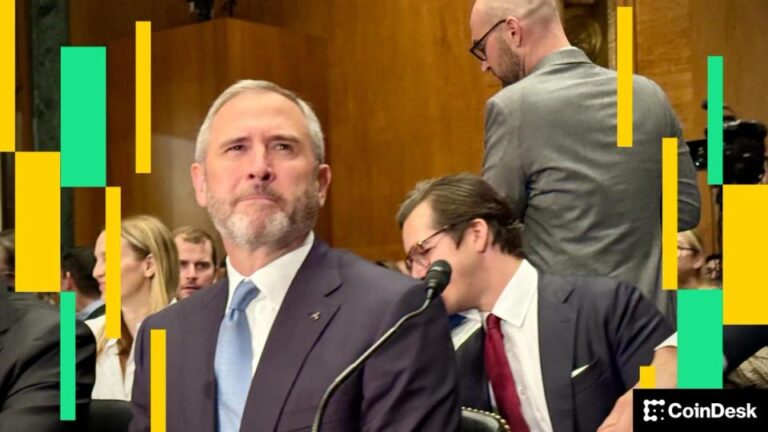

Ripple share buyback program values the firm at $50 billion

0

Ripple, the blockchain company closely associated with the XRP Ledger (XRP) network, has begun a share buyback that values the company at about $50 billion, according to a person familiar with the matter.

The blockchain payments firm is planning to repurchase up to $750 million in shares from investors and employees through a tender offer expected to run through April, the person who spoke on condition of anonymity, told CoinDesk.

Ripple is a major contributor to the XRP Ledger network, a blockchain designed for banks and payment firms to move money across borders and settle transfers in seconds. The firm said it has processed over 100 billion in transactions across its payments ecosystem.

The company has been quickly expanding through acquisitions, building services around trading and digital asset infrastructure. That push included the $1.25 billion purchase of prime brokerage Hidden Road and buying corporate treasury business GTreasury for $1 billion. The firm also issues a U.S. dollar stablecoin, the $1.5 billion , via its custody arm.

The move comes after a major funding round just months ago. In November, Ripple raised $500 million at a $40 billion valuation from a group of investors that included funds managed by affiliates of Fortress Investment Group, affiliates of Citadel Securities, Pantera Capital, Galaxy Digital, Brevan Howard and Marshall Wace.

That indicates a 25% higher valuation since the fundraising, despite a crypto market downturn that saw bitcoin and XRP tumble 30%-40% over the same period.

Bloomberg first reported on the buyback program.

UPDATE (March 11, 20:55 UTC): Updates story with a source familiar with the buyback program.

cautious optimism as BTC holds near $70,000 amid Iran war

0

Bitcoin’s resilience during the latest bout of global macro stress is starting to turn heads on trading desks.

The largest crypto climbed to just shy of $71,000, up roughly 7% from Sunday evening lows, even as geopolitical tensions escalated over the Iran conflict and markets grappled with risks ranging from oil supply disruptions to stress in private credit markets.

That relative strength is beginning to stand out. The Nasdaq 100 and S&P 500 have been roughly flat over the same time, while gold — typically a go-to safe haven during turmoil — has booked only modest gains. Looking at performance so far in March, BTC is the only one of the three posting gains.

Bitcoin is also showing early signs of breaking away from its tight correlation with embattled software stocks. Over the past five days, BlackRock’s spot bitcoin ETF (IBIT) is up 3.75%, while the iShares Expanded Tech-Software ETF (IGV) is down 2.45%.

The price action is turning analysts cautiously optimistic that the crypto market may finally be stabilizing after months of declines.

Seller exhaustion

Aurelie Barthere, principal research analyst at Nansen, said one encouraging signal is how little BTC has reacted to fresh geopolitical headlines.

Earlier in the week, a brief wave of optimism lifted equities and crypto alongside softer oil prices, suggesting markets were tentatively pricing in a potential de-escalation in the Iran conflict. But as the session progressed, that optimism faded, and risk assets gave back some of their gains.

“Bitcoin’s downside sensitivity has been relatively limited,” she said, noting that some traditional benchmarks such as the Euro Stoxx index have fallen more sharply during the same period.

That resilience suggests the marginal seller in bitcoin may be less aggressive than in equities, Barthere added.

Shifting correlation with gold

Another shift catching traders’ attention is bitcoin’s changing relationship with gold.

According to Bryan Tan, trader at crypto trading firm Wintermute, the BTC–gold correlation has flipped positive, moving to +0.16 from -0.49 a week ago.

During the initial phase of the Middle East conflict, bitcoin fell while gold rallied in a classic risk-off move, Tan noted. More recently, both assets have risen together while the U.S. dollar weakened, suggesting investors may be starting to treat them as beneficiaries of dollar softness rather than opposing risk trades.

“If this correlation continues trending positively, it shifts the narrative around BTC in a conflict environment from ‘sell the risk asset’ to something more nuanced,” Tan said.

ETF flows return

Improving bitcoin ETF flows may also be supporting the recent strength.

U.S.-listed bitcoin ETF flows per month (SoSoValue)

Bitcoin ETF flows had been trending negative for months following the peak in October. But data from the past two weeks shows a notable improvement, noted Joe Edwards, head of research at Enigma, particularly with consistent inflows into BlackRock’s IBIT fund, the largest of the bitcoin ETFs.

A sustained recovery in ETF demand could be critical for bitcoin, he added. A sustained recovery in ETF demand could be critical, he added. Many analysts believe bitcoin’s next phase of growth depends on access to deeper institutional capital pools, such as ETF investors in brokerage accounts. With that in mind, the recent wave of outflows was concerning, Edwards said.

The “good news,” he said, is that there are signs of that period ending.

IBIT has attracted nearly $1 billion in fresh inflows so far in March, after losing more than $3 billion between November and February, data by SoSoValue shows.

If the trend holds through the coming weeks, Edwards argued, it could support a broader bitcoin recovery into the second quarter.

Pro Traders Anticipate Low Odds of a Bitcoin Rally Toward $78,000

0

Key takeaways:

  • Professional traders remain cautious, pricing low odds for a Bitcoin breakout to $78,000 despite recent ETF inflows.

  • US and Israel-Iran war and soft US labor data offset momentum in Bitcoin ETFs.

Bitcoin options: 17% chance of breaking $78,000

Bitcoin (BTC) reclaimed the $70,000 mark again on Wednesday. However, repeated failed attempts to break above $74,000 over the last five weeks have fueled skepticism. The ongoing US and Israel-Iran war, coupled with disappointing US labor numbers, has only added to the cautious outlook.

Traders are now evaluating whether recent inflows into Bitcoin exchange-traded funds (ETFs) signal an imminent bullish breakout.

US-listed Bitcoin ETFs daily net flows, USD. Source: Farside Investors

While US-listed Bitcoin ETFs saw $414 million in net inflows between Monday and Tuesday, this was insufficient to offset the $576 million in net outflows recorded the previous Thursday and Friday. 

Data from the derivatives market suggests that professional traders are skeptical of a significant rally before the end of the month.

Bitcoin call options for March 27 at Deribit. Source: Deribit by Coinbase

Bitcoin call options on Deribit for March 27, which target a $78,000 strike price, traded at $704 on Wednesday. This pricing indicates that whales and market makers see less than a 17% chance of Bitcoin gaining roughly 12% from its current levels.

This cautious outlook is also visible in the futures market, where demand for leveraged long positions remains stagnant.

Bitcoin 2-month futures annualized premium. Source: Laevitas.ch

The annualized premium (basis rate) for monthly Bitcoin futures has stayed below the 4% neutral threshold. Notably, this metric failed to shift even after a 16% four-day rally that peaked with a retest of $74,000 on March 4.

Current onchain and derivatives data point toward indifference rather than an expectation of a sharp crash.

Economic outlook offsets institutional BTC inflows

Professional traders appear wary of sustained BTC price momentum, largely due to a worsening global economy.

Seema Shah, chief global strategist at Principal Asset Management, said that investors are far more focused on how the conflict feeds into inflation, according to Yahoo Finance.

Raymond James strategist Tavis McCourt wrote on Monday that the $25 oil price gain essentially offsets the fiscal benefit from the One Big Beautiful Bill Act, according to CNBC.

McCourt added that after the Gulf War in 1990 and the Russian invasion of Ukraine in 2022, it took about six months for oil prices to get back to where they were before.

The 92,000 job positions cut in the US during February, announced on Friday, vastly disappointed analysts, as consensus anticipated a 55,000 increase. Sentiment further deteriorated on Monday after JPMorgan reportedly reduced the value of private credit loans made to software firms, according to Financial Times.

Source: X/gumsays

Regardless of the economic outlook, yield products revolving around Strategy (MSTR US) shares are becoming increasingly supportive for Bitcoin’s price. The company announced a record high daily average price and trading volume, offering opportunities to issue at-the-market share offerings and use the proceeds to buy additional spot Bitcoin positions.

Related: Price predictions 3/11: BTC, ETH, BNB, XRP, SOL, DOGE, ADA, BCH, HYPE, XMR

X user “gumsays” said that Strategy Variable Rate Perpetual (STRC US) adoption would lead to Strategy buying billions worth of Bitcoin per week.

The analysis added that a potential series of ETF inflows could result in sustained institutional demand. Therefore, traders will likely have to wait until after March for Bitcoin to break $78,000.