

Individuals transacting cryptocurrency on offshore platforms or independently must now report their movements when the amount of crypto transacted surpasses $5,000 per year. Users must now deliver sensitive data, including the purpose of each transaction, hashes, and destination addresses. Paraguay Ramps Up Crypto Reporting Requirements For VASPs and Individuals The government of Paraguay is ramping […]
Bybit Bridges Traditional Banking and Digital Assets with Direct AED Trading Pairs
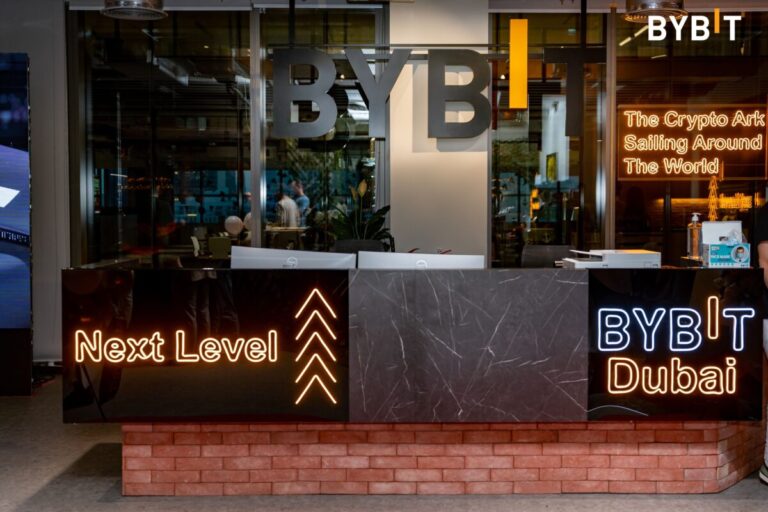
Bybit, the world’s second-largest cryptocurrency exchange by trading volume, has officially launched United Arab Emirates Dirham (AED) trading pairs. This new offering enables eligible users to trade supported digital assets directly using AED balances that have been deposited via local UAE bank accounts.
By allowing users to trade directly in their local currency, the platform aims to eliminate the friction typically associated with converting funds into other fiat currencies or stablecoins prior to entering the market. Once credited through a compliant domestic bank transfer, the AED balances can be utilized instantly on the exchange to improve overall efficiency and accessibility.
Expanding localized financial infrastructure
At launch, the exchange is offering four primary spot trading pairs: USDT/AED, BTC/AED, ETH/AED, and SOL/AED. This integration of local banking rails with digital asset trading reflects an ongoing industry trend toward converging traditional financial systems with digital finance, particularly in markets boasting clear regulatory frameworks.
The UAE is currently recognized as a global and regional leader in cryptocurrency adoption, supported by one of the most sophisticated and comprehensive digital asset regulatory frameworks in the world. Bybit noted that this development supports the growing demand for transparent, regulated, and locally integrated financial infrastructure as the digital asset ecosystem matures.
Strategic regional growth

Derek Dai, regional head of MENA at Bybit, emphasized the broader strategic importance of this localized offering.
“Being able to offer AED service to our local users carries significance beyond an improvement in user experience,” Dai stated. “As regional demand for digital asset services grows, local currency on-ramp, off-ramp, and trading play an increasingly important role in supporting responsible market participation. We will continue to expand our products and services within the orbit of compliance here in the UAE.”
While the new on-ramp channel marks a significant step for regional accessibility, Bybit highlighted that specific restrictions and eligibility requirements apply to the service. The AED trading functionality is exclusively available to users registered under the CMA license who joined the platform on or after 19 January 2026. Furthermore, the platform explicitly noted that this specific event is not currently available to residents of Dubai.
Stablecoin Yields will Bring Fresh Money to US Banks: Patrick Witt

Stablecoin yield providers will inject more capital into the US banking system, argues White House Council of Advisors for Digital Assets executive director Patrick Witt, amid debate over whether stablecoin yields will draw deposits away.
“Foreigners exchange local currency for stablecoins from a US-based issuer,” Witt said in an X post on Wednesday, adding that “global demand for USD is massive.”
“That is net new capital entering the American banking system,” Witt said. Most US stablecoin issuers hold US dollars or US Treasuries to back each token issued.
Banking and crypto industry clash over stablecoin yields
The US dollar index, which tracks the strength of the dollar against a basket of major currencies, fell to its lowest level in four years on Jan. 28, at 95.818, according to TradingView. It has since recovered 3.80% to 99.468.
It comes as the debate between crypto firms and US banks continues to heat up over the US CLARITY Act, aimed at providing the industry with clearer regulation, over whether allowing stablecoin yields will pull deposits out of traditional banks.
Major US bank Standard Chartered recently estimated in a research note that increasing stablecoin adoption could lead to US bank deposits decreasing “by one-third of stablecoin market cap.”
However, Witt argued that what’s often “lost” in the GENIUS and CLARITY Act discussions is how GENIUS-compliant stablecoins “will actually lead to deposit inflows.”
Community banking exec causes controversy in crypto industry
On Friday, the Independent Bankers Association of Texas president Christopher Williston said that making concessions in the CLARITY Act debate would risk harming local lending and economic production, prompting backlash from the crypto community.
“It’s simply impossible to roll over in the fight for liquidity that powers the economies of the places we call home,” he said.
Related: Republican opposition to CBDC could hold up housing affordability bill
Zero Knowledge Consulting founder Austin Campbell responded that “If community banks and crypto can’t find a way to work together, we already know who the winners are… It is the big banks.”
Witt also chimed in on this debate, saying it “feels like I’m watching an arsonist threaten to burn down their own home.”
Magazine: All 21 million Bitcoin is at risk from quantum computers
Cointelegraph is committed to independent, transparent journalism. This news article is produced in accordance with Cointelegraph’s Editorial Policy and aims to provide accurate and timely information. Readers are encouraged to verify information independently. Read our Editorial Policy https://cointelegraph.com/editorial-policy
Bitcoin holds $71,000 as Trump warns of Iran oil strikes
Two weeks into a Middle Eastern war and bitcoin is higher than where it started.
The largest cryptocurrency was trading at $71,000 on Saturday morning, down 0.7% over the past 24 hours after the U.S. bombed military targets on Kharg Island, Iran’s main crude export facility.
The reversal from Friday’s $73,838 high was sharp but contained. Bitcoin gave back 3.5% on the Kharg headlines and stopped. A month ago, a comparable escalation would have triggered a much deeper sell-off.
The weekly numbers tell the resilience story. Bitcoin is up 4.2% over seven days. Ether gained 5.5% to $2,090. Dogecoin added 5%. Solana rose 4.2% to $88. BNB climbed 4.5% to $655. Every major is green on the week despite the war intensifying, not easing.
The market is adapting to the conflict in real time. Early in the war, every headline produced an outsized reaction because nobody could price the tail risk. Now, traders have a framework, where strikes happen, oil spikes and bitcoin dips only to recover again.
The pattern has repeated enough times that the reflexive sell-the-headline impulse has faded. However, the $73,000-$74,000 resistance level stays in place, and has now rejected bitcoin four times in two weeks.
Trump’s language on Kharg Island added a new variable in the markets.
In a Truth Social post late Friday, he said he spared oil infrastructure “for reasons of decency” but would “immediately reconsider” if Iran continued blocking the Strait of Hormuz.
Iran responded that any strike on energy infrastructure would trigger retaliatory attacks on U.S.-linked facilities in the region. That’s a conditional escalation threat that didn’t exist 48 hours ago. If oil infrastructure becomes a target, the supply disruption, which the IEA already called the largest in history, gets dramatically worse.
Meanwhile, the $371 million in liquidations over the past 24 hours reflected the two-way nature of Friday’s session. Short liquidations outpaced longs at $207 million versus $163 million, meaning the initial surge to $73,800 squeezed bears before the Kharg headlines squeezed the longs who had just entered.
Attention now shifts to the Fed meeting on March 17-18. Oil above $100, the largest energy supply disruption in history, and a war entering its third week with no resolution make the stagflation case harder to dismiss.
CME FedWatch still prices a 95%+ probability of a hold at 3.5% to 3.75%, but the dot plot and Powell’s press conference will matter more than the decision itself. Any hint that rate hikes are back on the table would hit risk assets hard, including a crypto market that has spent five months pricing in cuts that keep not arriving.
Big Bet Takes Action to Block Prediction Markets in Brazil

Betting companies have reportedly asked regulators to pause the operations of prediction market platforms, such as Polymarket and Kalshi, in Brazil. The betting lobby argues that prediction market contracts constitute bets and should be blocked, as these platforms are unlicensed in the country. Betting Lobby Attacks Prediction Markets in Brazil Betting companies have taken action […]
Vitalik Buterin’s SHIB Gift Backfires? Warns Of “Authoritarian” AI Push From A Nonprofit

Trusted Editorial content, reviewed by leading industry experts and seasoned editors. Ad Disclosure
Ethereum’s co-founfer, Vitalik Buterin, has publicly distanced himself from the Future of Life Institute (FLI), the AI-security driven nonprofit he helped supercharge with a massive SHIB donation in 2021.
Vitalik Buterin Clears The Record
If there is something that Vitalik Buterin values most of all is clarity against misinformation. That’s why he doesn’t take lightly any form of speculation regarding the coherence of his connection to a project he has supported in the past. In a post on the social network X on March 13, Buterin decided it was time to “make clear the record” on his current relationship with the FLI, as well as the divergence (and similarities) of their approaches to AI risk.
The Facts
In 2021, Vitalik Buterin, who is known for his philanthropy focused on “high impact” causes, donated to the FLI part of the enormous gift of the SHIB token he received from Shiba Inu’s creators as a marketing stunt (that actually worked out) to promote the coin under the statement that “Vitalik owns half of our supply”. He explained that the FLI originally pitched him on a broad roadmap to reduce existential risks from AI, biology, nuclear threats and more, with a pro‑peace, pro‑science focus that convinced him to fund them, as it aligned with his own view of the path of real-world impact he believes the crypto sphere should be taking.
At the time, they presented me with a comprehensive roadmap that focused on improving all major existential risks (bio, nuclear, AI…) as well as general pro-peace and pro-epistemics (ie. helping us know the truth in adversarial contexts) initiatives.
A Divergence In Missions
However, Vitalik Buterin argues that the organization has now pivoted to toward large‑scale political and cultural advocacy around AI, which he sees as materially different from their original plan. He also clarified he had assumed FLI would only be able to liquidate a small portion of the SHIB he sent, around $10–25 million, but that they ultimately managed to cash out around $500 million’s worth.
But this is not about money, Vitalik Buterin wants to make clear, but rather about security and freedom. Coordinated political action with big money pools, he argues, “can easily lead to unintended outcomes”, as drastic as “solve problems in a way that is both authoritarian and fragile, even if it was not intended that way”. He criticizes one of FIL’s moves and uses it to exemplify one of his fears: actually-unsafe safety mechanisms that can be easily jailbroken and leave platforms vulnerable to regulations from centralization and governance.
Their primary approach to biosafety has been “how do we put guards into bio-synthesis devices and AI models so that they refuse to create bad stuff?”. I view this as a very fragile solution: there are many ways to jailbreak, fine-tune or otherwise get around such restrictions. Ultimately, putting all your eggs into this strategy can lead to very dark places like “let’s ban open-source AI” and then “let’s support one good-guy AI company to establish global dominance and don’t let anyone else get to the same level”. Approaches like this VERY EASILY backfire: they make the rest of the world your enemy.
Where They Do Agree
They say all’s well that ends well, and so Vitalik Buterin wraps up his post highlighting the “very good philosophical path forward” of the “Pro-human AI declaration” recently supported by the FIL, for it unites the entire world under the premise of “keeping humans in charge” against “risks to societal stability, national security, economic prosperity, civil liberties, privacy and democratic governance” posed by a “concentration of power resulting from AI”.
What This Means For Traders
At a macro level, this clash highlights a growing fault line: crypto wealth is increasingly funding AI‑safety and biosecurity work, but the governance and transparency frameworks around these flows are still immature. When a single SHIB‑denominated gift can create a nine‑figure war chest for an AI lobbying shop, donors and communities will demand far clearer reporting, liquidation strategies and guardrails. For traders, renewed scrutiny of the 2021 SHIB–FLI story can reignite concerns about “philanthropy dumps” whenever large foundations offload memecoins.
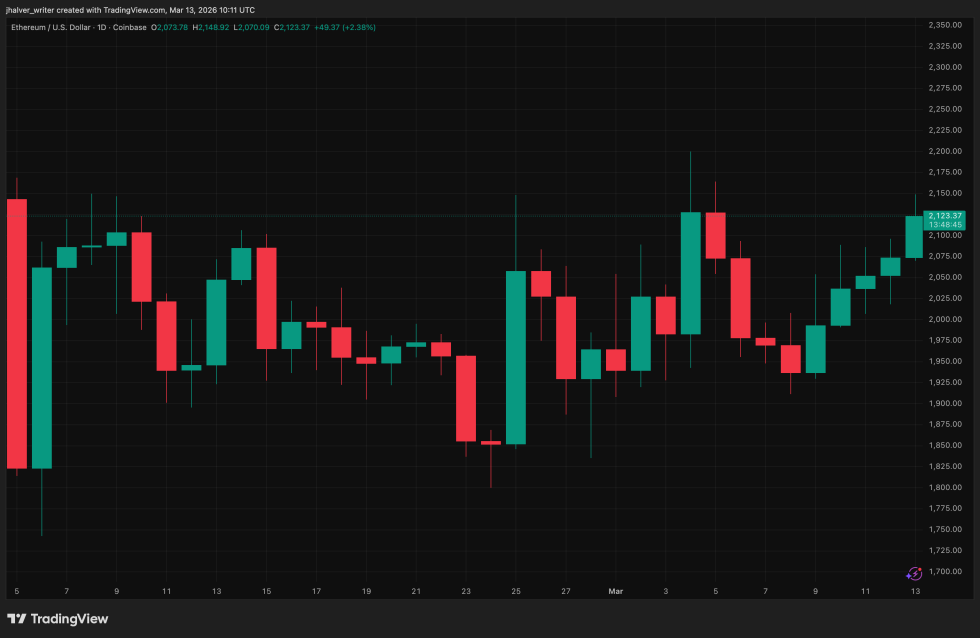
ETH’s price trends to the upside on the daily chart. Source: ETHUSD on Tradingview
Cover image from Perplexity, ETHUSD chart from Tradingview

Editorial Process for bitcoinist is centered on delivering thoroughly researched, accurate, and unbiased content. We uphold strict sourcing standards, and each page undergoes diligent review by our team of top technology experts and seasoned editors. This process ensures the integrity, relevance, and value of our content for our readers.
BlackRock says over 90% of Bitcoin ETF investors are long-term accumulators

BlackRock’s digital assets chief Robert Mitchnick said that more than 90% of Bitcoin ETF investors, including retail, financial advisors, and institutions, have followed a steady accumulation strategy.
Speaking to CNBC today, Mitchnick said retail investors “are some of the most long-term focused” and have tended to “buy the dip” when markets decline, while hedge funds account for a smaller share of more tactical trading activity.
“The only part of the demand base where we do see some tendency towards short-termism is the roughly 10 or so percent that is actually comprised of hedge funds,” said Mitchnick when asked what ETF flows reveal about crypto investor behavior.
He added that these investors have employed different trading strategies such as basis trades, going long on spot ETFs, and shorting futures contracts. These trades are largely market-neutral but can create temporary inflows or outflows in ETF data.
“But the other kind of 90 plus percent of the investor base,” Mitchnick emphasized, “have tended to be very steady and have been on an accumulation path pretty consistently.”
He noted that despite declines in the price of Bitcoin, BlackRock’s iShares Bitcoin Trust, IBIT, ranked among the top ETF inflows globally in 2025, drawing about $26 billion and placing fourth worldwide by inflows even as the asset posted negative returns.
“There’s clearly been a lot of selling pressure elsewhere in the Bitcoin ecosystem, on crypto exchanges, on these offshore levered perps platforms,” Mitchnick said. “But the ETF investor base has taken a much steadier, longer-term fundamental view of things.”
Bitcoin and Ether dominate crypto ETF demand
Commenting on investor demand for crypto assets, Mitchnick reiterated that it remains overwhelmingly concentrated on Bitcoin and Ethereum.
While BlackRock sees interest in other crypto assets, it takes “a very discerning approach” to expanding crypto offerings within its iShares ETF lineup.
“We continue to evaluate those as conditions evolve and as maturity, liquidity scale, and use cases develop,” he said.
Staking transforms Ether ETF economics
This week, the leading asset manager launched ETHB, its staking-enabled Ether ETF. The fund drew in over $43 million in net inflows on its trading debut, per Farside Investors.
Earlier Ethereum ETFs did not capture staking rewards, leaving investors unable to participate in the network’s native yield.
The new structure addresses that limitation, adding an income component that many portfolio allocators view as a meaningful incentive and one that could help narrow the adoption gap with Bitcoin products.
Despite the constraint, BlackRock’s flagship Ethereum ETF, ETHA, became the third-fastest ETF ever to reach $10 billion in assets under management, following only IBIT and FBTC.
With staking yield now incorporated, the firm expects that ETHB will become a dominant ETF vehicle for Ether exposure.
Mitchnick called the fund a near-silver bullet for investors seeking convenient exposure.
Disclosure: This article was edited by Vivian Nguyen. For more information on how we create and review content, see our Editorial Policy.
AI Tokens Surge as Crypto Market Rallies

TAO, FET, and RENDER led the AI sector higher amid improving market sentiment.
Artificial intelligence (AI) tokens outperformed the wider cryptocurrency market on Friday, with the sector’s total market capitalization rising 5% over the past 24 hours to $15.1 billion, according to CoinGecko.
Bittensor’s TAO token was among the top gainers, trading at approximately $233, up nearly 9% on the day and 33% on the week. The Artificial Superintelligence Alliance token (FET) also climbed roughly 8%, while RENDER gained 11%.
Meanwhile, Venice AI’s VVV token surged 15% to a $300 million market capitalization.
A blog post from Nvidia CEO Jensen Huang comparing the AI buildout to the historical impact of electrification helped drive bullish sentiment across AI-linked tokens earlier in the week.
“AI is becoming the foundational infrastructure of the modern world. And the choices we make now, how fast we build, how broadly we participate and how responsibly we deploy it, will shape what this era becomes,” Huang wrote.
The AI token rally unfolded against a backdrop of gradually improving crypto sentiment after Bitcoin reached as high as $74,000 earlier in the day. Still, the broader environment remains fragile as geopolitical tensions tied to the U.S.-Israel conflict with Iran continue to weigh on risk appetite.
Bitcoin can survive 72% of the world’s submarine cables being cut, but a targeted attack on five hosting providers could cripple it

Bitcoin’s network has been running nonstop since 2009. The question nobody had rigorously answered until now is what it would actually take to break it.
Researchers at the Cambridge Centre for Alternative Finance last week published the first longitudinal study of Bitcoin blockchain’s resilience to physical infrastructure disruption, analyzing 11 years of peer-to-peer network data against 68 verified submarine cable fault events.
The headline finding is that between 72% and 92% of the world’s inter-country submarine cables would need to fail simultaneously before Bitcoin experiences significant node disconnection.
In a world where the Strait of Hormuz is currently disrupted and infrastructure vulnerability is front of mind, the study provides the first empirical benchmark for how hard Bitcoin actually is to knock offline.
The numbers tell a story of a network that degrades gracefully rather than collapsing catastrophically. The researchers ran 1,000 Monte Carlo simulations per scenario across the full dataset and found that random cable failures barely register.
Over 87% of the 68 real-world cable fault events they studied caused less than 5% node impact. The largest single event, when seabed disturbances off Côte d’Ivoire damaged 7-8 cables simultaneously in March 2024, knocked out 43% of regional nodes but affected only 5-7 bitcoin nodes globally, roughly 0.03% of the network.
The correlation between cable failures and bitcoin’s price was essentially zero, at -0.02. Infrastructure disruptions are invisible against daily price volatility.
But the paper’s most important finding is the asymmetry between random and targeted attacks.
While random cable failures require 72-92% removal to cause damage, a targeted attack on the cables with the highest betweenness centrality, the ones that serve as chokepoints between continents, drops that threshold to 20%.
And targeting the top five hosting providers by node count, Hetzner, OVH, Comcast, Amazon, and Google Cloud, requires removing just 5% of routing capacity to achieve the same impact.
That’s a fundamentally different threat model. Random failures are acts of nature. Targeted attacks are acts of state, coordinated regulatory shutdowns of hosting providers or deliberate severing of critical cable routes. The study essentially maps two very different adversaries: one Bitcoin can easily survive, and one that remains a credible risk.
How threats to bitcoin change over time
The paper tracks how resilience evolved over time, and the trajectory isn’t a straight line. Bitcoin was most resilient in its early years from 2014-2017, when the network was geographically diverse and the critical failure threshold sat around 0.90-0.92.
Resilience declined sharply during 2018-2021 as the network grew rapidly but concentrated geographically, hitting its lowest point of 0.72 in 2021 during peak mining concentration in East Asia. The China mining ban in 2021 forced redistribution, and resilience partially recovered to 0.88 in 2022 before settling at 0.78 in 2025.
The TOR finding is the one that challenges conventional thinking. As of 2025, 64% of Bitcoin nodes use TOR, making their physical location unobservable.
The assumption has been that this inability to observe might hide fragility, that if TOR nodes turned out to be geographically concentrated, the network could be more vulnerable than it appears.
The Cambridge researchers built a four-layer model to test this and found the opposite. TOR relay infrastructure is heavily concentrated in Germany, France, and the Netherlands, countries with extensive submarine cable and land border connectivity.
An attacker trying to disrupt TOR relay capacity by cutting cables faces a compound problem because those countries are among the hardest to disconnect. The four-layer model consistently showed higher resilience than the clearnet-only baseline, with TOR adding between 0.02 and 0.10 to the critical failure threshold.

The paper frames this as “adaptive self-organization.” TOR adoption surged after censorship events like Iran’s internet shutdown in 2019, the Myanmar coup in 2021, and the China mining ban.
The Bitcoin community shifted toward censorship-resistant infrastructure without any central coordination, and that shift happened to also make the network physically harder to disrupt.
With the Strait of Hormuz effectively closed and a regional war disrupting infrastructure across the Middle East, the question of what happens to Bitcoin if submarine cables get damaged isn’t theoretical.
The study suggests the answer is probably nothing, unless someone is deliberately targeting the specific cables and hosting providers that matter most.
Network International and ADCB Egypt launch Egypt’s first Transactional Fraud Solution Powered by Artificial Intelligence with FICO’s Advanced Analytics

Network International (Network) (www.Network.ae), a leading fintech company in the Middle East and Africa, and ADCB Egypt – part of the Abu Dhabi Commercial Bank Group, one of the UAE’s foremost financial institutions – have launched FICO® Falcon® Fraud Manager.
The advanced analytics solution, powered by Artificial Intelligence (AI) and Machine Learning (ML) capabilities, delivers superior fraud detection. This is part of Network’s Enterprise Fraud Prevention initiative in Egypt, marking a first of its kind in safeguarding the country’s digital financial transactions.
The FICO Falcon fraud solution will enable ADCB Egypt and its customers to benefit from real-time fraud protection. By creating a unique behavioral profile for every customer and analyzing millions of transactions, the system can instantly identify and prevent fraudulent activity to safeguard accounts and ensure a seamless, secure experience at every touchpoint.
This partnership between Network International and ADCB Egypt further reinforces Network’s commitment to supporting Egypt’s financial inclusion agenda, specifically by combating fraud. It also establishes Network as a preferred partner for best-in-class fraud management solutions amongst Egyptian banks.
Dr. Reda Helal, Group Managing Director – Processing, Africa at Network International, said: “We are thrilled to have successfully deployed this solution, which marks a significant chapter in Network’s payments processing business in North Africa. The go-live of the FICO fraud solution underscores ADCB Egypt’s impact on the market by providing best-in-class digital customer experiences enhanced by operational efficiency. This partnership demonstrates Network’s commitment to delivering innovative, secure, and scalable payment solutions across the region.”
Alexandre Graff, Vice President of Global Partners & Alliances at FICO: “Fighting fraud is a critical priority in Egypt. FICO Falcon Fraud Manager is the leading AI-powered solution in this space, protecting 4 billion payment accounts worldwide. We are proud to partner with Network International and ADCB Egypt as they give Egyptian credit grantors the power to stop fraud faster, reduce friction in the customer experience, and safeguard consumers’ financial health.”
FICO and Network International have been working together since 2017, combining FICO’s innovative technology-led solutions with Network’s digital payments expertise to enhance fraud detection and prevention.