

Over the past decade, bitcoin mining thrived on predicting price surges after halvings. However, a new report by Wintermute indicates this reliance has ended as bitcoin matures into an institutional asset, disrupting previous profitability cycles. Diminishing Returns in the Post-Institutional Era For over a decade, bitcoin mining relied on a simple gamble: weather quadrennial halvings […]
Mastercard Unveils Single-Platform Global Commerce Suite to Streamline Cross-Border SME payments in APAC

Small and medium-sized enterprises (SMEs) across the Asia Pacific region are rapidly expanding into global trade, but complex payment processes and limited transaction visibility continue to hinder their growth.
In response, Mastercard has introduced the Mastercard Global Commerce Suite for Small Businesses. Powered by the Mastercard Move portfolio, this holistic set of capabilities is specifically designed to help banks support the evolving cross-border needs of time-strapped SMEs. The solution is initially available to banks and financial institutions in the key regional commerce hub of Hong Kong, with strategic plans to expand across select markets throughout the Asia Pacific.
Addressing the hurdles of global expansion
A persistent hurdle for internationalised SMEs is the glaring lack of in-house treasury and finance capabilities. When coupled with complex administrative processes, stringent compliance requirements, vague timelines, and limited financial visibility, the barrier remains exceptionally high for businesses looking to expand within an already volatile economy. Digital commercial payments in the Asia Pacific are forecasted to grow by 14.7 per cent annually through 2028, largely driven by the rapid digitisation of these smaller enterprises and their increasing participation in cross-border trade. As this demand rises, banks are finding themselves under intense pressure to offer simpler, more connected payment experiences that can reduce operational complexity while actively supporting international growth.
Unified features and industry perspectives

Through a single, unified touchpoint, the new suite enables SMEs to manage their payments, collections, and expenses with high efficiency. Businesses gain global finance flexibility, allowing them to pay and get paid like a local entity using virtual bank accounts in multiple currencies or a single multi-currency card. Furthermore, the platform offers seamless integration via app-based controls and API-driven connectivity to leading marketplaces and e-commerce platforms. This is paired with near real-time payouts and clear tracking for improved cash flow clarity, alongside strong authentication and compliance functionalities that reduce friction, fraud, and associated costs.
Anouska Ladds, executive vice president of commercial and new payment flows for Asia Pacific at Mastercard, highlighted the systemic friction the suite aims to eliminate. She noted that while SMEs want to move money across borders with the same speed and confidence as domestic transactions, many banks remain constrained by legacy systems. Ladds explained that the new suite aims to offer banks a scalable way to support SME growth by consolidating payments, visibility, and control into one purpose-built platform. Ultimately, she believes this will enable banks to serve SMEs more effectively and build the foundation for deeper, long-term relationships as these customers scale.
Modernising the broader ecosystem
Across the Asia Pacific, banks are actively modernising how they serve businesses as commercial payments become increasingly digital and data-driven by default. Mastercard is supporting this industry-wide shift by helping financial institutions simplify complex payment flows, connect fragmented systems, and deliver more consistent experiences across various cards, accounts, and platforms. By combining its global network capabilities, embedded security, and API-driven connectivity, the payments giant enables banks to digitise commercial payments at scale. The underlying engine, Mastercard Move, facilitates this by reaching nearly 17 billion endpoints and 95 per cent of the world’s banked population, enabling money to move quickly and safely across more than 200 countries and territories in over 150 currencies.
Bitcoin Miners Need AI, Yield Strategies to Survive

Many Bitcoin miners are struggling to turn a profit this market cycle due to diminishing returns, so they may need to pivot to artificial intelligence hosting or put their holdings to work to generate yields, says market maker Wintermute.
Wintermute said in a blog post on Thursday that Bitcoin (BTC) miners have spent years building large-scale power infrastructure in low-cost energy markets, and they now find themselves “sitting on exactly what the AI industry needs most urgently and cannot easily replicate.”
It said that Bitcoin mining is a “structurally rigid business model,” and while the AI pivot is a compelling one, it is also a “drastic and capital-intensive step.”
The report comes as mining giant MARA Holdings is the latest to eye AI, filing with the SEC on March 3 to signal its intent to sell some of its BTC to pivot to the technology. Meanwhile, publicly listed miners have sold more than 15,000 Bitcoin since October.
Miners hanging onto Bitcoin is “legacy of the HODL era”
Wintermute said that Bitcoin miners are collectively holding close to 1% of the total BTC supply, which it argued was a “legacy of the HODL era,” and that the “full toolkit of treasury management remains largely untapped.”
Crypto yield generation has been traditionally limited to staking and DeFi, but Wintermute said miners could tap yields through active management, such as monetizing market risk through derivatives structures, covered calls, and cash-secured puts.
Passive management options include deploying BTC into lending protocols to earn interest.
“We believe active balance sheet management is the most underutilized lever available to miners and one that deserves far greater strategic attention,” Wintermute said. “The miners who treat their BTC holdings as a working asset rather than a passive reserve will carry a structural edge into the next halving.”
Related: Mining companies move deeper into AI, HPC as MARA may sell Bitcoin
Wintermute said that for the first time in a four-year market cycle, Bitcoin has failed to deliver the two-times price return needed to offset halving-driven revenue cuts, and gross margins have peaked at levels that previously marked bear market floors.
Additionally, the transaction fee market has not filled the gap as it is “episodic” and not structural. At the same time, energy costs continue to squeeze margins.
The company noted that data suggests this squeeze is unlike previous cycles in 2018 and 2022, describing it as a “healthy shakeup” that fits within the design of Bitcoin and will make the mining industry “more efficient as a result.”
Magazine: All 21 million Bitcoin is at risk from quantum computers
Cointelegraph is committed to independent, transparent journalism. This news article is produced in accordance with Cointelegraph’s Editorial Policy and aims to provide accurate and timely information. Readers are encouraged to verify information independently. Read our Editorial Policy https://cointelegraph.com/editorial-policy
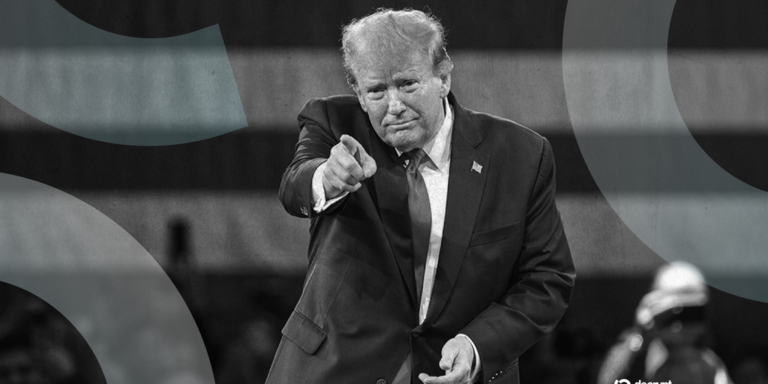
Trump Meme Coin Price, Trading Volume Skyrocket as Holders Vie for Exclusive Event Access
In brief
Daily Debrief Newsletter
Start every day with the top news stories right now, plus original features, a podcast, videos and more.
TRUMP Surges Over 50% on Mar-a-Lago Conference News

The top 297 holders of Official Trump are being invited to a conference and gala at Mar-a-Lago in April, with some eligible for a VIP reception with the President.
The TRUMP memecoin rallied more than 50% in less than 24 hours after its official X account announced on Thursday that top holders of the memecoin will be invited to an exclusive conference at Mar-a-Lago on April 25.
According to a dedicated page for the event on the memecoin’s official site, the “Crypto & Business Conference” will take place at U.S. President Donald Trump’s Palm Beach estate. Invitees include qualifying individuals from the top-297 holders of TRUMP, ranked by a points leaderboard.
The token climbed over 50% in the past 24 hours from around $2.76 to a high of $4.35 earlier today, before pulling back to $3.82 at press time.
The official memecoin of the sitting U.S. president is still down roughly 95% from its all-time high of ~$74, hit just days after its Jan. 17, 2025 launch ahead of Trump’s inauguration.
As part of the conference next month, President Trump will deliver a keynote at a gala luncheon alongside “18 global superstars,” with a VIP reception reserved for the top 29 qualifying holders, per the memecoin’s official website. Robinhood is listed as the preferred platform for the leaderboard.
The move echoes a pattern seen last April, when the announcement of a similar event — this time a presidential dinner, which left many of the attendees disappointed — sent TRUMP and other PolitiFi tokens surging.
Per CoinGecko, other PolitiFi tokens followed TRUMP higher again this time, with the sector gaining over 58% in the past 24 hours. MELANIA — the First Lady’s official memecoin, launched just two days after TRUMP and on the eve of inauguration — is up 13% on the day. MAGA Hat (MAGA) is also up 20% in the past 24 hours.
Last month, WLFI, the native token of Trump family-linked crypto project World Liberty Financial, rallied 30% the day of the firm’s flagship Forum event, also hosted at Mar-a-Lago.
The global memecoin market lost more than 60% of its value in 2025, even as the broader crypto market hit new highs, with total memecoin market cap falling from $93.1 billion in January 2025 to $36.5 billion by January 2026.
The sector has also been repeatedly rocked by rug pull scandals — most recently when former New York City Mayor Eric Adams promoted the NYC token in January, which briefly hit a $580 million valuation before crashing more than 75% amid allegations that a linked wallet pulled $2.5 million in liquidity near the top.
This article was written with the assistance of AI workflows. All our stories are curated, edited and fact-checked by a human.
Reply en NVIDIA GTC: los gemelos digitales y la IA física impulsan la próxima etapa de creación de valor industrial

Reply [EXM, STAR: REY] estará presente en NVIDIA GTC, del 16 al 19 de marzo de 2026 en San José, California, donde mostrará cómo las empresas pueden optimizar los procesos de producción y logística, escalar la robótica y aumentar de forma sostenible el rendimiento industrial mediante el uso de tecnología de tecnología de gemelos digitales e IA física. La conferencia es considerada el punto de encuentro internacional más importante para desarrolladores de IA, investigadores y responsables de toma de decisiones. Este año se espera la participación de más de 30 000 asistentes provenientes de más de 190 países.
El enfoque estará puesto en dos casos de uso concretos que demuestran cómo integrar los mundos digital y físico en entornos industriales de manera eficaz: un enfoque de desarrollo para IA de borde de autoaprendizaje en la fabricación y la logística, y un sistema inteligente de coordinación de robots desarrollado para Otto Group.
Reply presentará la solución “The AI Fast Lane for the Industrial Edge powered by NVIDIA on AWS” en el stand de AWS n.° 921, puesto n.° 7, el 17 de marzo de 3:00 a 5:00 p.m. y nuevamente el jueves 19 de marzo de 12:00 a 2:00 p.m. La aplicación valida y optimiza modelos de IA en dispositivos de borde autónomos y conectados, como brazos robóticos o robots móviles. Procesa datos de sensores en tiempo real, identifica brechas de rendimiento e inicia automáticamente procesos de reentrenamiento cuando es necesario. Un enfoque con intervención humana garantiza la calidad de los modelos. Con la integración de NVIDIA Omniverse con Isaac Sim, las simulaciones de gemelos digitales se incorporan directamente al proceso de desarrollo, lo que permite probar mejoras continuas y validar ganancias de eficiencia mediante datos sintéticos. De esta forma, Reply aborda uno de los principales desafíos de la industria: permitir que los sistemas de IA aprendan en el campo sin interrumpir las operaciones.
Del 16 al 19 de marzo, Google y Reply presentarán de manera conjunta una solución para coordinación inteligente de robots combinada con simulación robótica basada en la nube en el stand de Google n.° 513, puesto n.° 4. En este entorno, NVIDIA Isaac Sim se ejecuta directamente en instancias de Google Cloud G4. Esto permite crear gemelos digitales con muy alta precisión de entornos logísticos complejos sin necesidad de estaciones de trabajo locales, y simular y entrenar diversas flotas de robots sobre esa base. Como resultado, el proceso de validación puede acelerarse significativamente antes de que los sistemas se desplieguen en entornos reales.
Otto Group demostrará cómo funciona en la práctica la coordinación inteligente de robots el 17 de marzo. Roboverse Reply ha implementado un gemelo digital que replica con precisión el almacén, todos los sistemas robóticos y sus interacciones. Una capa de coordinación robótica conecta este gemelo digital con la gestión de flotas y el sistema de gestión de almacenes. El resultado es la coordinación centralizada de flotas, la simulación predictiva del diseño y la optimización de procesos incluso en períodos de máxima demanda. Otto Group presentará el proyecto el 17 de marzo de 3:00 a 3:40 p.m. en la sesión “Leverage Physical AI to Simulate and Orchestrate Robotic Fleets for Retail Fulfilment Centers.”
Con su participación en NVIDIA GTC, Reply muestra cómo la simulación digital y la automatización física ya se están integrando en la práctica. Los proyectos desarrollados para Otto Group y en el ámbito del industrial del borde demuestran cómo la IA física y los gemelos digitales de alta precisión trabajan en conjunto para crear nuevas oportunidades de generación de valor industrial.
Spot Bitcoin ETFs Log Their First Five-Day Inflow Streak of 2026

US spot Bitcoin exchange-traded funds (ETFs) logged their first five-day inflow streak of 2026, bringing in roughly $767.32 million this week.
The funds recorded $180.33 million in net inflows on Friday, extending the run of positive flows that began earlier in the week. The strongest day of the streak came on Tuesday, when spot Bitcoin (BTC) ETFs attracted $250.92 million, according to data from SoSoValue.
The last time the funds saw a comparable streak was in late November 2025, when spot Bitcoin ETFs logged five consecutive days of net inflows from Nov. 25 to Dec. 2, bringing in a combined $284.61 million.
Overall, the ETFs now hold $91.83 billion in net assets, with cumulative net inflows reaching $56.14 billion and roughly $4.93 billion in total value traded on the day.
Related: BlackRock says ‘exotic’ crypto ETFs not part of its strategy
Ether ETFs see 4-day inflow streak
Meanwhile, US spot Ether (ETH) ETFs recorded $26.69 million in net inflows on Friday, extending a four-day run of positive flows. The streak began on Tuesday, when the funds added $12.59 million, followed by $57.01 million on Wednesday and a stronger $115.85 million on Thursday, the largest inflow during the period.
The four-day stretch has brought roughly $212.14 million into spot Ether ETFs, reversing the outflows seen earlier in March. As of today, cumulative net inflows into US spot Ether ETFs stands at $11.79 billion, while total net assets across the funds reached $12.26 billion, with about $1.30 billion in value traded on the day.
The recent stretch marks the first sustained inflow run for spot Bitcoin and Ether ETFs this year after a volatile start to 2026 that saw several days of heavy outflows across the products.
Related: Bitcoin ETFs add $251M as Goldman Sachs tops XRP ETF holders
Bitcoin range-bound as Middle East tensions rise
Rising tensions in the Middle East and volatility in energy markets are weighing on global risk sentiment. According to Bitunix analysts, escalating conflict around the Strait of Hormuz and elevated oil prices have increased macro uncertainty and reduced expectations for aggressive Federal Reserve rate cuts, prompting investors to focus on short-term liquidity rather than long-term risk exposure.
Against this backdrop, Bitcoin remains range-bound. Bitunix said derivatives liquidation heatmaps show a key short-liquidity cluster near $71,300, which is acting as near-term resistance, with a larger concentration between $72,000 and $73,500.
On the downside, liquidity support sits around $69,000, with deeper long liquidation levels near $68,800, suggesting BTC may continue consolidating unless macro catalysts trigger a breakout.
Magazine: Bitcoin’s ‘narrative vacuum,’ Ethereum now inevitable: Trade Secrets
Cointelegraph is committed to independent, transparent journalism. This news article is produced in accordance with Cointelegraph’s Editorial Policy and aims to provide accurate and timely information. Readers are encouraged to verify information independently. Read our Editorial Policy https://cointelegraph.com/editorial-policy
Ghana Lets 11 Crypto Companies Participate in Sandbox

Ghana’s securities regulator has given the nod to 11 crypto trading platforms to participate in its new regulatory sandbox program, its first major step in support of crypto after passing a law to provide the local market with regulatory clarity in December.
Ghana’s Securities and Exchange Commission said on Tuesday that the 11 crypto platforms will operate under the country’s Virtual Asset Service Providers Act, adopted in December, which provides a regulatory sandbox framework for those companies to pilot their products and services in a controlled environment under the SEC’s oversight.
The companies admitted into the SEC’s regulatory sandbox are Africoin, Blu Penguin, Goldbod, Hanypay, Hyro Exchange, HSB Global, KoinKoin, Whitebits, Vaulta, XChain and Bsystem.
The sandbox program aims to spur crypto innovation while ensuring adequate consumer protection safeguards are in place. The participants will also need to comply with anti-money laundering and counter-terrorism financing standards.
The sandbox will last for 12 months, though companies that show market readiness and comply with all regulatory requirements can transition to a full license after six months.
Ghana said lessons from the pilot will shape the country’s future policies for the crypto market.
The VASP law stated that digital asset activities would fall under the SEC’s oversight and that industry players need to obtain a license or register with the Bank of Ghana or the SEC to operate in the country.
Foreign crypto companies are expanding into Ghana too
The new pilot comes after Blockchain.com said on Monday that it has expanded into Ghana as part of a push to broaden its presence in Africa.
A Blockchain.com spokesperson told Cointelegraph at the time that it would focus on expanding Ghana’s crypto payments infrastructure.
“Given how widely used mobile money is in Ghana, integration with the mobile money ecosystem is a key focus,” they said.
Related: Africa records highest stablecoin conversion spreads, data shows
Ghana is one of the larger economies on the African continent, which sees a high rate of crypto transactions under $1,000.
Crypto value received across the Sub-Saharan African region rose 52% year-on-year to over $205 billion between July 2024 and June 2025, blockchain analytics platform Chainalysis reported in September.
Nigeria dominates crypto activity, receiving over $92 billion over that period, while South Africa, Ethiopia, Kenya, and Ghana are the next-largest markets in the region.
Magazine: A ‘tsunami’ of wealth is headed for crypto: Nansen’s Alex Svanevik
Cointelegraph is committed to independent, transparent journalism. This news article is produced in accordance with Cointelegraph’s Editorial Policy and aims to provide accurate and timely information. Readers are encouraged to verify information independently. Read our Editorial Policy https://cointelegraph.com/editorial-policy
Libra Case: Milei Had Continuos Communication With Associates Before Token Launch

According to local reports, Milei would have been in constant communication with Mauricio Novelli, a crypto entrepreneur, just moments before writing the post sharing the token contract with his followers on social media. This could imply a coordinated strategy behind Milei’s actions. Libra: Milei Held Several Phone Calls Before Announcing the Token’s Issuance on Social […]
ADM launches new partnership with American Farmland Trust as part of its Farm Forward Initiative to strengthen american farmer resilience

ADM (NYSE: ADM) today announced a new initiative with American Farmland Trust (AFT) to partner with hundreds of farmers across Illinois, Indiana, Iowa, Kansas, Kentucky, and Missouri. The $500,000 investment from ADM Cares is part of ADM’s Farm Forward Initiative, the company’s long-term commitment to working alongside American farmers to strengthen resilience in a rapidly changing agricultural landscape.
Through the partnership, ADM Cares and AFT will engage American farmers to offer direct technical assistance for succession planning, connections to production resources and peer networks, and grant funding to support productivity, market access, and farmer well-being.
“The Farm Forward Initiative reflects our continued commitment to working alongside American farmers and strengthening America’s farm economy,” said Gary McGuigan, ADM Senior Vice President and President, North America Ag Services & Oilseeds and Global Trade. “By partnering with trusted organizations like American Farmland Trust, we’re offering American farmers access to the tools, resources and support they need to strengthen their businesses, care for their land, and sustain their families.
This partnership comes at a time when American farmers are adapting faster than ever as they navigate shifting market demands, evolving trade policy, advancing technology, and ongoing uncertainty. Last year, 315 family farms filed for bankruptcy, up 46% from 2024.
Strengthening resilience of American farms requires economic strength, environmental stewardship, and personal well-being, making coordinated and practical support more important than ever. By combining practical investment with trusted partnerships, ADM is reinforcing its commitment to stand with farmers when and where it matters most.
American Farmland Trust will lead on-the-ground engagement, providing hands-on support tailored to local needs and delivered through trusted networks with deep experience in farm viability and land stewardship.
“Farm resilience starts with strong planning, strong networks, and strong communities,” said AFT President and CEO John Piotti. “Through this partnership, we’re building on our work to advance soil health to further help farmers invest in their future – while attracting the next generation – by providing practical resources, direct financial assistance, peer connections, and expanding access to succession planning support.”
ADM’s Farm Forward Initiative
The Farm Forward Initiative brings together ADM’s existing and new investments, partnerships and on-the-ground engagement into a unified platform focused on farmer resilience in a rapidly changing agricultural landscape. The initiative is focused on addressing today’s pressures that American farmers face while creating opportunities for the future.
Through the Farm Forward Initiative, ADM is working hand-in-hand with farmers to expand access to markets, resources, and support — helping them strengthen their businesses, care for their land, and sustain their families. When American farmers thrive, rural communities and food systems thrive with them. Supporting competitive, adaptable farms also creates stronger local economies, more stable jobs and resilient regional food systems.
“Standing beside American farmers has always been a priority for ADM,” said McGuigan. “Our success is closely connected to the success of the farmers we work with every day. The Farm Forward Initiative brings greater focus to that commitment: building on longstanding efforts and partnerships to help ensure farmers and rural communities remain strong for the long term.”