Share
Share
Share
Share
Email
Businesses across Birmingham know that strong internal controls aren’t just a nice-to-have-they’re essential for managing risks, boosting efficiency, and keeping regulators happy. In a city with such a vibrant mix of manufacturing, professional services, and innovative startups, top providers of internal audit services step in to deliver independent, sharp-eyed reviews that spot weaknesses before they turn into bigger headaches. These companies bring together qualified professionals who understand the local landscape while applying best practices from broader UK and international standards.
What sets the leading companies apart is their focus on real value: not just producing reports, but offering actionable recommendations that help organisations tighten operations, protect assets, and support better decision-making. From risk-based audit planning to IT controls, fraud detection, and governance advice, these specialists work flexibly-whether through full outsourced audits, co-sourcing arrangements, or targeted project support-to fit the size and needs of Birmingham-based clients.
1. Acumon
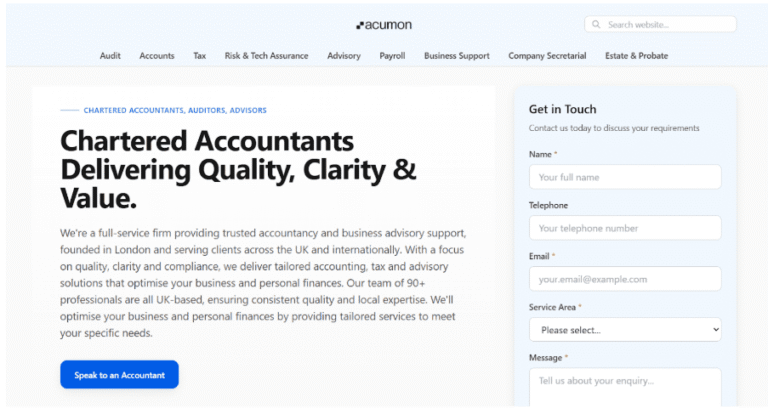
Acumon provides internal audit services under its Risk & Tech Assurance category as part of broader audit and assurance offerings for clients across the UK, including those in Birmingham. The company carries out independent reviews to examine controls, risk management, governance processes, and technology-related risks for businesses. This helps organisations identify potential issues, reduce risks, ensure compliance, and improve day-to-day operations through practical, tailored insights.
Acumon operates primarily from its London base in Ealing while extending services nationwide through its UK coverage and all-UK-based professionals. The approach remains practical and client-focused, concentrating on what actually matters to each organisation without unnecessary complexity. Services include comprehensive risk management, IT risk and cybersecurity assessments, governance and compliance checks, internal audit for CFOs and Finance Directors, plus related advisory elements like strategic planning to strengthen overall resilience and decision-making. Dedicated specialists handle the work with clear deliverables that fit businesses of varying sizes and sectors, blending compliance requirements with actionable recommendations.
Key Highlights:
- Independent control reviews
- Risk management checks
- Practical governance support
Services:
- Internal Audit
- Assurance Services
- Risk Assessment
- Control Reviews
Contact Information:

2. Bishop Fleming
Bishop Fleming provides internal audit and risk assurance for public and private sector organisations. Services cover compliance checks on key controls and annual audit plans. Internal audit mixes compliance reviews with risk-based assessments and targeted advisory support.
Public sector clients in education, housing, NHS, central and local government use these to strengthen controls and meet regulations. The approach is customised to focus on key impacts for resilience and risk awareness. Risk management covers monitoring, governance, workshops, risk registers and assurance mapping. Governance advisory reviews structures, board effectiveness, succession, codes of conduct and sector rules. Systems and controls assurance covers secure access, password policies, data handling and basic cybersecurity. Razia Gent directs internal audit and risk advisory from the Birmingham office on Colmore Row.
Key Highlights:
- Birmingham office on Colmore Row
- Customised public sector focus
- Risk and governance emphasis
- Practical control improvements
Services:
- Internal Audit
- Risk Management
- Governance Advisory
- Systems and Controls Assurance
3. Forvis Mazars
Forvis Mazars applies a risk-based, dynamic style to internal audit that protects long-term goals while improving day-to-day operations and change management. The service delivers assurance to stakeholders and sharpens risk, control, and governance processes with input from sector-experienced people. Flexibility stands out-organisations can build a fresh internal audit setup from scratch or strengthen what’s already running through co-sourced or outsourced partnerships.
The approach adapts to regulatory shifts and future challenges, pulling in specialists across industries for integrated work. It adds practical clarity about the business without rigid templates. UK-focused insights often touch on governance reforms, internal controls, and evolving responsibilities for boards and senior management. Contacts like Dan Mellows handle governance and internal audit matters directly.
Key Highlights:
- Risk-based and adaptable to regulatory changes
- Sector-specific expertise across industries
- Options to establish or enhance internal audit functions
- Emphasis on value through better risk and control understanding
- Integrated specialist input from the network
Services:
- Internal Audit
- Risk Management
- Governance
- Compliance and Internal Controls
- IT Internal Audits (risk-based tech assurance)
- Technology and Business Innovation Support
4. UHY Hacker Young
UHY Hacker Young folds internal audit into its wider audit and assurance lineup, available through the UK network including the Birmingham team. The focus brings pragmatic, solutions-oriented support that weighs compliance needs against commercial sense. Clients draw on this for objective reviews, particularly where internal scrutiny matters-like in academy trusts or education settings.
The Birmingham operation connects to broader expertise in specialist areas. Engagements aim for commercially viable outcomes with a collaborative feel. No dedicated internal audit sub-page exists, but it’s referenced within assurance services alongside financial audits and regulatory reporting.
Key Highlights:
- Birmingham team as part of UK network
- Pragmatic balance of compliance and business realities
- Support for internal scrutiny in sectors like education
- Collaborative client engagements
- Access to industry-specific experience
Services:
- Internal Audit
- Audit and Assurance
- Internal Scrutiny for Academies
- Financial Statement Audit
- Regulatory Reports
5. Grant Thornton
Grant Thornton offers internal audit and risk services within its UK assurance and advisory framework, with the Birmingham office serving public, private, and not-for-profit clients. The work combines local understanding with structured expertise to deliver independent reviews. Agility and relationship-building shape how teams engage, especially around risk identification and control effectiveness.
Insights from the company often explore how internal audit evolves in dynamic settings. The Birmingham presence supports diverse client types needing assurance beyond routine checks. While specific internal audit pages aren’t always standalone, it’s integrated into risk and audit offerings.
Key Highlights:
- Birmingham office covers varied sectors
- Support for public, private, and not-for-profit
- Focus on practical risk and assurance
- Personal, proactive engagement style
- Access to broader UK audit experience
Services:
- Internal Audit
- Risk Services
- Audit and Assurance
- Governance Support
6. PKF Smith Cooper
PKF Smith Cooper carries out internal audits as an objective evaluation of a business’s internal operations. The process checks that risk management, internal controls, and governance processes work effectively in practice. This gives companies an independent view of how things run day to day.
The service includes a comprehensive look at operations, often tailored to spot issues in controls or risks. The Birmingham office handles much of this work alongside broader audit tasks. Contacts include people like Richard Haydon as Audit Director and Stephen Newman in audit and business services.
Key Highlights:
- Internal audit focuses on risk management and controls
- Birmingham office supports audit and assurance
- Objective evaluations of internal operations
- Ties into governance processes
Services:
- Internal Audit
- Audit and Assurance
- Risk Management Evaluation
- Governance Reviews
7. Fraser Russell
Fraser Russell provides internal audit through a systematic and independent evaluation of an organisation’s internal controls, risk management processes, and financial procedures. The goal sits on enhancing efficiency, ensuring compliance with policies and regulations, and highlighting areas for improvement. Audits assess reliability of financial info, asset safeguarding, and operational performance.
This helps management strengthen governance, reduce risks, and fine-tune processes by identifying weaknesses and suggesting fixes. The company bases its work in Birmingham and serves clients there and beyond. It’s part of their audit and assurance lineup.
Key Highlights:
- Systematic evaluation of controls and risks
- Focus on compliance and efficiency improvements
- Birmingham-based with West Midlands reach
- Actionable insights for governance
Services:
- Internal Audit
- Audit and Assurance
- Risk Management Processes Review
- Financial Procedures Evaluation
8. Shareef Chartered Accountants
Shareef Chartered Accountants includes internal audits in its core auditing services alongside statutory audits and due diligence. The company offers specialist reviews and extra support where governing bodies need it, such as for solicitors, charities, or travel agents. This covers independent checks on controls and operations.
The setup suits clients across England and beyond, with a base near Birmingham in Solihull. It’s tied to their statutory audit and assurance work.
Key Highlights:
- Internal audits as part of core services
- Specialist reviews for specific sectors
- Support for governing body requirements
- Independent checks on controls
Services:
- Internal Audit
- Statutory Audit
- Due Diligence
- Specialist Reviews
9. Sedulo
Sedulo provides internal audit services to strengthen business processes and mitigate risks. The company identifies key business risks and develops a bespoke audit programme tailored to manage them. This forms part of broader audit and assurance offerings that include external audits and related assurance support.
The Birmingham office delivers these services to local clients alongside other audit work. The focus remains on helping organisations spot risks early and handle them in a practical way. Internal audits aim to provide clear insights into controls and processes without unnecessary layers.
Key Highlights:
- Bespoke audit programmes for risks
- Focus on process strengthening
- Birmingham presence for audit work
- Ties to assurance and insight
Services:
- Internal Audit
- Audit and Assurance
- Risk Mitigation
- Process Reviews
10. Deloitte
Deloitte provides internal audit services that deliver assurance and advice on significant risks facing organisations. The approach supports responsible growth and strategic execution by building confidence in controls and risk management processes. This involves detailed reviews that address complex challenges and help clients navigate uncertainties effectively.
Deloitte maintains a presence in Birmingham via its Midlands operation, serving clients across the region with consulting and risk-focused services. Internal audit work sits within broader advisory lines, emphasising practical insights for assurance needs. The company adapts its methods to suit different industries and business requirements without unnecessary layers.
Key Highlights:
- Assurance over key risks
- Advice for strategic execution
- Midlands presence including Birmingham
- Focus on responsible growth
Services:
- Internal Audit
- Risk Advisory
- Assurance Services
- Controls Review
11. PwC
PwC provides internal audit solutions with a strong emphasis on risk and objectivity. The service allows organisations to view risks from different angles and enables quicker responses in uncertain situations. It combines standard audit techniques with specialised input in cybersecurity, compliance, digital tools, and broader assurance areas.
The Birmingham office functions as a key location for these services outside London, supporting regional clients with sector-specific knowledge. The operation at One Chamberlain Square delivers internal audit and related risk work. The approach adapts to client needs across industries while maintaining focus on practical risk management and control effectiveness.
Key Highlights:
- Risk-focused internal audit
- Integration with compliance and digital
- Large Birmingham presence
- Sector-specific insights
Services:
- Internal Audit
- Risk Assurance
- Audit and Assurance
- Compliance Support
12. EY
EY offers internal audit transformation services to help organisations build trust in their audit functions and manage business risks more effectively. The work focuses on assuring that risks remain properly handled while adding practical value to existing internal audit setups. It relies on established methods suitable for different organisational structures and needs.
The Birmingham office gives UK clients access to these services through its consulting and assurance lines. One Colmore Square houses the operation in the city. The approach adapts to client situations, combining assurance work with transformation elements to improve risk handling and overall control environments without unnecessary complexity.
Key Highlights:
- Trust-building for internal audit
- Risk management assurance
- UK Birmingham office
- Transformation focus
Services:
- Internal Audit
- Risk Management
- Assurance Services
- Controls Assurance
13. BDO
BDO provides audit and assurance services through expert auditors with sector knowledge. The work emphasizes robust and transparent processes. Internal audit falls under risk advisory, where functions get designed or operated to suit the organisation’s needs.
This includes assessing risks across the business, reporting findings to management and boards, and creating strategic programmes. The Birmingham office handles audit, accounting, tax, and advisory for West Midlands clients in areas like manufacturing and not-for-profit.
Key Highlights:
- Robust audit and assurance delivery
- Tailored internal audit frameworks
- Birmingham hub for regional work
- Sector specialist input
Services:
- Audit and Assurance
- Internal Audit Services
- Risk Advisory
- Business Advisory
14. Protiviti
Protiviti provides internal audit services that deliver objective insights and tailored approaches to business risks and controls. The work spans critical areas like risk, compliance, and governance, often using technology and innovative methods to address evolving needs. This includes comprehensive reviews that help organisations face future challenges with confidence.
The company has a presence in Birmingham through its UK operation, with an office in the Colmore Circus area. It offers consulting solutions that cover internal audit alongside business process and analytics. Experts focus on deep expertise in these fields for clients in the region.
Key Highlights:
- Internal audit with objective reviews
- Tailored risk and compliance focus
- Birmingham office in Colmore Circus
- Ties to governance and technology
Services:
- Internal Audit
- Risk Consulting
- Compliance Services
- Business Process Review
15. Crowe
Crowe offers internal audit and specialist assurance, particularly for pension schemes and non-profit organisations. The service provides independent assurance through co-sourcing, outsourcing, or hybrid models, often led by pensions specialists. It draws on expertise in IT audit, cyber security, fraud resilience, and tax where needed.
The company maintains a Midlands office in Birmingham, serving as a hub for advisory, audit, and consulting in the area. This supports local clients with governance, risk, and control procedures. The new central Birmingham setup enhances regional delivery.
Key Highlights:
- Internal audit for pensions and non-profits
- Co-sourcing and outsourcing options
- Birmingham Midlands office
- Specialist input in cyber and fraud
Services:
- Internal Audit
- Assurance
- Risk and Assurance
- Specialist Pensions Audit
16. Assent Risk Management
Assent Risk Management delivers impartial auditing services focused on ISO standards across disciplines like information security, quality management, environmental sustainability, and health and safety. The auditing evaluates arrangements to ensure compliance and drive improvement, often as part of certification preparation or ongoing maintenance. Internal audits form a key part, with reports refined through external feedback.
The company serves the Birmingham area with ISO consultants helping organisations implement standards and achieve certification. It emphasises collaborative work to build management systems that deliver real benefits beyond basic compliance.
Key Highlights:
- Impartial ISO auditing
- Focus on internal audits for standards
- Support in Birmingham for ISO implementation
- Ties to risk and resilience consultancy
Services:
- Internal Audits
- ISO Auditing
- Consultancy
- Training
Conclusion
Wrapping up, picking the right internal audit support in Birmingham really comes down to what your business actually needs right now. Whether you’re dealing with tricky regulatory stuff, trying to tighten up controls after a growth spurt, or just want someone to look at risks with fresh eyes, the city has solid options that can deliver without turning everything into a massive project. What stands out most after digging into this is how much the practical side matters. It’s not about fancy reports that sit on a shelf – it’s about spotting issues early, giving clear recommendations you can actually use, and helping you sleep a bit better knowing the basics are covered. Birmingham’s scene mixes local understanding with proper expertise, so you don’t have to choose between someone who gets the Midlands vibe and someone who knows what they’re doing on the technical side.
If you’re thinking about bringing in external help for internal audit, start by being honest about your pain points. Do you need full outsourcing, just some extra hands for busy periods, or more of a health-check once a year? Once you’ve got that sorted, talking to a couple of places usually shows pretty quickly who feels like the right fit. In the end, good internal audit isn’t flashy – it’s quietly effective, and that’s exactly what most Birmingham businesses seem to value.