Home Blog Page 752

Sheriff’s Deputy Sentenced for Extorting Rivals of Self-Styled Crypto ‘Godfather’

0

In brief

  • The former LASD deputy was sentenced in a federal extortion case tied to crypto “Godfather” figure Adam Iza.
  • The case details how law enforcement authority was used to pressure rivals in financial disputes.
  • Prosecutors said Coberg “abused the power of his badge” for greed after swearing to uphold the law.

A former Los Angeles County sheriff’s deputy was sentenced to 63 months in federal prison for helping a crypto entrepreneur who called himself “Godfather” extort rivals and stage a false arrest tied to financial disputes, federal prosecutors announced Monday.

The deputy, Michael David Coberg, admitted in September last year that he conspired with LA-based entrepreneur Adam Iza to pressure people involved in business conflicts with him.

“Coberg swore an oath to uphold the Constitution and laws of the U.S.,” prosecutors wrote in a sentencing memorandum. “Instead, [he] betrayed that oath and those he swore to protect, abusing the awesome power of his badge. And he did so for an all-too-common reason: greed.”

Coberg’s sentencing marks the latest development in the federal prosecution tied to Iza and associates accused of using intimidation and police authority to pressure rivals in financial disputes.

Crypto Godfather

Iza, who went by his moniker “Godfather,” gained notoriety after federal prosecutors accused him of running fraudulent marketing and crypto schemes while surrounding himself with off-duty deputies who acted as bodyguards and advisers during disputes witLos Angelsh business rivals.

Investigators say he paid law enforcement officers large sums to accompany him, gather information on opponents, and pressure people involved in financial conflicts.

At one point, Iza had been accused of posing as an FBI officer to extort crypto at gunpoint.

Iza was arrested in September 2024 on charges of conspiracy, wire fraud, and tax evasion tied to several alleged fraud schemes, including a $37 million advertising fraud involving Facebook maker Meta.

Prosecutors say the operation generated tens of millions of dollars, including roughly $16 million in crypto, and was linked to other criminal activity, including a failed home invasion in 2022.

Coberg, meanwhile, was paid at least $20,000 per month to act as a security guard, adviser, and enforcer while still serving in law enforcement, according to a charging document filed in U.S. District Court in Los Angeles.

In one incident described in the filing, a victim identified as “Victim L.A.” was brought to Iza’s Bel Air residence in October 2021 to discuss a financial dispute. During the meeting, Iza displayed firearms, including an assault rifle, while Coberg questioned the victim and identified himself as an active-duty officer, prosecutors said.

The victim ultimately transferred the entire balance of a Bank of America account, about $127,000, to a bank account controlled by Iza while Coberg remained present during the confrontation, according to the filing.

Prosecutors also described a separate plan to retaliate against another rival by orchestrating a false arrest.

Iza and Coberg worked with a woman who encouraged the victim to travel from Florida to Los Angeles and later arranged a traffic stop at a preplanned location where another sheriff’s deputy arrested the victim after drugs were found in the vehicle.

The duo drove to the scene to watch the arrest and recorded video of it from their car. Messages sent afterward mocked the victim and referenced the arrest, according to prosecutors.

Iza has pleaded guilty and remains in federal custody while awaiting sentencing in federal court in Los Angeles as prosecutors process additional kidnapping charges filed in Connecticut last year.

Daily Debrief Newsletter

Start every day with the top news stories right now, plus original features, a podcast, videos and more.


Central Bank of Russia Proposes Opening National Economy to International Markets Using Digital Assets

0

The institution has asked the government to allow digital financial assets to be issued on open networks like Ethereum, opening national businesses to international investments. Central Bank of Russia governor Elvira Nabiullina also stated that these regulations would help conduct cross-border settlements. Russia Sets Up Digital Assets As Vehicles For International Investment The Central Bank […]

CV5 Capital Builds the Next Generation of Cayman Fund Infrastructure for Digital Assets

0

CV5 Capital, a Cayman Islands-based institutional fund platform and structuring specialist, is positioning itself as the infrastructure layer for the next generation of digital asset fund managers. As the digital asset industry moves beyond its early-adopter phase, a growing cohort of managers, from systematic trading firms to tokenised yield strategies, are confronting a structural reality: differentiated investment strategy alone is no longer sufficient. The managers who will succeed in attracting and retaining institutional capital will be those who pair alpha generation with the governance architecture, operational rigour, and jurisdictional credibility that sophisticated allocators require from day one.

CV5 Capital’s platform model addresses this challenge directly. Through its CV5 Digital umbrella structure, a Cayman-domiciled, multi-manager segregated portfolio company, the platform enables investment managers to launch a fully regulated, institutional-grade digital asset fund without the six to twelve months and substantial capital expenditure typically associated with building standalone infrastructure. Managers gain access to a coordinated suite of tier-one service providers, including fund administration, custody, legal counsel, audit, banking, and compliance support, all within a framework that satisfies the due diligence expectations of family offices, endowments, and institutional allocators. The result is a platform that compresses time-to-market while expanding the credibility of the manager’s operating model from launch.

The Cayman Islands remains the world’s pre-eminent jurisdiction for sophisticated offshore fund structures, and CV5 Capital is purpose-built to leverage that regulatory and reputational foundation for digital asset strategies. Funds launched via the CV5 Digital platform are registered under the Cayman Islands Mutual Funds Act (as revised) and operate within a governance framework overseen by experienced independent directors. CV5 Capital itself is licensed and regulated by the Cayman Islands Monetary Authority (CIMA) under the Securities Investment Business Act (as revised), providing the regulatory anchor that underpins the entire platform. This institutional framework is not incidental — it is the product, designed to meet the operational due diligence requirements of the most discerning allocators in the market.

“The digital asset management industry is undergoing a structural transition. Managers that recognise infrastructure as a competitive advantage, not a compliance burden, will be the ones that build durable businesses. CV5 Capital was built to deliver exactly that: institutional-quality Cayman fund infrastructure that allows managers to focus on their edge, their investors, and their performance, without spending a year and significant capital building the plumbing from scratch.” — David Lloyd, Founder & CEO, CV5 Capital

CV5 Capital supports a broad range of alternative investment strategies through its platform, including market-neutral, quantitative, arbitrage, multi-strategy, venture, and on-chain yield approaches. This strategy agnosticism is deliberate: the platform is designed as a white-label infrastructure solution that adapts to the manager’s investment mandate rather than constraining it. As institutional participation in digital asset markets continues to deepen, the firm anticipates sustained demand from managers seeking to launch Cayman digital asset funds that meet allocator expectations without sacrificing speed or commercial efficiency.

The broader market context reinforces CV5 Capital’s positioning. Operational due diligence, once a secondary consideration for digital asset allocators, has become a primary filter. Governance structures, service provider quality, custodial arrangements, and regulatory status are now evaluated alongside track record and strategy. For managers without an established operational architecture, this shift represents a meaningful barrier to institutional capital. For those on the CV5 Capital platform, it represents a structural advantage built into their fund from day one.

“The question allocators are asking is no longer simply ‘what is your strategy?’ — it is ‘how is your fund built?’ Infrastructure, governance, and service provider quality have become the table stakes for institutional capital. Our platform is designed to make those table stakes accessible from launch, not as an afterthought once a manager has already raised their first close.” — David Lloyd, Founder & CEO, CV5 Capital

FINDING SATOSHI Documentary Premieres April 22; Watch The Official Trailer

0

LOS ANGELES, CA — March 16, 2026 — Tucker Tooley Entertainment has debuted the trailer and key art for the highly anticipated investigative documentary Finding Satoshi, and announced that the film is now available for pre-order ahead of its April 22, 2026 release exclusively at FindingSatoshi.com. 

Watch the Trailer for Finding Satoshi HERE 

The film traces the greatest financial mystery of the 21st century: Who is Satoshi Nakamoto? 

Directed by Matthew Miele and Tucker Tooley, Finding Satoshi follows investigative journalist and New York Times bestselling author William D. Cohan and private investigator Tyler Maroney of Quest Research & Investigations as they conduct a forensic, four-year investigation into the origins of Satoshi Nakamoto, the pseudonymous creator of Bitcoin, whose identity remains secret. Through rare interviews with key builders and voices across the crypto ecosystem, including Michael Saylor, Fred Ehrsam, and Joseph Lubin, Cohan and Maroney uncover the human ideas, motivations, and philosophy behind the code that reshaped global finance. Finding Satoshi is produced by Tucker Tooley for Tucker Tooley Entertainment (TTE), alongside Jordan Fried for Fried Films and Happy Walters. William D. Cohan and Greg Renker serve as Executive Producers. The film is in association with Range Media Partners. 

“Satoshi Nakamoto’s creation of Bitcoin and subsequent disappearance is one of the greatest financial mysteries of all time. This film delivers a definitive answer to the question: ‘Who created Bitcoin?’ From the beginning, we knew uncovering that mystery demanded a rigorous investigation built on real reporting and real evidence, which our team conducted over a four-year period,” said co-director and producer Tucker Tooley. 

Coinbase CEO Brian Armstrong added: “It’s the most thoughtful take on this subject I’ve seen out there, and I suspect you got to the right answer. It’s a great piece of work.” 

How to Watch Finding Satoshi: 

● Available exclusively at FindingSatoshi.com 

● Pre-purchase now 

● Global release: April 22 

Download the Poster HERE 

Directed by Matthew Miele, Tucker Tooley 

Produced by Tucker Tooley, Jordan Fried, Happy Walters 

Executive Producers William D. Cohan, Chad Gervich, Tyler Maroney, Greg Renker, Gregoire Gensollen, Christian Parent, Nathan Brown, Adam Soldinger 

Genre Documentary 

Rated Not Yet Rated

About Tucker Tooley Entertainment (TTE) 

Tucker Tooley Entertainment (TTE) is a leading film and television finance and production company founded by Tucker Tooley and Greg Renker in 2016. Tucker Tooley’s projects have collectively earned more than $2.61 billion at the worldwide box office and span prestige dramas, global streaming hits, and major studio franchises. Recent releases include Lee Daniels’ The Deliverance, which debuted at #1 on Netflix, and Lionsgate’s adventure drama Arthur the King. TTE also co-financed and produced Den of Thieves 2: Pantera, the sequel to the hit heist thriller, which opened at #1 at the U.S. box office in January 2025, and will release the premium documentary Finding Satoshi in 2026. Additional TTE credits include Netflix’s Concrete Cowboy, Hulu’s acclaimed The United States vs. Billie Holiday, and the original Den of Thieves. Tooley also produced the global box-office success We’re the Millers, which grossed $270 million worldwide. 

Social Handles 

Instagram | @findingsatoshi | @tooleyentertainment 

TikTok | @findingsatoshi 

X |@findingsatoshi_ | @TooleyEnt 

YouTube | @findingsatoshi 

Facebook | Tooley Entertainment 

Finding Satoshi PR Contacts: 

AGENDA Collective | Satoshi@theagendaco.com 


Disclaimer: This is a sponsored press release. Readers are encouraged to perform their own due diligence before acting on any information presented in this article.

BTC price nears $74,000, memecoins drive risk-on mood: Crypto Markets Today

0

The crypto market is on the cusp of a major breakout as bitcoin trades at $73,000 and ether (ETH) at $2,250, its highest level since Feb. 4.

If bitcoin, the largest cryptocurrency by market capitalization, can break above $74,000 on convincing volume, it will likely run back to $80,000, which was a level of support in November before an eventual breakdown in January.

A rejection, on the other hand, would lead to a reversion to a trading range between $62,000 and $72,000, which has persisted for more than a month.

But the main story on Monday is not among crypto majors, it is the altcoin market and memecoins in particular.

PEPE rose by around 20% in the past 24 hours, while BONK and PENGU are also up by double digits. However, “overbought” conditions on the average relative strength index (RSI) suggest a pullback may be in store before any breakout.

Oil remains inflated at above $106 per barrel despite the U.S. reportedly considering a coalition to escort ships through the Strait of Hormuz, a key trade route.

U.S. stock futures are up around 0.5% and crypto-related companies are advancing in pre-market trading. Crypto exchange Coinbase (COIN) was recently 3% higher and Circle Internet (CRCL) added 5%. Bitcoin treasury company Strategy (MSTR) gained 4%.

Precious metals fell and the dollar weakened, reflecting risk-on sentiment.

Derivatives positioning

  • Industry-wide futures open interest has risen over 8% to $112.34 billion in 24 hours in a sign of increased risk-taking in the market.
  • Open interest (OI) in ether (ETH) and futures increased by 16% and 19%, respectively, leading the growth among major cryptocurrencies. This indicates strong investor preference for smart contract tokens. OI in bitcoin rose more than 5%.
  • In ether’s case, OI in coin terms climbed to 14.34 million ETH, the most since September 2025.
  • There are signs of speculation in non-serious tokens such as : Open interest tied to the cryptocurrency has jumped over 11%.
  • The growth in OI in most major tokens is accompanied by positive perpetual funding rates and cumulative volume deltas. This combination indicates a rising demand for bullish leveraged plays.
  • On Deribit, however, puts tied to bitcoin and ether continue to trade pricier than calls across all time frames. That’s a sign of continued demand for downside hedging despite the market bounce. Overhead call selling could be another reason for the persistent put premium.
  • In XRP’s case, the $1.40 strike call and put are the most popular, cumulatively boasting a notional open interest of $14 million. That’s nearly 25% of the total XRP options open interest on the exchange.

Token talk

  • The altcoin market is in a jubilant mood with the “altcoin season” index hitting 48/100, the highest in just over two months.
  • The total crypto market cap excluding bitcoin reached $1.1 trillion on Monday, adding around $40 billion in the past 24 hours and $10 billion since midnight UTC, according to TradingView.
  • The best-performing CoinDesk benchmark over the past 24 hours has been the Smart Contract Platform Select Capped Index (SCPXC), which is made up of ETH, SOL, ADA and SUI among layer-1 networks. The SCPXC is up by 6.3%, closely followed by the Memecoin Index (CDMEME), which has risen by 5.2%.
  • AI-focused token bittensor (TAO) lost 3.7% since midnight. This is a consolidation move rather than a decline after it surged by more than 69% from March 8 to March 15.
  • It appears some of those profits are being rotated into another AI project, , which has benefitted from a 60% increase in daily trading volume to $195 million, with the token rising by 11% as a result.

PEPE, BONK outpace BTC price, ETH as “barbell strategy” wins out: Crypto Daybook Americas

0

By Omkar Godbole (All times ET unless indicated otherwise)

Even as bitcoin rallies, non-serious tokens such as memecoins are emerging as the biggest winners.

Among the majors, bitcoin jumped more than 2% in 24 hours, and at one point early Monday briefly topped $74,300 for the first time since early February. Other tokens including XRP (XRP) and solana (SOL) gained over 4%, and ether (ETH) rose 7%. The CoinDesk 20 Index added nearly 4%.

But the top-performing token among the top 100 over the past 24 hours is the memecoin PEPE, which has surged 19%. Its compatriots BONK and PENGU are up over 10%, and SHIB also outpaced ether’s 7% rise. In fact, five of the day’s best-performing coins are meme tokens.

This illustrates a trend observed since 2023–24. Observers have dubbed it the “barbell strategy:” holding a serious token like bitcoin, with growing institutional adoption, on one end, while speculating in smaller, non-serious coins such as memecoins on the other.

The behavior contrasts with the previous bull market, when BTC rallies tended to lift more productive sectors of the market, such as DeFi and play-to-earn projects.

One possible reason for the absence of a so-called “meaningful alt season” is the flood of new altcoins, which has spread demand across thousands of projects. CoinMarketCap data show the total number of tokens has surpassed 37.8 million in just three years, highlighting the massive influx of new projects.

Some observers are pinning hopes on the Clarity Act in the U.S. to reinvigorate the broader market. Others caution that time is running short for decisive regulatory action.

In traditional markets, S&P 500 futures traded higher even as oil prices tested the $100 level. Nvidia’s GTC conference begins Monday, and CEO Jensen Huang could outline the company’s AI roadmap, an event the crypto industry will watch closely for signals on data center demand. Stay alert!

Read more: For analysis of today’s activity in altcoins and derivatives, see Crypto Markets Today

What to Watch

For a more comprehensive list of events this week, see CoinDesk’s “Crypto Week Ahead”.

  • Crypto
  • Macro
    • March 16, 8:30 a.m.: Canada consumer price index (CPI) YoY for February (Prev. 2.3%)
  • Earnings (Estimates based on FactSet data)
    • March 16: Bakkt Holdings (BKKT), post-market, -$0.47
    • March 16: Bitcoin Depot (BTM), pre-market, -$0.47
    • March 16: Cango (CANG), post-market, -$0.34

Token Events

For a more comprehensive list of events this week, see CoinDesk’s “Crypto Week Ahead”.

  • Governance votes & calls
    • Decentraland DAO is voting on whether to allow registered users to customize the color of their avatar name tag and to add a more accessible volume slider to the UI sidebar. Voting ends March 16 and 17.
  • Unlocks
    • March 16: Arbitrum (ARB) to unlock 1.78% of its circulating supply worth $9.65 millon.
  • Token Launches

Conferences

For a more comprehensive list of events this week, see CoinDesk’s “Crypto Week Ahead”.

Market Movements

  • BTC is up 2.22% from 4 p.m. ET Sunday at $73,300.29 (24hrs: +2.02%)
  • ETH is up 5.98% at $2,259.15 (24hrs: +6.57%)
  • CoinDesk 20 is up 3.81% at 2,130.70 (24hrs: +3.79%)
  • Ether CESR Composite Staking Rate is unchanged at 2.74%
  • BTC funding rate is at 0.0041% (4.4435% annualized) on Binance
  • DXY is unchanged at 100.29
  • Gold futures are down 1.36% at $4,983.70
  • Silver futures are down 2.80% at $78.65
  • Nikkei 225 closed down 0.13% at 53,751.15
  • Hang Seng closed up 1.45% at 25,834.02
  • FTSE 100 is unchanged at 10,261.99
  • Euro Stoxx 50 is down 0.67% at 5,678.08
  • DJIA closed on Friday down 0.26% at 46,558.47
  • S&P 500 closed down 0.61% at 6,632.19
  • Nasdaq Composite closed down 0.93% at 22,105.36
  • S&P/TSX Composite closed down 0.91% at 32,541.93
  • S&P 40 Latin America closed down 0.16% at 3,584.57
  • U.S. 10-Year Treasury rate is up 1 bps at 4.28%
  • E-mini S&P 500 futures are up 0.37% at 6,660.50
  • E-mini Nasdaq-100 futures are up 0.45% at 24,504.25
  • E-mini Dow Jones Industrial Average futures are up 0.78% at 46,957.00

Bitcoin Stats

  • BTC Dominance: 59.22% (-0.29%)
  • Ether-bitcoin ratio: 0.03088 (3.24%)
  • Hashrate (seven-day moving average): 947 EH/s
  • Hashprice (spot): $32.00
  • Total fees: 1.97 BTC / $140,987
  • CME Futures Open Interest: 111,895 BTC
  • BTC priced in gold: 14.8 oz.
  • BTC vs gold market cap: 4.92%

Technical Analysis

BTC's daily price swings in candlestick format. (TradingView)
BTC’s daily chart. (TradingView)
  • The chart shows bitcoin’s daily price swings in candlestick format since September 2025.
  • Despite the recent bounce, BTC remains trapped in a sideways grind marked by trendlines connecting highs hit on Feb. 8 and March 4 and lows from Feb. 6 and Feb. 24.
  • The next move largely depends on the direction in which the range play is resolved.
  • A similar price action unfolded in the two months to mid-January and ended deepening the selloff to nearly $60,000.

Crypto Equities

  • Coinbase Global (COIN): closed on Friday at $195.53 (+1.19%), +2.72% at $200.84 in pre-market
  • Galaxy Digital (GLXY): closed at $22.35 (+8.34%), +2.68% at $22.95
  • MARA Holdings (MARA): closed at $9.32 (+6.39%), +3.54% at $9.65
  • Riot Platforms (RIOT): closed at $14.04 (–3.17%), +2.42% at $14.38
  • Core Scientific (CORZ): closed at $16.49 (+1.54%), +0.73% at $16.61
  • CleanSpark (CLSK): closed at $9.76 (+2.20%), +3.18% at $10.07
  • Exodus Movement (EXOD): closed at $8.97 (–9.94%)
  • CoinShares Bitcoin Miners ETF (WGMI): closed at $38.28 (+0.83%)
  • Circle Internet Group (CRCL): closed at $115.38 (+1.05%), +2.88% at $118.70
  • Bullish (BLSH): closed at $36.62 (+1.05%), +2.40% at $37.50

Crypto Treasury Companies

  • Strategy (MSTR): closed at $139.67 (+1.70%), +3.10% at $144.00
  • Strive Asset Management (ASST): closed at $9.53 (+7.93%), +3.04% at $9.82
  • SharpLink (SBET): closed at $7.53 (+0.67%), +5.84% at $7.97
  • Upexi (UPXI): closed at $1.11 (+19.35%), +9.91% at $1.22
  • Lite Strategy (LITS): closed at $1.18 (+2.61%)

ETF Flows

Spot BTC ETFs

  • Daily net flows: $180.4 million
  • Cumulative net flows: $56.12 billion
  • Total BTC holdings ~ 1.29 million

Spot ETH ETFs

  • Daily net flows: $26.7 million
  • Cumulative net flows: $11.82 billion
  • Total ETH holdings ~ 5.73 million

Source: Farside Investors

While You Were Sleeping

Newborn Orangutan ‘Kiko’ Stolen from Zoo Atlanta

0

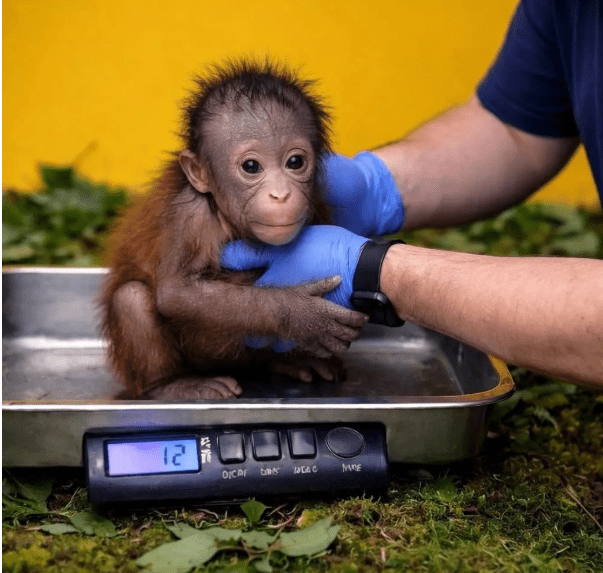
Atlanta, GA – March 16, 2026 – Authorities continue to search for leads in the daring daytime theft of Kiko, the newborn Sumatran orangutan born just three days ago to Zoo Atlanta’s beloved 28-year-old female, Benny. The infant was taken from the secure habitat earlier today, March 16, in what appears to be a calculated breach of the facility’s defenses.

Zoo officials have deliberately withheld public announcements, including on social media, to avoid compromising the active investigation and any chance of safely recovering the critically endangered baby.

Kiko—whose name, meaning “little one” in a nod to playful Sumatran-inspired naming traditions—was quietly selected by the primate care team shortly after the March 13 birth. Keepers described the tiny infant as unusually alert and strong from the start, with bright eyes and a tuft of fiery red hair already showing promise of the species’ signature long, flowing coat.

“Kiko was clinging tightly to Benny, nursing well, and already showing that classic orangutan curiosity,” one source shared privately. “Seeing them together was pure magic—until this morning.”

The discovery came during the routine 8:00 AM health check, when staff found the habitat disturbed and Kiko missing. Enhanced security footage captured a brief glimpse of an unidentified individual exiting the area, but facial recognition and other enhancements have so far yielded no solid identification.

Atlanta Police, working with federal agents from the U.S. Fish and Wildlife Service, have classified the incident as wildlife trafficking under the Endangered Species Act.

“Infant orangutans like Kiko are prime targets for illegal collectors,” noted a wildlife crime specialist. “They can command high prices on black markets—tens of thousands or more.”

Benny, the experienced mother (and famously intelligent resident known for her puzzle-solving skills and gentle demeanor), has been visibly distressed, pacing the enclosure and emitting low contact calls throughout the day. Veterinary staff are providing close monitoring and enrichment to help manage her stress while the search continues.

The orangutan exhibit remains closed to the public under the guise of “routine maintenance,” with additional security measures now in place across the zoo.

No ransom or demands have been received, and motives remain speculative—ranging from the exotic pet trade to misguided “rescue” attempts. Zoo Atlanta continues to cooperate fully with law enforcement but has issued no official statement, emphasizing that premature publicity could hinder efforts or endanger Kiko further.

This heartbreaking case underscores the ongoing threats to Sumatran orangutans, even in world-class zoological settings. With fewer than 14,000 individuals remaining in the wild, every birth like Kiko’s is a precious victory for conservation—making today’s theft not just a crime against the zoo, but against an entire species.

The public is asked to report any sightings of an infant orangutan or suspicious activity involving exotic primates to the Atlanta Police wildlife crime hotline at (404) 555-ANML or anonymously via tips to federal authorities.

Zoo Atlanta has promised updates only when they can be shared without risking the investigation.

This report draws from exclusive insider sources. We will provide further details as official information becomes available.

Read More From Techbullion


XRP Ledger Is A ‘Ghost Chain,’ Chainlink Community Liaison Claims

0

Trusted Editorial content, reviewed by leading industry experts and seasoned editors. Ad Disclosure

A fresh clash between XRP critics and defenders broke out on X after Chainlink Community Liaison Zach Rynes (@ChainLinkGod) argued that the XRP investment thesis has failed to keep pace with how crypto markets and financial infrastructure have evolved. His central claim was blunt: the XRP Ledger is now a “ghost chain,” while the use case once pitched for XRP as a bridge asset has largely been overtaken by stablecoins and broader interoperability infrastructure.

Rynes framed the dispute around what he called the long-running retail thesis behind XRP. “The bizarre retail thesis of XRP is that it will become the global reserve currency that everything trades against, the so-called ‘XRP standard,’” he wrote. “Rather than trading Dollars for Euros directly, you would trade USD for XRP, and then XRP for EUR, because this makes payments supposedly more efficient.”

He argued that XRP supporters prefer to describe this not as a bid for reserve-currency status, but as a narrower “bridge currency” role. In his view, that distinction does not materially change the argument. He said the larger problem is that the market structure envisioned by early XRP advocates was built in other ways over the past decade.

“The XRP vision was created over a decade ago before we had modern 200K TPS high-throughput chains, programmable smart contracts, DeFi protocols, fiat-backed stablecoins, tokenized deposits, atomic DvP/PvP swaps, and cross-chain infra,” Rynes wrote. “If you listen to what the world’s largest financial institutions and market infrastructures like Swift, DTCC, JP Morgan, BlackRock, and many others are saying, you’ll find zero of them talking about the need for a ‘bridge currency.’ Rather, they talk about the need for connectivity, interoperability, privacy, compliance, and orchestration.”

That critique extended to XRP Ledger’s position in tokenization and on-chain finance. Rynes said XRPL “will become the dominant chain for tokenized real world assets” remains a popular belief among XRP holders despite what he described as weak adoption metrics. He called XRPL “a ghost chain with less than 1% RWA market share and under 0.01% of stablecoins,” arguing that this makes the idea of XRPL emerging as the primary settlement layer difficult to defend.

He also pointed to stablecoins as the practical winner in the bridge-asset debate. According to Rynes, “USD-backed stablecoins have become the dominant crypto-native ‘bridge currency’ for payments, trading, and finance,” and the industry has already built “everything XRP was supposed to be, without XRP.” He cited Hyperliquid as an example of crypto-native finance where positions across multiple markets are effectively denominated against dollar-backed stablecoins rather than XRP.

The second half of his argument focused less on ledger design and more on Ripple’s business model. Rynes alleged that Ripple “socializes its costs to XRP holders and privatizes gains for its equity shareholders,” saying XRP sales fund products whose revenue accrues to Ripple rather than directly to token holders. He made the same point about RLUSD, writing that around 90% of its supply sits on Ethereum and other chains, which in his telling creates little to no direct demand for XRP itself.

XRP Community Fires Back

Not everyone in the thread accepted that framing. XRP advocate and lawyer Bill Morgan pushed back on Rynes’ comparison between token buybacks and equity buybacks, calling it “a false equivalence because a token is nothing like a share and has no rights attached it like a share.” He also rejected the idea that Ripple and XRPL should be treated as one and the same, writing that “Ripple does not own the XRPL which is a fully decentralised public permissionless Blockchain.”

Morgan argued that Ripple had opted for a different structure through Evernorth, which he described as an independent vehicle designed to acquire XRP and offer institutions regulated exposure. He said that model was preferable to Ripple itself running a reserve that could draw regulatory scrutiny, especially given how the SEC previously pointed to Ripple’s efforts to support XRP’s price in litigation.

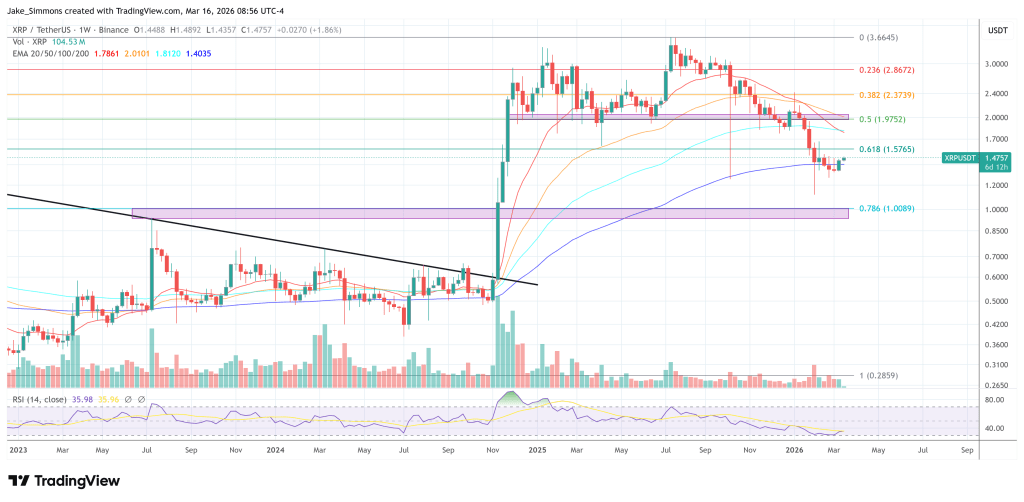
At press time, XRP traded at $1.4757.

XRP price chart
XRP rises back above the 200-week EMA, 1-week chart | Source: XRPUSDT on TradingView.com

Featured image created with DALL.E, chart from TradingView.com

Editorial Process for bitcoinist is centered on delivering thoroughly researched, accurate, and unbiased content. We uphold strict sourcing standards, and each page undergoes diligent review by our team of top technology experts and seasoned editors. This process ensures the integrity, relevance, and value of our content for our readers.

Polymarket Users Threaten Reporter to Change Iran Strike Story

0

Prediction markets platform Polymarket says it has now banned and reported users who pressured an Israeli journalist with death threats to amend a news article about an Iranian missile strike that was the subject of a $17 million prediction market. 

The Times of Israel military correspondent Emanuel Fabian wrote in a report on Monday that he began receiving messages to change his report about an Iranian missile that struck outside the Israeli city of Beit Shemesh on March 10.

“As far as I now understand, the emails I received were intended to confirm whether or not a missile had hit Israel on March 10 in order to resolve a prediction on Polymarket,” he wrote.

The market allowed bets on what date Iran would strike Israel, with over $17 million currently wagered on March 10. 

The rules state the market “will resolve to ‘Yes’ if Iran initiates a drone, missile, or air strike on Israel’s soil on the listed date,” however, a clause in the rules adds that “missiles or drones that are intercepted” wouldn’t be counted even if they land in Israel.

“My minor report on a missile striking an open area was now in the middle of a betting war, with those who had bet ‘No’ on an Iranian strike on Israel on March 10 demanding I change my article to ensure they would win big,” Fabian wrote.

Trading volumes on prediction markets, the largest being Polymarket and Kalshi, have surged in the past year, but critics and lawmakers have warned that popular markets tied to war and political events could incentivize insider trading.

Journalist gets death threats over report

Fabian said he received emails, messages and calls to change his report to say the strike was a missile fragment, with one individual also fabricating a message to make it appear that Fabian agreed the missile was intercepted.

Fabian said he received lengthy, threatening messages in Hebrew from someone called “Haim,” who told him to alter the report or there would be “damage you have never imagined you would suffer.”

Fabian said Haim warned he was “at risk,” that they would invest money “to finish you,” that he “made a fatal mistake” and that he had made “enemies who will be willing to pay anything to make your life miserable.”

Haim also gave “specific details” about his parents, family and neighborhood, he added.

Fabian said he went to the police over the threats, who are now investigating.

Polymarket said in a statement posted to X on Monday that it “condemns the harassment & threats directed at Emanuel Fabian — or anyone else for that matter.”

Related: Israel arrests two over Polymarket trades on military operations

“This behavior violates our Terms of Service & has no place on our platform. We’ve banned the accounts for all involved & will pass their info to the relevant authorities,” it added.

Fabian added that, before the threatening messages, a colleague from another media outlet had contacted him, saying an acquaintance was requesting to change the report. 

That journalist later confronted their acquaintance over the request, who admitted to placing bets on Polymarket and offering a portion of the winnings if the report was changed.

“The attempt by these gamblers to pressure me to change my reporting so that they would win their bet did not and will not succeed,” Fabian said. “But I do worry that other journalists may not be as ethical if they are promised some of the winnings.”

The results of the market over when Iran would strike Israel on Polymarket were in dispute at the time of writing, with “No” bettors asserting the explosion on March 10 was an intercepted missile.

However, Fabian later reported that the Israeli Defense Forces confirmed the missile that exploded outside of Beit Shemesh was not intercepted.

Magazine: How crypto laws changed in 2025 — and how they’ll change in 2026