Home Blog Page 595

Amberwood at Holland Secures Top Bid of 368 Million at Holland Link GLS Tender

0

Sim Lian Group has secured the top bid of $368 million for the Holland Link GLS site, marking a significant win that paves the way for the development of Amberwood at Holland. This successful tender outcome reinforces strong developer confidence in Singapore’s Core Central Region and highlights the enduring appeal of the prestigious Holland neighbourhood for premium residential projects.

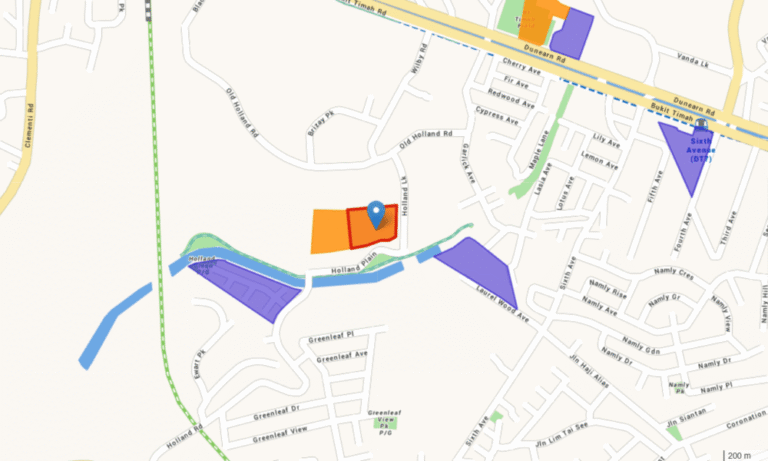
Amberwood at Holland, located at Holland Link and just minutes from King Albert Park MRT station on the Downtown Line, is set to become one of the most notable new launch condominiums in District 10. The $368 million bid reflects the site’s strategic value and the market’s positive outlook for well-located residential land in established neighbourhoods.

Strong GLS Tender Result

Competitive Bid Demonstrates Confidence

The $368 million top bid by Sim Lian Group for the Holland Link site is a clear indication of continued robust interest in prime residential land within the Core Central Region. This outcome comes amid a selective market environment where developers are focusing on sites with proven location advantages, excellent connectivity, and long-term growth potential.

Strategic Site Acquisition

The Holland Link site represents a valuable addition to Sim Lian’s portfolio. Its proximity to King Albert Park MRT and its position in the mature, green-rich Holland neighbourhood make it an ideal location for a high-quality residential development like Amberwood at Holland.

Prime Location Advantages

Excellent Connectivity

Amberwood at Holland will enjoy direct access to King Albert Park MRT station on the Downtown Line, offering residents seamless connections to the city centre, Orchard Road, and other key destinations. The development is also close to major expressways, providing convenient driving options for those who prefer private transport.

Convenient and Prestigious Neighbourhood

The Holland area is highly regarded for its mature greenery, reputable international and local schools, and vibrant local amenities. Amberwood at Holland residents will benefit from a balanced lifestyle with easy access to parks, shopping, dining, and educational institutions.

Modern Living and Investment Appeal

Contemporary Design and Amenities

Amberwood at Holland is expected to feature modern architecture with spacious layouts, high-quality finishes, and resort-style amenities including swimming pools, a gymnasium, landscaped gardens, and dedicated family spaces. The development aims to deliver a premium living experience that matches the prestige of the Holland address.

Strong Investment Potential

With its prime District 10 location, excellent connectivity near King Albert Park MRT, and the backing of Sim Lian Group, Amberwood at Holland offers attractive long-term investment potential. The successful $368 million GLS tender outcome supports expectations of solid capital appreciation and rental demand in this established neighbourhood.

Developer Track Record

Sim Lian Group has a solid reputation for delivering quality residential projects with good design and timely execution. Their successful bid for the Holland Link site and the planned launch of Amberwood at Holland reflect the group’s confidence in the location and their commitment to creating a high-standard condominium that meets the expectations of today’s discerning buyers and investors.

Amberwood at Holland is poised to become a standout new launch in Singapore’s western corridor. The $368 million top bid at the Holland Link GLS tender, combined with the project’s strategic location and modern lifestyle features, positions it as a compelling opportunity in the Core Central Region.


Is Your Crypto Funding Pyonyang? Inside Solana-Based Drift Protocol $286 Million Exploit

0

Trusted Editorial content, reviewed by leading industry experts and seasoned editors. Ad Disclosure

Blockchain analytics firm Elliptic says the $286 million exploit of Solana-based Drift Protocol is most likely linked to the Democratic People’s Republic of Korea (DPRK).

Solana Suffered One Of The Largest Crypto Exploits In History

On April 1st, the DEX Drift Protocol suffered a major exploit that drained almost $300 million dollars in crypto assets from its core vaults. The exchange reported on it on its official X account as it was still undergoing:

The raid unfolded in under 20 minutes, with roughly $286 million siphoned off across a basket of assets from close to 20 vaults. Drift is the largest decentralized perpetual futures exchange on Solana. This is the biggest crypto exploit seen so far in 2026 and ranks among the largest on record, edging out the $235 million WazirX breach.

Drift’s total value lock (TVL) collapsed from roughly $550 million to under $250 million after the attack. The team’s emergency response consisted of pausing deposits and withdrawals and coordinating with security firms and exchanges.

The protocol shared the details of the incident later on, claiming it was a “a highly sophisticated operation that appears to have involved multi-week preparation and staged execution”. Beyond that, the exchange’s official channels refrained from attributing responsibilities.

Now, the analytics firm Elliptic has released an investigation claiming the on‑chain behavior, laundering methods, and network‑level indicators match the techniques seen in prior DPRK‑linked operations, making this not just another DeFi rug, but a suspected state‑sponsored attack.

The North Korean Hackers Strike Again

Ledger CTO Charles Guillement also linked Drift’s attack method to Bybit’s $1.4 billion hack, which was attributed to North Korean hacking groups. NewsBTC’s sister website Bitcoinist reported on this yesterday.

According to Elliptic, the attacker likely compromised Drift’s administrator private keys, gaining privileged control over withdrawals and key parameters. The attack systematically drained three main vaults: JLP Delta Neutral, SOL Super Staking and BTC Super Staking, including a single $41.7 million JLP transfer worth about $155 million.

Elliptic traced the stolen funds and concluded that the attacker created the wallet roughly eight days before the exploit and even received a small test transfer from a Drift vault. This suggests a pre‑planned, staged operation rather than a smash‑and‑grab.

Solana, Elliptic

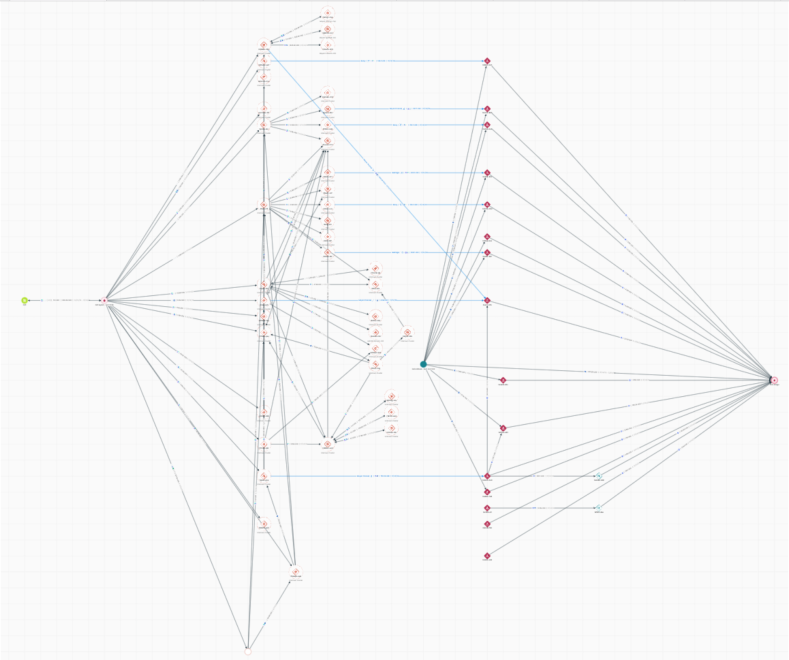
Elliptic Investigator's graphic showing the flow of funds from the initial exploit on Solana through to the attacker’s current holdings on Ethereum. Source: Elliptic.

After the exploit was completed, the attacker used Jupiter, a Solana DEX aggregator, to swap the stolen tokens into USDC, bridged funds to Ethereum, and then rotated into ETH and other assets across multiple wallets.

Such cross‑chain laundering patterns, obfuscation methods, and network‑level indicators match techniques seen in prior DPRK‑attributed attacks, Elliptic claims. If officially confirmed, this would be the 18th such operation with over $300 million stolen already.

Confirmed or not, there is no denying that state‑linked actors are systematically targeting liquidity‑rich crypto protocols to fund North Korea’s weapons programs. Let’s not forget that the North Korea‑affiliated Lazarus Group has funneled billions of dollars in stolen money through cryptocurrency networks.

Elliptic has already clustered all attacker‑linked token accounts on Solana and Ethereum so exchanges and protocols can screen against contaminated funds in near real time.

The hack will likely harden scrutiny of Solana DeFi governance, admin key design, and multisig security, even as the ecosystem continues to chase institutional‑grade perps liquidity.

Solana, SOL, SOLUSD

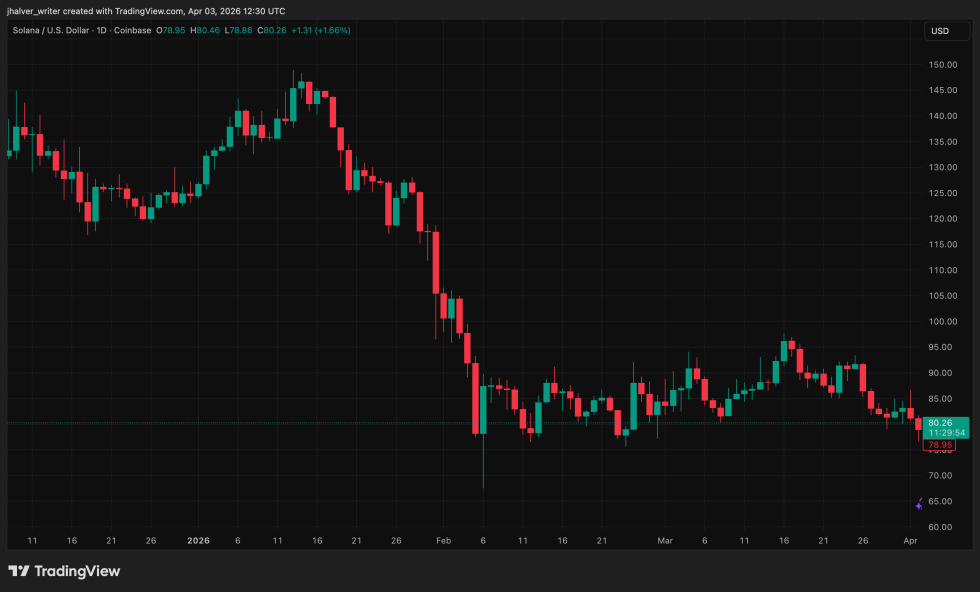
At the moment of writing, SOL trades for $80 on the daily chart. Source: SOLUSD on Tradingview.

Cover image from Perplexity. SOLUSD chart from Tradingview.

Editorial Process for bitcoinist is centered on delivering thoroughly researched, accurate, and unbiased content. We uphold strict sourcing standards, and each page undergoes diligent review by our team of top technology experts and seasoned editors. This process ensures the integrity, relevance, and value of our content for our readers.

PSA Rules, JPY Coins and Bank Issuers – Featured Bitcoin News

0

Japan’s Stablecoin Rules

JPYC Co. launched what regulators and the company call the world’s first fully regulated yen-pegged stablecoin in October 2025, capping a decade of cautious financial architecture that Tokyo began laying well before most governments acknowledged digital money existed.

The milestone did not arrive by accident. Japan’s Financial Services Agency (FSA) spent years designing a framework that would make a collapse like Terra/Luna structurally impossible on its soil, and the rules it finalized through amendments to the Payment Services Act tell you exactly where the country’s priorities landed.

Japan Draws a Hard Line on Who Can Issue

The PSA amendments, effective June 2023 with further refinements set to take effect by June 2026, draw a hard line around who can issue what the FSA calls “digital-money type stablecoins.” Only three types of licensed domestic entities qualify: banks, fund transfer service providers, and trust companies. Each issuer type carries its own reserve structure. Banks issue stablecoins as deposits covered by Japan’s existing deposit insurance system. Fund transfer service providers back their tokens with money deposits, bank guarantees or entrusted safe assets, including Japanese government bonds. Trust companies hold all trusted assets as bank deposits, with a post-2025 provision allowing up to 50% in low-risk short-term instruments.

JPYC became the first company to secure a fund transfer service provider license under the new regime in August 2025. Its yen-pegged token runs on Avalanche, Ethereum, and Polygon, carries a 1:1 yen reserve backing, and charges no transaction fees. Revenue comes from JGB interest earned on the reserve pool. The company has set a target of 10 trillion yen in circulation over three years, with a longer-term goal of 60 trillion yen within five years, focused on remittances, payments, and cross-border Web3 settlements.

The FSA designed this framework with one specific memory in mind. The 2022 Terra/Luna collapse, which wiped out tens of billions in value globally, hardened Japan’s existing caution into explicit law. Regulators concluded that the core risk in stablecoins is a run, the same dynamic that destabilizes conventional banks, and they built redemption at par as the system’s foundation. Every issuer is legally required to honor that guarantee. Tokens that cannot meet the standard are reclassified as crypto-assets and face an entirely different regulatory track.

Dollar Stablecoins Run Into a Wall

That architecture has a direct consequence for USDT and USDC. Dollar-denominated stablecoins control roughly 97 to 99% of the global stablecoin market, but they hold a fraction of that share in Japan. Foreign issuers like Tether and Circle cannot distribute to Japanese residents without meeting the same user protection and AML standards required of domestic entities, a bar that has rarely been cleared.

Japanese exchanges have historically avoided listing USD stablecoins rather than navigate the compliance structure. USDT remains largely restricted on Japanese platforms as of early 2026. USDC has a limited, regulated pathway via SBI VC Trade following Circle’s partnership with SBI Holdings, but access is capped and not broadly available to retail users.

The preference for yen-denominated digital assets is not entirely regulatory. Japan’s cash-heavy domestic economy generates less natural demand for dollar liquidity tools, and yen usage in regional remittances and trade already provides a functional alternative for cross-border needs. The FSA framework reinforced existing market behavior rather than working against it.

Banks Are Moving In

Japan’s three largest banks, MUFG, SMBC, and Mizuho, are developing trust-based yen stablecoins through the Progmat platform via joint proof-of-concept programs. SBI Holdings has announced plans to launch a yen stablecoin in Q2 2026. The total JPY stablecoin market cap sits at approximately $36.6 million as of early 2026, modest against global USD volumes but growing in the institutional and cross-border payment segments where Japan’s framework actually functions well.

Middlemen Face Their Own Stack

Intermediaries operating in this space face their own compliance requirements. Buying, selling, custodying, or transferring digital-money type stablecoins requires registration as an Electronic Payment Instrument Exchange Service Provider. Registered firms must hold at least 95% of customer crypto-assets in cold storage, segregate user funds in trust structures, comply with FATF Travel Rule requirements, and enter into contractual liability-sharing agreements with issuers covering losses from bankruptcy, hacks, or technical failures.

The 2025 PSA Amendment Act, enacted in June 2025, adds a lighter intermediary category for pure brokers, relaxes some reserve rules for trust-type issuers, and creates more flexibility for cross-border handling. FSA consultations from January 2026 addressed which bond types qualify as eligible reserves. The agency is also reviewing whether certain crypto-assets should move from PSA oversight to the Financial Instruments and Exchange Act, a change that would not affect the stablecoin framework but could alter investor protections for other digital assets.

How Japan Got Here

Japan’s early regulatory history helped set the conditions for where the market landed today. The 2014 Mt Gox collapse, then the world’s largest exchange, pushed the government into the first PSA crypto amendments by 2016. Those rules required exchange registration, user asset segregation and AML compliance for crypto broadly. Stablecoins received little attention in that early framework because the products barely existed. JPYC’s predecessor product, launched in 2021 as a Prepaid Payment Instrument rather than a formal stablecoin, and Hokkoku Bank’s regional Tochika token in Ishikawa Prefecture were the most visible early experiments before the current regime took shape.

The system Japan built is deliberate about what it sacrifices. It moves slowly. It favors domestic issuers. It keeps the largest global stablecoins effectively sidelined. What it produces in exchange is a structure where every yen-pegged token in circulation carries a redemption guarantee, a licensed issuer, a segregated reserve, and FSA oversight. That tradeoff will look different depending on whether you are a Tokyo retail user, a megabank treasury desk, or a foreign exchange trying to list USDC.

What Comes Next

More bank launches are expected in 2026. JPYC is expanding interoperability through a partnership with Circle and a TIS integration for enterprise payments. The framework that limited stablecoin activity for years in Japan is now the same framework enabling the first regulated domestic issuances. Whether that pace satisfies the market is a separate question from whether the system works as designed.

FAQ 🔎

  • What stablecoins are legal in Japan? Only yen-pegged digital-money type stablecoins issued by FSA-licensed banks, fund transfer service providers or trust companies are legal for circulation to Japanese residents.
  • Is USDC or USDT available in Japan? USDT remains largely restricted on Japanese platforms, while USDC has limited regulated access via SBI VC Trade under a Circle partnership.
  • What is JPYC? JPYC is the first fully regulated yen-pegged stablecoin, launched in October 2025 by JPYC Co. under Japan’s revised Payment Services Act framework.
  • Why does Japan restrict foreign stablecoins? Japan’s FSA requires all stablecoin issuers targeting residents to meet the same user protection, reserve, and AML standards as domestic licensed entities, a threshold most foreign issuers have not cleared.

U.S. March jobs smash expectations, with 178,000 added

0

The U.S. employment market rebounded in a big way from February’s sizable losses.

According to a Friday morning release from the Bureau of Labor Statistics, the country added 178,000 jobs in March, after losing 133,000 positions the previous month. Economist forecasts had been for 60,000 jobs to have been added.

The unemployment rate fell to 4.3% versus 4.4% in February and expectations for 4.4%.

At least part of the beat was due to a sizable downward revision in the February data from an originally reported decline of 92,000.

Trading quietly near the $67,000 level in the hours ahead of the data, bitcoin remained there in the minutes just following the report.

U.S stock index futures remained modestly lower, the Nasdaq 100 down 0.2%. The 10-year U.S. Treasury yield jumped four basis points to 4.36%.

Expectations about the future course of interest rates, of late, have been far more influenced by events in the Middle East and the price of crude oil than by the outlook for domestic economic growth.

As recently as last week, oil’s surging price had markets forecasting imminent rate hikes by the U.S. Federal Reserve. Speaking earlier this week, though, Fed Chairman Jerome Powell said the central bank recognized that oil price shocks — while initially making headline inflation numbers look worse — can depress economic activity. He indicated that the Fed would be in no hurry to raise rates in response to short-term moves in crude oil prices.

This morning’s strong beat suggests growing momentum in the economy, perhaps putting 2026 rate hikes back on the table.

CaixaBank rolls out crypto investment services

0

CaixaBank is to roll out two bitcoin-based crypto-asset investment vehicles in the coming months, offering custody, reception and execution of buy and sell orders.

Editorial

This content has been selected, created and edited by the Finextra editorial team based upon its relevance and interest to our community.

The bank is enabling cryptocurrency investment through two Exchange Traded Products, through investment vehicles managed by Invesco and Wisdom Tree. The two ETPs are listed on several European exchanges, allowing real-time transactions via Swissquote Bank and Coinbase Custody Trust Company.

CaixaBank will not provide advice or personal recommentations to customers on the inherently volatile financial instruments. Instead, it will make them available for customers to trade on their own through the bank’s own banking app.

The Spanish bank has been active in exploring alternative payment methods beyond pure fiat. It recently announced its participation, along with eight other major European banks, in an international consortium to create a euro-linked stablecoin based on blockchain technology.

It is also collaborating with the European Central Bank (ECB) on the future launch of the digital euro. CaixaBank was the only bank selected to participate in the initiative and co-developed, with the European Central Bank, a prototype P2P payment wallet using the digital euro.

Cathie Wood Sees No More 85% Bitcoin Price Drawdowns Versus All-Time Highs

0

Bitcoin (BTC) is “done” with drawdowns of 85% or more from all-time highs, says ARK Invest CEO, Cathie Wood.

Key points:

  • Bitcoin will not see another correction of 85% or more versus its latest all-time high, Cathie Wood argues.

  • A new prediction sees $34,000 becoming the next BTC price bottom.

  • Bitcoin bear-market seasonality hints that a reversal could come this month.

Wood on BTC price: No more 85% “collapses”

In an interview with CNBC’s Squawk Box segment on April 1, Wood stayed calm about double-digit BTC price losses.

“Believe it or not, in the Bitcoin community, down 50% — if that’s as far as it goes — they’ll consider that a real victory,” she said.

“Because you’re right; the 85-95% collapses associated with a very new technology — that’s done. This is a proven technology, it’s a proven monetary system and it’s a new asset class.”

Wood, a longtime Bitcoin bull, was speaking as Bitcoin circled its old $69,000 all-time highs from 2021.

Those preceded a year-long bear market in which BTC/USD lost nearly 80% before bottoming at $15,600. That marked the latest such correction, with bear markets typically bringing losses around the 80% mark.

Data from onchain analytics platform Glassnode shows that the current bear market has yet to match historical patterns with maximum downside versus Bitcoin’s $126,200 record from October 2025 at 52%.

BTC price drawdowns from all-time highs. Source: Glassnode

Responding to Wood, analyst Tony Severino predicted that 2026 would bring a price bottom equal to a 72% drawdown.

“Correct, -72% max drawdown next =$34,000,” he wrote on X.

That figure exceeds commonly held predictions by traders for where Bitcoin’s next generational floor will be. As Cointelegraph reported, consensus favors the area between $40,000 and $50,000.

This week, however, Bloomberg Intelligence analyst Mike McGlone warned that price may already be trending toward seven-year lows. 

Bitcoin historically rebounds in April

Continuing the bear-market comparison, data from network economist Timothy Peterson revealed that April could mark some form of inflection point for price.

Related: Bitcoin risks new lows as US dollar targets highest level since April 2025

A chart uploaded to X this week shows April typically being a recovery month during bearish phases. 

Bitcoin bear-market price comparison. Source: Timothy Peterson/X

The March monthly close, meanwhile, ended a five-month losing streak for BTC/USD with modest gains of 1.8%.