Home Blog Page 594

Oil and gold rally as Iran locks down key oil route to US and Israeli allies

0

Oil markets continued to rally on Friday morning amid renewed strain in the Middle East.

Iran’s Islamic Revolutionary Guard Corps (IRGC), a key instrument of Iran’s military and regional strategy, declared that any movement through the Strait of Hormuz by vessels tied to US and Israeli allies would face a forceful response, state media FARS reported.

The group said its navy had already intercepted and redirected three container ships attempting to pass through the corridor.

The move raised concerns about prolonged interruptions on a crucial oil route.

Brent and other crude prices rose on the potential supply squeeze, pushing prices higher despite recent attempts to keep markets steady.

Brent crude, the global benchmark, hit around $111 a barrel, while WTI, the US benchmark, topped $98, according to the latest data.

Elsewhere, gold is also gaining, pushing above $4,500, per TradingView.

Crypto markets

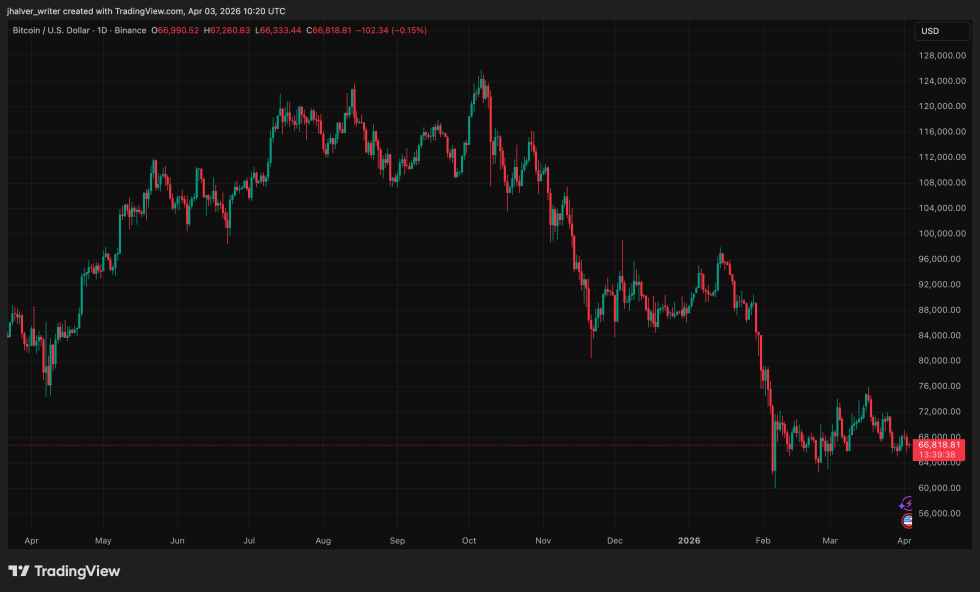
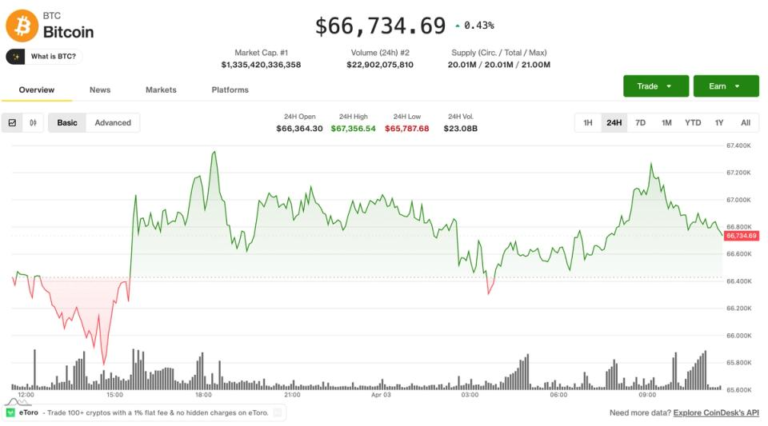
Crypto markets are under renewed pressure, with volatility on the rise. Bitcoin, which had already dipped below $67,000 earlier, extended its decline to $65,730.

Investor sentiment continues to deteriorate, as the Crypto Fear and Greed Index remains in the “extreme fear” zone. The market value has fallen 4% to $2.35 trillion.

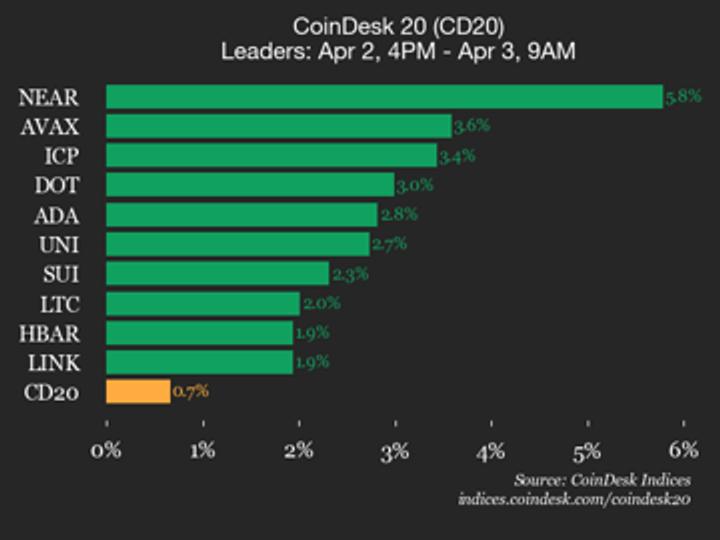
Weakness spread across altcoins as well. Ether slid 5% to below $1,980, while BNB and XRP each recorded losses exceeding 3% over the last 24 hours.

The strait and what flows through it

The Strait of Hormuz normally handles roughly 20.5 million barrels of crude oil and condensate per day, approximately one-fifth of global supply.

Since US and Israeli military strikes against Iranian infrastructure commenced on February 28, 2026, under what the Pentagon has dubbed Operation Epic Fury, that flow has been severely disrupted.

While Iran recently signaled “non-hostile” ships may pass, most major shipping lines remain suspended, keeping the blockage largely in place.

The disruption is nearly five times larger in volume terms than the 1973 Arab Oil Embargo, making it the most severe supply shock in modern energy history.

Brent crude stood at roughly $73 per barrel on February 27, the day before hostilities began. Within three weeks, it rocketed to a market peak of approximately $115 per barrel.

Dubai crude, a benchmark closely watched by Asian refiners, hit an unprecedented $137 per barrel during the height of the initial market panic in mid-March.

Oil prices overall are up over 40% compared with pre-war levels, a punishing increase that has forced multiple governments in Asia and Europe to impose fuel rationing and other emergency conservation measures.

Disclosure: This article was edited by Vivian Nguyen. For more information on how we create and review content, see our Editorial Policy.

Legal Tech Tools Federal Lawyers Use for Case Management and Research

0

Federal law is complex, data-intensive, and often time-sensitive. From handling large volumes of documents to conducting in-depth legal research, federal lawyers rely heavily on technology to stay efficient and effective. Legal tech tools have become essential in modern practice, enabling attorneys to manage cases more efficiently, analyze information faster, and deliver better outcomes for their clients.

Digital Case Management Systems

One of the most important tools in a federal lawyer’s workflow is a digital case management system. These platforms help organize case files, track deadlines, manage communications, and streamline collaboration across teams.

Instead of juggling multiple spreadsheets or paper files, attorneys can access all case-related information from a centralized dashboard. This improves efficiency and reduces the risk of missing critical deadlines or details.

“Efficient systems are the backbone of any high-performing operation,” says Gerrid Smith, Chief Marketing Officer at Joy Organics. “When teams can easily access and manage information, it creates clarity and allows them to focus on delivering meaningful results.”

Document Management and eDiscovery Tools

Federal cases often involve thousands—or even millions—of documents. eDiscovery tools powered by advanced algorithms enable lawyers to search, filter, and review documents quickly.

These tools can identify relevant information, flag key terms, and organize data in ways that make it easier to analyze. This significantly reduces the time required for document review and ensures that important evidence is not overlooked.

By automating parts of the discovery process, federal lawyers can focus more on building strong legal arguments rather than sorting through data manually.

Legal Research Platforms

Legal research is a critical component of the practice of federal law, and modern platforms have transformed the way attorneys access and analyze legal information. These tools provide instant access to case law, statutes, and legal precedents.

Advanced search features and AI-driven insights help lawyers find relevant information faster and more accurately. This allows for more informed decision-making and stronger case strategies.

“Access to accurate and well-organized legal information is essential in federal practice,” explains Dr. Nick Oberheiden, Founder at Oberheiden P.C. “When lawyers can efficiently research and verify legal precedents, it enhances both the quality and reliability of their work.”

Automation and Workflow Tools

Automation tools are increasingly being used to handle repetitive tasks such as document generation, scheduling, and compliance tracking. These tools help reduce administrative workload and improve overall efficiency.

For example, automated document templates can generate legal forms quickly, while workflow tools ensure that tasks are completed in the correct sequence. This minimizes errors and keeps cases moving forward smoothly.

Automation allows federal lawyers to allocate more time to strategic thinking and client representation.

Data Analytics and Case Insights

Data analytics tools are becoming a valuable asset in federal law. By analyzing past cases, legal trends, and outcomes, these tools provide insights that can inform case strategy.

Lawyers can use analytics to identify patterns, predict potential challenges, and evaluate the strengths of a case. This data-driven approach enhances decision-making and helps attorneys prepare more effectively.

“Analyzing data and identifying patterns is critical in complex investigations,” says Timothy Allen, Director at Corporate Investigation Consulting. “The ability to interpret information accurately can significantly impact how a case is approached and resolved.”

Secure Communication and Collaboration Tools

Given the sensitive nature of federal cases, secure communication is essential. Legal tech tools now include encrypted messaging platforms, secure file sharing, and client portals that protect confidential information.

These tools enable seamless communication between legal teams and clients while maintaining strict security standards. This not only improves efficiency but also ensures compliance with data protection requirements.

The Future of Legal Tech in Federal Law

As technology continues to evolve, legal tech tools will become even more advanced. Emerging innovations such as artificial intelligence, cloud computing, and predictive analytics are expected to enhance case management and research capabilities further.

Federal lawyers who embrace these technologies will be better equipped to handle complex cases, adapt to changing regulations, and meet the demands of modern legal practice.

A Technology-Driven Legal Landscape

Legal tech is no longer optional—it is a fundamental part of federal law practice. From managing cases to conducting research, these tools are transforming how attorneys work and deliver results.

By leveraging digital systems, automation, and data-driven insights, federal lawyers can operate more efficiently, reduce errors, and provide higher-quality legal services. In a field where precision and timing are critical, technology is proving to be an invaluable ally.


Ethereum Price in Danger of Dropping to $1.2K Next, Analyst Warns

0

Ethereum’s native token, Ether (ETH), may decline 40% to $1,200 in the coming weeks, according to a fractal setup shared by analyst Leshka.eth.

Key takeaways:

Ethereum setup flashes bull trap warning

Ethereum’s $1,200 downside target comes from a Supertrend setup on the daily chart, where two earlier bullish flips failed and led to steep breakdowns.

The Supertrend is a simple trend-following line plotted directly on the price chart. It changes color to show the current market direction: green when the trend is rising and red when the trend is falling.

ETH flashed similar bullish flips in October 2025 and January 2026, but neither held.

ETH/USD daily price chart. Source: TradingView

In both cases, the price moved above the Supertrend’s upper band, which then started acting as support. Once ETH lost that support, the recovery unraveled and the price dropped 45% and 48%, respectively.

“Now the same setup is forming at $1,990,” said Leshka.eth, adding:

“If that level breaks, the next target is the $1,200 zone.”

That aligns with the measured downside target of Ethereum’s prevailing bear flag pattern, as shown below.

Markets, Tech Analysis, Market Analysis, Altcoin Watch, Ether Price, Ethereum Price
ETH/USD daily price chart. Source: TradingView

The bearish setups are taking shape as Ethereum gives back its March gains against a worsening macro backdrop.

Related: Ether traders see ‘further decline’ as ETH price slips below $2K

Risk appetite has weakened alongside the US–Israel and Iran war, recession fears have risen, and bond traders no longer expect the Fed to cut rates before December 2027.

Target rate probabilities for the December Fed meeting. Source: CME

ETH has fallen more than 17% from its monthly high from over two weeks ago. US spot Ether ETFs have seen roughly $300 million in net outflows over the same stretch.

The apparent demand for Ethereum has also slipped to its lowest in 16 months.

ETH holder accumulation remains weak

Ethereum’s latest rebound has not triggered broad-based accumulation across major wallet cohorts, Glassnode data shows.

For instance, the number of mega-whale wallets holding more than 10,000 ETH has flattened after peaking in late 2025, while the 30-day change has only just crawled back toward neutral after months of decline.

Ethereum mega-whale address count balance (>10K ETH). Source: Glassnode

In other words, the biggest holders have not been accumulating aggressively.

The picture looks similar among smaller wallet cohorts.

Ethereum whales holding 1,000 to 10,000 ETH remain below their late-2025 highs, with the 30-day change hovering around flat to slightly negative levels.

Ethereum whale and shark address count balance. Source: Glassnode

Shark addresses holding 100 to 1,000 ETH also continue to trend well below last year’s peaks, suggesting that mid-sized and smaller large holders have not returned as strong buyers either.

Taken together, the data suggest ongoing distribution and weak conviction across key ETH holder cohorts, reinforcing the risk of a deeper drop if $1,990 breaks.

As Cointelegraph reported, one of the few bullish signs for Ethereum include the increasing amount of Ether staked and supply on exchanges falling to ten-year lows.