Kai Lindström, Vice President of Payments at SOK, sat down at MPE 2026 to discuss the Finnish retail giant’s payments strategy. SOK, Finland’s largest retail group and part of the Coop Alliance, and operates across grocery, hospitality, traffic services, and even has its own bank, giving them a broad view of the payments landscape.
The immediate focus for SOK is a large-scale migration: replacing over 12,000 point-of-sale terminals across more than 2,000 locations as part of moving to Adyen services and this major project is already halfway complete, though Lindström noted that getting long-time customers to adjust to the new terminal model is proving to be a challenge.
A bigger headache, however, lies in e-commerce, specifically with the pay-by-bank payment method as the issue stems from some banks not having fully up-to-date open banking interfaces. This leads to the inconvenient situation where a customer’s payment is initially declined, but the bank charges the money a day or two later. The e-commerce store thinks the transaction failed, but the customer is left calling customer service wondering why their money was taken.
To solve this, Lindström and his team are working on multiple fronts and their number one preference is using the Thinc by Visa service, but this currently uses a Dutch IBAN (starting with NL) to collect funds, which confuses Finnish customers who expect a domestic FI IBAN. Since that solution isn’t ready yet, they are utilizing another Adyen-supported open banking provider, which is unfortunately where most of the current decline/charge issues are occurring. Lindström confirmed they are working hard to resolve the API issues with the problematic banks to stabilize the service.
Looking ahead, Lindström highlighted several key trends he is focused on and hoping to learn more about at MPE. Unsurprisingly, AI is at the top of the list, especially for applications like fraud management, reporting, and analytics to better understand payment trends and customer card usage. Lindström also mentioned the emerging topic of agentic commerce (where AI agents conduct transactions autonomously) and confirmed SOK had just held its first internal workshop on the subject. This aligns with broader industry discussions about the impact of AI on merchant payments.
Furthermore, Lindström is heavily invested in Account-to-Account (A2A) payments, driven by European resiliency and sovereignty goals. The objective is to match the superior customer experience already delivered by payment types like Apple Pay and Google Pay. Finally, SOK is exploring the potential of stablecoins, not for typical point-of-sale use, but for back-office and cross-border payments to product providers and importers, where he believes significant money savings could be realized. The Buy Now, Pay Later trend is also on the radar.
Dubai’s Virtual Assets Regulatory Authority (VARA) published detailed guidance on Thursday that clarifies how token issuers should structure, disclose and distribute virtual assets in the emirate, sharpening rules for stablecoins and real-world asset (RWA) tokens.
The document, which interprets VARA’s existing Virtual Asset Issuance Rulebook rather than creating new law, sets out three distinct issuance pathways and spells out who is responsible for what in each.
Rather than treating all tokens as if they pose the same risks, the framework draws clear lines between Category 1 issuances (including fiat-referenced virtual assets and asset-referenced virtual assets), Category 2 issuances that must be distributed via a VARA-licensed intermediary, and exempt virtual assets with limited functionality.
VARA positions the regime as a purpose-built issuance framework calibrated to virtual assets, contrasting it with approaches that apply general securities or payments law to token launches, including fiat-referenced tokens (stablecoins) and asset-referenced tokens (RWA-style structures). The guidance also clarifies the role of licensed distributors in Category 2 issuances, making them responsible for due diligence and ongoing validation of compliance.
The clarification adds to Dubai’s push to build a bespoke crypto rulebook rather than forcing token launches into generic securities or payments law, and it comes just over a week after VARA expanded its exchange rulebook to cover exchange-traded crypto derivatives.
Related: Bybit doubles down on Middle East operations amid regional tensions
Although framed as guidance, Ruben Bombardi, general counsel at VARA, told Cointelegraph that a bespoke issuance regime offers issuers concrete benefits beyond traditional securities law approaches, including “greater regulatory clarity” because many virtual assets do not map neatly onto existing categories. For investors and users, it aims to support “informed decision-making” by improving transparency around an asset’s characteristics and risks.
VARA Guidance on VA Issuance. Source: VARA
Bombardi said this approach creates a “more tailored approach to issuance,” and provides “a single, dedicated reference point” for how virtual assets may be issued, disclosed and distributed in Dubai’s licensed regime.
VARA’s issuance regime aims to stand out globally
Bombardi also highlighted several features VARA sees as differentiating Dubai from other regimes internationally. These include specific treatment for asset-referenced virtual assets, with expectations around reserve assets, redemption rights and legal structuring, and a strongly disclosure-led approach anchored in whitepapers and separate risk disclosure statements that must be “clear, accurate, and accessible” to users.
He added that VARA expects the framework to be of interest to foreign regulators and standard setters, although its immediate focus remains on providing practical clarity for market participants in Dubai.
Magazine: South Korea gets rich from crypto… North Korea gets weapons
Cointelegraph is committed to independent, transparent journalism. This news article is produced in accordance with Cointelegraph’s Editorial Policy and aims to provide accurate and timely information. Readers are encouraged to verify information independently. Read our Editorial Policy https://cointelegraph.com/editorial-policy
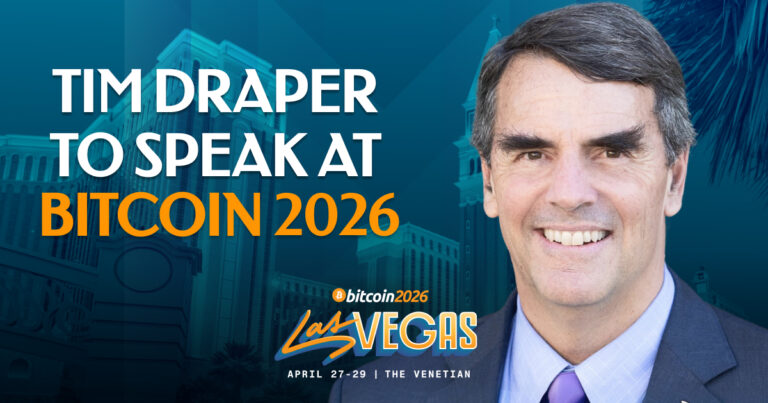
Tim Draper has been officially confirmed as a speaker at Bitcoin 2026. The founder of Draper Associates, DFJ, and the Draper Venture Network, Draper is one of the longest-standing and most vocal Bitcoin advocates in the venture capital world and one of the few investors who put real money behind the asset before it was widely taken seriously.
In June 2014, Draper made headlines by winning the U.S. Marshals auction of nearly 30,000 bitcoins seized from the Silk Road marketplace, spending approximately $19 million at a price of around $600 per coin. The bet has aged well. Draper has since invested in over 50 crypto companies, leading investments in Coinbase, Ledger, Tezos, and Bancor, among others. More recently, Draper led a $2.5 million pre-seed funding round in Ark Labs, a Bitcoin scaling startup building payment infrastructure, stating that “soon many people around the world will live on the Bitcoin standard.”
Draper Associates manages $2 billion in assets and has seeded some of the most valuable companies in history, including Tesla, SpaceX, Skype, Baidu, Coinbase, and Robinhood. His price conviction on Bitcoin remains intact. In a recent interview, Draper reiterated his $250,000 Bitcoin price target, rooted in the view that Bitcoin is in the middle of replacing the financial system itself describing it as infrastructure where contracts, payments, and ownership all move onchain without the layers of intermediaries that define today’s economy.
With over a decade of conviction behind him, Draper takes the Bitcoin 2026 stage as one of the asset’s earliest and most consistent voices, having put real money behind Bitcoin long before it was considered a credible institutional bet. Hear more from Tim Draper at Bitcoin 2026 taking place April 27–29 at The Venetian Resort in Las Vegas.
Bitcoin 2026 is Returning to Las Vegas
Bitcoin 2026 will take place April 27–29 at The Venetian, Las Vegas, and is expected to be the biggest Bitcoin event of the year.
Focused on the future of money, Bitcoin 2026 will bring together Bitcoin builders, investors, miners, policymakers, technologists, and newcomers from around the world. The event will feature a wide range of pass types, including general admission passes designed specifically for those new to Bitcoin, alongside premium passes for professionals, enterprises, and institutions.
With multiple stages, immersive experiences, technical workshops, and headline keynotes, Bitcoin 2026 is designed to serve both first-time attendees and long-time Bitcoiners shaping the next era of global adoption.
Past Bitcoin Conferences in the U.S.
Bitcoin’s flagship conference has scaled dramatically over the past five years:
2021 – Miami: 11,000 attendees
2022 – Miami: 26,000 attendees
2023 – Miami: 15,000 attendees
2024 – Nashville: 22,000 attendees
2025 – Las Vegas: 35,000 attendees
🎟️ Get Your Bitcoin 2026 Pass
Bitcoin Magazine readers can save 10% on Bitcoin 2026 tickets using code ‘ARTICLE10‘ at checkout.
Stay at The official hotel of Bitcoin 2026, The Venetian, and get a guaranteed low rate plus 15% off your pass. Be in the middle of where the fun is all happening, and where the networking never ends.
And don’t forget:
Volunteer at Bitcoin 2026 and get Pro Pass access plus exclusive perks.
All students ages 13+ can apply for a Student Pass and get free general admission access to Bitcoin 2026.
For more information and exclusive offers, visit the Bitcoin Conference on X here.
Why Attend Bitcoin 2026?
Bitcoin 2026 is the definitive gathering for anyone serious about the future of money. With 500+ speakers, multiple world-class stages, and programming spanning Bitcoin fundamentals, open-source development, enterprise adoption, mining, energy, AI, policy, and culture, the conference brings every corner of the Bitcoin ecosystem together under one roof.
From headline keynotes on the Nakamoto Stage to deep technical sessions for builders, institutional strategy discussions for enterprises, and beginner-friendly Bitcoin 101 education, Bitcoin 2026 is designed for everyone—from first-time attendees to the leaders shaping Bitcoin’s global adoption.
Whether you’re looking to learn, build, invest, network, or influence, Bitcoin 2026 is where Bitcoin’s next chapter is written.
Bitcoin 2026 Pass Types: Something for Everyone
Bitcoin 2026 offers a range of pass options designed to meet the needs of newcomers, professionals, enterprises, and high-net-worth Bitcoiners alike.
🎟️ Bitcoin 2026 General Admission Pass
Ideal for newcomers and those looking to experience the heart of the conference.
Limited access on Days 2 & 3
Entry to Main Stage
Access to Genesis Stage
Full access to the Expo Hall
🎟️ Bitcoin 2026 Pro Pass
Designed for professionals, operators, and serious Bitcoin participants.
Includes all General Admission features, plus:
Full 3-day access, including Pro Day
Entry to the Pro Pass Reception
Access to Enterprise Hall, Enterprise Stage, and Networking Lounge
Conference App networking features
Access to the Bitcoin For Corporations Symposium
Entry to Compute Village and Energy Stage
Complimentary lunch, coffee, tea, and snacks
Dedicated registration and check-in
Reserved seating at Main Stage
Huge savings when you bundle your hotel and Pro Pass
🐋 Bitcoin 2026 Whale Pass
The all-inclusive, premium Bitcoin 2026 experience.
Includes all Pro Pass features, plus:
Reserved seating at Main Stage
All-inclusive gourmet food and beverages
Entry to Whale Night and Whale Reception
Access to all official after-parties
Networking app access to connect with other Whales
Premium access to The Deep — an exclusive networking lounge with intimate speaker sessions
Complimentary stay at The Venetian when you bundle your whale pass and hotel (use promo code ‘WHALEHOTEL’ here)
This is the most immersive way to experience Bitcoin 2026.
🎉 Bitcoin 2026 After Hours Pass
Your ticket to the night.
Most deals are done with a drink in your hand. Get exclusive access to 3 official Bitcoin 2026 after-parties across Las Vegas — each with a 2-hour open bar — where the real conversations happen and the best connections are made.
Access to 3 official Bitcoin 2026 after-parties
2-hour open bar at each event
Evening events across Las Vegas, April 27–29
Network with Bitcoiners, builders, and industry leaders after hours
More headline speaker announcements are coming soon.
Bitmine Immersion Technologies (BMNR) began trading on the New York Stock Exchange on Thursday, moving from the NYSE American as it scales its crypto-focused treasury strategy.
The company paired the uplisting with an increase in its share repurchase program, raising the authorization to $4 billion from $1 billion. The buyback ranks among the largest announced this year, according to the company. BMNR’s stock has plunged roughly 90% since peaking last summer amid the height of the digital asset treasury mania. Shares are lower by 2.8% in early Thursday trading.
Bitmine now holds about 4.8 million ETH, equal to 3.98% of total supply, and continues to target 5%, or what it calls the “Alchemy of 5%.”
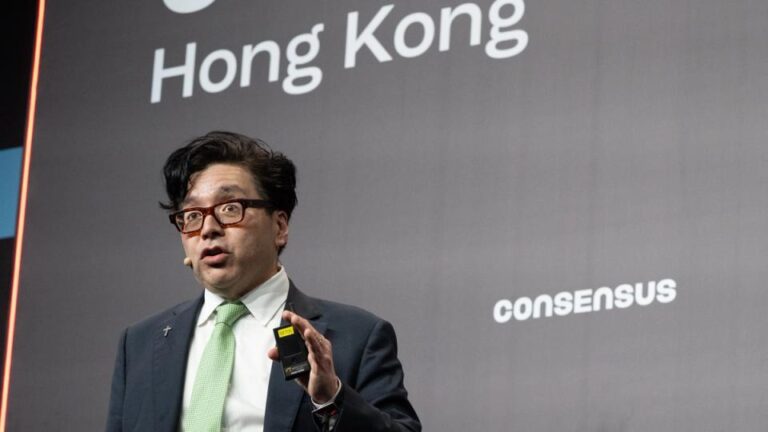
The macro backdrop could play a role. Fundstrat co-founder Tom Lee, who also chairs Bitmine, has argued that U.S. equities may have found a bottom following a ceasefire tied to tensions in Iran. Stocks, oil and volatility shifted sharply in response, a pattern that has also lifted crypto markets.
Bitcoin recently moved above $72,000 alongside gains in equity futures, reflecting a broader “risk-on” trade. Ether may benefit as well, with recent inflows into spot exchange-traded funds and increased staking activity reducing selling pressure, according to Lee.
For Bitmine, the link is direct. Each 1% rise in ether’s price adds roughly $100 million to the value of its holdings. A sustained rebound in crypto could support its balance sheet and stock.
BTC clung to a three-week high as the Iran truce lifted risk assets, but doubts about the deal’s durability capped upside.
Bitcoin held above $72,000 on Thursday, consolidating near its highest levels in three weeks as crypto markets digested a fragile ceasefire between the United States and Iran.
BTC was changing hands at $72,285, up 1.5% over the past 24 hours and 8% on the week, according to CoinGecko. Ethereum rose 0.6% to $2,210, also up 7.2% over the past seven days. XRP gained 0.6% to $1.36, BNB edged up 0.2% to $607.25, and Solana climbed 2% to $84, bringing its weekly gains to 6.6%.
BTC Chart
The gains followed a sharp ceasefire-driven short squeeze that sent BTC to its highest level since mid-March.
President Donald Trump said on Truth Social Thursday that all U.S. military assets would remain in place around Iran until the ceasefire is “fully complied with,” warning that failure could lead to renewed conflict. Meanwhile, Iran continued to restrict traffic in the Strait of Hormuz and proposed a $1-per-barrel fee on transiting oil, drawing criticism from the EU and the United States.
Total crypto market capitalization stood at approximately $2.53 trillion, per CoinGecko, up from $2.43 trillion at the start of the week.
Morgan Stanley’s MSBT Debuts
Morgan Stanley’s spot Bitcoin ETF, MSBT, kicked off trading as expected on Wednesday on NYSE Arca. The fund saw $30.6 million in net inflows on its first day.
The fund carries a 0.14% expense ratio, the lowest in the U.S. spot Bitcoin ETF market, undercutting BlackRock’s IBIT at 0.25% and Grayscale’s Bitcoin Mini Trust at 0.15%. Bloomberg
Despite MSBT’s strong debut, the broader U.S. spot BTC ETF complex saw $124 million in net outflows on Wednesday, excluding MSBT, per SoSoValue. Total AUM across U.S. spot Bitcoin ETFs stood at $91.9 billion, or about 6.43% of Bitcoin’s overall market cap.
The outflows followed a $471 million single-day inflow on April 6, when spot Bitcoin ETFs recorded their strongest daily inflows since February, despite ongoing geopolitical tensions
ZEC Leads Altcoins
Zcash was the standout performer this week. ZEC surged another 15% to $371 on Thursday, leading the broader market. The token has gained over 65% in the past 30 days, fueled by a risk-on rotation, a pending decision on the Grayscale spot ZEC ETF, and Foundry’s institutional mining pool launch.
ZEC Chart
On the downside, World Liberty Financial’s WLFI token fell roughly 10% to an all-time low of $0.0885. On-chain data showed WLFI deposited 5 billion of its own tokens as collateral to borrow stablecoins.
Looking Ahead
The two-week ceasefire window is set to expire around April 21, with peace negotiations expected to begin Friday in Islamabad. Whether the rally extends depends on the truce’s durability.
Fed minutes released Wednesday showed officials believe inflation may fall slowly toward 2%, while oil risks add pressure. Policymakers signaled room for either hikes or cuts depending on conditions, a hawkish undertone that adds another headwind for risk assets already contending with geopolitical uncertainty.
The Ethereum Foundation just converted 5,000 ETH worth $11 million to stablecoins through CoWSwap to fund research and development, signaling a shift in how the largest smart contract network manages its treasury.
That move affects the ethereum price outlook for anyone tracking where institutional decisions push capital next. ETH trades near $2,200 after gaining 6.3% on ceasefire news, yet Pepeto has collected more than $8.8 million in presale capital with a Binance listing approaching and live tools already running, offering the answer this search was leading to all along.
Ethereum Price Moves as Foundation Converts 5,000 ETH to Fund Development
ETH Outlook and Earlier Entries Competing for Capital This Quarter
Pepeto: Risk Screening and Cross Chain Access From a Former Binance Expert
In a market where information gaps define winners and losers, automated intelligence is more valuable than manual research. One presale delivering that intelligence layer is Pepeto, built for returns that last rather than temporary spikes, which is why every search for the ETH outlook keeps landing on this entry as the answer.
The project grows value through defined systems. A 186% APY staking reward multiplies positions before the exchange opens. The 420 trillion token structure mirrors the supply that carried the original Pepe to billions.
The tools already handle real volume. The cross chain bridge routes tokens across networks without charging, so every position stays intact. The risk scorer audits each contract before trades finalize, catching the threats that drain wallets across the meme sector daily.
Capital kept arriving even when fear dominated every chart, pushing presale receipts past $8.8 million. At $0.000000186 the entry barely registers against listing estimates, and the distance from that price to where the exchange opens is the exact space where returns get built.
The presale shuts down once the Binance listing goes live, erasing today’s entry from the market. The former Binance expert on the dev team has directed every milestone, and the same cofounder took the original Pepe token from zero to billions on matching supply. Early wallets acted before the crowd had reason to look, and this entry has a higher ceiling because a working exchange stands behind it, which is why this search was always leading here.
Ethereum Price: ETH Levels and Targets for 2026
ETH trades near $2,200 according to CoinMarketCap. The ethereum price for April depends on the Glamsterdam upgrade timeline and FOMC meeting on April 28. Support holds at $2,000, resistance at $2,400 with the $5,000 all time high from August 2025 as the bull target. Standard Chartered projects ETH reaching $10,000 longer term.
Even a return to $5,000 delivers roughly 120% from current levels, strong for a blue chip but measured against what presale entries produce before confirmed listings, the ETH outlook math from these levels requires months of patience that the presale window does not demand.
Conclusion:
The ethereum price points toward recovery as the Foundation balances staking with targeted sales. ETH may reach $5,000, but that 120% takes quarters while a presale targets 100x from one listing. Pepeto fills the gap, combining risk screening and fee free trading with presale pricing.
This search for the ethereum price led here for a reason, and acting through the Pepeto official website now means joining the wallets that discovered the answer first. The presale entry vanishes the moment the Binance listing activates, and the ethereum price crowd waiting for $5,000 is watching a move that takes months while the presale offers multiples that make those ETH gains feel like a rounding error.
Click To Visit Pepeto Website To Enter The Presale
FAQs
What is the ethereum price forecast for 2026?
Analysts see ETH reaching $3,000 to $5,000 by year end. Pepeto offers a faster ethereum price alternative targeting 100x before its confirmed Binance listing.
Why did the Ethereum Foundation sell 5,000 ETH?
The Foundation converted ETH to stablecoins to fund research and the Glamsterdam upgrade. Pepeto draws from a different funding model with presale capital exceeding $8.8 million.
Where can investors join the Pepeto presale?
The Pepeto official website hosts presale access and staking tools, backed by $8.8 million in capital confirming the demand.
Formerly known as Lightning Pay, Stacked may be the only Bitcoin exchange left standing after a series of mergers and bankruptcies in the New Zealand crypto industry. Doubling down on their vision to make Bitcoin “useful as money,” they just launched a self-custodied Lightning wallet.
Found at StackedBitcoin.com, the company has taken a different path than larger exchanges in the country, which, according to Simon, co-founder and CRO of Stacked, are going all-in on selling custodial and paper bitcoin. Exchanges like Sharesies are built following the Robinhood model, with no path to withdraw crypto to self-custodied wallets. While EasyCrypto, a popular swap exchange that received user fiat and sent crypto back to user wallets — similar to the Bull Bitcoin model — was recently bought out by SwyFTX and shut down, funneling its userbase to the parent custodial exchange.
Stacked, a 4-person company that’s seen significant growth in the country in recent years, believes this is the wrong direction for the local Bitcoin industry, and as such has launched a self-custodied Bitcoin and Lightning wallet that complements their own swap exchange offering. Users send fiat to Stacked and receive Bitcoin into their self-custodied wallet of choice. They can also pay utility bills or even their rent with Bitcoin through Stacked, who settle out the fiat recipients via New Zealand’s innovative Open Banking payments framework.
The Stacked wallet, which features a sleek and modern design, uses Breez and Spark SDKs in the back end to provide users a stable and easy-to-use Bitcoin experience, with full Lightning Network integration. The app lets users purchase Bitcoin manually and on a schedule via Autostack a DCA style set it and forget it purchase feature. Users can also manage contacts in the app to pay with bitcoin on their end and deliver fiat to recipients. The country has no capital gains tax; instead, Bitcoin profits are taxed as income, resulting in what may be a much more favorable regulatory environment for hyper Bitcoinization.
Stacked has been focusing its efforts to make Bitcoin useful as money in the Bitcoin Basin, a growing circular economy in Queenstown, New Zealand, which boasts around Bitcoin-accepting merchants to date. The company has created a dedicated website for the community and hosts regular events in the area, encouraging the local bitcoin economy.
In the 2025 financial year, 227,000 New Zealanders were identified as unique cryptoasset users partaking in around 7 million transactions. Local cryptocurrency exchange volumes reached approximately NZ$7.8 billion. Stacked projects the local digital asset market will to generate revenue exceeding US$200 million in 2026. Nearly 50% of New Zealanders are current or prospective Bitcoin and digital asset investors, according to 2024 research by Protocol Theory.
TD Cowen reiterated a “buy” rating for Bitcoin treasury firm Strategy, despite cutting its price target.
The company initiated coverage on Ethereum treasury company Sharplink, also calling it a “buy.”
Analysts said that Ethereum staking rewards should cover all of Sharplink’s operating costs, even if the price of ETH stays down.
TD Cowen analysts initiated coverage of Sharplink with a “buy” rating on Thursday, while reducing the investment bank’s price target for Bitcoin-buying Strategy.
The analysts, led by Lance Vitanza, penciled in a $16 price target for Sharplink shares, which changed hands around $6.42 in after-hours trading, according to Yahoo Finance. The company’s stock price has fallen 62% over the past six months.
Unlike crypto-buying firms dedicated to Bitcoin, Sharplink has shaped itself as an operating company that’s able to grow its digital assets stockpile through staking, the process through which entities participating in the process of validating transactions can earn Ethereum rewards.
Although several Ethereum exchange-traded funds have debuted in the U.S. that offer staking, TD analysts posited that the firm will generate a comparatively “superior staking yield” based on the fees that the ETFs charge and liquidity constraints for staking among asset managers.
Sharplink’s ability to increase the amount of Ethereum that it holds per share should lead the company to outperform Ethereum ETFs that offer staking within the context of a favorable price environment, the analyst wrote. They added that, should Ethereum’s price remain depressed, the company’s staking revenue should be able to “fully cover operating costs.”
Last month, Sharplink reported that revenue from staking jumped 50% quarter-over-quarter to $15.3 million from $10.3 million. At the time, the company had generated 14,500 Ethereum worth $9.4 million from staking. Meanwhile, the company disclosed a full-year loss of $734 million, driven by a decrease in the value of its Ethereum holdings in the second half of the year.
Consensys CEO and Ethereum co-founder Joe Lubin, who serves as Sharplink’s Chairman, said the firm is positioned to serve as a bridge between traditional public markets and Ethereum. (Disclosure: Consensys is one of 22 investors in an editorially independent Decrypt.)
Meanwhile, TD analysts trimmed their price target for Strategy, which holds over $55 billion worth of Bitcoin, to $350—but reiterated its “buy” rating for the firm.
On Thursday, Strategy’s stock price edged up to nearly $129, according to Yahoo Finance. Earlier this year, the investment bank trimmed its price target for the Tysons Corner, Virginia-based firm to $440 from $550.
TD Cowen analysts said the updated price target reflects a lower multiple on the company’s projected “BTC $ gain.” The Bitcoin-buying firm tracks the key performance indicator, or KPI, as the dollar value added to their Bitcoin holdings through acquisitions. What’s more, the analysts wrote that the price target reflects lower expectations of future Bitcoin prices.
Daily Debrief Newsletter
Start every day with the top news stories right now, plus original features, a podcast, videos and more.
Stablecoins are on track to become a foundational layer of global finance, with adjusted transaction volumes projected to reach $719 trillion by 2035, according to a new report by blockchain research firm Chainalysis on Wednesday.
The growth, driven by organic adoption alone, signals a structural shift in how value moves across borders and through everyday commerce, the research firm added.
Stablecoins moved more than $35 trillion on blockchain rails last year, noting that only roughly 1% was for real-world payments, according to a March report by McKinsey and blockchain data firm Atermis Analytics.
A key catalyst is the looming generational wealth transfer, with as much as $100 trillion expected to pass from Baby Boomers to Millennials and Gen Z over the coming decades. These younger cohorts, far more likely to use crypto as a financial instrument by default, are set to redefine payment preferences at scale, embedding digital assets into mainstream economic activity.
“When crypto becomes the default for the next generation of capital, the question is no longer if stablecoins compete with traditional rails, but how quickly they replace them,” Chainalysis said in its report.
At the same time, stablecoin transaction volumes are quickly converging with traditional payment networks. Chainalysis said that current trends suggest onchain payments could match Visa and Mastercard’s volumes no later than 2039, placing direct competitive pressure on legacy rails long defined by intermediaries, fees and delayed settlement.
Unlike card networks, stablecoins enable near-instant, 24/7 settlement and programmable transactions, reducing friction across remittances, business payments, and treasury operations. As merchant adoption expands, paying with stablecoins is increasingly shifting from a deliberate choice to invisible infrastructure, the firm added.
Chainalysis is also introducing a new category of blockchain intelligence agents, aimed at helping institutions navigate and operationalize this transition as digital assets move from the margins to the core of global finance.
“The institutions that build for onchain payments now will define the next era of global finance, while those that wait risk settling on someone else’s rails,” Chainalysis said.
First-Ever Agentic Platform Enables AI Agents to Open and Manage Business Bank Accounts
Meow, one of the U.S.’s largest fintechs, today announced the launch of the world’s first agentic platform enabling AI agents to open and manage business bank accounts on behalf of users. With a simple prompt to their preferred AI agent, users can now initiate the creation of a business bank account with Meow.
Brandon Arvanaghi, CEO of Meow, said, “Autonomous finance has arrived. With Meow, AI agents can handle everything from opening accounts to managing day-to-day activity.”
He added: “We believe banking will rapidly shift away from apps and dashboards toward a seamless, automated experience through AI agents. Meow is on the leading edge of this transformation.”
Once a bank account is established, agents can issue virtual and physical cards, send and receive payments, and manage account activity – all autonomously. See more information on our website and our videos on LinkedIn and X.