Nakamoto’s stock closed at $0.22 on April 6, below Nasdaq’s $1 minimum requirement.
Company has until June 8 to regain compliance or face delisting.
Reverse split would leave billions of shares available for future issuance.
Another Bitcoin treasury is reverting to financial engineering in a bid to save its stock price.
Nakamoto is preparing to ask shareholders to approve a reverse stock split as its shares trade around $0.21 — 79% below the Nasdaq’s minimum listing threshold of $1 and 99% below the company’s all-time high share price of $34 — according to a preliminary proxy filing on April 7.
The move comes two months after CEO David Bailey used the same collapsed stock to buy two companies he founded, BTC Inc. and UTXO Management, in a deal that doubled outstanding shares and diluted existing shareholders.
Renowned short seller Jim Chanos dubbed it the “Theater of the Absurd” at the time.
A reverse stock split combines multiple shares into one to artificially boost the stock price. For example, if Nakamoto does a 1-for-20 split, every 20 shares owned becomes one share. If you owned 100 shares at $0.21 that was worth $21 total, then you’d now own five shares at $4.20.
Your ownership percentage stays the same, and your total value stays the same. But the price per share goes up, helping the company meet the Nasdaq’s $1 minimum.
Reverse stock splits are often seen as a red flag, however, because they’re cosmetic fixes that don’t address underlying problems.
Indeed, Nakamoto has been struggling. In March, the company disclosed it sold 284 Bitcoin to fund operations, in what one analyst described as the “acute stress” facing Bitcoin treasury companies whose stocks have collapsed.
The company still holds 5,058 Bitcoin worth around $364 million, according to BitcoinTreasuries.net.
Nakamoto and David Bailey did not immediately reply to a request for comment from DL News.
Nasdaq pressure
Nakamoto received a deficiency notice from the Nasdaq on December 10, 2025, after its stock fell below $1 for 30 consecutive business days.
Now the company has until June 8 to regain compliance, which means the stock must close at or above $1 for at least 10 consecutive days.
If it fails, the Nasdaq could grant an additional 180-day extension by transferring the stock to the Nasdaq Capital Market. But if that fails too, the stock faces delisting.
“We believe that approval of the reverse stock split proposal would provide the company with additional flexibility to address the minimum bid price requirement if necessary,” the company wrote in the filing.
The dilution problem
Even after the reverse split consolidates Nakamoto’s roughly 690 million outstanding shares, the company plans to keep its authorised share count unchanged at 10 billion.
That would leave billions of shares available for future issuance, which could spell dilution for existing shareholders.
Nakamoto’s filing acknowledges the risk. “The issuance of additional shares would be dilutive to our existing stockholders and may cause a decline in the trading price of our Common Stock,” it read.
Pedro Solimano is a markets correspondent with DL News. Got a tip? Email him at psolimano@dlnews.com.
Curve’s FXSwap pools use frxUSD as the base dollar pairing for cross-currency swaps spanning the Brazilian real, Indonesian rupiah, British pound, Australian dollar, Korean won and USDT.
Polygon Labs, Frax, Curve Finance and DFB Network have launched a suite of foreign exchange liquidity pools on the Polygon blockchain, enabling onchain swaps between fiat-pegged stablecoins using Frax’s frxUSD as the base dollar pairing.
The pools are live on Curve’s Polygon deployment and pair frxUSD against BRZ (Brazilian real), IDRX (Indonesian rupiah), tGBP (British pound), AUDF (Australian dollar), KRWQ (Korean won) and USDT, with additional currency pairs in development. The four partners have also collaborated on an incentive program to bootstrap liquidity across the pools, with gauges live for reward distribution.
$6 Trillion Market
The launch targets the $6.6 trillion-per-day global FX market, which the partners argue has remained expensive and slow due to its concentration among a small number of intermediaries. Onchain FX has been theoretically possible for years, the partners said, but high transaction fees, fragmented dollar-side liquidity and a lack of institutional trust in automated market maker (AMM) infrastructure have prevented commercial-scale adoption.
“When you pair sub-cent transaction fees with a stable dollar base like frxUSD and Curve’s liquidity infrastructure, you get something the traditional FX market has never offered: transparent pricing, instant settlement, and access for any company,” Polygon Labs CEO Marc Boiron said in a blog post.
How the Stack Works
Each layer of the stack handles a different function. Frax’s frxUSD serves as the dollar anchor for every pool. The stablecoin is fully backed by tokenized U.S. Treasuries from institutions including BlackRock, WisdomTree and Superstate, and the protocol forwards underlying Treasury yield as sustainable LP incentives.
Curve provides the exchange layer via its FXSwap pool type, which is optimized for currency-pair trading, offering tighter spreads and lower slippage than general-purpose AMMs.Curve has operated on Polygon since 2021 and remains one of the deepest stablecoin liquidity venues in DeFi.
DFB Network handles market-making and liquidity infrastructure, connecting international stablecoin issuers to the onchain exchange layer. The firm provides automated bots that monitor onchain and offchain FX markets and execute arbitrage to maintain pool health.
Polygon itself functions as the settlement layer. A typical token transfer on the network costs roughly $0.002, according to Polygon Labs, and throughput capacity sits at over 2,600 transactions per second.
Commercial FX
The pools are being pitched as practical infrastructure for cross-border business payments. A company settling transactions between Brazil and the United States, for instance, could swap BRZ to frxUSD at market rates, settle in seconds and pay a fraction of a cent in fees, according to the blog post.
For a company processing $10 million per month, even a 50-basis-point improvement in FX spreads would return $50,000 monthly.
Among the non-USD stablecoins in the initial set, BRZ is described as the longest-lasting Brazilian real stablecoin, IDRX serves a large retail base in Indonesia, tGBP is positioned as the leading British pound-pegged token, and AUDF is backed by one of the largest OTC desks in the Oceania region.
This article was written with the assistance of AI workflows. All our stories are curated, edited and fact-checked by a human.
BlackRock’s tokenized US Treasury fund BUIDL launched on Uniswap through a partnership with Securitize, putting over $2 billion in real world assets on a decentralized exchange for the first time and proving that the largest asset manager on the planet now treats DeFi as legitimate infrastructure. This major development signals there may be a new cryptocurrency to watch as institutional players enter DeFi.
When institutional capital moves onto decentralized rails, the entire crypto ecosystem benefits, and the new cryptocurrency conversation shifts toward projects with real tools and confirmed exchange access. Pepeto has raised above $8.8M because early wallets are positioned for 100x before the confirmed Binance listing opens.
BlackRock BUIDL Fund Goes Live on Uniswap
BlackRock’s tokenized Treasury fund BUIDL, holding over $2 billion in assets, launched on Uniswap via Securitize, allowing white listed investors and institutions to trade real world assets with self custody across Ethereum, Solana, and BNB Chain, according to CoinDesk.
BlackRock also acquired an undisclosed amount of UNI tokens as part of the deal, signaling direct financial commitment to the DeFi ecosystem, according to The Block. For any new cryptocurrency gaining traction right now, BlackRock validating DeFi proves that the infrastructure is mature enough for institutional capital, and the projects positioned with real tools and confirmed listings before that wave fully arrives collect the widest returns.
New Cryptocurrency Picks and the Tokens Worth Watching
Pepeto: Exchange Tools at Presale Pricing Before Institutions Fill DeFi
BlackRock putting $2 billion in Treasuries on Uniswap proves DeFi is ready for serious money, and Pepeto gives traders the tools to thrive in the market that institutional DeFi creates. The presale passed $8.8M and every round closes ahead of schedule as the Binance listing draws closer.
The cross chain bridge connects blockchains so holders reposition assets without hidden costs during the capital rotations that institutional DeFi entries trigger. PepetoAI catches contract risks and whale activity before positions are at stake, the intelligence that protects portfolios when billions flow onto decentralized rails. SolidProof verified both tools and they are operational.
The cofounder who invented Pepe and turned raw community energy into $11 billion of market value without a single product now directs Pepeto, with a Binance veteran constructing the exchange. The reader searched for a new cryptocurrency and the answer keeps landing on Pepeto because the cofounder track record, live tools, and confirmed Binance listing is the rarest setup the market produces.
Dogecoin: Community Power Without Institutional Infrastructure
Dogecoin trades near $0.092, down 87% from its $0.7376 record, according to CoinMarketCap. The community keeps DOGE in every conversation, and Elon Musk attention creates temporary price spikes. But constant token issuance dilutes every recovery, the $0.10 resistance rejects rallies, and DOGE has no DeFi infrastructure, no institutional products, and no confirmed exchange catalysts. For the new cryptocurrency audience, DOGE offers nostalgia but the return math from here depends entirely on the next meme cycle.
Solana: Developer Favorite at a Deep Discount
SOL trades near $83.10 after dropping 73% from its $293 peak, and BlackRock’s BUIDL fund launching across Solana validates the network’s institutional readiness, according to CoinMarketCap. CME futures launch May 4, the STRIDE security framework went live April 6, and 167 million monthly holders set a new record. The fundamentals are the strongest in the L1 space, but at $46 billion, doubling to $160 takes months of sustained institutional rotation that one listing event delivers from presale pricing.
Conclusion
BlackRock launching its $2 billion BUIDL fund on Uniswap proves the largest asset manager treats DeFi as permanent infrastructure, and every new cryptocurrency positioned with real tools and confirmed listings benefits from the wave of institutional capital that follows. While Dogecoin offers community loyalty and Solana carries the strongest L1 fundamentals, both need months of buying for meaningful multiples.
Wallets keep building at the Pepeto official website because each round fills before the deadline and the Binance window gets tighter every day. The reader searched for a new cryptocurrency and the answer led here, because early wallets acted before the crowd had reason to look, and the presale pricing with a working exchange behind it is how every early fortune in crypto started.
Click To Visit Pepeto Website To Enter The Presale
FAQ
What is the best new cryptocurrency to watch right now?
Pepeto leads with working tools, SolidProof audits, and a confirmed Binance listing from the cofounder who grew Pepe into an $11 billion cultural force.
What does BlackRock’s BUIDL launch on Uniswap mean?
$2 billion in tokenized Treasuries on a decentralized exchange proves the largest asset manager treats DeFi as permanent infrastructure, accelerating capital flows that reward early positioned entries.
How do presale entries compare to large caps after institutional DeFi launches?
One listing event captures the full gap between presale cost and public trading price, which large caps need months of institutional rotation to approach. Visit the Pepeto official website for presale stages and live tools.
Bitcoin climbed to $72,000 as rising recession odds and a weak US dollar boosted the appeal of scarce financial assets.
Rising oil prices and a wobbly truce with Iran threaten to reverse Bitcoin’s recent gains.
Bitcoin (BTC) reclaimed the $72,000 level on Thursday despite data showing rising inflation and weak economic growth in the United States. Crude oil prices jumped back to $97 after senior Iranian leaders claimed that the US and Israel had violated the ceasefire. Traders now fear that risk markets could react negatively, potentially sending Bitcoin price back below $68,000.
The inverse relationship between oil prices and risk markets became increasingly evident. Shortly after US President Donald Trump announced a ceasefire on Wednesday, the S&P 500 index futures jumped to their highest levels in 30 days, while WTI crude oil prices dropped below $100. Hence, Bitcoin traders fear that the fragile truce between the US and Iran could lead to bearish outcomes.
Fragile ceasefire with Iran and weak US economic data limit Bitcoin upside
Iranian parliamentary speaker and former Islamic Revolutionary Guard Corps (IRGC) general Mohammad Bagher Ghalibaf, who has emerged as a leading voice within the regime, said that Israel’s continued campaign in Lebanon against Hezbollah, the illegal entry of military drones in Iranian airspace and the denial of uranium enrichment violate the ceasefire negotiations, according to Yahoo Finance.
Inflation data reported by the US Bureau of Economic Analysis on Thursday likely helped to lift traders’ spirits. The core Personal Consumption Expenditures (PCE) index rose by 0.4% in February over the previous month. In parallel, the US fourth quarter gross domestic product was revised down to a 0.5% annualized rate. Overall, data points to increased recession risks.
US dollar strength index (left, green) vs. Bitcoin/USD (right, orange). Source: TradingView
Although counterintuitive, the higher odds of economic stagnation amid sticky inflation have led traders to become less risk-averse, as the US government will likely be forced to inject liquidity to support markets. Reduced confidence in the US Federal Reserve’s ability to avert a recession without causing inflation has led to a weaker US dollar, when measured against a basket of foreign currencies.
AI infrastructure and private credit risks are not an imminent concern
While the correlation between Bitcoin and the US stock market is far from perfect, traders tend to seek protection when fixed income returns relative to the inflation expectations are diminished. Regardless of whether Bitcoin is far from being perceived as a reliable alternative to fiat currency debasement, weakness in the US dollar tends to favor scarce assets.
Related: Fed minutes crack door to further rate cuts amid Iran war
Bitcoin/USD 30-day correlation vs. S&P 500 index. Source: TradingView
The S&P 500 index traded a mere 2% away from its all-time high on Thursday, a clear indication that investors do not fear issues in private credit markets or the surging debt cost protection for AI infrastructure companies.
Ultimately, Bitcoin seems to have merely followed investor expectations regarding the war in Iran rather than reacting to weak US macroeconomic data.
For now, recession risks favor scarce assets; hence, there is little reason to believe that inflation or job market perspectives could act as a sell-off trigger.
This article is produced in accordance with Cointelegraph’s Editorial Policy and is intended for informational purposes only. It does not constitute investment advice or recommendations. All investments and trades carry risk; readers are encouraged to conduct independent research before making any decisions. Cointelegraph makes no guarantees regarding the accuracy or completeness of the information presented, including forward-looking statements, and will not be liable for any loss or damage arising from reliance on this content.
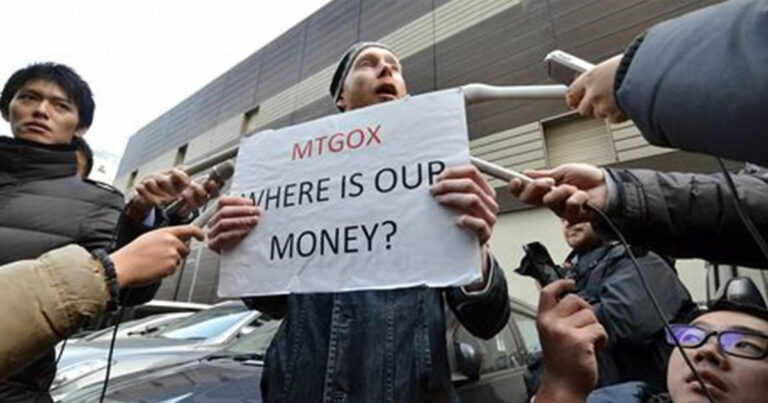
Revolutions leave behind artifacts. Sometimes they end up in museums. Sometimes they spend a decade in a suitcase. Kolin Burges became one of the defining figures of Bitcoin’s first financial crisis when he flew from London to Tokyo in February 2014 and stood outside the offices of Mt. Gox — then the world’s largest Bitcoin exchange, handling an estimated 70–80% of global Bitcoin trading volume — with a hand-lettered cardboard sign reading “MTGOX — WHERE IS OUR MONEY?” Day after day, in the snow, he held that sign while international media gathered and the exchange’s leadership scrambled to contain the fallout. Mt. Gox filed for bankruptcy shortly after, revealing that approximately 850,000 Bitcoin — belonging to customers, not the exchange — had been lost. The sign Burges carried during those weeks has become one of Bitcoin’s most iconic artifacts.
The works gathered in Relics of a Revolution at Bitcoin 2026 trace a lineage of dissent that connects street-level protest to the birth of Bitcoin itself. Also a part of this exhibition is an original copy of The Times from January 3, 2009 — the newspaper whose front-page headline, “Chancellor on brink of second bailout for banks,” Satoshi Nakamoto permanently embedded in the Bitcoin Genesis Block. It was not included as solely a timestamp. It was a thesis. The financial crisis was not a flaw in the system — it was the system. And as of that block, an alternative was live. The Mt. Gox protest sign displayed beside that newspaper is proof that the revolution did not end with the Genesis Block. Sovereignty demands permanent vigilance, and the people willing to fight for it have always been willing to stand outside in the cold.
I sat down with Kolin Burges ahead of his panel at Bitcoin 2026 to talk about protest, broken trust, and what happens when you stop waiting for someone else to hold the sign.
BMAG: Kolin, for people encountering this story for the first time — can you set the scene? You were a customer of Mt. Gox. Your withdrawals stopped. What made you decide that the right response was to get on a plane, fly to Tokyo, and stand outside their office with a sign?
Kolin: This was January 2014 – I only deposited my BTC into Mt. Gox for a few days but it was the wrong few days. When I tried to withdraw, my account was debited but the coins didn’t arrive. The same happened to all the other customers, leading to an attempted “bank run” on Mt. Gox and claims from the company that there were simply some technical issues with the withdrawals.
Over the next ten days the tension built up and everyone just wanted to know whether their bitcoins were safe. (We didn’t have “safu” back then). Mt. Gox were just fobbing people off with template customer support replies and making public statements which were not particularly believable.
It was mentioned on Reddit that someone called “CoinSearcher” from Australia had travelled to Tokyo to talk to management and to protest, but then had to return home for work. Banking law expert (and Mt. Gox customer) Karl-Friedrich Lenz passed by that protest on his way from work and began a conversation which would set later events in motion.
Over in London I was quietly outraged that Mt.Gox were just fobbing me off. I knew that there was nothing I could do unless I went there, and so I woke up one morning with the realization in my head that I was going to Tokyo.
BMAG: You’ve said you didn’t have a detailed plan when you arrived. You just knew you had to be there. Can you walk us through what those first days were like — confronting Karpelès, the media showing up, the pressure Mt. Gox put on you to stop?
Kolin: Before I arrived in Tokyo I had contacted Karl and CoinSearcher. Karl set up the initial media contacts with the Wall St Journal and Coindesk. We met with the WSJ who went with me to Mt. Gox to request to talk. I was refused a meeting with anyone, either at that time or in the future, and I left. That was the diplomatic route at a dead-end and so it was time to look for attention via protest and to try to force a meeting.
I went to the Bitcoin Tokyo meetup and met another customer Aaron, who informed me he was coming to join the imminent protest – instant doubling of size. I also met Coindesk reporter Jon Southurst who arranged to cover it.
The next morning the Wall St Journal and Coindesk were waiting with me in the snow for CEO Mark Karpeles to come by. The last thing you expect when you’re ambling into work on a Tokyo morning is that you’ll be confronted by a mildly angry Glaswegian waving a large cardboard sign. And so the video and photos went viral later that day and set the crypto internet alight. It became an iconic and heavily memed moment in bitcoin history. Not something I had expected.
Aaron arrived shortly after the confrontation and together we began the Mt. Gox protest, initially two people standing in rain and snow holding signs and umbrellas in front of an empty street.
By the end of that day the Financial Times and NHK (Japanese state broadcaster) had sent reporters to cover it and we realised that this was becoming much bigger news than we expected. From then on the media came in larger and larger amounts every day.
BMAG: There’s a remarkable detail in your account — Mt. Gox representatives met with you privately and told you that if you kept protesting, everyone would lose their Bitcoin. They essentially asked you to stop holding them accountable in order to preserve confidence in their failing system. How did you process that in the moment?
Kolin: He said he couldn’t allow the protest to continue and also that everyone would lose their bitcoin if it did. When I heard those words I felt an unusual sensation that can only be described as my blood running cold. It felt like reality had suddenly taken a dark turn. For context, the big question on everyone’s minds at that time was whether the bitcoins were missing or safe. I went to my hotel and had a long call with Aaron. Although the Mt. Gox person claimed to not have visibility on whether the bitcoins were still in Mt. Gox, the statement about people losing their BTC suggested otherwise. The protest was not somehow going to make the bitcoins disappear – so if people really were going to lose their money then the bitcoins must already be gone.
The next day Mt. Gox made another, even more bizarre, attempt to stifle the protest. They feigned concern that Aaron and I were cold and invited us to move the protest to the inside of their offices! I can just picture going into their office every day to stand for 8 hours holding signs in front of their developers.
After we refused that they started getting technical about our position on the street – demanding that we shift a couple of inches further forward to ensure we didn’t encroach even an inch over the airspace of the property boundary (which wasn’t even their property). It was like they were descending to kindergarten level.
BMAG: Mt. Gox collapsed two weeks after your protest began. In retrospect, do you think the media pressure your protest generated forced the situation to a head faster than it otherwise would have — and was that a good thing?
Kolin: I have no doubt that the collapse timeline was accelerated by the pressure. Certainly Mt. Gox thought so or they wouldn’t have been in such a panic about the protest.
What’s more interesting is the knock-on effect that it likely had on the longer term. We now know what was going on within their walls at that time. They were scrambling to get their hands on 200,000 bitcoins to keep the exchange running (and presumably to keep the CEO out of jail). For them it was a race against time to get the bitcoins before everything went fubar. The media was starting to mob the street and the global attention was glaring in through their windows like the Eye of Sauron.
They created an infamous document which they privately sent to other bitcoin exchanges begging for 200,000 bitcoins to help bail them out of an 845,000 bitcoin loss, which was then leaked by Ryan Selkis. It was stunningly desperate as all the other bitcoin exchanges combined wouldn’t realistically have that much money unless they stole it from their own customer funds and destabilised the entire ecosystem even further. The document showed their plan was to use these bitcoins to pause operations, rebrand Mt. Gox as Gox, then restart the exchange, “owing” the customers their bitcoins that they could hopefully pay off at some vague point in the future. The bitcoins would enable them to allow a very limited amount of customer withdrawals and create a semblance that there was a proper exchange running.
We also now know that within a few days of them finally giving up and announcing their collapse they found 200,000 missing customer bitcoins in an old wallet file. This was by coincidence the exact amount they had needed for their plan.
If the protest had not pressured the timeline it seems pretty likely they would have found those 200,000 bitcoins while Mt. Gox was still operating. In that case it would have been highly unlikely that they would have voluntarily gone into liquidation and returned the coins through the bankruptcy process. Instead it seems probable they would have attempted to execute their stay-open plan using those bitcoins.
It was a good thing that they were forced into liquidation and the government took control of the coins. There is no universe in which Mt. Gox could possibly have made a success of the plan and paid off the remaining 645,000 BTC. So if they had kept going we’d just have ended up with something even messier further down the road.
BMAG: The sign you carried during those weeks is now a recognized artifact of Bitcoin history. When you made it, did you have any sense it would take on that kind of significance — or was it just the most direct tool you had?
Kolin: I had no idea of its future significance. I got up at 6am on the morning of the protest and drew the sign. After a couple of days I covered over the handwriting with printed text of the same words. This was to make it more TV camera friendly. If I had been thinking about the future symbolic significance I would probably have kept it as it was. After the protest it sat for 10 years undisturbed in a suitcase. When I saw Bitcoin Sign Guy’s “Buy Bitcoin” sign sell at auction for 16 bitcoins I decided it was time to get it out and dust it off.
BMAG: More than a decade later, does the Mt. Gox protest sign feel like a relic of a problem Bitcoin has solved, or a warning that’s still relevant? We’ve seen exchange failures since — the lesson about self-custody and not trusting intermediaries seems to need repeating.
Kolin: That problem has definitely not been solved! How many exchanges from 2014 or 2015 have even survived until today?
There are two main types of problem – exchanges being hacked and exchanges plundering their customer money. Both are still happening. Keeping money away from exchanges all the time isn’t really practical if you need to exchange it, trade derivatives, etc. More recently, advanced dexes have become common on other chains and they remove a lot of the risk but not all of it.
With hacks, the real issue is ultimately human laziness – corner-cutting on security procedures. When an exchange gets hacked you nearly always find out it had a gaping security hole or procedural weakness. Why are so many exchange CEOs who manage billions of dollars not making sensible efforts to secure their deposits? A lone coder could design a secure wallet procedure before breakfast time, at least a basic one which does the job. You don’t need large resources and the more complexity you add the riskier it becomes.
Part of the problem is that exchanges like to say they use cold storage and that makes customers feel more secure, but the definition of “cold storage” is becoming more vague as technologies advance. In theory it means that a wallet’s private keys have never been exposed to an internet-connected device. But things have become more complex and now it can be used to describe wallets for which transactions are created on external websites and then imported to be signed. Those signing devices may not themselves be directly connected to the internet but if they end up signing transactions originating from the net then the funds are still indirectly exposed to the malicious forces on the net. And we’ve seen the disastrous consequences of that. It goes against the original ethos of cold storage. Exchanges should always be running the full pipeline used for cold storage transactions on highly secure internal devices rather than relying on the integrity of external websites.
Perhaps we need more precise definitions of the security setup of wallets so that exchanges can’t hide behind a vague term.
BMAG: There’s a pattern that extends beyond bitcoin or crypto grifting — FTX replaying the Mt. Gox script with a bigger budget, the 2008 bank bailouts before that, the US savings & loan crisis of the late 1980s before that (which I first learned about from a Punisher comic book as a kid), and now ballooning national debt running the money printer. It’s a cycle of leverage, collapse, and reset where ordinary people absorb the losses every time. As someone who lived through the original version of that story with Mt. Gox, do you see bitcoin as genuinely breaking that cycle, or are we watching new versions of the same concentrated risk build up inside the bitcoin ecosystem itself?
Kolin: Bitcoin does solve some of the problems at the base layer because nobody can print more of it on a whim. In that sense it is a real break from the older pattern. In theory, no bailing out banks and government mistakes by creating more magic money that the public then has to pay for for years, and no institutional escape hatch when the numbers stop adding up.
But fiat still exists and that will keep happening within the fiat system, with knock-on effects to bitcoin. So unless bitcoin replaces fiat we’ve still got those risks.
And bitcoin also doesn’t fix human behaviour. The moment people pile their coins into centralised exchanges, lenders, or other leveraged structures, the old cycle starts rebuilding itself. If you recreate banks on top of bitcoin, you recreate banking failures on top of bitcoin.
This is Part I of a three-part series accompanying the Relics of a Revolution exhibition.
Fix the money. Fix the world.
Burges is exhibiting the Mt. Gox signs at Bitcoin 2026, April 27–29, at The Venetian Resort, Las Vegas, and is a speaker on a panel titled “Looking at Bitcoin Art Through a Protest Lens.” The signs can be previewed on BMAG here, with bidding set to begin April 17.
The Bitcoin Museum & Art Gallery (BMAG) is the curatorial and cultural programming division of BTC Inc and the Bitcoin Conference. Since 2019, the BMAG conference art gallery has facilitated more than 120 BTC in art and collectible sales. Learn more about BMAG at museum.b.tc. Follow BMAG on twitter @BMAG_HQ.
Bundle your Bitcoin 2026 pass with a stay at The Venetian and get your fourth night free. Use code AFTERS for a free After Hours Pass, or get your pass alone here.
Chainalysis projects stablecoinvolume could hit $719 trillion, reshaping payments and settlement systems.
Adoption surge from younger investors may drive $508 trillion in added annual activity across markets.
Merchant growth, with $232 trillion potential, puts pressure on legacy providers as blockchain rails expand.
Stablecoins Gain Ground as Core Financial Infrastructure
Digital assets are increasingly influencing the structure of global finance, particularly in how payments are processed and settled. Chainalysis, a blockchain analytics firm, released findings on April 8 in a blog preview of its forthcoming study, “The New Rails: How Digital Assets Are Reshaping the Foundations of Finance.”
The report examines how stablecoins are evolving into core financial infrastructure. It frames stablecoins as scalable settlement layers capable of absorbing growing transaction demand across global markets. The analysis also points to structural inefficiencies in legacy rails that create a favorable environment for blockchain-based alternatives. Chainalysis stated:
“Adjusted stablecoinvolume is projected to reach $719 trillion by 2035 through organic growth alone. Factor in macro catalysts, and that figure could approach $1.5 quadrillion.”
The analysis explains that stablecoin activity has shifted toward real economic use cases, including payments, remittances, and corporate treasury functions. These capabilities position stablecoins as faster and more efficient alternatives to legacy financial systems. Macro catalysts include generational capital rotation, increasing merchant acceptance, and institutional infrastructure buildout across payments networks. Regulatory momentum and demand for continuous settlement further reinforce conditions that could accelerate adoption beyond baseline projections.
Rising Adoption and Merchant Integration Drive Massive Growth
A major structural shift in global wealth distribution is also expected to influence adoption patterns in the coming years. Chainalysis noted:
“We estimate that this transition alone could add $508 trillion to annual stablecoin transaction volumes by 2035.”
As younger, digitally native investors gain control of capital, their preference for blockchain-based tools may accelerate broader financial system changes. This demographic shift introduces sustained demand for on-chain financial services that operate without traditional banking constraints. As capital migrates, liquidity may increasingly concentrate within blockchain ecosystems rather than legacy financial institutions.
FDIC Proposes GENIUS Act Rules for Bank Stablecoin Issuers: 1:1 Reserves and 2-Day Redemptions Required
The Federal Deposit Insurance Corporation approved a notice of proposed rulemaking Tuesday, laying out reserve, redemption, capital, and risk management…
Read Now
FDIC Proposes GENIUS Act Rules for Bank Stablecoin Issuers: 1:1 Reserves and 2-Day Redemptions Required
The Federal Deposit Insurance Corporation approved a notice of proposed rulemaking Tuesday, laying out reserve, redemption, capital, and risk management…
Read Now
FDIC Proposes GENIUS Act Rules for Bank Stablecoin Issuers: 1:1 Reserves and 2-Day Redemptions Required
Read Now
The Federal Deposit Insurance Corporation approved a notice of proposed rulemaking Tuesday, laying out reserve, redemption, capital, and risk management…
“We estimate that POS saturation alone could add $232 trillion in annual stablecoin volumes by 2035,” Chainalysis further said. The analysis also points to growing merchant acceptance as a critical factor in mainstream adoption. As stablecoins become embedded in everyday transactions, traditional payment providers may face increasing competition from on-chain alternatives. At scale, merchant integration reduces user friction, enabling stablecoins to function as default payment rails rather than optional tools. This shift could compress margins for intermediaries while redistributing value across issuers, wallets, and on-chain infrastructure providers.
OKX Ventures and HashKey Capital are backing a new Vietnam-based crypto exchange as Hanoi accelerates efforts to bring one of the world’s most active retail crypto markets under formal regulation.
Vietnam Prosperity Crypto Asset Exchange (CAEX) said Friday that the two firms have agreed to invest and become strategic partners alongside founding shareholders VPBank Securities and digital-identity firm LynkiD.
The funding will bring CAEX’s capital base to VND 10 trillion — roughly $380 million — the minimum needed to enter a government pilot program for regulated crypto trading under Resolution 05/2025.
The deal lands as Vietnam’s Digital Technology Industry Law, which took effect in January, formally recognized crypto assets and laid the legal groundwork for licensing, oversight, and industry incentives. Now regulators are pushing to shift activity onshore through a pilot program expected to grant licenses to a handful of domestic exchanges, part of a broader effort to restrict offshore trading and tighten control over capital flows.
That combination — legal recognition paired with controlled market access — has triggered a race among local financial institutions and global crypto firms to lock in early positioning. Vietnamese users moved an estimated $200 billion in digital assets in the year through mid-2025, placing the country among the top crypto-adoption markets globally.
Under the partnership, OKX Ventures and HashKey will work with CAEX on infrastructure, security, compliance, and liquidity. The exchange sits within the VPBank ecosystem, drawing on VPBankS for financial backing and governance and LynkiD for core technology and digital identity.
Vietnam was added to the Financial Action Task Force grey list in 2023 for weak anti-money laundering controls, particularly regarding virtual assets. That designation has been a major motivator behind the regulatory push.
The new framework requires crypto firms to obtain licenses, verify user identities, monitor transactions and file reports — measures designed to bring Vietnam closer to global compliance standards.
For Hanoi, the bet is that a regulated crypto market can help repair the country’s financial reputation. For OKX and HashKey, the calculus is simpler: get in early, meet the compliance bar, and grow with the market while the rules are still being written..
A solo bitcoin miner on the Bitcoin network has defied steep odds to successfully mine a block, securing the full reward of 3.128 BTC, valued at roughly $222,000 at current prices.
The miner solved block 944,306 early Thursday using CKpool in a solo configuration, according to data from mempool explorers. The payout consisted of the standard 3.125 BTC block subsidy, worth about $221,800, along with 0.003 BTC in transaction fees, adding roughly $212 to the total.
CKpool developer Con Kolivas confirmed the win, noting the miner operated with about 70 terahashes per second (TH/s) of computing power. That level of hashpower represents a fraction of the network and is comparable to a single Bitmain Antminer S17+ unit, a machine released in 2019.
At that scale, the probability of mining a block is extremely low. Kolivas estimated the miner faced odds of roughly 1 in 100,000 per day, translating to an expected success rate of once every several centuries. Despite those odds, the miner managed to validate the block and claim the entire reward.
Solo bitcoin miner’s small odds for success
The miner’s contribution accounted for approximately 0.0000069% of the network’s total hashrate, which stood near 1.02 zettahashes per second on April 9. By comparison, large public mining firms such as Bitdeer and MARA Holdings operate at tens of exahashes per second, orders of magnitude higher than the solo participant.
While CKpool functions as a mining pool, it differs from traditional pooled mining setups. Most users on the platform engage in solo mining, meaning they do not combine hashpower with others to share rewards. Instead, participants accept a lower probability of success in exchange for retaining the full block reward if they find one, minus a small fee paid to the pool operator.
This approach removes the need for bitcoin miners to maintain independent infrastructure while preserving the upside of solo mining. It also highlights the lottery-like nature of block discovery for smaller participants.
The latest success follows a similar event just days earlier, when another solo bitcoin miner using CKpool earned roughly $210,000 after mining block 943,411. That miner operated with higher hashpower and faced odds closer to 1 in 28,000 per day.
Such outcomes remain rare but not unprecedented. Solo miners have occasionally secured full rewards despite minimal computational resources, reinforcing the probabilistic structure of Bitcoin mining, where any participant with hashpower retains a nonzero chance of success.
Editorial Disclaimer: We leverage AI as part of our editorial workflow, including to support research, image generation, and quality assurance processes. All content is directed, reviewed, and approved by our editorial team, who are accountable for accuracy and integrity. AI-generated images use only tools trained on properly license material. In Bitcoin, as in media: Don’t trust. Verify.
A judge heard arguments in Roman Storm’s motion for acquittal on Thursday.
If successful, prosecutors would be forced to decide whether to double down on a case that has been scrutinized by Department of Justice superiors.
But if Storm fails, he faces a retrial later this year.
The fate of Tornado Cash co-founder Roman Storm landed back in the hands of a federal judge on Thursday.
Last year, a jury convicted Storm of conspiracy to operate an unlicensed money transmitting business. But jurors couldn’t agree on more serious charges of conspiracy to launder money and conspiracy to evade US sanctions.
Judge Katherine Polk Failla now has several weeks to decide whether to acquit the embattled software developer, as he requested shortly after his month-long criminal trial.
At a hearing on Thursday, Storm’s attorneys said that prosecutors had improperly dragged the case into New York. Moreover, prosecutors failed to prove that Storm had committed a crime, his attorneys said.
One of those attorneys, Cooley partner Brian Klein, noted the US Treasury Department considers crypto mixers like Tornado Cash to be legitimate businesses.
“Maintaining your cryptocurrency mixer … that would also be legal,” Klein said. “I think that’s an important starting point here.”
Prosecutors, in turn, defended the evidence they presented during a multi-week trial last year.
If Failla sides with the government, it would pave the way for a retrial later this year. If she sides with Storm, prosecutors would be forced to decide whether to double down on a case that has been scrutinized by superiors at the Department of Justice, including acting Attorney General Todd Blanche.
Tornado Cash is a so-called mixer that makes it difficult to trace the movement of crypto across Ethereum and other blockchains. That has made it popular with those seeking privacy on blockchains.
But the protocol is also popular with cybercriminals like the Lazarus Group, a hacking outfit affiliated with North Korea. Lazarus used the protocol to launder hundreds of millions of dollars in crypto stolen during a massive hack in 2022.
Prosecutors in the US and the Netherlands took note, charging Storm and another co-founder, Alexey Pertsev. Their defence has become a cause célèbre among cypherpunks and DeFi proponents, who say that US and Dutch prosecutors tragically misunderstand crypto technology.
Their advocacy appeared to pay off last year when Blanche issued a memo meant to curtail the prosecution of software developers who build crypto mixers.
Pertsev is appealing a five-year prison sentence. Storm faces up to five years in prison on the money transmission charge and decades in prison on the money laundering and sanctions evasion charges.
A testy hearing
Storm’s attorneys have argued there is no evidence he intended for Tornado Cash to be used by criminals.
At times during Thursday’s hearing, Failla appeared sympathetic to Storm’s argument.
During one particularly tense exchange, Failla asked Ban Arad, an assistant US attorney, whether merely creating Tornado Cash was a crime.
It was not, Arad replied.
What about merely maintaining Tornado Cash, Failla asked.
Arad appeared to suggest that was indeed a crime, noting that mixers like Tornado Cash are more effective at obfuscating the flow of illicit crypto when they contain large sums of “clean” crypto.
Therefore, Arad continued, any attempt to serve even law-abiding users could be viewed as an attempt to facilitate money laundering.
“You were doing better before you started talking,” Failla said, dismissing the argument.
At the outset, however, the judge cautioned anyone against attempting to use her questions to divine the outcome of Thursday’s hearing.
“Don’t read too much into my questions,” she said. “If my mind was made up one way or the other, I wouldn’t drag you all in.”
Indeed, at the end of the hearing, Failla proposed several dates for a potential retrial at the end of the year.
“It was good to see the judge digging in and asking detailed questions, but there is no way to predict how she will rule on Storm’s motion,” Amanda Tuminelli, director at the nonprofit DeFi Education Fund, told DL News in a statement. Tuminelli was among a handful of Storm supporters who attended Thursday’s hearing.
“Given that she was focused on dates for the retrial at the end of the hearing, I think we can expect to see the case continue.”
Many of Failla’s questions on Thursday came back to whether merely keeping Tornado Cash afloat or pushing software updates amounted to criminal behaviour. But other questions addressed the trial’s location.
Storm lives in Washington state, but was tried in New York. Prosecutors cited payments to a business partner with a Manhattan bank account and messages exchanged with an investor while the investor was in New York.
Storm’s attorneys say there was no evidence those payments went to the Manhattan bank account, and that messages to the Tornado Cash investor were completely unrelated to any of the alleged crimes.
Failla is expected to issue a decision in several weeks. If she were to side with Storm, it wouldn’t be the first time a convicted crypto criminal convinced a judge to overturn a jury’s decision.
Last year, a judge acquitted notorious crypto trader Avraham Eisenberg. Prosecutors are appealing the judge’s decision.
Aleks Gilbert is DL News’ New York-based DeFi correspondent. You can reach him at aleks@dlnews.com.
Ether (ETH) may be on the path to retesting $2,500 if the current rally above $2,150 and the bullish spot and futures market volumes pushing prices higher are sustained.
Ether is also supported by a key macro indicator that places the altcoin in a rare undervaluation zone not seen since 2022. The data points to fading selling pressure and the early stages of an accumulation process for Ether.
ETH price structure strengthens above $2,150
Ether’s daily chart shows bulls leading the charge after a 6.33% rally pushed the price above the $2,150 resistance. ETH now eyes a retest of its March highs near $2,385, with further upside toward the $2,475–$2,635 fair-value gap acting as a price magnet for bulls.
Repeat retests of $2,150 over the past two months suggest weakening resistance, as buyers continue stepping in at higher levels.
ETH/USDT on the one-day chart. Source: Cointelegraph/TradingView
Charts show ETH market structure improving and the current volumes being largely spot market driven. On the four-hour chart, ETH maintains higher lows while attempting to break into the $2,250–$2,300 range.
The aggregated spot cumulative volume delta (CVD) has remained elevated in April at 184,500 ETH, reflecting sustained spot demand.
ETH spot CVD, futures CVD, open interest and funding rate. Source: Velo.chart
The futures CVD has also trended gradually upward to 4.36 million ETH, suggesting that derivatives traders are beginning to support, rather than lead, the move.
The funding rate remains positive at 0.0052, indicating a long bias, and the open interest near 4.75 million ETH is still range-bound, signaling limited leverage.
Data shows ETH is in a controlled accumulation phase, marginally led by spot demand, though a stronger breakout would likely require an expansion in futures positioning.
Macro index shows ETH in a “rare” undervalued zone
Ether may be nearing a macro bottom according to the Capriole Macro Index Oscillator with a reading at -2.42. This puts Ether in a rare undervalued zone historically linked with capitulation and trend reversals.
The indicator tracks investment behavior, cycle positioning, and onchain data, with deeply negative values often signaling seller exhaustion.
Previous signals highlight the metric’s reliability. In June to July 2022, ETH bottomed near $1,000–$1,200 when the indicator fell to -2.2. In October to November 2023, a drop to -1 aligned with ETH’s price breaking out after a drop to $1,500.
In April 2025, another negative reading marked a local bottom near $1,500, setting the stage for a rally above $4,000.
Macro Index Oscillator for ETH. Source: Capriole Investments
The current setup mirrors prior capitulation phases. ETH has fallen from highs near $4,800 to $2,100, while the oscillator sits near cycle lows.
With ETH now in a rare undervalued zone, the downside risk appears limited relative to the upside potential. However, the confirmation would come with a reclaim of the $2,400–$2,500 level and a move back toward zero for the macro indicator.
Analyst crypto sunmoon noted that the ETH taker buy/sell ratio has been trending upward for four to five months.
Combined with the current drawdown, the structure resembles the setup preceding the April to May 2025 rally, suggesting a similar recovery phase may be forming.
Ether taker buy-sell ratio on all exchanges. Source: CryptoQuant
Related: Three reasons why Ether traders expect ETH to hold above $1.8K
This article is produced in accordance with Cointelegraph’s Editorial Policy and is intended for informational purposes only. It does not constitute investment advice or recommendations. All investments and trades carry risk; readers are encouraged to conduct independent research before making any decisions. Cointelegraph makes no guarantees regarding the accuracy or completeness of the information presented, including forward-looking statements, and will not be liable for any loss or damage arising from reliance on this content.