Bitmine Immersion (BMNR), the largest Ethereum treasury company, bought 10,399 ether (ETH) during last week as Chairman Tom Lee pointed to ether’s strongest monthly performance against the Nasdaq in a year as evidence that crypto is recovering.
The purchase, worth roughly $19.1 million at ETH’s current price of $1,840, lifted Bitmine’s holdings to almost 5.8 million ETH, or about 4.8% of Ethereum’s circulating supply, according to the company’s Monday update.
The latest acquisition was broadly in line with the previous week’s 9,946 ETH purchase, extending Bitmine’s streak of weekly ether buys since adopting its Ethereum treasury strategy in June 2025.
The company also bought back 4.5 million shares of its common stock, bringing total recent repurchases to 16 million shares.
The update comes as Strategy (MSTR), the largest corporate bitcoin holder, disclosed another sale of bitcoin. The company trimmed its treasury by 1,638 BTC, worth about $105 million, while repurchasing $81.2 million of its STRC preferred stock. Strategy also raised $290 million through sales of common shares.
Lee tied the company’s outlook to ether’s relative strength against technology stocks.
The odds of the Digital Asset Market Clarity Act’s (CLARITY) passage are dwindling as the US Senate is scheduled to begin summer recess at the end of this week, threatening another leg down for cryptocurrency valuations, according to wealth manager Bernstein.
Bernstein said that the Senate’s failure to pass the legislation could trigger an immediate negative “industry knee-jerk reaction,” which may result in another leg down for Bitcoin and the broader crypto market.
“From a tactical standpoint, we expect the crypto market to bottom and start showing momentum towards late Q3 and early Q4 prior to the mid-terms,” Bernstein analysts wrote in a Monday report shared with Cointelegraph.
At the same time, however, the analysts said that Senate failure to pass the legislation may bring more proactive policy support from regulators, including the Commodity Futures Trading Commission (CFTC) and the Securities and Exchange Commission (SEC), which may accelerate rulemaking initiatives under Project Crypto.
Project Crypto is a regulatory initiative first announced by SEC Chairman Paul Atkins in July 2025, which was later expanded into a joint staff initiative between the SEC and CFTC in September 2025. The initiative aims to create a workable regulatory framework for digital assets using existing agency authority while Congress finalizes crypto market legislation under the CLARITY Act.
Bernstein said that the two agencies could provide more interpretive releases tied to the taxonomy of tokens, clear rules around decentralized finance (DeFi) and accelerate the innovation exemption for issuing tokens that would be exempted from securities status during a finite period.
CLARITY Act odds decline to 31%
Bernstein’s skepticism is supported by prediction market traders who are betting against the passage of the CLARITY Act before the end of 2026.
Odds of the legislation’s passage before the end of the year are now at 31%, down 7% in the past week and down 9% in the past month, according to Polymarket, which shows about $3.7 million has been wagered on that prediction.
Prediction market odds of the CLARITY Act being signed into law by the end of 2026. Source: Polymarket
Meanwhile, White House officials are reportedly weighing a bipartisan ethics counterproposal received on Thursday, following weeks of negotiations between Republican Senator Thom Tillis and Arizona Democrat Ruben Gallego.
The proposal would enable state attorneys general to sue the Department of Justice if it fails to enforce ethics laws against federal officials, three sources familiar with the matter told crypto journalist Eleanor Terrett.
Related: ABA, state banking groups push back on CLARITY Act stablecoin yield provisions
The CLARITY Act aims to establish the first regulatory framework for digital assets in the US, but it has been met with pushback from the banking industry, which argued that the current draft would allow crypto firms to offer yields on stablecoins without facing the same requirements as traditional financial institutions.
On June 26, Galaxy Digital cut its odds of the CLARITY Act becoming law in 2026 to 50%, warning that the US Senate is running out of time to move the crypto market structure bill before its August recess.
Magazine: How the EU’s crypto tax rules are expected to work for users and platforms
Bitget said it will stop providing crypto trading services to residents of Japan, citing efforts to comply with local regulations.
The crypto exchange, ranked fifth by Coingecko with trading volume of roughly $714.7 million over the past 24 hours, stopped accepting new registrations from Japanese residents on Sunday, according to a Monday announcement.
Japan reclassified cryptocurrencies as financial instruments following legislation approved by its parliament in mid-July. The new rules are expected to take effect next year and include fines of about $62,800 and prison sentences of up to 10 years for operation without registration.
Existing users who believe Bitget has incorrectly identified them as Japanese residents must complete a Level-2 identity verification, including proof of address by Nov. 1, the company said. Accounts that do not complete the process will be considered Japanese, it added.
Bitget will place those accounts into close-only mode starting Nov. 1, according to its FAQ. Users will not be able to open or add to positions or use services, including spot and futures trading, copy trading, trading bots and their earn products. Deposits, subject to limits, and withdrawals will remain available.
Xyper has launched an on-chain crypto marketplace where autonomous AI agents and human creators can independently earn rewards for social content, with payouts distributed automatically through smart contracts directly to their wallets.
The launch comes as 87% of creators now use generative AI in their day-to-day work, while global influencer marketing spend is projected to reach $40.51 billion in 2026.
That second point is not theoretical. Earlier this year, X’s head of product announced the platform would no longer allow apps that pay users to post, immediately revoking API access for InfoFi projects that had built reward programs around exactly that model. Xyper’s approach sidesteps that fragility by settling everything on chain: rewards live in smart contracts from the moment a campaign launches, not inside a platform integration that can be revoked without notice.
Here’s how it works. Projects fund campaigns by depositing rewards into smart contracts and specifying the content they want, posts, threads, videos, or coordinated distribution across platforms including X and YouTube. Creators connect an X account, choose a live campaign, and submit content, no application or approval step required. Submissions are scored by an AI system for quality, relevance, and engagement, then registered on chain through signed vouchers. Once verified, payouts land directly in a connected wallet with no manual processing.
The most distinctive part of Xyper’s design is its treatment of autonomous AI agents as first class participants alongside human creators, a bet that lines up with where the market is already heading: 86% of creators now use generative AI in their day to day work. Through the Xyper Agent Skill, developers can connect an agent directly to the platform so it independently finds campaigns, produces content, submits it, and collects rewards around the clock. Dedicated agent endpoints in Xyper’s API let agents run continuously across multiple campaigns without human intervention.
“Every creator platform of the last decade has made the same trade: you get distribution, and the platform gets the leverage. If they change a policy or shut off an API, your income disappears with it,” Philipp Eryushev, CEO of Xyper, said in a statement shared with AlexaBlockchain.
“We built Xyper so that never happens again. The reward lives in a smart contract the second a campaign launches, not in someone else’s goodwill. And we built it for a world where a growing share of content isn’t written by a person at their desk, it’s produced by an agent working around the clock. Xyper is the infrastructure for that shift,” Eryushev added.
Xyper is live now at xyper.market, with active campaigns, leaderboard rankings, and referral tracking available today.
The above article “Crypto Marketplace Xyper Enables AI Agents To Earn On-chain As Content Creators” was first published on AlexaBlockchain. Read the complete article here: https://alexablockchain.com/xyper-enables-ai-agents-to-earn-on-chain-as-content-creators/
Read Also: This is the First U.S.-Chartered Depository Bank to Offer Stablecoin Invoicing
Disclaimer: The information provided on AlexaBlockchain is for informational purposes only and does not constitute financial advice. Read complete disclaimer here.
Crypto-friendly trading platform Robinhood (HOOD) is now registered to offer cryptocurrency services in the U.K.
Robinhood’s U.K. arm was added to the Financial Conduct Authority’s (FCA) list of registered cryptoasset companies as of July 31.
The company’s existing FCA registration means it meets the regulator’s requirements where it comes to anti-money laundering (AML). A regime for crypto firms has been in effect since 2020 and now numbers over 50 approved companies, including Ripple, Kraken and traditional finance (TradFi) giants like BlackRock and BNY.
Winning the regulator’s permission to offer crypto services has added significance ahead of the inception of the more comprehensive framework for crypto regulation in the U.K. The authorization process opens at the end of September and closes at the end of February next year, ahead of the full regime coming into force in October.
The relatively brief window for companies to register and obtain full regulatory approval means those firms already registered under the FCA’s existing regime may have done a lot of the heavy lifting in advance.
The flaw allowing the exploit traces to a March 2021 firmware build that routed seed generation to a predictable software randomizer instead of the chip’s hardware one, leaving the resulting keys reproducible offline by anyone who works out the range. Coldcard manufacturer Coinkite released emergency firmware for every affected model and told users who had generated a seed on the flawed software to move funds to a wallet address made with a fresh one.
Thorn said he had no direct victim report and published his findings on pattern matching alone, choosing speed over confirmation to warn people while the transactions were still unconfirmed.
If it holds, however, the running total across four waves had reached about 1,816 bitcoin, near $114 million, from more than 5,200 addresses since July 30.
The Coldcard attacker went after dust, then found value again. (Shaurya Malwa/CoinDesk)
Thorn advised users to check funds, move anything off an affected device and bid the fee up.
The pattern covered blocks 960,778 to 960,792, with 218 transactions hitting 462 victim addresses at a rate of about 14 sweeps per block against 0.3 in a pre-incident control window, roughly 45 times normal.
Each of the spent coins that arrived after the Coldcard firmware boundary, and the destinations were fresh addresses with no prior history, one per victim rather than the shared collectors that made the first two waves easy to map.
Treasuries rallied across the curve as the oil move eased inflation worries, taking the 10-year yield down four basis points to 4.69% after it hit its highest since January 2025 last week. Nasdaq 100 futures and European share futures both gained 0.8%. Gold added 0.3% to about $4,060 an ounce.
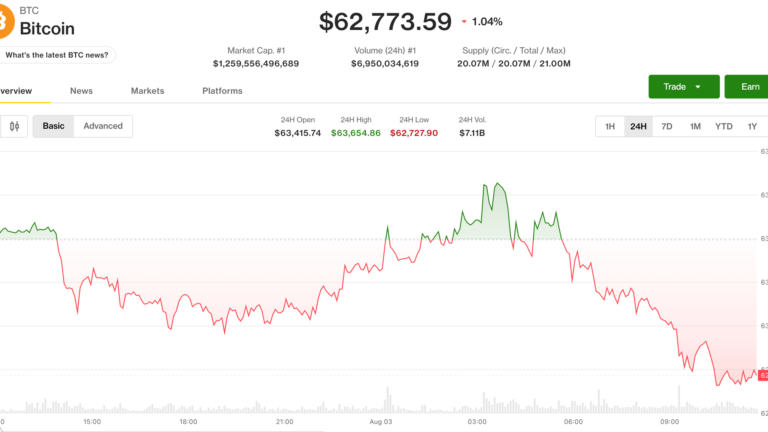
Falling oil, falling yields and rising stock futures usually give crypto a lift. This time bitcoin ignored all three — because the pressure on it is coming from a broken hardware wallet rather than from the macro.
As CoinDesk reported Sunday, a third wave of sweeps against Coldcard-generated addresses were found over the weekend, bringing observed losses to 1,367 bitcoin, nearly $89 million, across 4,585 addresses.
The average haul per address has fallen with each wave, which suggests the attacker has worked through the large balances, and later moved to emptying wallets worth a few thousand dollars.
Wave one took 1,083 bitcoin from 1,196 addresses on July 30, but wave three took 208 BTC from 1,912 wallets, which is more wallets for a fifth of the money.
Meanwhile, ether funds took small inflows on Friday while bitcoin funds saw an outflow, an unusual split for a market where bitcoin normally sets the direction and ether follows.
“Seems people really moved their Bitcoin out of extreme caution after the coldcard hack,” Moreno said.
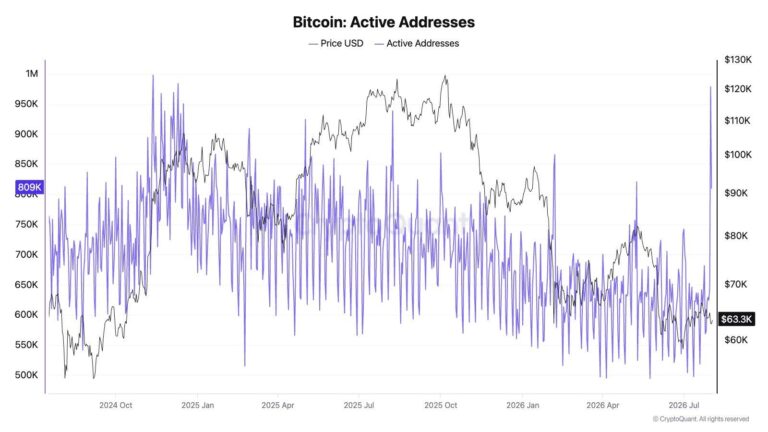
Small Bitcoin transactions tell a similar story. According to CryptoQuant, the combined volume of all transfers smaller than 1 BTC reached 39,600 BTC on Friday, just shy of the 39,900 BTC moved on November 16, 2022, the day after FTX filed for bankruptcy.
“The Bitcoin plebs had not moved this amount of BTC in a day since the FTX collapse,” Moreno said, adding that he liked to see people “taking action.”
Blockchain sleuth Timechainindex made a similar observation, noting that total net inflows to exchanges totaled 11,163 BTC on July 31, most of which flowed into major exchanges and firms like Binance, River, Kraken, and OKX.
“These are plebs who are scared,” the handle said on X, explaining the nature of the BTC inflow.
The total number of BTC held in wallets tied to centralized exchanges has increased to 2.715 million from 2.703837 million before the Coldcard exploit.
Reverse of FTX
Following FTX’s failure, the dominant risk was exchange insolvency and withdrawal freezes. Holders responded by moving bitcoin into self-custody, reducing exchange balances.
The current episode centers on self-custody risk associated with a single hardware wallet. The vulnerability has prompted some holders to temporarily shift smaller balances onto exchanges.
The stablecoin market is fragmenting, and onchain capital allocator Spark is betting it can capitalize on the split.
Fintechs, exchanges and banking groups are increasingly launching their own dollar-linked tokens. Each issuer wants to keep users, reserves and transaction activity inside its own network as competition ramps up.
The stablecoin landscape “is about to fragment more and more,” Sam MacPherson, CEO of Phoenix Labs, said in an interview with CoinDesk.
PayPal has PYUSD, Circle has USDC, and Tether has USDT. Robinhood has joined the Global Dollar (USDG) consortium and is building its own chain, while OpenUSD (OUSD) is another large consortium that includes Stripe and Coinbase.
Beyond these giants, there are hundreds of other stablecoins, including Ethena’s USDe, World Liberty Financial’s USD1 and Sky’s USDS.
The result is liquidity scattered across an expanding number of tokens and networks.
Spark is betting those networks will still need to connect. Its aim is to be the layer that moves money between them.
Spark is an affiliated lending and liquidity unit of Sky, the DeFi ecosystem formerly known as MakerDAO and the issuer of the USDS stablecoin. It is developed by Phoenix Labs and supported through Sky’s governance and capital.
Senators Ruben Gallego and Thom Tillis sent a proposed revised ethics provision to the White House on Thursday, after drafting the compromise the day before, an industry source familiar with the talks told CoinDesk. As of midafternoon on Friday, the White House had not officially responded to the proposal.
Ethics remains the biggest outstanding issue to be resolved before the Clarity Act can advance. There are ongoing negotiations around other issues, including stablecoin reserves and yield, law enforcement authorities and some of the Agriculture Committee provisions addressing the Commodity Futures Trading Commission’s total remit, but these are relatively uncomplicated compared to ethics, two industry sources said. One added that they expected those other issues to be resolved relatively quickly should negotiators come to a deal on ethics.
If the White House signs off on the counter-proposal from Tillis and Gallego, that could speed the way to at least the first part of the cloture process, the other source told CoinDesk. The Senate would still need to follow the cloture process laid out in last week’s edition of this newsletter, but the timelines involved mean that it would be difficult to get the bill all the way through by the end of the week. Still, getting through that first procedural vote would be a visible win for the crypto industry, should it happen.