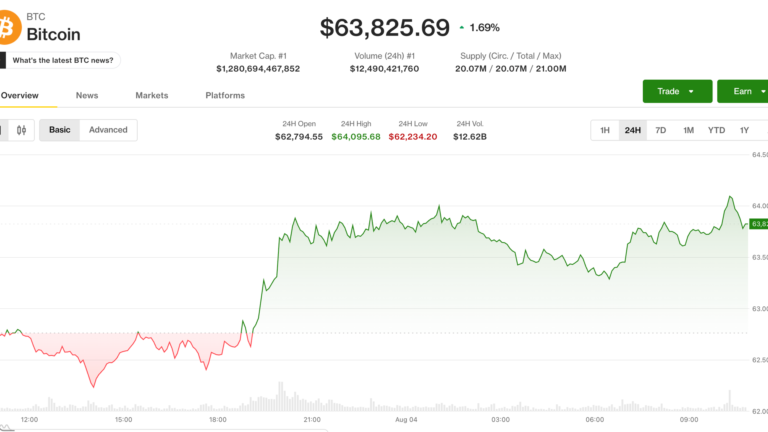
Bitcoin neared $64,000 in Asian morning hours Tuesday, up 2% over 24 hours and 1% on the week, recovering the $63,000 level it lost during Monday’s session. The low came near $62,250 before a steady bid carried it to just above $64,100 overnight.
Ether lagged near $1,865, up marginally on the day but still down 1% over seven days, the only major in the red on the weekly view. XRP rose almost 1% to $1.08 and is up 2% on the week. BNB added 1.5% to nearly $591 and leads the majors over seven days at almost 5%.
Solana gained over 1% to nearly $74, tron 1% to 33 cents and dogecoin the same to 7 cents. Hyperliquid’s HYPE bounced over 4% to $54 after last week’s slide, though it remains down 3% over seven days.
The recovery came without any resolution to the Coldcard situation. A fourth wave of sweeps against addresses generated by the affected firmware ran through Monday, taking roughly 449 bitcoin from 709 addresses on the revised count, and Galaxy Research has not confirmed whether the same operator is behind it.
The Clarity Act is widely viewed as the crypto industry’s most important piece of U.S. legislation, with supporters arguing it would establish clear rules for digital assets, reduce regulatory uncertainty and unlock broader institutional adoption. Analysts say passage would improve market sentiment by giving banks, asset managers and exchanges greater confidence to invest in blockchain infrastructure and expand crypto products.
Bernstein’s analysts said they expect regulators to move more quickly on token classifications, decentralized finance (DeFi) guidance, self-custody rules and innovation exemptions for token issuance, while continuing to support tokenization, crypto derivatives and prediction markets.
The Clarity Act remains strategically important because it would provide permanent regulatory certainty, encourage banks, broker-dealers and exchanges to invest in blockchain infrastructure, clarify the division between securities and commodities oversight and establish a long-term framework for decentralized finance and digital assets regardless of future political administrations, the report said.
Even if the legislation stalls, the broker expects the crypto industry’s political influence to remain strong ahead of the U.S. midterm elections and sees the current downturn ending in late third or early fourth quarter, helped by the prospect of further White House policy support.
For listed companies, failure to pass the bill would preserve the status quo for stablecoin regulation.
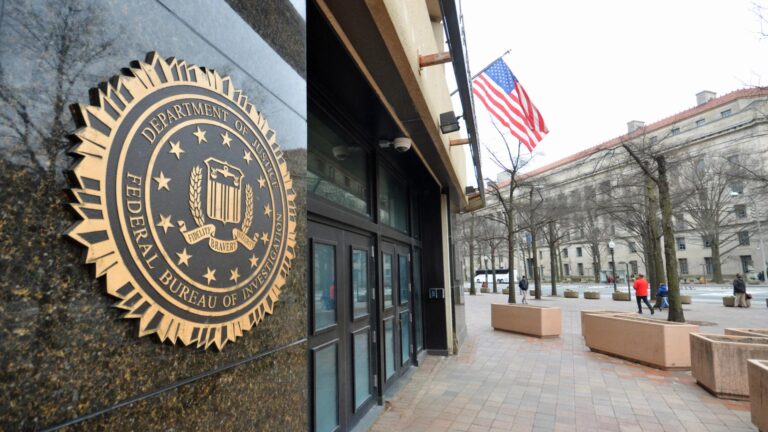
A supervising U.S. FBI agent who worked in intelligence at the national headquarters has been arrested and accused in a federal court filing of stealing more than $1 million in cryptocurrency.
The high-level special agent, identified as Patrick Steven Yarmoch, allegedly turned himself in to agency colleagues, reporting that he dug crypto keys from FBI systems to make as many as a dozen transfers to himself from accounts tied to foreign individuals he’d investigated, according to an August 1 account filed with the U.S. District Court for the Eastern District of Virginia.
Yarmoch — who held a “top secret” security clearance — had worked in counterintelligence, specifically with an investigative unit that focused on an unnamed “adversary nation,” according to the court filing, which noted he was suspended for a couple of days before being fired and arrested on July 31.
The resident of Ashburn, Virginia, had worked as a supervisory special agent at FBI headquarters in Washington, specifically in its counterintelligence and espionage division. He’d previously worked for years out of Boston, where he’d been in a national-security unit investigating the adversary nation referenced in the court filing.
U.S. Treasury Secretary Scott Bessent confirmed Sunday that the U.S. joined Japan in coordinated foreign exchange intervention last Friday, calling it a move to counter “disorderly yen movements.” The USD/JPY pair almost hit 164 its weakest level since 1986 before snapping back to 156.5 on Monday.
“We will not hesitate to participate in further joint intervention,” Bessent wrote on X, adding that the U.S. “strongly supports Japan’s decisive market and monetary steps to correct the substantial undervaluation of the yen.”
For the crypto market, August 2024 marked a bloodbath caused by the unwind of the yen carry trade. When the Bank of Japan (BOJ) hiked interest rates to 0.25% unexpectedly that month, the yen strengthened, and BTC collapsed from roughly $62,000 to $49,000 in a week, roughly a 20% drawdown, as leveraged carry investors sold risk assets to cover yen-denominated losses.
The BOJ held rates at 1% last week, while Governor Kazuo Ueda’s flagged AI demand and yen weakness as the two factors pushing inflation above 2%.
Different this time?
However, with everyone expecting bitcoin to fall alongside a strong yen, CoinDesk analysis shows the opposite. Bitcoin’s 52-week rolling correlation with USD/JPY had hit -0.90, suggesting BTC was actually falling alongside a weakening yen, which is the opposite of carry-trade logic. Analysis shows it was more likely broad U.S. dollar strength, not the yen.
Japanese bond yields are still surging regardless of the announcement, with the 30-year yield approaching 4%, while bitcoin has remained relatively flat above $63,000.
Cointelegraph is committed to providing independent, high-quality journalism across the crypto, blockchain, AI, and fintech industries.
All news, reviews, and analyses are produced with full journalistic independence and integrity. For more details on our standards and processes, please read our Editorial Policy.
Matt Prusak, president and interim chief financial officer of Trump-linked bitcoin miner American Bitcoin (ABTC), is leaving the company to join AI and energy infrastructure developer Giga Energy, marking another senior executive move toward the power sector that is increasingly underpinning both bitcoin BTC$63,848.82 mining and artificial intelligence.
Prusak said he will step down from American Bitcoin effective Aug. 4 and join Giga Energy as chief business officer and interim CFO.
He said in emailed comments that after “years building bitcoin businesses,” he was shifting “upstream to the power infrastructure now constraining both mining and AI compute.”
The departure reflects a broader shift as bitcoin miners reposition around AI and power infrastructure. As mining becomes increasingly commoditized and margins come under pressure, a growing number of miners are pivoting toward artificial intelligence infrastructure, repurposing their power, land and data center expertise to serve the surging demand for AI compute.
The shift has accelerated as hyperscalers race to secure electricity and capacity, allowing mining companies to diversify revenue beyond bitcoin production and tap the higher valuations being awarded to AI infrastructure businesses.
Just when you thought crypto was getting boring, a new phenomenon is lighting up Crypto Twitter — Fake World Assets (FWAs). Yes, really.
It’s the latest iteration of the onchain gacha craze, where users receive a random collectible, or collectibles, that are usually worth very little, but are sometimes worth quite a lot.
Within four days of launch, FWAs guzzled so much Ethereum gas that they briefly became the chain’s largest gas consumer by fees over a 24-hour period.
At its peak on July 25, FWAs generated approximately $1.53 million in daily fees, and even leapfrogged Tether and Circle to briefly rank among Ethereum’s biggest consumers of blockspace. Its creators, TokenWorks, proclaimed:
“4 days since launch. Fake World Assets are the next big thing.”
TokenWorks is far from an impartial observer, but TVL continues to climb, reaching over $6.15 million on July 31. Fee revenue has now eased to around $350,000 per day, which equates to an annualized run rate of roughly $268 million. By August 1, FWA had seen 10,000 ETH in volume, and 100,000 purchases. Some of the activity is driven by users trying to access early FWA token incentives, but there also appears to be genuine interest in the gamified mechanic.
Fake World Assets TVL and fees. Source: DeFiLlama
Not everyone is convinced the excitement around FWA will last. Simon Dedic, founder of venture capital firm Moonrock Capital, and an early backer of onchain collectible platforms, tells Magazine:
“I’m very bullish on gamified commerce… my skepticism on FWA is specific.”
Dedic argues that much of the current activity is driven by generous token incentives rather than genuine demand.
“The whole thing is purely aimed at crypto degens so they can gamble and speculate,” he says.
So, is this just another short-lived obsession, or has the industry finally stumbled upon something built to last?
All very interesting, but what the heck are FWAs?
Crypto has spent years trying to put the real world onchain, from stocks and bonds to collectible cards and Brazilian cows.
Related: Gambling on random Pokémon cards: Onchain gagcha hits record high as crypto sinks
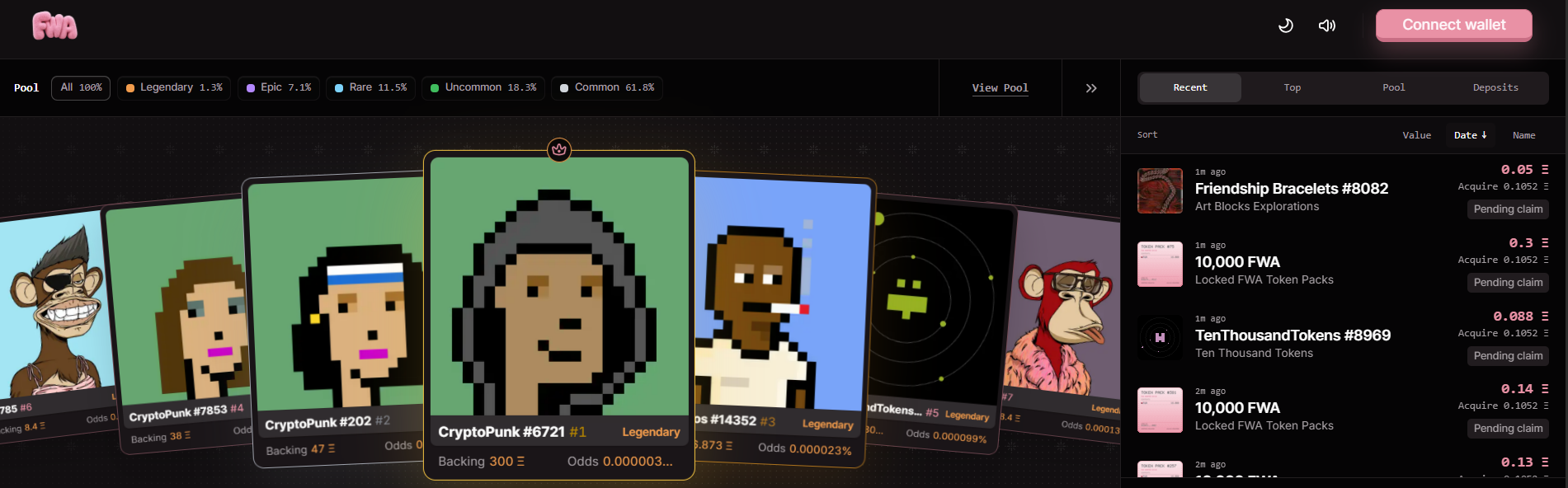
TokenWorks decided to flip the idea on its head by creating Fake World Assets, which are just NFTs. Rather than buying a specific collectible like a Bored Ape, users pay to spin an onchain “gacha” machine for the chance to win a randomly selected NFT backed by Ether.
The prizes on offer come from dozens of well-known collections, like CryptoPunks and Azuki to Lil Pudgys and Art Blocks.
Fake World Assets is just the latest Ethereum-based protocol to put a new spin on the craze.
Gacha is short for gachapon/gashapon, which are vending machines invented in Japan in the 1960s that spit out a random toy in a capsule. This mechanic migrated to mobile and browser games, with the loot boxes in Dragon Collection in 2010 often cited as the first major gacha game. Meanwhile a similar mechanic was at work with real world Pokemon trading card “booster packs” that offered a random assortment of collectible cards, of various rarity levels and values.
These cards were subsequently tokenzied onchain by projects such as Collector Crypt, Beezie and Courtyard. As Magazine reported previously, onchain gacha saw a record $324 million in volume in June. (Hundreds of these tokenized cards have now been wrapped for use on FWA.)
The concept is expanding every week, with developers experimenting with randomized “token packs” containing ERC-20 tokens, while StockRip on Robinhood chain, shows how tokenized stocks can be wrapped into NFT-based gacha packs.
Fake World Assets. Source: fwa.fun
As AzFlin, founder of DAO launchpad daos.world and a former Uniswap engineer, says:
“Just when you think everything in crypto has been invented, something new springs up.”
What is the appeal of onchain gacha?
The gacha mechanic combines crypto, collectibles and gambling . As pseudonymous crypto commentator 2Lambroz puts it, from the player’s perspective, “you’re buying a lottery ticket on the pool.”
“People enjoy playing the lottery, and it’s important to take that seriously,” says Benjamin Lockwood, a Wharton economist whose research into state-run lotteries found that people value the experience itself, not just the chance of winning.
Meir Statman, the behavioral finance pioneer and professor at Santa Clara University and author of A Wealth of Well-Being, tells Magazine:
“There is a parallel to ‘onchain gacha’ in people bidding on the contents of abandoned storage units. Most find items worth placing in the trash, but some find items they can sell on eBay. One found a painting worth hundreds of thousands of dollars. These combine hope for riches with playfulness. This is what lotteries offer.”
Two sides to every story
Why do people play the lottery? Source: Knowledge at Wharton
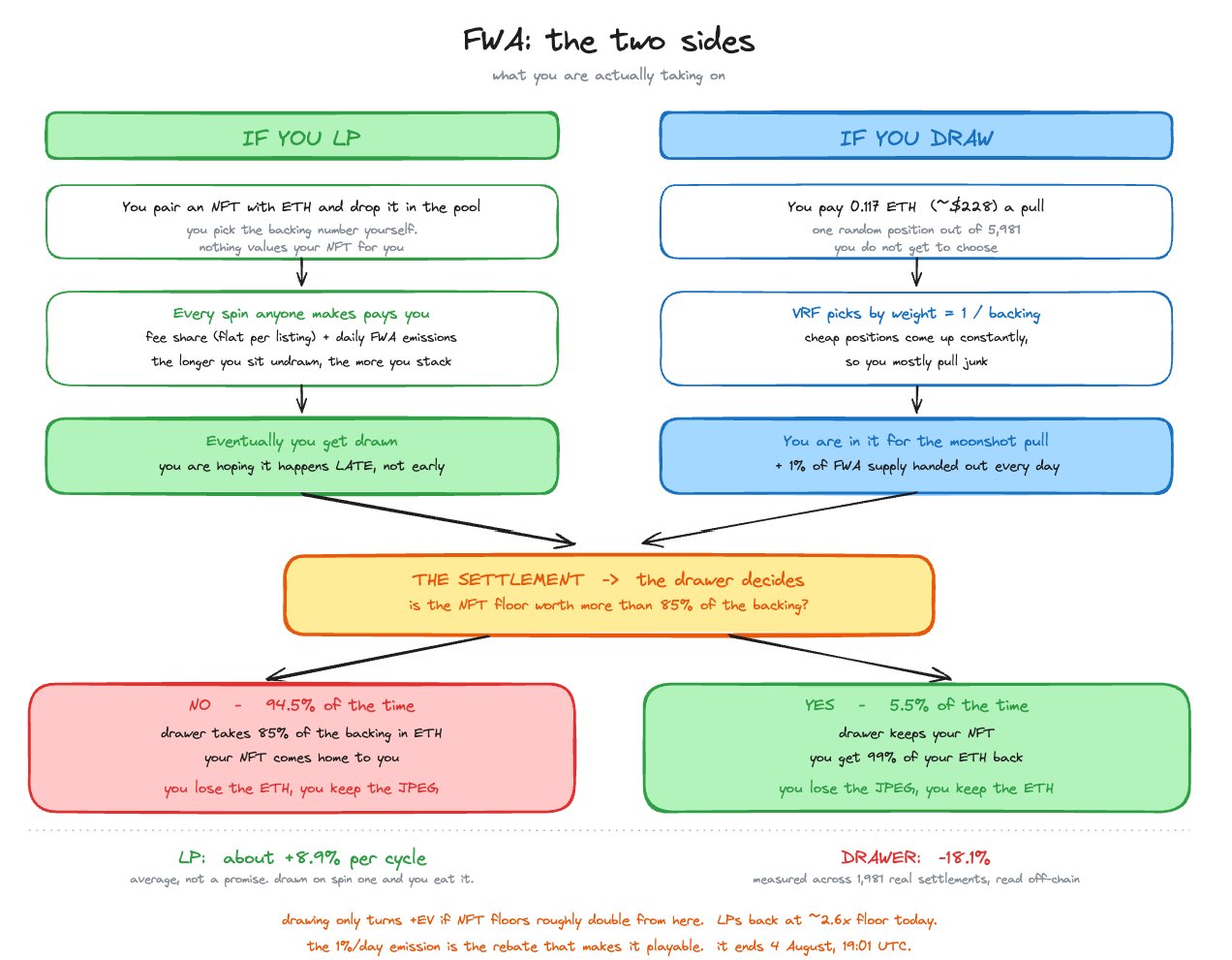
There are two sides to the FWA protocol.
NFT holders become liquidity providers (LPs), depositing collectibles alongside ETH and earning a share of the fees while their position remains in the pool.
Players, meanwhile, pay for the chance to pull a randomly selected NFT, deciding afterwards whether to keep it or redeem most of its attached ETH value instead. (Blockworks Research notes that at present, around 70% of purchasers choose to convert their winnings to FWA.)
As 2Lambroz explains, LPs are effectively hoping their NFT stays in the pool long enough to earn fees before it’s selected, while players are chasing the chance of landing a prize worth far more than the cost of a spin.
FWA: The two sides. Source: 2Lambroz
Self-proclaimed Ethereum maxi, Materkel says:
“The most fun NFT/casino primitive in over a decade of crypto, where users actually get to be both players and the house at the same time […] Money legos on Ethereum are back!”
Can the hype last?
While Dedic believes much of the activity relates to token incentives, he says he’s “very bullish on gamified commerce for a generational reason.”
“The further Gen Z moves into being the generation with the strongest buying power, the more shopping is going to be gamified and come with a dopamine kick attached.”
And rather than offering random NFTs from last cycle, Dedic believes the mechanism is better suited to assets people already want to own, such as collectibles like Pokémon cards, watches and even whiskey.
“I see enormous potential in selling much-demanded assets in a gamified way,” he says. “I see very little in building Ponzi schemes to create demand for assets nobody wanted in the first place.”
The real test will come when the novelty wears off and the incentives fade. If users keep spinning anyway, onchain gacha may have found a retail use case crypto has been searching for all along. If not, they’ll join the dumpster fire of failed crypto experiments that burned brightly before fading away.
Magazine: The 100x obsession: Fundamentals grow in importance as crypto matures
Cointelegraph publishes long-form journalism, analysis and narrative reporting produced by Cointelegraph’s in-house editorial team with subject-matter expertise. All articles are edited and reviewed by Cointelegraph editors in line with our editorial standards. Some articles contain affiliate links, from which Cointelegraph may earn a commission. These relationships do not influence which products we review or our editorial conclusions. Content published in here does not constitute financial, legal or investment advice. Readers should conduct their own research and consult qualified professionals where appropriate. Cointelegraph maintains full editorial independence.
Morgan Stanley downgraded shares of Circle Internet (CRCL) to underweight from equal-weight on Monday and cut its price target to $38 from $106, citing a weaker long-term earnings outlook.
The stock, which slid 6% following the report, has fallen about 30% year-to-date, reflecting growing investor concern over the outlook for USDC, the company’s dollar-backed stablecoin and its largest source of revenue.
Analyst James Faucette said Morgan Stanley expects slower USDC growth as reserve income comes under pressure and Circle shifts toward lower-margin transaction revenue.
“We downgrade Circle, as USDC contraction exposes reserve income sensitivity and points to a lower-margin shift toward transaction revenue,” Faucette wrote in a research note.
The bank reduced its USDC supply forecasts by roughly 33% for 2027 and 44% for 2028, resulting in GAAP earnings-per-share estimates that are about 3% below Wall Street consensus in 2027 and 20% below consensus in 2028.
Morgan Stanley also pointed to rising competition from tokenized money market funds and tokenized deposits, which could reduce both USDC balances and the revenue Circle earns on reserves.
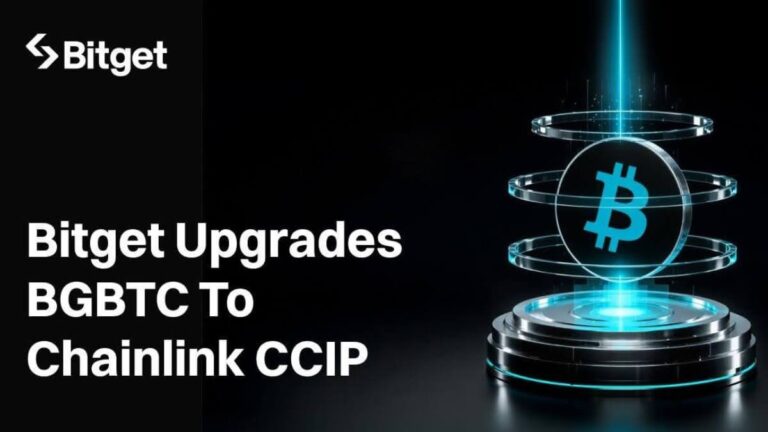
Global, August 3, 2026 — Bitget, the world’s largest Universal Exchange (UEX), has announced a major upgrade to BGBTC, its official yield-bearing Bitcoin asset, introducing daily BTC-denominated rewards, large-volume fast redemption, institutional-grade risk oversight, and enhanced transparency. Bitget also adopted Chainlink’s Cross-Chain Interoperability Protocol (CCIP) as its canonical cross-chain infrastructure to unlock secure multi-chain distribution, building upon its existing use of Chainlink Proof of Reserve.
For much of Bitcoin’s history, investors have faced a simple choice of holding BTC as a long-term asset or deploying it into separate yield strategies that often require sacrificing liquidity or taking on additional complexity. The upgrade reflects a broader shift in how Bitcoin holders are managing their assets as demand grows for solutions that combine long-term ownership with capital efficiency. As digital asset markets mature, users increasingly expect their core holdings to remain productive while continuing to serve multiple purposes across trading, investing, and portfolio management.
BGBTC was developed to address that shift. Fully backed 1:1 by Bitcoin, the upgraded asset allows users to earn daily BTC-native rewards while maintaining access to a growing range of use cases across the Bitget ecosystem. In addition to spot exposure, BGBTC can be used as futures margin, lending collateral, and for participation in Launchpool and PoolX, allowing users to generate yield without removing Bitcoin from active use.
“Bitcoin has become one of the world’s most important financial assets, but much of it still sits idle,” said Gracy Chen, CEO of Bitget. “The next stage isn’t simply holding Bitcoin, it’s making it productive. We see capital efficiency becoming one of the defining themes of digital asset markets, and BGBTC is designed to help users generate value from their BTC while allowing it the flexibility to put it to work across multiple financial activities.”
The upgrade also introduces Bitget’s independent Curator framework, adding a new layer of institutional-grade oversight to BGBTC’s underlying yield strategies. The Curator is Gauntlet, a leading vault curator and quantitative risk management firm known for its work across decentralized finance. The framework separates strategy oversight from asset custody while strengthening portfolio monitoring, risk management, and long-term yield sustainability.
The launch builds on Bitget’s broader strategy of improving capital efficiency across digital assets. Following the introduction of products such as USDGO Holderyield, Bitget continues expanding an ecosystem where users can generate value from their core holdings while maintaining access to trading, lending, and other financial opportunities. Through partnerships with infrastructure providers including Morph and Chainlink, BGBTC also forms part of Bitget’s long-term vision of connecting centralized and decentralized finance through a unified Bitcoin yield network.
As Bitcoin adoption continues to mature, Bitget believes the conversation is shifting from simply owning digital assets to making them more productive. The BGBTC upgrade represents another step toward building infrastructure where Bitcoin can generate yield, remain liquid, and support a wider range of financial use cases without compromising simplicity or security.
For more information, visit here.
About Bitget
Bitget is the world’s largest Universal Exchange (UEX), serving over 125 million users and offering access to over 2M crypto tokens, 500+ tokenized stocks, ETFs, commodities, FX, and precious metals such as gold. The ecosystem is committed to helping users trade smarter with its AI agent, which co-pilots trade execution. Bitget is driving crypto adoption through strategic partnerships with LALIGA and MotoGP™. Aligned with its global impact strategy, Bitget has joined hands with UNICEF to support blockchain education for 1.1 million people by 2027. Bitget currently leads in the tokenized TradFi market, providing the industry’s lowest fees and highest liquidity across 150 regions worldwide.
For more information, visit: Website | X | Telegram | LinkedIn | Discord
Risk Warning: Digital asset prices are subject to fluctuation and may experience significant volatility. Investors are advised to only allocate funds they can afford to lose. The value of any investment may be impacted, and there is a possibility that financial objectives may not be met, nor the principal investment recovered. Independent financial advice should always be sought, and personal financial experience and standing carefully considered. Past performance is not a reliable indicator of future results. Bitget accepts no liability for any potential losses incurred. Nothing contained herein should be construed as financial advice. For further information, please refer to our Terms of Use.
Source: Bitget
The above article “Bitget Taps Chainlink to Enable Daily Bitcoin Yield for Users” was first published on AlexaBlockchain. Read the complete article here: https://alexablockchain.com/bitget-taps-chainlink-to-enable-daily-bitcoin-yield-for-users/
Submit Your Blockchain and Crypto Press Release here.
Disclaimer: This is a press release, provided by the company/ company representative. AlexaBlockchain does not endorse, guarantee, or accept responsibility for the content, accuracy, quality, advertising, products, or other materials presented in this publication. Readers are advised to conduct their own due diligence before taking any actions related to the company mentioned herein. AlexaBlockchain expressly disclaims any liability for damages or losses, whether direct or indirect, arising from or related to the use of or reliance on any content, goods, or services referenced in this press release.