Trusted Editorial content, reviewed by leading industry experts and seasoned editors. Ad Disclosure
In a recent QuickTake post on CryptoQuant, XWIN Research Japan explains how the rising Japanese bond yields are currently affecting Bitcoin’s price action.
Japanese Gov’t Bonds Face Downturn Amid Macroeconomic Pressures
According to XWIN Research Japan, yields on Japanese Government Bonds (JGBs) have been rising amid persistent inflationary pressures, expectations of policy normalization, and rising concerns over fiscal expansion. In response, there has been a corresponding fall in bond prices, indicating that Japan’s domestic institutions, e.g., banks, are simultaneously holding through heavy unrealized losses.
With approximately ¥390 trillion (approximately $2.6 trillion USD) currently invested in JGBs, even a modest 1% increase in yields could push tens of trillions of yen worth of holdings into negative territory, amplifying financial strain across the system.
Expectedly, this scenario has exerted significant pressure on institutional investors, forcing adjustments on their balance sheets. According to the crypto research group, risk assets, including Bitcoin, are the easy targets of this “rebalancing” activity. Considering that Japan maintains a large external investment portfolio, any liquidity withdrawal exhibits a signal effect on the market.
Therefore, this chain of rising yields, which leads eventually to liquidity contraction, often affects Bitcoin directly. Notably, historical patterns have suggested that low-rate environments often support price growth or expansions, while increasing rates typically impede the flagship cryptocurrency’s growth.
Stablecoin Supply Surges Toward Record Levels
Furthermore, XWIN Research Japan cites the All Stablecoins (ER20): Total Supply metric to report a significant growth in the available stablecoin supply. According to research analysts, this suggests that there is actually capital waiting on the sidelines. However, this available liquidity is clearly not being introduced into risk markets.
Source: CryptoQuant
Hence, it becomes apparent that Bitcoin is currently within a classic environment where liquidity exists, but is yet to be deployed. Interestingly, exchange flows also reveal that about $9.6 billion left the Bitcoin market in early 2026, with capital evidently rotating into stablecoins. These two conditions also contribute to weakened demand, as rising rates already cause demand to taper.
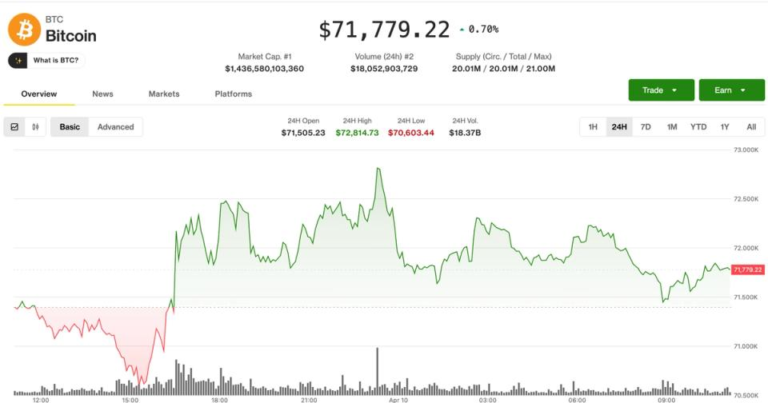
Therefore, until macroeconomic conditions improve, the Bitcoin price might continue to struggle in the long-term, as institutional demand might even then become weaker. As of this writing, Bitcoin is valued at $67,391, reflecting a positive daily shift of 0.76%. On larger time frames, the premier cryptocurrency reports a weekly gain of 1.34% and a monthly loss of 5.47%. With a market cap of $1.34 trillion, Bitcoin remains the world’s 13th largest asset and largest digital asset.
BTC trading at $66,827 on the daily chart | Source: BTCUSDT chart on Tradingview.com
Featured image from iStock, chart from Tradingview
Editorial Process for bitcoinist is centered on delivering thoroughly researched, accurate, and unbiased content. We uphold strict sourcing standards, and each page undergoes diligent review by our team of top technology experts and seasoned editors. This process ensures the integrity, relevance, and value of our content for our readers.
Peter Schiff and Michael Saylor clash as Schiff questions bitcoin’s 12% long-term return.
Schiff urges selling Strategy stock (MSTR) after its 68.5% rise, warning of a sharp crash.
Saylor defends bitcoin, citing a 36% annualized return and long-term strength.
Schiff and Saylor Clash Over Bitcoin Returns and Strategy Valuation
Economist and gold advocate Peter Schiff and Strategy Executive Chairman Michael Saylor shared opposing views on social media platform X on April 5. Schiff criticized bitcoin and Strategy’s stock performance, questioning its sustainability. Saylor defended BTC’s long-term strength, emphasizing broader evaluation periods and structural demand.
Schiff stated: “Despite bitcoin’s mere 12% rise over the past five years, MSTR is up 68.5%, outperforming the NASDAQ. But that’s not due to bitcoin’s performance. It’s due to investors’ willingness to overpay for MSTR so Saylor could keep overpaying for bitcoin. Sell MSTR before it crashes.” The gold bug added in another X post:
“Over the past five years, the price of bitcoin is up by just 12%. Over the same time period, the NASDAQ is up 57.4%, the S&P 500 is up 59.4%, gold is up 163%, and silver is up 181%. If the appeal of bitcoin is its superior long-term performance, why should anyone keep HODLing it?”
Saylor replied to Schiff by emphasizing that evaluating BTC requires selecting appropriate timeframes, highlighting stronger performance over longer horizons. The chart he shared shows bitcoin leading with a 36% annualized return since August 2020, followed by gold at 16%, QQQ, which tracks the Nasdaq-100 index, at 15%, and SPY, an S&P 500 exchange-traded fund, at 14%. Real estate exposure through VNQ, a real estate investment trust ETF, appears at 5%, while bonds, represented by BND, a total bond market ETF, show a negative 1% return.
Schiff Doubles Down on Strategy Risks as Saylor Signals Institutional Shift
Schiff has repeatedly criticized Strategy’s BTC-focused approach, with earlier remarks echoing his current concerns about sustainability. On March 9, he shared on X that Strategy’s model relies heavily on continued capital inflows. He asserted: “The bitcoin pyramid is being propped up by MSTR, which pays an 11.5% yield on STRC to keep buying. As more STRC shares are sold, Strategy burns ever more cash. Once that cash is depleted, Saylor will have to choose between suspending the dividend or selling bitcoin to pay it.” This earlier criticism aligns with his broader argument that Strategy’s valuation depends on sustained investor demand rather than underlying fundamentals.
Saylor, on the other hand, detailed on April 4 his broader outlook of BTC’s role in global markets. He stressed:
“ Bitcoin has won. Global consensus is that BTC is digital capital. The four-year cycle is dead. Price is now driven by capital flows.”
“Bank and digital credit will determine bitcoin’s growth trajectory. The biggest risk is bad ideas driving iatrogenic protocol changes,” the Strategy executive chairman said. His remarks reinforce his position that BTC’s valuation is increasingly shaped by institutional adoption and macroeconomic liquidity conditions rather than historical market cycles.
Trump threatened Iran on Truth Social April 5, warning of Tuesday strikes if the Strait of Hormuz blockade continued.
WTI crude May 2026 futures climbed 2.7% to $114.59, while Nasdaq-100 futures dropped 0.65% to 24,061.75.
Hyperliquid’s XYZ:CL perpetual contract hit $593M open interest as DeFi traders priced in geopolitical risk 24/7.
Oil Futures Spike After Trump Posts Strait of Hormuz Warning on Easter Sunday
Trump’s post, directed at Iranian leadership, warned that power plants and bridges would be targeted, and was signed off with “Praise be to Allah.” The message followed reports that a U.S. military pilot was rescued after their aircraft was downed by Iranian forces amid escalating tensions in the Persian Gulf.
Oil markets did not wait for Monday’s open to respond.
May 2026 WTI crude oil futures on the CME Globex platform were trading near $114.42 to $114.59 per barrel by approximately 6:50 p.m. EDT Sunday, up roughly $2.88 to $3.05, or about 2.6% to 2.7%, from the prior settlement of $111.54. The contract’s day range stretched from $112.50 to a session high of $115.48.
The WTI 52-week range has now widened to approximately $54.98 to $119.48 intraday, reflecting a year of compounding geopolitical pressure on global supply. June 2026 WTI contracts traded near $100.28, confirming a steep contango curve that tapers into the $70s by late 2026 and early 2027.
U.S. equity index futures told a quieter but consistent story. The E-mini S&P 500 June contract was trading near 6,583.25, off roughly 0.59% from its prior settlement. The E-mini Nasdaq-100 posted the steepest decline among the three major contracts, falling 156.25 points, or 0.65%, to 24,061.75, consistent with the sector’s sensitivity to geopolitical risk and rising energy costs. E-mini Dow futures were near 46,483, tracking modestly lower with an estimated 0.5% decline.
Cash equity markets were closed for the extended Easter weekend. The last regular session closed April 2, with Good Friday on April 3 observed as a market holiday. All equity futures data reflect the active June 2026 front-month contracts.
Hyperliquid Action Roars as Crypto Economy Gains
Decentralized markets offered their own read on the situation. On Hyperliquid, the XYZ:CL WTI perpetual contract was trading between $112.56 and $113.63, with open interest reaching $575 million to $593 million. The 24-hour volume on the onchain platform ran between $156 million and $237 million, with a funding rate slightly negative, meaning shorts were receiving modest payments from long holders.
Hyperliquid’s oil perps carry up to 20x leverage, settle in USDC, and trade around the clock with no expiration, giving traders exposure to energy price moves that traditional CME Globex cannot fully capture during low- volume evening windows. During prior volatility spikes in early 2026, daily volume on Hyperliquid oil contracts reached $1 billion to $1.7 billion, alongside significant liquidation cascades.
Image source: Hyperliquid on Sunday at 7:30 p.m. Eastern time.
Brent crude tracked WTI higher. The XYZ:BRENTOIL perpetual on Hyperliquid was trading near $109.85 to $110.31, with 24-hour volume of $47 million to $60 million and open interest near $557 million. Alongside this, the total digital asset market cap climbed to $2.35 trillion, up 1.13% on the session, as traders rotated into decentralized assets during a weekend when traditional markets had no avenue to respond.
As of 7:30 p.m. Eastern time, bitcoin traded at $69,009, up 2.11% on the day and 4.06% over the past week, holding firm as the dominant store-of-value play while Wall Street futures drifted red. Ethereum rose 2.95% to $2,118, posting a 6.26% weekly gain that outpaced bitcoin’s move. XRP added 2.21% to $1.32, and BNB gained 1.79% to $602.
Overnight developments, including any further statements from the White House or Iranian government, will likely set the tone for Monday’s open across energy, equity, and DeFi markets. Traders watching WTI will need to account for both the CME session and Hyperliquid’s continuous onchain order book.
Trusted Editorial content, reviewed by leading industry experts and seasoned editors. Ad Disclosure
Bitcoin is in an uncomfortable spot, and this time the warning is coming from a cycle signal that has shown up at some of the market’s most decisive turning points.
The leading cryptocurrency has crossed a technical threshold in the Gaussian weekly uptrend that has appeared at the same stage of every prior market cycle, and according to one closely followed analyst, it may be pointing toward both a final dip to the bottom and the last discounted entry before the next bull run.
The Gaussian Channel Flip That Matters
In a technical update posted on X, ChartNerd pointed out that Bitcoin has flipped from its green Gaussian weekly uptrend into a red bearish channel, a transition he says has always opened the final stretch of every prior Bitcoin bear market.
According to the chart, which is shown below, each cycle follows a familiar sequence of a strong green expansion phase, a transition highlighted as a trend flip, and then a red bearish channel that leads into the final sweep.
Examining the multi-year logarithmic Bitcoin weekly timeframe chart shows that the pattern is visible across the 2014/2015 cycle, the 2018/2019 bottom, and the 2022 cycle low. The current trend flip looks like those previous transitions, and this places Bitcoin once again at a point where the trend has always moved into bearish territory.
According to ChartNerd, this signal has consistently appeared right before the last major downside move in past bear markets. This is why the analyst does not interpret the signal as the beginning of a prolonged collapse. However, it could be seen as a late-stage development, which shows the Bitcoin price is nearing a bottom.
Bitcoin Trend Flip. Source: @ChartNerdTA On X
The Path To The Bottom
Bitcoin is currently down by about 47% from its October 2025 peak price of $126,080. There is still a possibility of further downside from this point, but most of the structural damage to price has already occurred. ChartNerd’s current read places the projected final low somewhere in Q2 and Q3 2026, with a target sweep range between $40,000 and $50,000.
BTCUSD now trading at $67,058. Chart: TradingView
In another analysis post, ChartNerd noted that Bitcoin’s four-year cycle structure is still intact despite recent supercycle narratives and that the current market still operates within that structure.
Bitcoin Gaussian Channel. Source: @ChartNerdTA On X
The Gaussian Channel on the price chart shows that the Bitcoin price is on a path to test the channel’s red baseline at $66,895 on the 27-day timeframe, with the lower red support at $44,463. Each prior cycle saw a brief dip to or below that red support line. This means that the Bitcoin price may still face one more period of downside volatility to this range before reversing higher.
Featured image from Unsplash, chart from TradingView
Editorial Process for bitcoinist is centered on delivering thoroughly researched, accurate, and unbiased content. We uphold strict sourcing standards, and each page undergoes diligent review by our team of top technology experts and seasoned editors. This process ensures the integrity, relevance, and value of our content for our readers.
Anthropic has filed with the FEC to create an employee-funded political action committee called AnthroPAC.
The move follows a dispute with the Trump administration over military use of the Claude AI model.
The filing shows how AI companies are preparing to engage more directly in U.S. politics.
Artificial intelligence giant Anthropic has filed paperwork with the Federal Election Commission to create a political action committee, signaling a deeper move into U.S. politics as the fight over AI policy and its own ongoing battle with the White House intensifies.
The San Francisco-based company registered the Anthropic PBC Political Action Committee, known as AnthroPAC, in a filing on Friday. The committee is structured as a separate segregated fund tied to the company, and authorized to make political donations funded by employee contributions. According to a report by Bloomberg, those contributions are capped at $5,000 per employee.
Employee-funded political action committees (PACs) allow companies to collect voluntary contributions from employees and distribute those funds to candidates and political committees.
Other tech companies that have established political PACs include Google, Microsoft, and Amazon. In 2024, those three PACs alone contributed more than $2.3 million to U.S. political candidates, according to campaign finance data by the nonprofit research group OpenSecrets. While contributions went to both Republicans and Democrats, donations skewed toward GOP candidates during the 2024 campaign season.
Anthropic’s move comes during an escalating conflict with President Donald Trump’s administration over the military use of its AI systems.
In February, Trump ordered federal agencies to stop using Anthropic’s technology following a dispute between the company and the Pentagon over how the military could deploy its Claude AI model. Despite an ultimatum by the U.S. Department of Defense, Anthropic refused Pentagon demands to remove safeguards that prohibit the system from being used for mass domestic surveillance or fully autonomous lethal weapons.
In March, Anthropic filed a federal lawsuit challenging the government’s decision to label the company a national security “supply chain risk,” a designation that barred Pentagon contractors from doing business with the firm. The company argued the move was retaliation for its refusal to loosen restrictions on military uses of its AI.
Last week, U.S. District Judge Rita Lin issued a preliminary injunction blocking enforcement of the designation, finding the government’s actions likely violated Anthropic’s First Amendment and due process rights.
Anthropic has not publicly addressed the establishment of the PAC. Still, it comes as artificial intelligence legislation is a growing issue in Washington ahead of the U.S. midterm elections, and underscores how AI developers hope to influence policy going into 2027. In February, a report by CNBC said that in 2026, Anthropic gave $20 million in donations to Public First Action, a group supporting efforts to develop AI safeguards.
Anthropic did not immediately respond to a request for comment by Decrypt.
Daily Debrief Newsletter
Start every day with the top news stories right now, plus original features, a podcast, videos and more.
This week, Google published a paper describing how a quantum computer could theoretically derive a bitcoin private key in 9 minutes, with ramifications that stretch to Ethereum, other tokens, private banking, and potentially everything in the world.
Quantum computing is easy to mistake for a faster version of a regular computer. But it is not a more powerful chip or a bigger server farm. It is a fundamentally different kind of machine, different at the level of the atom itself.
A quantum computer starts with a very cold, very small loop of metal where particles begin to behave in ways they do not behave under normal conditions on Earth, ways that alter what we think of as the basic rules of physics.
Understanding what that means, physically, is the difference between reading about the quantum threat and actually grasping it.
How computers and quantum computers actually work
Regular computers store information as bits — each is either a 0 or a 1. A bit is a tiny switch. Physically, it’s a transistor on a “chip” — a microscopic gate that either lets electricity through (1) or doesn’t (0).
Every photo, every bitcoin transaction, every word you’ve ever typed is stored as patterns of these switches being on or off. There is nothing mysterious about a bit; it is a physical object in one of the two definite states.
Every calculation is just shuffling these 0s and 1s around really fast. A modern chip can do billions of these per second, but it still does them one at a time, in sequence.
Quantum computers use something known as qubits instead of bits. A qubit can be 0, 1, or — and this is the weird part — both at the same time!
This is possible as a qubit is a completely different kind of physical object. The most common version, and the one Google uses, is a tiny loop of superconducting metal cooled to about 0.015 degrees above absolute zero, colder than outer space but here on Earth.
At that temperature, electricity flows through the loop without any resistance, and the current is said to exist in a quantum state.
In the superconducting loop, current can flow clockwise (call that 0) or counterclockwise (call that 1). But at quantum scales, the current does not have to pick one direction and actually flows in both directions simultaneously.
Don’t mistake it for switching between the two really fast. The current is measurably, experimentally and verifiably in both states simultaneously.
(CoinDesk)
Mind-bending physics
With us so far? Great, because here’s where it gets genuinely strange, because the physics behind how it works isn’t immediately intuitive, and it is not supposed to be.
Everything someone interacts with in daily life obeys classical physics, which assumes that things are in one place at one time. But particles do not behave this way at the subatomic scale.
An electron does not have a definite position until you look at it. A photon does not have a definite polarization until you measure it. A current in a superconducting loop does not flow in a definite direction until you force it to pick.
The reason we don’t experience this in everyday life is decoherence. When a quantum system interacts with its environment, air molecules, heat, vibrations and light, the superposition collapses almost instantly.
A football cannot be in two places at once because it is interacting with trillions of air molecules, dust, sound, heat, gravity, etc., every nanosecond. But isolate a tiny current in a near-absolute-zero vacuum, shield it from every possible disturbance, and the quantum behavior survives long enough to compute with.
That’s why quantum computers are so hard to build. People are engineering physical environments where the laws of physics that normally prevent this stuff from happening are held at bay for just long enough to run a calculation.
Google’s machines operate in dilution refrigerators the size of huge rooms, colder than anything in the natural universe, surrounded by layers of shielding against electromagnetic noise, vibration, and thermal radiation.
And the qubits are fragile even then. They lose their quantum state constantly, which is why “error correction” dominates every conversation about scaling up.
So quantum computing is not a faster version of classical computing. It is exploiting a different set of physical laws that only apply at extremely small scales, extremely low temperatures, and extremely short timeframes.
(CoinDesk)
Now stack that up.
Two regular bits can be in one of four states (00, 01, 10, 11), but only one at a time (since current flows in only one direction). Two qubits can represent all four states at once, as the current is flowing in all directions at the same time.
Three qubits represent eight states. Ten qubits represent 1,024. Fifty qubits represent over a quadrillion. The number doubles with every qubit that is added, which is why the scaling is so exponential.
The second trick is something called entanglement. When two qubits are entangled, measuring one instantly tells an observer something about the other, no matter how far apart they are. This lets a quantum computer coordinate across all those simultaneous states in a way that regular parallel computing cannot.
And these quantum computers are set up so that wrong answers cancel each other out (like overlapping waves that flatten) and right answers reinforce each other (like waves that stack higher). By the end of the computation, the correct answer has the highest probability of being measured.
So it’s not brute-force speed. It’s a fundamentally different approach to calculation — one that lets nature explore an exponentially large space of possibilities and then collapses to the right answer through physics rather than logic.
A monumental threat to cryptography
This mind-bending physics is why it is terrifying for encryption.
The math protecting bitcoin relies on the assumption that checking every possible key would take longer than the age of the universe.
But a quantum computer doesn’t check every key. It explores all of them simultaneously and uses interference to surface the right one.
That is where it ties into Bitcoin. Going one direction, from private key to public key, takes milliseconds. Going the other direction, from public key back to private key, would take a classical computer a million years, or even longer than the age of the universe. That asymmetry is the only thing proving that a person is holding their coins.
(CoinDesk)
A quantum computer running an algorithm called Shor’s can go through that trapdoor in reverse. Google’s paper this week showed it could do so with far fewer resources than anyone previously estimated, and within a timeframe that races against bitcoin’s own block confirmations.
This is why the threat of quantum computers breaking blockchain encryption is genuinely making everyone very worried.
How that attack works step by step, what Google’s paper specifically changed, and what it means for the 6.9 million bitcoin already exposed, is the subject of the next piece in this series.
Trusted Editorial content, reviewed by leading industry experts and seasoned editors. Ad Disclosure
The cryptocurrency market has indeed seen better days than the past week, but the Solana price has particularly struggled to contend with the broad downward pressure. This sluggish price action could be linked to the major DeFi exploit that rocked the ecosystem, causing the outflow of more than $270 million in value. According to the latest on-chain data, the Solana price could see even further pressure as exchange inflows spike.
$110 Million Of SOL Flow To Centralized Exchanges In 3 Days
In an April 4th post on the social media platform X, crypto analyst Ali Martinez shared that significant amounts of the Solana token have been moved to centralized exchanges over the past few days. This on-chain observation has caused a warning alarm to go off on the potential price trajectory of SOL, especially considering the already not-so-optimistic market climate.
The relevant indicator here is the Exchange Balance metric, which tracks the amount of a particular cryptocurrency available on centralized exchanges at a given time. This on-chain metric provides some level of insight into the current demand and supply dynamics in the crypto open market.
Hence, a rise in the value of this metric suggests that more market participants are sending assets to exchanges, which could imply that supply might be overwhelming the available demand. This trend could be bearish for an asset’s value (the Solana price, in this case), as it could be an indication of increasing selling pressure.
Source: @alicharts on X
According to Glassnode data highlighted by Martinez, 1.40 million Solana, valued at approximately $110 million, were transferred to centralized exchanges in the last 72 hours. As inferred earlier, coin movements of this magnitude are often red flags in the market, as they could be a potential source of bearish pressure on price.
The rationale behind this conclusion is that one of the major services offered by centralized exchanges is a platform for investors and traders to offload their digital assets. Hence, this latest increase in the exchange inflow can be linked to a rise in selling pressure on the Solana price.
Solana Price At A Glance
Interestingly, the Solana price fell below the psychological $80 support after reaching the local high of around $85. As of this writing, the price of SOL stands at around $80.8, reflecting no significant change in the past 24 hours. According to data from CoinGecko, the altcoin’s value has been down by more than 3% in the past seven days.
The price of Solana on the daily timeframe | Source: SOLUSDT chart on TradingView
Featured image from Shutterstock, chart from TradingView
Editorial Process for bitcoinist is centered on delivering thoroughly researched, accurate, and unbiased content. We uphold strict sourcing standards, and each page undergoes diligent review by our team of top technology experts and seasoned editors. This process ensures the integrity, relevance, and value of our content for our readers.
The odds of the United States invading Iran this year surged to 63% on the Polymarket prediction platform on Sunday, following comments made by US President Donald Trump on social media.
Despite the surge, the odds of an invasion before 2027 are still down from the high of 68% on March 29, due to a US troop buildup in the region and comments from the Trump administration that the United States was considering capturing Kharg Island, a major Iranian oil shipping station.
Volume on that prediction was about $3.74 million at the time of publication.
Odds of the US invading Iran before 2027 surge to 63%. Source: Polymarket
On Tuesday, after Trump signaled that the US might leave Iran in the next two to three weeks, Bitcoin (BTC) jumped by about 2.6% and the S&P 500 index to added about 2.91%. However, Trump reversed course with his latest statement on Sunday. He wrote:
“Tuesday will be power plant day, and bridge day, all wrapped up in one, in Iran. There will be nothing like it! Open the fuckin’ strait, you crazy bastards, or you’ll be living in hell.”
At last look, BTC was little changed, trading up less than 0.1% in the past 24 hours, remaining anchored around the $67,500 level, according to data from TradingView.
The mixed signals from the Trump administration on the war and how long it will last continue to create investor uncertainty and an impact on all risk asset prices, as market analysts, traders and economists attempt to forecast the effects of the war.
Source: Donald Trump
Related: Polymarket takes down market on missing US pilot after backlash
Trump’s comments draw a wave of online backlash, but asset prices barely budge
“I wish Trump would stop threatening Iranian civilian infrastructure. It’s a lose-lose for us: backing down hurts his negotiating credibility,” economist Peter Schiff said in response to Trump’s comments.
“Carrying it out escalates the war, damages US standing, generates sympathy for Iran and fuels Iranian hatred for America,” Schiff continued.
“I assumed this was a fake, it isn’t — wild,” podcaster and Bitcoin advocate Peter McCormack said.
Brent crude oil, the most widely used pricing benchmark for the international spot oil market, remains elevated, closing Thursday at more than $109 per barrel. Trading is scheduled to resume on Monday following the Easter holiday weekend.
Magazine: Inside the Iranian Bitcoin mining industry
Cointelegraph is committed to independent, transparent journalism. This news article is produced in accordance with Cointelegraph’s Editorial Policy and aims to provide accurate and timely information. Readers are encouraged to verify information independently. Read our Editorial Policy https://cointelegraph.com/editorial-policy
A tweet from @zerohedge shows the U.S. and Iran remain at odds, dropping the odds of a ceasefire by April 7 to 1.1% YES, down from 2% yesterday and 12% a week ago.
Traders see no resolution soon. The April 7 market closes in 4 days, with new strikes and hardline rhetoric suggesting no ceasefire. April 15 odds fell to 6.5% YES, down from 22% a week ago, as traders anticipate a mid-month catalyst.
The April 30 odds dropped to 17.5% YES. Markets expect a resolution after April, with May 31 at 36.5% YES and June 30 at 51.5% YES. The biggest jump is between April 30 and May 31, suggesting a key event in that period.
Daily trading volume is $430,773 in USDC, with $22,948 on April 7 alone. The order book depth of $12,367 to move April 7 odds by 5 points shows volatility risk. A 2-point spike in April 30 odds indicates brief bullish sentiment.
The lack of diplomatic progress suggests a bleak short-term outlook. The market’s reaction to @zerohedge’s tweet shows pessimism. At 1.1¢, a YES share for April 7 pays $1 if a ceasefire happens, a risk for those betting on a sudden change in four days.
Watch for shifts in rhetoric from Trump, who set an April 6 deadline for action on Iranian energy. Statements from CENTCOM or mediation by Oman or Qatar could affect market sentiment.
Markets Impacted
Get prediction market intelligence as a structured API feed. Early access waitlist.
Polymarket has removed a betting market tied to the rescue of U.S. service members in Iran, after intense backlash and criticism from lawmakers this weekend.
The market allowed users to wager on when the U.S. would confirm the rescue of two airmen after an F-15E fighter jet was shot down over Iran. The crew members have since been rescued.
Rep. Seth Moulton, a Democrat from Massachusetts, criticized the listing in a post on X, calling it “disgusting” and arguing it reduced a military rescue effort to a financial trade.
Moulton has taken a hard line on prediction markets, recently banning his staff from using platforms such as Polymarket and Kalshi over concerns that financial incentives could influence policy decisions.
A Polymarket spokesperson said the listing did not meet its integrity standards removed shortly after it appeared. The company added that it is reviewing how the market passed internal safeguards.
The incident comes as prediction markets face rising pressure in Washington. A group of congressional Democrats last month introduced legislation that would ban contracts tied to elections, war and government actions.
Separately, several senators have urged the Commodity Futures Trading Commission to prohibit markets linked to individual deaths, citing national security concerns.
Regulators are also asserting authority over the sector. The CFTC said this week it filed lawsuits against three states over efforts it believes attempt to bypass federal oversight of prediction markets.
Industry scrutiny has expanded beyond politics. The NFL has asked operators to avoid offering contracts it views as objectionable or open to manipulation, including bets tied to officiating decisions or events known in advance.
Still, the market is expanding. Kalshi has late last month secured a license to offer margin trading to institutional investors, while new players are entering the market. Among them is JPMorgan, whose CEO, Jamie Dimon, has signaled that it is looking to enter the fray.