Share
Share
Share
Share
Email
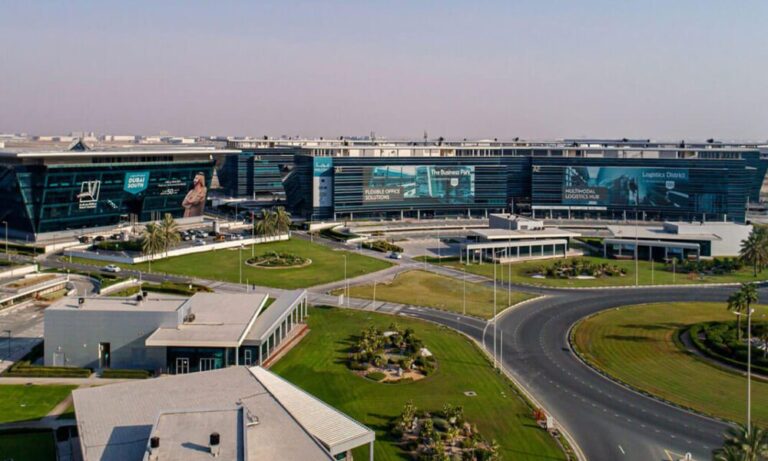
Dubai South business setup is increasingly seen as a strategic move for companies aiming to enter global trade flows with minimal barriers. Positioned around one of the world’s largest future airports — Al Maktoum International — this zone is designed as a powerful logistics and business ecosystem connecting aviation, cargo, and international commerce.
Unlike many traditional jurisdictions, Dubai South company formation is not just about registering an entity. It is about placing your business in a location built for scalability, infrastructure, and long-term regional expansion.
Dubai South stands out because of its strategic positioning and business-friendly framework. Located at the crossroads of major international trade routes, the zone naturally attracts companies involved in logistics, aviation, transport, and distribution.
From a structural perspective, Dubai South free zone company setup offers several key advantages. Foreign investors can retain 100% ownership, with no restrictions on capital repatriation. In addition, companies that meet QFZP criteria may benefit from a 0% corporate tax rate, which significantly enhances operational efficiency.
Another strong point is flexibility. Businesses can begin with minimal infrastructure — such as a virtual office or co-working space — and expand as operations grow. Combined with government support and transparent pricing, this makes Dubai South attractive for both startups and established international groups.
Established in 2006, Dubai South was developed as part of a long-term vision to create a “city of the future” around a global aviation hub. Today, it functions as an integrated cluster combining logistics, transport, aviation, and commercial activities.
What makes Dubai South business setup in UAE particularly appealing is that it is not limited to logistics alone. While the zone has strong roots in cargo and aviation, it also accommodates service providers, technology firms, and innovative projects looking to expand internationally.
The presence of advanced infrastructure and direct government oversight ensures a stable environment for companies planning long-term operations.
One of the strengths of opening a company in Dubai South is the diversity of permitted activities. Companies can operate in logistics, freight forwarding, warehousing, customs handling, and aviation-related services. At the same time, the zone also supports trading, consulting, IT services, education, and creative industries.
Certain sectors, such as aviation services or regulated activities, require additional approvals from relevant authorities. However, the proximity to a major logistics corridor and international airport creates unique opportunities for businesses operating in global supply chains.
Licensing options are designed to match different business models. Service licences cover professional and consultancy activities, commercial licences support trading operations, and industrial licences allow manufacturing and assembly for export. Educational licences are also available for institutions and training providers.
The process of Dubai South company registration is structured and relatively fast when documents are prepared correctly. It begins with selecting a company structure, choosing a business activity, and confirming whether additional approvals are required.
Once this stage is completed, the applicant prepares the required documentation package and submits it online. This usually includes the company’s Articles of Association, copies of passports of shareholders and directors, proof of residential address, and details of the chosen business activity. It is also necessary to select a registered address (such as a flexi-desk, office, or warehouse) and confirm the proposed company name. The system is designed to be efficient, allowing most steps to be completed remotely without visiting the UAE.
In standard cases, the licence is issued within 5–10 working days after submission and payment. With proper preparation, the entire process — from document collection to final approval — can be completed within one to one and a half weeks.
A major benefit of Dubai South business setup is the ability to complete the entire process remotely. This is particularly valuable for foreign entrepreneurs who want to launch operations without relocating.
Applications are submitted digitally, and identity verification is typically conducted via video call. During this process, a representative confirms the applicant’s details and records consent for registration.
Entrepreneurs can also appoint an authorised representative or consultant to handle communication with the free zone authority. As a result, the founder receives incorporation documents, a licence, and even entry permits while remaining outside the UAE.
This approach makes Dubai South company formation highly accessible and efficient for international businesses.
The cost of setting up a business in Dubai South depends on the chosen licence, workspace, and visa requirements. Entry-level solutions are designed to be affordable, allowing startups to begin with minimal investment.
Freelance permits start from around AED 5,000, while standard company licences begin from approximately AED 10,000 per year. Workspace solutions vary depending on scale — from Smart Desk packages to fully customised office spaces.
Additional expenses include e-channel registration and visa processing. On average, visa-related costs — including medical checks, Emirates ID, and insurance — range between AED 3,000 and 4,000 per person.
This transparent pricing model allows businesses to plan budgets accurately and scale operations as needed.
Dubai South is particularly well-suited for businesses that rely on logistics, trade, and international connectivity. Companies involved in import-export, warehousing, and aviation services benefit from direct access to global transport routes.
It is also a strong option for startups and consultants who value flexibility, remote registration, and scalable infrastructure. Manufacturers looking for export-oriented production facilities can also take advantage of the zone’s industrial capabilities.
At the same time, certain limitations should be considered. Businesses requiring immediate VAT registration or operating in highly regulated sectors outside the zone’s scope may need to explore alternative jurisdictions. Additionally, approval policies may vary depending on nationality and compliance requirements.
Dubai South business setup offers a compelling combination of strategic location, modern infrastructure, and flexible business conditions. Its proximity to a major international airport and integration with logistics networks make it an ideal platform for companies targeting global markets.
With remote registration, scalable office solutions, and a clear licensing framework, Dubai South free zone company setup provides both accessibility and long-term potential. For entrepreneurs seeking to establish a presence in the UAE while maintaining operational flexibility, this zone represents a strong and practical choice.
The next logical step is to evaluate your business model, select the appropriate licence, and structure the setup correctly. With the right preparation, Dubai South can serve as a powerful base for regional and international growth.