Home Blog Page 397

Why Checkout is Becoming the Most Valuable Moment in Commerce

0

In 2008 there was a key moment that changed mobile phones forever. It came from Apple, and it wasn’t a new model announcement but the launch of its App Store. Transforming the humble iPhone from a single-purpose device into a platform that users could tailor with functionalities to fit their own
needs, wants and individual preferences.

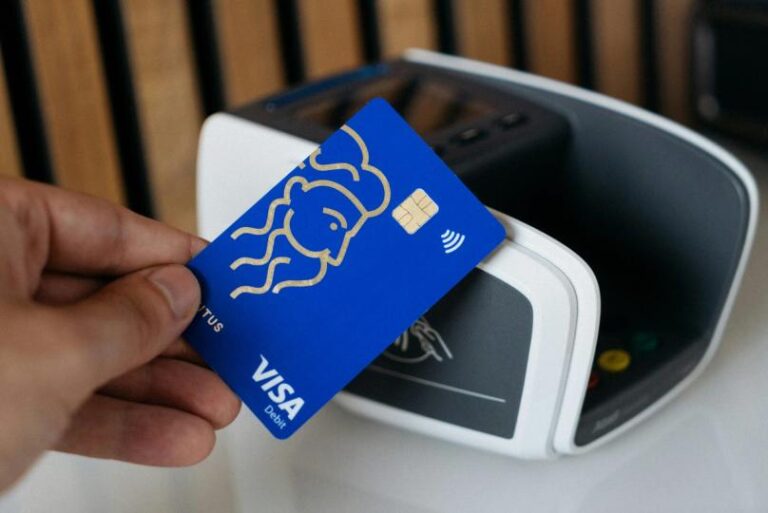
That same dynamic is playing out in the payments industry today, with card acceptance no longer being enough for customers. They are looking for a seamless transaction that is simple and convenient, and expect merchants to integrate extra services like credit, subscriptions, or currency tools to make it so.

Merchants can maximise on this by understanding the transaction isn’t the final step for customers but an opportunity to add value, enhance trust, and strengthen the relationship with their customer. While embedded finance isn’t new, it is coming to its own.

Building for modern commerce

Seamless payments aren’t a differentiator but the bare minimum, customers shouldn’t have to face slow checkouts, redirects or hidden costs in today’s commerce environment. They’re voting with their wallets too – a recent survey found 77% of UK shoppers expect payments to complete almost instantly, and 58% want one-click checkout – otherwise they’ll abandon their cart. Another study reports 75% of buyers say having their preferred payment method turns a “would-be” buyer into a paying customer.

Shoppers have made it clear that they want speed, simplicity and choice, with instant confirmation and access to their preferred payment methods as part of the standard experience. Whether that includes cards, digital wallets, bank transfers or buy now, pay later options, the expectation is that everything works together in a unified and intuitive way and without adding a drop of complexity. Merchants must understand that seamless payments aren’t a nice to have or for the lucky few but a fundamental requirement and getting it wrong can mean they’re in the fast lane to failure. Embedded affordability

Once payments work seamlessly the attention can shift to affordability, as higher ticket items can, in themselves, be a barrier to conversion. Offering financing options like buy now pay later (BNPL) and embedding them into the checkout process can enable customers to spread costs in a way that suits them. At the same time, merchants can boost both their average order value and ensure that carts aren’t abandoned.

There is a growing focus handling this option carefully however, with tighter regulations from the FCA being implemented as the BNPL market boomed. It grew from virtually zero in 2017 to over £13billion by 2024, and from July 2026, new rules will require clear upfront terms and affordability checks on all deferred-payment credit.

This marks an important shift towards responsible embedded finance – merchants must operate with the same level of responsibility expected of traditional lending with transparency, fairness, and customer understanding being critical. When it’s implemented clearly and used appropriately, embedded financing becomes a practical tool that supports sales volumes and reduces drop off, while customers gain control over how they pay.

Relationships aren’t built on one transaction

The checkout isn’t just about the transaction but presents an opportunity to build a valuable relationship with the customer. Subscription models can be an important tool for this, having become a core business model for many in recent years providing services from streaming to coffee deliveries on tap.

They’re popular for good reason too, creating consistency for businesses and customers. They key though is to ensure the payment feels effortless and manageable. When it is embedded into a digital experience, repeat transactions can happen without interruption, with payment details stored securely customers can manage their plans, update details easily and maintain visibility and control. This last point is particularly important, with regulators requiring cancellation processes to be straightforward and accessible.

When it comes to subscriptions, convenience encourages retention, but transparency builds trust. If handled well, customers remain because the service continues to meet their needs, not because leaving is complicated.

Local checkout for global commerce

As ecommerce becomes increasingly global the checkout for international shoppers must match their expectations, yet cross border transactions remain a common pitfall for merchants. There’s a strong preference from customers to be able to see prices and complete their purchase in their own currency so, if forced to navigate unfamiliar currencies or make mental calculations for exchange rates, confidence and trust can drop and cart abandonment often follows.

Embedding currency conversion directly into the checkout can address this. Showing local pricing, applying transparent exchange rates and supporting regional payment methods all contribute to a more reassuring and smoother experience. For merchants, localising global transactions in this way drives stronger performance across borders without needing to fundamentally change their core offering.

The opportunity of the checkout

The payments industry is operating in a way that is more measured, with the focus shifting from rapid experimentation towards innovation that lasts and meets customers expectations. As such, investment has become more selective and there’s a greater emphasis on regulatory oversight which places a greater focus on stability and consumer protection.

Progress is now defined by execution and improving how existing systems work together. By refining key moments, particularly at the checkout, small enhancements can deliver meaningful results. Embedding value into each transaction, whether through financing, loyalty incentives, currency tools or personalised experiences, allows merchants to improve performance without adding complexity. The aim is to build on what we have already and make it better in a way that feels natural and effective.

Every interaction matters and should be smooth, clear, and reliable – embedded finance is the foundation of this, and the opportunity is to make each moment count

About the author
Scott Dawson-DECTA-165-Edit_pp

Scott Dawson, CEO at DECTA UK, is a highly motivated and results-oriented individual with over 20 years of experience within the payments industry. He is committed to driving DECTA’s UK strategy forward, with a focus on its growth within the UK and supporting small to medium businesses with its broad range of payment solutions.

About DECTA

DECTA is a global payment technology provider offering comprehensive solutions across acquiring, issuing, processing, white label gateway and a digital banking platform. Serving merchants, banks, payment service providers and fintechs, DECTA delivers tailored payment services as a standard, ensuring accessibility and flexibility for every client.

With offices across Europe — including Ireland, Cyprus, the UK, and Latvia — DECTA empowers businesses to scale and innovate in the evolving payments landscape. Our fully authorised platform is built on direct licenses with Mastercard and Visa, certification with UnionPay International, and integration with a broad spectrum of global and local payment methods.

How Maker’s Spark and USDC are winning the $10 billion Aave breakup

0

Over $10 billion has exited Aave after the Kelp DAO exploit, but the capital hasn’t all gone to one place.

After the roughly $292 million exploit broke the cross-chain backing of rsETH, users have spread capital across safer, simpler venues rather than rotating into a direct replacement. Aave’s total value locked has fallen about 40%, according to DeFiLlama data, as impaired collateral triggered market freezes, stalled liquidations, and forced deleveraging, pushing users to withdraw or close positions.

Some of that capital has moved into Maker-linked Spark, which has emerged as the clearest relative winner. Its TVL has risen around 10% as users rotate toward infrastructure backed by Sky’s $6.5 Billion stablecoin reserves, favoring tighter risk controls over open-ended lending markets exposed to complex collateral.

Elsewhere, large liquid staking providers like Lido have held relatively steady. That stability suggests users are not abandoning ETH exposure, but stripping out layers of risk tied to restaking, rehypothecation and cross-chain bridges.

A third pocket of inflows is showing up in real-world asset protocols such as Centrifuge and Spiko, which both offer exposure to tokenized assets like T-bills and bonds.

At the same time, a significant share of funds has moved into stablecoins, particularly USDC, as users step out of risk and wait on the sidelines rather than immediately redeploying capital.

Not all of Aave’s decline reflects capital rotation. Part of the drop comes from loans being repaid and positions unwound, mechanically shrinking TVL without a new destination.

The result is a fragmented market response. Capital is flowing toward simplicity, controlled risk and even cash, suggesting that after Kelp, confidence in shared collateral layers has weakened rather than shifted elsewhere.

why $79,200 could act as a launchpad or a ceiling for bitcoin

0

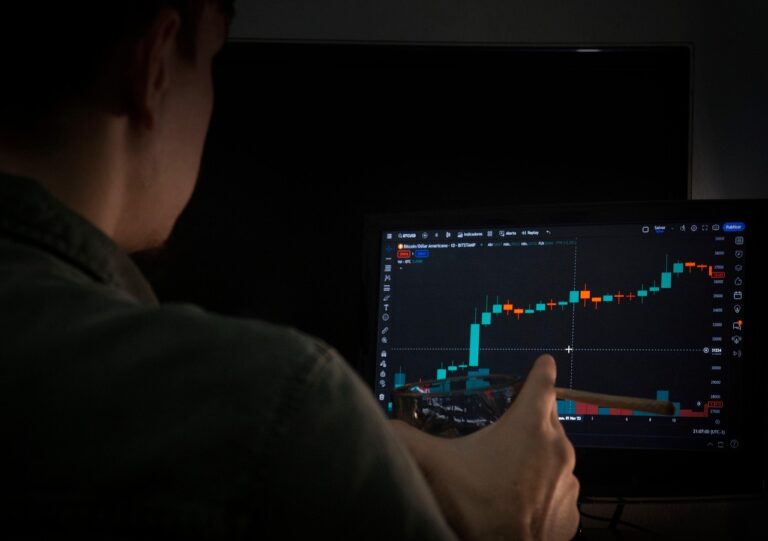
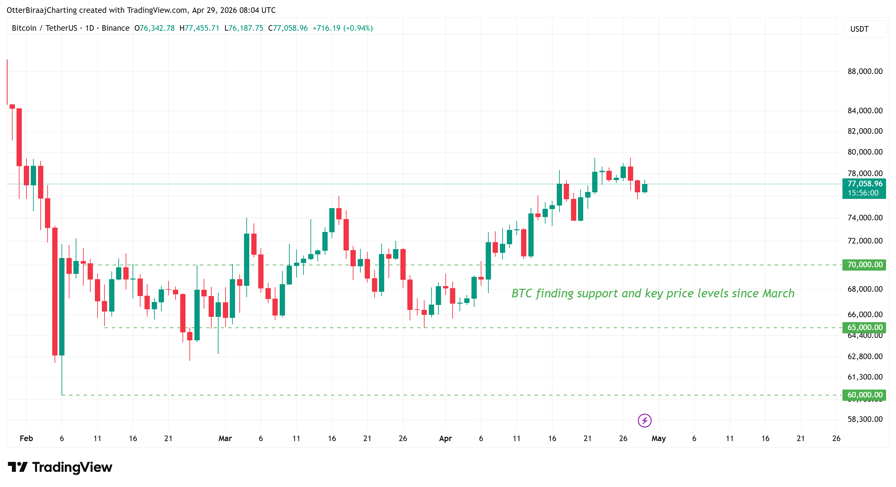
Bitcoin is nearing a decisive moment as it tests two closely aligned on-chain resistance levels, following roughly 75 days of sideways consolidation since its Feb. 6 local bottom at $60,000 as bitcoin climbs above $78,000.

The first metric is the True Market Mean, currently at $78,200. This metric, tracked by Checkonchain, reflects the average acquisition price of actively circulating supply, excluding lost or dormant coins. It effectively captures the aggregate cost basis of engaged market participants.

The True Market Mean filters out lost, dormant, and economically inactive coins, leaving only the cost basis of participants who are actually present in the market, making it a more precise gauge of where real selling pressure resides.

Just above sits the Short-Term Holder realized price (STHRP) at $79,200, according to checkonchain. This cohort, defined as investors holding coins for fewer than 155 days, tends to be more reactive to price swings. With spot prices below their average entry, these participants remain at a slight loss. Bitcoin tested the STHRP in mid-January around $98,000 and got rejected.

A sustained move above this zone could shift both levels into support, strengthening bullish momentum. Conversely, failure to reclaim them may prolong bitcoin’s consolidation phase, with potential downside.

Mastercard study: Nearly 9 in 10 consumers in Latin America and the Caribbean are ready to embrace everyday digital payments

0

  • Cash remains relevant where digital acceptance is limited, according to 47% of consumers
  • Debit leads everyday payments in LAC, with 60% of consumers using it for daily transactions
  • 95% of digital users say security is important when choosing how to pay, reinforcing trust as a key condition for growth

A new Mastercard study on the state of digitalization and financial inclusion in Latin America and the Caribbean (LAC) reveals a region entering a new phase of financial progress. Digital participation is now mainstream, but the next phase of financial inclusion – and sustainable, inclusive economic growth – will depend not on access alone, but by how confidently and consistently people and small businesses can use digital payments to manage daily life, grow, plan for the future, and ultimately achieve financial health.

“Digital participation in Latin America and the Caribbean has reached a new level, and inclusion is no longer just about bringing people into the financial system – it’s about making sure the system works for them every day.”Share

Across LAC, 89% of consumers now qualify as digital users, signaling a significant milestone in the region’s financial and digital evolution. At the same time, momentum continues to build among those still outside the ecosystem, with 68% of non-users saying they are “somewhat or very likely” to adopt digital payments in the future. This reinforces that as adoption scales, the real test of inclusion is shifting from access to everyday usability – the ability to pay, earn, save, and transact with confidence across daily needs, from groceries, and transportation, to services, and other daily necessities wherever life happens.

Digital participation in Latin America and the Caribbean has reached a new level, and inclusion is no longer just about bringing people into the financial system it’s about making sure the system works for them every day,” said Andrea Scerch, President, Mastercard Latin America and the Caribbean. “From paying for groceries or a coffee to commuting or managing household expenses, the focus must be on making digital payments work reliably in the moments that matter most.”

Debit: The catalyst for consistent digital lifestyles
Debit has emerged as the region’s most relevant and trusted everyday payment tool, anchoring digital behavior across daily transactions. In fact, debit plays a central role in enabling these everyday transactions, particularly in high-frequency categories:

  • Groceries (34%)
  • Restaurants and cafés (33%)
  • Phone bills (27%)
  • Ride-sharing services (26%)

Yet the ability to rely on digital payments consistently remains uneven across the region. In many of these moments – especially in small, local, or informal settings – limited acceptance forces consumers to rely on cash. Closing this gap is essential to improving financial outcomes on both sides of the transaction.

Cash remains stubbornly present in high‑frequency daily moments. Nearly half (47%) of consumers used cash in the past six months. Consumers are clear about what they want next: 87% wish more stores and people accept digital payments, and 59% say that at least once a month they must use cash when they would rather pay with a card or digital device. This acceptance gap represents one of the biggest opportunities in advancing financial inclusion at scale across LAC.

Trust and security are also conditions for growth. Among digital users, 95% say security is important when choosing how to pay and 94% cite trustworthiness as important. For consumers who are hesitant, stronger security features are a key lever: 43% say advanced security would make them more likely to use digital payments, alongside clearer protection in case of problems (38%) and better customer support (36%).

Mastercard’s next commitment: Advancing financial health for people and small businesses

As digital participation expands across the region, Mastercard is evolving its approach to financial inclusion. Building on its long‑standing efforts to expand access, the company is now focused on helping people and small businesses move from access to financial health. Reflecting this shift, Mastercard has committed to connecting and protecting 500 million more people and small businesses on their pathways to financial health by 2030. This commitment recognizes that financial progress is a journey – from making everyday payments and building transaction history to gaining access to tools that help households manage expenses and enable businesses to grow, absorb shocks and plan.

Closing the acceptance gap: Building a secure, frictionless ecosystem for all

Mastercard is focused on closing this gap by expanding digital acceptance in ways that deliver shared value across the region. Through continued collaboration with financial institutions, merchants and governments, Mastercard continues to deliver secure, frictionless payment experiences, such as Contactless, Tap on Phone and Click to Pay, helping merchants of all sizes – from large retailers to neighborhood businesses – accept digital payments easily and securely, meeting consumers where they are.

By reducing friction at checkout, strengthening security, and enabling acceptance in everyday environments, these solutions help ensure that digital payments work reliably across physical and digital touchpoints – supporting local commerce, small businesses, and broader economic participation.

“The inclusion conversation has evolved beyond access. Today, people across the region recognize the benefits of digital payments speed, convenience and safety,” Scerch added. “That’s why we’re focused not only on expanding acceptance, but on helping people and small businesses participate confidently and safely in the digital economy whether in large urban centers or local neighborhood businesses. As part of Mastercard’s commitment to connect and protect 500 million more people and small businesses by 2030, we’re working to ensure the benefits of digital payments reach more communities, more consistently, across Latin America and the Caribbean.”

As LAC advances toward a more digital economy, the findings send a clear signal: the future of financial inclusion will depend on how easily people can pay for the things that matter most in their daily lives, wherever they are.

Top U.S. Commander Says Bitcoin “Shows Incredible Potential”

0

Admiral Samuel Paparo, commander of U.S. Indo-Pacific Command (INDOPACOM), told the Senate Armed Services Committee on Tuesday that Bitcoin represents a “valuable computer science tool as power projection,” offering a rare and notable endorsement of the cryptocurrency from one of the nation’s most senior military officers.

The comments came during a FY2027 defense authorization hearing on April 21, 2026, when Sen. Tommy Tuberville (R-AL) pressed Admiral Paparo on whether Bitcoin leadership gives the United States an edge against China in the Indo-Pacific theater.

“Bitcoin is a reality,” Paparo told the committee. “It’s a peer-to-peer, zero-trust transfer of value. Anything that supports all instruments of national power for the United States of America is to the good.” 

He added that INDOPACOM’s research into Bitcoin centers on its underlying computer science architecture — the fusion of cryptography, blockchain, and proof-of-work protocols — and that those protocols “impose more cost than just securing networks,” extending to offensive and defensive cyber operations.

“Bitcoin shows incredible potential as a computer science tool,” Paparo said. “It’s a valuable computer science tool as a power projection,” he later said.