Home Blog Page 36

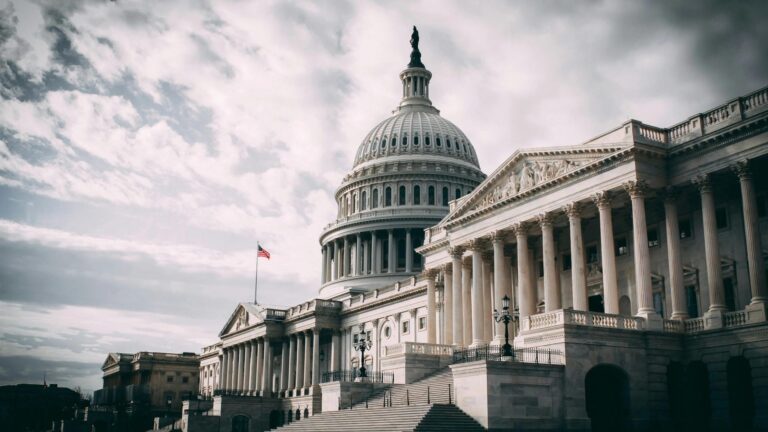
U.S. government digital dollar set to be banned tonight under housing law’s CBDC limit

0

The CBDC limit expires at the end of 2030, though there was little chance that a Fed digital currency would have been executed by then. There’s been limited appetite at the central bank, where its previous leadership — even before the arrival of Trump’s newest Fed chair, Kevin Warsh — had long said that such an effort would require backing from the White House and congressional authorization. There’s never been wide support for a CBDC in Congress.

But the idea — strongly opposed by the crypto industry for its potential to compete with privately issued stablecoins — has been pursued in other jurisdictions, such as Europe and China, and it became a popular political target for U.S. politicians. So Republicans managed to slip it into the unrelated housing legislation, after previously trying to include it in a range of bills including the Foreign Intelligence Surveillance Act.

Despite the overall housing bill’s popularity, Trump took an unexpected, last-minute stand against signing it, for which he’d previously scheduled a ceremony and had a stage erected. He declared that he wouldn’t sign anything until lawmakers approved a bill that would impose new proof-of-citizenship and identity checks on voters — an effort without sufficient current support to pass in Congress.

Bitcoin Whales Due Credit for $64,000 BTC Price Rebound, Says CryptoQuant

0

Bitcoin (BTC) demand shifts are “behind” the price rebound to $64,000, new analysis claims.

Key points:

  • New Bitcoin price analysis says that US whales are behind the latest spate of BTC price relief.
  • The Coinbase Premium is above its 14-day moving average, a key sign of strength.
  • Research from Bitcoin Suisse suggests that “something changed” on the market this week.

Bitcoin Coinbase Premium still negative despite trend line reclaim

In a blog post on Friday, onchain analytics platform CryptoQuant attributed Bitcoin’s July upside to US-based whales.

Specifically, the Coinbase Premium — the difference in price between Coinbase’s and Binance’s BTC/USDT pairs — is showing early signs of buy-side momentum “regaining strength.”

“The Coinbase Premium Index for both BTC and ETH remains in negative territory, but both have bounced off their local lows,” contributor Burak Kesmeci wrote. 

“On top of that, both metrics managed to reclaim their SMA14. This is what’s behind Bitcoin’s move from 58K to 64K, and Ethereum’s rally from $1,500 to $1,750.”

Bitcoin Coinbase Premium Index with 14-day SMA. Source: CryptoQuant

Kesmeci referred to the Coinbase Premium Index’s 14-day simple moving average. As Cointelegraph reported, the Index has spent much of 2026 in negative territory, implying weak demand from both large and small investors on the largest US crypto exchange.

“Once again, U.S. whale activity is proving to be the leading data point for trend direction. Short-, medium-, and long-term regime shifts can all be read through this metric,” Kesmeci continued.

The Index currently sits at -0.08, per CryptoQuant data, having last flipped positive on daily time frames more than two months ago.

“The current picture is a catalyst for a short-term bounce — but for a real long-term regime change, this metric needs to break above zero,” Kesmeci concluded.

Bitcoin Suisse: “Bottom signal framework flashing”

 As Cointelegraph reported, institutional demand is also on the radar for market participants.

Related: BTC speculators in focus as analysis says ‘textbook Bitcoin bottom’ is underway

The US spot Bitcoin exchange-traded funds (ETFs) saw their first net inflows after a record-breaking $2.7 billion losing streak.

Data from UK-based investment company Farside Investors nonetheless shows investor sentiment remains sensitive to even small BTC price moves.

On Thursday, a third straight day of net outflows totaled $95.3 million.

US spot Bitcoin ETF netflows (screenshot). Source: Farside Investors

Analyzing a basket of metrics, crypto finance provider Bitcoin Suisse included ETF flow data as one signal that the status quo on the market has changed.

“Eight weeks of ETF outflows. Bitcoin at a 21-month low. This week, something shifted,” it told X followers in a thread on Friday.

Bitcoin Suisse described a “bottom signal framework flashing” while the Crypto Fear & Greed Index remained in its lowest “extreme greed” zone.

Federal Reserve Taps A16z Co-Founder for Monetary Policy Task Force

0

The US Federal Reserve named Andreessen Horowitz (a16z) co-founder Marc Andreessen to help lead a task force studying how artificial intelligence and other new technologies could affect productivity and jobs.

Andreessen will serve on the Fed’s Productivity and Jobs task force alongside Charles I. Jones, a Stanford University economics professor currently on leave at Anthropic, and Asha Sharma, Microsoft’s executive vice president and Xbox CEO.

The new task force will assess how general-purpose technologies such as AI will affect employment and productivity to better inform the central bank’s policymaking, the Fed said in a Thursday press release.

The group is one of five task forces launched under new Fed Chair Kevin Warsh, each responsible for examining important areas of monetary policy conduct. The other task forces will focus on the Fed’s policy communication, balance sheet policy, data quality and inflation frameworks.

Andreessen co-founded Andreessen Horowitz, which has become one of Silicon Valley’s most influential venture capital firms and a major backer of crypto and AI startups.

Andreessen and Warsh’s ties date back to the early 1990s at Stanford University. During a 2025 interview with CNBC, Warsh said that both Andreessen and Palantir’s Peter Thiel “have been friends from my days in college.” 

Andreessen publicly supported Warsh’s appointment as Fed chairman. “I’ve known Kevin for 30 years; he combines great insight in economics and finance with keen understanding of technology and business,” he wrote in a Jan. 30 X post following US President Donald Trump’s nomination.

Source: Marc Andreessen

Warsh launches Fed task forces

Warsh revealed the leadership-driven overhaul and the creation of the five new task forces during a press conference on June 17.

“These subjects are timely, consequential, and, in my view, worthy of a fresh look,” said Warsh during the press conference, adding that each of these will be independently led by “some of the very best minds—both inside and outside the economics profession.” 

Warsh also said that the central bank will strive to publish policy statements and guidance in shorter, clearer language.

Related: Hyperliquid shows how onchain perps could challenge Wall Street: Pantera

FOMC divided over AI’s economic impact

The Federal Open Market Committee (FOMC) is sharply divided over the economic impact of AI and whether it is an inflationary or disinflationary technology. Some view AI as a long-term disinflationary productivity booster, while others argue that the current spending on AI infrastructure is actively increasing inflation.

During a May 27 speech, Governor Lisa Cook said that she expects AI to further “boost productivity growth, contributing to my expectation that GDP will grow robustly,” but added that it presents the risk of “higher inflation.” 

In former Fed Chair Jerome Powell’s statements from March 2026, he said that data center spending is “putting pressure on all kinds of goods and services” and is “probably pushing inflation up at the margin.” 

Magazine: Strategy sells $216M Bitcoin, Bollinger bullish on BTC: Hodler’s Digest, June 29-July 6, 2026

Hyundai adopts stablecoins for cross-border treasury transfers

0

Hyundai, the world’s third-largest carmaker by vehicle sales, moved a stablecoin-based, cross-border, internal remittance system into production readiness on the Avalanche blockchain, becoming the first major South Korean company to do so.

“Hyundai is the first major enterprise to publicly announce this type of implementation on Avalanche, but the initiative represents more than a technical experiment,” said Justin Kim, head of APAC at Ava Labs, which develops and supports the blockchain platform. “This is already a real treasury management use case, not a sandbox — the pilot moved live USD and USDT between Hyundai Motor’s U.S. and Mexico entities,”

The international transfer comes as stablecoins gain traction beyond crypto trading. Large companies are increasingly testing the technology to move money between subsidiaries, settle cross-border payments and reduce the cost and time associated with traditional banking rails, Lindsey Einhaus, who leads strategy and operations at stablecoin infrastructure firm Bridge, said at Consensus Miami in May.

For the maker of the Kia compact and Ioniq electric cars the first phase involved transferring $20,000 from Hyundai Motor America to Hyundai Motor Mexico by converting dollars into Tether’s USDT stablecoin before converting the funds back into dollars.

Circle takes banking step with U.S. trust bank approval

0

Circle (CRCL), the issuer of the world’s second largest stablecoin USDC, received approval from the U.S. Office of the Comptroller of the Currency (OCC) to establish a national trust bank.

National trust banks are authorized to provide users with custody and fiduciary services but do not accept consumer deposits or make loans like traditional commercial banks.

Shares are higher by 14% in pre-market trading.

“OCC approval to establish Circle National Trust marks a defining step in bringing blockchain technology and digital assets into the core of the U.S. financial system,” Circle CEO Jeremy Allaire said Friday in a statement announcing the milestone. “Federal oversight of our trust bank sets a new standard for transparency, governance, and scale for Circle’s infrastructure.”

The move comes as crypto firms such as Kraken, increasingly seek federal charters, licenses and banking approvals. Crypto.com secured an OCC license in February to operate as a federally regulated crypto custodian bank. BitGo, Circle, Ripple, Paxos, and Fidelity Digital Assets all received similar conditional approvals in December. The OCC upgraded BitGo’s approval to unconditional immediately after.

OKX, MetaMask, Matter Labs back dispute resolution court for AI agents

0

A group of crypto and Web3 firms that includes OKX, MetaMask, Matter Labs and Genlayer have formed the “Internet Court” to reach dispute resolutions between AI agents.

These days, AI agents negotiate and pay one another without humans in the loop, but as with human-to-human transactions, agent-to-agent transactions will run into contractual disagreements.

The problem is that agentic systems have no way to settle these disputes, and traditional courts are not built to handle such cases. Hence the need for the 27-firm-backed protocol, led by the Genlayer Foundation, which makes AI-based payments, escrow and dispute resolution interoperable, according to a press release.

Agentic commerce is not prepared for the potential fallout when agents disagree at machine speed, according to David Riudor, CEO and co-founder of the GenLayer Foundation. “Internet Court is the shared place agents can turn to when a deal goes wrong. Machine-speed money needs machine-speed adjudication,” he said.

A key problem the dispute protocol solves is interoperability between a variety of AI commerce systems. Agentic commerce is certainly charging ahead but the infrastructure underpinning this new economy is still highly fragmented.

Binance Seeks New Crypto Licenses After MiCA Shift

0

Binance is in talks with regulators that have invited the exchange to apply for crypto licenses following its withdrawal from the Markets in Crypto-Assets Regulation (MiCA) application in Greece, according to co-CEO Richard Teng.

Teng said at the Reuters NEXT Asia conference in Singapore on Thursday that the discussions are still “premature” and declined to identify the jurisdictions. 

MiCA created a single licensing framework for crypto firms across the European Union. After the bloc’s transition period expired on July 1, the European Securities and Markets Authority said crypto firms must serve EU clients through a MiCA-authorized entity, with limited exceptions for unsolicited cross-border business.

Binance withdrew its application for a MiCA license in Greece on June 24, after reports surfaced that Greek regulators were planning to reject the exchange’s licensing bid.

“It caught us by surprise because we submitted a fully compliant application. The regulators told us as much,” Teng said.

“We are not quite sure why the approval kept being delayed. We withdrew the application because otherwise our users would have faced a very short transition period,” he added.

Related: EU crypto rulebook faces enforcement challenge as MiCA transition ends

EU users withdraw assets to self-custody

Teng argued that many European users opted for self-custody rather than transferring their assets to MiCA-authorized exchanges.

“Of the users in the EU [who] have subsequently withdrawn their funds out of our platform, 70% of those funds went to self-hosted wallets. Only 30% flowed to MiCA-regulated entities,” Teng said.

He questioned whether MiCA is meeting its consumer protection objectives, arguing that self-hosted wallets receive less regulatory oversight than licensed exchanges.

Binance recorded $1.23 billion in net outflows during the week beginning June 29, up 207% from roughly $400 million the previous week, according to DefiLlama data reviewed by Cointelegraph.

The transition has also intensified competition among exchanges holding MiCA licenses. OKX said in a statement that its app downloads rose 158% between June 24 and July 5, citing Sensor Tower data.

Binance questions MiCA’s impact

Beyond Europe, Teng said Binance continues to expand its regulatory footprint in Asia, citing its partnership in the Philippines.

“We have deployed in many places in Asia now, from Japan to Korea to Thailand, Indonesia, Australia. We just announced the Philippines. A few more are coming,” Teng said.

Related: ESMA turns spotlight on crypto custody risks after MiCA transition

Binance reentered the Philippine market through a partnership with BlockShoals Technologies after regulators moved to restrict access to the exchange in 2024. However, neither Binance nor BlockShoals is licensed by the Bangko Sentral ng Pilipinas to handle peso transfers or other central bank-regulated virtual asset services.

In a June interview with Cointelegraph, BlockShoals’ head of legal, Marie Antonette Quiogue, said the arrangement allows Binance to offer crypto trading because those activities fall under the jurisdiction of the Philippine Securities and Exchange Commission, while services regulated by the central bank would require separate authorization.

Magazine: The 5 types of real world assets being tokenized fastest onchain

BOK Doubles Down on Bank-Led Stablecoins as Deposit Token Pilots Advance

0

The Bank of Korea (BOK) has doubled down on its stance that won-denominated stablecoins should first be issued through bank-led consortiums.

According to local reports from Digital Asset and EDaily, the central bank made the comments in materials submitted on Thursday to the National Assembly’s finance committee. Local outlets reported that the BOK called for safeguards, including priority issuance by bank-led consortiums and a statutory policy body involving relevant agencies.

The latest comments reinforce the BOK’s months-long push to keep won stablecoin issuance under bank-led structures. The central bank’s stance has divided policymakers and industry groups and contributed to delays in South Korea’s digital asset bill.

The BOK also said it plans to continue developing deposit-token use cases in the second half of the year, including support for government subsidy payments, vouchers, electric vehicle charging infrastructure and further real-world transactions for the general public. Deposit tokens are digital tokens that represent commercial bank deposits.

In April, BOK Governor Hyun-Song Shin expressed support for deposit tokens and central bank digital currencies (CBDCs) in his first public address, while South Korea’s Ministry of Economy and Finance announced a pilot to use tokenized deposits for government operational spending. 

BOK’s stablecoin stance keeps bill debate alive 

The BOK’s latest comments add to a policy standoff that has slowed progress on South Korea’s Digital Asset Basic Act. The bill had repeatedly stalled over disagreements on who should be allowed to issue stablecoins, with the BOK pushing for banks to retain majority ownership of stablecoin issuers.

Related: South Korea adds token securities to capital market overhaul

The debate has continued as lawmakers consider how stablecoins, tokenized real-world assets (RWAs) and other digital assets should fit into South Korea’s rulebooks. In April, the ruling Democratic Party proposed to put stablecoins and RWAs under existing financial laws. Despite this, key issues such as whether stablecoin issuers should be bank-led remained unresolved. 

The bill’s timeline, which the government told President Lee Jae-myung in January it aimed to meet by the first quarter of 2026, has since slipped amid the US-Israeli war with Iran that began in late February, local elections, and delays in reorganizing the Assembly’s committee structure.

Magazine: The 5 types of real world assets being tokenized fastest onchain

Cointelegraph is committed to independent, transparent journalism. This news article is produced in accordance with Cointelegraph’s Editorial Policy and aims to provide accurate and timely information. Readers are encouraged to verify information independently.

Polymarket takes next step in U.S. comeback with margin trading plan

0

Prediction market Polymarket applied for a license to offer U.S. users margin trading, enabling them to place bets with less upfront capital, Bloomberg reported Thursday.

Polymarket’s U.S. affiliate, Coming Home GBA LLC, filed for a futures commission merchant license with the National Futures Association, Bloomberg said, citing a company representative. Polymarket will also require authorization from the Commodity Futures Trading Commission (CFTC) for changes to its rulebook that would allow trading without fully collateralized positions.

Prediction market platforms like Polymarket and Kalshi offer yes-or-no wagers on the outcomes of events, such as weather, sports and elections. Margin trading lets investors open positions with less upfront capital, a practice common in traditional markets. Kalshi received clearance to offer margin trading in March.

Polymarket’s application comes as prediction markets continue to grow. Volumes hit $51 billion last year and are on pace to reach about $240 billion in 2026. Wall Street broker Bernstein recently said it expects volume to rise to $1 trillion by 2030 as the sector evolves from niche wagering into wide-based “information markets” spanning sports, crypto, politics and the economy.

Bitcoin (BTC) price challenges Monday’s rejection level as ether (ETH) looks to break its streak of lower highs

0

The crypto market took another leg higher on Friday with bitcoin trading at $64,400, up by 2% since midnight UTC.

The largest cryptocurrency is currently at the price it failed to penetrate on Monday. If it can break past this level, it will likely advance toward the June 15 high of $67,250.

Ether (ETH) outperformed bitcoin, rising 2.6% to $1,790 as it looks to snap a trend of sequential lower highs and lower lows.

There were also notable gains across the altcoin sector ahead of the weekend, typically a period of lower liquidity. Zcash (ZEC) and aave both rose by around 5% as optimism is slowly crept back into more speculative bets after months of waning sentiment.

Crypto diverged from U.S. equities, with S&P 500 index futures and Nasdaq 100 futures falling 0.1% and 0.4%, respectively.

Derivatives positioning

  • Crypto derivatives markets are showing signs of stabilization, with speculation easing and longer-term positioning increasing.
  • Volume over 24 hours fell 7% to $140 billion, while open interest (OI) rose 3% to $110.52 billion. This shift suggests the recovery is being driven more by strategic positioning than by high‑frequency speculative activity.
  • Cumulative OI in bitcoin’s USD- and USDT-denominated futures on major exchanges has picked up slightly, from 262K to 272K, as the spot price topped $64,000. When read alongside positive funding rates and positive 24-hour OI-adjusted cumulative volume delta (CVD), the OI increase indicates a growing bias for bullish bets.
  • Ether has yet to see a meaningful rise in futures OI, a sign that traders are still staying away from leverage.
  • In the broader market, most tokens have positive 24-hour CVDs, a sign that buyers are becoming more aggressive, trading market orders rather than passive limit orders. This set expectations for continued price rises ahead.
  • Confirmatory signals come from options-based implied volatility indexes tied to BTC and ETH, which continue to drop. It’s a sign of traders expecting market calm, a feature of rallies. BTC’s index, BVIV, fell to 38.5 early today, the lowest since June 6.
  • In the options market on Deribit, put skews continue to weaken as the price rally eases downside concerns. Calls at $62,000, $65,000, and $67,000 are among the most-traded instruments, along with the $56,000 put. A call represents a bullish bet on the market.