Home Blog Page 327

Policy Summit and other things at Consensus 2026: State of Crypto

0

Consensus 2026 in Miami starts Tuesday. We’ve got a host of policy sessions — some of which this newsletter previewed a few weeks back. Here’s the full list of sessions you should attend. On the fence about going but you’ll be in Miami? Not too late to register. Can’t make it in person? Hit me up about a virtual pass.

You’re reading State of Crypto, a CoinDesk newsletter looking at the intersection of cryptocurrency and government. Click here to sign up for future editions.

The narrative

Consensus 2026 Miami kicks off! Be there or be square.

Why it matters

The thing I enjoy most about Consensus is meeting folks who are willing to walk me through the policy and regulatory issues they’re following. We’re putting many of those folks on stage for that reason. The goal is for these sessions to be as informative as they are entertaining, if not more so. Bring your notebooks.

Breaking it down

The following is a complete list of the policy sessions taking place this week.

Tuesday

Wednesday

Thursday

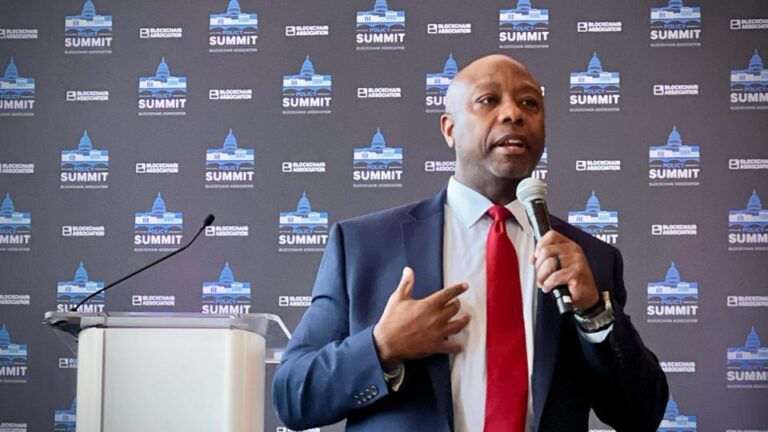
  • 10:00 a.m. ET: We are kicking off the Policy Summit. The goal: Eight hours of informed discussion on key issues, starting with how decentralized finance can be regulated, especially given all the hacks that keep on happening.
  • 10:30 a.m. ET: Former IRS officials Raj Mukherjee and Seth Wilks will discuss the 1099-DA and how the IRS’ approach to digital assets may evolve. This session is part of the Policy Summit.
  • 10:55 a.m. ET: PayPal Head of Crypto Compliance Larry Wade and Crypto Council for Innovation CEO Ji Hun Kim will talk about how fintech firms are looking at the regulatory sector for digital assets. This session is part of the Policy Summit.
  • 11:40 a.m. ET: Senator Ashley Moody and Digital Chamber CEO Cody Carbone will discuss the industry’s relationship with D.C.
  • 11:40 a.m. ET: Executives at federally regulated banks will discuss how more and more crypto companies are seeking banking licenses, and what that means for both the banking and crypto industries. This session is part of the Policy Summit.
  • 12:50 p.m. ET: World Liberty Financial co-founders Donald Trump, Jr. and Zach Witkoff will take the stage.
  • 12:55 p.m. ET: Breadcrumbs analyst James Delmore will lay out how much money has been dedicated to the 2026 election from crypto companies, and how that may be spent. This session is part of the Policy Summit.
  • 1:00 p.m. ET: Stand With Crypto’s Mason Lynaugh, Fellowship PAC’s Jesse Spiro and Sternhell Group’s Alex Sternhell will discuss how the crypto industry is engaging with the midterm. This session is part of the Policy Summit.
  • 1:30 p.m. ET: DeFi Education Fund’s Gavin Zavatone and Blockchain Association’s Lindsay Fraser will lay out what might happen with crypto legislation and rulemaking in 2027, based on the different possibilities this November. This session is part of the Policy Summit.
  • 1:55 p.m. ET: SEC Crypto Task Force Chief Counsel Taylor Lindman will discuss his role and the work he’s engaged in at the regulator. This session is part of the Policy Summit.
  • 2:00 p.m. ET: Tether’s Bo Hines and Bridge’s Lindsey Einhaus will talk about the evolution of stablecoin regulations.
  • 2:10 p.m. ET: Former CFTC Acting Chair and current Moonpay CLO Caroline Pham, Aleo’s Head of Policy Yaya Fanusie and Binance Global Policy Lead Steven McWhirter will talk about recent regulator proposals around stablecoin rules, and what these proposals may eventually turn into. This session is part of the Policy Summit.
  • 2:40 p.m. ET: Coinbase Vice President Kara Calvert will talk about the White House negotiations that may ultimately lead to a deal on stablecoin yield in the Clarity Act. This session is part of the Policy Summit.
  • 2:55 p.m. ET: And speaking of the Clarity Act, is it even happening? Experts keeping track will weigh in. This session is part of the Policy Summit.
  • 3:30 p.m. ET: Everyone is talking about tokenization, including how the rules around that sector of the financial services industry may change. This session is part of the Policy Summit.
  • 4:00 p.m. ET: We’ve spilled a lot of ink talking about federal regulatory efforts, but the U.S. also has 50 states with their own jurisdictions and approaches. Representatives working with these states as part of, or with the local governments will talk about those approaches. This session is part of the Policy Summit.
  • 4:30 p.m. ET: Last, but certainly not least: Prediction markets. Are prediction market contracts federally regulated swaps? Or are they gambling products dressed up as a financial derivative? These questions are sitting before courts throughout the country, and will likely wind up before the U.S. Supreme Court before all’s said and done. A crack group of lawyers are going to preview what those arguments might look like to close out Policy Summit.

If you’ve got thoughts or questions on what I should discuss next week or any other feedback you’d like to share, feel free to email me at nik@coindesk.com or find me on Bluesky @nikhileshde.bsky.social.

You can also join the group conversation on Telegram.

See ya’ll next week!

Crypto Industry Under Siege: 29 Attacks Recorded In April 2026 Alone

0

Trusted Editorial content, reviewed by leading industry experts and seasoned editors. Ad Disclosure

The crypto industry is seriously under attack following a recent surge in exploit incidents. According to market analyst Ali Martinez, data from DeFiLlama shows that April was particularly bad for digital asset firms and protocols, with 29 attacks recorded, the highest ever in a single month. Without a doubt, these incidents have sparked concerns among crypto enthusiasts, leading to speculation about potential causes and solutions to this disturbing pattern.

Notably, total attacks in April resulted in combined losses of $635 million. About 90% of these losses can be attributed to attacks on the Drift Protocol and KelpDAO. Drift Protocol, the largest Solana-based decentralized perpetual futures exchange, saw North Korean hackers drain $285 million by tricking the security council into unknowingly pre-signing transactions using a fictitious CarbonVote token.

On the other hand, Kelp DAO, an Ethereum-based liquid staking protocol, lost $292 million in rsETH after attackers exploited the protocol’s LayerZeo-powered cross-chain bridge by manipulating the message layer to act on a nonexistent valid instruction. The impact of these attacks goes beyond immediate losses and also weakens crypto users’ confidence. For example, the total value locked (TVL) on DeFi platforms dropped by $13.5 billion following the 48 hours after the Kelp DAO attack.

AI Evolution And Adoption Driving Crypto Attacks: Analysts

According to Martinez, the strides recorded in global AI development now function as a double-edged sword. While there is greater potential for higher productivity owing to newer AI products, such as Anthropic’s Mythos models, these agentic AIs can also facilitate effective exploitation operations, minimizing the time required for reconnaissance and weaponization.

The crypto pundit draws much attention to this developing negative use case, citing that a small volume of AI-assisted attacks by North Korean hackers accounted for 76% of the losses recorded in April. As AI development surges, Martinez warns that the crypto industry is at risk of a surge in security incidents, which could lead to higher market volatility.

More data from DeFiLlama shows that total exploit losses in 2026 now stand at $723.39, representing a 57% decline from the figures reported in the same period in 2025. However, it’s worth noting that the $1.692 billion recorded in the 2025 first trimester is largely attributable to the $1.5 billion Bybit hack, i.e., the largest exploit in the crypto industry.

Market Overview

At press time, the total crypto market cap is $2.57 trillion, down 0.16% over the past day.

Crypto
Total crypto market cap valued at $2.57 trillion on the daily chart | Source: TOTAL chart on Tradingview.com

Featured image from Unsplash, chart from Tradingview

Editorial Process for bitcoinist is centered on delivering thoroughly researched, accurate, and unbiased content. We uphold strict sourcing standards, and each page undergoes diligent review by our team of top technology experts and seasoned editors. This process ensures the integrity, relevance, and value of our content for our readers.

Can Bitcoin Seal its Best Weekly Close in Over Three Months?

0

Bitcoin (BTC) eyed $79,000 into Sunday’s weekly close as crypto markets continued to be guided by the US-Iran war.

Key points:

  • Bitcoin circles a key weekly level into the weekly close, with the highest close in several months on the table.
  • Analysis sees the mid-$80,000 zone and higher coming back into play.
  • Liquidity grabs form the basis for caution among some traders.

BTC price nears highest weekly close in over three months

Data from TradingView showed BTC/USD attempting to hold higher after cancelling out losses from earlier in the week.

Finishing the week above $78,670 would deliver the pair’s highest weekly close since late January.

BTC/USD one-week chart. Source: Cointelegraph/TradingView

Friday delivered a boost to risk assets as hopes of a fresh peace agreement between the US and Iran accelerated. On Sunday, however, US President Donald Trump appeared skeptical of ratifying Iran’s latest peace proposals.

In a post on Truth Social, Trump wrote that he “can’t imagine that it would be acceptable.”

Source: Truth Social

Despite this, some crypto market commentators remained optimistic about the short-term outlook.

“Strong consolidation on $BTC , and Friday gave us a slight insight in what’s likely to come,” trader and analyst Michaël van de Poppe wrote on X.

Van de Poppe referenced Friday’s strong inflows to the US spot Bitcoin exchange-traded funds (ETFs), which totaled nearly $630 million.

“I don’t think this will slow down in the coming week and that’s probably why we’re seeing a relatively shallow consolidation taking place,” he continued. 

“The $79K area is a crucial zone. That needs to break. If this breaks, I’m assuming we’ll see more upwards momentum and I’ve got $86-88K as first resistance area and $92-94K as the crucial one.”

BTC/USDT one-day chart. Source: Michaël van de Poppe/X

Bitcoin traders warn of liquidity games

Caution was also visible, with traders watching for liquidity grabs to the upside before a subsequent price reversal.

Related: Here’s what happened in crypto today

“Starting to see a build of liquidity form below, but a take of the high liquidity and using that to dump,” Crypto Tony commented on data from CoinGlass on the day.

BTC liquidation heatmap. Source: CoinGlass

Trading account JDK Analysis described the liquidity setup as “typically bearish.”

“We can clearly see fresh longs opening into the highs, while price continues to show signs of absorption – unable to push meaningfully higher despite increasingly aggressive market buying for now,” it summarized in posts on X.

BTC/USDT 15-minute chart. Source: JDK Analysis/X

This article is produced in accordance with Cointelegraph’s Editorial Policy and is intended for informational purposes only. It does not constitute investment advice or recommendations. All investments and trades carry risk; readers are encouraged to conduct independent research.

Crypto, AI Super PACs Flood Midterms As Poll Finds Most Americans Distrust Both Industries

Crypto and AI industry groups are pumping tens of millions of dollars into the 2026 midterm elections, but a new poll shows most Americans don’t trust either industry.

45% of Americans say investing in cryptocurrency is not worth the risk and 44% say AI is developing too fast, according to an April survey by Public First for Politico. The survey also found that narly half trust a traditional bank over a crypto platform, and two-thirds want Congress to impose strict regulations or broad oversight principles on AI.

The numbers spell trouble for candidates taking money from industry-aligned super PACs. In hypothetical matchups, poll respondents were far less likely to back candidates supported by groups pushing looser AI regulations than those backed by groups calling for tighter tech rules.

“Skepticism of the industries, those results suggest, could turn into voter backlash if Americans grow fed up with the heavy spending,” the report said.

The poll was conducted between April 11 and 14, surveying 2,035 US adults online. Results were weighted by age, race, gender, geography and educational attainment, with an overall margin of sampling error of ±2.2 percentage points.

Related: White House confirms Trump to address memecoin gala on Saturday

AI, crypto PACs spend big

Pro-AI super PAC Leading the Future, which launched in August 2025, has raised more than $75 million and deployed funds in primaries across North Carolina, Texas, Illinois and New York. Fairshake, the pro-crypto PAC backed by Coinbase, Andreessen Horowitz and Ripple Labs, has already spent $28 million across competitive primaries.

Source: Politico

Both industries are also spending heavily on lobbyists. OpenAI and Anthropic posted record lobbying expenditures in the first quarter of 2026. The crypto industry, meanwhile, is pushing the CLARITY Act through the Senate, a market structure bill it hopes will bring regulatory certainty to digital assets.

In 2024, a Fairshake-affiliated PAC spent over $40 million helping defeat Ohio Senator Sherrod Brown, a longtime crypto critic who is now running again.

Related: Crypto PAC Fellowship Halts Support of Texas AG for Senate: Report

Crypto, AI PACs are flying under the radar

For now, most voters don’t know these groups exist. Just 9% have heard of Leading the Future and only 3% recognize Fairshake. However, political observers told Politico that once voters connect the money to the industries behind it, the backlash could be swift.

“I do think if they see somebody is backed by crypto, that’s always going to be a problem,” former Ohio Rep. Jim Renacci reportedly said.

Magazine: Bitcoin will not hit $1M by 2030, says veteran trader Peter Brandt

Cointelegraph is committed to independent, transparent journalism. This news article is produced in accordance with Cointelegraph’s Editorial Policy and aims to provide accurate and timely information. Readers are encouraged to verify information independently.

Bitcoin Mining Firm Riot Platforms Records $167 Million Revenue In Q1 2026: Report

0

Trusted Editorial content, reviewed by leading industry experts and seasoned editors. Ad Disclosure

Bitcoin mining firm Riot Platforms has published its financial performance for the first quarter of 2026, reporting revenue of over $167 million. The financial report highlights a shift in the company’s business model and a growing trend in its revenue stream, as its recently launched data center business takes center stage.

Riot Platforms’ Data Center Business Generates $33 Million Q1 Revenue

In its recent disclosure, Riot Platforms reported generating $167.2 million in revenue in the first quarter of the year. Based on the reported numbers, the company’s core Bitcoin mining business saw an approximately 21.7% decline in revenue, from $142.9 million to $111.9 million.

This revenue decline can be attributed to the fall in BTC’s price, which began as early as February 2026 and fell to as low as $62,000 at some point. The premier cryptocurrency’s value, while it also dipped in the first quarter of 2025, only fell to around $80,000 by March last year.

Moreover, the Bitcoin network hashrate was relatively higher in the first quarter of 2025 than in 2025’s Q1, with the resulting mining difficulty eating into Riot Platforms’ margins. As the announcement shows, the mining firm produced 57 BTC less this year than in the same period in 2025.

Interestingly, a new business line (data center operations) helped Riot Platforms offset its apparent revenue decline, contributing $33.2 million to the topline. For what would have looked like an underwhelming earnings report for the firm, the significant revenue from its data center business offered something of a silver lining.

Riot Platforms CEO, Jason Les, said about the performance:

The first quarter of 2026 marks a definitive inflection point for Riot, as we officially transitioned into an active, revenue-generating data center operator. Our ongoing delivery of initial capacity to AMD, and their decision to already double their footprint with a 25 megawatt expansion, validates our ability to execute at institutional scale with the most demanding tenants

The optimistic sentiment from the Q1 earnings report was reflected in the price of Riot Platforms’ stock (ticker RIOT). According to price action data, the company’s stock jumped by nearly 20% from $16 to above $19 in the last two trading days of the previous week.

Bitcoin Mining Companies Continue Pivot To AI

The significant contribution of Riot Platforms’ data center operations to its revenue highlights the ongoing shift in the Bitcoin mining industry. This strategic pivot comes especially given how much BTC mining profitability has taken a hit over the last couple of years.

Unsurprisingly, Riot Platforms is not the only Bitcoin miner making a strategic play in the burgeoning artificial intelligence (AI) industry. MARA Holdings (formerly Marathon Digital Holdings) is among the firms leading the diversification to AI and data center infrastructure.

Bitcoin

The price of BTC on the daily timeframe | Source: BTCUSDT chart on TradingView

Featured image from iStock, chart from TradingView

Editorial Process for bitcoinist is centered on delivering thoroughly researched, accurate, and unbiased content. We uphold strict sourcing standards, and each page undergoes diligent review by our team of top technology experts and seasoned editors. This process ensures the integrity, relevance, and value of our content for our readers.

Crypto is at the bottom of U.S. voters’ priorities heading into the midterm, CoinDesk survey shows

0

U.S. voters placed cryptocurrencies toward the bottom of a list of their highest priorities for the upcoming midterm election.

Just 1% of respondents said they ranked crypto as their top concern, according to a survey of 1,000 randomly selected registered U.S. voters, though other responses revealed a wider view of the technology as an important political issue.

The survey was conducted near the end of April by Public Opinion Strategies on CoinDesk’s behalf, as part of CoinDesk’s coverage of the 2026 U.S. midterm election. The survey was evenly split between Republican and Democrat respondents (41% of respondents identified with each party to some degree), with a credibility interval of plus or minus 3.53%.

Crypto won’t be on the ballot this year, but the industry still has a vested interest in who wins. The market structure bill, one of the most important pieces of legislation, is seen as the top priority for crypto. Though the bill known as the Clarity Act still has a path to becoming a law before the end of the year, it’s taken far more time than expected and still needs to clear a number of hurdles. Other bills, including expected tax reform legislation, will likely end up before Congress in the coming months. Ahead of the election, the crypto industry has dedicated hundreds of millions of dollars intended to support friendly candidates, after being the single largest donor industry in the 2024 election.

This article is part of a CoinDesk series on voters’ views for the 2026 midterm election.

As of press time, the most likely outcome of the 2026 election is that Democrats will become the majority party in the House of Representatives, while the Senate is more likely to remain dominated by Republicans. A generic question in POS’s poll for CoinDesk about whether voters would choose the Republican or Democrat candidate gave a slight edge to Democrats (44% to 41%); this +3 margin is roughly in line with a number of other polls, according to a tracker hosted by The New York Times.

Prediction market provider Kalshi has the Senate at an even split. But Democrats have a much tougher road to picking up a majority there, Cook Political Report said in April.

This poll also showed U.S. President Donald Trump with a net negative approval rating, with 40% of respondents saying they somewhat or strongly approved of his performance, while 60% disapproved.

And unsurprisingly, respondents said the cost of living (36%), jobs and the economy (13%), and Social Security and Medicare (11%) were their single most important issues. Other issues, such as immigration and border security, healthcare, national security, government spending and more, all saw single-digit percentage responses. Crypto ranked at the bottom, largely among voters leaning toward the Republican Party. Artificial intelligence came in just a smidge higher, with 2% of respondents calling it their single most important issue.

Views on crypto

Crypto itself does not enjoy a favorable image among the survey respondents. While participants who leaned toward the GOP had a slightly more favorable view of cryptocurrency than unfavorable (41% to 39%), base GOP (33% to 39%), independents (27% to 48%), Dem-leaning voters (26% to 54%) and base Dems (25% to 58%) all had a more unfavorable view.

Just over a quarter of participants (27%) said they had invested, traded or used a cryptocurrency, while another 27% said they haven’t but might one day. Of those who had invested, 2% currently have over $10,000 worth of digital assets, 9% said they owned between $1,001 and $10,000 and 12% said they had $1,000 or less in crypto.

(CoinDesk/Public Opinion Strategies)

In terms of the November election, 49% of participants who said they were “much more interested” in this year’s election than in the 2022 election said they owned $1,000 or more worth of crypto.

According to the data, 47% of respondents said Republicans were more supportive of cryptocurrencies, compared to just 14% who said the same about Democrats. These figures don’t necessarily indicate whether respondents saw that as a good thing, however. Interestingly, Democrats maintained a slight edge in voter trust in crypto, with 27% of respondents saying they trusted the party, compared with 25% who said they trusted Republicans more. A greater proportion of respondents — 40% — said they didn’t trust either party.

Roughly 40% of respondents also said they would be more likely to vote for a candidate who shared their views on crypto, though the survey did not ask whether this was tied to positive or negative views of crypto.

Crypto also had lower favorability (30%) than Republicans (39%) or Democrats (43%). Meanwhile, DeFi — also known as finance on the blockchain — had 17% of respondents saying they had a favorable view, though only 60% of respondents overall said they’d even heard of it.

Artificial intelligence had rosier numbers — 46% of respondents had a favorable view, while 45% had an unfavorable view.

Despite all that — and in somewhat of a contradiction to not flagging crypto as their top issue — when asked directly how important crypto was for the 2026 election, 3% of respondents said it was the “single most” important issue, and a further 22% said it was an important issue. That represents a much higher awareness of digital assets than voters had several years ago.

CoinDesk will release data from this survey on Tuesday at Consensus Miami.

Americans still prefer banks over crypto for financial access, CoinDesk’s survey shows

0

Cryptocurrency began in part as an answer to the missteps and abuses of banks during the 2008 financial crisis, but despite existing almost two decades and capturing wide attention, the public hasn’t been sold on that point and still favors the traditional financial system for their financial access, according to new polling commissioned by CoinDesk.

When asked which they trusted more between banks and crypto when it came to financial inclusion, 65% of respondents to an online survey said banks and only 5% favored crypto. Though slightly more than half (52%) agree that the movement is more than a passing fad, 60% think crypto will be a mostly negative force in the economy.

That’s according to 1,000 randomly selected U.S. voters surveyed last week by research firm Public Opinion Strategies. The survey is meant to get a snapshot of public sentiment as crypto and artificial intelligence issues wind their way through Congress, federal regulators and the political campaigns that are steaming toward this year’s congressional midterm elections.

This article is part of a CoinDesk series on voters’ views for the 2026 midterm election.

The sense that banks are safer than crypto comes at a delicate time for the industry, when its lobbyists have been fighting with the bank industry over the crypto sector’s most important policy hope: the Senate’s Digital Asset Market Clarity Act. Banks have argued that stablecoin rewards could compete directly with their own interest-bearing deposit accounts and threaten a migration that could strangle U.S. lending. So far, their argument stalled the Clarity Act for months, though the latest signs suggest the bill may start moving again in the coming days.

Despite some public distrust, crypto has come a long way in a short time to insert itself into the financial life and culture of the U.S. About one in four people say they’ve invested in crypto (27%), though most of them got in at least a few years ago and only 2% say they have more than $10,000 in digital assets.

Whatever information the public is consuming about the industry doesn’t seem to be helping lift their view, with more than half (53%) getting a less favorable impression of the industry in recent news coverage. When they think about crypto, those who like it gravitate most toward the concept of its profitability while those who distrust it focus on the scams associated with the sector.

About 46% of people don’t have anything to do with crypto and say they don’t want to, though that leaves 27% who haven’t yet invested and say they might be open to it. The negative views are most likely to be held by people older than 45, with a sharp rise in distrust the older they get. Males, Republicans and minority groups share the most consistent affinity for crypto, according to the data.

The AI question

Like crypto, AI also gets a heap of distrust from older respondents, though younger people’s views are pretty mixed.

Overall, 55% think the risks of AI technology outweigh its benefits. But the younger demographics, males and Republicans are all a bit more likely to support the advances, as they do in digital assets. And owners of crypto are also much more likely to support the benefits of AI, with 64% saying its pursuit is worth the risks.

While the corporate U.S. has embraced the use of AI in almost all aspects of their business, the new data on public perceptions reveals the negative perception gap that emerging technologies may need to overcome for mass acceptance. The crypto industry has pinned hopes on its eventual inclusion in the U.S. system of financial regulation to lend it wider acceptance and give more comfort to holdouts who worry about its oversight. But that process depends on a sharply divided Congress and the sedate timeline of federal regulators like the Securities and Exchange Commission.

Still, key regulators appointed by crypto-cheering President Donald Trump have pledged to move as quickly as possible to bring digital assets into the mainstream. And key senators have suggested the Clarity Act will finally get the hearing it needs in May, keeping it potentially viable for 2026 passage.

CoinDesk will release data from this survey on Tuesday at Consensus Miami.

U.S. voters don’t trust Trump administration to oversee crypto sector, CoinDesk poll finds

0

Most voters in the U.S. aren’t comfortable with President Donald Trump’s hand on the wheel of crypto industry oversight, with 62% saying they don’t trust his administration on that point, according to a survey commissioned by CoinDesk.

After the previous administration’s heavy hand on crypto, Trump’s promise to make the U.S. the “crypto capital of the world” reignited hopes in the sector. The president has deployed his White House to pave a wide road toward friendly crypto regulation. His administration named a high-profile crypto czar, issued executive orders to map out an industry agenda, named regulators who vowed to support friendly new rules and shepherded legislation to create the first major U.S. crypto law.

However, the polling trend seems to show that Trump’s broader political popularity beyond crypto has steadily waned, and his approval rating among U.S. voters is sinking, with this latest polling putting it at 40%.

This article is part of a CoinDesk series on voters’ views for the 2026 midterm election.

Almost half of the respondents (45%) are also aware that the president and his family have built a profitable personal stake in the crypto industry, which includes partial ownership and control of World Liberty Financial and other digital assets interests. The poll revealed that 73% of the public opposes its senior government officials — without identifying any in particular — having personal business dealings in the industry.

While Republicans are the most flexible on that point, a strong majority of 59% of GOP voters also can’t stomach those kinds of ties.

However, most people don’t know the extent of Trump’s financial involvement, with only 17% of those polled being aware that he and his sons backed the launch of World Liberty. Though the Trumps have many irons in crypto fires, World Liberty has drawn special attention for a number of potential conflicts and controversies.

(CoinDesk/Public Opinion Strategies)

The online survey conducted last week was split evenly between voters who supported Trump and Democrat Kamala Harris in the last presidential election, so a large majority of respondents doubting his administration’s crypto capabilities would seem to demonstrate a shift since 2024 in the sentiment of some of Trump’s voters.

The White House didn’t respond to requests for comment, but a spokesman for World Liberty responded to the polling data with a statement that Trump “pledged to make the United States the crypto capital of the world, and World Liberty wholeheartedly supports this vision.”

“The president has continually delivered on his promise to ensure that one of the most important technological breakthroughs of the century develops and thrives in America,” the company spokesman said.

Apart from people’s thoughts on Trump and government officials’ involvement in crypto, the survey of 1,000 registered voters performed by research firm Public Opinion Strategies delved into perceptions of crypto and the voters’ intentions in this year’s elections, revealing that most retain a distrust — or at best an uncertainty — about cryptocurrencies and their place in the economy and politics. The snapshot of public opinion carries a “credibility interval” of about 3.5%, representing the statistical uncertainty of the survey’s results.

(CoinDesk/Public Opinion Strategies)

The crypto industry has had a delicate relationship with the president, rejoicing at his regulatory appointments and policy choices, but having to quietly weather his own business involvement in the sector, which brought a host of challenges in lobbying for crypto legislation. The crypto world’s biggest aim in Washington is to get a new law that formalizes U.S. regulation of the industry, but Trump’s political opponents argue it benefits his own interests. The current effort is known as the Digital Asset Market Clarity Act, and while Trump’s White House has been one of its major boosters, his own crypto ties may get in the way.

The Clarity Act has already passed the U.S. House of Representatives and remains a few steps away in the Senate, but one of the last sticking points is a Democratic request that it should include a ban on the kind of personal crypto ties that CoinDesk’s poll revealed most people oppose. The provision to halt senior officials from crypto interests clearly had Trump in mind when the lawmakers called for it, and the bipartisan talks over its potential form have stretched across months and have included back-and-forth exchanges of language ideas in recent days.

In previous attempts, White House officials have said they won’t stand for a bill that targets the president or his family members. It’s unclear how the final version will avoid affecting Trump while also living up to Democrats’ expectations that it prevents government conflicts of interest.

The bill will need plenty of Democrats if it’s expected to eventually win the 60 votes typically required for legislation to get Senate approval.

Last weekend, President Trump spoke at an event for a few hundred of the top investors in his self-branded memecoin $TRUMP. There, he assured the crowd that the U.S. is the “leader in crypto.” He also told them the assets have “become mainstream.”

According to the CoinDesk survey, the industry has only become a regular part of the lives of a small segment of the population — not quite mainstream. And most haven’t embraced the industry’s most important political booster, Trump, as an industry watchdog they’re ready to trust.

CoinDesk will release data from this survey on Tuesday at Consensus Miami.

Finova Creates 50 New Roles with Launch of Manchester Hub as AI Adoption Fuels Growth

0

Finova, one of the UK’s leading providers of cloud-based mortgage, savings, and lending software, has opened of a new office in Manchester. The launch of the new hub has created over 50 new jobs, with over half of the positions already filled and active recruitment underway to complete hiring over the coming months.

The strategic expansion challenges the common narrative surrounding artificial intelligence and employment. According to the company, the move proves that integrating AI within financial services can actively create jobs within a growing technology business.

Developing the next generation of fintech talent

Located at x+why, 100 Embankment Manchester, the new hub will primarily house developers and engineers. This team will be focused on advancing Finova’s lending, broker, and servicing platforms. Additionally, the company has committed to offering apprenticeships at the site to help develop the next generation of UK fintech talent.

The decision to expand follows a period of sustained growth across Finova’s business. This momentum has been driven by continued demand from UK lenders and brokers, alongside ongoing investment in the firm’s AI-enabled platform.

Currently, Finova:

  • Serves over 60 financial institutions.

  • Manages nearly £50 billion in loans and savings.

  • Powers one in five UK mortgages.

AI as a catalyst for expansion
Gareth Richardson, CEO at Finova

Finova’s proprietary AI capabilities have been a key driver of its recent momentum. For example, the company utilizes Broker Assist, a conversational AI agent designed to streamline the mortgage process for lenders, brokers, and customers. The tool achieves this by significantly reducing manual effort and enabling faster decisions.

Gareth Richardson, CEO at Finova, addressed the industry’s changing technological landscape.

“There’s a common assumption that investment in AI leads to fewer jobs. At Finova, we’re seeing the opposite,” Richardson stated. “Our AI capabilities are driving real commercial growth, and that growth is what’s enabling us to invest in new talent and technology.”

He added: “We’re a UK business, built for UK lenders, brokers, borrowers and savers, and we place great emphasis on investing in the incredible pool of talent right here in the UK.”

Celebrating its 30th anniversary this year, Finova currently employs more than 500 people across London, Cheltenham, and India. The new Manchester hub marks the next major phase of its growth trajectory, strengthening its core engineering capabilities while supporting continued platform innovation.

“Manchester is a city with a strong technology ecosystem and real ambition,” Richardson noted. “We want to play a role in shaping what an AI-driven financial services company looks like in the UK — one that grows its technology and its people at the same time.”

Bitcoin Price Outlook In May: Historical Data Suggests A Negative Performance

0

Trusted Editorial content, reviewed by leading industry experts and seasoned editors. Ad Disclosure

After a dismal start to the year, the Bitcoin price has somewhat steadied the ship over the past two months. According to price action data, the flagship cryptocurrency closed in the green in both March and April, with a double-digit performance coming in the previous month.

However, the latest historical data suggests the Bitcoin price might be in for a turbulent period in May. This projection is based on the premise — or perhaps the fact — that the market leader has never registered three consecutive months of positive returns during a bear market.

Will BTC Break Or Hold This Pattern In May 2026?

In a May 2nd post on the social media platform X, YouTuber Crypto Rover shared an interesting insight into Bitcoin’s past performance during bear market years. According to the market pundit, the world’s largest cryptocurrency has never closed three straight months in the profit during a bear market year.

Highlighting data from the past 13 years, Crypto Rover noted BTC’s uninspiring performance during the previous bear markets (2014, 2018, and 2022). Historical data shows that the premier cryptocurrency saw at most four positive months in these 12-month periods, with the highest gain (39.46%) coming in May 2014.

Interestingly, the month of May has historically been positive for the Bitcoin price, with significant upward movements in seven of the last 12 years, including the last two years. However, it is worth noting that BTC has never recorded three consecutive positive May performances.

Bitcoin price

Source: @cryptorover on X

Now, the Bitcoin price has been in a bear market since late last year, getting stuck in a sustained downward slope in the early months of 2026. Having risen by nearly 2% in March and 12% in April, and currently up by roughly 3% in May, the price of BTC seems on track to break an unprecedented record if it closes the month in the green.

However, if history is anything to go by, Bitcoin’s price recovery journey might be about to face its first significant obstacle. Moreover, on-chain data show that BTC’s resurgence is largely driven by the futures market, not genuine spot demand, making it difficult to see how this bear market year will be any different for the flagship cryptocurrency.

Bitcoin Price Overview

As of this writing, the price of BTC is around $78,367, with no significant change over the past 24 hours. According to CoinGecko data, the market leader is up a measly 1% over the last seven days.

In a broader context or timeframe, though, Bitcoin appears to be one of the best-performing large-cap cryptocurrencies. Price data shows that the coin has recovered more than 17% of its value in the past 30 days.

Bitcoin price

The price of BTC on the daily timeframe | Source: BTCUSDT chart on TradingView

Featured image from iStock, chart from TradingView

Editorial Process for bitcoinist is centered on delivering thoroughly researched, accurate, and unbiased content. We uphold strict sourcing standards, and each page undergoes diligent review by our team of top technology experts and seasoned editors. This process ensures the integrity, relevance, and value of our content for our readers.