

Backed by Hana Financial Group and SK Telecom, BitGo Korea built a locally registered entity from scratch to serve institutional and enterprise clients, rather than taking the acquisition route.
BitGo Korea Secures VASP Registration for Crypto Custody

Cointelegraph is committed to providing independent, high-quality journalism across the crypto, blockchain, AI, and fintech industries.
All news, reviews, and analyses are produced with full journalistic independence and integrity. For more details on our standards and processes, please read our Editorial Policy.
Bitcoin briefly hits $70,000 for the first time since June. Here is why
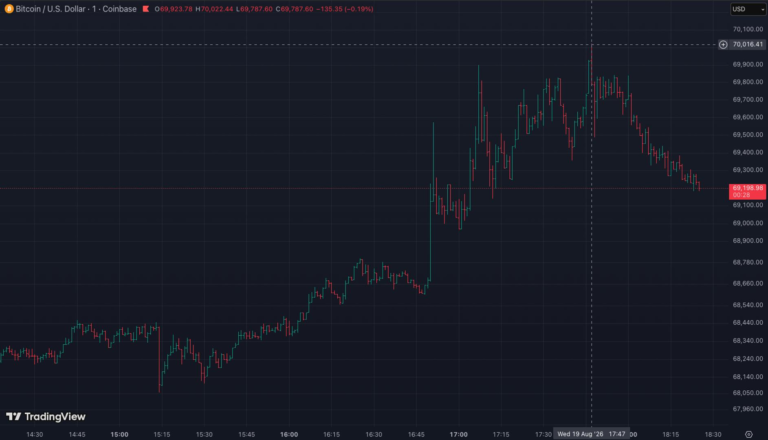
The largest crypto asset rose more than 7% on Wednesday after several catalysts sent crypto-related assets higher.
OCC head promises final GENIUS rules by November

The US banking regulator released a 376‑page proposal in February, calling for public comment on rules to implement the stablecoin bill ahead of its January 2027 effective date.
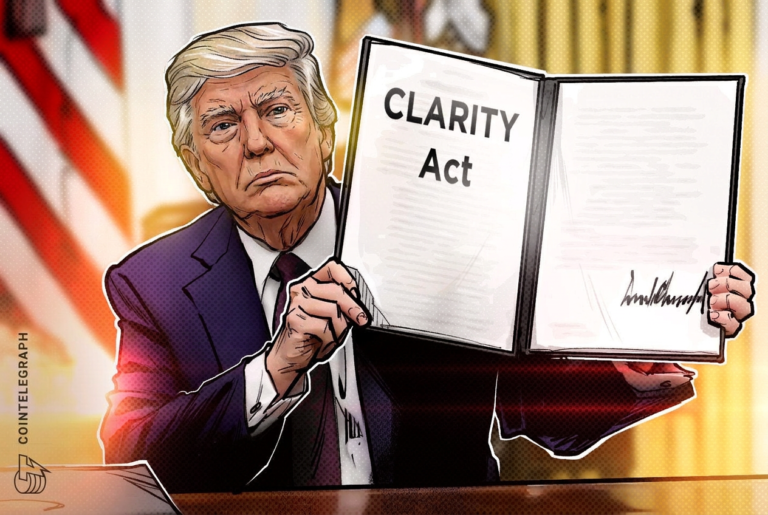
Trump Pushes for CLARITY Act Passage Alongside Crypto Leaders
Update (Aug. 19, 8:55 pm UTC): This article has been updated to include comments from Senator Ruben Gallego at the Wyoming Blockchain Symposium.
US President Donald Trump continued to push for passage of a crypto market structure bill as the Senate remains in recess.
In a Wednesday press conference with crypto company executives including Coinbase CEO Brian Armstrong and Gemini co-founders Cameron and Tyler Winklevoss, Trump said members of Congress should pass “a fair version” of the Digital Asset Market Clarity (CLARITY) Act to keep the US “ahead of China.” The market structure bill, passed by the House of Representatives in July 2025, has been stalled in the Senate for months amid concerns about tokenized equities, stablecoin rewards and the Trump family’s potential conflicts of interest with the crypto industry.
Armstrong, who spoke after Trump and US regulatory heads, said that the bill would make crypto policies in the US “durable into the future, so it could survive for decades and decades to come.” The Coinbase CEO speculated that the bill could have “more than 60 votes” once the Senate addressed a cloture motion on Sept. 15.
“It’s very bipartisan, I would say,” said Trump following Armstrong’s comments. “Lot of Democrats support.”
The president pushed for Congress to pass CLARITY in July following the death of Senator Lindsey Graham. Trump said that Graham had been a “big supporter” of the bill, and lawmakers in the Senate should advance CLARITY in his honor.
Trump has previously hosted crypto industry leaders at the White House during a summit to address regulations in March 2025 and for the signing ceremony for the GENIUS stablecoin bill in July 2025.
Related: SEC proposes new crypto rules in absence of CLARITY Act
“I think, unfortunately, what the president means is fair to him,“ said Senator Ruben Gallego at the Wyoming Blockchain Symposium in response to Trump’s remarks on CLARITY, referring to ethics language in the bill. He added:
“The president is agreeing to some limitation. It’s not his place to agree. It’s the place of the Congress, the Senate and then the White House […] the president doesn’t just get to decide what level of regulation he gets.“
SEC and CFTC moving forward without CLARITY
Crypto company executives’ remarks to the press came one day before the Commodity Futures Trading Commission (CFTC) was scheduled to hold an Innovation Advisory Committee meeting. CFTC Chair Michael Selig said the agency would explore moving forward on crypto regulations at the meeting, as Congress wouldn’t be returning to session for another month.
The White House meeting happened the same week that the Securities and Exchange Commission proposed crypto rules offering companies a safe harbor from tokens being treated as “investment contracts” and certain exemptions for token issuance.
Magazine: El Salvador’s Bitcoin experiment turns 5: ‘It was for us, not them’
HYPE jumps 11% as Trump says CFTC is working to bring Hyperliquid to U.S.
During a White House meeting Wednesday, President Donald Trump said CFTC Chair Mike Selig is working to bring the perpetual futures platform into the U.S. under federal rules.
Crypto campaign fund Fairshake faces $2 million setback in Florida primaries

In a race that drew criticism to crypto’s leading political action committee for featuring fake headlines in ads, Fairshake’s expensive effort fell short.
Crypto PAC Notches Primary Wins, But Loses $2M Florida Race

Four of the five candidates supported by ads funded by the cryptocurrency-aligned political action committee (PAC) Fairshake won their primaries or otherwise advanced on Tuesday, potentially a bellwether for the industry’s influence in the 2026 midterm elections.
On Tuesday, Democratic and Republican candidates supported by media funded by the Fairshake-affiliated PACs Protect Progress and Defend American Jobs, respectively, notched wins across three US states. Altogether, the PACs spent about $3.6 million on House and Senate races in Alaska, Florida and Wyoming.
Democrat Lois Frankel won re-election in Florida’s 23rd congressional district after Protect Progress spent more than $150,000 on supportive media. Defend American Jobs also spent a combined $1.5 million on ads to support Republican Nick Begich in Alaska’s at-large congressional district, Republican candidate Sydney Gruters in Florida’s 16th congressional district and Representative Harriet Hageman for the US Senate in Wyoming. Gruters and Hageman won their primaries, while Begich is expected to advance in Alaska.
All four candidates will likely go on to face challengers in the 2026 midterms in November, but a Democrat in Florida’s 24th district also won despite being the target of more than $2 million worth of negative ads funded by Protect Progress. Oliver Gilbert defeated challengers Shevrin Jones and Kendrick Meek with 34.4% of the vote, in a race that addressed the potential influence of the crypto industry.
Florida’s 24th congressional district results for Democratic primary. Source: The New York Times
According to an Aug. 12 Miami Herald report, Gilbert said “[Donald] Trump’s tech billionaire buddies” were behind the “crypto con artists trying to buy a Democratic primary” through the Protect Progress ads. The news outlet said the ads included fake Miami Herald headlines misrepresenting Gilbert’s policy positions, though a spokesperson for the PAC claimed that “the underlying facts in our ad are true.”
The Fairshake PAC, which reported holding a $193 million war chest as of January, was responsible for funding more than $130 million worth of ads supporting candidates it considered pro-crypto in the 2024 election cycle and opposing many who spoke negatively about the industry or voted against its interests. As of June, the committee had spent more than $82 million on races ahead of the 2026 midterms.
Related: UK authorities continue probe into Nigel Farage’s crypto ‘gifts’ after by-election win
Gilbert did not mention the crypto industry or the ads in his Tuesday night acceptance speech. Fairshake spokesperson Geoff Vetter said that the PAC was “just getting started building the largest pro-crypto Congress in history” following the three state primaries and other candidates winning in 2026.
Makeup of next Congress to impact crypto market structure law?
Both the US Senate and House of Representatives are on recess until September, when the former is scheduled to address a cloture motion on the Digital Asset Market Clarity (CLARITY) Act, a bill expected to establish comprehensive regulations for digital assets. Although the legislation passed the House with bipartisan support in July on a 294-134 vote, many Senate Democrats have been pushing for stronger ethics provisions related to the Trump family’s crypto investments.
Following the 2026 elections, US Congress could shift from a Republican to Democratic majority depending on the outcome of key races potentially influenced by PACs like Fairshake. Lawmakers elected in November could advance or stymie legislation affecting the crypto industry, including CLARITY, if the current session does not address the bill before 2027.
Magazine: 200,000 fake AI ‘victims’ deployed to scam bait online fraudsters
Bitcoin surges above $68,000, liquidating $1.4 billion shorts as Treasury buybacks boost risk appetite
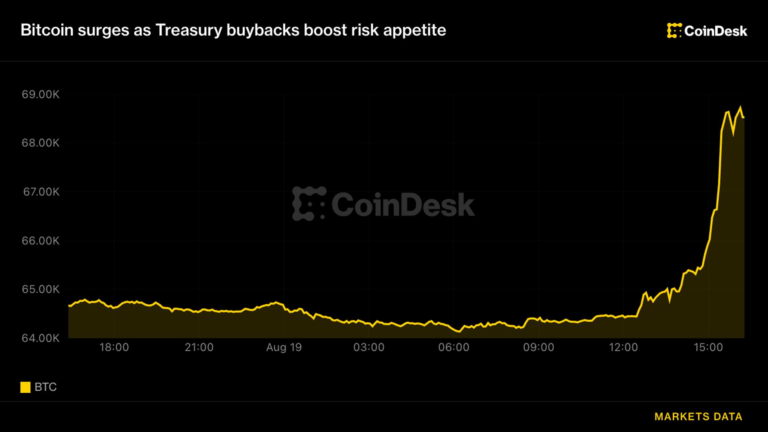
BTC rose about 6% while ether, solana and crypto stocks climbed after the Treasury doubled the size of its bond buybacks.
US commodities regulator imposes 5-year trading ban on ex-Alameda, FTX execs

The consent orders ended the CFTC’s case against two former crypto executives after FTX and Alameda agreed to $12.7 billion in disgorgement and restitution payments in August 2024.