
The consent orders ended the CFTC’s case against two former crypto executives after FTX and Alameda agreed to $12.7 billion in disgorgement and restitution payments in August 2024.

The consent orders ended the CFTC’s case against two former crypto executives after FTX and Alameda agreed to $12.7 billion in disgorgement and restitution payments in August 2024.

The Securities and Exchange Commission’s (SEC) new regulatory proposal marks a significant step forward from a set of “inapt” crypto rules to clearer and more enforceable digital asset regulations, according to Commissioner Hester M. Peirce.
A “whole generation has struggled with the SEC’s insistence” and the application of “a set of inapt rules to crypto,” but the SEC’s new crypto guidelines mark an important step toward “putting clear, sensible, enforceable rules in place for crypto offerings,” said Peirce in a statement released on Tuesday.
SEC Chairman Paul S. Atkins also praised the initiative and said that the agency’s prior enforcement-heavy approach has “driven investment offshore, limiting the type of protections that we can provide investors here,” according to a separate statement.
In a Tuesday notice, the SEC proposed new rules to create a “clear and fit-for-purpose framework for certain investment contracts involving crypto assets,” allowing entities to raise capital while preserving investor protections.
The proposal came days after the US Senate failed to advance the Digital Asset Market Clarity (CLARITY) Act, which would provide a comprehensive framework for financial regulators overseeing the crypto industry.
On July 27, Atkins told CNBC the agency was “ready, willing, and able to come out with rules“ on digital assets if the Senate failed to pass the CLARITY Act.
Meanwhile, Galaxy Digital has cut its odds on the CLARITY Act’s chances of passing in 2026 to 10%, warning that multiple political issues remain unresolved and the Senate will have only about two to three weeks to pass it when it reconvenes on Sept. 14.
Magazine: Why Meta is choosing partners over power in its 2026 stablecoin push

The exchange that lost $1.46 billion to North Korean hackers is the first large centralized firm to put numbers on a claim bitcoin developers have been making all month.

The feature, which follows earlier moves into financial transactions, is not yet being tested anywhere, a spokesperson said.

A chain of six flaws caused the cross-chain trading network to credit a pool with nearly 50 million tokens that were never properly funded, letting an attacker drain real assets.

Bitcoin held near $64,000 and every major except BNB gained, while Korean semiconductor stocks fell more than 7% and Fed minutes are due at 2 p.m. ET.
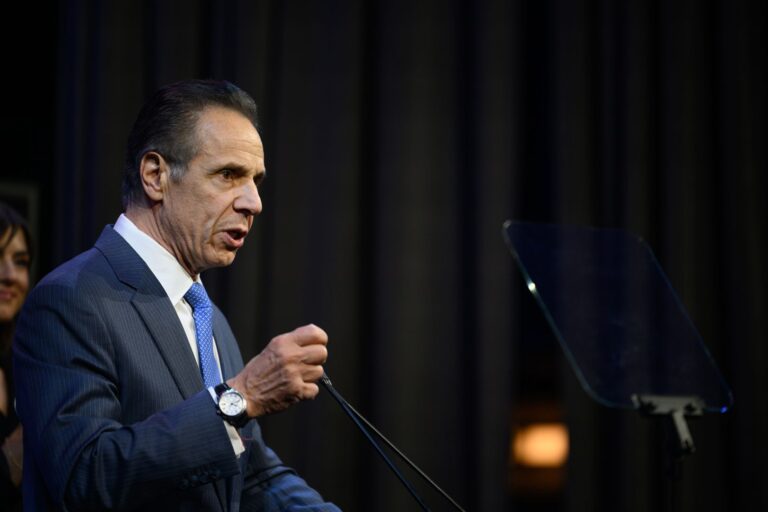
Former New York Gov. Andrew Cuomo says the CLARITY Act is key to linking crypto and traditional markets.

An affiliate of political action committee (PAC) Fairshake, funded primarily by Coinbase and Ripple Labs, has poured more than $2 million into media opposing a Democratic candidate who did not appear to have taken any prominent position on digital assets before the ads were released.
According to records with the Federal Election Commission (FEC) as of Tuesday, the Protect Progress PAC had spent more than $2 million on ads opposing Democratic candidate Oliver Gilbert in Florida’s 24th congressional district. Notably, no candidate in the Democratic primary appeared to have taken a strong position on digital assets as part of their campaigns before the PAC’s involvement.
The Democratic candidate is running for the seat currently occupied by Representative Frederica Wilson, who, in addition to voting against the Digital Asset Market Clarity (CLARITY) Act and Guiding and Establishing National Innovation for US Stablecoins (GENIUS) Act while serving in Congress, endorsed Gilbert. Shevrin Jones, a Florida state senator and Democratic candidate who was ahead of Gilbert in an early August poll, has completed a questionnaire with Stand With Crypto, earning him a “strongly supports” rating from the advocacy organization.
Gilbert reportedly said “[Donald] Trump’s tech billionaire buddies” were behind the “crypto con artists trying to buy a Democratic primary” through the ads, which included fake Miami Herald headlines unrelated to digital asset policy. Wilson endorsed Gilbert at a June 22 event. Cointelegraph reached out to Gilbert’s campaign for comment but did not receive an immediate response.
“The facts are the facts, and, as the Miami Herald stated, the underlying facts in our ad are true,” a Fairshake spokesperson told Cointelegraph. He did not comment on reason for the PAC expenditures.
Fairshake reported holding a $193 million war chest as of January, which it has used through affiliates like Protect Progress and Defend American Jobs to support Democratic and Republican candidates, respectively, for races in the 2026 midterm elections. As of June, the PAC had already poured more than $82 million into primaries and special elections to influence voters through ads.
Related: Crypto PAC pours another $1M into Michigan House race
On Tuesday, voters in Alaska, California, Florida and Wyoming will decide on congressional candidates to face off in the general election in November.
The Protect Progress PAC has also spent more than $150,000 on media supporting the re-election of Lois Frankel in Florida’s 23rd district. Defend American Jobs reported a combined $1.5 million on ads in favor of Representative Nick Begich in Alaska’s at-large congressional district, Republican candidate Sydney Gruters in Florida’s 16th district and Representative Harriet Hageman for one of the US Senate seats representing Wyoming.
The 2026 primary races will help determine whether Democrats retake control of the US House of Representatives and Senate starting in the next session of Congress in January, or Republicans remain the majority. Both chambers are on recess until September, when the Senate is expected to hold a vote on the CLARITY Act.
Magazine: Bitcoin to $1M by 2030 is ‘mathematically impossible’ says Markus Thielen

Falcon Finance is moving into AI infrastructure financing with a tokenized debt instrument designed to fund GPUs before they reach the data center.
The company said Tuesday it is opening a regulated issuance pipeline in El Salvador, with its first transaction structured around high-end GPUs and anchor compute demand from NEAR AI. The instrument is still being structured, meaning investors are not yet buying an operating GPU-backed product.
The move comes as Wall Street is racing to turn AI computing infrastructure into a financeable asset class. Nvidia this month outlined a $500 billion infrastructure financing initiative involving firms including Goldman Sachs, Apollo and Blackstone. The leading chipmaker seeks to bring more third-party capital into the AI buildout.
Falcon’s structure targets a specific cash-flow mismatch in buying AI hardware.
Companies acquiring high-end GPUs can commit capital months before the equipment is delivered, installed and generating revenue. Falcon said the first transaction involves equipment whose purchase price has been fixed through October, with proceeds from the issuance funding delivery.
The debt obligation will sit inside a special purpose vehicle holding contractual rights linked to the hardware and its output, according to the company.
During the period before installation, the obligation would be issued below par and gradually accrete toward its face value. Once the GPUs are installed in a data center, lease income generated by the hardware is intended to service the debt.
That effectively gives investors exposure to two stages of the GPU lifecycle: the financing period before deployment and the cash flow generated after the equipment begins operating.
“Between paying for high-end GPUs and racking them, four to eight months go by with the capital already committed and nothing running,” Yurii Olentyr, a board member at GPU supplier vGPU, said in a statement shared with AlexaBlockchain. “Today that gap sits on somebody’s balance sheet, or with a small group of lenders who understand the hardware well enough to take the risk. The constraint we see is almost never demand for compute but rather who can afford to wait.”
More From AlexaBlockchain
NEAR AI will provide anchor demand for the computing capacity produced by the equipment and serve as a technology partner, according to Falcon.
The company was founded by Illia Polosukhin, previously a Google researcher and one of the eight authors of the 2017 paper Attention Is All You Need. That research introduced the Transformer architecture that became foundational to modern large language models.
Having a buyer for the resulting compute could be important to the financing structure because GPU economics ultimately depend on utilization and rental pricing, not simply the resale value of the chips.
That distinction has become increasingly relevant as billions of dollars flow into GPU-backed lending.
Falcon is not the first company to finance GPUs as productive assets.
CoreWeave pioneered large-scale borrowing against AI computing infrastructure and in March closed an $8.5 billion GPU-backed financing facility, which the company described as the first such transaction to receive an investment-grade rating.
The market is now moving another step toward financialization.
CME Group, Silicon Data and trading firm DRW are preparing compute futures designed to allow customers to hedge the price of GPU computing capacity, according to Barron’s. The planned contracts, subject to regulatory approval, would create a standardized financial market around the price of compute rather than ownership of individual machines.
Falcon’s proposal attacks a different part of the problem. Rather than creating a derivative tied principally to compute pricing, it aims to finance identified hardware and then connect that obligation to the revenue the equipment generates.
The more unusual part of the structure is what Falcon intends to do after underwriting.
GPU financing has largely remained in private-credit arrangements and bespoke lending facilities, where positions can be difficult to sell before maturity. Falcon wants the resulting obligation to exist as an onchain asset capable of secondary trading and potentially being used as collateral.
“Compute financing has become one of the fastest-growing categories in asset-backed credit, and almost all of it is arranged through private syndicates,” Artem Tolkachev, Falcon Finance’s chief RWA officer, said.
“A lender who wants out before maturity has very few options. We are structuring a tokenized GPU forward so that the exposure can be transferred on a secondary market and posted as collateral against borrowing.”
The underlying credit risks, however, do not disappear because the obligation has been tokenized.
Investors remain exposed to hardware delivery, counterparty performance, GPU utilization, lease pricing and technological depreciation. Those risks are particularly important in AI infrastructure because new chip generations can alter the economics of existing hardware quickly.
Falcon is using El Salvador because the country has built a dedicated regulatory framework for issuing and servicing digital assets.
Its Digital Assets Law was approved in 2023, while the National Commission of Digital Assets, or CNAD, oversees the country’s digital-asset ecosystem and maintains rules covering issuers and digital-asset service providers.
Falcon said issuance in the country will be handled through NOTA S.A.S. de C.V., which it identified as registered under number PSAD-0088. CNAD’s public registry currently lists NOTE S.A.S DE C.V. under PSAD-0088, registered on June 12, 2026, with activities including digital-asset trading and derivative-related services. The difference in the company name appears in the source materials and should be clarified by Falcon.
The regulatory model is intended to separate primary issuance from subsequent trading. Falcon says minting and redemption would remain subject to identification and compliance requirements while tokens could subsequently circulate through open blockchain markets, including decentralized exchanges.
Whether that produces meaningful secondary liquidity remains untested.
That question matters because the tokenized real-world asset market has expanded much faster than secondary trading in many of its assets.
As per RWA.xyz data, there is $38.21 billion worth of tokenized assets onchain as of Aug. 18, excluding stablecoins under its principal asset-value measure.
Academic research examining tokenized Treasuries, gold and private credit has nevertheless found that putting an asset onchain does not itself guarantee an active market. Trading activity and holder participation vary substantially across products, with some relatively large tokenized assets remaining thinly traded or concentrated among relatively few holders.
Falcon says its architecture is specifically intended to tackle that problem by designing assets for secondary markets and collateral use from inception rather than treating tokenization simply as a new ownership record.
“Most issuers do not want tokenization. They want a result: liquidity, composability, and capital they can actually use,” Falcon founding partner Andrei Grachev said. “Wrapping an asset in a token is the easy part, and on its own it changes nothing.”
AI’s infrastructure boom has a financing problem as well as a technology problem.
GPUs are expensive, delivery and data-center deployment require substantial upfront capital, and the revenue backing those investments begins only after the machines become operational. Nvidia’s attempt to mobilize hundreds of billions of dollars of outside capital and CoreWeave’s repeated use of GPU-backed debt show how quickly computing hardware is being turned into collateral for a new credit market.
Falcon is testing whether blockchain markets can provide another source of capital — and, importantly, whether those credit exposures can become transferable rather than remaining locked inside private lending agreements.
El Salvador already has precedent for regulated tokenized assets. Tether’s gold token XAU₮ is issued through an El Salvador entity registered as a stablecoin issuer and digital-asset service provider under the country’s Digital Asset Issuance Law.
But Falcon’s GPU structure will face a harder test than simply putting debt onchain.
Its significance will depend on whether investors actually trade the instrument after issuance, whether it can reliably function as collateral, and whether compute revenue continues to cover financing obligations as newer generations of AI hardware arrive.
If those pieces work, GPU financing could begin moving from bespoke private-credit deals toward a more standardized market for investable AI infrastructure.
The above article “Falcon Finance Turns the Wait for AI GPUs Into a Tradable Investment” was first published on AlexaBlockchain. Read the complete article here: https://alexablockchain.com/falcon-finance-turns-the-wait-for-ai-gpus-into-a-tradable-investment/
Read Also: This is the First U.S.-Chartered Depository Bank to Offer Stablecoin Invoicing
Disclaimer: The information provided on AlexaBlockchain is for informational purposes only and does not constitute financial advice. Read complete disclaimer here.

The US Securities and Exchange Commission (SEC) has proposed new rules that could affect the cryptocurrency industry after lawmakers in Congress failed to pass a market structure bill before breaking for a month-long recess.
In a Tuesday notice, the SEC said that the agency proposed rules to create a “clear and fit-for-purpose framework for certain investment contracts involving crypto assets.” According to the regulator, the “tailored securities offering regime” would allow entities to raise capital while preserving investor protections.
The agency’s rules did not include an “innovation exemption” for crypto-based stocks, which had also been expected to be announced. Notably, the proposed rules came just days after the US Senate failed to advance the Digital Asset Market Clarity (CLARITY) Act, a bill expected to clarify the roles federal agencies would have in overseeing and regulating crypto.
“[L]egislation remains indispensable to enacting ‘future-proofed’ rules of the road that are durable enough to protect the work we are undertaking today from being unwound by a future rogue regulator,” said SEC Chair Paul Atkins. “The SEC has and will continue to support Congress in delivering the CLARITY Act to President Trump’s desk.”
According to the proposed rules, crypto companies would be offered exemptions allowing the issuance of up to $5 million in tokens during a four-year period and up to $75 million during a 12-month period, as well as a safe harbor exempting cryptocurrencies from being treated as ”investment contracts.” Token issuers would be required to make financial statements and “would be subject to ongoing reporting requirements.“
The public will have 60 days to comment on the proposal after publication in the Federal Register.
Related: CLARITY or not, crypto isn’t going back in the bottle: Bitwise
The SEC’s proposed rules in the absence of legislation from Congress came ahead of a scheduled Thursday meeting of the US Commodity Futures Trading Commission (CFTC) on crypto, AI and prediction markets. The commodities regulator said it planned to address “areas where regulatory action can complement future congressional legislation.”
Atkins had been scheduled to speak at the Wyoming Blockchain Symposium on Tuesday, but canceled amid the SEC announcement. White House crypto adviser Patrick Witt said at the event that US regulators would “let loose” on crypto regulation if Congress was unable to move forward on the CLARITY Act.
Before the Senate broke for its August state work periods, Majority Leader John Thune filed cloture on a motion to take up the CLARITY crypto bill when lawmakers return in mid-September.
Following the August recess, senators only have 14 days in session before breaking again ahead of the November election. If Thune and Republican lawmakers can’t get a floor vote before then, the Senate has another 22 days in session before 2027, when new members of Congress will be sworn in.
Magazine: Will the crypto lobby’s $189M campaign get CLARITY over the line?