A South Korean funeral services company has reported an unrealized loss of about 45 billion won ($33 million) tied to investments in leveraged ether (ETH) exchange-traded funds (ETFs).
The Seoul-based Bumo Sarang, Korean for Parental Love, invested in the T-REX 2X Long BMNR Daily Target ETF (BMNU), a leveraged exchange-traded fund managed by Tuttle Capital Management that seeks to deliver 200% of the daily performance of Bitmine Immersion Technologies (BMNR), the world’s largest publicly traded holder of ether.
Leveraged ETFs are designed for short-term trading and can magnify both gains and losses, making them among the riskiest exchange-traded products available to retail investors.
The company’s losses are unrealized, meaning the holdings have not yet been sold. Still, the disclosure underscores the growing appetite in South Korea for speculative, crypto-linked investment products, particularly leveraged ETFs tied to digital asset firms and related equities.
South Korea has become one of the world’s busiest markets for leveraged and inverse ETF trading, with regulators warning investors about volatility and the risks associated with amplified exposure products.
The losses also reflect recent sharp swings in crypto-related equities as digital asset markets remain highly volatile.
The crypto industry’s campaign-finance juggernaut, the Fairshake political action committee, backed winners in half a dozen Southern primaries on Tuesday, pouring millions of dollars into the races as one of the congressional midterms elections’ leading spenders.
The super PAC deployed more than $20 million in political advertising in three states, mostly to Republican candidates who are considered likely to win their deep-red regions in the November general elections. So far this year, Fairshake — which has in previous election cycles helped get dozens of pro-crypto candidates to Washington — has backed a lengthy list of primary winners, though it did experience some setbacks, most notably in the Illinois race in which it spent more than $10 million trying to defeat Lt. Gov. Juliana Stratton on her way to her Democratic primary victory in March.
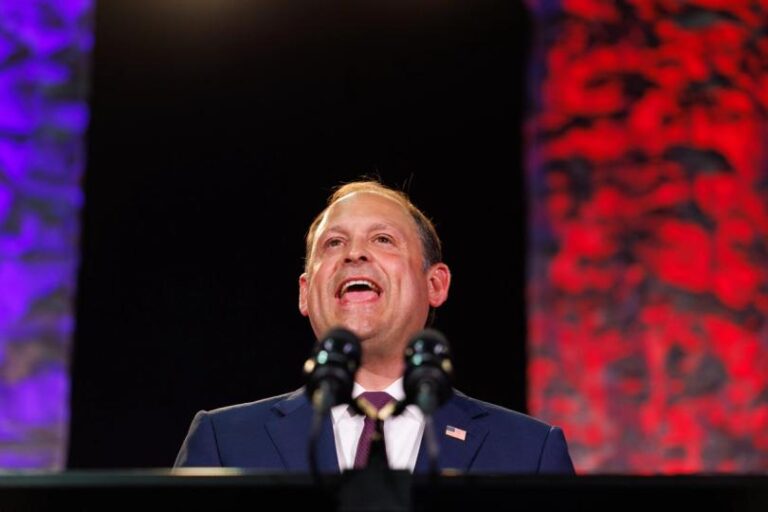
Fairshake devoted more than $7 million each in Tuesday’s Senate primaries in Alabama and Kentucky. It backed Republican U.S. Representative Andy Barr in Kentucky to replace the longtime Senate powerhouse Mitch McConnell, and Barr won that primary handily with more than 60% of the vote. In Alabama, the $7.4 million spent by Fairshake didn’t quite get to a resolution, yet, because Representative Barry Moore didn’t get past the 50% mark despite leading his closest competitor by more than 13 percentage points, so the crypto-backed candidate will face a runoff.”Fairshake’s 6-0 sweep tonight was a clear victory for pro-crypto leaders across the country,” said Geoff Vetter, a spokesperson for Fairshake, in a statement. “This powerful bipartisan mandate is being heard across America from Georgia to Alabama to Kentucky.”
In Georgia, the PAC focused on four seats in the U.S. House of Representatives, including a Democratic primary in the district left vacant after the death of longtime Democratic Representative David Scott. In the district, Fairshake supported Jasmine Clark, a Democratic state lawmaker who dominated a crowded field in this week’s primary after getting $4.2 million in crypto ad spending.
Such spending far outstripped the organic campaign fundraising in that race, with the crypto funds totaling more than was raised by all 10 Democratic candidates and far more than Clark’s own $1.2 million brought in by her campaign directly.
Clark’s campaign had included a supporting statement for crypto technology, which has often been the case with candidates Fairshake devoted its millions.
“We need to reassert ourselves as a leader on emerging technologies — whether that be AI, blockchain or cryptocurrencies — by working with experts to craft a smart, clear regulatory framework to help the industry grow and protect consumers from bad actors,” Clark’s campaign website declared.
Across Georgia, Fairshake also poured lesser amounts of cash into Republican primaries, backing candidates Jim Kingston (who won with 52%), Houston Gaines (who won with 67%) and incumbent Representative Clay Fuller (who had previously prevailed in a special election in April to replace Marjorie Taylor Greene and won this week with 81%).
Super PACs buy their ads without consultation with the campaigns they’re supporting, and Fairshake’s strategy has been to run ads designed to support or oppose candidates on whatever political points the committee sees as most effective — almost never mentioning the issue of cryptocurrency.
Singapore’s central bank has pulled the crypto payment license of Bsquared Technology Pte. Ltd., stripping the firm of its right to provide digital payment token services after uncovering a series of breaches.
In a Wednesday announcement, the Monetary Authority of Singapore (MAS) said it revoked Bsquared’s Major Payment Institution Licence after an on-site inspection found weaknesses in the company’s risk management practices and conflict-of-interest policies, as well as failures to comply with the regulator’s outsourcing guidelines.
MAS said Bsquared provided false or misleading information on multiple occasions, from its initial license application through the inspection itself.
Bsquared, also known as BSQ, obtained its license 16 months ago after receiving approval to offer digital payment token services under Singapore’s Payment Services Act 2019.
Related: Singapore’s OCBC launches tokenized gold fund on Ethereum and Solana
MAS orders Bsquared to submit a closure certificate
The company is required to submit a closure certificate from its auditors confirming that all customer funds have been returned to their recipients. Bsquared told MAS it held no outstanding customer assets.
“MAS takes a serious view of the breaches committed by BSQ, and is reviewing the responsibilities of key officers of BSQ,” the central bank added.
MAS revokes Bsquared’s license. Source: MAS
MAS has granted 37 digital payment token services licenses so far, and revocations remain uncommon. Last year, MAS rejected an application from AmazingTech, the operator of Tokenize Xchange, and the Commercial Affairs Department subsequently launched a probe into the company.
Related: Crypto dispute over Resupply exploit lands in Singapore harassment court
Singapore pushes deeper into digital asset infrastructure
Singapore has built a reputation as one of Asia’s leading crypto hubs, home to regional offices of Coinbase and Ripple, as well as the global headquarters of Crypto.com.
The city-state is also cementing its position as a leading hub for integrating traditional finance with digital assets.
Last month, Singapore Gulf Bank launched a service allowing institutional clients to mint and redeem stablecoins directly from their bank accounts via the Solana blockchain, enabling 24/7 settlement between fiat and digital assets.
Magazine: Guide to the top and emerging global crypto hubs — Mid-2026
As I write this, Bitcoin is coming off of conceivably its worst week ever.
It started out with the January 31, 2026 release of batch number two of the Epstein files, which implicated none-too-few Bitcoiners and early stage Bitcoin companies (I wonder, will we still be talking about Epstein in 2036?).
The release now reads like a nasty omen. Because on Thursday of the same week, bitcoin suffered its fourth worst drawdown ever, a 21% bludgeoning that bled $16,000 from its price as it went from $76,000 to $60,000 in a single day.
This was gnarly for bitcoin holders, of course, but it was gnarlier still for Bitcoin miners, who were already suffering under historically low revenue compression.
Bitcoin hashprice – a measure of mining revenue in either USD or BTC per unit of hashrate – hit an all-time low of $28.90/PH/day, according to Bitcoin mining data platform Hashrate Index. This means that 1 petahash of hashrate (roughly five new generation ASIC miners) would net you a paltry 28 dollars and 90 cents.
A bum can make a better daily wage panhandling.
It’s no surprise, then, that Bitcoin’s difficulty experienced 6 negative difficulty adjustments (out of 7 total) in three months between November 12, 2025 and February 7, 2026 (and the only positive adjustment was 0.04% on Christmas Eve). The last time we had a string of adjustments like that? 2011.
2011, y’all – when early tinkerers were mining with the computing power equivalent of a toaster compared to modern ASIC miners.
Now, bitcoin’s anemic price isn’t the only factor weighing on difficulty. Bitcoin miners are also pivoting to AI, and they are starting to decommission their ASIC fleets to make room for The Next Big Thing™.
But the economic stress miners are facing right now offers a decent glimpse into the future of an industry whose underlying commodity trades in backwardation on a long enough timeframe. Put another way, hashprice is trending to zero, so what does that mean for Bitcoin?
Nothing good. But also, nothing bad, either.
For sale, blockspace. Used once.
Before we prognosticate, let’s examine where the Bitcoin mining industry is now.
I said earlier that hashprice is trending to zero. This is due to a combination of Moore’s law – as semiconductors improve, so too does the energy efficiency of ASIC miners, meaning miners can produce more hashrate with fewer electrons, which puts pressure on Bitcoin’s difficulty and reduces the rate of mining rewards per unit of hashrate – and the Halving.
The block subsidy will eventually hit zero. By 2036, it will be 0.78125, so for the block subsidy to offer the same nominal payout under today’s 3.125 BTC subsidy given current BTC prices (roughly $212,000), bitcoin will need to be $272,000.
Failing that, Bitcoin miners better pray for fat transaction fees. But even here, the trend is working against them. Right now, you can get a transaction confirmed for under 1 satoshi per virtual byte (sat/vbyte).
Bitcoin adoption is at an all-time high but the mempool is a ghosttown. Part of this is thanks to data-efficient upgrades like SegWit and Taproot, but it’s also because Bitcoin is scaling as Hal Finney predicted: via Bitcoin banks, be those exchanges, other custodians, or paper products like the ETFs.
The only truly meaningful on-chain use of the last three years has come from what some Bitcoiners call shitcoins: ordinals and inscriptions, which ironically were largely adopted by “shitcoiners” from the realms of Ethereum and Solana.
Please set aside any moralizing, kvetching, and pearl clutching for a moment. It doesn’t matter if you love or hate monkey JPEGs on Bitcoin, but you need to acknowledge that they were a boon for miners and they buoyed block rewards before and after the 2024 Halving.
This market is dead now, though, and so far no Layer 2 or alternative use case for the blockspace has filled the vacuum they left. Given the lack of adoption for the swathes of Layer 2 projects that were paraded out during the ordinals mania to great fanfare, I think it would be wise to not count on such platforms generating meaningful fees in 10 years. Hopefully they will! But I wouldn’t bet on it.
Maybe in the age of AI people will start using Bitcoin timestamps for content and identity attestation – or some other, unforeseen use of blockspace will pop up – but again, I’m not holding my breath.
It is likely, however, that AI produces at least some positive externalities for Bitcoin miners, even if it also brings with it negative ones.
The coming domin(AI)tion blackpill
The biggest trend in Bitcoin mining over the last year has nothing to do with Bitcoin.
The largest Bitcoin miners in the world – Core Scientific, Riot, IREN, Cipher, CleanSpark, Hut 8, TeraWulf, among others – have started swapping ASICs for GPUs to cash in on the LLM gravytrain.
It’s almost a retrograde movement, except the GPUs aren’t producing nonces for miners as they once did – they’re running AI or high-performance computing loads.
I’m not sure how many Bitcoiners have played this tape through, or pondered the implications of it. Publicly traded Bitcoin miners – the ones making these pivots, or at least the ones making the most noise about them – account for roughly 40% of Bitcoin’s hashrate. And they’re trying to find a way to convert every basis point of this total into computing fodder for Claude, ChatGPT, Gemini, etc.
If you’re wondering why, it’s simple dollars and cents. They can monetize their megawatts for much greater sums than mining bitcoin. Sorry if that shatters any illusions you may have about the fabled altruistic miner who is hashing to defend the network against those dastardly bad actors.
This is a good thing actually. Firstly, it’s a headwind for hashrate growth, which is a tailwind for mining profitability. Fewer mega miners means more satoshis to go around for everyone else, but perhaps more importantly, it takes a cohort of Bitcoin miners out of the game who have lopsided operational and financing advantages.
Specifically, I’m talking about public miners’ access to capital markets, which allows them to aggressively scale their hashrate even if they are not profitable. Not making enough from mining to cover your costs? No problem – just dilute your shareholders! For years, public Bitcoin miners have issued new equity, sold it into the open market, and used the proceeds to shore up operation costs and expand their operations more quickly than private miners.
The end result is that Bitcoin’s hashrate has grown much more quickly than we might otherwise expect. When China dominated mining, Bitmain fueled meteoric hashrate growth with its self-mining and via the proxies in its spoils system. Since the China Mining Ban in 2021 shifted hashrate to the U.S., the rapid proliferation of public miners has had the same effect.
But the promise of an AI payday will be too tempting for these companies to ignore, so this new computing application will take these public miners out of the game. And this shift will be as dramatic as The Great Hashrate Migration after China’s 2021 Bitcoin mining ban.
The megaminer disintermediation whitepill
This coming change isn’t a blackpill, though. It’s a whitepill.
As mega-miners fade into the background, the smaller and medium-sized miners, those who operate on the margins, on the outskirts, and who have little chance of converting their operations into another form of data center, will thrive – or at least survive.
Ten years from now, the majority of hashrate should come from these Bitcoin miners, not the publicly traded companies who could mine without regard for actual profitability. Those miners who are around in 2036 will be scrappy, shrewd, and nimble. They will have some edge that makes their operations economical, be that recycling heat; mining off-grid on oil and gas wells, wind farms, or solar arrays; or be integrated on the power-plant level.
For the few large scale miners that will still exist at this time, they will likely be among the last bunch in that list: Bitcoin mining operations that run on energy-producing assets, from nuclear sites to natural gas plants, to soak up excess electricity whenever there is a bumper crop of production.
Perhaps it goes without saying, but of course, this assumes that block rewards are healthy enough to sustain hashrate even on the margins. To return to our math in the second section, bitcoin will need to be at least $272,000 to match the value of the current block subsidy.
Ideally, transaction fees make up more than ~1% of the block subsidy, which has been the theme for more than a year, but there’s no guarantee that this will be the case. (Even if they don’t, though, miners with the lowest cost energy will still be mining assuming bitcoin isn’t totally worthless.)
Energy efficiency gains from ASICs will help pick up the slack for overall profitability, but only so much, as the watt-per-terahash ratio is improving at a slower and slower rate and will virtually plateau at some point in the future given the current trajectory.
The last five years have been the exception, not the rule
But again, all of this is a good thing, actually, because it will disintermediate the largest actors in the Bitcoin mining industry, which consequently serve as potential chokepoints that could compromise the network.
The public miners are an obvious centralization point here. These are highly scrutinized, legally compliant firms that will bend the knee to Uncle Sam if it threatens their business. (Lest we forget, MARA (formerly, Marathon Digital Holdings) started mining OFAC-compliant blocks – blocks that censored any transaction connected to an OFAC-sanctioned Bitcoin wallet – in 2021, despite the fact that there was no law or legal precedent to mandate such an action).
Less obvious, though, is the threat that Bitcoin mining pools present to Bitcoin’s permissionless and censorship-resistant ethos. The vast majority of mining pools operate using a full-pay-per-share (FPPS) payout method. This means that miners are paid regardless of how many blocks the pool mines, using the hashprice metric we covered in the introduction. This model, the obverse of the pay-per-last-n-share (PPLNS) that Slushpool (now Braiins Pool) pioneered in 2011, means that the pool assumes all of the risk of mining, and they act as insurance companies of sorts for miners by guaranteeing income regardless of how much bitcoin the pool is actually mining. For example, if an FPPS pool mines 10 blocks a day and is responsible for 9 blocks worth of payouts, they pocket the difference, but if they mine 8 blocks, they eat the difference.
As hashprice becomes increasingly compressed with each successive block subsidy halving, it will become increasingly difficult for FPPS providers to cover the risk of mining luck while guaranteeing payouts. This becomes even more difficult if transaction fees start making up even a modest amount of total mining revenue, because FPPS pools typically calculate hashprice using the base block subsidy plus a rolling average of transaction fees over a given period. Put another way, what happens when an FPPS pool has to pay its miners using a hashprice that assumes transactions make up 10% of mining revenues, but the blocks this pool mines only make half of that?
Pool solvency becomes a mounting concern, and so FPPS pools will have to either adapt, or another model – either old or new – will take its place out of necessity.
This is another positive still, because it neutralizes another weak point for Bitcoin. Right now, Foundry, a U.S.-based mining pool, mines 1/3rd of Bitcoin blocks. What do you think would happen if the U.S. government tells Foundry to censor certain transactions, and create a white and black list for approved or sanctioned Bitcoin wallets?
If FPPS fades into the background, we might expect self-mining and PPLNS-esque payouts to dominate, and this should eat into the market share of large FPPS pools and mitigate the above risk. (The counterfactual to this hypothetical, just to be intellectually honest, is that as Bitcoin mining becomes more variable, one or two pools end up dominating marketshare, as only the largest companies have enough sway to attract users and make good on their payout promises).
Ultimately, Bitcoin mining just isn’t a good business, and that’s actually a good thing. A dwindling block subsidy and hashprice will push mining to the margin, to the lowest cost of energy possible, with operators that can only scale with prudence and diligence. In ten years, Bitcoin mining will likely be much more distributed than it is now as a result.
It’s entirely possible, then, that we look back on the mega-mining meta that became popular in the U.S. after the China Mining Ban as an aberration rather than the norm – another product of a fiat-warped, zero-percent interest rate policy economy that was doomed to expire when the accounting stopped making sense.
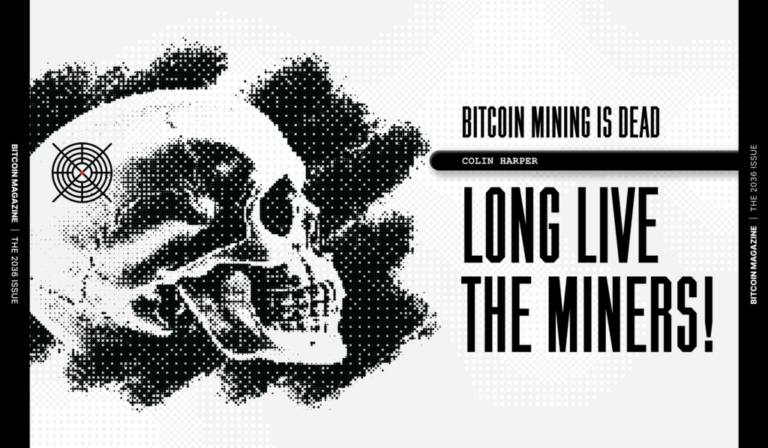
Don’t miss your chance to own The 2036 Issue — featuring articles written by many influential figures in the space pondering the challenges of the next decade!
This piece is featured in the latest Print edition of Bitcoin Magazine, The 2036 Issue. We’re sharing it here as an early look at the ideas explored throughout the full issue.
The European Commission said it is seeking feedback on whether the European Union’s landmark crypto framework, the Markets in Crypto-Assets Regulation (MiCA), remains fit for purpose as digital asset markets evolve.
The consultation, which remains open until Aug. 31, invites responses from both the public and industry stakeholders, including crypto firms, financial institutions, technology providers, academics and consumer groups, the executive branch of the EU announced on Wednesday.
MiCA was voted into law in 2023, establishing the EU’s first harmonized regulatory regime for crypto-assets and related services. The framework covers cryptoassets and stablecoins, as well as issuers and cryptoasset service providers operating within the bloc. The first regulations, related to stablecoins, took effect in June 2024, and the rules became fully applicable the following December.
The Commission said it is now reassessing the framework given the rapid changes in digital asset markets and shifts in the international regulatory landscape since MiCA was first developed.
The consultation includes both a public questionnaire and a more technical targeted consultation focused on legal and operational aspects of the regime.
Market analysts say Ether’s (ETH) price may drop to $1,000 if a breakdown from a bearish chart pattern is confirmed.
Key takeaways:
Ether’s bear flag targets 50% ETH price drop to $1,075.
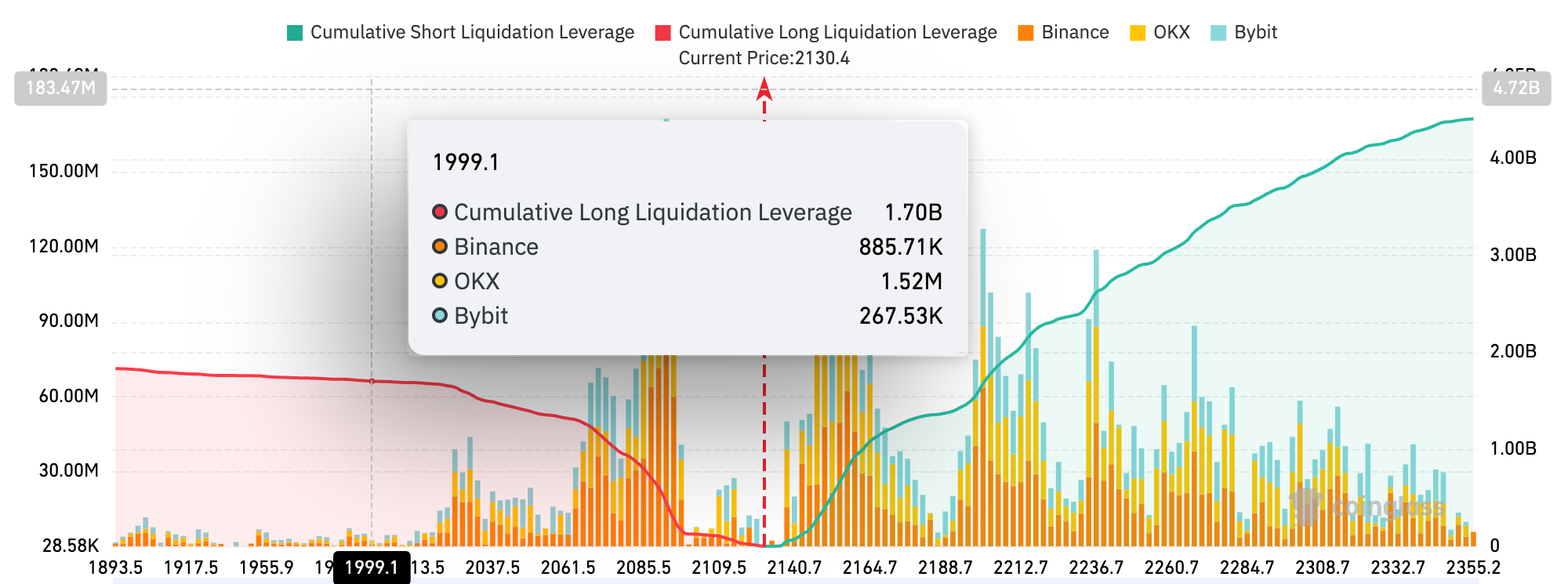
Ether risks over $1.70 billion in long liquidations if the price breaks below $2,000.
Whale accumulation weakens as major ETH holders reduce exposure.
Ether’s bear flag targets $1,000 ETH price
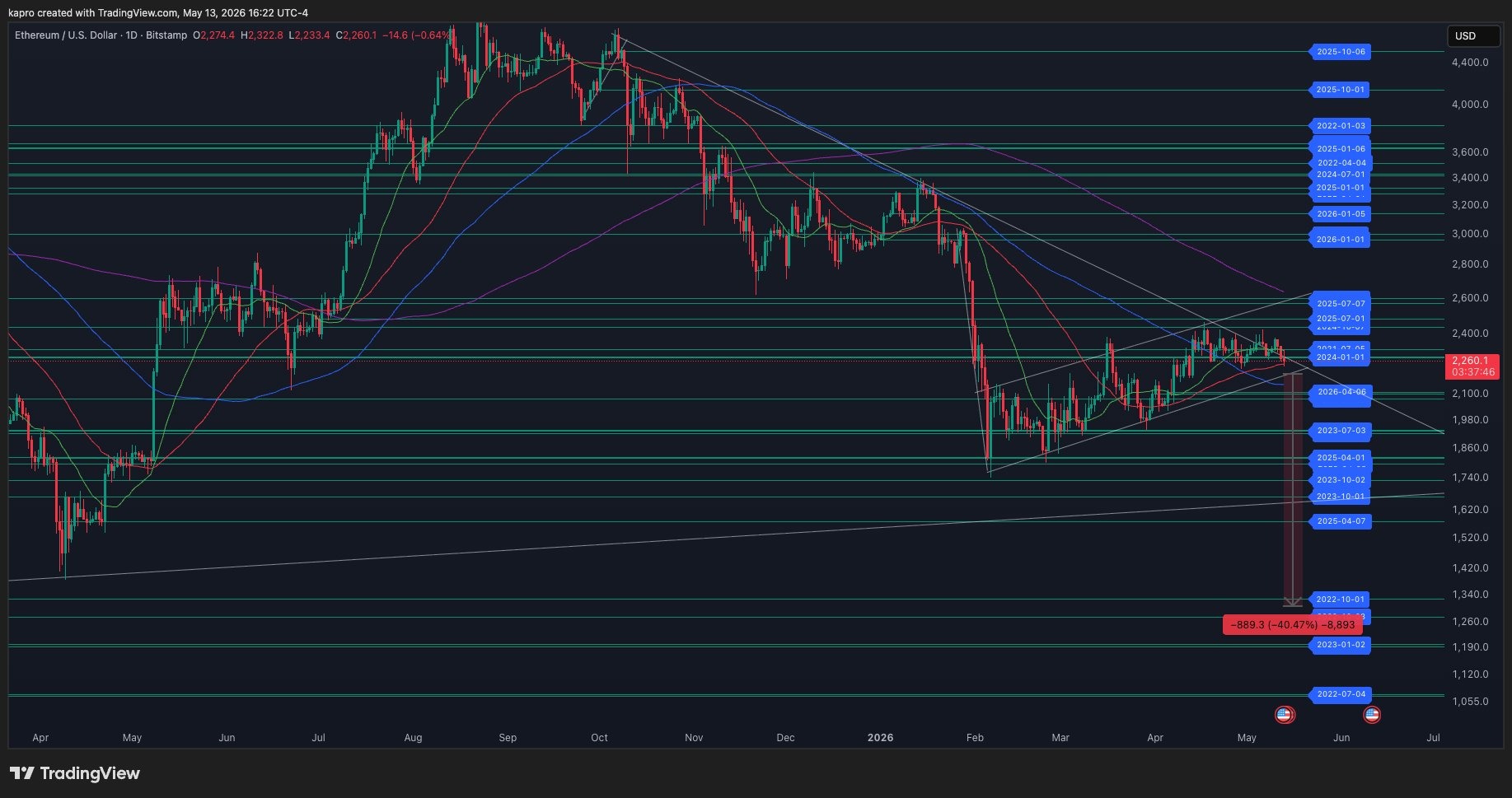
Ether’s downtrend could accelerate if the price breaks below the lower trend line of a bear flag at $2,000 on the daily chart, where a similar breakdown in January led to a 41.5% ETH price drop.
Related: Ether taker volume turns negative for first time in two months: Will ETH fall under $2K next?
A bear flag pattern is a bearish continuation setup that forms after the price consolidates inside an up-sloping channel following a sharp price drop.
The measured target of the flag, derived from the previous downtrend’s height added to the breakdown point at $2,000, is $1,075, down 49% from the current price.
“$ETH is about to break the bear flag pattern,” analyst Coin Signals said in a Monday post on X, adding that if the price fails to hold above the lower trend line at 2,000, a “sell-off to $1800 or a new low” would follow.
Fellow analyst Keith Alan told his followers to be “prepared for the nasty scenario,” involving the confirmation of a death cross between the 21-day simple moving average (SMA) and 50-day SMA, and validation of a bear flag in the daily time frame.
“Momentum indicators also show deterioration on both daily and weekly RSI timeframes,” the analyst said in a recent article on X.
“Failure to establish support, however, opens the door to a sequence of progressively lower technical support levels” toward the measured target of the bear flag structure around $1,300, he added.
ETH/USD daily chart. Source: X/Keith Alan
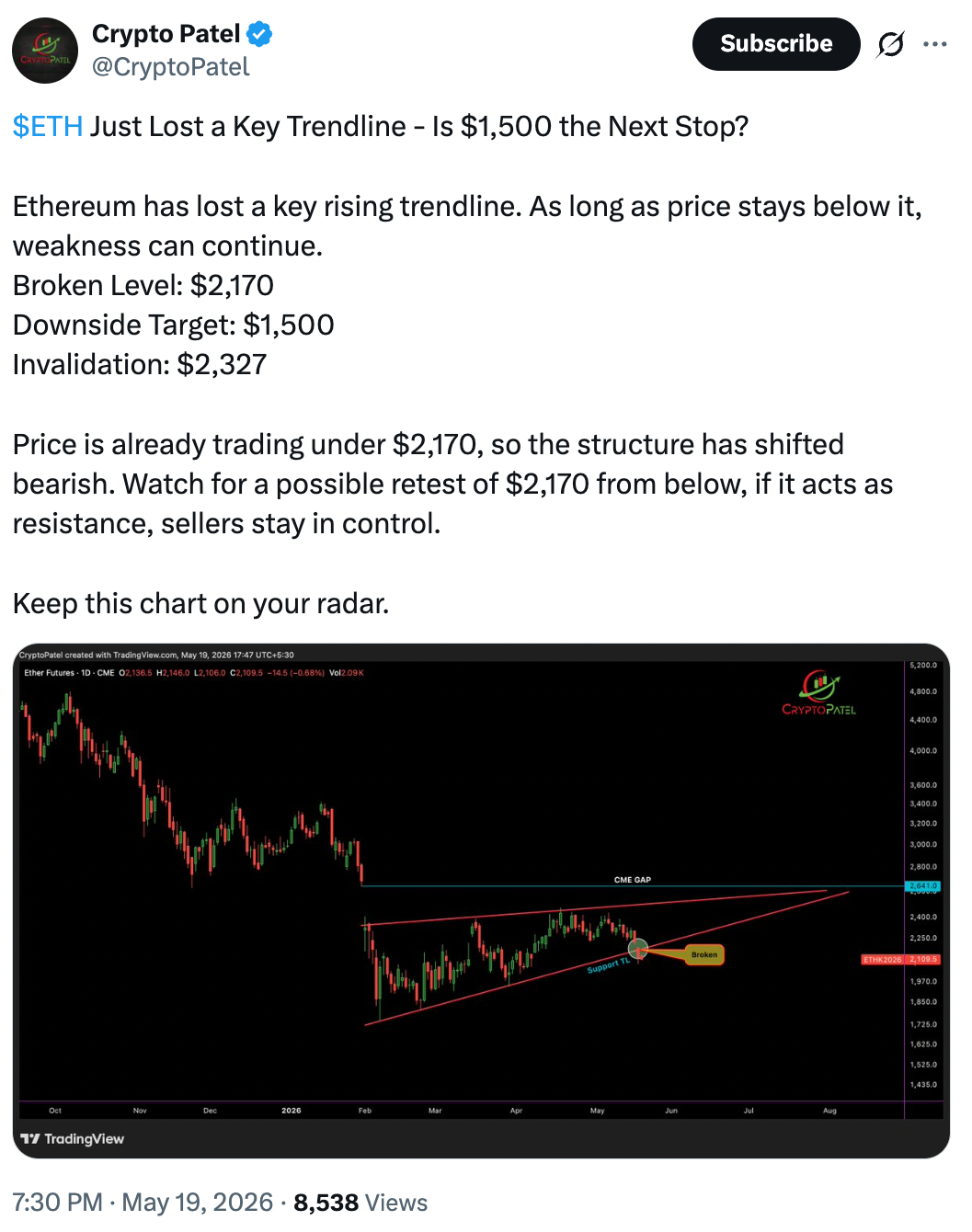
Fellow analyst Crypto Patel said that ETH’s validation of a rising wedge pattern was underway, with a downside target of $1,500.
“Ethereum has lost a key rising trendline. As long as the price stays below it, weakness can continue.”
ETH/USD daily chart. Source: X/Crypto Patel
Meanwhile, Ethereum’s liquidation map shows that a correction below $2,000 would trigger over $1.70 billion worth of leveraged long ETH liquidations across all exchanges, according to CoinGlass data.
ETH exchange liquidation map. Source: CoinGlass
Ethereum whale accumulation drops
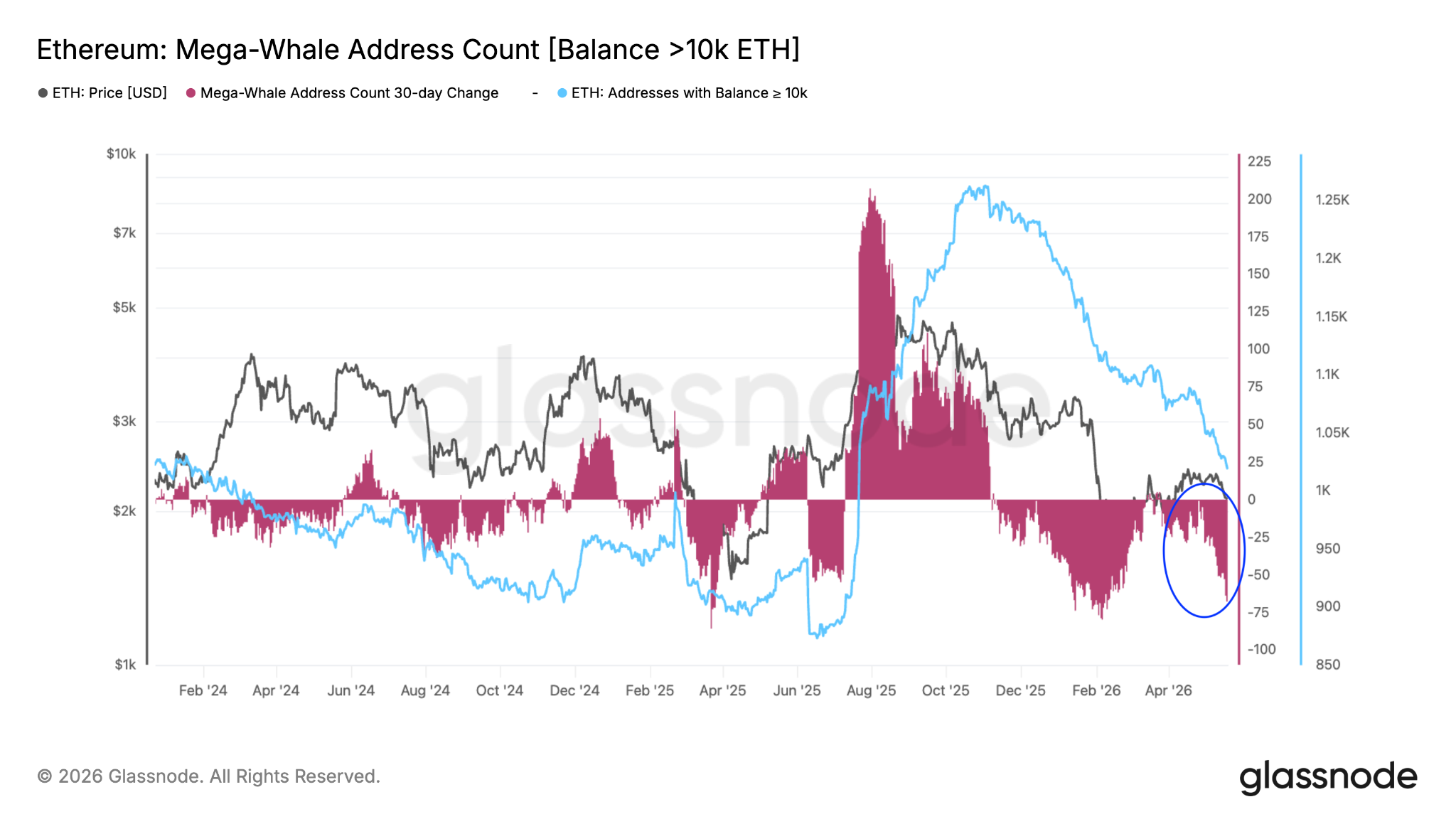
Ether’s latest rebound to $2,400 did not trigger broad-based accumulation across major wallet cohorts, Glassnode data showed.
For instance, the number of mega-whale wallets holding more than 10,000 ETH has declined sharply to a 10-month low of 1,050, with the 30-day change dropping to as low as -70, levels last seen in early February.
In other words, large players are taking advantage of recent liquidity to de-risk, reflecting a lack of mid-term confidence.
The picture looks similar among smaller wallet cohorts.
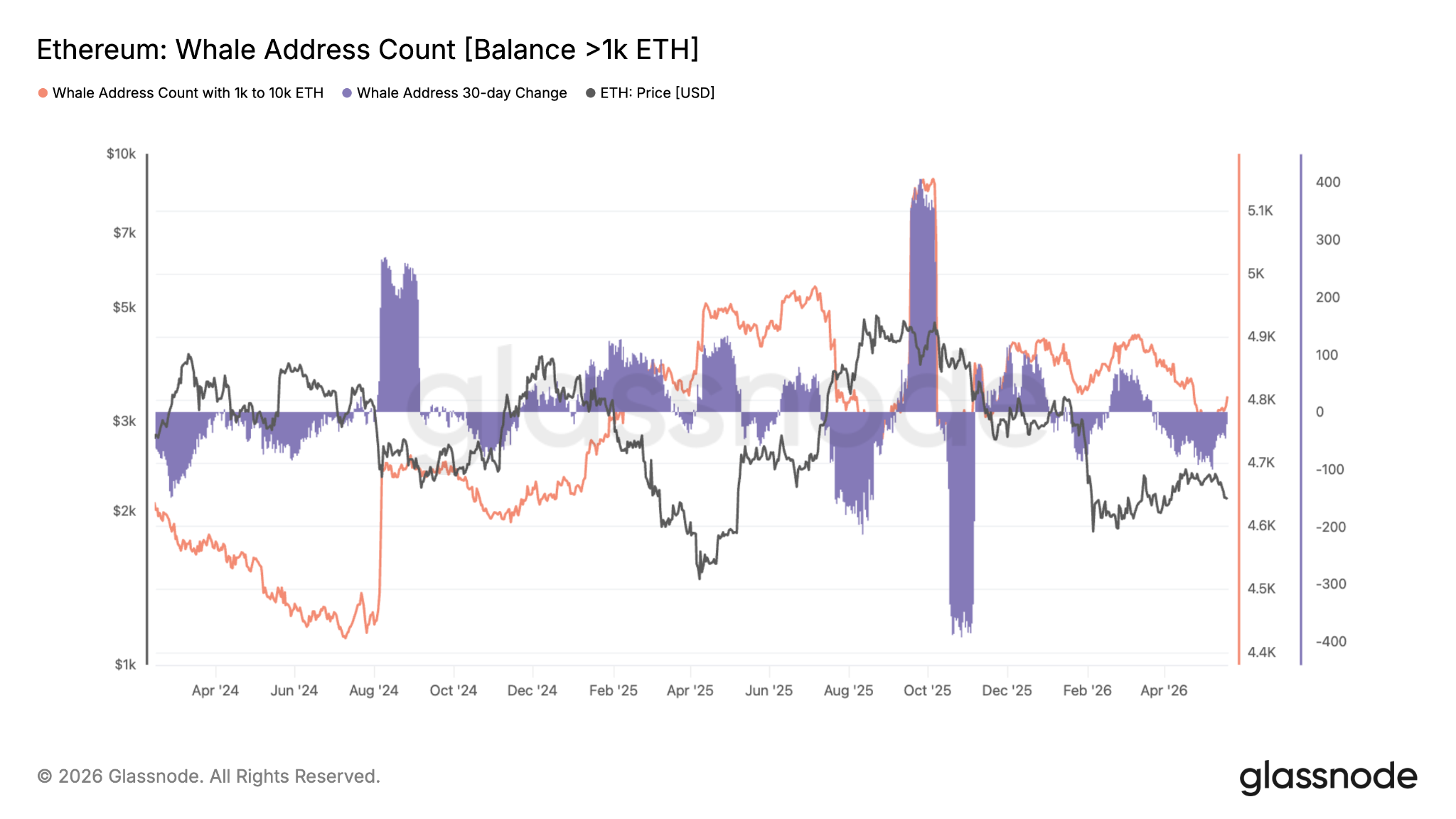
Ethereum wallets holding 1,000 to 10,000 ETH have also been declining, falling to a nine-month low of 4,750 on May 8. The 30-day change remains negative, hovering around -50 at the time of writing.
Ethereum whale and shark address count balance. Source: Glassnode
Taken together, the data suggest ongoing distribution and weak conviction across key ETH holder cohorts, reinforcing the risk of a deeper drop if $2,000 breaks.
This reduction in whale counts aligns with the recent inflows into exchanges, indicating the path of least resistance remains down in the immediate future and selling pressure mounts.
The European Commission has opened a review of its landmark crypto regulation, signaling that the European Union is considering updates to its landmark digital asset framework just two years after it took effect.
The commission on Wednesday launched a public consultation seeking feedback from the crypto industry and the wider public on whether the EU’s Markets in Crypto-Assets Regulation (MiCA) should be updated. The consultation will remain open until Aug. 31.
The commission said crypto markets and the global regulatory environment have “continued to evolve” since MiCA took effect in 2024, prompting officials to assess whether the current framework remains “fit for purpose.”
The move marks an important regulatory development in the EU, with some industry observers already referring to potential future updates to the framework as “MiCA 2.”
Stablecoin interest ban included in regulatory review
The targeted consultation under MiCA is a detailed questionnaire designed to assess how the regulation is functioning in practice and where adjustments may be needed.
It seeks feedback on ongoing classification challenges, particularly the blurred boundary between crypto assets and traditional financial instruments under EU law, including wrapped tokens, synthetic assets and tokenized fund interests.
A key focus is stablecoins, including a reassessment of MiCA’s prohibition on interest or interest-like remuneration. The commission is asking whether this restriction should be maintained or revised, alongside broader questions on reserve requirements, liquidity management, redemption rights and the thresholds used to determine “significant” tokens.
An excerpt from the targeted consultation on the MiCA review. Source: EC
Beyond stablecoins, the consultation also examines emerging risk areas, including decentralized finance (DeFi), staking, lending, non-fungible tokens, and crypto asset service providers (CASPs), as well as issues around market integrity, investor protection and potential simplification of compliance rules.
Related: Euro stablecoin project Qivalis adds 25 banks ahead of launch
The inclusion of DeFi and tokenized financial assets is particularly notable as both areas remain largely outside MiCA’s scope.
EU probes whether consumers actually trust crypto
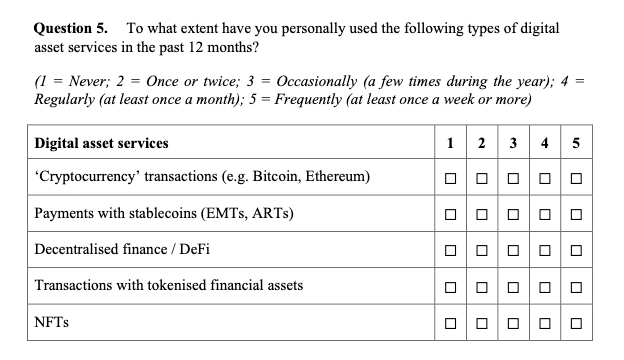
The public consultation document shows the commission is not only reviewing whether MiCA works as a legal framework, but also whether ordinary consumers understand and trust digital assets under the new rules.
Many of the questions focus on user awareness of Bitcoin (BTC), Ether (ETH), stablecoins, DeFi and tokenized assets.
An excerpt from the public consultation on the MiCA review. Source: The EC
It also explores what would increase consumer confidence in crypto services, including stronger protections, clearer rules, improved supervision and easier access through regulated banks and payment providers.
The review comes as MiCA approaches a key transitional deadline in July 2026, after which CASPs must be fully authorized under the EU framework or cease operations.
Magazine: How crypto laws changed in 2025 — and how they’ll change in 2026
President Donald Trump signed an executive order Tuesday directing the Federal Reserve and other financial regulators to tear down barriers that have long kept crypto and fintech firms on the outside of the U.S. payment system — a move that puts the central bank at the center of a fight that has been building for years.
The order, titled “Integrating Financial Technology Innovation into Regulatory Frameworks,” calls on the heads of federal financial agencies to audit existing rules within three months and identify regulations that “unduly impede” fintech firms from partnering with federally regulated institutions.
Within six months, regulators must act on what they find.
The Fed, crypto, and government control
At its core, the order targets the Federal Reserve’s control over master accounts — the gateway to payment rails like Fedwire that handle high-value dollar settlement across the financial system. Those accounts have historically been reserved for licensed depository institutions, a wall that forced crypto companies seeking direct payment access to pursue costly state or federal banking charters.
The order asks the Fed to do two things: evaluate whether its framework can be extended to non-bank fintech and crypto firms, and clarify whether the 12 regional Federal Reserve banks have independent authority to approve or deny master account applications without direction from the Board of Governors in Washington.
That second question carries real weight. If regional banks can act alone, crypto firms could potentially shop for a sympathetic Fed branch — a scenario that already played out in March, when the Kansas City Fed approved a limited-purpose account for Payward, the parent company of Kraken, making it the first crypto exchange to win any form of Fed payment access.
Kraken Co-CEO Arjun Sethi called the arrangement the “convergence of crypto infrastructure and sovereign financial rails.”
But the approval landed before the Fed had finalized a broader policy framework — and that sequence infuriated traditional banking groups. The Bank Policy Institute, which represents large U.S. banks, said it was “deeply concerned” by the timing.
That tension sits at the center of the debate Trump’s order now forces into the open. Rebecca Romero Rainey, president and CEO of the Independent Community Bankers of America, said the order exposes “significant gaps in regulation” between banks and non-bank entities, and argued that the Fed should pause new policies on stablecoins, master accounts, and trust charters to assess their combined impact. “Like activities should be subject to like regulation,” she said.
The Fed has been moving, if slowly, toward its own answer. In December, it published a proposal for so-called “skinny” master accounts — restricted central bank accounts that provide payment system access while excluding features like interest on reserves or discount window borrowing. The framework has drawn conflicting responses from both the crypto industry and community banks, each pushing the rules in opposite directions.
The executive order gives the Fed 120 days to deliver a formal report to the White House. That deadline transforms what has been a slow-moving regulatory process into a political one — with the Trump administration now holding a timer over an institution that prizes its independence.
Bitcoin (BTC) is down roughly 40% from its October 2025 record high, but a long-term valuation model suggests the cryptocurrency could erase the entire decline and rally to as high as $255,000 by year-end.
Key takeaways:
Bitcoin Decay Channel puts BTC’s conservative year-end range at $90,000–$255,000, with its 2027 range extending to $128,000–$308,000.
Bearish HODL Waves suggest a possible higher bottom in the $65,900–$70,500 range.
Bitcoin model puts BTC’s year-end target in the $90,000–$255,000 range
The Bitcoin Decay Channel is a logarithmic price model that tracks BTC’s long-term uptrend while adjusting for smaller gains in each new cycle.
The cryptocurrency’s major tops in 2013, 2017 and 2021 formed near the model’s upper valuation bands, while bear-market lows repeatedly moved back toward its lower support zone.
BTC/USD price performance to date. Source: Sminston/TradingView
Bitcoin’s latest rebound also began near the lower end of the Decay Channel in March-April, showing that buyers stepped in around a zone the model has historically treated as long-term support, or bottom.
That keeps the bullish case alive, according to analyst Sminston.
“Bitcoin Decay Channel gives a pretty reasonable range—conservative case—of $90k–$255k, by the end of this year. $128k – $308k for end of ’27,” he said in a Wednesday post, adding:
“For comparison, Bitcoin was $43k in December 2023.”
Sminston’s $90,000–$255,000 Bitcoin target range fits multiple predictions calling for BTC to reach a new all-time high in 2026.
Earlier, Bernstein analysts maintained a $150,000 Bitcoin target for 2026, while pushing their $200,000 peak forecast into 2027, citing a longer institutional adoption cycle led by BTC ETFs and public companies.
Related: Bitcoin price history suggests 77% odds of new all-time high within a year
BitMEX co-founder Arthur Hayes expected Bitcoin to reclaim $126,000 this year, citing US war spending in Iran, AI infrastructure demand and the resulting pressure for more fiat liquidity.
Bear flag and other indicators hint at persistent BTC sell-off risks
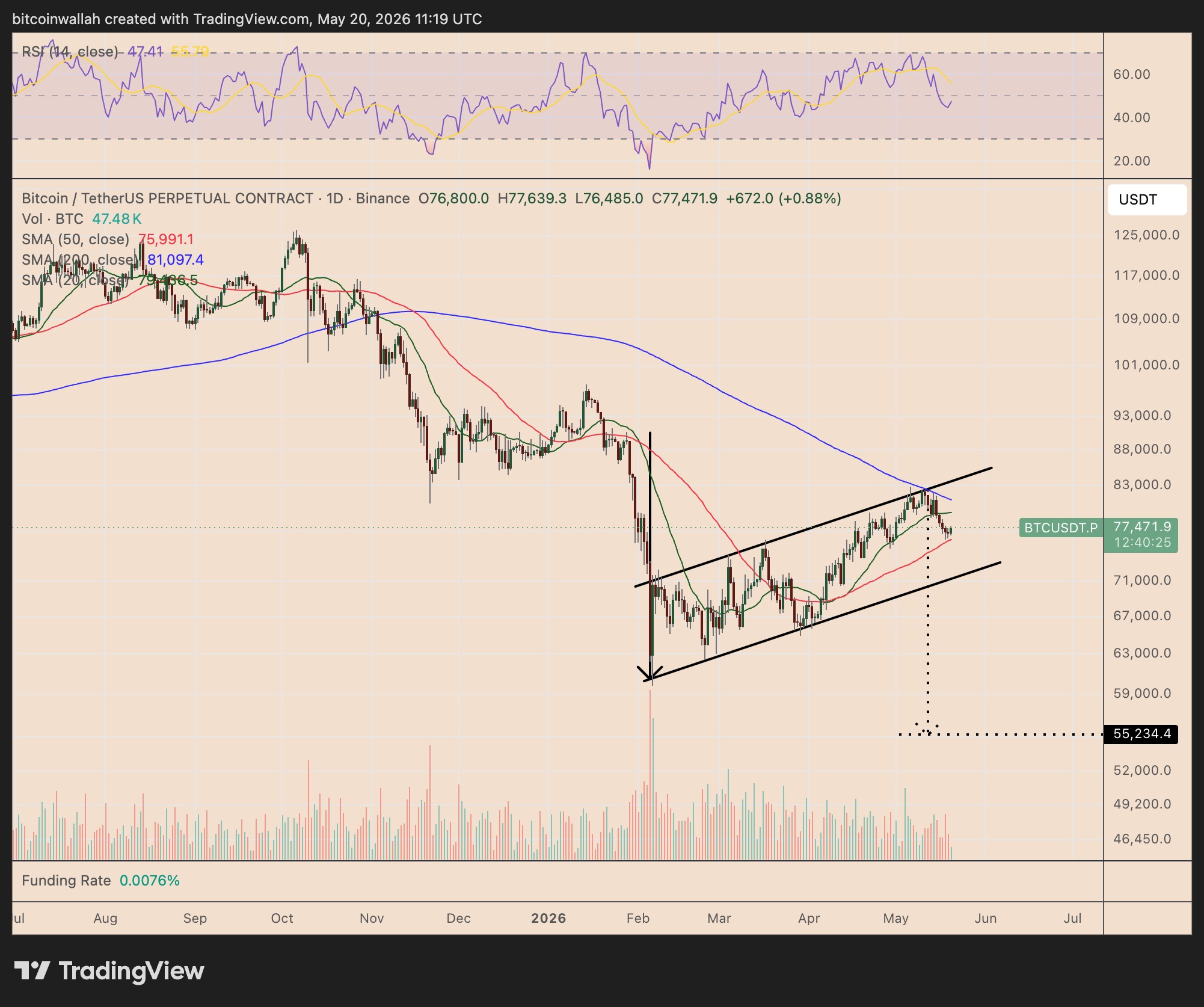
Bitcoin continues facing selloff warnings from a slew of bearish indicators, including a multi-month bear flag.
A bear flag typically resolves when the price drops by as much as the previous downtrend’s height. BTC risks plunging under $56,000, down about 30% from current prices, if the classic breakdown setup plays out as intended.
BTC/USDT daily chart. Source: TradingView
Onchain data suggests Bitcoin may not need to fall as far as the bear-flag target.
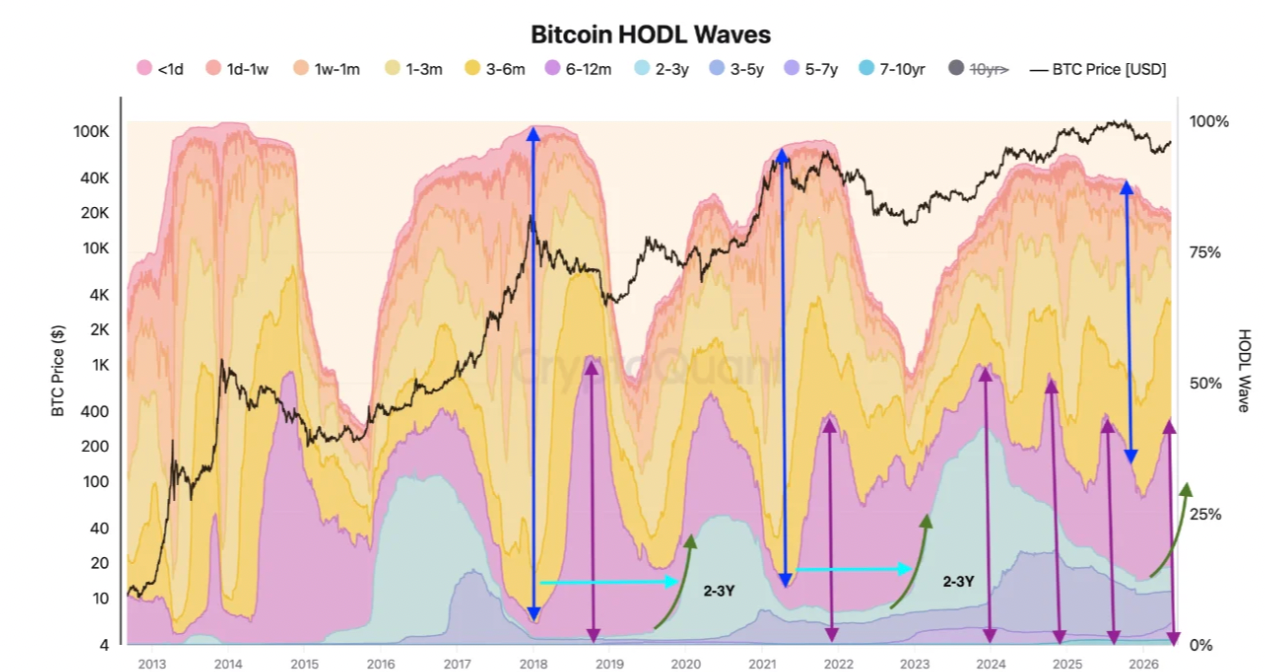
The Bitcoin HODL Waves indicator, which tracks how long BTC remains unmoved in wallets, suggests a possible bottom in the $65,900–$70,500 range if the weakness continues.
Bitcoin HODL wave indicator. Source: CryptoQuant
In a Tuesday post, CryptoQuant analyst Sunny Mom said a stronger long-term holder base may help BTC form a higher, slower bottom this cycle, with $70,500 as the key level to hold.
South Carolina has enacted a new law aimed at establishing a clear and supportive framework for cryptocurrency use, marking one of the most comprehensive state-level efforts to date.
Governor Henry McMaster signed Senate Bill 163 into law on May 19 after it passed the legislature with strong bipartisan support, clearing the Senate in a 38–1 vote and the House in a 110–1 vote. The measure amends the state’s legal code to define key digital asset activities while outlining protections for users, businesses, and infrastructure tied to the sector.
At the core of the legislation is a provision that affirms the right of individuals and businesses to use digital assets like bitcoin in commerce. The law states that no entity may be prohibited from accepting cryptocurrencies as payment for goods and services.
It also guarantees the right to hold assets in self-hosted or hardware wallets, reinforcing the principle of self-custody.
The bill further prevents South Carolina and local governments from imposing additional taxes or fees on transactions that involve digital assets when those assets are used as a method of payment. Lawmakers framed this provision as a way to ensure parity between digital assets and U.S. dollars in commercial use.
South Carolina: No CBDC use by state actors
Another key element of the South Carolina law is its stance on central bank digital currencies. The legislation bars any state agency, department, or political subdivision from accepting or requiring payments in a CBDC.
It also prohibits participation in any testing program tied to a Federal Reserve-issued digital currency. The measure reflects concerns among some policymakers about privacy, financial surveillance, and federal overreach.
The law also includes protections for cryptocurrency mining operations, a sector that has sought clearer rules at the state level. Local governments are restricted from imposing limits on mining businesses in industrial zones that differ from those applied to other industries in the same areas. Noise regulations must align with general standards rather than rules that target mining operations.
In addition, several crypto-related activities are exempt from money transmitter licensing requirements. These include mining, running network nodes, developing blockchain-based software, and engaging in crypto-to-crypto transactions.
Other States passing pro-bitcoin measures
South Carolina joins a growing group of states pursuing legislation that supports digital asset adoption. Kentucky passed a similar measure in 2025 that protected self-custody rights and limited local restrictions on mining. Missouri’s House Bill 2080, introduced by Ben Keathley, would also establish a state-managed Bitcoin reserve fund allowing the treasurer to acquire, hold, and oversee bitcoin under strict custody, reporting, and long-term holding requirements.
The passage of S. 163 signals a continued push at the state level to shape crypto policy in the absence of a unified federal framework, with lawmakers seeking to attract investment while addressing concerns tied to emerging financial technologies.