
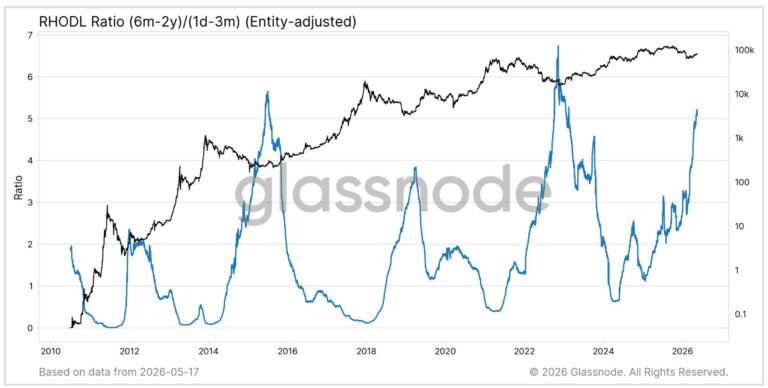
Realized cap stabilization, historically elevated RHODL readings and deeply negative funding rates all point toward a potential cycle low for bitcoin forming earlier this year.
CoinDesk 20 performance update: Uniswap (UNI), up 3.7%, leads index higher
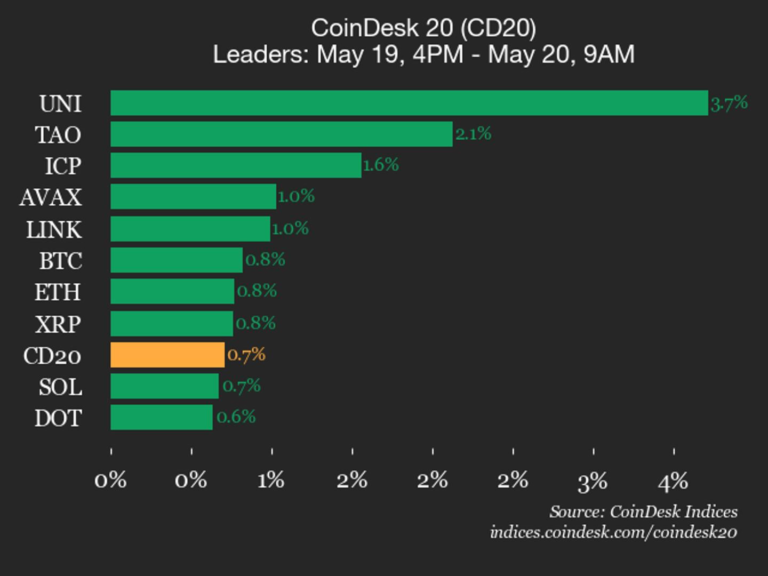
Bittensor (TAO) gained 2.1%, joining Uniswap (UNI) as a top performer.
Bitcoin Momentum Weakens as BTC Price Support at $75K Becomes Key

Market analysts say Bitcoin (BTC) is showing “momentum exhaustion” after its 8% drop from multi-month highs above $82,000, with bulls expected to defend key crucial support levels.
Key takeaways:
- Bitcoin momentum weakens after rejection above the $82,000 level.
- Analysts warn BTC could fall to $65,000 if support at $74,000-$76,000 fails.
Bitcoin’s price momentum is “weakening”
Private wealth manager Swissblock stated that Bitcoin’s momentum is fading following failure to “sustain expansion” above $82,000.
Swissblock said that Bitcoin’s positive momentum has been losing “force with every bounce,” contributing to the latest drop to $76,000.
Related: Bitcoin price stays under $77K as US bond yields near 20-year highs
Bitcoin is now trading at $77,200, with the true market mean and the short-term holder cost basis around $78,000 now acting as immediate resistance.
“Bitcoin is losing its capacity to regenerate strong positive momentum internally,” the wealth manager said, adding:
“Momentum exhaustion is not the breakdown itself. It is the process that usually comes before it.”
Bitcoin performance impulse. Source: Swissblock
Echoing this observation, analyst Axel Adler Jr pointed out that Bitcoin’s slow impulse performance indicator has “turned negative for the first time since April,” adding:
“Momentum is fading exactly as macro pressure is rising. Without Slow back above zero, every rally is unconfirmed.”
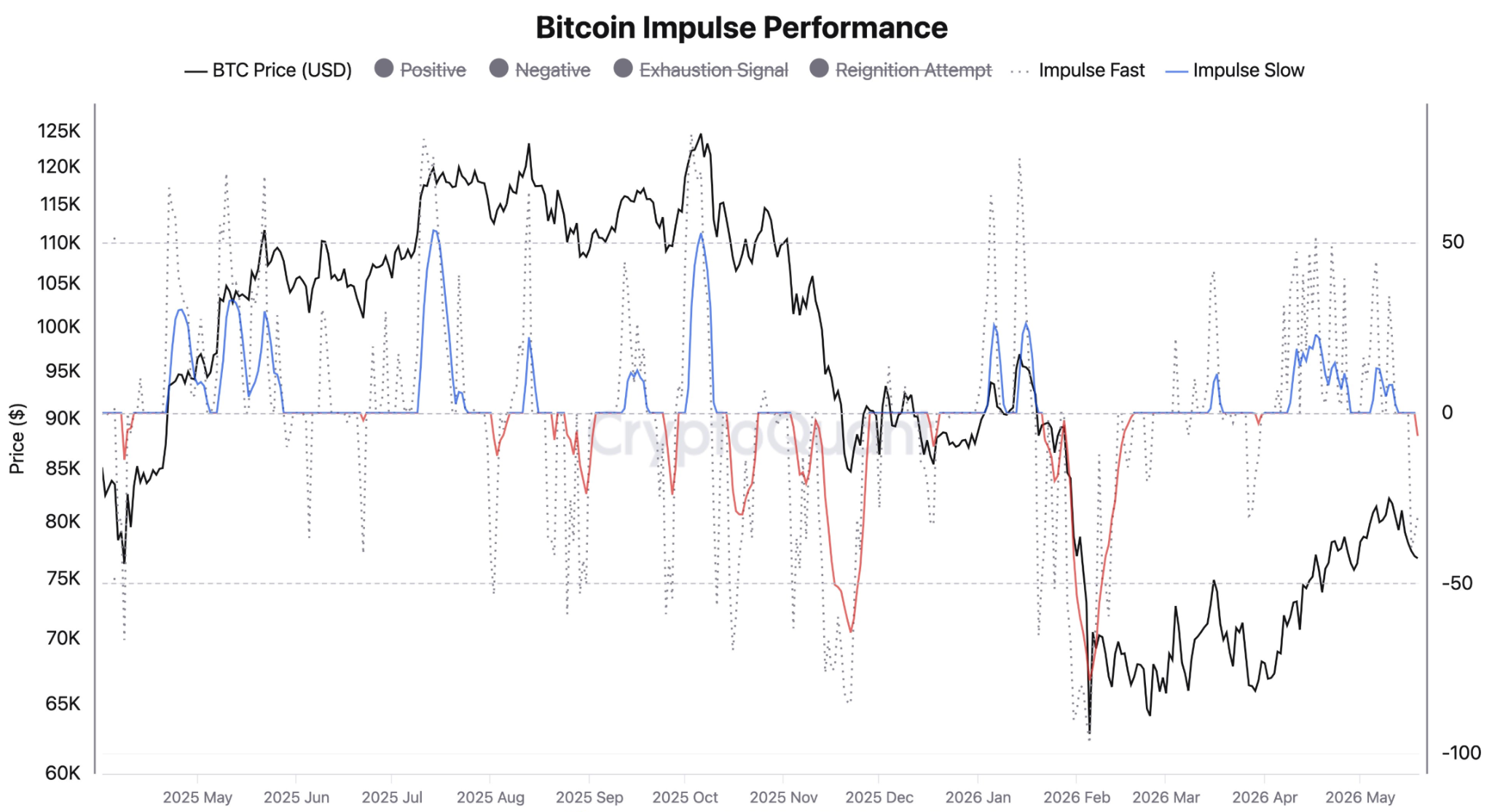
Bitcoin impulse performance. Source: CryptoQuant
Bitcoin’s price momentum indicator has also decreased significantly, falling by 29% over the last week to 47.1 from 66.7, indicating a “shift from strong upward to weakening momentum,” Glassnode said in its latest Market Pulse report, adding:
“Bitcoin’s market structure is beginning to soften as momentum, spot demand, and speculative positioning weaken across the market.”
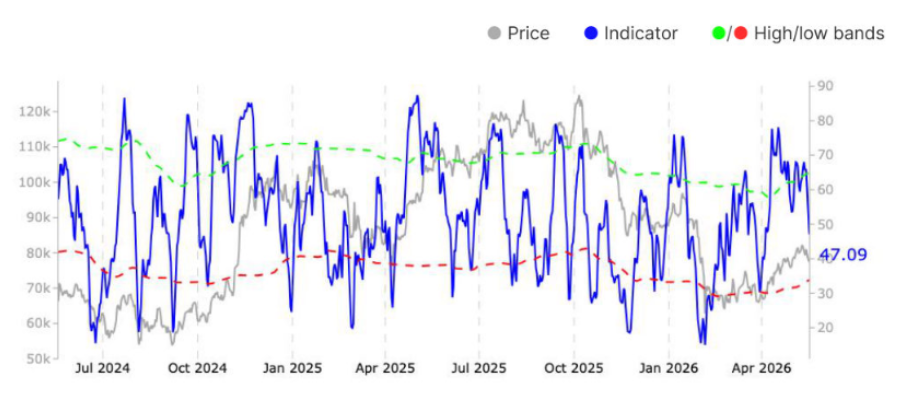
Bitcoin price momentum. Source: Glassnode
Key Bitcoin support levels to watch
As Cointelegraph reported, Bitcoin’s upside hinges on bulls keeping the price above the $74,000-$75,000 zone, as it has repeatedly served as key support over the last two years.
This is where the key moving averages are found, including the 50-day exponential moving average (EMA), the 100-day 100-day EMA and the 50-day simple moving average (SMA), as shown in the chart below.
This reinforces the importance of this demand zone and the fact that BTC/USD has not yet dipped below, “may be the most bullish thing” for Bitcoin, trading resource Material Indicators said in a recent X post.
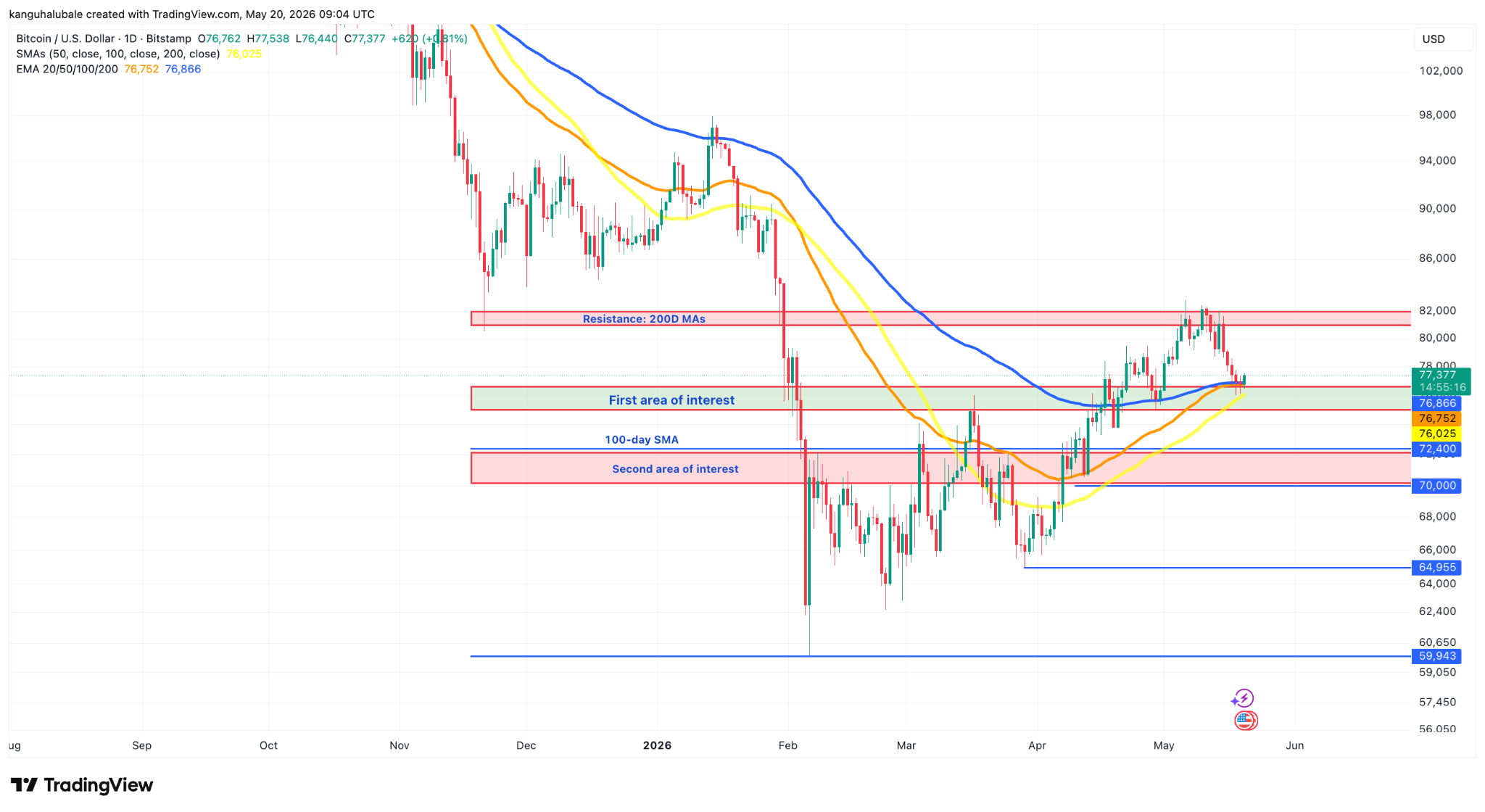
BTC/USD daily chart. Source: Cointelegraph/TradingView
The second area of interest lies between $72,000 (100-day SMA) and the psychological level at $70,000.
If this level is lost, BTC price could drop to $65,000 or later revisit the macro low below $60,000, reached on Feb. 6.
Analyst Daan Crypto Trades Bitcoin said that if the support at $75,000-$76,000 is lost, the BTC/USD pair would retest the $72,000 “level pretty quickly.”
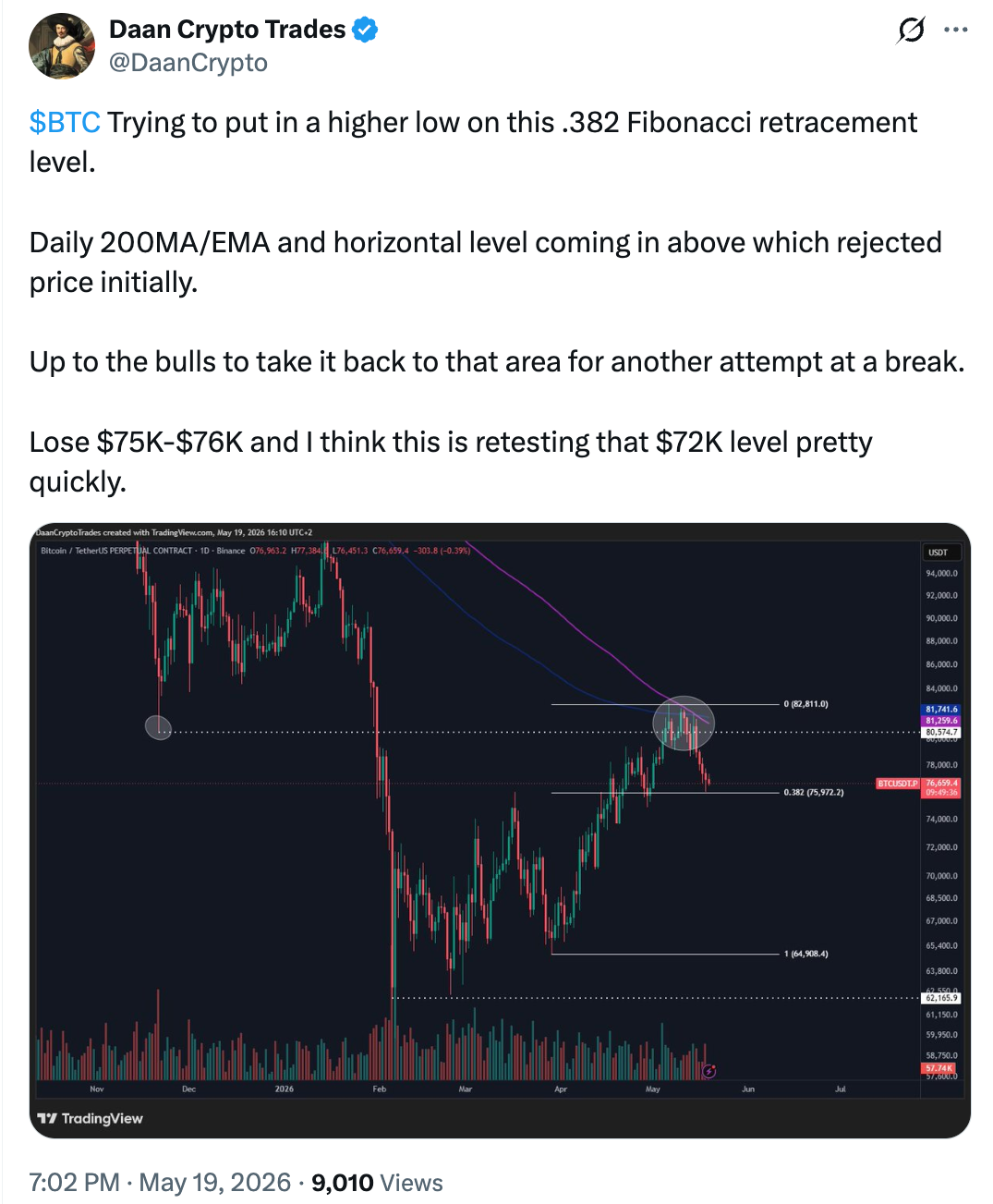
BTC/USD daily chart. Source: X/Daan Crypto Trades
Zooming out, trader CryptoAmsterdam said it would be “good” if the BTC/USD pair held support at $74,000-$76,000 (the orange area on the three-day chart below) with other areas of defense around $72,000.
The analyst sets downside targets at $60,000 and $50,000 in case these support levels are breached.
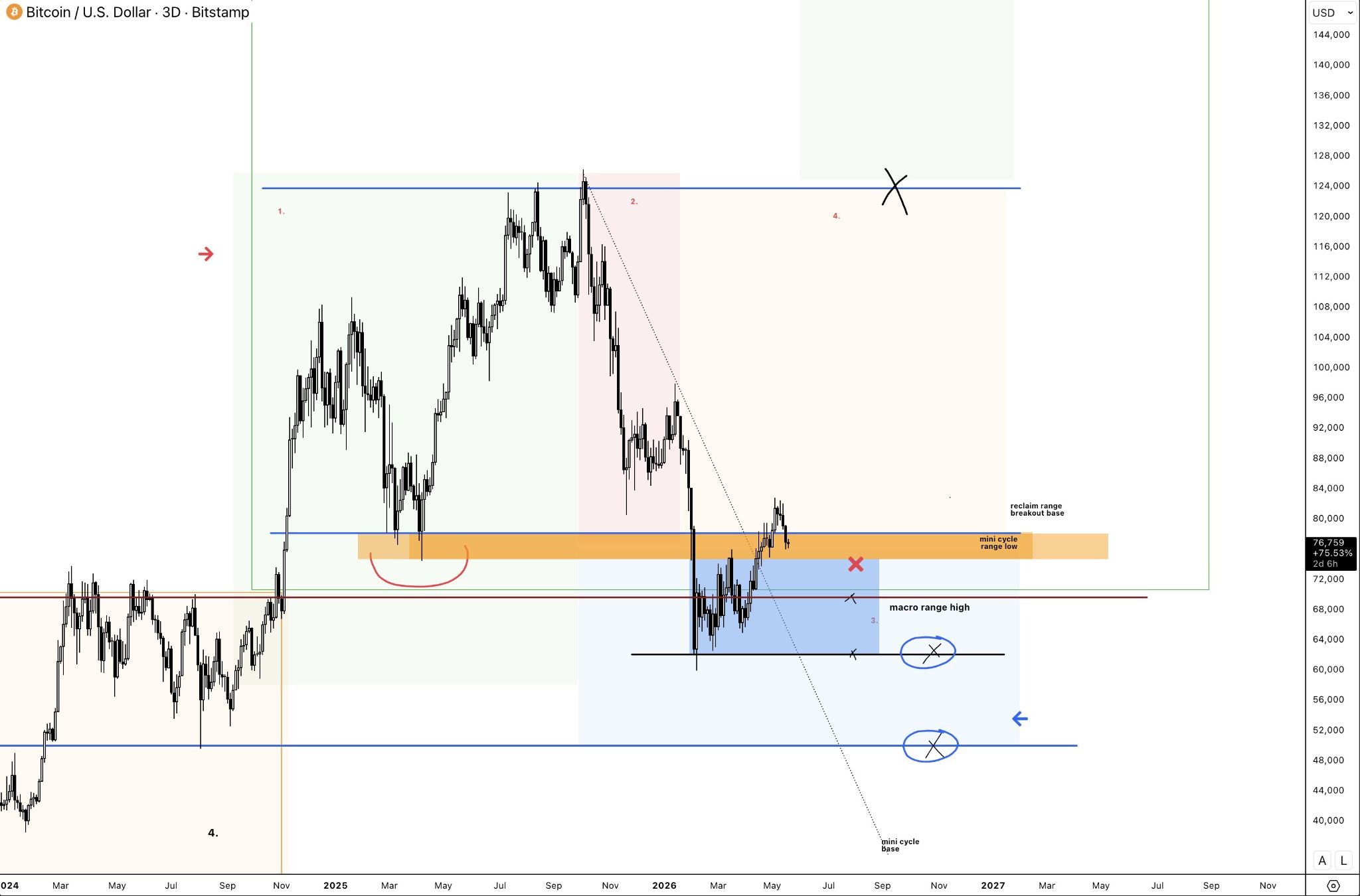
BTC/USD three-day chart. Source: X/CryptoAmsterdam
As Cointelegraph reported, a key support level for the bulls was the 50-day SMA at $75,600, which, if lost, could see the BTC/USDT pair sink to $65,000.
South Carolina Governor Signs Bill Protecting Bitcoin Miners and Banning CBDC Payments

South Carolina Governor Henry McMaster signed Senate Bill 163 into law on Tuesday, advancing one of the most crypto-friendly state-level frameworks in the country.
The bill, which previously passed the Senate 38-1 and the House 110-1, bans state agencies from accepting central bank digital currencies (CBDCs), protects the rights of crypto users and miners, and clears regulatory hurdles for businesses operating in the space.
On CBDCs, the law bars any state agency or political subdivision from accepting, requiring payment in, or participating in Federal Reserve-led digital currency trials, including any pilot programs run by federal agencies.
It also protects crypto self-custody rights, preventing governments from restricting the use of hardware and self-hosted wallets while barring higher taxes on crypto transactions than comparable payments made in US dollars.
Related: Senate Crypto Bill Might Pass as Late as August: NYDIG
South Carolina protects Bitcoin miners
The bill gives Bitcoin miners operating in industrial zones specific protections. Local governments cannot impose restrictions on mining businesses that do not apply to other industrial operations in the same area, and cannot set mining-specific noise limits beyond what general pollution rules already require.
“A political subdivision shall not change the zoning of a digital asset mining business without going through the proper notice and comment. A digital asset mining business may appeal a change in zoning to the proper court of jurisdiction,” the bill reads.
Source: South Carolina State House
The law also exempts several activities from money transmitter licensing requirements, including mining, node operation, blockchain software development and crypto-to-crypto trading. Mining-as-a-service and staking-as-a-service providers are excluded from securities classification.
Related: Polish lawmakers back revised crypto bill after repeated vetoes
More states pass crypto-friendly bills
South Carolina joins a growing list of states staking out pro-crypto positions. Kentucky passed the Bitcoin Rights bill in March last year, guaranteeing self-custody rights and shielding mining operations from discriminatory local rules.
Oklahoma, Arkansas, Florida, Mississippi, Montana, North Dakota, Louisiana and Arizona are among the states that have passed similar pieces of crypto legislation in recent years.
Magazine: Will the CLARITY Act be good — or bad — for DeFi?
Bitcoin rebounds above $77,000. Analysts weigh in on whether the bounce has legs.

Your day-ahead look for May 20, 2026
Bitcoin Battles ‘Collapsing’ Bond Markets as Week Starts With Trip to $76,500
Bitcoin (BTC) starts a new week under pressure as support levels fade and macro gloom intensifies.
Key points:
- Bitcoin falls below a key 21-week trend line after the weekly close, but hopes of a “bear trap” rebound remain.
- US-Iran war rhetoric continues to push oil higher, pressuring crypto markets.
- Those tensions could still be countered by strong PMI and Nvidia earnings data in the coming days.
- Bitcoin whales are acting as if the bottom is already in, per new analysis.
- Despite this, a surge in exchange inflows from a key investor cohort raises alarm over “capitulation.”
BTC price analysis sees relief bounce after sub-$77,000 dip
Bitcoin felt the pressure as the new weekly candle began, dropping to $76,500 — its lowest levels since May 1, per data from TradingView.
After several support retests, BTC/USD began to fall through recently recovered ground, which included the 21-week exponential moving average (EMA) at $78,660.
BTC/USD one-day chart with 21-week EMA. Source: Cointelegraph/TradingView
With it, price fell back below the bull market support band.
“Another weekly close at it for now, but to confirm a proper breakout you’d need to see a bounce now,” trader Daan Crypto Trades wrote in X analysis before the trip toward month-to-date lows.
“If this ends up falling back below that $75K-$76K area and closes there on the weekly, then this was just a big deviation/dead cat bounce in my eyes.”
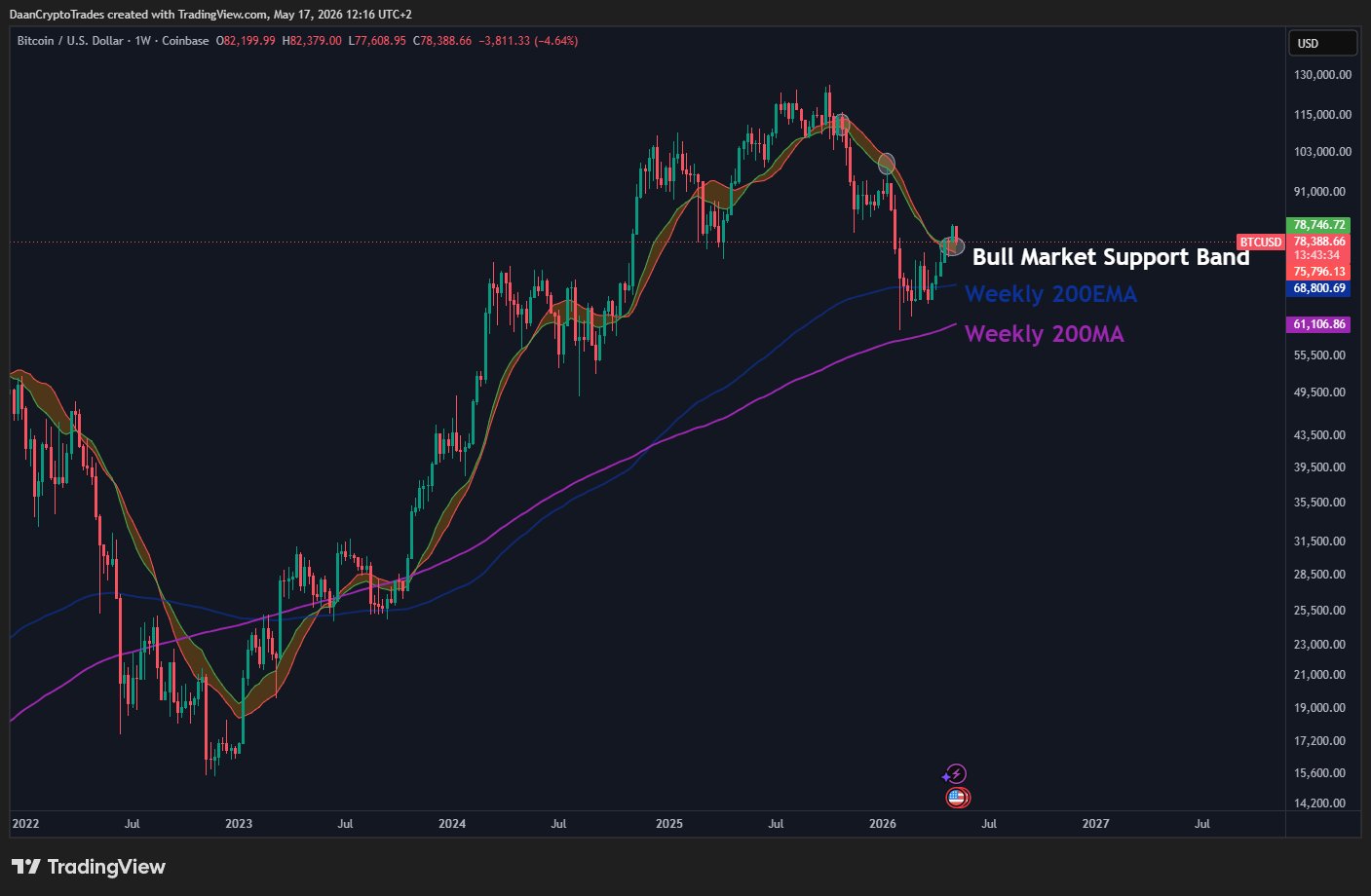
BTC/USD one-week chart. Source: Daan Crypto Trades/X
The downside cost BTC long positions, with cross-crypto long liquidations for the 24 hours to the time of writing passing $670 million.
Data from CoinGlass also shows potential liquidations building either side of spot price, providing fuel for liquidity grabs both up and down.
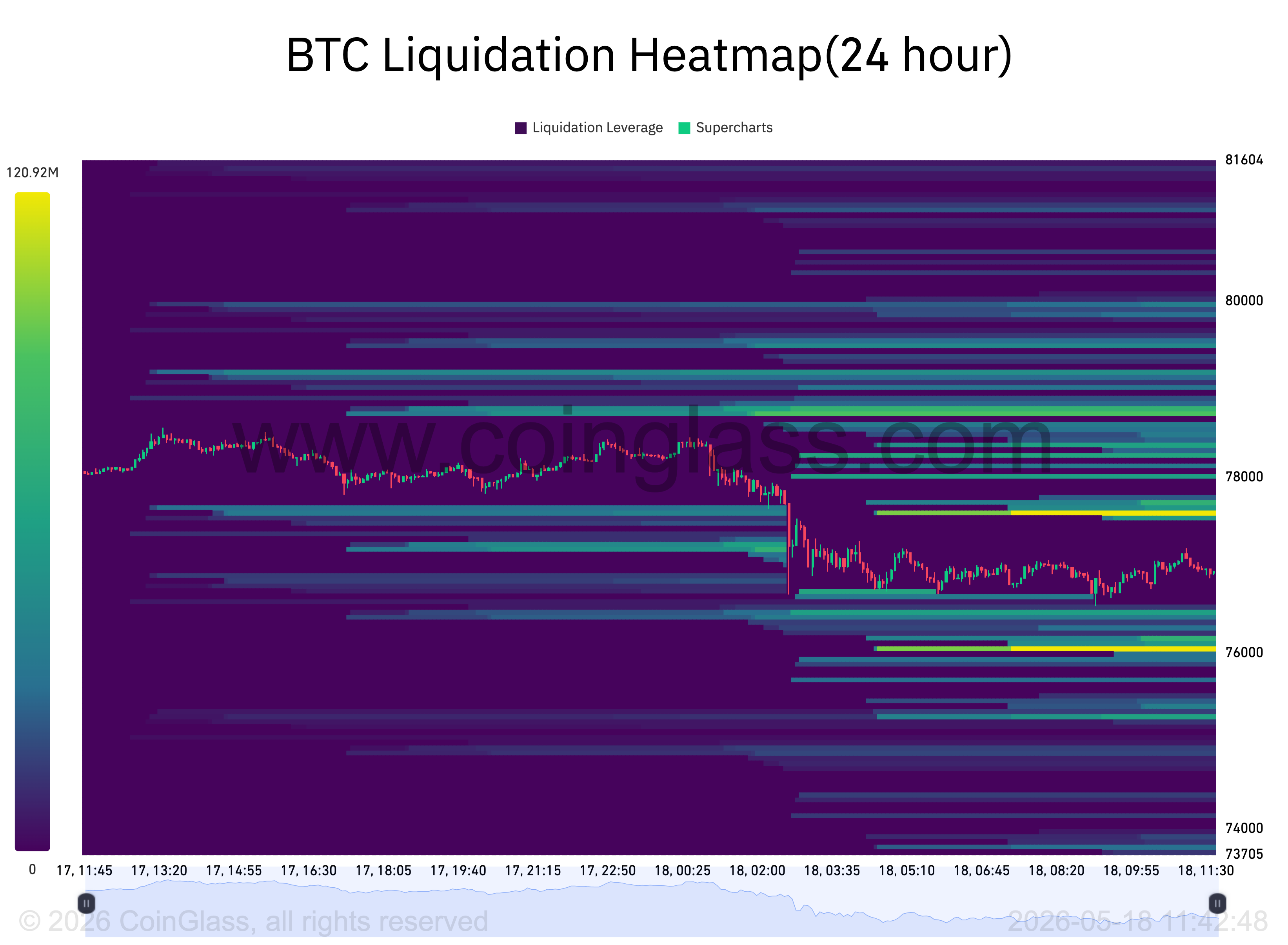
BTC liquidation heatmap. Source: CoinGlass
Commenting, trading account Cryptic Trades saw a bounce coming next due to the magnitude of liquidated longs.
“$BTC has just tapped into the prior Breakout Zone at $75K-$76K,” it told X followers.
“Expecting a bounce here, as the longs I covered in my prior alert also got flushed.”
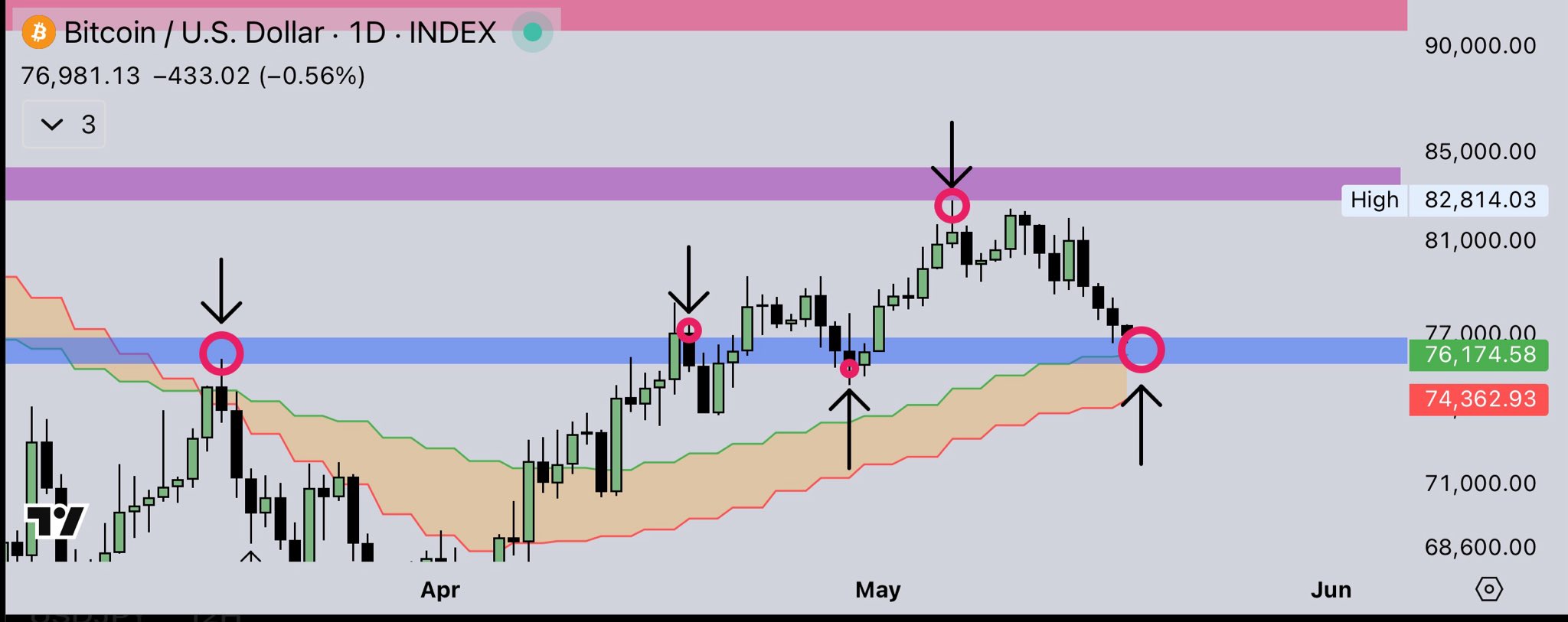
BTC/USD one-day chart. Source: Cryptic Trades/X
At the weekend, Cryptic Trades suggested that any downmove would have the markings of a classic “bear trap,” given rising open interest and negative funding rates.
“This shows us that bears are DOUBLING DOWN right now and betting on a breakdown,” it wrote.
“It also shows that even though the market structure remains intact, bears are shorting as if a breakdown already happened. That’s generally how bear-traps are formed.”
US bond markets “collapsing in real time”
While light on US macro data, the coming week is already shaping up to be a tricky one for crypto traders.
Tensions over the US-Iran war are returning, with the prospect of the Strait of Hormuz oil route fully opening still absent.
In a post on Truth Social over the weekend, US President Donald Trump wrote that the “clock is ticking” for Iran, without giving specific details.
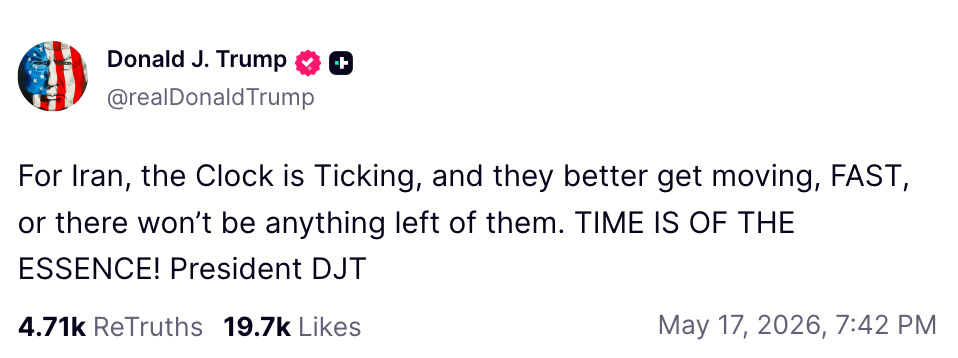
Source: Truth Social
Additional reports claimed that Trump was convening a security meeting to discuss “military options in Iran,” per trading resource The Kobeissi Letter.
Oil futures reacted sharply at the weekly open, with WTI crude reaching near two-week highs of $104.45.
“The impact on energy prices from the war in the Middle East is pushing inflation to its highest level in years,” analytics resource Mosaic Asset Company commented in the latest edition of its regular newsletter, The Market Mosaic.
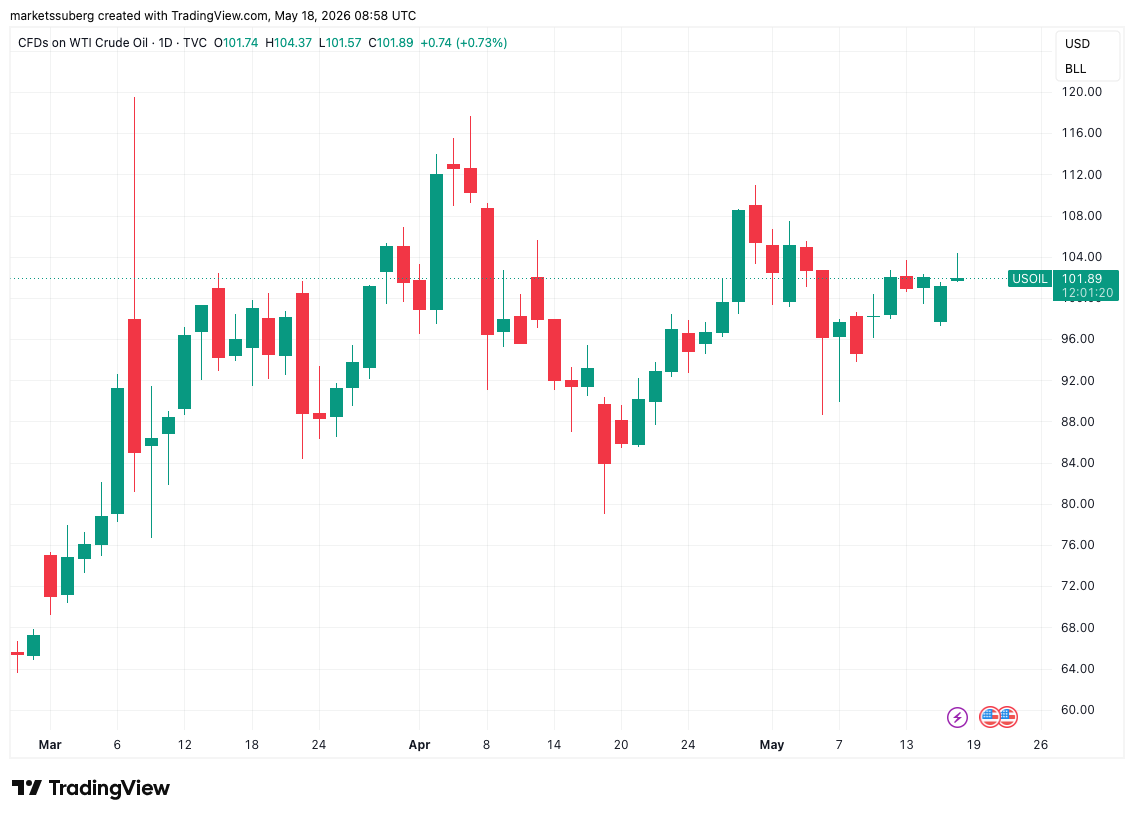
CFDs on WTI crude oil one-day chart. Source: Cointelegraph/TradingView
Like others, Mosaic tied high oil prices to surging US inflation prints.
“While a spike in energy prices are helping drive inflation higher, the most recent reports continue a trend of growing price pressures,” it continued.
US bond markets, meanwhile, continue to sum up the about-turn in market sentiment, as “unsustainable” yield growth wipes out the odds of interest-rate cuts by the Federal Reserve.
“On Friday, the 30-year Treasury yield jumped above the 5% level which is the high tested several times over the past couple years. A sustained breakout could have serious implications at a time when federal debt and deficit spending is surging,” Mosaic warned.
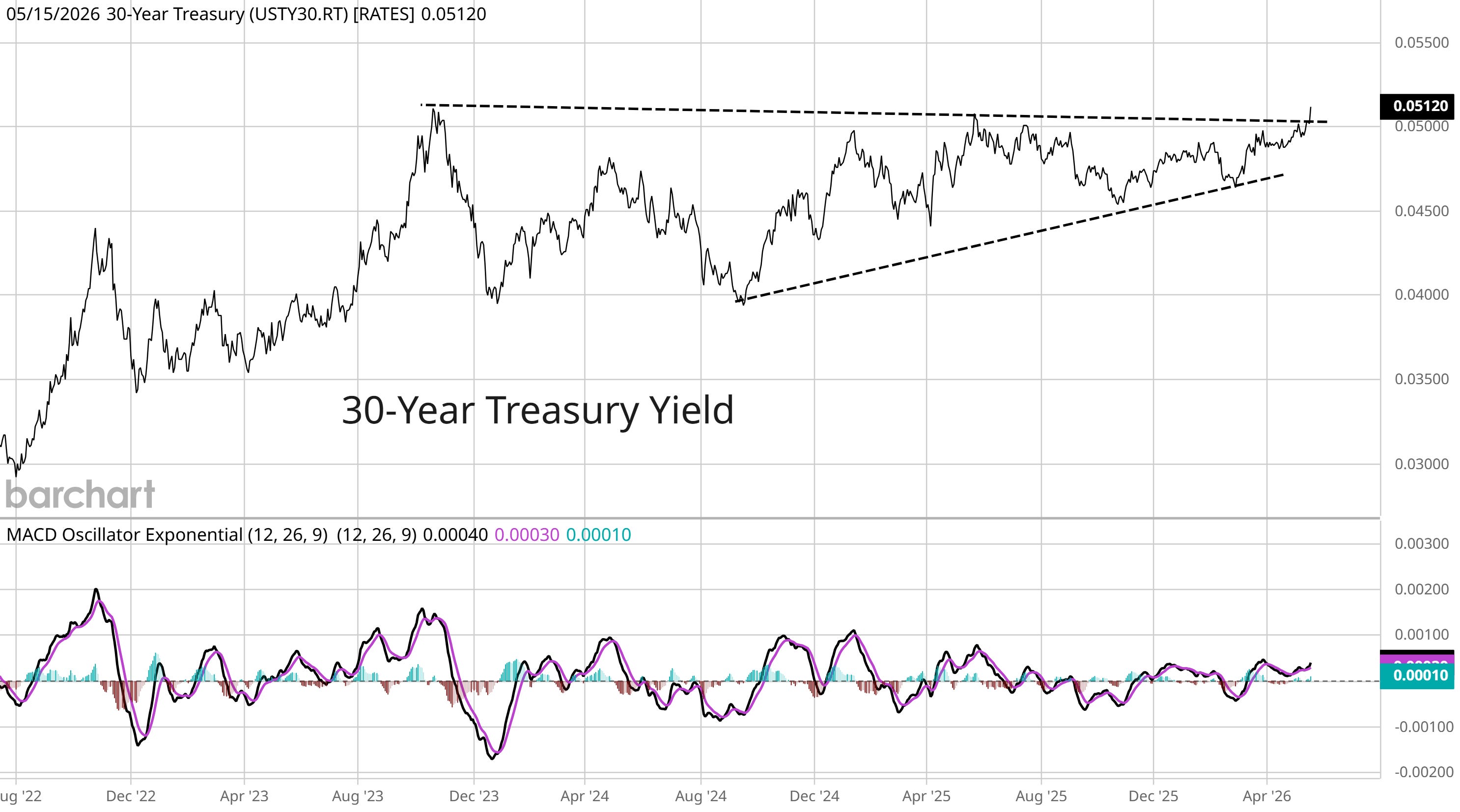
US 30-year treasury yield chart. Source: Mosaic Asset Company
Kobeissi described the US bond market as “collapsing in real time.”
“And, in a sudden turn of events, the odds of rate cuts have collapsed to 2% this year and US inflation is nearing 4%+,” it noted on X.
PMI, Nvidia earnings give crypto bulls hope
Amid the chaos, a silver lining could come in the form of manufacturing data.
The latest S&P Manufacturing Purchasing Managers Index (PMI) report, due out on Thursday, should ideally continue a breakout that began earlier in 2026.
Bitcoin and risk assets reacted positively to the development, which ended several years of PMI contraction.
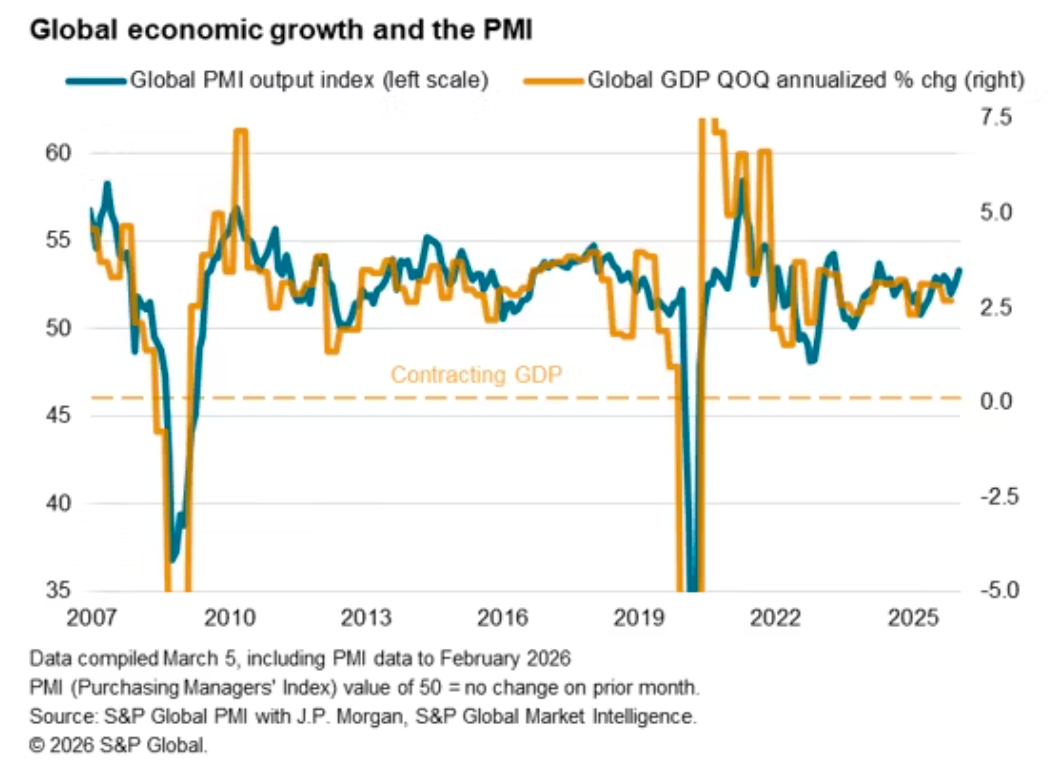
Global PMI versus GDP data (screenshot). Source: S&P Global
Major tech earnings are also lining up to potentially offer markets a boost in the event that they surpass expectations. Nvidia will report on Wednesday — something that Kobeissi even calls the “biggest earnings event of the quarter.”
Commenting on the outlook for market volatility, independent macro and market strategist Michael J. Kramer cautioned that bulls may ultimately suffer.
“NVIDIA once again finds itself heavily overloaded with call positioning, and unless the stock sees a meaningful pullback ahead of earnings that helps reengage put demand, I think the most likely outcome is another post-earnings sell-off,” he wrote in an X thread on Sunday.
Kramer predicted a surge in implied volatility toward Friday’s options expiry event.
“So unless NVIDIA is able to truly blow traders away with its results, the stock likely faces the usual ‘sell-the-news’ reaction, or, as I like to call it, the mechanical unwind,” he reiterated.
Bitcoin whales brush off hawkish Fed signals
In its latest market overview, onchain analytics platform CryptoQuant examined the relationship between Fed policy and the actions of Bitcoin whales.
These large-scale investors, often tied to “smart money” and a key yardstick for long-term market trajectory, could be signalling that the outlook is not as bad as sentiment shows.
“Tracking their moves offers us a backdoor view into how the biggest players are reading the room, which in turn helps us stress-test and refine our own market thesis,” contributor Joohyun Ryu wrote in a QuickTake blog post this week.
“To cut straight to the chase, the good news is that whale wallet balances haven’t shown any dramatic shifts.”
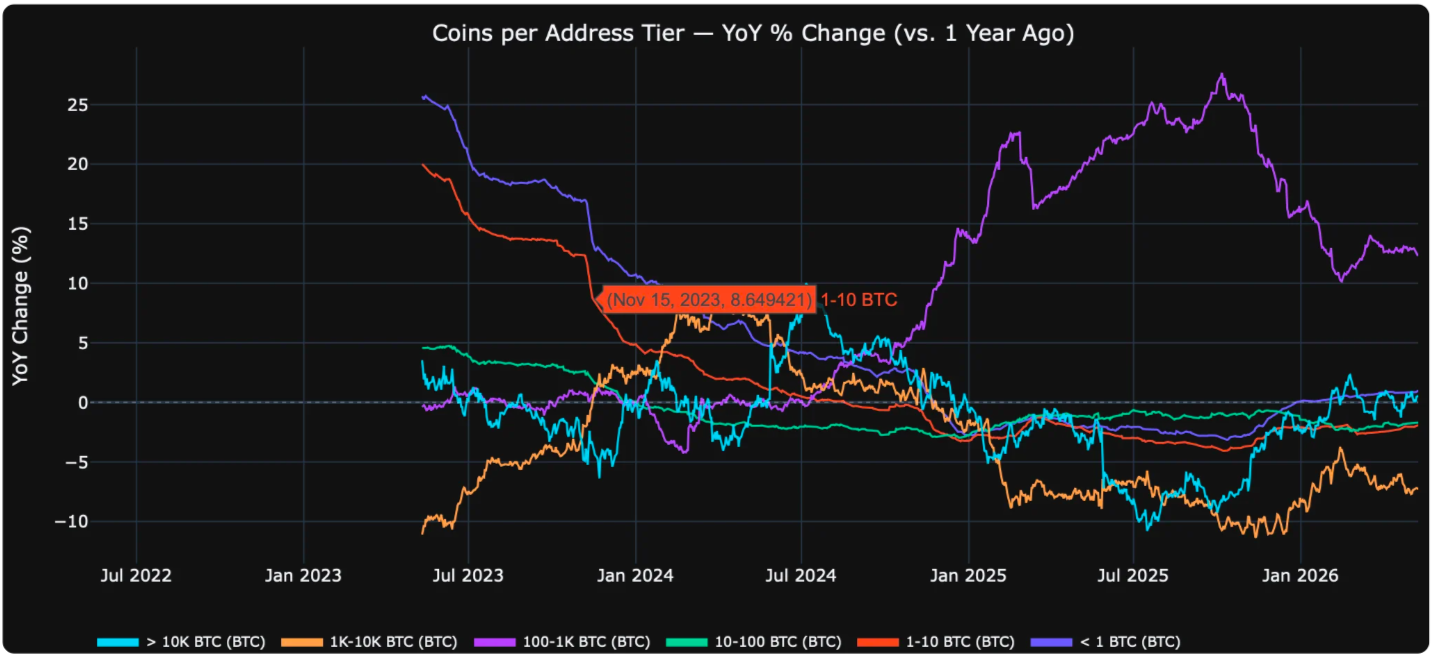
BTC holdings per address tier (screenshot). Source: CryptoQuant
Analyzing whale holdings, Joohyun argued that despite the odds of rate cuts disappearing for both 2026 and 2027, there appears to be no real cause to reduce risk exposure. Some cohorts are even adding to their holdings.
“On top of that, the ultimate mega-whales—those holding over 10K—are finally seeing their bags recover to levels we haven’t seen since last year,” he continued.
“Judging by these trends, it looks like the whales are betting that the market has officially bottomed out. That said, this isn’t a full-blown buying frenzy just yet, so it’s still wise to proceed with caution.”
Traditionally, financial tightening and an inflationary environment pressure crypto prices — a phenomenon most recently seen during the 2022 bear market.
Long-term holders lose their nerve
For the time being, however, sell-side pressure remains a key threat to Bitcoin.
Related: Bitcoin price history suggests 77% odds of new all-time high within a year
Specifically, CryptoQuant notes a pronounced uptick in exchange inflows from wallets that bought BTC between six and 12 months ago.
“Bitcoin is not facing a simple short-term correction, but a structurally driven crisis fueled by cascading leverage liquidations and deep spot-market fear.,” contributor Easy OnChain warned.
“On-chain data shows a clear ‘cascading dumping’ pattern, where capitulation from long-term holders triggers panic selling among short-term investors.”
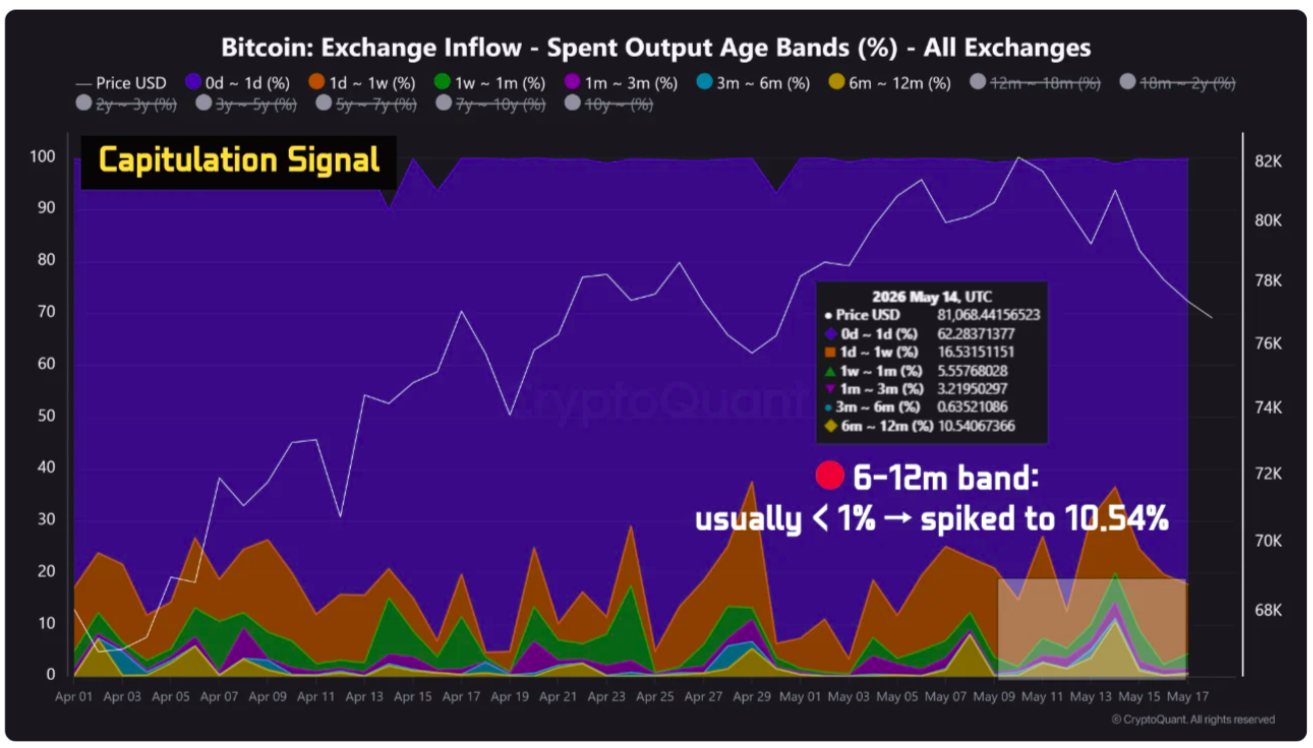
Bitcoin exchange inflows data (screenshot). Source: CryptoQuant
The former cohort, hodling for up to 12 months, has accounted for 10.54% of exchange inflows since May 14 — more than 10 times normal levels.
For CryptoQuant, this signals “large-scale capitulation.”
“Historically, this reflects investors locking in major losses and exiting the market, creating severe spot-market selling pressure,” Easy On Chain continued, noting contagion spreading to speculators.
“The current decline is therefore an internally driven market crisis caused by derivative liquidations, large-scale long-term holder capitulation, and cascading panic from short-term participants,” it added.
“Until this toxic supply is fully absorbed and sentiment stabilizes, a rapid V-shaped recovery remains unlikely.”
Despite Trump’s pledge, a CBDC is being explored behind closed doors, says former CTFC chair

Publicly, the U.S. has fiercely opposed a Central Bank Digital Currency, but former CFTC Chairman Timothy Massad said it is inevitable and there will be one sooner or later.
Pan-European stablecoin effort expands to 37 lenders in push back against U.S. dollar dominance

Qivalis, a stablecoin initiative backed by a group of European banks, aims to issue a stablecoin later this year to deepen the euro’s role in tokenized finance.
Goldman Sachs Cuts Crypto ETF Exposure, Rebalances Holdings

US investment bank Goldman Sachs sharply reduced its exposure to cryptocurrency exchange-traded funds (ETFs) in the first quarter of 2026.
No XRP-linked ETFs appeared in Goldman Sachs’ Q1 Form 13F filing with the US Securities and Exchange Commission.
In its Q42025 13F filing, Goldman Sachs reported holding nearly $154 million worth of XRP-related ETFs from Bitwise, Franklin Templeton, Grayscale and 21Shares.
Goldman Sachs was the largest institutional holder of XRP-related ETFs as of Dec. 31, 2025. Source: James Seyffart
Quarterly 13F filings are closely watched by crypto investors because they provide a rare look into how major institutional asset managers are allocating capital across digital-asset investment products. The bank pulled back from XRP products, even as broader institutional interest in digital-asset ETFs remains intact.
Early pullback from new crypto ETFs
Goldman Sachs no longer reported any holdings in Solana-linked ETFs either.
The bank previously disclosed positions in Solana-linked ETFs, including the Grayscale Solana Trust ETF (GSOL), the Bitwise Solana Staking ETF (BSOL) and the Fidelity Solana Fund (FSOL).
Both XRP- and Solana-linked ETFs launched in late 2025, when issuers began rolling out a new wave of crypto funds beyond Bitcoin (BTC) and Ether (ETH).
Solana ETFs began trading in late October 2025, with additional funds rolling out in November. The first spot XRP ETFs hit the market in mid-November as issuers raced to bring new altcoin products to investors.
Goldman Sachs trims Bitcoin ETF exposure, but still holds more than $700 million
While no longer reporting ETF exposure to XRP and Solana, Goldman Sachs continued to hold significant positions in Bitcoin and Ether ETFs, along with equity tied to crypto companies.
The bank held about $690 million in BlackRock’s iShares Bitcoin Trust ETF (IBIT) and another $25 million in the Fidelity Wise Origin Bitcoin Fund (FBTC), even after reducing both positions by roughly 10% during the quarter.
Goldman Sachs also cut its position in the iShares Ethereum Trust (ETHA) by about 70%, leaving it with roughly 7.2 million shares valued at around $114 million.
Related: JPMorgan piles into BlackRock’s Bitcoin ETF in Q1 2026
In crypto equities, Goldman Sachs increased its exposure to several names, led by a 249% jump in Circle Internet Group (CRCL) and a 205% rise in Galaxy Digital (GLXY), while also adding to positions in Coinbase Global (COIN), Robinhood Markets (HOOD) and PayPal Holdings (PYPL) during the quarter.
At the same time, it reduced stakes in major mining and infrastructure names, including BitMine Immersion Technologies (BMNR), Bit Digital (BTBT) and Riot Platforms (RIOT). It reduced positions in Strategy (MSTR) and IREN (IREN).
Magazine: XRP ‘probably going to $12,’ Bitcoin ETFs add $1B: Market Moves
Bitcoin is falling, bond yields are rising. Yet BTC’s implied volatility, an uncertainty gauge, remains low.

BTC’s implied volatility remains low despite the recent price selloff. Options specialist prefers a long straddle strategy in this scenario.