Home Blog Page 269

Can XRP Catch Up To SWIFT? This Latest ISO Is Changing The Game

0

A crypto analyst has said that the global banking system is about to be forcibly changed, as a new SWIFT mandate sets a critical deadline that could change XRP and Ripple forever. ISO 20022 is SWIFT’s new global messaging standard for cross-border payments, and the change is set to take full effect in November 2026. The analyst said that SWIFT will shut down the older unstructured messaging, forcing every major bank onto a new system. He also suggests this could have major implications for XRP, as it aims to serve as a global bridge asset for cross-border transfers.

SWIFT’s ISO 20022 To Overhaul Unstructured Messaging

In a YouTube video released on May 10, a market analyst known as Cheeky Crypto said that SWIFT is about to bring “the death of legacy banking data.” He noted that the new ISO 20022 mandate will remove unstructured addresses within the SWIFT network by November 2026. According to him, if banks fail to comply with these new standards, their transactions will not be cleared or processed.

Cheeky Crypto explained that over the past few decades, traditional banks have consistently relied on messy manual data-entry systems, which often lead to failed or delayed transactions. However, SWIFT is ending this era and introducing new solutions backed by structured data that run on blockchain technology.

Notably, Cheeky Crypto said he spent the last few days researching XRP’s role within this upcoming global money shift. He noted that as legacy systems prepare for a major change, institutions are being backed into a corner because they do not have the time or money to build compliant systems of their own. Because of this, he said banks are now looking for existing bridges like XRP that are already cleared by regulators. He noted that trillions of dollars from these institutions are set to move into blockchain-ready solutions like XRP, to ensure global liquidity continues to flow effectively.

According to the analyst, institutional inflows into XRP-based products are already rising significantly ahead of the November deadline. He said the move is primarily driven by corporate entities desperate to remain operational before SWIFT shuts the door on its old unstructured messaging standards.

He also cited a statement by Ripple’s Executive Chairman, Chris Larsen, who said that legacy banking systems are built on weak foundations. Larsen noted that the upcoming “2026 mandate is the tide coming to wash away anything that isn’t structured, verified, and compliant.” 

XRP Ledger Presented As Better Alternative For Banks

In his video, Cheeky Crypto also stated that banks are now showing strong interest in the XRP Ledger as legacy systems break down and they build stronger ones. The analyst noted that XRP is built to handle the exact type of structured data SWIFT is trying to build instantly. 

To back this up, Cheeky Crypto has compared the average transaction time and cost of legacy cross-border transfers with those of the XRP Ledger settlement. He says that legacy systems tend to take 3-5 days and cost a fortune in hidden fees. Meanwhile, the Ledger settles a transaction in roughly 3-5 seconds for a fraction of a penny. 

MoonPay Acquires Dawn Labs, Launches AI Trading Agent Dawn CLI

0

MoonPay, the leading global crypto payments network, announced the acquisition of Dawn Labs, an applied research lab focused on artificial intelligence and financial markets, and the launch of Dawn CLI, an AI-native technology tool for trading. The move reflects MoonPay’s broader push to build AI-native infrastructure for financial services.

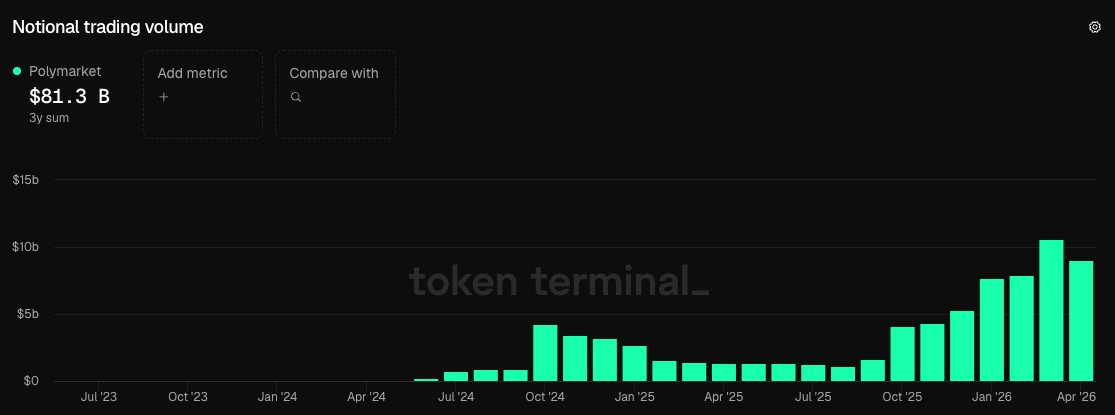
Prediction markets are one of the fastest-growing categories, attracting a new generation of active traders across platforms like Polymarket and Kalshi. These traders use signals from social media, automated strategies and cross-platform positioning, but the infrastructure required for high performance remains fragmented, manual and technically demanding.

Building and deploying a trading strategy has traditionally required expertise across research, software development and portfolio management. Dawn CLI is designed to simplify that process. Users describe a strategy in plain English, and Dawn CLI converts it into executable code, conducts automated user research and simulation, and executes user-directed trades autonomously on supported trading venues.

Dawn Labs was founded in 2025 by Neeraj Prasad. He studied Computer Science and Engineering at MIT, where he conducted machine learning research in the university’s neuroscience labs. Before founding Dawn, Neeraj held engineering roles at Waymo, Microsoft, Citadel, and Reservoir Labs, spanning perception systems for autonomous vehicles, machine learning infrastructure, quantitative trading, and deep learning compilers. The acquisition brings Neeraj and the full Dawn team into MoonPay to advance its AI-native infrastructure strategy. Neeraj will serve as Chief Engineer of MoonPay Labs.

From Strategy to Execution

  • Dawn CLI manages the full trading lifecycle:
  • Natural language input: Users describe a strategy in plain English
  • Automated user research: The platform surfaces relevant data and market signals for the user to evaluate a strategy
  • Code generation and backtesting: Trading strategy code is generated and stress-tested automatically
  • Autonomous execution: Trades are executed continuously as directed by the user 

“The team at Dawn Labs have made the most complex parts of active trading accessible to anyone with an idea,” said Ivan Soto-Wright, CEO and Founder of MoonPay. “With Dawn, traders can direct AI agents to develop and execute sophisticated trading strategies autonomously.”

“We built Dawn to address the fragmentation traders face across research, strategy development and execution,” said Neeraj Prasad, Founder of Dawn Labs and Chief Engineer of MoonPay Labs. “Competing effectively has required expertise across multiple disciplines at once. Dawn brings those capabilities into a single autonomous system. Joining MoonPay allows us to scale that system to a broader audience.”

MoonPay’s Commitment to AI-Native Infrastructure

This acquisition is the latest step in MoonPay’s evolution toward AI-native infrastructure. Over the past year, the company has moved from on-ramp APIs to MoonPay CLI, MoonPay Agents with Ledger-secured hardware signing, and MoonAgents Card – a virtual Mastercard debit card that lets users and AI agents spend stablecoins directly from onchain balances anywhere Mastercard is accepted online. Each step has given AI agents more direct, programmable access to the financial layer. The launch of the Open Wallet Standard extended that infrastructure to every agent, every framework, and every chain. Dawn CLI represents the next step in that progression.

US Senate Banking Committee Releases Text for Crypto Market Structure Bill ahead of Markup

The recently released text of the Digital Asset Market Clarity Act (CLARITY) in the US Senate Banking Committee is raising some eyebrows among experts before a scheduled Thursday markup for provisions on housing and the lack of ethics language.

On Monday, three Republican lawmakers unveiled the text of the bill lawmakers will use to consider advancing crypto market structure legislation in the banking committee. It followed drafts released in July and September 2025, building upon discussions between crypto and banking industry representatives over stablecoin yield.

Text of CLARITY Act. Source: US Senate Banking Committee

However, the latest version includes provisions seemingly unrelated to crypto market structure. In the last pages of the legislation was a provision on housing called the Build Now Act, which, according to a section-by-section summary of the text, was aimed at creating “a pilot program to incentivize housing development of all kinds in certain Community Development Block Grant participating jurisdictions.”

According to Senators Tim Scott, Cynthia Lummis, and Thom Tillis, the bill reflected “continued negotiations with Democratic colleagues,” signaling bipartisan support in Thursday’s markup. However, some Senate Democrats, including Kirsten Gillibrand, said that they would not vote for market structure on the floor without clear provisions on ethics to address potential conflicts of interest.

“We have worked too hard on this bill to give up now,” Senator Angela Alsobrooks, who sits on the banking committee and announced the stablecoin yield compromise with Tillis, told Cointelegraph. “My hope is to get to a bipartisan markup on Thursday with a compromise on ethics.”

Related: Seven Democrats seen as ‘key’ to advancing CLARITY Act: Galaxy

The CLARITY Act is expected to give the Commodity Futures Trading Commission (CFTC) more authority in overseeing and regulating digital assets, in a shift of roles usually handled by the Securities and Exchange Commission (SEC).

The Senate Agriculture Committee passed its version of the bill in a January markup, but the legislation must pass the banking committee, full Senate, and reconcile in the House of Representatives before potentially being signed into law.

What‘s in the bill?

CLARITY explicitly prohibits paying interest or yield on payment stablecoins, with the exception of “rewards or incentives based on bona fide activities or bona fide transactions that are not economically or functionally equivalent to the payment of interest or yield on an interest-bearing bank deposit.”

The bill also included language from the Blockchain Regulatory Certainty Act, legislation proposed to protect developers from money transmitter requirements. The advocacy organization DeFi Education Fund said in a Monday X post that it was “encouraged by the direction of recent negotiations” over the bill, noting the software developer protections.

Lawmakers did not include any provisions on ethics related to Democrats’ concerns over US President Donald Trump’s crypto ventures, such as his memecoin and his family’s World Liberty Financial business.

“This bill puts investors, our national security and our entire financial system at risk – and it will turbocharge Donald Trump’s crypto corruption,” said Massachusetts Senator Elizabeth Warren in response to the bill. “In just one year in office, the President and his family have raked in at least $1.4 billion in gains from crypto deals alone, and yet this bill stunningly includes zero provisions to prevent that.”

The Senate Agriculture Committee voted along party lines to advance the bill in January, but the legislation would require 60 votes to pass the Senate even if the same were to happen in the banking committee on Thursday. When stablecoin payments legislation, the GENIUS Act, was under consideration in the Senate in June 2025, many Democrats joined with Republicans to pass the bill in a 68-30 bipartisan vote.

Magazine: Guide to the top and emerging global crypto hubs: Mid-2026

Bitcoin Trader Records $13M in Unrealized Losses As BTC

0

A Bitcoin (BTC) whale is now down about $13 million as BTC price has rebounded by around 40% from its February lows. However, the trader continues to stand by the short position.

Key takeaways:

  • A trader known as “pension-usdt.eth” is short 1,000 BTC worth roughly $81 million using 3x leverage.
  • The BTC short position will be fully liquidated at $100,810, while Kalshi bettors now assign a 50% probability of BTC reaching $100,000 in 2026.

Nearly $81 million risks liquidation if BTC hits $100,000

Known by the moniker ‘pension-usdt.eth,’ the trader is short 1,000 BTC, worth about $81.06 million, with 3x cross leverage, according to data gathered by HypurrScan.IO.

The position, with exposure of over $80.87 million, was opened when BTC was trading for $67,990. As of Tuesday, the cryptocurrency had risen to around $81,000–$82,000, leaving the short position down just shy of $13 million.

BTC and ETH short positions of pension-usdt.eth as of May 12. Source: HypurrScan.IO

The trader also holds a 20,000 Ether (ETH) short worth about $46.1 million, bringing total bearish exposure to more than $127 million.

Funding from both short BTC and ETH positions has added over $125,000, though that is dwarfed by the unrealized loss.

The drawdown is notable because pension-usdt.eth once had 20 straight wins and a win rate above 85%, said data resource Lookonchain in its April post.

Nonetheless, the trader confirmed that he is “still short,” and that “the trade makes sense.”

Source: X

The comments came as Bitcoin showed signs of upside exhaustion near a strong resistance confluence. This resistance level includes the 200-day simple moving average (200-day SMA, blue line) and the upper boundary of a rising wedge pattern, both around $82,430.

BTC/USD daily chart. Source: TradingView

A successful resolution of the wedge pattern will increase Bitcoin’s odds of dropping toward the measured target around $71,500. The trader’s unrealized loss on the 1,000 BTC short would shrink to roughly $3.5 million if that happens.

Analyst Crypto Kid further stressed that a rejection from the 200-day SMA has historically signaled prolonged bear markets.

“The last two times this retest occurred at the same point in Bitcoin’s four-year cycle, we dropped an average of 68%,” he said in a Monday post.

BTC/USD daily chart. Source: TradingView

A similar drawdown from current levels would send the BTC price under $30,000, turning pension-usdt.eth’s trade into a profit of roughly $38 million.

Analysts say Bitcoin’s structure no longer resembles prior bear markets

Some analysts argue that the current Bitcoin setup no longer resembles previous bear-market conditions.

Analyst CRG noted that during the 2022 bear cycle, Bitcoin did not post a single daily close above the Ichimoku cloud. This zone often serves as dynamic resistance in downtrends and support in uptrends.

BTC/USD daily chart. Source: TradingView/CRG

BTC’s eventual breakout above the cloud marked the start of a “new bull market.”

As of May, BTC was already trading comfortably above the daily cloud. For CRG, that weakens the bearish comparison with the last cycle.

BTC/USD daily chart. Source: TradingView/CRG

Pierre Rochard, CEO of The Bitcoin Bond Company, echoed a similar view, arguing that the current bear market has “materially decoupled from past cycles.”

Bitcoin drawdown from all-time highs to cycle lows. Source: Pierre Rochard

In a Tuesday post, Rochard said Bitcoin’s relative strength likely comes from a combination of steady ETF inflows and continued accumulation by Bitcoin treasury companies such as Strategy.

Related: Bitcoin price eyes $96K as institutions absorb 500% of daily BTC supply

On Kalshi, a prediction market platform, bettors now see 50% chance of Bitcoin hitting $100,000 in 2026.

Bitcoin price targets for 2026. Source: Kalshi

Pension-usdt.eth’s $81 million Bitcoin position will be liquidated entirely if the BTC price reaches $100,810.

Ethereum Foundation Launches Clear Signing Standard

0

The initiative, anchored by ERC-7730 and a new attestation framework, aims to make human-readable transactions the default across wallets and protocols.

The Ethereum Foundation on Tuesday formally launched Clear Signing, an open standard intended to replace the unreadable hex strings that most wallet users still approve when signing on-chain transactions.

The initiative bundles three components: ERC-7730, a JSON descriptor format that lets contracts describe their functions in plain language; a neutral, mirrorable registry of those descriptors; and ERC-8176, an attestation framework that lets auditors cryptographically vouch for the accuracy of those descriptors. Open developer tooling rounds out the launch.

The Foundation said that blind signing, in which users approve raw hex data without being able to verify what they are authorizing, has fed “billions” in ecosystem losses.

How it Works

When a wallet supports ERC-7730, it reads a contract’s descriptor file alongside the raw calldata and reconstructs the transaction as something a person can actually read. A Uniswap V3 swap, for example, would render as “Send 1,000 USDC, receive minimum 0.42 WETH” rather than a function selector and a list of integers. Descriptors live in an open registry, but wallets independently decide which registry instances they trust, and any party can mirror or self-host.

ERC-8176 layers integrity attestations on top. After a descriptor is merged, auditors can publish signed attestations confirming its accuracy, letting wallets apply their own trust policies and weight descriptors that carry multiple independent reviews.

The Foundation is acting as a neutral steward. Contributors span hardware (Ledger, Trezor, ZKnox), software wallets (MetaMask, WalletConnect), security (Cyfrin), infrastructure (Fireblocks, Zama), and tooling (Sourcify, Argot). The work also ties into the Foundation’s Trillion Dollar Security initiative, a broader push to harden Ethereum infrastructure as on-chain institutional value climbs.

Ledger originated clear signing as an internal security project in 2021, formalized it as ERC-7730 in 2024, and earlier this year transferred governance to the Foundation to make the standard credibly neutral. The April 2026 release of ERC-7730 V2 expanded coverage to cross-chain use cases, software wallets, and confidential-token primitives.

Why it Matters

Blind signing has been a recurring root cause of high-profile crypto losses. February 2025’s $1.5B Bybit exploit and the roughly $235M WazirX breach both involved signers approving transactions whose true intent was not displayed, alongside a steady drip of wallet-drainer phishing attacks that hide malicious approvals behind opaque calldata.

Standardizing descriptors does not eliminate that risk on its own, since coverage depends on developers writing ERC-7730 files for their contracts and wallets choosing to honour them. But it lowers the bar dramatically: any wallet implementing the standard can render transactions for any protocol that has published a descriptor, without bespoke integrations.

This article was written with the assistance of AI workflows. All our stories are curated, edited and fact-checked by a human.

ETH Derivatives and Onchain Data Suggest the Path to $2,600 Remains Open

0

Key takeaways:

  • ETH derivatives metrics show professional traders are holding steady and haven’t flipped bearish despite recent DeFi exploits.
  • Ethereum’s 53% Total Value Locked market share and institutional ETF demand continue to provide support near $2,200.

Ether price rally stalls, but ETH futures far from bearish

Ether (ETH) price failed to sustain bullish momentum after peaking near $2,380 on Sunday. Repeated failures to break the $2,400 mark over the past four weeks have gradually drained confidence, suggesting professional ETH traders might be jumping ship despite several derivatives and onchain metrics supporting further upside.

ETH perpetual futures annualized funding rate. Source: Laevitas

The ETH perpetual futures annualized funding rate stood at 5% on Tuesday, slightly below the neutral 6% to 12% range. While not particularly enthusiastic, the metric has distanced itself from the bear-controlled negative funding rates seen last week.

ETH options put-to-call ratio at Deribit, USD. Source: Laevitas

ETH options put (sell) volumes have stayed lower than equivalent call (buy) options at Deribit since May 4. Demand for neutral-to-bearish strategies has been declining for three weeks, so ETH whales and market makers aren’t flipping bearish just yet.

Still, the lack of bullishness in ETH futures could be explained by external factors like high oil prices and inflation fears. The US Consumer Price Index jumped to 3.8% in April, the highest in over three years, due to rising energy costs.

The Bureau of Labor Statistics report also contained bad news for workers, as real average hourly wages dropped 0.5% from the prior month.

DeFi hacks and Ethereum Foundation sales weigh on investor sentiment

Besides worsening macroeconomic conditions, the Ethereum ecosystem has faced internal struggles, including several hacks of decentralized finance (DeFi) protocols. The Kelp DAO rsETH bridge was exploited via LayerZero message spoofing, draining over $290 million from multiple lenders using fake collateral, including market leader Aave.

More recently, the Ekubo protocol lost $1.4 million through EVM v2 swap vulnerabilities, while TrustedVolumes saw a $6.7 million loss due to a protocol logic flaw. These incidents stem from protocol-specific bugs and access control errors rather than flaws in Ethereum itself, EVM security, or layer-2 bridge designs.

Recent ETH sales by the Ethereum Foundation and the subsequent unstaking of $50 million have created discomfort among investors. Sentiment took another hit after an Ethereum ICO participant moved 10,000 ETH to a new wallet. Regardless of the reasoning behind these moves, fear and uncertainty remain elevated as ETH trades 54% below its all-time high.

Related: North Korea ‘industrialized’ crypto theft, laundered billions–CertiK

Blockchain Total Value Locked market share. Source: DefiLlama

Ether’s strength lies in Ethereum’s 53% Total Value Locked (TVL) market share and its lead in decentralized application (DApp) activity when including its layer-2 ecosystem. No competitor matches its institutional appeal, which is clear from the $11.6 billion in Ethereum spot exchange-traded fund (ETF) assets under management.

Ultimately, the lack of bullish leverage demand in ETH futures should not be seen as fading interest from pro traders, so the path toward $2,600 and higher remains open.

AFC Urges Regulatory Clarity and Tailored Oversight in OCC Stablecoin Rulemaking

0

The American Fintech Council (AFC), an industry association representing responsible financial technology companies and innovative banks, has formally submitted a comment letter to the Office of the Comptroller of the Currency (OCC).

The letter directly responds to the OCC’s Notice of Proposed Rulemaking to implement the Guiding and Establishing National Innovation for U.S. Stablecoins Act, widely known as the GENIUS Act. In its submission, the AFC strongly advocates for a foundational federal framework that bolsters the integrity of the U.S. financial system while preserving the necessary capacity for market participation and technological innovation.

Tailoring rules to issuer risk profiles
Phil Goldfeder, chief executive officer of the American Fintech Council

A central theme of the AFC’s letter is the necessity of calibrating regulatory expectations to match the size, complexity, and specific risk profile of the issuing entity. The council emphasized that the resulting regulatory framework must remain distinctly risk-based. By avoiding duplicative regulatory requirements, the OCC can prevent policies that might inadvertently inhibit market entry and stifle competition among digital asset innovators.

Phil Goldfeder, chief executive officer of the American Fintech Council, highlighted the historic nature of the legislation and the critical importance of its proper implementation. Goldfeder stated that the GENIUS Act represents a major milestone in operationalizing a framework for payment stablecoins, which will ultimately enhance payment efficiency and reinforce the global competitiveness of U.S. financial infrastructure. He expressed appreciation for the OCC’s thoughtful engagement in establishing a durable regulatory regime, reiterating that the rules must be carefully tailored to the unique operational profiles of individual stablecoin issuers.

Reserves, redemption, and federal clarity

To build a durable and trusted digital asset market, the AFC expressed strong support for a strict reserve and redemption framework grounded entirely in high-quality, highly liquid assets. The association stressed that these underlying assets must be capable of being converted to cash on a timely basis to ensure that redemptions can be consistently fulfilled at par on demand. Furthermore, the council advocated for a clear, unambiguous delineation between federal and state regulatory authorities to reduce market fragmentation and provide necessary operational certainty for all participants.

Ian P. Moloney, chief policy officer at the AFC, noted that a durable regulatory framework for payment stablecoins must be grounded in a clear understanding of the underlying risks associated with issuance, redemption, and operational infrastructure. Moloney explained that the AFC’s recommendations support a highly practical approach aligned with existing supervisory regimes, allowing regulators to focus on safety, soundness, and consumer protection outcomes while continuing to accommodate rapidly evolving technologies.

Addressing operational logistics, the letter highlighted specific recommendations regarding custody requirements, concentration risk, and reporting obligations. Notably, the AFC suggested that the OCC should permit subsidiaries of insured depository institutions to maintain their stablecoin reserve assets directly within Federal Reserve master accounts or designated subaccounts. According to the council, this structural allowance would significantly promote consistency and safety across the ecosystem while heavily reducing the operational burdens placed on compliant issuers.

What’s Really At Stake In The Market Structure Debate: The BRCA

0

If you’ve been following the headlines lately, you could easily be forgiven for thinking that the fight over stablecoin yields is the only sticking point holding the United States back from the crypto industry’s long awaited comprehensive market structure legislation. But sadly, you’d be wrong.

For months now, the headlines have fixated on a genuine but ultimately tractable disagreement: whether crypto platforms should be allowed to share yield from their Treasury bill reserves with stablecoin holders, or whether that practice should be restricted to protect traditional banks from competition for consumer deposits. It’s a real fight. The American Bankers Association has mobilized their entire lobbying arsenal against it. Coinbase has made it a red line. Senate negotiators have spent months trying to thread the needle. And they’ll probably figure it out eventually.

But while bank lobbyists and the media obsess over who exactly will get the privilege of pocketing stablecoin interest, Congress is getting dangerously close to gutting the single provision that will determine whether market structure actually delivers on its promise — or ends up crippling the very industry it claims to support. That provision – Section 604 of the current Senate draft – has to do with developer protections and whether those who write non-custodial software can be held liable by the USG as bona-fide money transmitters. Whether this section survives the Senate negotiation process intact will determine the fate of the entire bill.

This provision isn’t a technical footnote. It’s not some abstract philosophical debate. It is the load-bearing wall that supports the entire policy objective of this bill. And right now, it’s cracking.

The BRCA Is the Whole Ballgame

The Blockchain Regulatory Certainty Act, or BRCA, is a narrowly tailored provision with bipartisan origins. Introduced by Senators Cynthia Lummis (R-Wyoming) and Ron Wyden (D-Oregon), it does one essential thing: it clarifies that software developers and infrastructure providers who do not custody or control user funds are not money transmitters under federal law. That’s it. It doesn’t weaken anti-money laundering statutes. It doesn’t shield bad actors. It simply draws a line that should have been obvious from the start — that writing code is not the same as transmitting money.

Without the BRCA, developers of non-custodial software — the people who build the wallets, the protocols, and the decentralized applications that millions of Americans already use — face potential criminal liability under Section 1960 of the federal criminal code. Not civil penalties. Not regulatory fines. Criminal prosecution for the mere act of publishing software. 

This is not a hypothetical. We’ve already seen what “regulation by prosecution” looks like. In 2025, the developers behind Tornado Cash and Samourai Wallet were criminally prosecuted — not for personally laundering money, not for actively conspiring with criminals, but for simply writing and publishing code that other people used in ways the government didn’t like. Keonne Rodriguez and William Lonergan Hill are now locked up serving federal sentences following their respective convictions in what often looked like a show trial. Roman Storm is being re-prosecuted and faces over a century in prison. And all this despite standing DOJ guidance to the contrary, a Treasury department which acknowledges the valid need for privacy/mixers, and an administration that claims to be “the most crypto-friendly” in history. No matter what shade of lipstick you want to put on it, the message from federal prosecutors is unmistakable: if you build non-custodial software in the United States, you do so at your own peril.

If the Senate CLARITY Act passes without robust BRCA protections, that message becomes the law of the land. And the rational response from every developer, every startup, and every venture-backed crypto firm in America will be the same: leave.

This is not an exaggeration. It is an economic certainty. No founder with competent legal counsel will accept a regulatory framework where writing open-source code can land you in a federal penitentiary based on which way the wind is blowing in Washington D.C. Instead they will incorporate in Singapore, in Switzerland, in the UAE — in any jurisdiction that doesn’t treat software engineers like unlicensed money transmitters. A CLARITY Act without strong BRCA developer protections, won’t just fail to bring clarity. It will accelerate the very capital flight that Congress claims to be trying to prevent.

Congress Could Kill the Agentic Economy in Its Crib

The developer exodus would be catastrophic enough on its own. But the timing here couldn’t be worse because Congress could very well end up strangling a nascent technological revolution that has the potential to generate material GDP growth for decades to come: the agentic economy.

Autonomous AI agents — software systems that can negotiate, transact, and execute tasks on behalf of users without the need for human intervention — are emerging as the next great computing paradigm. NVIDIA CEO Jensen Huang projected a $1 trillion agentic AI opportunity at GTC 2026. OpenAI is building models purpose-designed for multi-agent architectures. Institutional capital is flooding in. And the infrastructure these agents need to operate at scale — micropayments, 24/7 settlement, programmable wallets, cryptographic verification — is all built using blockchains.

This is not a crypto-native fever dream. It is the consensus view of the world’s largest technology companies and investors. AI agents need permissionless, always-on financial rails. Traditional payment systems, with their batch settlements, minimum transaction fees, and business-hour limitations, cannot support an economy where machines transact with machines thousands of times per second. Blockchains can. And the developers building that nascent infrastructure are the same developers the CLARITY Act threatens to criminalize and drive offshore.

We’ve been here before. In the late 1990s, Congress faced a similar inflection point with the early internet. Lawmakers could have imposed heavy-handed regulations on the nascent web — requiring licenses for website operators, imposing liability on platform developers for user-generated content, taxing digital transactions before the market had a chance to mature. They chose restraint. That decision — deliberate, bipartisan, and far-sighted — enabled the creation of the most extraordinary engine of economic value in modern history. Google, Amazon, Apple, Meta, Microsoft, NVIDIA, Tesla — trillions of dollars in publicly traded equity, millions of American jobs, and an entire generation of global technological leadership — all trace their origins to a Congress that understood that overzealous regulation kills innovation.

The agentic economy is the internet boom of the 2020s. The question is whether this Congress will show the same wisdom — or whether it will over-legislate a transformative technology in its infancy, ceding what should be a new generation of American economic dominance to competing jurisdictions that won’t make the same mistake.

An Affront to the Toolmaker Principle

Even if we set aside the economic catastrophe sure to follow in the wake of any official criminalization of crypto/AI software development, the government’s current approach to developer liability – which would become permanently anchored by a CLARITY Act without strong BRCA protections – represents something more fundamental: a violation of the basic principles of American law.

We do not prosecute automobile executives as accessories to bank robberies because the getaway driver used a Ford. We do not charge Google engineers with conspiracy because criminals coordinated an attack over Gmail. We do not indict Microsoft engineers for money laundering because a cartel tracked its finances using Excel. In every other domain of American commerce, we recognize a foundational legal principle: the maker of a tool is not liable for its misuse.

Crypto developers are the only class of toolmakers in the American economy being singled out for this retributive treatment. And the tool they are building — non-custodial, open-source software that empowers individuals to transact without intermediaries — is arguably more aligned with American values of individual liberty, financial privacy, and free enterprise than any technology since the printing press.

This is not a partisan observation. The BRCA was co-introduced by a Republican and a Democrat. It passed in the House of Representatives with a 70% margin. The principle it embodies — that publishing code is not a crime — should be as uncontroversial as the principle that publishing a newspaper is not a crime. Yet here we are, watching a Congress that promised to make America the crypto capital of the world negotiate away the one provision that would actually make that possible.

What Congress Needs to Hear

Making America the crypto capital of the world was a central promise of the current administration and the congressional majority that rode into office alongside it. Voters heard that promise. The industry heard it. The world heard it. The CLARITY Act, without bulletproof developer protections, would fall catastrophically short of delivering on that promise.

The fight over stablecoin yields will get resolved. Nobody wants to see the digital yuan win because bank lobbyists needed the gravy train to keep running through Wall Street. The regulatory competition between the SEC and the CFTC will get resolved. A new Howey framework will be developed. These are all important details, but ultimately they are just that – implementation details. The existential question — the one that determines whether there will even be an American crypto industry left to regulate by 2030 — is whether Congress will protect the developers who build this technology from criminal prosecution for the act of writing code.

The BRCA must be included in any market structure bill. It must be included with teeth. And it must not be diluted, carved out, or traded away in backroom negotiations over provisions that, however important, are not the difference between an industry that thrives in America and one that packs its bags for Hong Kong or Singapore.

Congress has a very narrow window of opportunity left. The midterm elections in November look poised to be a political earthquake. The legislative timer in Washington D.C. is rapidly running out of sand. A generational opportunity for the United States to assert its continued leadership in the new multi-polar world order is disappearing. The time to get this right is now — not because the crypto lobby is demanding it, but because the principles of American innovation, equal treatment under the law, and our continued economic and technological leadership of the world demand it.

The question is not whether the United States will have a market structure bill. The question is whether that bill will be worth the paper it’s printed on.

This is a guest post by Kyle Olney. Opinions expressed are entirely their own and do not necessarily reflect those of BTC Inc or Bitcoin Magazine.

Can Bitcoin Bulls Shake Off a New US CPI Inflation Spike?

0

Bitcoin (BTC) saw classic volatility ahead of Tuesday’s Wall Street open as a key US inflation gauge hit its highest levels in three years.

Key points:

  • US CPI inflation reaches its highest year-on-year levels since 2023.
  • Energy prices fuel the rise, with the US-Iran war continuing to make its presence felt.
  • Bitcoin traders retain support levels while a 200-day trend line comes in as resistance.

Bitcoin price on edge as CPI beats multiyear records

Data from TradingView showed BTC price action circling $81,000 as risk assets saw fresh headwinds.

BTC/USD one-hour chart. Source: Cointelegraph/TradingView

These came in the form of the April US Consumer Price Index (CPI), which at 3.8% year-on-year put inflation at its highest since 2023.

“The index for energy rose 3.8 percent in April, accounting for over forty percent of the monthly all items increase,” an official news release from the US Bureau of Labor Statistics (BLS) noted.

The 12-month increase in energy was almost 18%, continuing to show the impact of the US-Iran war and oil-supply squeeze on prices.

“Conversely, the indexes for new vehicles, communication, and medical care were among the major indexes that decreased in April,” the release added.

US CPI 12-month % change. Source: BLS

Reacting, trading resource The Kobeissi Letter observed that the odds of the Federal Reserve pivoting to interest-rate hikes were “surging.”

“We are now experiencing post-pandemic inflation levels amid surging oil prices,” it wrote in a post on X.

Fed target rate probabilities (screenshot). Source: CME Group

The latest data from CME Group’s FedWatch Tool showed expectations anchored around current rates staying in place throughout 2026 and next year.

Crypto and risk assets tend to see downside pressure when rate hikes return, thanks to the implied lower liquidity entering the market.

Questions over Bitcoin’s “momentum” at the 200-day trend line

Bitcoin traders, meanwhile, reiterated lines in the sand that bulls should protect in the short term.

Related: BTC price target becomes $85K next: Five things to know in Bitcoin this week

“The 21-MA is a crucial level to look at,” crypto trader and analyst Michaël van de Poppe told X followers on the day, referring to the 21-day simple moving average (SMA) at $78,800. 

“The $76K area is a crucial support zone that I fancy not to be breached, if that happens, we’ll be going substantially lower.”

BTC/USDT one-day chart. Source: Michaël van de Poppe/X

Trading resource Material Indicators flagged problematic resistance in the form of the 200-day SMA near $82,600.

“Bulls appear to be attempting to establish an R/S Flip at $80.7k to build foundational support for another run at breaking the 200-Day SMA,” it summarized

“Do bulls have the momentum to succeed?”

BTC/USD one-day chart. Source: Material Indicators/X

Bitcoin Clings To $80K As Altcoins Drag Market Lower

0

Solana, Cardano and Hyperliquid led the day’s losses as risk appetite cooled across digital assets.

Bitcoin slipped toward the $80,000 level on Tuesday as broader crypto markets retreated alongside Wall Street, with the total digital asset capitalization falling 1.6% to roughly $2.76 trillion over the past 24 hours.

The leading cryptocurrency was changing hands at $80,262 at press time, down 1.7% on the day and 1.3% lower on the week, according to CoinGecko. Ether fared worse, sliding 2.8% to $2,265 and extending its weekly decline to 4.7%.

ETH Chart

Altcoins Lead Losses

Most of the Top 20 tokens traded in the red. Solana dropped 3.7% to $94, although it remains 10% higher over the past week. Cardano slid 4.2%, while Hyperliquid’s HYPE token shed 3.5% to $40.32 and is down 8.5% on the week.

XRP fell 3.5% to $1.43, BNB lost 1.1% to $653, and Dogecoin gave up 2.4%.

Hot CPI Rattles Risk Assets

US consumer prices rose 0.6% in April and 3.8% from a year earlier, according to the Bureau of Labor Statistics, marking the highest annual headline reading since May 2023 and coming in a touch above the 3.7% Dow Jones estimate. Core CPI, which strips out food and energy, climbed 0.4% on the month and 2.8% annually, also topping forecasts.

Energy prices jumped 3.8% in April, accounting for more than 40% of the headline gain, with the gasoline index up 28.4% over the past 12 months amid the closure of the Strait of Hormuz. Shelter costs reaccelerated 0.6%, while real average hourly wages slipped into negative territory year-on-year for the first time since April 2023.

Traders responded by trimming rate-cut bets further. CME Group’s FedWatch tool now shows a roughly 30% probability of a Fed rate hike by December, while a June hold is fully priced in.

Equity markets sold off in tandem. The tech-heavy Nasdaq Composite was down about 1.5% in afternoon trading, the S&P 500 shed 0.6%, and the Dow Jones Industrial Average traded close to flat, with both the Nasdaq and S&P 500 retreating from Monday’s record closing highs. WTI crude pushed back above $100 a barrel after President Donald Trump rejected Tehran’s latest peace offer and described the ceasefire as on “massive life support.”

ETF Flows

US-listed spot Bitcoin ETFs broke a two-day losing streak on Monday, attracting $27.29 million in net inflows after registering $145.65 million and $277.50 million of redemptions on Friday and Thursday, respectively, according to SoSoValue. The 11 products now hold roughly $109.08 billion in net assets, equivalent to about 6.78% of Bitcoin’s market value.

Spot Ether ETFs moved in the opposite direction, recording $16.89 million in net outflows. The nine US-listed products manage $13.85 billion in total assets and have drawn $12.07 billion in cumulative inflows since their July 2024 launch.