Home Blog Page 262

Ether May Soar to Five-Digit Prices Fueled by Rising Institutional Adoption

0

Market analysts said Ether (ETH) was ready to continue its uptrend following moves by JPMorgan and BlackRock to launch tokenized funds on the Ethereum network.

Key takeaways:

  • Institutional adoption is underway as JPMorgan and BlackRock plan to launch tokenized funds on Ethereum.
  • Strong technical structures in multiple time frames suggest ETH price is bottoming out. 

ETH traders anticipate the price to “outperform”

Data from TradingView showed ETH/USD trading at $2,320, up 2% over the last 24 hours. 

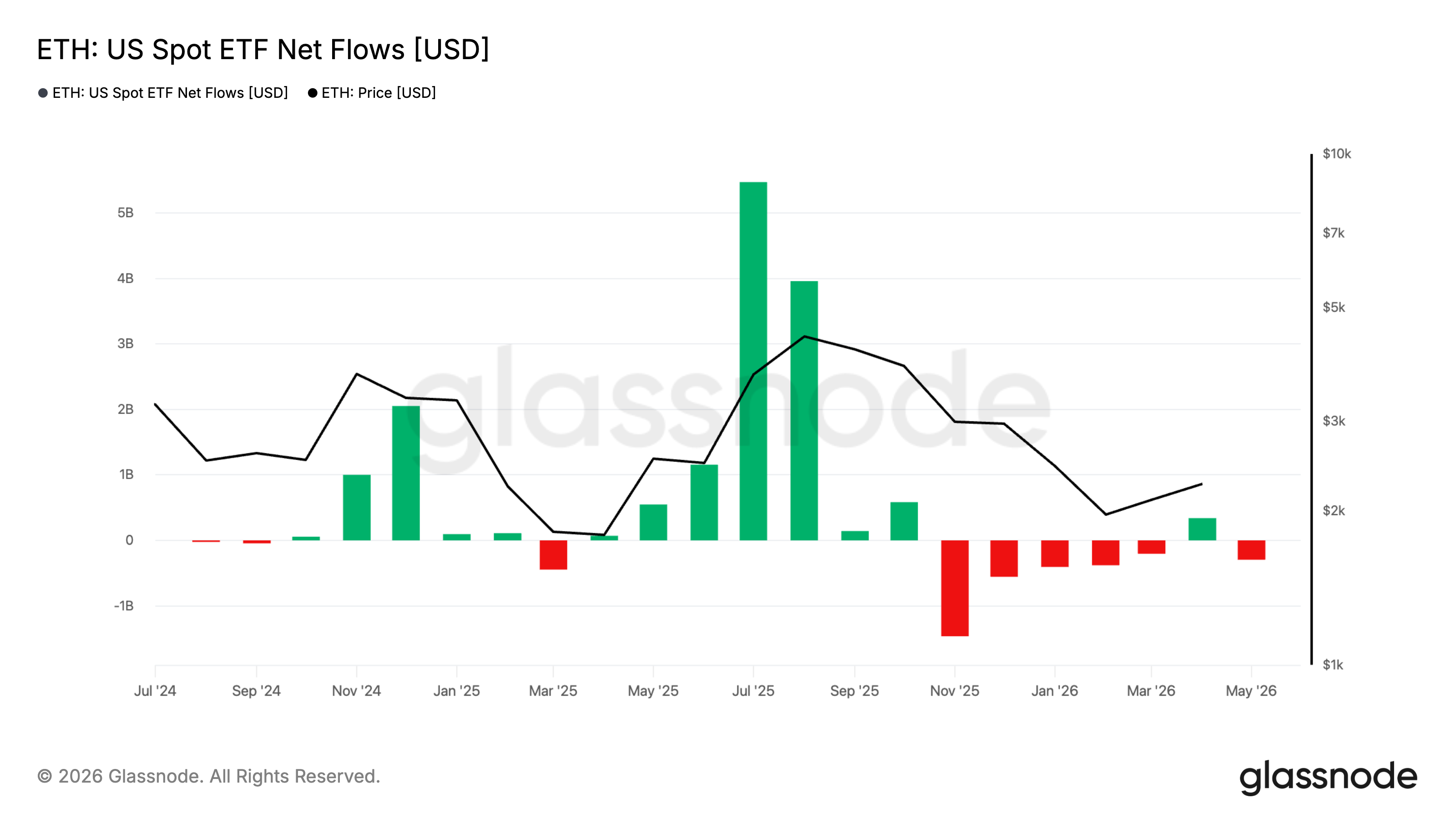
The pair failed to crack through resistance at $2,400 last week, as spot Ether exchange-traded fund (ETF) outflows and rising balance on Binance derailed Ether’s recovery.

As such, bulls must push and hold the ETH/USD pair above $2,400 to continue the uptrend.

In a Wednesday post on X, analyst CryptoJack said ETH is “getting ready for a pump” as it consolidates inside a symmetrical triangle on lower time frames.

“A breakout could lead to a strong move soon.”

ETH/USD chart. Source: X/CryptoJack

Crypto Patel’s chart shows ETH trading inside an ascending triangle that has guided its price action since 2020. ETH is bouncing off the triangle’s lower trendline around $1,800, a zone that previously acted as a launchpad for large upside moves.

The analyst sets the upside target for Ether at $10,000-$15,000, saying:

“$ETH will outperform this cycle.”

ETH/USD two-week chart. Source: X/Crypto Patel

Fellow crypto analyst Celal Kucuker also shared a bullish argument, laying out a long-term roadmap that places ETH on course for a possible move above $24,000.

ETH/USD one-month chart. Source: X/Celal Kucuker

Momentum indicators support the rebound thesis. Ether’s monthly relative strength index (RSI) has cooled toward a historical support area near 42-455, similar to levels that preceded past rallies.

As Cointelegraph reported, buyers will be back in control once the ETH/USD pair breaks above the $2,450-$2,600, confirming a trend shift.

Institutional adoption fuels Ether’s bullishness

As Cointelegraph reported, JPMorgan is set to launch a tokenized money market fund on Ethereum, allowing stablecoin issuers to hold reserves backing their stablecoins while earning interest.

Related: Bitmine slows Ethereum buys, targets December to own 5% of supply

BlackRock, the world’s largest asset manager, has also filed for tokenized versions of its Treasury liquidity funds, where official ownership records will be maintained on Ethereum using ERC-20 token standards.

Source: Cointelegraph

“Institutional adoption just hit another level,” analysts at Ethereum Daily said in a post on X on Wednesday. 

“This is the most bullish news for Ethereum,” X user Borovik said in a reaction to the news on Wednesday.

Tokenized funds on Ethereum, bulls argue, will drive onchain activity, increase gas demand and total value locked (TVL). This will, in turn, boost the blockchain’s legitimacy, making ETH the preferred settlement layer for trillions in TradFi capital. 

Data from RWA.xyz shows that global tokenized funds already exceed $31 billion, with Ethereum dominating approximately 55% of the space.

Total global RWA value. Source: RWA.xyz

These were not the only bullish news for Ethereum. MN Capital founder Michael van de Poppe said that the approval of the CLARITY Act, which is scheduled for markup on Thursday, would be a “massive trigger for the markets.” 

Market analyst Ethprofit.eth said the CLARITY Act “looks extremely bullish for Ethereum,” while Bitcoin Mami said “institutional demand is going insane post CLARITY Act,” pushing ETH price to $10,000.

Polymarket bettors are pricing in a 60% chance that the CLARITY Act will be signed into law in 2026, down 5% over the last 24 hours.

Odds of the CLARITY Act being signed into law in 2026. Source: Polymarket

If the CLARITY Act becomes law, Ether is expected to rally, as seen in July 2025, when the signing of the GENIUS Act into law preceded a 65% ETH price rise to its current all-time high of $4,950 from $3,000. 

Paybis Secures MiCA and Payment Licenses in Latvia in Stablecoin Play

Cryptocurrency platform Paybis has received two licences from Latvia’s central bank, including one for crypto-asset services under the European Union’s Markets in Crypto-Assets Regulation (MiCA) and another for payment institution operations under Payment Services Directive 2 (PSD2).

The licences were issued by the Supervision Committee of Latvijas Banka on May 12 to SIA Paybis Europe, the company’s EU entity, according to an announcement from the central bank. Paybis is the third company in Latvia to receive a MiCA CASP licence, the central bank said.

The MiCA licence covers custody and administration of crypto assets on behalf of clients, exchange of crypto-assets for funds or other crypto assets, execution of orders, transfer services and crypto asset advisory, Latvijas Banka said. The central bank added that the PSD2 payment institution licence enables Paybis’s EU entity to execute payments and make transfers to payment accounts.

Paybis CEO and co-founder Innokenty Isers said the dual licensing allows the firm “to make a broad, future-focused offering, including working with stablecoins.”

Related: MiCA has made euro stablecoins safe but weak, new report argues

Paybis eyes B2B crypto infrastructure push

Konstantins Vasilenko, co-founder and chief business development officer of Paybis, told Cointelegraph that Paybis is targeting business clients with a white-label crypto infrastructure stack, covering on/off-ramps, buy/sell/swap, payment acceptance and stablecoin payouts. These services would be delivered through a single API, allowing companies to offer crypto services to their own customers without building their own regulated setup.

“This is where the combination of MiCA CASP authorisation and PSD2 PI licensing is particularly important, because it allows us to connect crypto asset services with regulated payment rails,” he added.

Source: Viktors Valainis, Minister of Economics of Latvia

Founded in 2014, Paybis supports 90 cryptocurrencies and serves seven million users across 180 countries. It also holds money services business licences in the US and Canada.

Related: MiCA-licensed Banking Circle joins bank stablecoin settlement race in Europe

EU weighs “MiCA 2” amid rising scrutiny

In April, a European Commission adviser said the EU’s MiCA crypto regulation is likely to evolve over time, with the Commission planning a public consultation to assess whether the rules are working for market participants. Speaking at Paris Blockchain Week 2026, Peter Kerstens said it would be “rather unusual” if there were no “MiCA 2” at some point, noting that EU financial legislation typically develops in stages.

The comments came amid growing scrutiny and opposition from the crypto industry. Stablecoin issuer Circle has pushed back on euro stablecoin thresholds, while policymakers debate whether supervision of major crypto firms should be centralized under the European Securities and Markets Authority.

Magazine: Singapore isn’t a ‘crypto hub’ — it’s something better: StraitsX CEO

Coinbase CEO Says Crypto Bill Could Rewire American Finance — Senate Votes Thursday

0

A long-stalled crypto market structure bill is moving through Congress with new momentum — and Coinbase’s top executive says it could reshape the American financial system.

Coinbase CEO Brian Armstrong declared his company’s support for the Digital Asset Market Clarity Act on Wednesday, calling the legislation a “true compromise” that balances the demands of the crypto industry against the interests of the traditional banking sector and signaling the bill is in the best shape he has seen since negotiations began.

The statements, via Fox News, came as the Senate Banking Committee prepared to hold its markup of the CLARITY Act on May 14, the first formal committee vote on the legislation in the Senate after months of procedural delays and two cancelled markups.

Committee Chairman Tim Scott has set a target of June or July 2026 for a full Senate floor vote, while the White House has marked July 4 as its goal for a presidential signature.

A legislative marathon is taking place

The CLARITY Act — formally H.R. 3633, the Digital Asset Market Clarity Act of 2025 — cleared the House of Representatives on July 17, 2025, in a 294–134 bipartisan vote, with all 216 House Republicans in support and 78 Democrats crossing the aisle. 

Since then, the bill sat in the Senate Banking Committee through two cancelled markups, extended stablecoin negotiations, and an intensifying lobbying war between crypto firms and Wall Street banks.

At its core, the legislation draws a regulatory line between the Securities and Exchange Commission and the Commodity Futures Trading Commission. 

Under the bill, the CFTC would hold exclusive jurisdiction over spot and cash markets for digital commodities while the SEC retains authority over investment contract assets and primary market fundraising. Stablecoins are carved out as a separate category under shared oversight.

The Senate version of the bill expanded beyond the House text, growing to nine titles that cover decentralized finance protections, illicit finance provisions, bankruptcy safeguards for crypto customers, and the Blockchain Regulatory Certainty Act, which creates safe harbors for software developers who publish code without controlling customer funds.

The stablecoin standoff

The bill’s most contested provision centered on stablecoin yield. Banks warned that permitting crypto platforms to pay rewards on stablecoin balances would trigger deposit flight from traditional bank accounts and threaten lending operations. Crypto firms, led by Coinbase, argued that restrictions would hand banks a competitive advantage and strip Americans of new financial tools.

The standoff produced a compromise brokered by Senators Thom Tillis (R-NC) and Angela Alsobrooks (D-MD). Under the final language in Section 404 of the bill, stablecoin issuers and affiliated digital asset service providers cannot pay yield on balances if that yield is the functional or economic equivalent of bank interest. 

Activity-based rewards — cashback on payments, transaction-based incentives, and rewards tied to commerce — remain permitted. A stablecoin holder who takes no action generates no return.

Armstrong confirmed his support after the compromise text became public, with Coinbase’s Chief Policy Officer Faryar Shirzad declaring the industry “secured what is important.” 

Speaking on Fox, Armstrong credited Senators Tillis, Alsobrooks, and their staffs for bringing both sides to the table. “I’ve got to give a lot of credit to Senators Brooks and Tillis and their staff who worked tirelessly on this,” he said.

Armstrong described a financial sector moving fast toward digital asset integration.

 “I go around and I speak with lots of different bank CEOs, and many of them are just leaning into this as an opportunity to grow their business,” he said. “They’re integrating stablecoins as fast as they can.”

More than 100 crypto firms and industry groups, including the Crypto Council for Innovation and the Blockchain Association, wrote to the Senate Banking Committee in April urging the panel to advance the bill, warning that continued delays risk pushing innovation and capital outside the United States. 

Treasury Secretary Scott Bessent reinforced that call, telling a Senate panel the legislation is essential to protecting the dollar’s status as the world’s reserve currency.

The Thursday markup is not the finish line. If the Banking Committee approves the bill, it must merge with a version passed by the Senate Agriculture Committee in a party-line 12–11 vote in January 2026.

A full Senate floor vote requires 60 votes, making Democratic support a practical requirement and leaving an ongoing fight over ethics provisions — specifically language addressing President Trump and his family’s crypto holdings — as the bill’s biggest remaining fault line.

FloQast and Forvis Mazars Germany Announce Strategic Partnership to Transform Accounting Automation

0

WHY THIS MATTERS

The strategic partnership between FloQast and Forvis Mazars Germany, announced on May 12, 2026, marks a major milestone in FloQast’s aggressive DACH region expansion. By combining its AI-powered “Accounting Transformation Platform” with the deep industry expertise of Forvis Mazars, FloQast is positioning itself to tackle the unique regulatory complexities and the acute accounting talent shortage in Germany. This collaboration follows the April 2026 opening of FloQast’s Berlin hub, signaling a commitment to providing localized, high-impact automation that meets the rigorous “auditable” standards required by German finance leaders.

The partnership focuses on the Record-to-Report (R2R) cycle, utilizing FloQast AI Agents to transform traditional accounting roles. These agents allow teams to move away from being “preparers” of manual data and toward becoming “strategic reviewers.” By automating high-impact tasks like Close Management and Compliance using natural language prompts, the joint solution allows German enterprises to bypass traditional IT hurdles and achieve greater operational agility while maintaining a strict cryptographic audit trail.

FloQast, the Accounting Transformation Platform created by accountants for accountants to automate accounting and audit workflows with AI, today unveiled a strategic partnership with Forvis Mazars Germany focused on enhancing operational efficiency through the automation of key accounting processes.  

The collaboration seeks to combine FloQast’s AI-powered workflows with Forvis Mazars’ expertise in designing closing processes to boost efficiency, increase accuracy, and provide deeper insights for businesses across various industries.  

“Our partnership with Forvis Mazars reinforces our commitment to helping accounting teams across EMEA adapt to the evolving demands of the profession,” said Aaron O’Donoghue, Alliances Lead, EMEA, FloQast. “With increasing regulatory complexity and a shrinking talent pool, finance teams need smarter, more efficient ways to work. By combining FloQast’s AI-powered technology with Forvis Mazars’ deep industry expertise, we’re enabling organisations to improve accuracy, enhance compliance, and drive greater operational agility. Furthermore, this partnership is a critical driver for our DACH expansion strategy, allowing us to further localised, high-impact AI automation to the German markets.” 

Following the April opening of its Berlin hub to meet growing demand across the DACH region, FloQast is accelerating the modernisation of essential accounting and audit workflows. By integrating seamlessly with existing systems, the platform allows teams to bypass IT complexity and immediately automate high-impact processes like Close Management and Compliance. This transformation is driven by FloQast AI Agents: a groundbreaking, auditable AI capability that enables accountants to automate complex, recurring workflows using natural language rather than code—streamlining the record-to-report process and allowing teams to better leverage data to drive organisational strategy. 

 FF NEWS TAKE

FloQast is successfully “exporting” its accountant-first philosophy to the German market, where precision and compliance are non-negotiable. The alliance with Forvis Mazars is a tactical masterstroke, as it provides FloQast with the local “boots on the ground” needed to navigate the complex German GAAP and tax reporting landscape. By leveraging Forvis Mazars’ consultancy excellence, FloQast is ensuring that its AI Agent Builder—launched globally in late March 2026—is tuned to the specific logic and workflows of European mid-market and enterprise businesses.

The real differentiator here is the No-Code Visual Agent Builder. In a region where IT resources are often a bottleneck, the ability for an accountant to “draw” a workflow and have an AI agent execute it is a game-changer. As DACH-based finance teams face increasing pressure to do “more with less,” the 30% reduction in time-to-close typically seen on the FloQast platform becomes a powerful economic argument. If this partnership hits its targets, we expect FloQast to quickly become the standard-bearer for ISO 42001-certified AI adoption across Central Europe.

Solana’s ‘Alpenglow’ upgrade is live for testing

0

Network News

“ALPENGLOW” UPGRADE LIVE FOR TESTING ON SOLANA: Solana developer Anza said that Alpenglow, the network’s biggest proposed consensus overhaul to date, is live on a community test cluster, marking a major step toward a potential mainnet rollout. The update means validator operators can now test software designed to move Solana from its current consensus system, which combines Proof-of-Stake with TowerBFT and Proof-of-History, toward a new architecture intended to dramatically reduce finality times and improve network responsiveness. “Alpenglow is live on the community test cluster,” Anza wrote on X. “The biggest consensus change in Solana’s history, now running on validator infrastructure ahead of mainnet.” Today, Solana relies on Proof-of-History, a cryptographic clock that timestamps transactions, alongside TowerBFT, a voting mechanism validators use to agree on the state of the blockchain. While the design has helped Solana achieve high throughput and low fees, some have pointed to outages and network instability during periods of heavy demand. — Margaux Nijkerk Read more.

LAYERZERO APOLOGY FOR KELP DAO INCIDENT: LayerZero said that it “made a mistake” allowing its own verification infrastructure to secure high-value crypto assets in a vulnerable configuration, marking a notable shift in tone after weeks of blaming developer Kelp DAO for a $292 million hack tied to North Korean attackers. The admission marks a notable shift after weeks of public finger-pointing between LayerZero and Kelp over responsibility for the April hack, which LayerZero had initially framed as an application-level configuration failure by Kelp. “First things first: an overdue apology,” LayerZero wrote in a blog. LayerZero initially blamed Kelp, arguing the protocol had chosen a risky “1-of-1” configuration in which only a single decentralized verifier network, or DVN, needed to approve cross-chain transfers, creating a single point of failure. A DVN is part of the infrastructure that verifies whether a transaction moving assets between blockchains is legitimate. “We made a mistake by allowing our DVN to act as a 1/1 DVN for high-value transactions,” the company said. “We didn’t police what our DVN was securing, which created a risk we simply didn’t see. We own that.” — Sam Reynolds Read more.

RONIN TO TRANSITION TO LAYER-2: Ronin, the gaming-centric blockchain once synonymous with the industry’s infamous $625 million exploit in 2022, is officially shedding its sidechain skin on May 12 to become an Ethereum layer 2 to improve security while maintaining throughput. Ronin, which announced the migration in April, will execute a hard fork at block 55,577,490, a process that will result in about 10 hours of downtime for users, the network said Monday on X. According to onchain data, the migration is expected to begin on Tuesday around 15:16 UTC. “Four years ago, we launched Ronin because Axie Infinity needed a faster and more efficient network,” Ronin said when announcing the migration. “It worked. Axie Infinity onboarded millions of gamers to crypto, and Pixels proved that it was possible to do it again.” The time has come to plug “back into the mothership.” While operating as an independent sidechain in mid-May 2022, Ronin suffered what is still today the largest DeFI bridge exploit in history. Layer 2 protocols benefit from tighter links to the underlying blockchain than sidechains, offering benefits that include greater security. — Olivier Acuna Read more.

ETHEREUM DEVELOPERS RELEASE “CLEAR SIGNING”: The Ethereum Foundation and a group of major crypto wallet developers are rolling out a new security standard designed to stop users from accidentally signing away their funds, a problem that has fueled some of the industry’s biggest hacks and scams. The initiative, called “Clear Signing,” aims to replace the confusing walls of code users currently see when approving Ethereum transactions with simple, human-readable explanations of what they’re actually agreeing to. The effort comes after years of phishing attacks and wallet drains that often boil down to the same issue: users unknowingly approving malicious transactions they don’t understand. The Ethereum Foundation pointed to incidents like the Bybit hack as examples of how attackers exploit “blind signing,” where users approve transactions filled with unreadable technical data. Right now, signing a crypto transaction can feel like clicking “accept” on a terms-of-service page written in another language. Wallets often display long strings of code that only highly technical users can decipher, leaving everyday traders vulnerable to fake apps, malicious links and compromised websites. — Margaux Nijkerk Read More.


In Other News

  • Charles Schwab, the brokerage giant that manages around $12 trillion in client assets, began the rollout of its spot cryptocurrency trading service for retail customers in the U.S. An initial group of clients can now trade bitcoin and ether (ETH) on the Schwab Crypto platform, the company posted on X.In July last year, CEO Rick Wurster said the company planned to introduce crypto trading in the near future, with a timeframe of first-half 2026 confirmed last month. The Westlake, Texas-headquartered firm already offers crypto investments through exchange-traded funds (ETFs) and futures trading. — Jamie Crawley Read more.
  • JPMorgan (JPM) is preparing to launch a tokenized money market fund, the latest sign that major financial institutions and Wall Street asset managers are speeding up efforts to move traditional assets onto blockchain rails. A filing with the U.S. Securities and Exchange Commission SEC) outlined plans for a blockchain-based money-market fund investing exclusively in short-term U.S. Treasuries, cash and overnight repo agreements backed by government securities. The fund, dubbed JPMorgan OnChain Liquidity-Token Money Market Fund (JLTXX), will maintain blockchain-based token balances tied to investors’ ownership records, allowing approved users to submit purchase, redemption and transfer requests through Ethereum, the filing said. The underlying blockchain infrastructure will be operated by Kinexys Digital Assets, JPMorgan’s blockchain unit formerly known as Onyx. — Kristzian Sandor Read more.

Regulatory and Policy

  • The legislation that could fully insert the U.S. crypto industry into the regulated financial system has emerged in its latest form, with the Senate Banking Committee unveiling the market structure bill’s text just after midnight on Tuesday in advance of this week’s hearing that’s set to push the effort forward. The latest version wasn’t expected to offer many surprises for the crypto industry that’s already had a chance to dig through it privately, but it includes still-contentious language on stablecoin yield and it maintains legal protections for decentralized finance (DeFi) developers, keeping that corner of the crypto sector happy (so far). Industry insiders waited for the release late into the night, and they’ll still have to study the language to ensure their expectations were met. “This bill reflects serious, good-faith work across the committee and delivers the certainty, safeguards, and accountability Americans deserve,” committee Chairman Tim Scott said in a statement. “It puts consumers first, combats illicit finance, cracks down on criminals and foreign adversaries and keeps the future of finance here in the United States.” — Jesse Hamilton Read more.
  • The Senate confirmed Kevin Warsh to the Federal Reserve Board of Governors on Tuesday, moving President Donald Trump’s pick one step closer to becoming the next chair of the U.S. central bank. Lawmakers approved Warsh in a 51-45 vote. Sen. John Fetterman (D-Pa.) was the only Democrat to support the nomination. Warsh still must win a separate Senate vote to become Fed chair, which is expected Wednesday. Governors serve 14-year terms while the chair serves a four-year term. If confirmed as chair, Warsh, 56, will replace Jerome Powell, whose eight-year term leading the Fed ends Friday. Powell, however, has said he plans to remain on the board until a federal probe into renovations at the Fed’s headquarters concludes. — Helene Braun Read more.

Calendar

  • June 2-3, 2026: Proof of Talk, Paris
  • June 4, 2026: Stable Summit, New York
  • June 8-10, 2026: ETHConf, New York
  • Sept. 29-Oct.1, 2026: Korea Blockchain Week, Seoul
  • Oct. 7-8, 2026: Token2049, Singapore
  • Nov. 3-6, 2026: Devcon, Mumbai
  • Nov. 15-17, 2026: Solana Breakpoint, London

Ethereum Hits 200M Gas Target Ahead Of Glamsterdam Upgrade

0

The Ethereum Foundation has reached several progress milestones on the next Ethereum upgrade called “Glamsterdam” and has named three new leads for its Protocol team.

The Ethereum Foundation said in a blog post on Monday that it had achieved a “credible post-Glamsterdam target,” establishing a 200 million gas limit floor, giving the network a major post-upgrade speed boost from its current gas limit of around 60 million.

“The immediate focus is shipping Glamsterdam,” the Ethereum Foundation said, which had originally scheduled the upgrade for June, but is now likely to be sometime in the third quarter of 2026.

Glamsterdam focuses on scaling the layer-1 chain by reorganizing how the network processes transactions and manages its growing database, “fundamentally updating how Ethereum creates and verifies blocks,” according to the Ethereum website. 

The Ethereum Foundation is also continuing preparations for Hegotà, the next major upgrade, and advancing the Strawmap, its quantum-ready roadmap.

“Glamsterdam devnets are now live, and scoping for Hegotà is well underway,” it stated during an interop event in Svalbard, Norway. 

Finalizing ePBS and smarter data storage

The EF also confirmed the stabilization of enshrined Proposer-Builder Separation (ePBS), a system that allows validators to outsource their block-building duties to a set of specialized builders.

The new enshrined version builds this separation directly into Ethereum’s rules with less reliance on outside relays, giving the network more time to handle bigger blocks safely.

Related: AI ‘vibe coding’ could put Ethereum roadmap ahead of schedule: Vitalik Buterin

EIP-8037 has also been finalized, which enables smarter pricing for storing data. The proposal increases the cost of state creation operations, avoiding excessive state growth under increased block gas limits. 

Glamsterdam is the first upgrade on Ethereum’s long-term roadmap. Source: Strawmap.org

Changes in EF Protocol leadership 

The Foundation also announced the “start of a leadership transition” for the Ethereum Foundation Protocol cluster with Will Corcoran, Kev Wedderburn and a developer identified only as Fredrik as the new leads

Ethereum developers Barnabé Monnot and Tim Beiko are moving on from the Foundation, while Alex Stokes will be on sabbatical, it said.

“There’s a new chapter starting for the Protocol cluster. We’re welcoming new leads and coordinators, and continuing our work toward Glamsterdam, Hegotà, and the Strawmap,” said Corcoran on X on Monday. 

“Making Ethereum’s unique features more available to users today is on my mind; so is participating in the plurality of ways that Ethereum gets built,” said Monnot.

Magazine: Strategy reveals why they would sell BTC, Trump Media posts loss: Hodler’s Digest

Ardian and iCapital® Expand Distribution of Ardian Access Evergreen Strategies Through Leading Global Fund Platforms

0

Ardian, a global private investment firm, and iCapital[1], the global fintech company shaping the future of investing, today announced the continued expansion of their partnership with the broader availability of the Ardian Access SICAV suite of evergreen[2] private markets strategies[3] through leading global fund platforms, including Allfunds, Clearstream and Euroclear Fundsplace. 

Building on a partnership that began in 2022, Ardian and iCapital have worked closely to design, structure, service and distribute evergreen investment solutions that support longterm portfolio construction for wealth investors. The latest expansion further reflects a shared ambition to expand access to private markets while maintaining operational efficiency, scalability and enhanced investor experience across distribution channels. 

Through availability on Allfunds, Clearstream and Euroclear Fundsplace, the Ardian Access strategies can now be accessed via established platform workflows and custody environments already used by wealth managers and advisors globally. This approach allows Ardian and iCapital to meet growing demand from the wealth channel while reducing operational friction and integration complexity for distributors and end investors. 

Launched in partnership with iCapital, Ardian Access provides evergreen exposure to Ardian’s private equity and infrastructure capabilities. iCapital structures and services the strategies and provides end‑to‑end lifecycle support, leveraging its integrated technology and operating capabilities to streamline onboarding, administration and the ongoing investor experience for wealth managers and advisors. 

“We are delighted to expand our partnership with iCapital, a leading player in making private asset investment more accessible. This enhanced collaboration enables us to offer Ardian strategies to a broader audience of private investors, while supporting transparency, operational simplicity, and service quality. By leveraging leading platforms, we are pursuing our goal to expand access to private markets while meeting investors’ high standards for information, governance, and experience throughout the entire investment cycle.” said Erwan Paugam, Head of Private Wealth Solutions and Senior Managing Director at Ardian. 

“This expanded partnership underscores the strength of our long‑standing relationship with Ardian and our shared focus on accessibility and investor experience,” said Marco Bizzozero, Head of International at iCapital. “By combining Ardian’s investment expertise with iCapital’s advanced technology, structuring, servicing and distribution capabilities, including connectivity to leading fund platforms, we are creating a more efficient and scalable way for the wealth channel to access private markets solutions, supporting both sustainable growth and a better overall experience for advisors and their clients.”

Metaplanet Q1 Operating Profit Rises as Bitcoin Loss Widens

0

Tokyo-listed Metaplanet reported first-quarter operating income Wednesday of 2.27 billion Japanese yen (roughly $14.38 million) on net sales of about $19.5 million, implying an operating margin of 73.6% as surging Bitcoin option income more than tripled revenue from a year earlier, according to the company’s Q1 fiscal year 2026 earnings release.

The strong operating performance contrasted with an ordinary loss of around $728 million, driven mainly by non-cash valuation losses as Bitcoin’s price declined during the period, and the company marked its expanding Bitcoin (BTC) holdings lower.

The price of Bitcoin fell around 24% during the quarter, from around $87,000 on Jan. 1 to roughly $66,000 on March 31, according to data from Coingecko.

Revenue for the quarter ending March 31 rose from about $5.5 million a year earlier to about $19.5 million, the filing shows, with the Bitcoin Income Generation business of option premiums and derivative valuation gains contributing the bulk of sales, while hotel operations remained a small, stable contributor.

BTC price fell 24% in Q1. Source: Coingecko

Metaplanet posted a basic loss of roughly $0.63 per share, widening from a loss of about $0.078 a year earlier, and kept its full-year 2026 outlook unchanged, still forecasting net sales of roughly $101 million and operating profit of about $72 million, while refraining from giving ordinary or net income guidance due to Bitcoin price sensitivity.

Strong operating income offset by Bitcoin valuation loss

Metaplanet ended the quarter holding 40,177 Bitcoin, up from 35,102 at the end of December 2025, after adding about 5,075 BTC in Q1 to become the third-largest publicly listed Bitcoin treasury, through a combination of new equity and Bitcoin-backed borrowing.

Consolidated Financial Results for Q1, FY2026. Source: Metaplanet

On a fully diluted basis, Bitcoin holdings per share increased from 0.0240486 BTC to 0.0247319 BTC, corresponding to a first-quarter BTC yield of 2.8%, which the company highlights as a key performance indicator for shareholder value creation, as it measures Bitcoin per-share growth after dilution.

Metaplanet’s capital structure continued to evolve over the quarter, with total net assets falling from $2.96 billion at Dec. 31 to approximately $2.60 billion, as Bitcoin-related valuation losses outweighed equity raised during the quarter.

Short-term borrowings also increased as the company drew further on its $500 million Bitcoin-collateralized credit facility, under which it had $302 million outstanding as of May 13, 2026, it said.

Metaplanet shares traded lower on Wednesday in Tokyo, at around 327 Japanese yen (roughly $2.07), down 3.82% at the time of writing from Tuesday’s close, according to data from Yahoo! Finance.

Magazine: Bitcoin will not hit $1M by 2030, says veteran trader Peter Brandt

Telecom giant KDDI to acquire 14.9% stake in Coincheck Group in $65 million deal

0

KDDI, one of Japan’s largest telecom companies, is set to hold a 14.9% stake in local crypto exchange operator Coincheck Group (CNCK) after agreeing to a $65 million deal.

The telecom giant will subscribe for 28.5 million newly issued Coincheck Group shares at $2.28 each, Coincheck said on Wednesday. The deal is expected to close in June.

Coincheck and KDDI also signed what both firms called a business alliance covering customer referrals, revenue sharing and referral fees. The companies said the partnership is aimed at expanding crypto access in Japan through KDDI’s consumer channels and Coincheck’s trading, custody, staking and asset-management services.

KDDI has been building around crypto and Web3 since at least 2023, when it launched αU, a metaverse and Web3 service with a non-fungible token (NFT) marketplace and crypto wallet.

The company deepened that push through a capital and business alliance with HashPort, a Japanese Web3 wallet developer. The deal was tied to plans allowing users to convert Ponta loyalty points into stablecoins and crypto, and convert those assets into au PAY gift cards.

KDDI will receive registration rights for the shares and the right to nominate one non-executive director to Coincheck Group’s board at its next annual general meeting, expected in September.

Coincheck’s Dutch parent listed on Nasdaq in late 2024 under the ticker CNCK, after a delayed plan to go public through a SPAC deal. The company has since pushed into institutional crypto services, including through its acquisition of digital asset prime broker Aplo.

KDDI, as of December 2025, had over 72 million mobile subscriptions. J.P. Morgan advised Coincheck Group on the deal. De Brauw Blackstone Westbroek and Simpson Thacher & Bartlett acted as legal counsel.

PayDo Partners with BVNK to Add Stablecoin Capabilities Without Crypto Custody

0

PayDo, the all-in-one Electronic Money Institution (EMI), has entered into a new strategic partnership with BVNK, a global provider of stablecoin payment infrastructure. The collaboration is designed to enable PayDo’s vast business customer base to access seamless fiat-to-stablecoin conversion for pay-ins, payouts, and checkouts, significantly improving operational speed and flexibility without requiring businesses to directly handle or hold cryptocurrency.

By adding stablecoins to its broader payment stack, the platform aims to provide online businesses with a simplified and scalable solution for cross-border transactions. Specifically, the new capabilities allow users to top up their PayDo balances with stablecoins, which are then automatically converted to fiat in a single transaction. Conversely, users can send outgoing transfers by automatically converting their existing fiat balances into stablecoins at the point of payout. Furthermore, merchants can now actively accept crypto payments through their websites via a stablecoin checkout feature, with the resulting funds settling directly into their PayDo accounts in fiat.

Navigating high-volume cross-border payments

Currently, PayDo processes over €5billion annually for thousands of businesses worldwide. Its unified platform consolidates a wide array of essential financial services under a single API, including multi-currency accounts, direct SEPA and SWIFT transfers, merchant acquiring, card issuing, mass payouts, and pioneering Open Banking solutions.

Serhii Zakharov, CEO and founder of PayDo

The integration of stablecoins is expected to be especially beneficial to PayDo customers who operate in highly complex, high-volume, and time-sensitive cross-border environments, where traditional banking systems and correspondent networks frequently introduce delays and friction. Importantly, PayDo does not custody crypto assets at any point; all stablecoin transactions are automatically converted to fiat, ensuring that users benefit from rapid fiat settlement within a highly regulated framework while heavily reducing the need to independently manage crypto-related compliance processes.

Building a unified financial ecosystem
Chris Harmse, co-founder at BVNK

Serhii Zakharov, CEO and founder of PayDo, emphasized that these developments mark another critical step toward creating a truly unified, all-in-one financial ecosystem.

“BVNK’s infrastructure was crucial in reaching this balance between stablecoin flexibility and fiat stability,” Zakharov commented. “PayDo is looking forward to many more productive updates alongside our partners in the upcoming months.”

Chris Harmse, chief business officer and co-founder of BVNK, echoed this sentiment, highlighting the growing real-world utility of digital assets. He stated that the partnership unlocks massive new opportunities for business customers to move, hold, and settle funds more easily. Harmse noted that the collaboration serves as a prime example of how stablecoins are being rapidly adopted across traditional financial services as a highly practical, everyday tool for more efficient money movement.