Home Blog Page 263

The 2036 Issue: Letter From The Editor

0

None of us can see the future. We don’t know what 2036 will bring. 

We all like to tell ourselves that we can, or do, and maybe we do actually see small pieces of it coming before we catch up to them, but none of us see the whole picture. That’s, at the end of the day, part of what it is to be human. 

Nevertheless we can’t seem to help ourselves from at least trying. 

Going into the second half of the 2020s we are coming out of a time period that marked wild and tumultuous disruption, with the world changing in both big and small ways that none of us could have imagined in our wildest dreams at the start of 2020. As we enter the second half of the decade, events around the world are starting to push us in a direction that seems like it will be even more disruptive and unpredictable than the first half of the decade. 

In this issue, we are going to do what we can’t help ourselves doing, we’re going to try to predict the shape of the next decade. I say shape, and not just the future itself, because that is the best that human beings can actually do. 

These pages are filled with pieces written by some of the most influential and intelligent people that engage in this space trying to look ahead and provide something of value to you, the reader. Some have given deep analysis of how larger geopolitical trends will unfold, others have written more lighthearted musings on what different aspects of our lives will be like day-to-day, and some have written what I can only call warnings or reminders of what to keep in mind while navigating the coming ten years. 

Every few generations, the world seems to go through some tumultuous upheaval. A radical shift that upends the order and institutions that maintained the previous shape of the world. I think we are entering that next period now, and we’ve probably been standing in its doorway since 2020. 

Chaos and change are not solely reasons to give in to fear, or anxiety, they are also reasons to have hope and optimism. When things fall apart, it doesn’t just mean the end of what was there before, it means there is space to build something new. It signals the beginning of something new in the exact same moment that it signals the end of something old. 

The next ten years are going to be the biggest opportunity yet for Bitcoin. We can either spend them optimistically building, putting our energy into bringing into reality the positive impact we see that Bitcoin can have on the world, or we can squander them doing the opposite. 

Ultimately, the shape the future has when it finally arrives at our doorstep will be the shape that all of our individual actions and choices mold it into. 

Make them count. 

Don’t miss your chance to own The 2036 Issue — featuring articles written by many influential figures in the space pondering the challenges of the next decade!

This piece is the Letter from the Editor featured in the latest Print edition of Bitcoin Magazine, The 2036 Issue. We’re sharing it here as an early look at the ideas explored throughout the full issue.

Bitcoin Tests $82K As Crypto Funds Notch Sixth Straight Week Of Inflows

0

Crypto investment products absorbed $858 million last week, ahead of the upcoming CLARITY Act markup and Fed chair transition.

Total crypto market capitalization stood at $2.81 trillion on Monday as Bitcoin reclaimed $82,000 and global crypto fund flows extended their longest positive streak since last summer.

BTC last traded at $82,020, up 0.9% on the day and 1.9% over the past week. Ether continued to lag the majors, slipping 0.7% to $2,341 and posting a 1.3% weekly decline.

SOL Chart

Solana stood out among the Top 10 with a 15% weekly gain to $98, while Cardano added 12% and BNB rose 5.4% in the same timeframe.

Sixth Week Of Inflows

Global crypto investment products pulled in $857.9 million last week, the sixth consecutive week of net inflows and the largest weekly haul since the week ending April 24, according to the latest CoinShares Digital Asset Fund Flows report. The streak has now brought year-to-date inflows to $4.9 billion, with total assets under management above $160 billion, the highest since February.

Bitcoin products accounted for $706.1 million of the weekly total. Ether funds reversed the prior week’s losses with $77.1 million in inflows, while Solana products added $47.6 million and XRP funds drew $39.6 million.

CoinShares head of research James Butterfill attributed the surge to compromise language being finalized on the stablecoin yield provisions of the Digital Asset Market CLARITY Act, together with Bitcoin reclaiming $80,000 over the past week.

U.S. spot Bitcoin ETFs have logged six straight weeks of net inflows totaling around $3.4 billion, per SoSoValue data, the longest such streak since August 2025. Cumulative net inflows since the January 2024 launch sit at roughly $59.3 billion, with total net assets at $106.6 billion.

Strategy Slows Down

Strategy disclosed its smallest weekly Bitcoin purchase of 2026, picking up 535 BTC for roughly $43 million between May 5 and May 11, according to its latest 8-K filing. The buy lifts total holdings to 818,869 BTC at a blended cost basis of around $75,540 per coin.

The pace reflects a sharp deceleration. Strategy bought 34,164 BTC for the week ending April 20, then 3,273 BTC the following week, and paused entirely ahead of its Q1 2026 earnings call on May 5.

Macro Week Ahead

The Senate Banking Committee is scheduled to mark up the CLARITY Act on May 14, with stablecoin yield language the central sticking point.

Meanwhile, Jerome Powell’s term as Fed chair ends on May 15, with Kevin Warsh widely expected to take the gavel at the June FOMC meeting.

Building a Greenfield Foundation for Digital Transformation

0

The partnership between Paragon Bank, a FTSE 250 specialist lender, and Mambu began in 2020, establishing a foundation of trust through the successful delivery of development finance and savings propositions. As Paragon’s savings portfolio grew, the need for a robust and reliable core banking engine became clear, leading the bank to choose Mambu as the partner for its next evolutionary step. This collaboration resulted in a greenfield transformation and the birth of “Spring,” a digital product designed to address a specific gap in the UK savings market.

Spring serves as the cornerstone of Paragon’s digital transformation, representing their first truly direct-to-consumer product with end-to-end digitization. By utilizing a greenfield approach, the bank was able to launch a new brand into a new market segment, informed heavily by customer insights. This ground-up build proved that the bank could rapidly innovate and deploy new services in a very short period of time by working in close partnership with Mambu and other key suppliers.

The development of Spring was driven by data from Paragon’s existing cohort of proactive savers. Research indicated that while consumers were interested in better rates, many were deterred by a perceived “baffle of choice” and the “perceived hassle” of moving money. Consequently, the primary objective for Spring was to create a hassle-free user experience. By focusing on a seamless customer journey and agile delivery, Spring has not only successfully gained market momentum but has also instilled greater organizational confidence in Paragon’s ability to execute large-scale digital transformations.

https://mambu.com/en/customer/paragon-bank?utm_campaign=Deposits&Savings&utm_source=FFNews&utm_medium=paid_media&utm_content=interview

Key Highlights from the Fintech Show:

  • Foundation of Trust: Karishma Jaycee explains how the initial 2020 partnership on development finance built the capability for Paragon’s later digital expansion.

  • Greenfield Transformation: The use of a new, cloud-native core banking engine allowed for the rapid launch of Spring as a standalone digital product.

  • Solving for “Hassle”: Derek Sprawling notes that customer research identified “perceived hassle” as the biggest barrier to savings growth, which Spring was specifically designed to eliminate.

  • Direct-to-Consumer Success: Imogen Gurney highlights Spring as the bank’s first front-to-back digitized product, proving their ability to build from the ground up.

  • Agile Momentum: The project has established a new “rhythm” for agile change within the bank, propelling further digital innovation.

Hotter-than-expected inflation data knocks BTC below $80,000

0

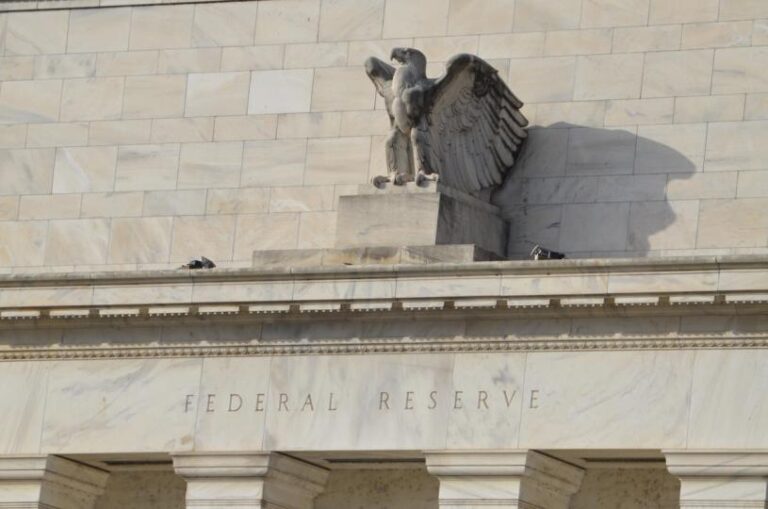
U.S. producer prices for April came in far hotter than expected on Wednesday, complicating the Federal Reserve’s path forward to ease monetary policy later this year.

The April Producer Price Index rose 1.4% month-over-month, nearly triple economists’ expectations for a 0.5% increase. Annual producer inflation accelerated to 6%, while core PPI excluding food and energy climbed 1% on the month and 5.2% year-over-year, both well above forecasts.

The report reinforced that inflation is reaccelerating after Tuesday’s consumer price index (CPI) rose 3.8% year-over-year, the hottest inflation reading in almost three years.

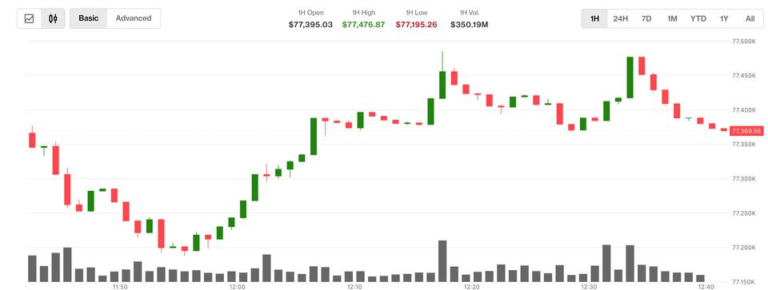
Bitcoin (BTC), which traded above $81,000 overnight, quickly dropped below the key $80,000 level in the minutes following the release before recovering slightly. The largest cryptocurrency was recently changing hands just above $80,000, down about 0.8% over the past 24 hours.

Equity futures held relatively steady ahead of the U.S. open, with Nasdaq 100 futures up 0.2% and S&P 500 futures little changed.

The inflation surprise adds another layer of uncertainty for the Fed as policymakers navigate rising energy prices tied to the ongoing Iran conflict and persistent concerns over supply disruptions around the Strait of Hormuz. Higher oil prices risk feeding further into inflation data in the months ahead.

The report could also revive discussion of whether the central bank may need to consider additional tightening rather than cuts, even as President Donald Trump continues to pressure the Fed to lower interest rates.

That backdrop is especially delicate as Kevin Warsh prepares to take over leadership of the central bank, with investors closely watching how the incoming chair will balance slowing growth risks against resurgent inflation pressures.

Ethereum Lands JPMorgan’s New Tokenized Money Market Fund

0

Trusted Editorial content, reviewed by leading industry experts and seasoned editors. Ad Disclosure

JPMorgan is launching a tokenized money market fund on Ethereum, marking another step by a major Wall Street institution into public-blockchain-based fund infrastructure. The new JPMorgan OnChain Liquidity-Token Money Market Fund will offer Token Class shares under the ticker JLTXX, according to a registration filing for JPMorgan Trust IV.

The filing positions the product as a government money market fund seeking current income while maintaining liquidity and stability of principal. Its Token Class carries a 0.16% net expense ratio after fee waivers and reimbursements, with gross annual operating expenses listed at 0.71%. Those waivers are scheduled to remain in effect through June 30, 2028, unless renewed or revised.

Bloomberg ETF analyst Eric Balchunas framed the fee structure as a notable part of the launch. “JPMorgan filed for a tokenized money market fund,” he wrote on X. “Big deal bc JPM inching further into crypto and big deal bc fee is pretty low 16bps for a stable NAV (imposs to do in ETF). Cheaper than most money funds altho Vanguard’s is like 11bps.”

JPMorgan Taps Ethereum For Tokenized Treasury Fund

The fund’s strategy is conservative by design. Under normal conditions, it will invest exclusively in US Treasury bills, bonds and notes, along with overnight repurchase agreements fully collateralized by Treasury securities and/or cash. JPMorgan says the fund will seek to maintain a $1.00 NAV, buy only Treasury securities with remaining maturities of 93 days or less, keep dollar-weighted average maturity at 60 days or less, and invest only in US dollar-denominated securities.

Related Reading: Ethereum Leverage Ratio Sees Sharp Drop: What It Means

The crypto relevance sits less in the portfolio and more in the rail. The filing says the fund will use blockchain technology to let investors submit transaction instructions for fund shares, while the official record of ownership remains the transfer agent’s traditional book-entry register. Token balances attributed to an investor’s blockchain address are intended to correspond one-for-one with fund shares, but JPMorgan makes clear that the Investor Register, not the blockchain balance, is determinative for legal ownership.

That structure reflects the institutional compromise now forming around tokenization: public-chain connectivity, but within controlled market infrastructure. JPMorgan says the blockchain system is designed, deployed and maintained by Kinexys Digital Assets, a business unit within JPMorgan Chase Bank. The system runs as a permissioned framework on top of public blockchains, requiring approved wallet addresses and allow-listing before investors can purchase, redeem or transfer token balances.

Ethereum is currently the only blockchain available for investors, though the filing says expansion to other blockchains is anticipated: “The Ethereum blockchain, a public blockchain network, is currently the only available blockchain for use by investors, although expansion to other blockchains is anticipated in the future.”

That detail drew attention from CEO and co-founder of Etherealize Vivek Raman who wrote via X: “Five months after MONY, JP Morgan is launching a second tokenized money market fund — on the biggest, most institutional public blockchain: Ethereum. Blackrock and JPM issuing on Ethereum in the same week…”

BlackRock is preparing two tokenized money-market funds aimed at investors holding cash in stablecoins, including a digital share class tied to the roughly $6.1 billion BlackRock Select Treasury Based Liquidity Fund. After the success of BUIDL, those tokenized shares are also set to run on Ethereum alongside traditional share classes, reinforcing the chain’s role as the preferred public settlement venue for a growing set of institutional cash-management products.

At press time, Ethereum traded at $2,303.

Ethereum price chart
XRP bulls must break the 0.382 Fib, 1-week chart | Source: ETHUSDT on TradingView.com

Featured image created with DALL.E, chart from TradingView.com

Editorial Process for bitcoinist is centered on delivering thoroughly researched, accurate, and unbiased content. We uphold strict sourcing standards, and each page undergoes diligent review by our team of top technology experts and seasoned editors. This process ensures the integrity, relevance, and value of our content for our readers.

SUI drops 3.2% as index trades lower

0

CoinDesk Indices presents its daily market update, highlighting the performance of leaders and laggards in the CoinDesk 20 Index.

The CoinDesk 20 is currently trading at 2185.22, down 0.3% (-5.55) since yesterday’s close.

Seven of 20 assets are trading higher.

Leaders: DOT (+2.6%) and BNB (+1.7%).

Laggards: SUI (-3.2%) and TAO (-2.7%).

The CoinDesk 20 is a broad-based index traded on multiple platforms in several regions globally.

Tokenized Treasuries hit $15 billion as BTC price stalls, Fed rate-hike concerns build: Crypto Daily

0

This is an excerpt from CoinDesk newsletter ‘Daybook.’ Sign up here, if you haven’t already.

While bitcoin remains pinned above $80,000, another interest rate-sensitive corner of the crypto market is booming and may suck capital out of other coins.

The total value locked in tokenized Treasuries has surged to $15.35 billion, topping the mid-April peak of around $15.10 billion, according to rwa.xyz data.

This comes as markets price in a higher probability of a Federal Reserve interest-rate hike (yes, an increase in borrowing costs), a stark shift from expectations for rapid rate cuts baked in earlier this year.

“The June cut just got significantly harder to defend, and the allocator positioning we flagged – capital sat in [BlackRock’s] BUIDL and tokenized T-bills rather than spot crypto – is going to look prescient by Friday,” Iggy Ioppe, co-founder of Polygon Ventures, said in an email.

Flows into yield-bearing tokenized Treasuries could rise further if today’s U.S. producer price index (PPI) points to persistent inflationary pressures in the pipeline. Consensus is for the April print to come in at 4.9% year-on-year, up from 4.0% in March.

An elevated reading would add to Fed rate-hike expectations and pose a headwind to risk assets. How bitcoin reacts remains to be seen, especially as it held largely steady above $80,000 after Tuesday’s hotter-than-expected CPI print.

While noting BTC’s resilience, analysts at Marex warned that further gains may be difficult if inflation continues to climb.

“That is the constraint for crypto: it can hold, but it will struggle to trend higher if real [inflation] rates keep grinding up,” analysts at Marex said.

Miners, too, present a potential headwind.

“If large miners are reporting big losses and pivoting toward AI, it usually means they may need to manage balance sheets more actively, which can translate into more spot supply on rallies. That is not a crash trigger, but it can cap upside in a choppy macro tape,” they noted.

In the broader market, smaller coins such as ING, DOT, ATOM and TRUMP added 5% or more, pointing to a rotation of capital into selective tokens. Majors like ether (ETH), solana (SOL), and XRP remain choppy.

Bitcoin and ether volatility indexes continue to point to near-term calm ahead of three major events: the PPI report, the Clartiy Act vote and the meeting between President Donald Trump and his Chinese counterpart, Xi Jingping.

In traditional markets, WTI crude oil futures bounced back above $100, while copper rose to near-record highs, both pointing to more commodity-led inflation ahead. Stay alert!

Read more: For analysis of today’s activity in altcoins and derivatives, see Crypto Markets Today . For a comprehensive list of events this week, see CoinDesk’s “Crypto Week Ahead.”

What’s trending

Today’s signal

Bitcoin appears to be at an inflection point, with the recovery from February lows stalling near the 200-day simple moving average (SMA) at around $82,300 and the upper boundary of a rising channel.

The momentum has stalled just as macro uncertainty around inflation and Federal Reserve policy intensifies.

A bearish resolution would involve BTC failing to break above the 200-day average and slipping below $75,000, which was widely cited as a key level in February-March. That could encourage systematic sellers back to the market, particularly if rising Treasury yields continue to tighten financial conditions and weigh on risk appetite.

On the bullish side, a decisive move above the 200-day average would confirm a bull market, potentially yielding a rally to as high as $92,000.

The Rise of Autonomous Agents in Financial Ecosystems

0

At the Money20/20 Asia event in Bangkok, the primary transformation identified in the financial services sector, both in APAC and globally, is the widespread adoption of AI agents. Zor Gorelov, Chief Executive Officer at Blue Language Labs, detailed how this shift is unfolding across two distinct use cases. First, internal enterprise agents are being deployed to significantly improve productivity and operational efficiency. Second, businesses are increasingly adopting agents to drive growth, creating a new requirement for financial institutions to support these autonomous entities in their expanding operations.

Blue Language Labs is addressing this shift by helping banks bridge the gap between their existing systems and these new AI-driven workflows. The company focuses on making payment infrastructure both highly usable and safe before exposing it to a bank’s merchant clients. By providing the necessary layers of security and accessibility, the firm allows financial institutions to act as a secure foundation for the next generation of automated business growth, ensuring that as merchants integrate AI agents into their operations, the underlying financial movements remain protected and efficient.

For banks and fintechs adopting this technology over the next 12 months, the results are focused on security, merchant success, and balance sheet growth. By implementing these solutions, institutions can offer a level of safety and security that traditional infrastructures may lack when facing autonomous agent interactions. Consequently, banks are better positioned to help their merchants grow, which leads to a direct increase in deposits for the institution. This creates a symbiotic relationship where the bank’s investment in secure AI infrastructure directly fuels the commercial expansion of its client base.

Key Highlights from Zor Gorelov:

  • The Agent Shift: Gorelov identifies the adoption of AI agents as the single biggest change currently impacting financial services in APAC and worldwide.

  • Enterprise Productivity: A look at how internal agents are being utilized within the enterprise to streamline workflows and improve overall productivity.

  • Supporting Merchant Growth: How financial institutions are using AI to help their business clients grow and scale their operations.

  • Safe Infrastructure Exposure: The role of Blue Language Labs in making bank payment infrastructure usable and secure for merchant exposure.

  • Deposit Increases: Why adopting secure AI technology leads to business growth for merchants and increased deposits for the banks that support them.

Why the copper-to-gold breakout could point to bitcoin (BTC) breakout

0

The copper-to-gold ratio has broken above its 200-day moving average for the first meaningful time since September 2020, a development that has historically coincided with the early stages of bitcoin bull markets.

The ratio currently stands at 0.00142, with copper trading at $6.65 per pound and gold near $4,700 per ounce. Previous surges in the ratio during 2013, 2017, and 2021 aligned with major gains in bitcoin prices.

The correlation coefficient between bitcoin and the copper-to-gold ratio currently sits at -0.11, though it has rebounded sharply from -1.00. This suggests the two assets are not yet positively correlated, but the relationship is beginning to strengthen. Historically, during bitcoin’s strongest bull runs, the correlation has moved toward or above 1.0.

The current negative reading largely reflects the earlier divergence phase, when the ratio was falling and bitcoin typically declined faster than copper. As the ratio recovers, that relationship has historically converged alongside improving market conditions.

Historically, the copper-to-gold ratio has led bitcoin by several weeks to months, suggesting the current move may still be in its early stages.

The copper-to-gold ratio is widely viewed as a gauge of economic momentum and investor risk appetite. Copper is closely tied to industrial demand and tends to outperform during periods of economic expansion, while gold is traditionally associated with defensive positioning. A rising ratio therefore signals a more risk-on macro environment.

Zoth and Bakkt Forge Strategic Partnership to Scale Compliant Stablecoin Payments Across Emerging Markets

0

Privacy-first stablecoin neobank Zoth and regulated digital asset infrastructure company Bakkt have officially signed an MOU to establish a strategic partnership framework.

The partnership directly combines Bakkt’s comprehensive US licensing stack with Zoth’s established emerging-market payment corridors and last-mile infrastructure. By joining forces, the two companies aim to provide enterprise money transfer operators (MTOs) with a fully compliant route to move stablecoin-based cross-border payments at scale.

Bridging the compliance gap

While the foundational infrastructure for stablecoin cross-border payments already exists, regulatory compliance has historically acted as a major blocker for large MTOs and financial institutions requiring global coverage. Under the new MOU, Zoth will officially operate as an Authorized Agent within the licensing structure of Bakkt Financial Solutions I, LLC.

This integration grants Zoth’s enterprise MTO pipeline access to a US-licensed counterparty, providing the structural compliance advantage necessary to clear regulatory gates and close enterprise deals.

Bakkt Financial Solutions I, LLC brings a robust suite of regulatory credentials to the table, which includes:

  • Pan-US Money Transmitter Licenses.

  • The New York BitLicense, which is widely considered the most stringent and comprehensive digital asset licensing regime in the United States.

  • Federal registration under the Bank Secrecy Act as a FinCEN Money Services Business (MSB).

Targeting high-volume remittance corridors

While Bakkt provides the necessary regulatory framework, Zoth delivers the operational depth, local partnerships, and platform infrastructure required to move money efficiently across the Global South. The partnership specifically targets some of the highest-volume payment flows globally, bridging US-licensed digital asset infrastructure with major emerging market corridors.

Together, the firms will cover major remittance routes, including:

  • USA to South Asia: Recognized as the single largest remittance corridor globally and a primary growth market for US-licensed payment operators.

  • UAE to South Asia: The largest remittance corridor operating within the entire Middle East.

  • USA to the Middle East: A high-growth corridor that serves the Gulf Cooperation Council’s (GCC) large expatriate workforce base.

  • USA to the Philippines and Nigeria: Ranked among the highest-volume US outbound corridors globally.

  • Sub-Saharan Africa: Encompassing key markets such as Uganda, Kenya, Nigeria, Ghana, and South Africa.

Scaling to $1billion

Currently, Zoth boasts $300million in annualized Total Payments Volume (TPV) and has already sold over $75million in yield products. Backed by prominent investors including SOSV, Taisu Ventures, Borderless Capital, and the Blockchain Founders Fund, Zoth is leveraging the Bakkt partnership to scale its TPV to $1billion annually.

Pritam Dutta, co-founder and CEO of Zoth, highlighted the immediate industry impact of the collaboration.

“Stablecoin infrastructure is ready,” Dutta stated. “What large institutions have been waiting for is the regulatory configuration that gives them confidence to sign. By combining Bakkt’s US licensing stack with Zoth’s payment infrastructure and on-the-ground market operations, we are creating a template for how cross-border payments in the Global South move from pilots to production at scale.”

Dutta noted that the strategic partnership ultimately benefits every enterprise partner that has been waiting for a compliant, credentialed solution built for active operation.