Cardless, a firm that has facilitated credit cards for brands like Qatar Airways and Alibaba, said it developed a payment card in conjunction with crypto exchange Coinbase (COIN) for stablecoin holders who are unable to obtain one through traditional channels.
The Coinbase stablecoin-secured product is for situations where a regular credit card cannot be approved on an unsecured basis, but the applicant holds digital assets on the exchange, said Cardless co-founder Michael Spelfogel. Some of their stablecoin holdings are set aside as collateral against the debt.
“People apply from all different parts of the credit spectrum,” Spelfogel said in an interview. “There are some people that want to use this method because they believe in cryptocurrency, but they’re just beginning their journeys and accumulating wealth.”
Cardholders, who pay $49.99 for the privilege, still earn yield on their sequestered USDC holdings, Spelfogel said.
The product builds on a partnership that started in September, when the firms introduced a Coinbase-branded card in association with American Express (AXP). That card offered up to 4% cashback in bitcoin BTC$63,271.85. Cardless declined to say how many of the cards have been issued.
Traditional credit programs are slow-moving, rigid systems designed around banks that left billions on the table because companies never had the tools to design credit on their own terms, according to Cardless.
More than 200 crypto companies and organizations have urged the US Senate to pass the CLARITY Act, amid concerns that continued stalling could see it miss an important legislative window.
In a letter on Monday shared by crypto lobby group Stand With Crypto, the group called on Senate Majority Leader John Thune and Minority Leader Chuck Schumer “to bring the Clarity Act to the Senate floor without delay.”
It said the Senate Banking Committee’s vote last month to pass the bill took “months of serious, bipartisan work” and the Senate should “build on that momentum and give members the opportunity to advance durable market structure legislation.”
The bill would outline how the Securities and Exchange Commission and the Commodity Futures Trading Commission would regulate crypto, but it has stalled multiple times in the Senate this year as lawmakers and lobbyists have disagreed on its provisions.
Source: Stand With Crypto
Banking groups have pushed for the bill to include a ban on platforms offering stablecoin yields, while the crypto industry has lobbied to include protections for developers of decentralized crypto platforms, both sparking months of negotiations between the groups.
The letter, signed by the lobby groups Stand With Crypto, The Digital Chamber, the Blockchain Association, and the Crypto Council for Innovation, said the bill would keep crypto jobs, investment and market activity in the US and make the country a “global leader in digital asset innovation.”
“Digital asset markets are global, growing, and central to the future of financial infrastructure,” the letter said. “The question before Congress is whether that future will be built in the United States — under U.S. law, U.S. oversight, and American values — or continue moving to offshore jurisdictions with less transparency, weaker consumer protections, and limited accountability.”
Related: Crypto’s CLARITY Act faces partisan fight over ethics on Senate floor
The Senate has yet to schedule floor time for the bill ahead of the midterm elections in November, which has led analysts to drop their odds of the bill passing this year.
Galaxy Digital said on Friday that it lowered its odds of the bill passing in 2026 to 60% from 75%, saying it must pass the Senate before the August recess in late July, as “after that, the window effectively closes.”
The Senate Agriculture and Banking Committees passed their versions of the bill concerning commodities and securities laws, and each of those needs to be married up before being put to the Senate for debate.
Lawmakers have also flagged the bill needs amendments around ethics and policing illicit finance if it is to receive support for the at least 60 votes required for the legislation to pass without prolonged debate.
Senator Cynthia Lummis, who has worked to advance the bill, told CNBC on Wednesday that lawmakers are addressing the issues of ethics and illicit finance that could see it lose support on the floor.
Galaxy said it has not seen information showing that the bill, or negotiations around it, have advanced, or that the provisions at issue have been resolved.
Magazine: Will the CLARITY Act be good — or bad — for DeFi?
Stand With Crypto and more than 200 companies and organizations sent a letter to Senate Majority Leader John Thune and Minority Leader Chuck Schumer on June 7, urging them to schedule the Digital Asset Market Clarity Act for a full Senate vote.
The letter — signed by executives and representatives from some of the most recognized names in digital finance — frames the moment as a test of American leadership in the global race to govern digital asset markets.
Signatories include Coinbase, Circle, Ripple, Kraken, Andreessen Horowitz, Binance.US, Multicoin Capital, Riot Platforms, and Uniswap Labs, among dozens of state-level blockchain coalitions and university blockchain clubs spanning all 50 states.
“Digital asset markets are global, growing, and central to the future of financial infrastructure,” the letter states. “The question before Congress is whether that future will be built in the United States — under U.S. law, U.S. oversight, and American values — or continue moving to offshore jurisdictions with less transparency, weaker consumer protections, and limited accountability.”
The letter was led by four organizations: Stand With Crypto Executive Director Mason Lynaugh, Blockchain Association CEO Summer Mersinger, Crypto Council for Innovation CEO Ji Hun Kim, and Digital Chamber CEO Cody Carbone.
The coalition argues that the Clarity Act would establish a federal framework for digital asset markets, clarify regulatory responsibilities between the SEC and CFTC, create registration pathways for market participants, and extend protections to software developers.
The letter positions the bill as one built on years of bipartisan education and stakeholder engagement.
“Durable policy must be built across party lines, especially when it will shape the future of American financial markets,” the signatories wrote, pointing to the Senate Banking Committee’s recent passage of the bill as validation that consensus is within reach.
Where the Clarity Act stands right now
The Clarity Act — short for the Digital Asset Market Clarity Act — passed the House of Representatives in July 2025 by a bipartisan vote of 294-134. The bill stalled twice in the Senate, including a January 2026 episode when Coinbase withdrew support over a proposed ban on stablecoin rewards.
The Senate Banking Committee cleared the bill on May 14, 2026, by a 15-9 vote. Democrats Ruben Gallego of Arizona and Angela Alsobrooks of Maryland joined Republicans in supporting the measure.
The bill aims to resolve a long-standing regulatory turf dispute between the SEC and CFTC by establishing clear definitions for when digital asset tokens qualify as securities, commodities, or other categories.
Remaining obstacles include contested DeFi provisions, ethics language that would bar senior government officials from profiting on crypto holdings during their tenure, and the question of whether community bank deregulatory provisions will be attached to the bill.
Some Democrats, led by Sen. Elizabeth Warren, have argued the bill’s anti-money-laundering measures are not strong enough.
The clock is a factor. Analysts at Galaxy Digital put the bill’s chances of becoming law at 60% following the committee vote, but noted the window before August recess leaves only weeks for Senate consideration, reconciliation with the Agriculture Committee version, and a final House vote before it reaches President Trump’s desk.
The coalition’s letter frames the stakes plainly: “With the Clarity Act, the Senate has a chance to ensure the next generation of financial infrastructure is built, governed, and regulated in America.”
Merck KGaA is moving deeper into blockchain-based supply-chain verification as European regulators prepare to impose tougher product transparency rules across industries.
The German science and technology group has entered a strategic collaboration with The Hashgraph Group to integrate Merck’s M-Trust physical authentication system with TrackTrace, a Digital Product Passport platform built on Hedera.
The companies say the combined system is designed to help businesses prove – where a product came from, as well as the authenticity of physical product.
That distinction is becoming more important as the European Union tightens rules around product origin, composition, sustainability claims and deforestation-linked commodities.
Under the EU’s Ecodesign for Sustainable Products Regulation, Digital Product Passports are expected to become a core compliance tool for product categories brought under the framework. These passports are designed to give consumers, companies and regulators access to product-level data through a scannable tag, such as a QR code.
The EU’s Digital Product Passport registry is expected to go live on July 19, 2026.
The regulatory pressure is not limited to manufactured goods.
The EU Deforestation Regulation will require companies placing commodities such as cocoa, coffee, timber, soy, palm oil, rubber and cattle-linked products on the EU market to prove that those goods are not connected to deforestation.
Large companies are now expected to comply from Dec. 30, 2026, after the bloc delayed implementation amid industry concerns over readiness and digital enforcement systems.
For Merck and The Hashgraph Group, the opportunity sits at the intersection of those two trends: product compliance and product authenticity.
TrackTrace creates digital records of a product’s origin, lifecycle, sourcing data and related credentials. Merck’s M-Trust adds a physical layer by embedding invisible security markers into products or packaging using patented pigment technology.
When scanned with an M-Trust handheld device, the product’s authenticity is confirmed, cryptographically signed and recorded within TrackTrace on the Hedera network.
The goal is to create a single chain of proof connecting the physical item to the digital claims attached to it.
It’s important because digital records alone do not solve the counterfeit problem. A supply-chain database can show what should have happened to a product. It cannot always prove that the product in front of a regulator, buyer or consumer is the same one described in the system.
“Digital records alone are not sufficient for high-stakes supply chains,” Stefan Deiss, CEO and Co-founder of The Hashgraph Group, told AlexaBlockchain. “Enterprises need to prove the physical product is genuine, not just the paperwork.”
Deiss said the integration with M-Trust is intended to cover both physical authentication and digital verification, from the first mile to the last mile, creating a foundation for trusted Digital Product Passports across industries.
Merck said the collaboration builds on its participation in the Enterprise Accelerator Program of The Hashgraph Association, a Swiss-based nonprofit focused on adoption across the Hedera ecosystem.
The companies said the system has already been demonstrated in a first working supply-chain pilot, which is expected to be announced separately.
The timing is notable.
Product traceability has become a compliance issue, not just a sustainability branding exercise. Companies selling into the EU will increasingly need to substantiate claims about origin, materials, carbon footprint, lifecycle and sourcing conditions.
Weak verification systems create clear commercial and legal risks.
Fraud risks in cocoa is rising due to high prices and incoming EU rules. These include the adulteration of cocoa with cheap fillers such as husks and the falsification of deforestation-free certificates.
Those examples show why product passports may require more than a QR code.
If certificates can be forged, and if products can be substituted or diluted, companies need systems that can connect claims to physical goods. That is the gap Merck and The Hashgraph Group are trying to address.
Dr. Thomas Endress, executive director and head of M-Trust in Merck’s Group Science & Technology Office, said product authentication has always required a bridge between physical and digital systems.
“Integrating M-Trust’s verification with TrackTrace’s digital traceability creates exactly the kind of end-to-end trust infrastructure that enterprises and regulators are asking for,” Endress said. “This is what product authentication looks like when it is built for the scale and complexity of modern supply chains.”
Hedera’s role is to act as the network layer for tamper-resistant records.
Supply-chain traceability has long been one of the most discussed enterprise use cases for blockchain.
Early pilots promised better transparency in food, luxury goods, pharmaceuticals and raw materials, but adoption was often slowed by fragmented data standards, supplier onboarding costs and the difficulty of proving that a digital record matched a physical product.
That last problem is central to the Merck-Hashgraph integration.
Blockchain can make a record difficult to alter after it has been written. It cannot, by itself, verify that the original data was true. A counterfeit product can still be attached to a genuine-looking digital record if the physical authentication layer is weak.
Merck’s M-Trust system is meant to reduce that risk by embedding the verification mechanism directly into the product or packaging.
Similar efforts are already visible across other sectors.
In luxury goods, the Aura Blockchain Consortium, backed by LVMH, Prada Group, Cartier and OTB, has built blockchain-based product passports for authentication and traceability.
In electric vehicles, Volvo has introduced a battery passport for the EX90 SUV using Circulor’s blockchain-based tracing system, ahead of EU battery passport requirements.
In food, blockchain traceability pilots have been tested to reduce the time needed to trace contaminated products through complex supply chains.
The results have been mixed but instructive.
Blockchain-based traceability can improve auditability and data integrity when suppliers participate and data standards are clear. But it does not remove the need for physical verification, inspections, supplier governance and regulatory acceptance.
That is why the Merck collaboration is more significant than another enterprise blockchain pilot.
It reflects a shift in the market from voluntary transparency tools toward regulated proof systems. As EU rules harden, companies may need infrastructure that can satisfy auditors, customs authorities, buyers and consumers at the same time.
The combined TrackTrace and M-Trust architecture is designed to support multiple regulated sectors, including food, pharmaceuticals, luxury goods, electronics and industrial components.
Merck & Co. (known as MSD outside the U.S. and Canada) reported a full-year 2025 revenue of $65.01 billion with EMEA contributing $14.6 billion.
The collaboration also strengthens Hedera’s enterprise positioning at a time when many public blockchain networks are trying to prove relevance beyond financial speculation.
As Europe turns product data into a compliance requirement, supply-chain transparency is becoming a business infrastructure problem. Merck and The Hashgraph Group are betting that the next phase of Digital Product Passports will require proof of the product itself, not just proof of the paperwork.
The above article “Merck Taps Hedera for EU Digital Product Passport Compliance Push” was first published on AlexaBlockchain. Read the complete article here: https://alexablockchain.com/merck-taps-hedera-for-eu-digital-product-passport-compliance-push/
Read Also:
Disclaimer: The information provided on AlexaBlockchain is for informational purposes only and does not constitute financial advice. Read complete disclaimer here.
The UK’s Financial Conduct Authority has proposed allowing some authorized investment funds to hold up to a 10% allocation of crypto exchange-traded notes, closing a regulatory gap between retail investors and funds.
The FCA floated the idea in a quarterly consultation paper on Friday, which would allow retail-focused funds called undertakings for collective investment in transferable securities, or UCITS funds, and some non-UCITS funds to gain exposure to crypto.
The regulator said it wanted authorized funds to “remain contemporary and consistent with the demands of investors” while ensuring consumers “are adequately protected and markets function well.”
The proposal seeks to align rules on who can buy crypto products after the FCA lifted its ban on retail investors being able to trade crypto exchange-traded notes in August, as the regulator looked to align retail access to crypto with other countries.
The FCA said in its consultation that its proposed 10% cap would “set conservative restrictions on assets to which a fund can be exposed, in exchange for allowing these funds to be marketed to retail consumers.”
An excerpt from the FCA’s consultation pitching allowing retail funds limited exposure to crypto products. Source: FCA
The regulator added that it didn’t believe allowing retail-focused funds “to have significant exposure” to crypto products was appropriate, “given the speculative nature of the underlying cryptoassets.”
Related: UK Lords warn BoE could regulate pound stablecoins into irrelevance
Retail funds that want to invest in crypto must also show that the investment is “consistent with the disclosed investment objectives and risk profile of a given fund,” the FCA said.
The proposal said that unregulated and qualified investor schemes could invest in “more speculative assets,” and it would not apply a limit to holdings, but those funds can’t be marketed or sold to retail investors.
The FCA is also seeking input on whether it should prevent funds centered on holding so-called “long-term assets” such as property and other retail-focused funds from holding crypto exchange-traded notes, arguing that it does not consider crypto to be consistent with the funds’ investment objectives.
The consultation on the proposal will last for five weeks, until July 13.
It comes as the UK has been clearing a path for crypto, with the FCA and Bank of England consulting on proposed rules for stablecoins, crypto custody and staking.
The Bank of England last month said it was reconsidering parts of its proposed stablecoin regime after crypto companies warned that holding caps and reserve requirements could stifle adoption.
In April, the FCA also made new rules for tokenized funds to make it easier for asset managers to use blockchains and sought feedback on guidance to clarify requirements for stablecoin issuance, crypto trading, custody and staking.
Magazine: How crypto laws changed in 2025 — and how they’ll change in 2026
Sam Bankman-Fried, the imprisoned founder of the collapsed cryptocurrency exchange FTX, has filed a formal clemency petition with the U.S. Department of Justice’s Office of the Pardon Attorney, requesting a presidential pardon from President Donald Trump while serving a 25-year prison sentence for fraud and conspiracy.
The application, now listed as pending in DOJ records, comes as Bankman-Fried pursues a simultaneous appeal of his conviction and sentence.
In a phone interview with FOX Business correspondent Susan Li — his first on-record media appearance from behind bars — Bankman-Fried made clear he wants Trump’s intervention. “I assume that you would want a pardon from the White House?” Li asked. “Absolutely,” Bankman-Fried replied. “It would be, obviously, ultimately up to the president, not up to me.”
When pressed on whether his parents or family members were lobbying the administration on his behalf, Bankman-Fried offered only a deflection: “I can’t speak for them.”
The pardon application is listed on the DOJ’s clemency case status portal as a request for a “pardon after completion of sentence.” The office confirmed that details of ongoing reviews are not disclosed to the public.
President Donald Trump has said that he will not pardon former FTX CEO Sam Bankman-Fried, rejecting clemency for the convicted executive.
Bankman-Fried’s failure at FTX
Bankman-Fried was sentenced on March 28, 2024, to 25 years in federal prison after a New York jury found him guilty on all seven criminal counts in November 2023, including two counts of wire fraud and five counts of conspiracy.
Prosecutors demonstrated that he misused billions of dollars in customer deposits to fund risky bets at his affiliated hedge fund, Alameda Research, while also financing political donations and real estate purchases.
The court found that FTX customers lost $8 billion, equity investors in FTX lost $1.7 billion, and lenders to Alameda Research lost $1.3 billion. Judge Lewis Kaplan ordered an $11 billion forfeiture.
Despite the verdict, Bankman-Fried refuses to characterize his conduct as theft.
“I didn’t steal user funds either,” he told Li. “Customers have been repaid now 170% or so on their deposits. It’s one of the very few cases where the platform was over-collateralized, where customers were more than made whole. And yet there was not just a criminal investigation, but a prosecution and dozens of years of sentence.”
He pointed to the recovery of cryptocurrency markets during the FTX bankruptcy process as the reason customer payouts exceeded original deposit amounts.
“It’s a great disservice to them that it has taken three years,” he added.
The push for clemency follows a months-long pattern of public statements from Bankman-Fried that mirror Trump’s positions.
Writing through prison-approved communications, he has praised Trump’s decision to strike Iran, credited the president with rescuing the Securities and Exchange Commission through the appointment of Paul Atkins to replace Gary Gensler, and highlighted falling gasoline prices under the current administration.
The approach mirrors a political repositioning strategy Bankman-Fried had deployed before — after being seen as a Democratic mega-donor in 2020, he appeared on Tucker Carlson’s program in 2025 to signal alignment with conservative audiences.
The bid places Bankman-Fried alongside a wave of high-profile defendants who have received clemency from Trump since his return to office.
Trump pardoned Silk Road founder Ross Ulbricht, former Binance CEO Changpeng “CZ” Zhao, and the co-founders of BitMEX.
The FTX collapse began in November 2022 after CoinDesk reported on balance sheet concerns linking FTX to Alameda Research, triggering a customer run that exposed an $8 billion gap in the exchange’s accounts.
Key FTX insiders, including former Alameda CEO Caroline Ellison and FTX co-founder Gary Wang, testified against Bankman-Fried after pleading guilty and cooperating with federal prosecutors.
While bitcoin BTC$63,391.40-holder listed firm Strategy’s chairman Michael Saylor blamed the AI boom for last week’s bitcoin selloff, crypto investment firm Arca is pointing the finger squarely at Saylor himself.
“The selling pressure last week was clearly due to the Saylor/MSTR news,” wrote Arca’s Chief Investment Officer Jeff Dorman in his weekly note, pushing back on what he called “gaslighting from MSTR and other Bitcoin bulls.”
Bitcoin, the leading cryptocurrency by market value fell nearly 14% to $60,000 last week. The sell-off happened after Strategy on June 1 disclosed that it sold 32 BTC in the preceding week. Strategy still holds 845,256 BTC worth billions of dollars.
Saylor attributed the sharp slide to AI infrastructure spending absorbing capital at historic scale.
“The AI buildout is absorbing capital at a historic scale, creating temporary pressure across global markets. That does not weaken Bitcoin. It strengthens the case for scarce, liquid, digital capital. Bitcoin remains the premier asset for the long term,” Saylor said.
Arca isn’t buying it.
Dorman’s argument is straightforward. What crashed the market waqs not the amount of BTC sold, which was just 32, worth roughly $2.5 million, but the realization of what that sale implied: that Strategy may need to sell significantly more bitcoin to meet the cash dividend obligations on its preferred shares, including STRC.
In Arca’s view, Saylor has made a series of missteps over the past three weeks. He used his only cash to pay off zero-coupon debt, then rattled markets by teasing a $2.5 million bitcoin sale, which is barely enough to cover one month’s preferred dividends. Strategy currently has roughly five months of cash flow remaining, Dorman noted, leaving the market to wonder what comes next.
The bullish scenario
Dorman says there is one scenario that could stabilize things quickly. If Saylor announces via 8-K filing that Strategy has raised $2 to $4 billion by selling MSTR stock and bitcoin, enough to cover preferred dividends through September 2028, Dorman believes markets would rally sharply. That buffer would remove the forced-seller overhang and give bitcoin room to breathe.
But Dorman doesn’t think Saylor will do it.
“Saylor is basically addicted to buying Bitcoin,” he wrote, suggesting the more likely outcome is continued drip selling, just enough each month to cover the dividend, which keeps steady pressure on the market.
“When the world’s biggest buyer becomes a forced seller, the market will keep pressing until there is blood,” Dorman wrote.
The bright spot
Last week’s BTC selloff was initially confined to Bitcoin itself and did not immediately spill over into the wider market, a bright spot that points to growing market sophistication, according to Dorman.
BTC’s dominance rate, or its share of the total crypto market, fell for the second consecutive week, hitting lows under 58% for the first time since September.
He noted that early in the week, bitcoin fell on its own idiosyncratic news while other crypto assets held steady. This, he said, was a clear sign that investors are now assessing each digital asset on its individual risk profile rather than indiscriminately selling everything when the market leader weakens.
“If BTC can move lower on its own idiosyncratic bad news without taking down the whole market, this would be yet another sign that digital asset market participants are becoming more sophisticated,” he added.
By week’s end though, BTC’s selloff became too intense and most assets joined the downtrend.
Bitcoin (BTC) starts the second week of June with damage control — and new macro lows are still expected this year.
Traders see a relief bounce coming next for BTC price action, but the bottom, they agree, is not in.
US inflation data will test markets’ resolve as the US-Iran war drags on.
Peace-deal pledges by US President Donald Trump do little to stabilize the risk-asset picture.
Multiple onchain indicators give analysts hope that the worst of the sell-off is over.
Crypto sentiment dives to some of its lowest levels on record.
Bitcoin bear-market bottom is months away
Bitcoin saw modest relief around its latest weekly close, data from TradingView shows, but among traders, the lack of major good news is conspicuous.
“Previous weekly candle closed very bearish, and left an imbalance at 72.5K. As long as we hold the 59.1K previous weekly low, my final long target for this week is that 72.5K imbalance,” trader Lennaert Snyder wrote in one of his latest analysis posts on X.
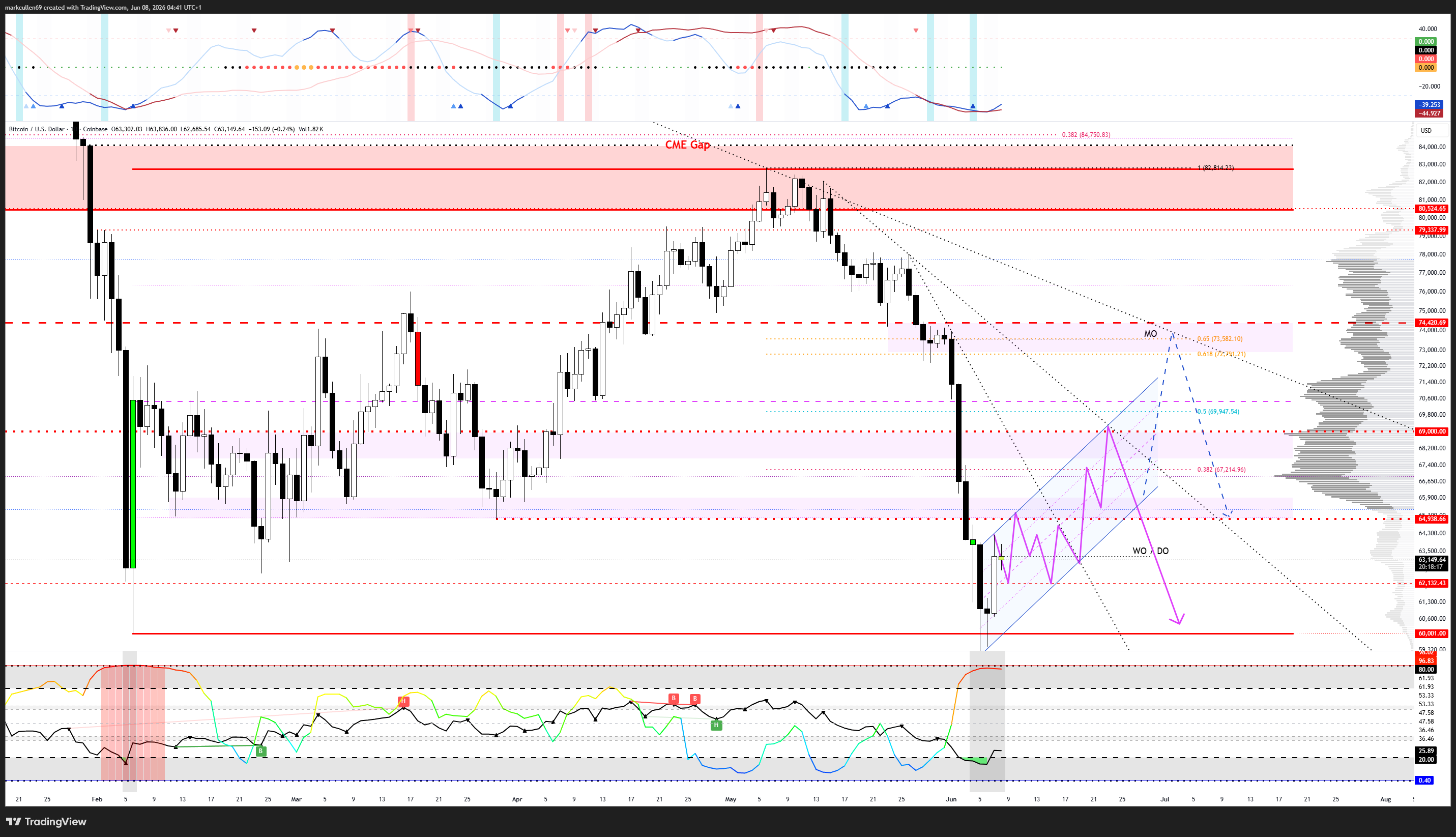
Trader Mark Cullen warned that even in the event of a relief bounce, the bear-market low was still to come.
“Now $BTC has swept the 60K level, which happened a bit quicker than i had originally anticipated,” he told X followers.
“I expect we have a bit more sideways and up for the rest of June. I am not expecting the ultimate market low until middle to late Q3.”
BTC/USD one-day chart. Source: Mark Cullen/X
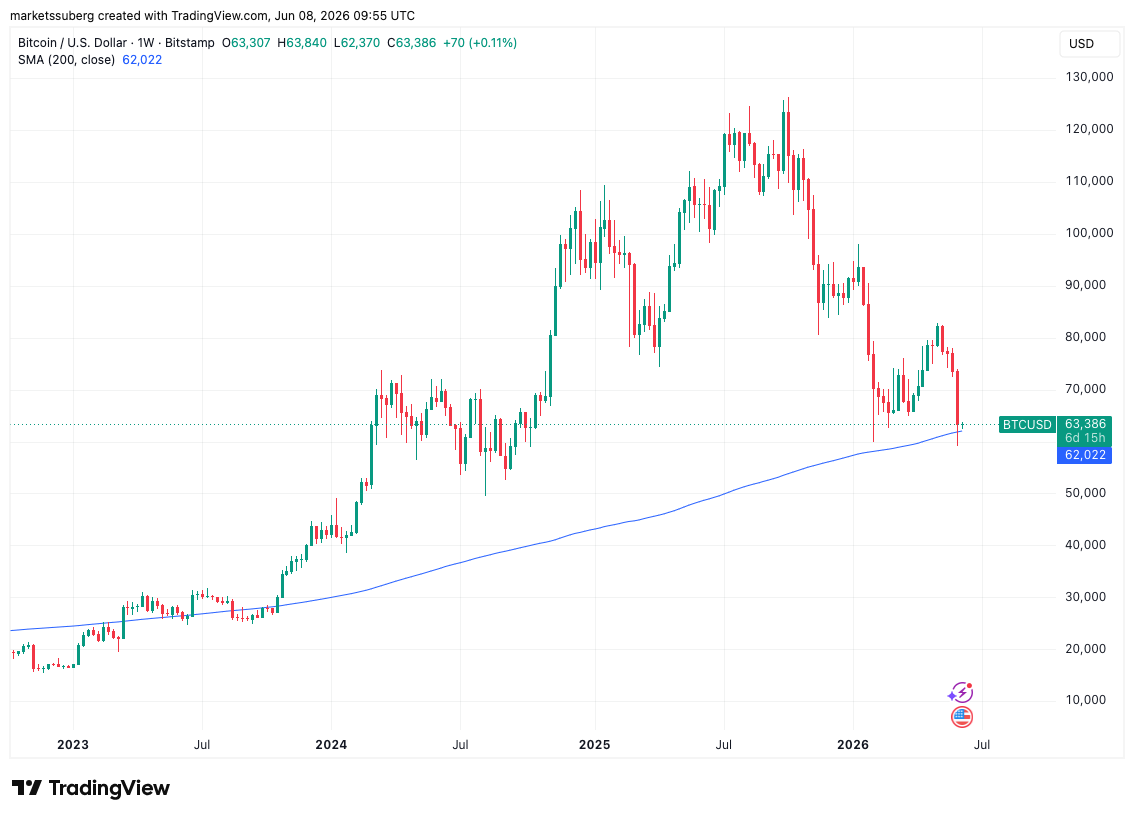
With slightly different timing, crypto commentator ColinTalksCrypto had similar expectations. BTC/USD, he noted, had closed below a key long-term trend line, the 200-week simple moving average (SMA).
“Thus, we likely get a bounce for a 1-3 months and then a drop to a new low in Q4,” he argued.
ColinTalksCrypto said that Q4 “has high odds of being the cycle bottom.”
BTC/USD one-week chart with 200SMA. Source: Cointelegraph/TradingView
CPI and PPI inflation to challenge multiyear highs
May US inflation data will add fuel to market nerves this week, with markets already betting on interest-rate hikes.
The May prints of the Consumer Price Index (CPI) and Producer Price Index (PPI) are slated to reflect the ongoing influence of the US-Iran war on the economy.
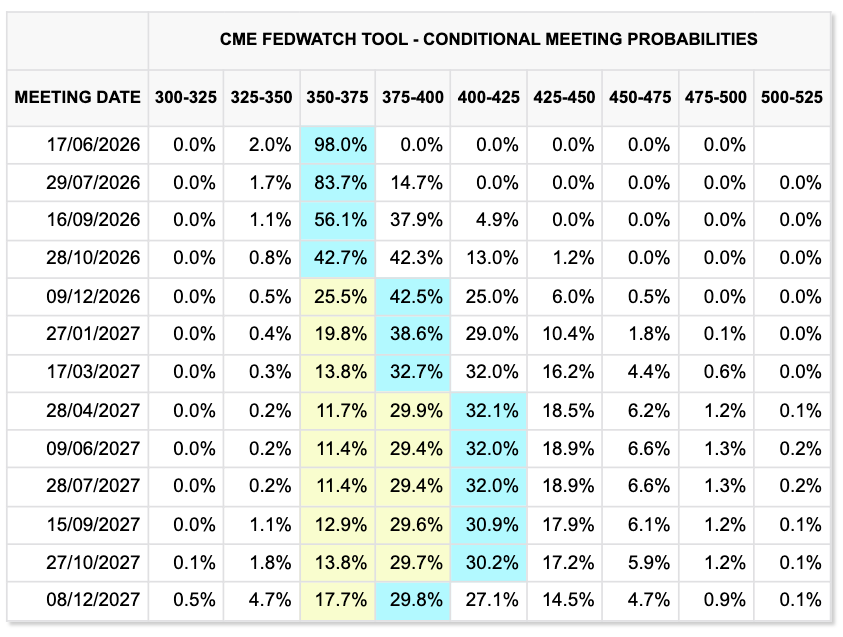
Both indexes hit multiyear highs when last updated for April, and the latest data from CME Group’s FedWatch Tool shows expectations of Federal Reserve policy changing quickly.
“The BASE case shows two rate HIKES by early 2027. There is even a rising 17% chance of 3 rate HIKES by April 2027,” trading resource The Kobeissi Letter noted in analysis late last week.
“Just months ago, markets saw up to 4 rate CUTS in 2026 alone.”
Fed target rate probabilities (screenshot). Source: CME Group
As Cointelegraph reported, US stock markets have broadly shaken off inflation risks, hitting repeated all-time highs as tech stocks drive optimism.
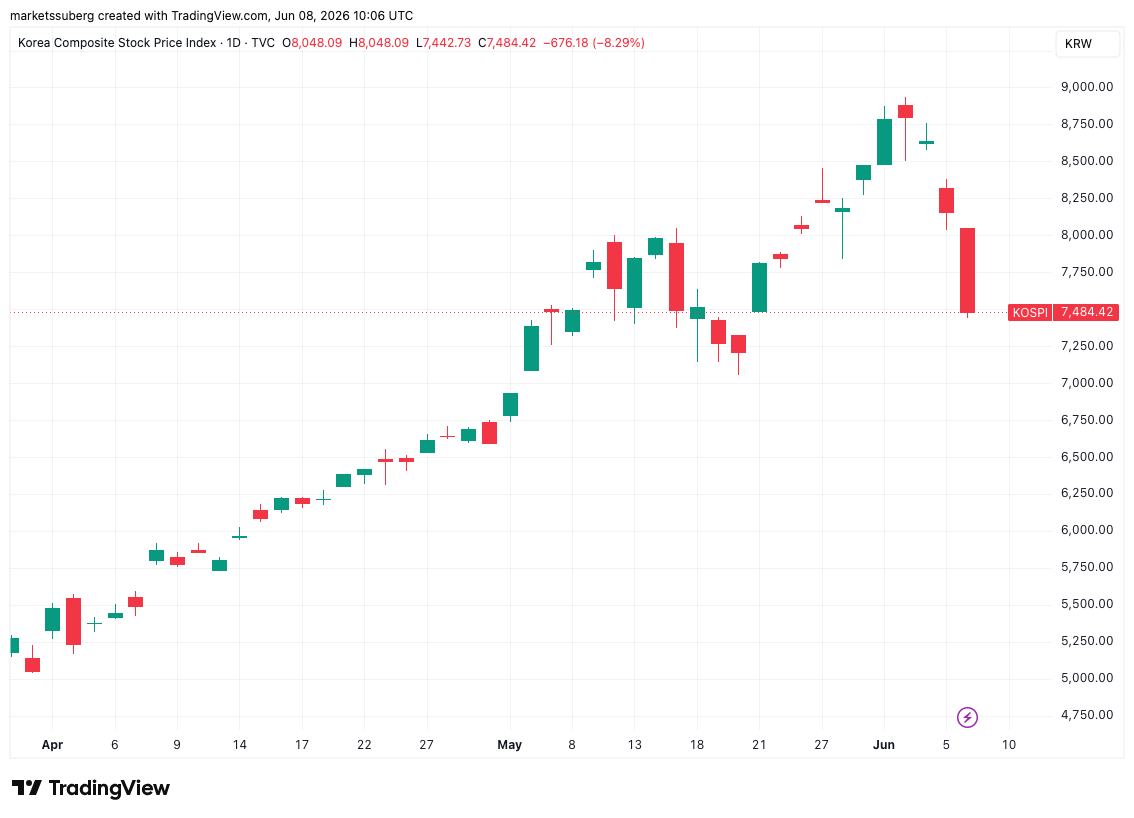
That picture is also looking less stable this week as rate-hike nerves filter through. South Korea’s stock market was halted for volatility on Monday after falling 8% at the open.
Korea Composite Index one-day chart. Source: Cointelegraph/TradingView
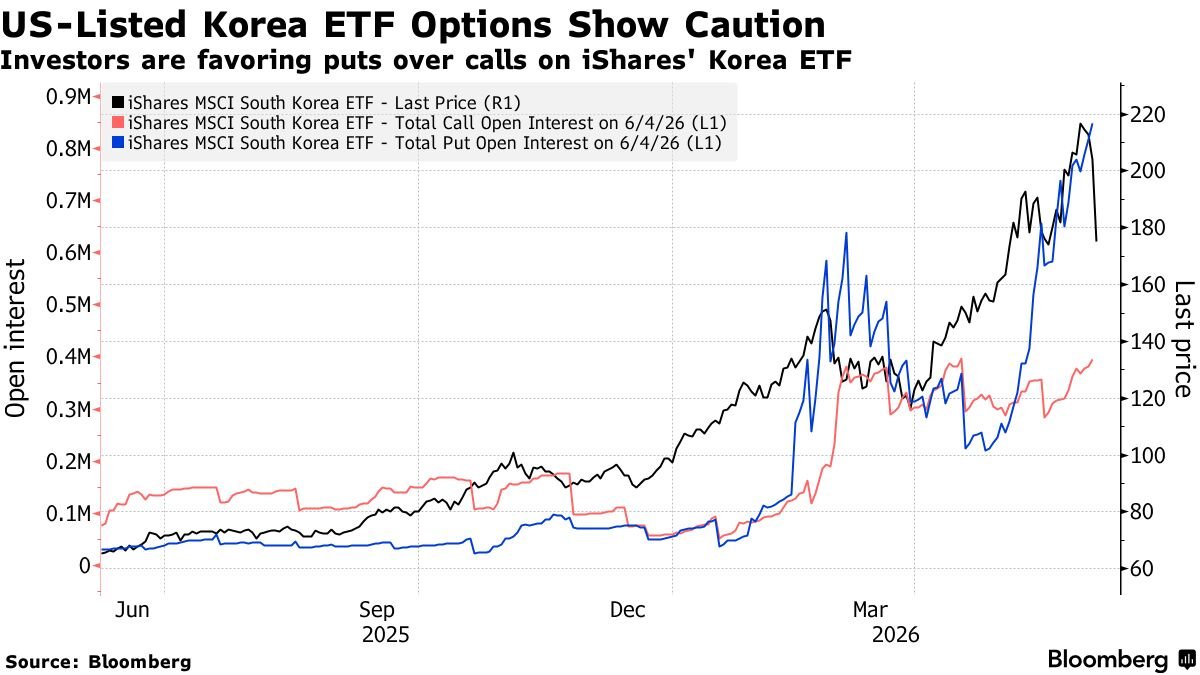
“Something just shifted in the world’s hottest stock market,” Nic Puckrin, founder of crypto platform Coin Bureau, commented on Sunday.
“Koreans stocks are up 90% this year. But the options chart on the Korea ETF has flipped from bullish bets to downside protection. The is a sign that those still in the trade are no longer confident.”
Market data for iShares South Korea ETF. Source: Nic Puckrin/X
Iran war peace promises fail to tame markets
Coming in tandem with macro pressure are developments in the US-Iran war, which remains an unpredictable market volatility catalyst.
Last week, US President Donald Trump said that the conflict would “work out well,” but the assurances failed to stop new multiyear lows for BTC/USD.
Exchanges of fire in the interim meant that the sense of uncertainty continued.
Quoted by the Financial Times and others on Sunday, Trump again sought to put a positive slant on events, saying that the latest strikes would not impact ongoing peace negotiations.
“The deal may make it on its own merit, or not, but this will not have any effect on it,” he said in a telephone interview.
Bitcoin appeared buoyed by Trump’s words, which included an assertion that Israel would have “no choice” but to accept an Iran deal.
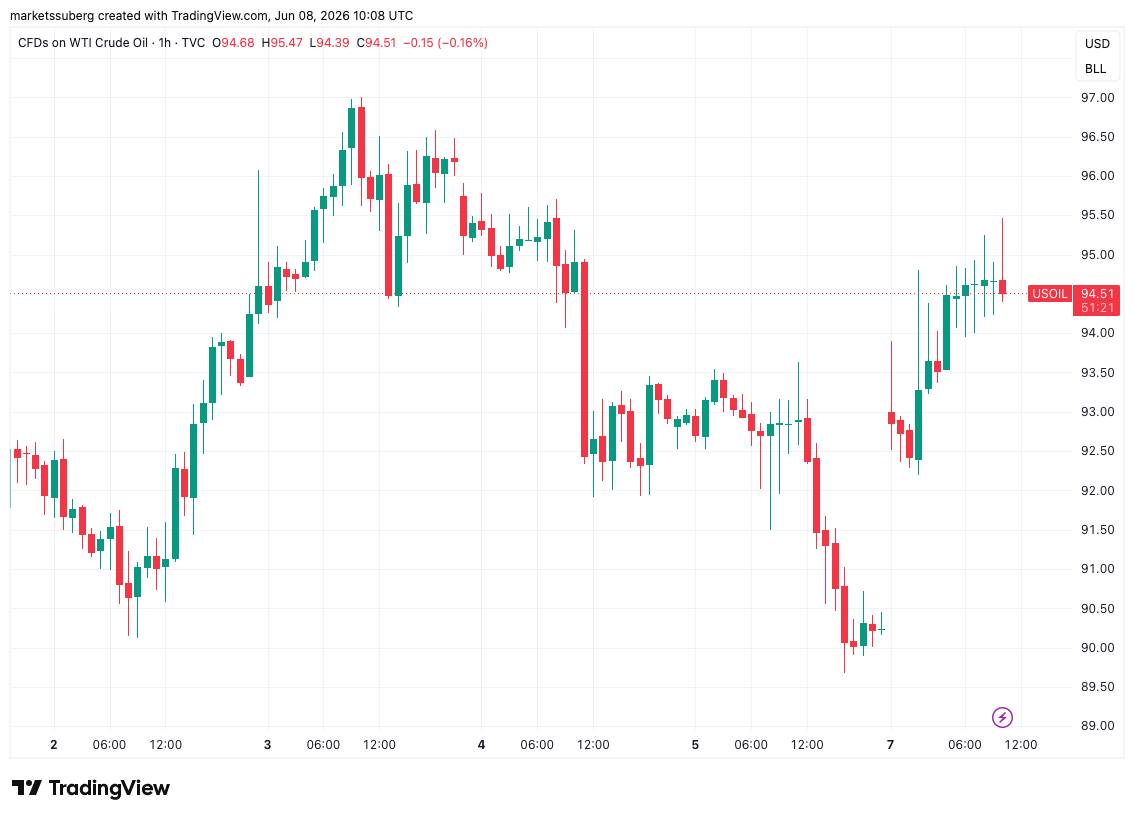
Oil prices gained into the new week, with WTI crude returning above $95 per barrel.
CFDs on US WTI crude oil one-hour chart. Source: Cointelegraph/TradingView
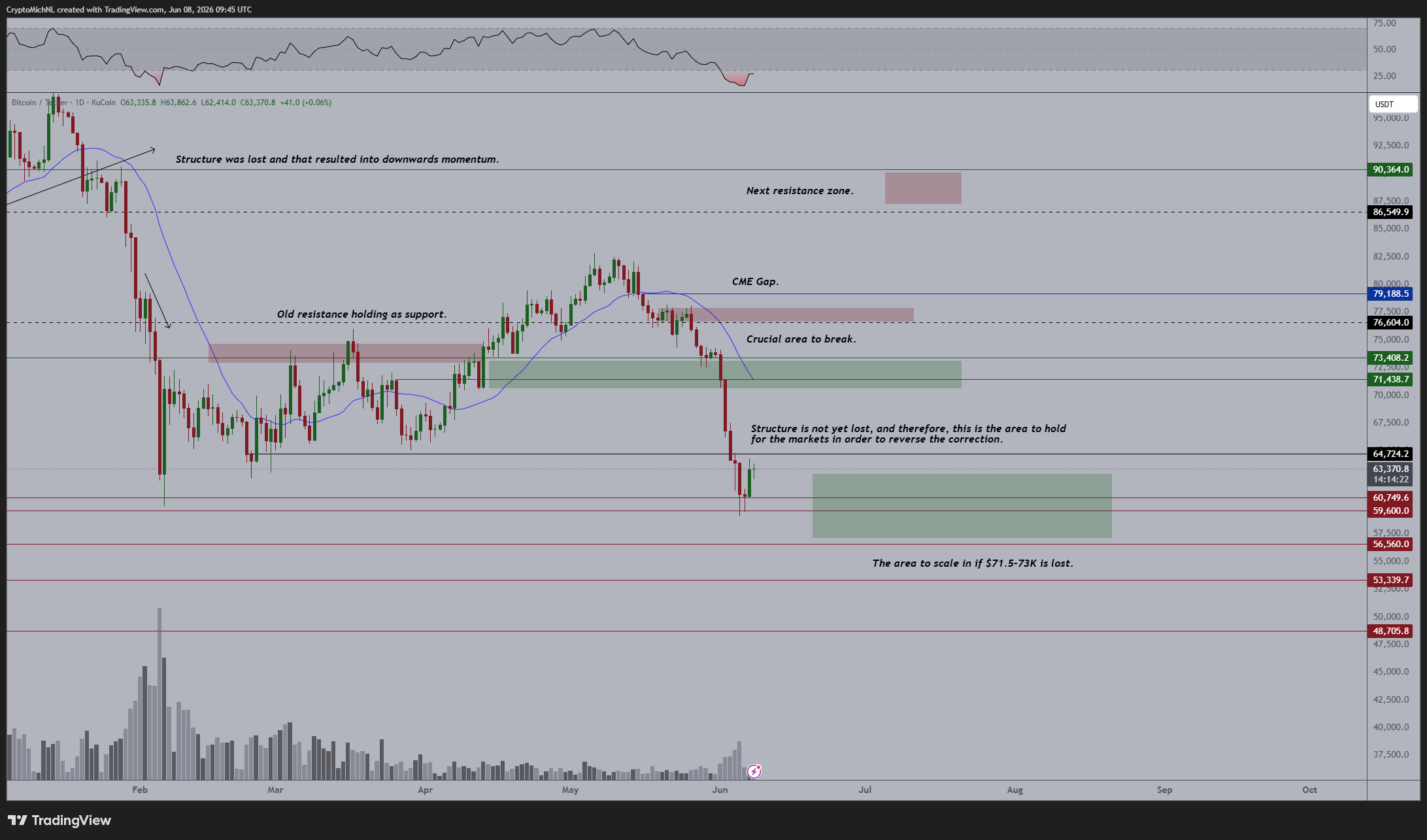
Commenting, crypto trader and analyst Michaël van de Poppe warned that the new week would start with a bump.
“I would expect to see prices drop slightly lower going into the Monday open, as the stock markets were falling off a cliff on Friday evening,” he told X followers.
“After US open, or on Tuesday, this rotates back up and we’ll start to see a glimpse of upwards momentum on Bitcoin.”
BTC/USDT one-day chart. Source: Michaël van de Poppe/X
Indicators point to easing sell pressure
In Bitcoin circles, talk continues to focus on whether BTC has seen its bear-market bottom with the latest dip below $60,000.
Last week, Cointelegraph reported on an analysis concluding that most prerequisites for a market rebound were already in place.
In its latest research, onchain analytics platform CryptoQuant added to the list of reasons why the worst of the rout should be over.
“Together, these indicators suggest that speculative excess has largely been removed from the system,” contributor XWIN Japan wrote in a QuickTake blog post.
“Market sentiment has shifted from euphoria to caution, and investors are entering a period of patience and accumulation.”
The three indicators in question are the spent out profit ratio (SOPR) for long-term (LTH) and short-term (STH) investors, along with the overall BTC supply held at a loss, as well as the 200-day simple moving average (SMA).
The latter is already on the radar for traders after BTC/USD returned to it for the first time since 2023 last week.
“The LTH-SOPR / STH-SOPR ratio has fallen significantly, indicating that long-term holders are no longer realizing the large profits seen during the previous bull market,” XWIN continued about the other components.
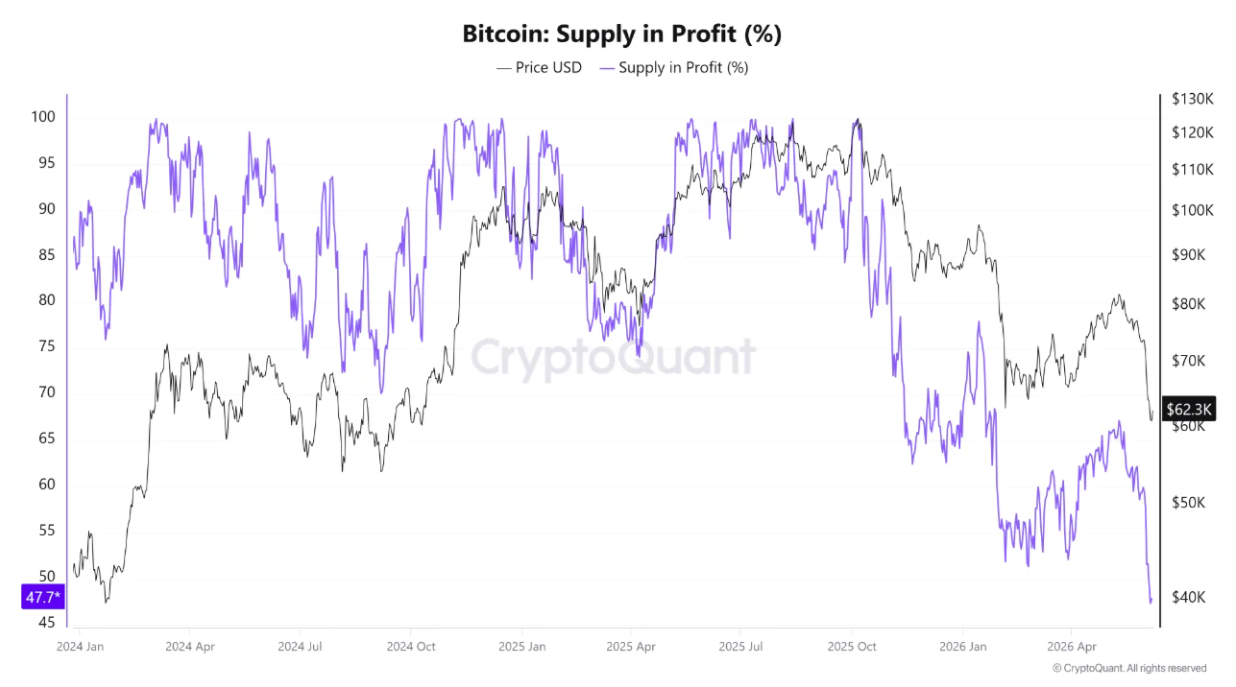
“Supply in Profit has dropped to roughly 47%, meaning more than half of Bitcoin holders are now at break-even or in a loss position. This is a sharp contrast to bull market conditions, when over 90% of supply is often in profit.”
Bitcoin supply in profit (screenshot). Source: CryptoQuant
CryptoQuant also flagged a “demand shortage” thanks to tech stocks stealing the limelight from crypto as a whole.
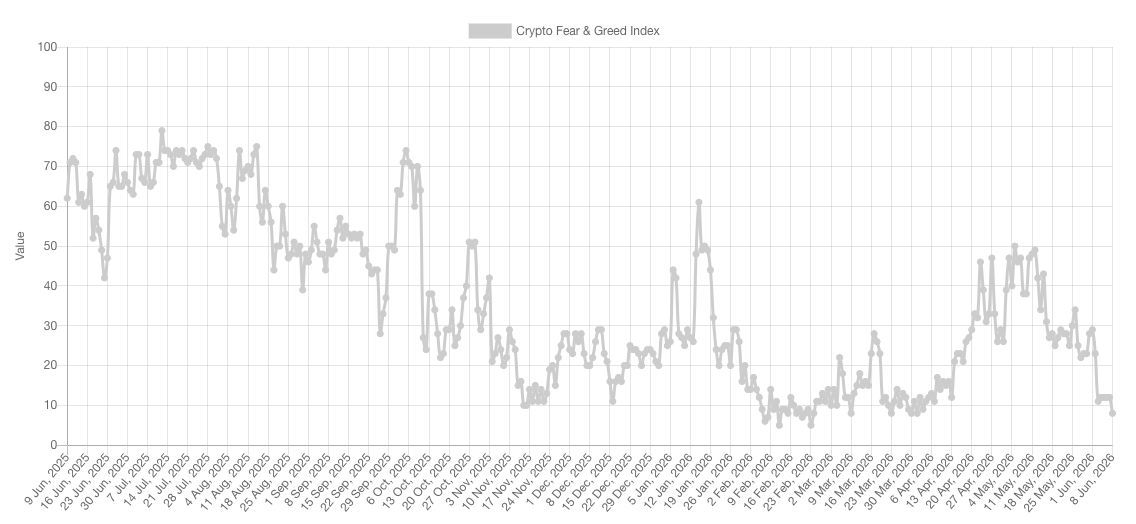
Crypto market sentiment has returned to single figures, per data from the Crypto Fear & Greed Index — but a buying opportunity could be already here.
Related: Bitcoin risks new purge with bear-market losses still $35B below 2022 total
The Index, which uses a basket of factors to determine the overall market mood, measured 8/100 on Monday — well within its “extreme fear” zone.
Such a low score was last seen at the start of April, and is one of the lowest ever recorded.
Crypto Fear & Greed Index (screenshot). Source: Alternative.me
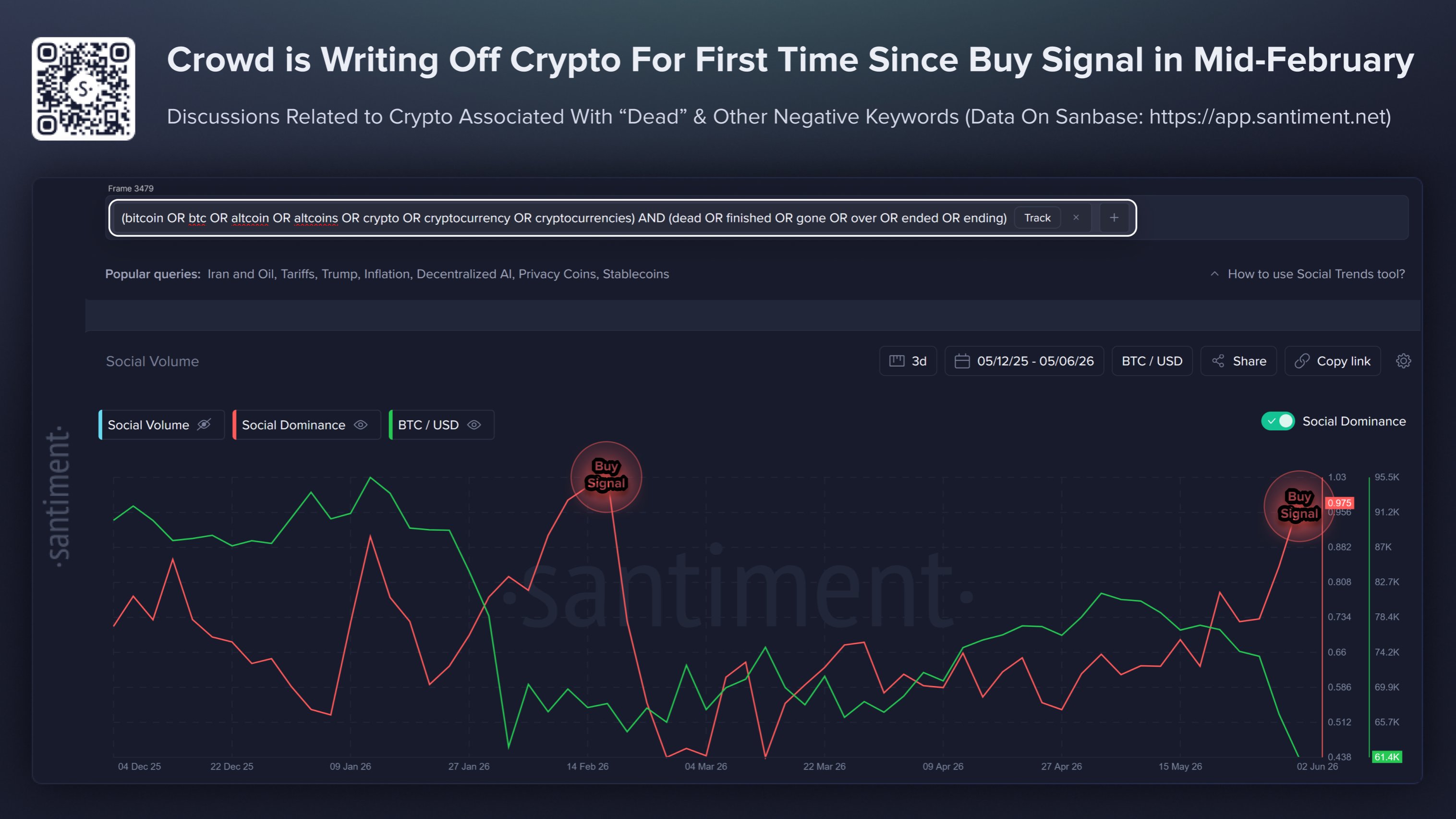
Monitoring social media cues, research platform Santiment described the “highest level of pessimism since mid-February.”
“Historically, these moments of widespread despair have often appeared close to market bottoms,” it told X followers.
“When traders begin declaring an asset class ‘dead,’ especially something largely speculative-driven like crypto, it typically signals that many sellers have already exited their positions, leaving less supply available to push prices significantly lower.”
Crypto sentiment data. Source: Santiment/X
In February, when the $60,000 zone first came back into focus, a collapse in sentiment preceded a rebound to the mid-$70,000 range.
“While sentiment alone cannot predict exact turning points, historical patterns indicate that periods when investors are most convinced that crypto is ‘finished’ have frequently provided safer-than-average opportunities for patient traders willing to take the opposite side of the crowd’s emotions,” Santiment added.
Bybit and Kraken both launched 1:1 equity-backed SpaceX exposure via xStocks, joining Coinbase International and BitMEX in a four-venue race that now splits between synthetic perpetuals and regulated tokenized equity issued by Backed Assets (JE) Limited.
Bybit and Kraken both launched tokenized SpaceX exposure through the xStocks framework last week, bringing the number of venues offering pre-IPO SpaceX products to at least four.
The two additions follow Coinbase International’s USDC-settled synthetic perp on June 4 and BitMEX’s USDT-margined perpetual on June 5, but differ in structure: xStocks tokens are backed 1:1 by the underlying equity in regulated custody, not settled against a cash index.
SpaceX perpetual open interest across venues has reached $280 million, per figures cited in recent reporting. Kraken’s parent Payward separately reported that the xStocks network has processed more than $25 billion in total transaction volume since launch, across 50-plus integrated platforms.
The xStocks Issuer and Legal Structure
xStocks are issued by Backed Assets (JE) Limited, a Jersey private limited company that became a Payward subsidiary in December 2025. Each token is backed 1:1 by the underlying share, held in third-party regulated custody. In the EEA, the product is offered via Payward Europe Digital Solutions (CY) Limited, authorized by the Cyprus Securities and Exchange Commission under MiFID II. Outside the EEA, distribution runs through Payward Digital Solutions Ltd., licensed by the Bermuda Monetary Authority.
Kraken customers in more than 110 supported countries, including the EEA, can register interest in the SpaceX IPO to receive SPCXx, a tokenized representation of SpaceX equity, at the offering price on listing day. The token then trades 24/7 on Kraken and compatible DeFi venues.
Kraken also listed a separate pre-IPO perpetual contract (PF_SPCXXUSD) on June 7 at 10:00 a.m. UTC, offering up to 5x leverage on a multi-collateral flex margin. Pricing uses a proprietary Kraken PreMarket Synthetic index, exponentially smoothed and clamped to within ±0.25% of mark to limit liquidations in a thin pre-IPO book. Kraken intends to convert PF_SPCXXUSD to xStocks-based pricing at the IPO.
Bybit’s xStocks launch was confirmed by the xStocks network and by Emily Bao, Bybit’s Head of Spot: “By listing tokenized equities and ETFs, we’re not just adding new products, we’re empowering our users with greater choice, deeper flexibility, and more control… xStocks was the clear choice.”
Mechanics Across the Four Venues
The four products split into two structural categories. Coinbase International’s SPCX-PERP and BitMEX’s SPCXUSDT are cash-settled perpetual futures — no equity transfer, no share custody, no built-in post-IPO conversion path. Kraken and Bybit’s xStocks tokens involve Backed Assets (JE) Limited issuing tokenized equity against shares in regulated custody, with a defined conversion to post-IPO equity pricing.
All four venues exclude US persons. The xStocks products also bar UK, Canadian, and Australian users.
Payward indicated that SpaceX will not be the last IPO offered through the xStocks framework. Additional listings are expected in the coming weeks.
The complete legislative text for bitcoin-favorite bill H.R. 8957, the American Reserve Modernization Act of 2026, has been made public on the U.S. Congress website, offering lawmakers, industry stakeholders, and the public their first detailed look at the mechanics behind a bill that would permanently codify a Strategic Bitcoin Reserve into federal law.
The bill, introduced May 21 by Rep. Nick Begich (R-AK) alongside co-lead Rep. Jared Golden (D-ME) and more than 20 co-sponsors, was referred to the House Committee on Financial Services upon introduction.
While the legislation’s broad contours — consolidating federally held Bitcoin under Treasury oversight and building on President Trump’s March 2025 executive order — were known at introduction, the full text reveals a sweeping architecture of custody rules, transparency requirements, and acquisition guardrails that go well beyond the executive action it seeks to codify.
Central to the bill is a mandatory 20-year holding period on all BTC deposited into the Strategic Bitcoin Reserve, during which no holdings may be “sold, swapped, auctioned, encumbered, or otherwise disposed of for any purpose”.
That lock-up clock resets with each new deposit, meaning BTC seized through criminal or civil forfeiture proceedings — designated in the bill as “qualifying Bitcoin” — would be essentially untouchable for two decades upon transfer to the reserve.
After that period, the Treasury Secretary may recommend offloading no more than 10% of reserve assets during any two-year window, subject to Congressional review.
Proof of Reserves for U.S. Bitcoin
The full text also mandates a “Proof of Reserve” system requiring quarterly public cryptographic attestations of all holdings, independent third-party audits, and Comptroller General oversight — a level of on-chain transparency unprecedented for a federal financial program.
Non-Bitcoin digital assets acquired by the government, such as Ethereum or other forfeited cryptocurrencies, would be held in a separate Digital Asset Stockpile, with proceeds from any dispositions directed toward expanding the Bitcoin reserve or reducing the national debt.
Perhaps notably, the bill explicitly prohibits the government from using any new borrowing, new taxes, or deficit spending to acquire BTC.
Instead, it directs the Treasury and Commerce Departments to jointly study budget-neutral acquisition pathways within 180 days of enactment — including conversion of non-Bitcoin stockpile assets, Federal Reserve surplus remittances, and gold certificate revaluations.
The bill also opens a voluntary state participation program, allowing states to store their own BTC holdings in segregated Treasury accounts, while affirming that no provision may be construed to authorize seizure of privately held Bitcoin.
The bill now awaits action in the House Financial Services Committee.