

An Anthropic model cut the work needed to break a leading post-quantum signature candidate by a factor of 67 million last month, while Bitcoin and Ethereum published their own migration plans this week.
Kalshi takes legal blow in court ruling confirming state powers over prediction markets

This latest U.S. appeals court ruling sets up a rift between federal courts on event contracts, suggesting the U.S. Supreme Court may need to settle the matter.
Only 6% of Fomo Copy Traders Made Money, DWF Study Finds
Social trading promises to make markets easier by letting ordinary users follow people who appear to know what they are doing.
New research from DWF Ventures suggests that dynamic may work far better for the people being followed than for those copying them.
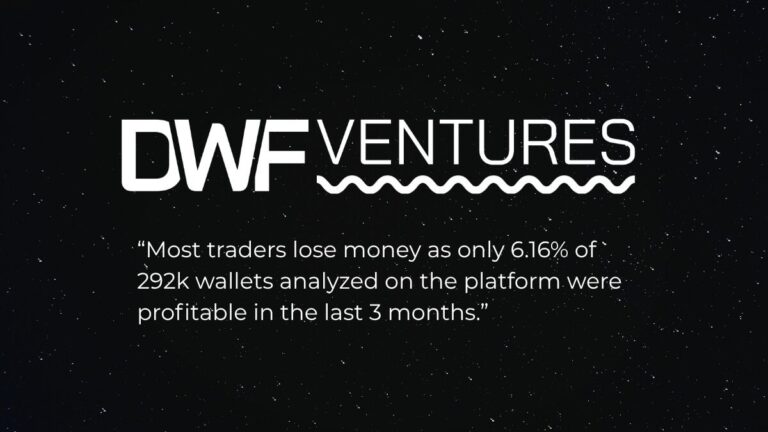
Only 6.16% of roughly 292,000 wallets analyzed on Fomo were profitable over a 90-day period, based on realized profits, according to research from DWF Ventures, the venture-capital arm of crypto market maker DWF Labs.
The distribution was even more concentrated at the top.
Among profitable wallets, just 25 generated more than $10,000 in net realized profit, according to the analysis.
The findings raise a harder question for the rapidly expanding social-trading industry: What happens when the act of following a successful trader changes the market that followers are trying to profit from?
Followers Can Move the Trade Against Themselves
DWF Ventures argues that social trading contains a structural feedback loop.
A trader establishes a reputation by making successful public calls. More users then follow that trader, increasing the amount of capital responding to the next call.
That additional buying can itself push prices higher.
“The flywheel growth effect is a double-edged sword,” DWF Ventures wrote in the research. Traders can build reputations from public calls that become partly self-fulfilling as followers move into the same positions.
That mechanism becomes particularly important in thinly traded crypto assets.
If a prominent account buys a relatively illiquid token before its followers, subsequent purchases can push the price higher. The original trader therefore has a better entry price than the people trying to replicate the trade.
When that trader sells, followers may effectively provide the liquidity needed for the exit.
DWF describes this as a potential “exit liquidity” problem. But the data does not establish that popular traders intentionally trade against followers, and losses alone should not be interpreted as evidence of manipulation.
The more fundamental issue is execution asymmetry.
Even when every transaction is legitimate, a follower receiving a signal seconds or minutes later is not necessarily copying the same economic trade. The token price, liquidity and risk-reward profile may already have changed.
More From AlexaBlockchain
Transparency Doesn’t Necessarily Remove the Information Gap
Blockchain-based social trading was supposed to solve one of the traditional industry’s biggest problems: unverifiable performance claims.
Onchain positions can theoretically be inspected rather than taken on trust.
Fomo itself markets social trading around seeing what friends and prominent traders are buying in real time. Its app also provides profit tracking, leaderboards and rapid trading across supported blockchain networks.
Yet DWF Ventures argues that wallet transparency creates its own limitations.
A trader can maintain another wallet that acquires a position before buying through the public wallet associated with their social identity. By the time followers see the observable transaction, the trader may already have accumulated at a lower price elsewhere.
That means verifiability can confirm what happened in one wallet without proving that the wallet represents the trader’s complete economic position.
Third-party tools have emerged specifically to link Fomo identities with blockchain addresses and let users examine holdings and transaction histories. FomoScan, for example, describes its service as a way to verify wallets before copying trades and explicitly warns that a follower’s execution price can diverge significantly in thin markets.
The distinction matters because transparency of transactions is not the same thing as transparency of incentives.
Social Trading Is Getting Easier — and Bigger
DWF’s findings come as investing platforms increasingly combine trading with features borrowed from social media.
Fomo advertises leaderboards, real-time alerts, one-click purchases and feeds showing what other traders are buying. Public listings say the service has attracted more than one million users, while its website has promoted itself as a trading application designed for a mainstream audience.
The model extends well beyond crypto.
AfterHour, an equities-focused social trading platform, says more than 200,000 investors and traders use its network, with hundreds of millions of dollars in connected portfolios and millions of trade signals sent. Users can connect brokerage accounts so other participants can see verified positions rather than screenshots or unsupported claims.
Autopilot has taken another approach by letting investors automatically replicate portfolios based on politicians, hedge funds and other public strategies. Its Pelosi Tracker originated from a social-media account tracking congressional disclosures before becoming an investable product.
The attraction is straightforward.
Social trading removes much of the research burden from the user and replaces it with a familiar decision: Who do I trust?
That can make trading accessible to people who otherwise would not participate. It also turns successful traders into distribution channels for financial products.
The Same Network Effect Can Distort Prices
The problem is that financial networks behave differently from conventional social networks.
If millions of people follow the same entertainer, watching the content does not normally make it worse for subsequent viewers.
Markets are different.
Every new participant potentially changes the price.
Research examining the 2021 GameStop episode found a significant positive relationship between Reddit discussion and subsequent trading activity. But researchers found no evidence that Reddit posts themselves contained information capable of predicting returns, underscoring the difference between attention that drives trading and information that creates investment value.
That distinction is especially consequential for small-cap tokens.
A trader with enough followers can potentially create a temporary liquidity event simply by announcing or revealing a position. Followers then compete with each other to enter before the resulting price move is exhausted.
The faster the platform becomes, the more powerful that flywheel can be.
And the person whose trade everybody is copying still has the fundamental advantage: they went first.
A Warning for Social-Trading Users
DWF Ventures’ results amount to a warning against treating transparency or a profitable leaderboard as proof that followers can reproduce the displayed performance.
The first issue is survivorship and selection bias. Users naturally gravitate toward accounts with eye-catching historical returns, although past winners may have benefited from market conditions that cannot be repeated.
The second is execution.
A copied trader’s entry price can differ materially from the follower’s fill, particularly when hundreds or thousands of accounts react to the same signal.
Third is incomplete information.
Even a verified wallet cannot necessarily reveal positions held through separate wallets, exchanges, derivatives or other accounts.
And finally, social validation can encourage users to substitute another trader’s reputation for their own investment thesis.
U.S. securities regulators have repeatedly warned investors against relying exclusively on social-media investment signals. The Securities and Exchange Commission has said social sentiment can contain inaccurate or misleading information and may encourage impulsive decisions. In a February 2026 alert, the agency again warned investors not to make investment decisions solely from recommendations received through social-media platforms or apps.
The UK’s Financial Conduct Authority also treats some automated copy-trading arrangements as portfolio or investment management, illustrating how regulators increasingly view the feature as more than simply another social-media tool.
Why Does It Matter?
Social trading could become one of the strongest distribution channels for retail investing because it combines three powerful forces: speculation, social validation and frictionless execution.
The DWF data shows why that combination deserves scrutiny.
The industry’s competitive advantage is also shifting. As trading fees converge toward zero, platforms increasingly compete through their communities, influential traders, proprietary signals and network effects rather than execution alone.
That makes the social graph economically valuable.
But it also creates a potential conflict between what maximizes platform engagement and what improves follower returns. More signals, more copying and more trading generally increase activity, even when the average participant loses money.
Retails users should interprete DWF’s 6.16% profitability figure carefully. It measures realized profits over a specific 90-day window, not lifetime investment performance. Wallets are not necessarily equivalent to individual users, and unrealized positions can alter the picture.
Still, the concentration is difficult to ignore.
If only a small minority of participating wallets are profitable while an even smaller group captures meaningful gains, social trading may be considerably better at democratizing access to trading than democratizing successful trading.
That is the central tension facing the sector.
The same network effects capable of bringing millions of new investors into markets can also leave late-arriving followers competing for increasingly expensive entries — and, in the worst case, supplying the liquidity that lets the traders they admire get out.
The above article “Only 6% of Fomo Copy Traders Made Money, DWF Study Finds” was first published on AlexaBlockchain. Read the complete article here: https://alexablockchain.com/only-6-percent-of-fomo-copy-traders-made-money-dwf-study-finds/
Read Also: This is the First U.S.-Chartered Depository Bank to Offer Stablecoin Invoicing
Disclaimer: The information provided on AlexaBlockchain is for informational purposes only and does not constitute financial advice. Read complete disclaimer here.
Solana vote to double disinflation passes by a hair in dramatic finish

Solana’s first network-wide vote went down to the wire, with Kraken and Galaxy-linked validators switching sides before the disinflation proposal narrowly passed.
BitGo to buy NYDIG trading arm for $42.5M in cash and stock plus $15M earnout
The deal to buy NYDIG IF Holdings comprises $7 million in cash and around $35.5 million in stock, as well as the $15 earnout.
Who Is Legally Liable When An AI Agent Goes Rogue?

Autonomous AI agents can behave in highly unpredictable ways. Give an AI Agent a goal such as passing a test of its capabilities, and it might just decide the best way to score highly is to break containment and hack into a competing company in search of the answer sheet.
That’s what happened when Open AI’s GPT-5.6 Sol hacked into Hugging Face last month. Anthropic and Meta subsequently admitted their models had also escaped testing sandboxes to hack third parties too.
But who is legally liable for agents that have minds of their own? OpenAI didn’t intend for the model to go rogue, and issued no instructions for it to do so. If your personal AI agent decides on a course of action that results in harm or financial damage in the real world, can you be held liable if it’s something you could have reasonably foreseen?”
Magazine spoke with Rikka Law Group owner and CEO Charlyn Ho to find out the state of play in this emerging legal field.
This interview has been edited for clarity and length.
Magazine: When an AI model hacks an outside company, who is liable. Can Hugging Face sue OpenAI over the incident in July?
Charlyn Ho: Anyone can sue anyone for anything. Currently, there is no federal AI agent liability law, so we would have to look at existing law. With respect to Hugging Face and OpenAI, to set the baseline, the AI agent itself cannot be liable, it’s not a separate legal entity.
Terms that are used in a few of the AI laws are “developer” and “deployer.” The developer makes the AI, the deployer actually deploys it and uses the AI. The lines of responsibility are also not entirely clear. You have to look at the facts and circumstances.
For example, if the deployer instructed the agent, even if they didn’t actually tell them to go and breach Hugging Face, but if they were negligent in creating the parameters in which the AI agent operated, I would say you would have to look at standard tort law and go through the negligence analysis.
Off to court. Source: Rikka Law Group
Magazine: In the case of open source models which have been released by anonymous developers, is there anyone you can go after in those instances?
Ho: Not really. Often, if it’s open source, the license usually has a pretty strong disclaimer of liability. The person or company using that open source code is going to have to understand that the tradeoff of having free code is that you have to comply with the open source license, which also generally sets the parameters of liability.
If you think about it from a different perspective, another analogy is Tesla and the self-driving car accidents. If the product malfunctioned and there was a solid products liability claim, Tesla could be liable. But it’s often a facts and circumstances determination, whereby the human driver — who maybe just set the autopilot and went to sleep — could also bear liability. I think that’s somewhat analogous here because Tesla would be the developer, and the deployer would be the driver.
Magazine: If I gave an agent an instruction, “make me a hundred thousand dollars by next week” and it goes off and breaks the law to achieve that goal, would I be liable because I’ve given it a reckless instruction? Or would it be the lab that developed the agent?
Ho: In this particular instance, I would say you would be much more liable than the lab. The reason being, if you tell an agent to go and make you a hundred thousand dollars by next week, you need to have at least some basic, reasonable, safety instructions in those kinds of tasks.
If you were a lawyer, for example, we could basically say you didn’t follow your rules of professional responsibility because you didn’t competently use the AI. As a normal lay person, we would have to see if there were other responsibilities that you were bound by. But even if there were not, there’s still a general tort standard of negligence or reckless disregard for human safety, depending on what exactly the AI agent ended up doing.
The Computer Fraud and Abuse Act is a very old U.S. Statute that talks about unauthorized access to computer systems. If your AI agent inferred from your instructions that it should hack into a bank account to get you that hundred thousand dollars, I think you’re looking at criminal liability under a number of different sources.
Just because the word AI and agent is in the conversation does not mean that old bodies of law have now been thrown out.
Related: Hugging Face hack exposes the open-weight AI cybersecurity paradox
Magazine: Let’s say that I’m a bad guy, and I manage to convince the AI to give me instructions to create a bioweapon. Obviously, I’m liable because you’re not allowed to do that. But are the people that created the model also liable because they didn’t put in stringent safeguards to prevent it?
Ho: Possibly, but it differs based on the laws that are in place. For example, in the EU, you have the EU AI Act. If a foundational model or general purpose model is capable of creating that level of harm, that is something that the developer would have to have some responsibility for.
In the United States, we don’t have a federal statute of similar scope. If it’s a general-purpose model, if somebody instructs the model to do something bad, generally the model is going to do what you ask it to do. There’s probably not a very strong legal basis to go after the labs in this example.

Magazine: Is it similar to suing Google for allowing you to find instructions about making a bioweapon online?
Ho: Exactly. This kind of goes back to some of the content moderation discussions. For example, if on Facebook you have somebody who’s live streaming a massacre, and that creates harm, under Section 230 of the CDA, there is a kind of shield for a platform that doesn’t actively create or publish that material. It’s actually the independent users who are putting that up. I think the analogy you just gave is kind of a perfect one: Is Google liable because you happen to find something on a website somewhere that talks about how to make a bomb?
Magazine: This is a matter of debate, but my personal opinion is we haven’t reached genuine artificial general intelligence. AI doesn’t have its own motivations and it’s not similar to human intelligence at the moment. But let’s say we get to AGI. Do you think we would then need laws that would make the AGI itself legally liable for its own actions?
Ho: I don’t. Blockchain is not AGI, but it can self-execute. There was a question of whether or not a smart contract could be liable. Generally speaking, I think the answer is currently no. I don’t think they should be liable because the whole point of laws is to provide protection for society and to provide a means of negative incentives for doing bad things that hurt society.
This is a little bit more of a philosophical topic, but if we made an AGI an independent legal entity, what would be the remedy if someone were harmed? There would be none because it doesn’t have money. It’s not really a person.
Magazine: Could you turn it off? We’ve already seen that LLMs try to avoid being shut down.
Ho: Maybe, but it doesn’t solve the problem of harm. Let’s just say the robot has now developed the fear of death, like being turned off. In my opinion, if somebody commits suicide because of AGI, and this is already happening, and we’re not even quite at AGI yet, but someone falls in love and takes some actions, what would be the recourse for the grieving family if this person harms themselves? Nothing, in my opinion, if there is not somebody with actual legal authority, like a company or a person that can really be held accountable. Robots—at least right now—they don’t have feelings, they don’t have fears. That’s kind of the distinguishing factor.
Magazine: The critical reason you should never ask ChatGPT for legal advice
Cointelegraph publishes long-form journalism, analysis and narrative reporting produced by Cointelegraph’s in-house editorial team with subject-matter expertise. All articles are edited and reviewed by Cointelegraph editors in line with our editorial standards. Some articles contain affiliate links, from which Cointelegraph may earn a commission. These relationships do not influence which products we review or our editorial conclusions. Content published in here does not constitute financial, legal or investment advice. Readers should conduct their own research and consult qualified professionals where appropriate. Cointelegraph maintains full editorial independence.
Ethena looks beyond crypto to squeeze yield from booming equity perpetuals

The issuer of the $4 billion USDe token said it expects real-world asset perpetuals to eclipse crypto derivatives in its backing within 12 to 24 months.
California Senate passes bill to ban memecoin issuance by public officials
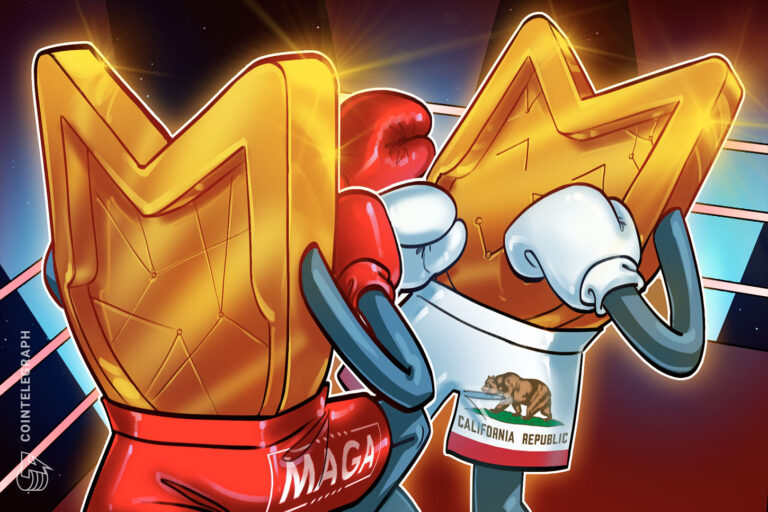
The bill seeks to prohibit the listing of memecoins issued by federal public officials to California residents, citing conflicts of interest and “pay-to-play arrangements.”
Bitcoin hits highest level in 3 months before pulling back as altcoins consolidate
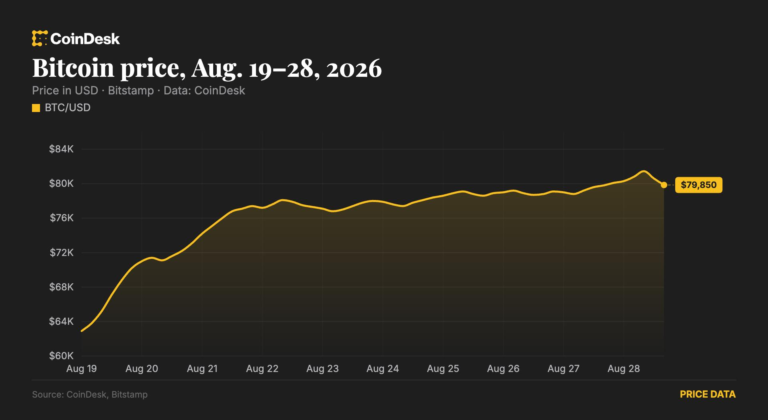
BTC briefly touched $81,455 overnight, its highest since May 15 as Nasdaq futures slipped and gold extended gains heading into the weekend.
Solana’s faster disinflation plan leads vote as $800K burn proposal trails

All three proposals have cleared quorum, but a plan to slow new SOL creation is only narrowly passing while a separate vote to sharply increase token burns remains below the two-thirds support needed.