Home Blog Page 176

CFTC Chair Claims Gemini Case was Politically Motivated, Seeks to Reverse $5M Settlement

US Commodity Futures Trading Commission (CFTC) Chair Michael Selig is claiming that the agency under former President Joe Biden “politically targeted” the co-founders of cryptocurrency exchange Gemini through enforcement actions.

In a Tuesday CNBC interview, Selig said under his leadership, the CFTC was “trying to get back to a baseline” on enforcement, after what he claimed was politicization by the Biden administration. While the Selig acknowledged that he is a political appointee nominated by US President Donald Trump, he claimed that the recently reported staff cuts targeted people “engaging in lawfare.”

“The Biden administration weaponized the federal agencies against the crypto industry and many other industries,” said Selig. “They politically targeted people like the Winklevoss twins, and that’s not acceptable. We’re righting those wrongs. We’re gonna start fresh. The agency should not be used to engage in lawfare.”

Michael Selig in Tuesday interview. Source: CNBC

Under Selig, the CFTC last week moved for a federal court to vacate the agency’s $5 million settlement with Gemini, which it reached in January 2025 before the commission was under the Trump administration. Gemini co-founders Tyler and Cameron Winklevoss each donated $1 million to Trump’s 2024 election campaign and have since attended White House events with the president, including the signing ceremony for the stablecoin-related GENIUS Act.

“I’m not going to get into the facts, because this is an active investigation, litigation rather,” said Selig. “But what is important here is that to the extent the agency was used to politically target folks, we’re reversing that, and we’re starting fresh.”

Related: CFTC backs crypto perpetual contracts, issues advisory on 24/7 trading

According to former CFTC Chair Timothy Massad, it was “extraordinarily unusual” for the agency to attempt to reverse its position on a previously settled case like Gemini’s. Cointelegraph reached out to the CFTC and Gemini for comment but did not receive an immediate response.

Selig leads CFTC policy as the agency’s sole commissioner and chair

Under Selig, the CFTC has taken the position that federal commodities law supersedes individual US states’ authority over prediction market platforms like Kalshi and Polymarket. The commission has filed lawsuits against Minnesota and other jurisdictions attempting to restrict or ban prediction markets.

Source: Polymarket

Selig remains the agency’s sole commissioner following a string of resignations and departures from its leadership in 2025, including former acting chair Caroline Pham. Many US lawmakers have urged Trump to fill the agency’s five-person leadership panel with a bipartisan group of regulators, but the president had not announced any picks as of Tuesday.

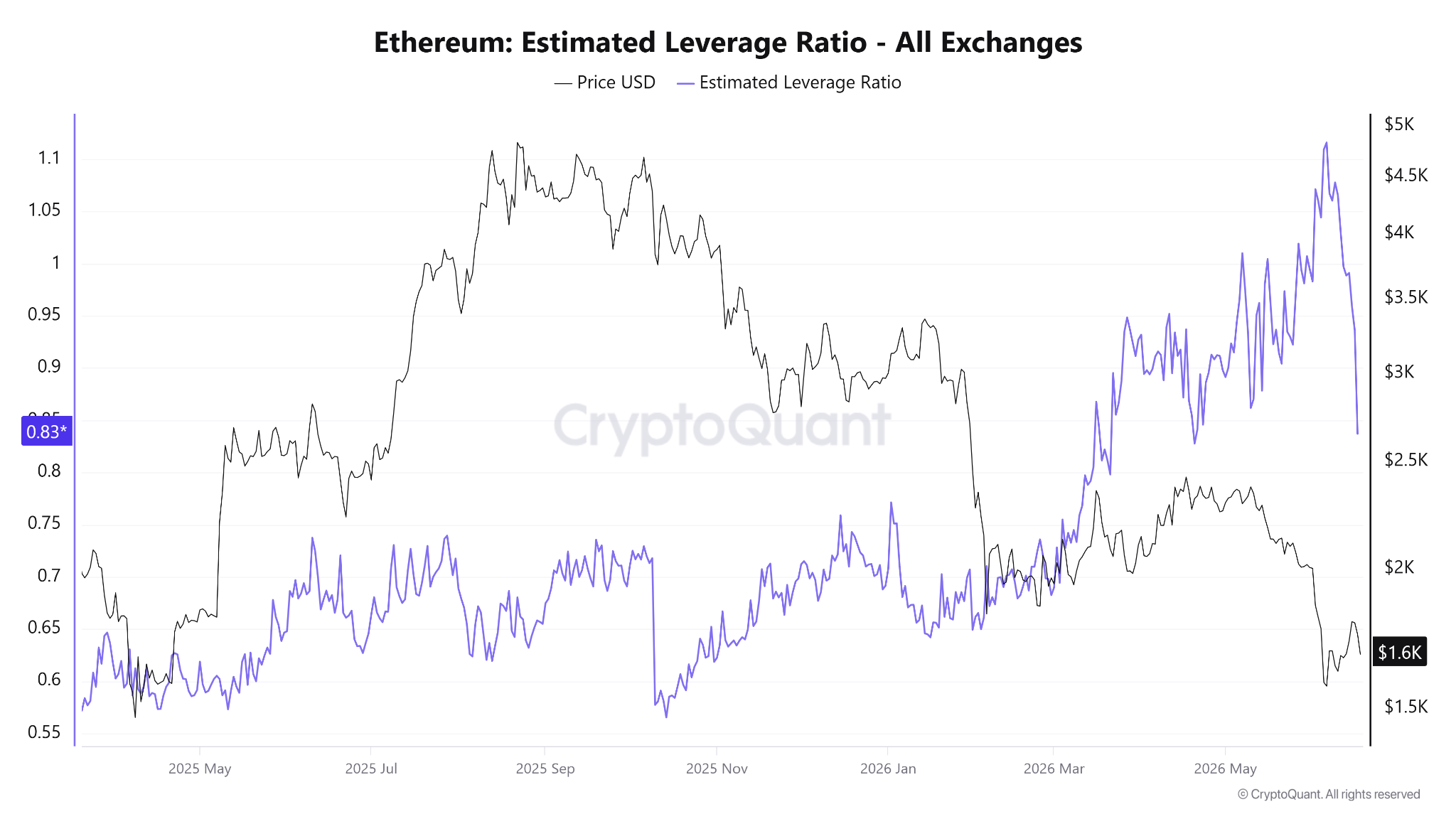
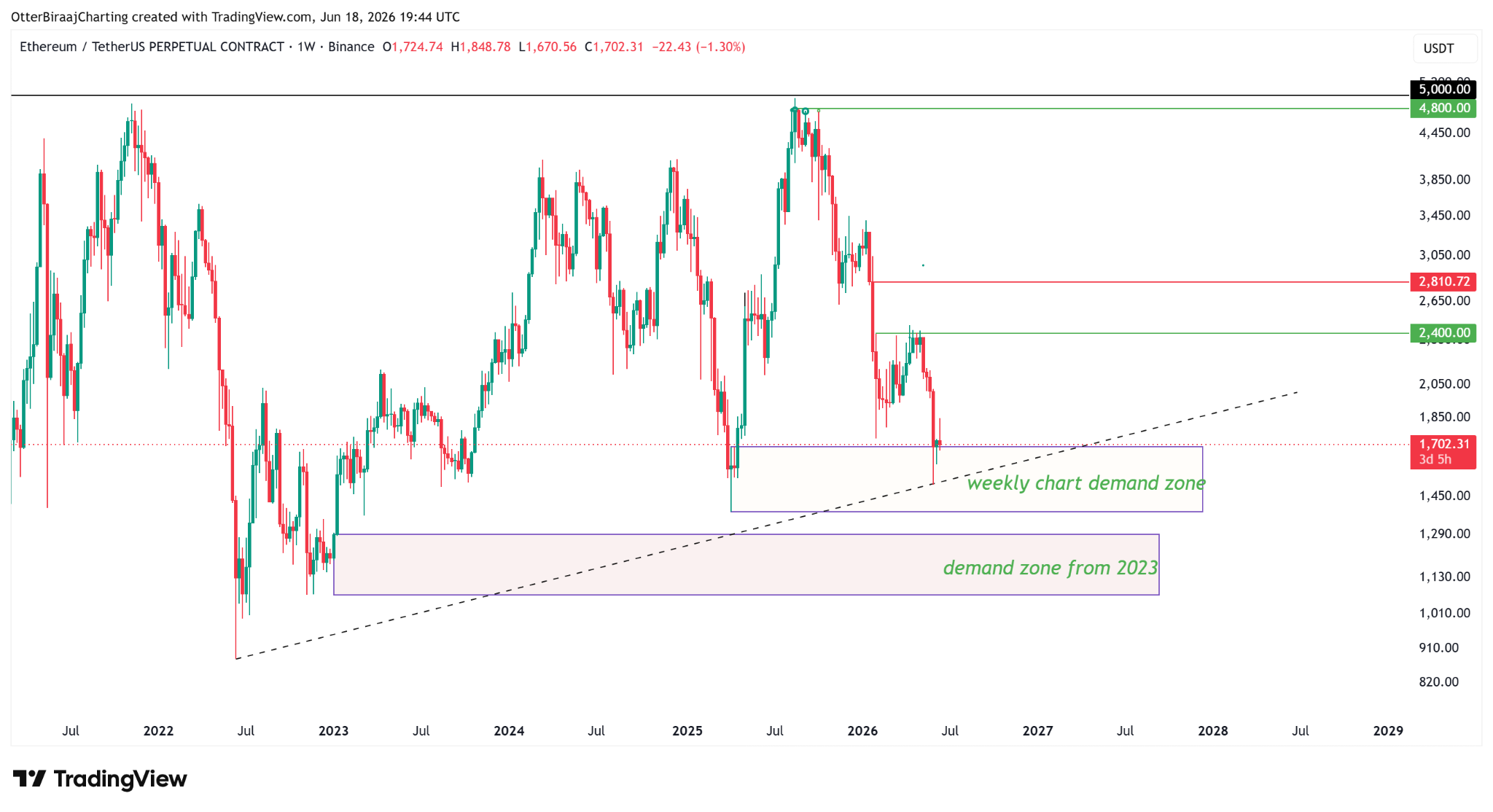
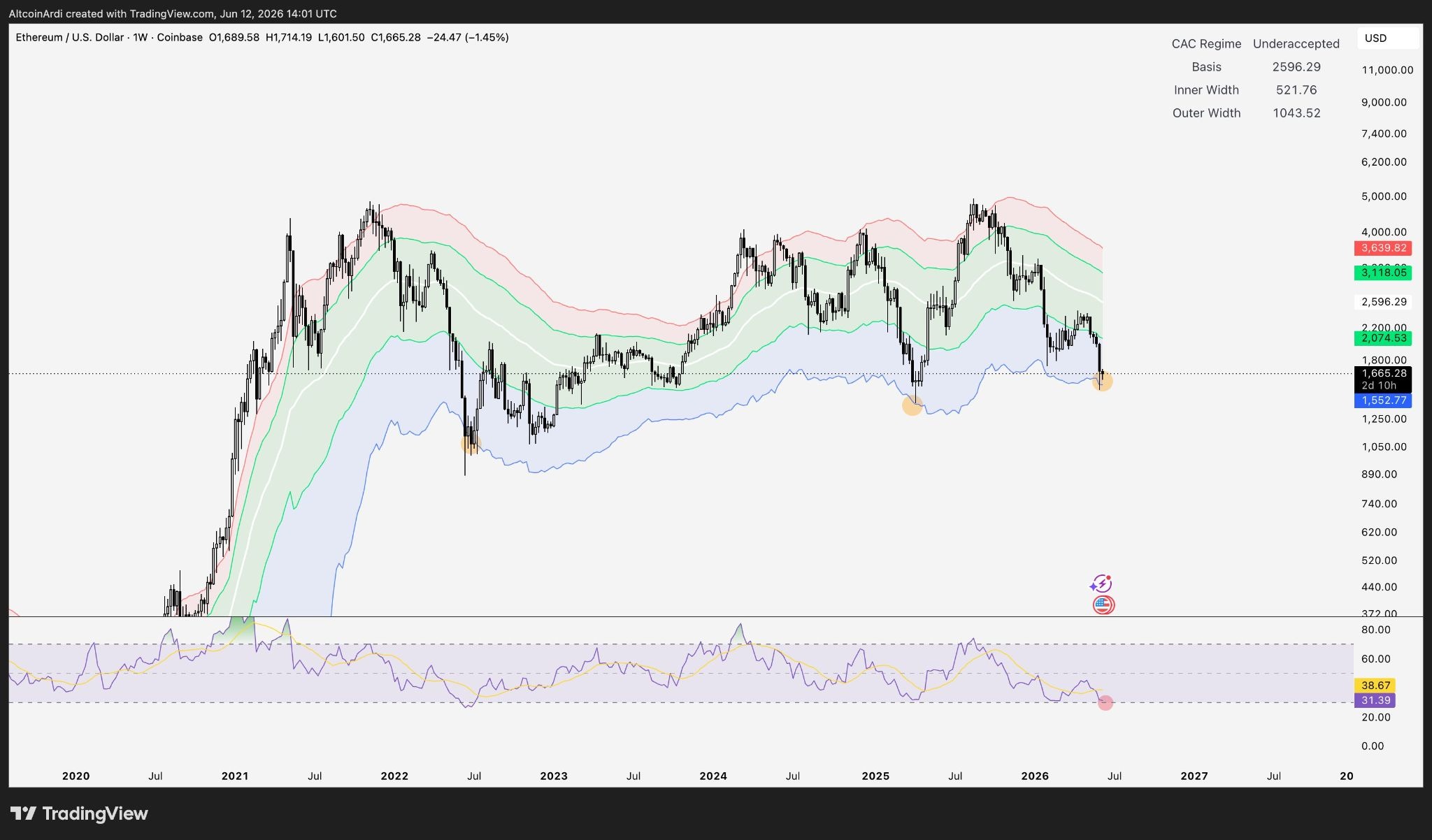
Magazine: HYPE chases $100 target, ETH could dump below $1800: Market Moves

Bad Sentiment, Strong Fundamentals: the Institutional Turn | Chris Perkins, Franklin Crypto

0

🎧 Listen to Interview 💻 Watch Video… Read the full story at The Defiant

BTC may face deeper losses as capital chases AI stocks, K33 says

0

Bitcoin tumbling to $67,000 may signal a challenging summer ahead as investor capital continues flowing into artificial intelligence (AI) stocks and away from crypto.

In a Tuesday report, K33 Research head Vetle Lunde said bitcoin’s weakness reflects fading institutional demand, heavy ETF outflows and growing vulnerabilities in derivatives markets.

“Much of the market views the opportunity cost of holding BTC as too high while anything AI-related soars,” Lunde wrote.

The divergence has become increasingly difficult to ignore. Bitcoin has failed to reclaim its 200-day moving average while the Nasdaq and S&P 500 continue setting record highs. Investors are also looking ahead to potential IPOs from companies such as SpaceX and Anthropic, which may be drawing capital away from crypto, Lunde argued.

That rotation is evident in bitcoin ETF flows. Spot bitcoin exchange-traded products shed 62,794 BTC over the past three weeks, the second-largest outflow streak on record, the report noted.

K33 said ETF selling accelerated after bitcoin’s failed attempt to break above its 200-day moving average last month.

$60,000 bottom being questioned

The shift in tone marks a notable change for K33. The firm previously argued bitcoin’s plunge to around $60,000 in February likely marked the deepest drawdown of the cycle. A key part of that thesis was unusually negative funding rates in perpetual futures markets, which reflected persistent bearish positioning and created conditions for powerful short squeezes.

That setup helped fuel bitcoin’s rebound toward $83,000. But the rally ultimately stalled at the 200-day moving average, a level that has capped previous bear market rallies.

Today, the derivatives picture looks very different, Lunde said. CME bitcoin futures open interest has fallen to its lowest level since October 2023, a sign that institutional traders are reducing exposure. Meanwhile, funding rates in perpetual futures have risen alongside open interest even as bitcoin falls, suggesting leveraged longs are building into a weakening market.

While the firm has not completely abandoned its view that $60,000 marked the cycle low, the tone has become more defensive.

“We read the latent selling pressure in those leveraged longs as a warning of possible deeper lows and advise caution,” the report said.

K33 still sees bitcoin as undervalued relative to equities over the long run. But with institutional demand fading, ETF investors heading for the exits and capital chasing stronger-performing sectors, the firm says the market faces a tougher backdrop than it did just a few weeks ago.

“With outside capital reluctant to enter and existing holders trimming exposure, we may be in for a choppy summer,” Lunde wrote.

Tom Lee predicts ETH will hit $250,000 as corporate validators take over network control

0

The cryptocurrency market is looking at the wrong signals, and a massive shift in how the world’s financial networks operate is happening quietly behind the scenes.

In a keynote address at the Proof of Talk conference in Paris, Tom Lee, head of Research at Fundstrat and Chairman of Bitmine Immersion Technologies (BMNR), told his audience that ether (ETH) is experiencing significant changes that will eventually drive up its price to $250,000. While Lee did not provide a specific timeline for the target, he did map out the infrastructure shifts driving the network toward that value.

Ether on Tuesday was changing hands at $1,906, down 6% over the past 24 hours.

Lee’s Bitmine firm is one of the largest corporate holders of Ethereum. Bitmine ramped up ETH purchases last week, making its most significant since December. It bought 111,942 ether (ETH) worth around $237 million at current prices. That lifted the firm’s holdings to almost 5.4 million ETH, about 4.47% of ether’s circulating supply.

“If a thesis is correct and Ethereum is going to break out of this consolidation, and the consolidation breakout is tokenization and AI, you know, I think that that’s probably 50X or so—significant upside for Ethereum. If Ether realizes, is correct, and Ethereum goes to $250,000, that values Bitmine stock at $5,000. It’s a bargain at $18.”

Multi-trillion-dollar growth

Lee explained that this multi-trillion-dollar growth will be driven by artificial intelligence. As advanced software and automated computing take over the internet, machines will need a way to pay each other instantly without relying on slow, traditional bank wires.

“Robots are already going to dominate most traffic on the internet,” Lee stated. “And this is why Andreessen Horowitz and others have talked about this as being the great unification because if you’ve got robot systems, you’re going to have to control them. And that’s where blockchain is much more effective than traditional rails for controlling what robots do. Whether it’s authentication or identity or payment speed, all of these work better on crypto systems.”

Because of this machine-to-machine economy, Lee believes Ethereum will transform from a speculative digital asset into the primary global currency for paying for automated computer processing power.

Ethereum Foundation death

This systemic growth is completely changing how the underlying blockchain networks are managed. Lee pointed out that the non-profit Ethereum Foundation has spent years shrinking its own footprint, dropping its network holdings down to just 100,000 ETH—accounting for a tiny 0.1% of the total supply.

In its place, massive public companies are stepping in to run the network as corporate validators. Corporate entities like Bitmine and Sharklink now collectively control 7% of the entire circulating Ethereum supply. Instead of relying on foundation grants, these corporate treasuries now generate $500 million in staking rewards each year to fund the ecosystem themselves.

To demonstrate the value of this model, Lee announced a major regulatory milestone for Bitmine, which trades on the New York Stock Exchange under the ticker BMNR.

“Bitmine also meets the eligibility criteria to be added to the Russell 1000,” Lee revealed. “The inclusion date is June 26. Why does that matter? Well, the Russell 1000 is the most widely tracked index in the world… Every fund manager in the world who is benchmarked against the Russell 1000—and that’s over $4 trillion worth—will have to decide if they want to own Bitmine.”

Lee explained, with graphics behind him, that holding an active corporate validator stock significantly outperforms buying spot crypto. Over a baseline six-month stretch, holding regular spot ETH generated a modest 22% return, while Bitmine’s staking architecture returned 500% to its investors.

For Lee, the massive structural growth of corporate staking and AI utility completely overrides any temporary market panic. “If you are bearish today, you are selling at the bottom,” Lee concluded. “And again, I can’t emphasize thinking, if you’re bearish today, you are bearish at the bottom for Bitcoin and Ethereum.”

How High Can NEAR Price Go in June?

0

NEAR, the native token of the AI- and privacy-focused Near Protocol, has been an outlier in the broader crypto market, outperforming top coins such as Bitcoin (BTC) and Ether (ETH) in recent weeks.

As of Tuesday, NEAR traded as high as $2.75, marking a nearly 20% rebound in the last 24 hours. In comparison, the crypto market capitalization dropped by 3.7% in the same period.

NEAR/USD four-hour chart. Source: TradingView

Key takeaways:

  • NEAR’s bounce from a multi-year bottom zone raises the odds of its price rising toward $3.77.
  • Fundamentals remain supportive, with NEAR Intents processing $19.69 billion in volume and generating $32.64 million in fees.

NEAR fractal targets 40% price gains

NEAR’s weekly chart shows the token rebounding from a long-term bottom area near $0.90–$1.10, a zone that also preceded its major rallies in 2021 and 2024.

The 2021 rebound from the bottom area delivered 2,375% gains, while the 2024 recovery produced a 900% rally before the top. In each case, the rally exhausted at NEAR’s descending trend line resistance.

NEAR/USD weekly chart. Source: TradingView

The current setup is smaller but structurally similar. As of Tuesday, NEAR had bounced 225% after bottoming inside the $0.90–$1.10 area in February and was approaching its multi-year descending trend line resistance.

The primary upside target came around the $3.40–$3.77 range, aligning with NEAR’s 200-week exponential moving average (200-week EMA, the blue line) and the 0.382 Fibonacci retracement level.

That would mark an upside of roughly 25%–40% from current prices.

Related: NEAR protocol leads AI token rally with a 50% pump: Is $5 NEAR price next?

Conversely, NEAR faces strong resistance in the $2.61–$2.72 area, a range coinciding with its 100-week EMA (purple) and 0.236 Fib line.

NEAR/USD weekly chart. Source: TradingView

Failing to break this level decisively may result in a pullback toward the 5o-week EMA at around $2, down by roughly 30% from current prices. Also, NEAR’s weekly relative strength index (RSI) is near 68, showing momentum is strong but nearing overheated territory.

A move above 70 would put NEAR in the classic overbought zone, increasing the odds of short-term consolidation or a pullback toward $2.

NEAR Intents, June upgrade support bullish Case

NEAR’s fundamentals favor the upside.

Investor sentiment has improved around the protocol’s AI, privacy, and cross-chain infrastructure push.

That includes NEAR Intents, a cross-chain transaction system that lets users move assets across blockchains without manually handling bridges or fragmented liquidity.

The product has processed $19.69 billion in volume and generated about $32.64 million in fees, according to DefiLlama data.

Near Intents TVL, fees, revenue, and DEX volumes. Source: DefiLlama

The bullish case has also strengthened ahead of NEAR’s expected June network upgrade, which is set to introduce dynamic resharding.

The feature is designed to automatically add network capacity as demand rises, improving scalability without requiring users or developers to manage the underlying infrastructure.

BitMEX Co-Founder Arthur Hayes predicted that NEAR’s price will grow 20x in the long term.

EdgeX Blames Outsider for EDGE Token Crash as ZachXBT Alleges Insider Manipulation

0

Decentralized exchange edgeX has attributed a more than 40% collapse in its EDGE token to ‘deliberate’ market manipulation by an unnamed external party, a claim that onchain investigator ZachXBT has dismissed.

Data from CoinMarketCap shows edgeX (EDGE) plunged from roughly $1.20 to an intra-day low of $0.3663 on Tuesday, a drop of around 70%. The token is currently trading at $0.6474, down by around 45% over the past day.

In a post on X, the edgeX team acknowledged the sudden collapse in its native token, telling its community it had “observed a sudden and irregular price movement” and was actively investigating.

In response, ZachXBT claimed edgeX’s supply had been controlled by a small number of insiders operating with a low float, making the token inherently vulnerable to these types of events. He also demanded that the project publicly disclose the counterparties and market-maker agreements that contributed to the crash.

Only 350 million EDGE tokens are currently in circulation out of a maximum supply of 1 billion, meaning more than two-thirds of the total supply has yet to hit the market. A low circulating float can make a token more vulnerable to sharp price moves, especially if liquidity is concentrated or large holders sell into thin order books.

Related: Verus bridge exploiter returns $8.5M after bounty offer

EdgeX says project not hacked

In a follow-up statement, edgeX said the platform had not been compromised in any way. “What we have identified so far suggests deliberate attempts by certain external party to manipulate the market price of EDGE,” the project wrote, calling it a market integrity issue.

However, ZachXBT was unconvinced. “We investigated ourselves and did not find ourselves guilty even though we control nearly the entire supply,” he sarcastically wrote.

Source: CoinMarketCap

EdgeX is the 16th largest DEX in terms of trade volume over the past day, according to data from DefiLlama. The project has a total value locked (TVL) of $137 million.

Related: Recovery hopes fade as Kelp DAO hacker launders nearly all $220M in stolen funds

DEX trading volume declines

DEX trading volume across all chains has also pulled back sharply from its peak levels.

The broader pullback in DEX activity can make thinly traded tokens more vulnerable to sharp moves, though EDGE’s crash also involved project-specific questions over supply, market makers and insider control.

After hitting a spike close to $45 billion in early 2025, aggregate decentralized exchange volume has trended lower and largely stabilized in the $5 billion to $20 billion daily range through the first half of 2026, with a secondary peak around $30 billion in October 2025 before fading again, according to data from DefiLlama.

DEX trade volume. Source: DefiLlama

The cooling activity reflects a broader retreat in onchain trading appetite following the frenzy of early 2025, leaving DEX markets thinner and more vulnerable to outsized price impacts.

Magazine: The legal battle over who can claim DeFi’s stolen millions

Securitize Brings Hamilton Lane’s HLSCOPE Private-Credit Fund to TRON in First Issuance on the Network

0

The tokenized Senior Credit Opportunities feeder fund — already live on Polygon, Ethereum and three other chains — becomes the inaugural Securitize-issued asset on a network with 383 million accounts and roughly $90 billion in circulating stablecoins.

Securitize on Tuesday launched a tokenized version of Hamilton Lane’s Senior Credit Opportunities Fund, known as HLSCOPE, on the TRON blockchain, the first asset the tokenization platform has ever issued on the stablecoin-heavy network, the two companies said in a joint announcement.

The launch puts a Reg D-gated private-credit feeder fund, managed by Securitize Capital into Hamilton Lane’s evergreen senior-secured loan vehicle, onto a chain that, by TRON’s own count cited in the announcement, hosts more than 383 million accounts and roughly $90 billion in circulating stablecoins.

Hamilton Lane (Nasdaq: HLNE) is a private-markets firm with $1 trillion in total assets under management and supervision as of March 31. Securitize itself has $4 billion-plus in AUM across funds with Apollo, BlackRock, BNY, KKR, VanEck and Hamilton Lane.

The deal extends the institutional RWA-tokenization arc to a chain whose volume is dominated by stablecoin settlement rather than DeFi activity, in contrast with Ethereum and Polygon, where Securitize-issued products have largely lived. It follows DTCC’s selection of Stellar for its tokenized-securities rollout and Franklin Templeton’s tokenized Treasury fund crossing $2.5 billion in AUM in May.

“Tokenization reaches its full potential when institutional-grade assets can operate on blockchain networks built for global scale,” Carlos Domingo, Securitize co-founder and chief executive, said in the announcement. “Bringing HLSCOPE to TRON marks an important milestone not only because it is the first Securitize asset launching on the network, but because it expands access to private markets through infrastructure designed for continuous, global financial activity.”

HLSCOPE Fund Specifications

HLSCOPE has been live since May 2023, when Securitize first deployed it on Polygon with a $10,000 minimum investment, down from the $2 million minimum on the underlying institutional fund, monthly subscription windows and on-demand redemptions at the previous quarter’s NAV.

The fund charges a 1.75% management fee with no performance fee, according to RWA.xyz data, and currently shows a NAV of roughly $1,228 per token across about $4.4 million in token value. Access is restricted to accredited investors under a Reg D exemption; that gating travels with the token across chains, enforced at the smart-contract layer by Securitize’s transfer agent.

Securitize’s Multi-Chain Footprint and the Wormhole Layer

HLSCOPE is already issued on Polygon, Ethereum, Optimism and Plume per RWA.xyz, with the bulk of supply on Polygon. TRON becomes the fifth network. Cross-chain transfers run through Wormhole, which Securitize designated as its official interoperability provider in September 2024 and which already routes BlackRock’s BUIDL tokenized money-market fund across five networks.

“TRON supports fast, efficient and scalable global settlement,” Justin Sun, founder of TRON, said in the announcement. “Welcoming Securitize and HLSCOPE to the TRON ecosystem represents an important step in bridging traditional finance with blockchain infrastructure.”

The TRON launch comes as Securitize is in a proposed business combination with Cantor Equity Partners II (Nasdaq: CEPT) that values the firm at $1.25 billion and would list the combined entity under the ticker SECZ. The two parties filed a Form S-4 on January 28, 2026; the deal is expected to close in the first half of 2026.

What the TRON Distribution Test Will Hinge On

HLSCOPE’s $4.4 million in current token value sits well below TRON’s stablecoin scale, and the network’s existing user base, which is heavily weighted toward retail USDT transfers, does not on its face overlap with the accredited-investor pool the fund is built for. The token’s reach on TRON will depend on whether the chain’s stablecoin liquidity meaningfully attracts qualified subscribers, or whether TRON mostly serves as a settlement venue for transfers Securitize Markets controls on either end.

The pace of follow-on Securitize issuances on TRON, and any updated supply breakdown showing the network capturing share from Polygon or Ethereum, will signal whether this is a one-product expansion or a wider tilt.

Titan Network hits 4 million devices on its crowdsourced AI-compute network

0

The cost of running artificial intelligence hardware has opened an unexpected way for AI firms to cut outgoings while allowing individuals to make money from their home technology, according to Titan Network.

The internet infrastructure company said its software pools unused computing resources and rents it out as a “decentralized cloud” to AI companies, who pay less than they would if buying capacity from large, centralized providers.

Powering AI is big business. The software requires massive computing resources, and the data centers consume huge amounts of power to run the machines and cool the buildings. Many bitcoin mining companies have those setups and a number, including MARA Holding (MARA) and Riot Platforms (RIOT), are pivoting to serve the rising demand. On Monday, Alphabet (GOOG) said it planned to raise a whopping $80 billion to spend on AI infrastructure.

“We have two of the top 10 AI companies in the world using our products to realize 75% cost savings on their infrastructure,” Konstantin Tkachuk, founder and chief strategy officer, said in an interview at the Proof of Talk conference in Paris.

The company now has 4 million connected devices worldwide and clients including Tencent, Alibaba, and the AI video platform Kling AI, Titan Network said. About 1 million devices are online at any one time.

Titan is not the first project to try lowering costs by aggregating unused computing capacity in what’s known as a decentralized physical infrastructure network (DePIN) system. Unlike platfoms such as Aethir and Akash Network, which target spare cycles on institutional servers, Titan says it uniquely links to private citizens.

“Titan has broken the code no one else has been to before, enabling regular people to make money from the up-and-coming AI data infrastructure industry,” River Davis, Titan’s creative director, told CoinDesk.

When big companies pay to use the network for data tasks like web scraping, data collection, or content delivery, Titan sends 80% of those corporate earnings directly to the people providing the devices and internet bandwidth, who have downloaded a browser plugin or some specialized software.

The project said it has already captured roughly 5% of the AI data market in Asia.

Movement pivots to stablecoin payments as the layer-2 boom loses momentum

0

Movement, a project originally designed to link blockchains built using the Move programming language with Ethereum, is pivoting toward cross-border payments, remittances and dollar savings products, reflecting a broader shift across the increasingly crowded layer-2 landscape.

The company behind the blockchain said Tuesday that it had secured access to licensed payment systems in the U.S., Canada and European Union, and would focus on building stablecoin-based settlement infrastructure for emerging markets.

The direction change comes as a number of layer-2 projects reassess their original scaling-focused roadmaps amid growing competition and declining differentiation among networks. With dozens of Ethereum scaling chains now competing for users, liquidity and developer attention, some projects are turning toward payments and real-world financial applications as a path to growth.

Polygon, one of the earliest Ethereum scaling projects, has increasingly emphasized payments and stablecoin infrastructure in recent years, pursuing projects with fintechs and payment providers as transaction fees and rollup technology become commoditized.

While layer-2 networks were initially pitched as a solution to Ethereum’s scaling challenges, the sector’s rapid expansion has left many projects searching for more specialized use cases. For Movement, that increasingly means competing not with other blockchain networks, but with traditional payment systems and remittance providers.

The team behind Movement said it plans to leverage licensed payment partners alongside blockchain settlement infrastructure to target the roughly $685 billion remittance market serving low and middle-income countries.

As part of the transition, the Movement Network Foundation said it repurchased some 19% of tokens previously allocated to investors, equivalent to 4.1% of total token supply. MOVE was recently trading around 14.35 cents.

“Billions globally are financially disenfranchised and unserved,” CEO Torab Torabi said in a press release shared with CoinDesk. “Our mission is to marry licensed payment rails with onchain settlement to modernize financial services globally, particularly in emerging markets.”

Read more: Movement Labs Terminates Rushi Manche After MOVE Token Deals

MSTR’s BTC sale could kickstart ETH outperformance

0

Strategy’s (MSTR) first bitcoin sale since 2022 may have been tiny relative to its massive $58 billion holdings, but the market’s reaction could signal a broader shift in crypto markets, according to Standard Chartered’s head of digital asset research, Geoff Kendrick.

In a note to clients, Kendrick pointed out that ether (ETH) significantly outperformed bitcoin on the day the sale was announced, despite broader weakness in crypto prices. Since Monday, ETH has appreciated 5% relative to BTC.

Among sessions when bitcoin declined, the move ranked among the largest ETH-versus-BTC gains since the start of 2024, he noted.

“I see [Monday] as being the start of ETH outperformance versus BTC,” Kendrick wrote.

The call comes as investors continue debating whether ether can regain momentum after lagging behind bitcoin for much of the past two years. Since September 2022, when the Ethereum network transitioned from a mining-centric proof-of-work to a proof-of-stake model, ETH has depreciated 66% versus BTC, reaching a five-year low in April 2025. That downtrend, however, has shown signs of shifting, as ETH has bounced more than 60% from the lows over the past year.

Kendrick, who has a long-term ETH price target of $4,000 by the end of 2026 and $40,000 by 2030, said he expects the ETH-BTC ratio to climb to 0.04 by year-end from around 0.028 currently, implying ether would outperform bitcoin by more than 40% even if both assets move higher or lower.

This isn’t the first time Kendrick has forecasted ETH outperforming bitcoin. Earlier this year, he had a similar call, citing the passage of U.S. Clarity Act, which he said would create a regulatory framework for the sector and boost digital assets such as ETH, as it would unlock the next chapter for decentralized finance.

Bitcoin vs. Ethereum digital asset treasuries

While Strategy’s bitcoin sale has rattled the market, Kendrick argued that the significance of the transaction isn’t the $2.5 million in BTC that changed hands, but what it reveals about the different economics of bitcoin and ether treasury firms.

Strategy (MSTR) and other bitcoin treasury companies rely largely on bitcoin price appreciation and capital markets activity to support their business models. Because bitcoin does not generate yield, treasury firms may occasionally need to sell holdings or raise capital to cover expenses and obligations.

Read more: Strategy sparked panic with bitcoin sale, but analysts say it was ‘immaterial’

Meanwhile, ETH can be staked to earn yield, currently around 3% annualized, providing a source of income without requiring firms to liquidate assets.

For example, Tom Lee’s Bitmine (BMNR), the largest Ethereum treasury, amassed a $11 billion ETH stash without issuing any debt. While that bet is deeply underwater, the firm estimates its staking operations generate roughly $258 million in annualized revenue, with projected rewards approaching $300 million annually through its MAVAN staking platform.

Kendrick argued that staking income makes ether treasury companies more self-sustaining than their bitcoin-focused peers. While Ethereum treasury firms such as Bitmine and SharpLink Gaming (SBET) currently trade at lower premiums than Strategy (MSTR), he expects investors to reward them for generating recurring income from their holdings, helping close that valuation gap over time.

Read more: Saylor’s Strategy sold bitcoin for the first time since 2022. These firms are still buying