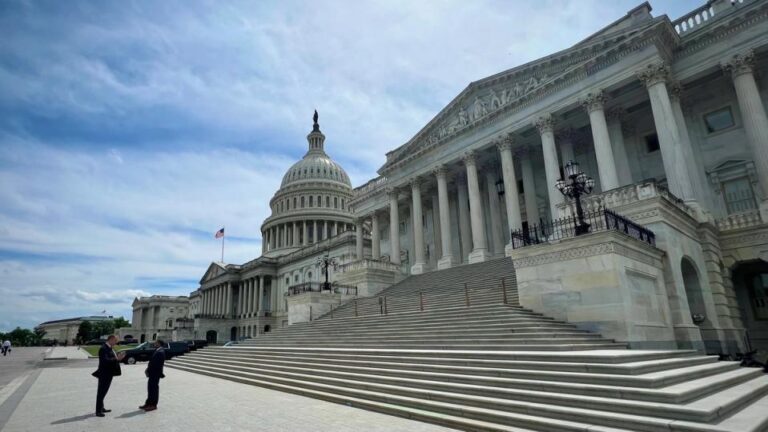
Thanks to the newly passed U.S. Senate housing affordability bill, the Federal Reserve may be heading toward a formal ban from instituting a digital dollar in the form of a central bank digital currency (CBDC), despite the fact the Fed wasn’t working on such a project.
Republican politicians had embraced an aggressive opposition campaign against the U.S. following in European and Chinese footsteps in the pursuit of a CBDC, labeling the idea a dangerous overreach of government surveillance. So they insisted it get inserted into the 21st Century ROAD to Housing Act that just passed the Senate in an 85-5 vote Monday night.
The concept of a digital dollar likely would have needed the backing of the White House, Congress and the Federal Reserve, none of which pushed to pursue one. But if the House of Representatives follows suit and votes to send the housing bill to President Donald Trump for his signature, the CBDC will be legally stifled.
However, the ban would only last for a very limited four years until the end of 2030.
The three largest U.S. crypto trade associations sent a joint letter to the House Ways and Means Committee on June 21, calling for passage of H.R. 9175, the Tax Clarity for Mining and Staking Act, introduced by Representative Mike Carey (R-OH).
The Blockchain Association, Crypto Council for Innovation (CCI), and Digital Chamber described the bill as “a durable compromise” and pressed lawmakers to pass it without changes.
The dispute between the IRS and the crypto industry over mining and staking taxes stretches back over a decade.
In 2014, the IRS issued Notice 2014-21, which declared that miners must report the fair market value of any mined Bitcoin as gross income at the moment of creation — not at the point of sale. The rule treats mined coins like wages: taxable on receipt, whether or not the miner ever converts them to cash.
The situation for stakers worsened in 2023, when the IRS published Revenue Ruling 2023-14, extending the same logic to proof-of-stake validators. Under that ruling, staking rewards are taxable income the moment a validator earns them, creating a cash-flow problem: validators owe tax on assets they may have no intention of selling.
This dynamic pushes U.S.-based miners and stakers into a difficult position. Proof-of-work and proof-of-stake networks secure more than $1.7 trillion in digital assets. The trade groups argue that forcing participants to recognize income on illiquid rewards discourages domestic validation activity and cedes ground to foreign competitors operating under more favorable tax treatment.
What H.R. 9175 will do for crypto mining
H.R. 9175 does not eliminate tax on mining or staking rewards. Instead, it gives taxpayers a choice.
Under the bill, miners and stakers can elect to treat new digital assets as self-created property, deferring tax recognition until the point of sale. The bill also allows grantor trusts holding digital assets to receive staking rewards without forfeiting their trust status — a technical fix that matters for institutional participants managing funds through trust structures.
The Ways and Means Committee held a full-committee hearing on digital asset taxation on June 9, the first of its kind in years. Six digital asset tax bills were on the table. H.R. 9175 was among them.
The June 21 letter was signed by Blockchain Association CEO Summer Mersinger, CCI CEO Ji Hun Kim, and Digital Chamber CEO Cody Carbone.
Their unified front represents a coordinated industry push at a moment of rare legislative momentum. Senator Cynthia Lummis has run parallel efforts in the Senate, introducing legislation that would defer tax on mining and staking until the point of sale — language that aligns in spirit with H.R. 9175.
The clock is a factor. Congress faces a narrow legislative window before the August recess, and Lummis — one of the Senate’s most vocal advocates for digital asset reform — departs in January 2027. The broader crypto tax reform effort has drawn support from across the crypto industry, with groups pressing Congress to treat digital assets with the same coherence applied to other asset classes.
For crypto miners and stakers who have operated under a cloud of tax uncertainty since Bitcoin’s earliest days, H.R. 9175 represents the most concrete legislative vehicle for relief in years.
Latest developments: Edelman argues investor sentiment and industry fundamentals are moving in opposite directions.
Bitcoin ETF investors have pulled billions from funds in recent days, while market fears have risen amid concerns about Mt. Gox wallet movements and regulatory uncertainty, Edelman said.
Debate around the CLARITY Act has added to uncertainty, with lawmakers including Sen. Bernie Sanders and Sen. Elizabeth Warren pushing for additional provisions related to crypto oversight, according to Edelman.
The result is a market focused on negative headlines even as major financial institutions continue expanding crypto-related initiatives.
Edelman joined CoinDesk’s Jennifer Sanasie on Public Keys.
The contrast: Wall Street firms are increasing their involvement despite weak market sentiment.
BlackRock, JPMorgan, Morgan Stanley, Franklin Templeton, Fidelity, State Street and Invesco are all advancing tokenization efforts, Edelman said.
Tokenization is expanding beyond crypto assets into equities, cash and ETFs, according to Edelman.
Institutional investors are showing growing interest in crypto exposure, with many firms planning first-time allocations or increasing existing positions, he said.
Worth watching: The fate of the CLARITY Act could shape crypto markets in the months ahead.
The Bitcoin funding rate climbed to 7%, showing confidence, but spot ETF outflows keep a $70,000 breakout on hold for now.
Strong order-book bids and lower oil prices helped, but weakness across stocks, bonds, and gold signals a preference for cash.
Bitcoin (BTC) flirted with the $65,500 level on Monday after US Vice President JD Vance said that the Strait of Hormuz remains open amid “encouraging progress” on talks with the Iranian delegation in Switzerland. Bitcoin traders showed signs of optimism through growing demand for bullish leveraged positions, raising the question of whether $70,000 is next.
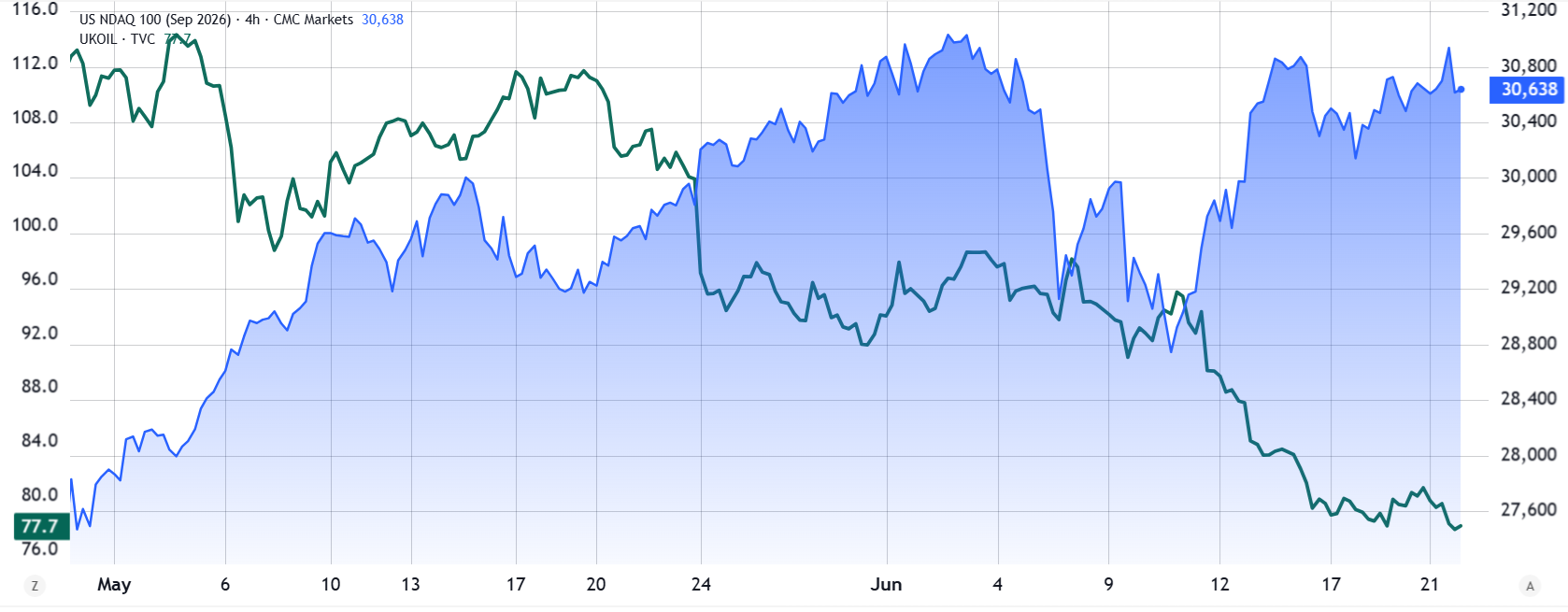
The Bitcoin perpetual futures annualized funding rate jumped to 7% on Monday, its highest level in nearly three weeks. Although still within the neutral 6%-12% range, the indicator reflects growing confidence among bulls. Part of the optimism likely stemmed from Brent crude oil prices declining to $77.50, their lowest level since March.
The Nasdaq 100 Index posted a modest 1% decline as artificial intelligence stocks weakened. SpaceX (SPCX US) shares dropped 13% after the company announced plans to raise debt despite holding more than $100 billion in cash. Investors fear the sector will need higher investments for longer before turning profitable.
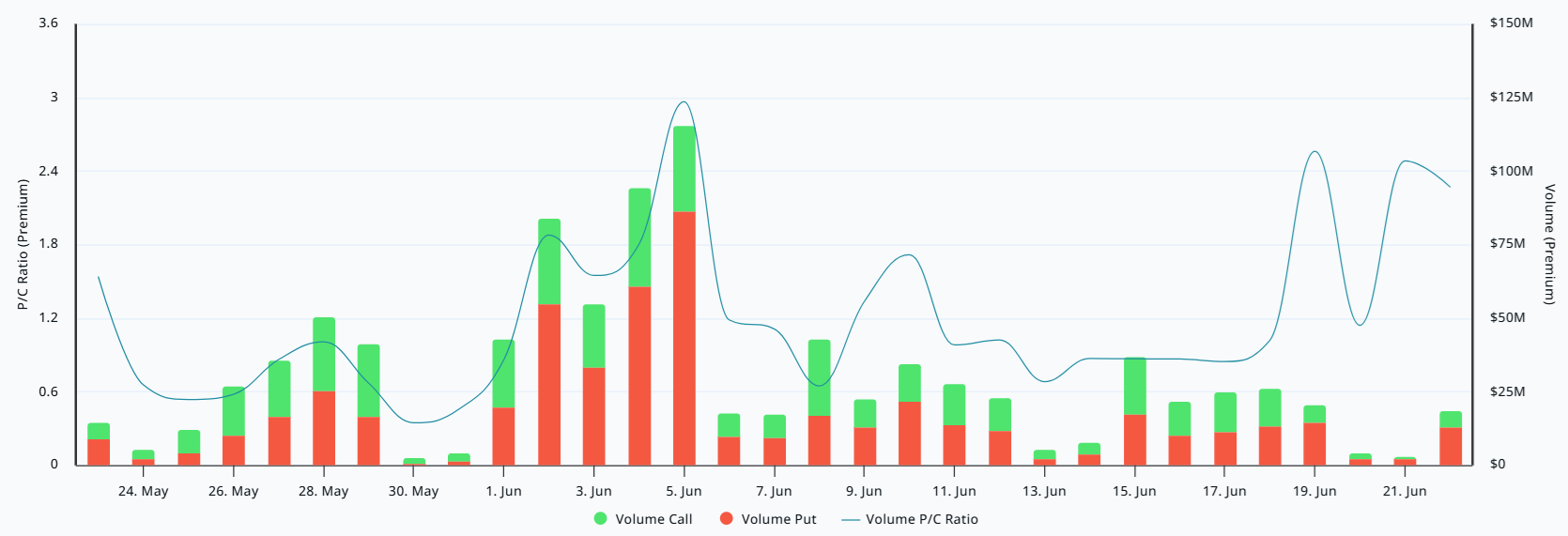
Bitcoin options premium put-to-call ratio at Deribit, USD. Source: Laevitas
Demand for put (sell) options outpaced call (buy) instruments by over two times on Monday, signaling stronger demand for downside price protection. The indicator has leaned toward bearish strategies since Friday, reversing the trend from the prior week.
Strategy eases concerns, but stocks and bonds signal increased risk
Part of traders’ concerns stemmed from weakness in Strategy’s (STRC US) valuation. Shares of Strategy traded 13% below the $64.1 billion cost to acquire BTC 847,363. Despite holding a comfortable $6.75 billion in debt, investors feared the company would need to sell reserves. Those concerns eased somewhat as Strategy announced a $300 billion additional cash position.
Bids on major exchanges’ Bitcoin order books exceeded offers by $12 million on Monday, reversing the weekend trend. Consequently, Bitcoin’s failure to hold the $65,000 level should not signal weakness, especially since gold traded down 0.9% on Monday while investors sold US government bonds.
Related: Bitcoin tipped for $66K top as trader flags ‘suspicious’ BTC price gains
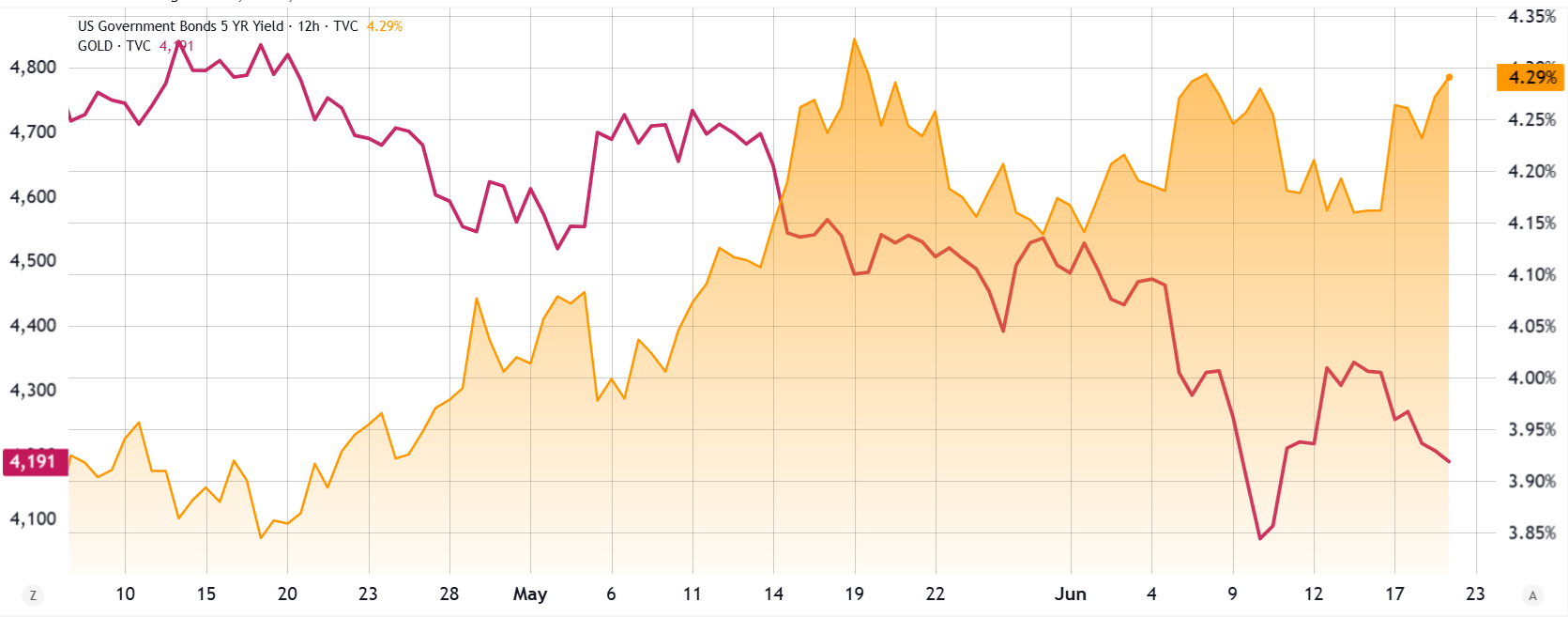
Gold/USD (left) vs. US 5-year Treasury yield (right). Source: TradingView
Higher yields on US Treasuries signal that investors demanded higher returns to hold those bonds, whether driven by inflation or by the anticipation of dilution from rising US government debt levels. The simultaneous weak performance across stocks, bonds, and gold points to a preference for cash positions, creating a cautious backdrop for Bitcoin.
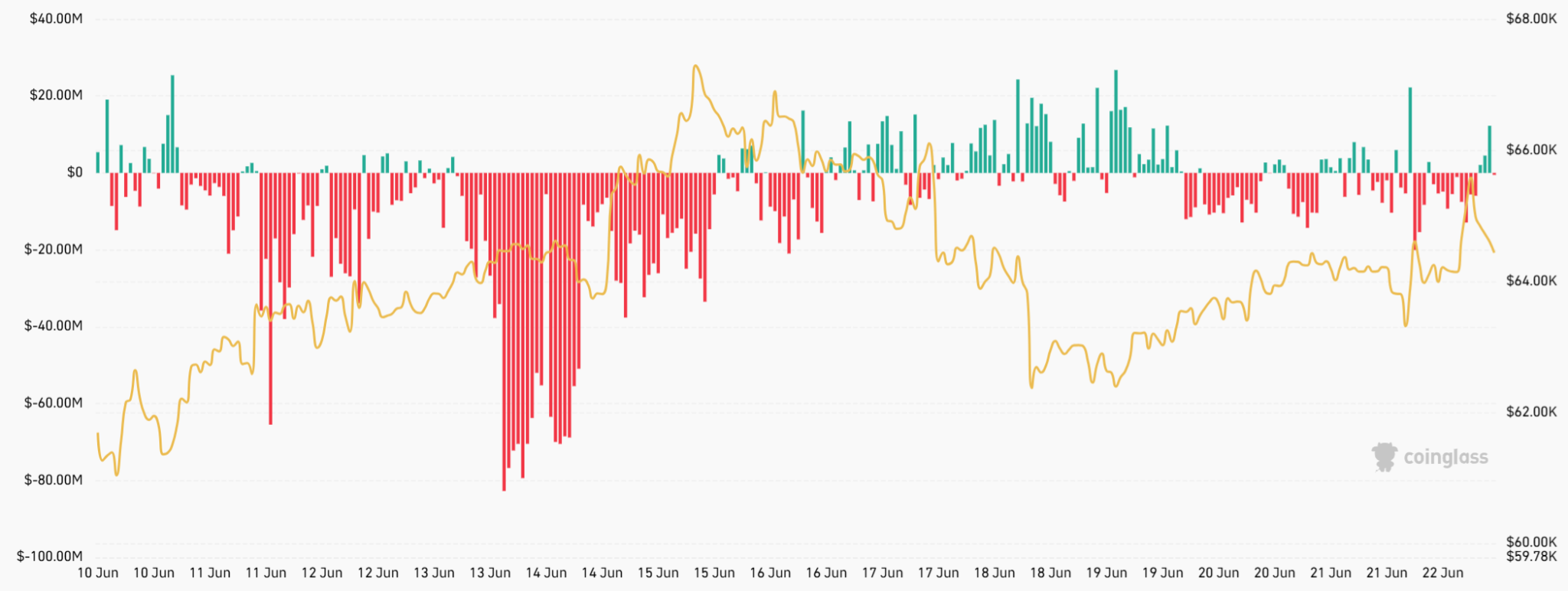
Weak demand for US-listed Bitcoin exchange-traded funds (ETFs) continues to weigh on investor sentiment after six weeks of outflows. Bitcoin spot ETFs saw $228 million in net outflows the prior week, according to CoinGlass data. Consequently, the odds of a short-term Bitcoin rally to $70,000 look limited.
The CFTC issued a request for comment on running standard futures around the clock and on perpetual contracts referencing physically delivered energy commodities such as crude oil, extending the perpetual-contract model from crypto into oil and gas derivatives.
The CFTC asked the public to weigh in on running standard futures around the clock and on listing perpetual contracts tied to physically delivered energy commodities such as crude oil. The request opens the door to importing the crypto-native perpetual design into the oil and gas derivatives markets.
The Commodity Futures Trading Commission issued the request for comment Monday afternoon, organizing it around two questions. The first asks how standard futures, including energy futures, would function on a 24/7 schedule with no change to their fixed expiration, delivery, or settlement terms. The second asks what happens when perpetual contracts reference physically delivered or storable energy commodities. Comments are due within 30 days of the notice’s publication in the Federal Register, per the CFTC release.
The filing is a request for comment, a procedural step that gathers input ahead of any rulemaking rather than a proposed rule with regulatory text attached. The agency says it “intends to use the information and comments received to inform its understanding of these developments.”
Selig’s Innovation Pledge
Chairman Michael Selig framed the move as supporting new market designs without loosening guardrails. “As registered entities extend trading hours and introduce new contract designs, a clear, data-driven record will help the Commission better understand these developments’ implications and impact in the market,” Selig said in the release. He added that the request “reflects the Commission’s commitment to supporting responsible innovation, while preserving the protections against manipulation and market disruption that participants and the public rely on.”
Selig echoed the framing on his own account, calling the request a reflection of the agency’s pledge to back “responsible innovation” while preserving anti-manipulation protections, in a post quote-tweeting the CFTC announcement.
Perps Meet Physical Oil
Perpetual contracts have no expiry. A periodic funding payment between long and short holders tethers the contract price to the spot reference, the mechanism that made perps the dominant instrument on crypto venues like Hyperliquid and Binance. The RFC asks how that funding-rate convergence would behave against the cost-of-carry economics of a storable physical commodity, where delivery, storage capacity, and seasonal supply all shape price.
The request names crude oil as a central example of a physically delivered or storable energy commodity, the kind of market where delivery logistics and storage constraints can drive sharp price moves that a perpetual design would have to contend with.
Building on the Bitcoin Order
The energy request extends a regulatory arc that began in crypto. In May, the CFTC cleared the first US-regulated bitcoin perpetual futures, then issued a policy statement saying other asset classes, “including, among others, agricultural and energy products,” would be judged on their own terms. CFTC staff later gave designated contract markets a path to convert perpetual-style digital commodity futures into true perpetuals.
The expansion has drawn pushback. CME Group has moved to sue the CFTC over the perpetual approval, arguing the contracts meet the Dodd-Frank definition of a swap and should face the heavier regulatory regime that attaches to swaps. CME Chief Executive Terry Duffy has separately called US crypto perps “a disaster waiting to happen.” The energy RFC pulls that same contract design toward the commodity markets CME has long dominated.
What the Comment Record Targets
The first set of questions concerns moving standard energy futures to a 24/7 schedule without changing their fixed expiration, delivery, or settlement terms, while the second addresses how perpetual contracts would work against a physical underlier. The agency tied the request to a live trend, noting that registered entities are already extending trading hours and introducing new contract designs.
The comment window opens once the notice hits the Federal Register, setting a 30-day clock for hedgers, exchanges, and commercial energy participants to respond before the agency weighs its next step.
Market forecasts have ballooned in recent years. Citi has estimated tokenized assets could reach a $5 trillion market capitalization by 2030, while a report from Boston Consulting Group and Ripple projected a market worth $18.9 trillion by 2033.
Patent battle over tokenization infrastructure
At the center of the dispute are patents covering compliance systems for tokenized securities, digital asset issuance and redemption technology and blockchain-based trading infrastructure.
tZERO said its investigation concluded that products including Securitize’s DS Protocol and Vault Registrar infringe patents covering self-enforcing compliance controls for security tokens and crypto integration systems.
The company said it is also investigating potential infringement by at least six other firms across tokenization, institutional crypto infrastructure and decentralized finance.
Securitize rejected the claims.
“tZERO’s allegations are without merit and run counter to the spirit of fair play that defines our industry at its best,” the company said in a statement posted on X.
Early pioneers clash amid growing stakes
The dispute pits two pioneers of tokenization against each other.
tZERO launched in 2014 and has spent more than a decade building technology for regulated digital asset markets and says it holds 105 patents globally across 23 patent families related to tokenized capital markets. NYSE parent Intercontinental Exchange made a strategic investment in the company in 2022, and tZERO unveiled plans last year to go public.
President Donald Trump signed two executive orders Monday aimed at cementing U.S. dominance in quantum computing while accelerating the federal government’s transition to encryption that can withstand quantum attacks.
The move carries significant implications for Bitcoin and the broader crypto industry, which has long been warned that a sufficiently powerful quantum computer could crack the cryptographic foundations underpinning digital assets.
The first order, titled Ushering in the Next Frontier of Quantum Innovation, sets an ambitious target: a “scientifically relevant” quantum computer deployed at a national laboratory or Department of Energy facility by 2028.
The order also directs the Departments of Commerce, Energy, and Defense alongside NASA to develop deployment plans for quantum sensors and networking technologies within five years.
White House science advisor Michael Kratsios framed the orders as a continuation of Trump’s first-term quantum push.
“President Trump has long recognized the importance of quantum as an economic and national security imperative,” Kratsios said before the signing.
The second order is where Bitcoin holders should pay close attention. It moves the federal deadline for adopting post-quantum cryptography from 2035 to December 2031 — a four-year acceleration — and directs NIST to complete a pilot migration of federal systems by the end of 2027.
The Cybersecurity and Infrastructure Security Agency has also been tasked with helping critical infrastructure operators make the shift.
The concern for Bitcoin is what researchers call “Q-Day” — the moment a quantum computer becomes powerful enough to reverse-engineer private keys from public addresses, effectively allowing an attacker to drain any exposed wallet. Coinbase’s advisory council has warned that roughly 7 million BTC could eventually be vulnerable, a figure representing tens of billions of dollars in exposed holdings.
Quantum-resistant bitcoin
In March, Google set its own 2029 deadline. BTQ Technologies launched a Bitcoin testnet built around BIP-360, a quantum-resistance proposal, while developers have since proposed BIP-361, which would freeze BTC held in vulnerable legacy addresses if owners fail to migrate.
Other networks like Stellar have unveiled a migration roadmap earlier this month, and Algorand has pledged broad quantum resilience by 2027 — but Bitcoin, whose security model has remained largely unchanged since Satoshi’s whitepaper, has no mandatory upgrade path.
Trump’s orders don’t necessarily regulate crypto directly, but by pulling the federal deadline four years closer, they send somewhat of a signal: Q-Day is no longer a distant hypothetical, and the window to harden Bitcoin may be narrower than the industry assumes.
Solana (SOL) captured 95% of all tokenized equity trading activity across blockchains last week, setting a new record with $1.29 billion in trading volume. The surge comes as SOL trades more than 75% below its all-time high near $295, leaving SOL traders divided on whether the asset is nearing a cycle bottom.
SOL onchain activity continues to expand across several metrics, even as a SOL price reversal remains the central focus for market traders.
Tokenized equities on Solana hit record activity
Data shows Solana generated $21 million in weekly app revenue, ahead of Ethereum, Hyperliquid, and Base. Over the past month, Solana applications produced $82.84 million in revenue, compared with $67.43 million on Hyperliquid and roughly $51 million on Ethereum.
App revenue generated by chains. Source: DefiLlama
Solana has also led the charge for tokenized equity trading on its chain. Independent reporting from Solana Floor noted that the network recorded its largest week on record for tokenized stock trading, with $1.29 billion in volume, accounting for 95% of activity across all chains.
According to Solana Floor, last week’s volume exceeded the total for the entire previous month, driven largely by the release of SpaceX’s IPO token, SPCX.
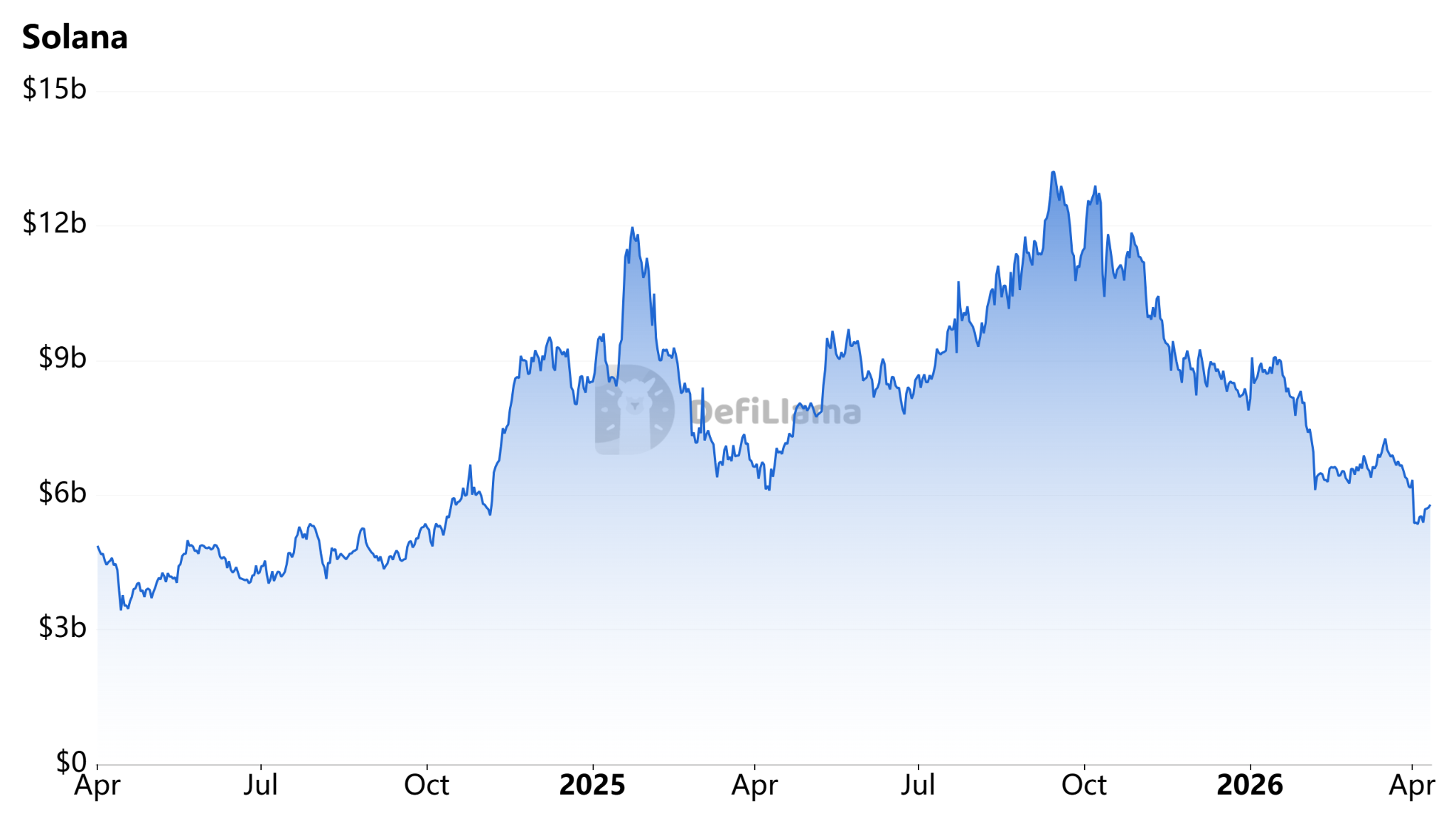
At the same time, the total value locked (TVL) on Solana stands near $5.7 billion. TVL measures the value of assets deposited across decentralized finance applications and serves as a gauge of onchain capital participation.
Solana’s TVL chart. Source: DefiLlama
That figure sits well below Solana’s all-time high TVL of roughly $13 billion from September 2025, showing that capital committed to DeFi applications has not returned to peak-cycle levels despite strong transaction activity and revenue generation.
Related: These XRP price charts hint at potential 25% relief rally in July
SOL traders remain split on accumulation timing
Market analysts and traders remain divided on whether SOL has already entered a durable bottoming phase.
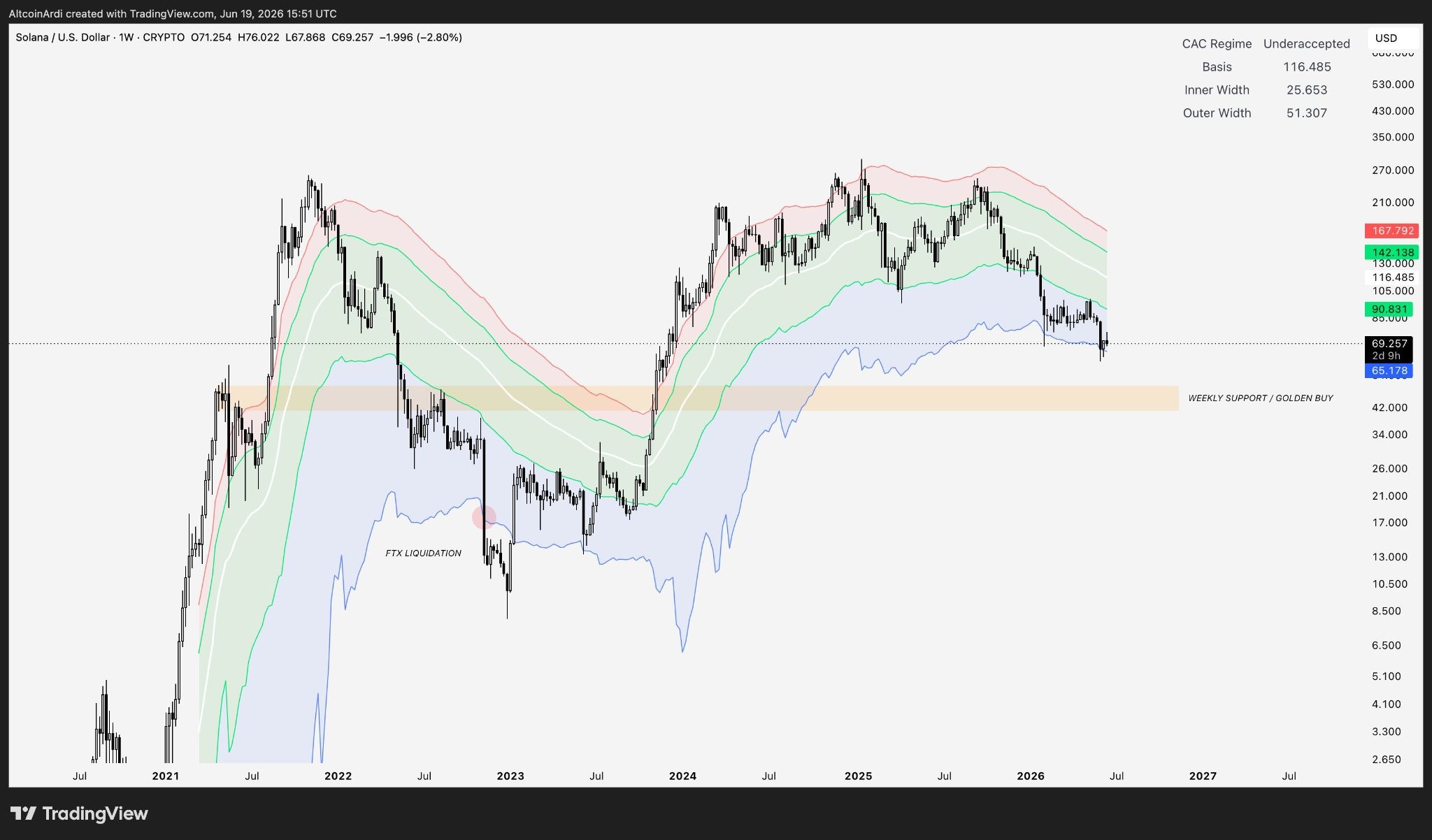
Crypto trader Ardi said Solana is approaching the area that attracts the trader’s attention for the next bull cycle. Ardi noted that SOL has already fallen about 77% to $60, from its cycle peak near $295.
Drawing on historical drawdown compression seen in Bitcoin and Ether, Ardi said an 80%–85% decline would place SOL in the $45-$60 range, the most attractive accumulation zone.
SOL/USD, one-week analysis by Ardi. Source: X
Crypto trader Bluntz took a more constructive view, arguing that the price forming a weekly bullish divergence with respect to the relative strength index (RSI) following an 80% drawdown often appears near the market lows. The trader implied that SOL could trend higher sooner rather than later based on this setup.
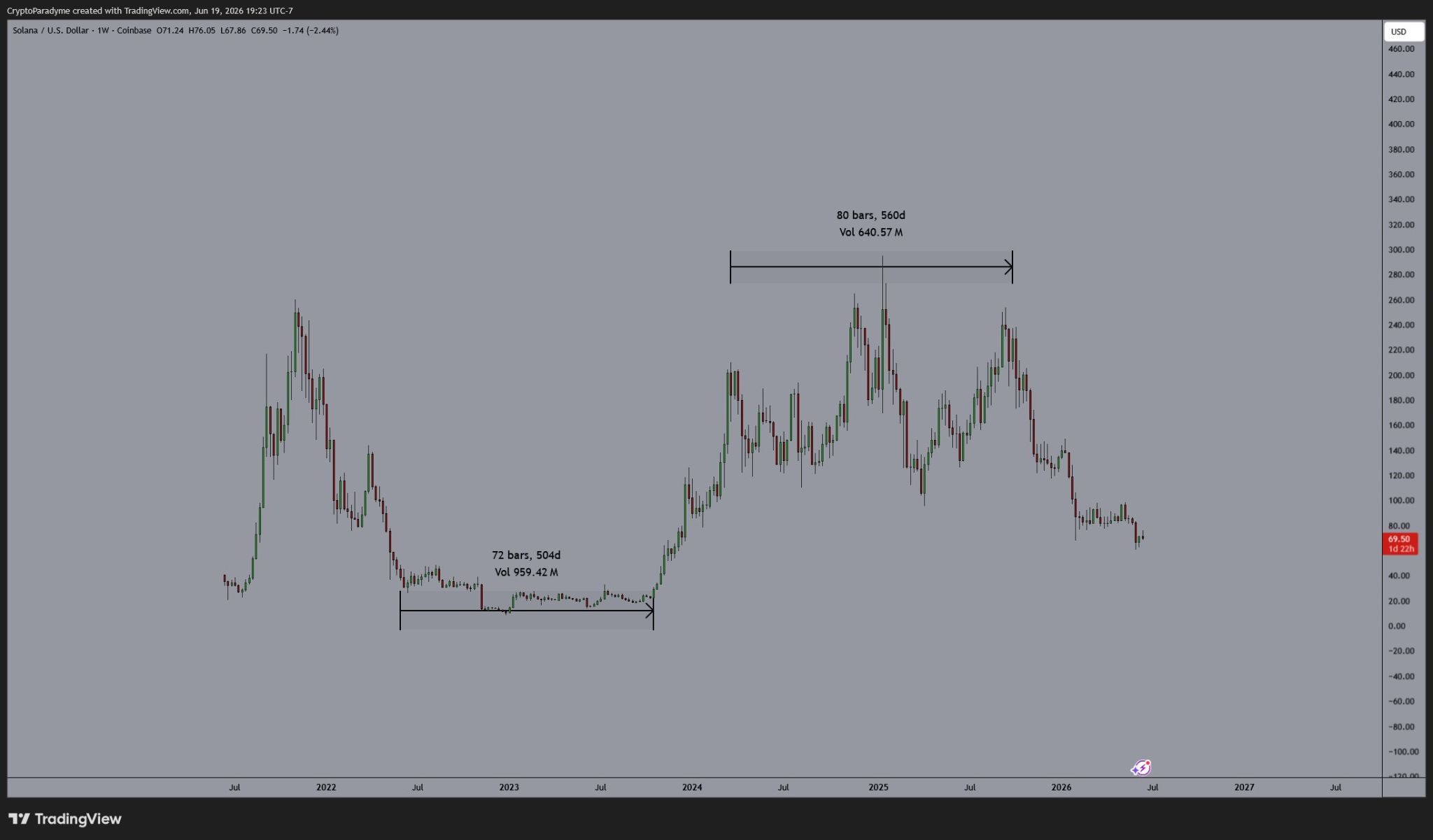
Meanwhile, crypto trader Dyme urged caution, noting that Solana spent roughly 500 days from May 2022 to October 2023, building a base before its last major recovery. The comparison suggests that SOL may require a longer period of sideways trading before a durable bottom forms.
SOL/USD, one-week chart analysis by Dyme. Source: X
Trading Stable founder Ryan Clark also questioned the recent optimism, noting that SOL continues to trade below the key weekly 50-period and 200-period simple moving averages. The analyst, popularly known as HORSE, said that a move back above the $90 region would provide a stronger technical signal.
For now, the debate centers on whether demand SOL can build higher before the price reaches the $45-$60.
Related: Altcoin selling tops $266B as capital rotates out of crypto: Is altseason extinct?
Franklin Templeton has completed its acquisition of 250 Digital, the crypto investment firm spun out of CoinFund in January 2026, and used the closing to launch a new institutional business line called Franklin Crypto.
The deal, first announced in April, marks one of the most concrete moves by a major legacy asset manager to build a dedicated crypto operation from within.
250 Digital came into existence at the start of 2026 as a standalone entity carved out of CoinFund Management, bringing with it a team built around liquid crypto strategies and institutional-grade portfolio construction.
Christopher Perkins, who leads the firm, will now head Franklin Crypto. Seth Ginns, 250 Digital’s chief investment officer, will carry that title into the new division. Both spent years at CoinFund before the spinout and bring deep roots in the institutional digital asset world.
The new Franklin Crypto unit is aimed at pensions, sovereign wealth funds, and large asset allocators that want exposure to digital assets through regulated structures. Its strategy spans liquid token markets, venture exposure, and structured products tied to blockchain infrastructure.
One of the more striking details of the transaction is how it was paid. Franklin Templeton used BENJI tokens — the on-chain representation of its Franklin OnChain U.S. Government Money Fund — as part of the acquisition consideration.
That makes this deal among the first major M&A transactions in financial services to be settled using tokenized fund shares rather than cash or conventional securities.
BENJI tokens give holders exposure to a regulated U.S. money market fund recorded on a public blockchain. Franklin Templeton has spent years building out that infrastructure, and using it as M&A currency signals that the firm views its tokenization stack as a live commercial tool, not a proof of concept.
Franklin Templeton’s long bet on bitcoin and digital assets
Franklin Templeton CEO Jenny Johnson has been direct about her view of blockchain’s threat to traditional finance — she has argued that blockchains put pressure on Wall Street’s fee structures, not just its technology.
That posture runs through the firm’s recent moves: filing for a Bitcoin ETF years before institutional demand caught up, launching ETFs that reinvest stock dividends into Bitcoin, and now acquiring a crypto-native team to run an institutional operation at scale.
The 250 Digital acquisition is the most structural step yet. Rather than wrapping crypto exposure inside an ETF or a fund sleeve, Franklin Templeton is building a division with its own leadership, its own investment philosophy, and a mandate to go after the institutional market head-on.
With over $1.5 trillion in assets under management, Franklin Templeton’s full commitment to a dedicated crypto unit sends a signal to the rest of the asset management industry. The firm is not treating digital assets as a side product.
It is staffing, acquiring, and deploying capital as if crypto is a permanent fixture in institutional portfolios.
Political action committees (PACs) backed by cryptocurrency companies and aligned interest groups have bet more than $8 million to support candidates in Tuesday’s primaries across three US states, which could impact the makeup of the country’s Congress in 2027.
As of Monday, the Protect Progress PAC, an affiliate of Fairshake that supports Democratic candidates, reported spending more than $516,000 on media for April McClain Delaney, running in Maryland’s 6th congressional district. However, much of the PAC’s attention has been focused on two races in Maryland and New York, where it reported combined expenditures of more than $5.5 million and $1.4 million, respectively, for primary races in the states’ 5th and 15th congressional districts, for Adrian Boafo and Ritchie Torres.
Filings with the Federal Election Commission (FEC) showed that Protect Progress had spent about $24,000 on ads to oppose Quincy Bareebe and $74,000 for media opposing Harry Dunn, both running against Boafo in Maryland’s 5th district. Dunn and Bareebe, along with Rushern Baker, who is running in the same primary, issued a statement on June 15 against what they called the “influence of dark money and special interests” in the race:
“We are calling on Governor Moore, Senator Alsobrooks, and Congressman Hoyer to answer directly: Do you support nearly $8 million in outside spending from crypto billionaires and AIPAC in a Maryland Democratic primary? If not, they should say so publicly and call on Adrian Boafo to reject it.”
Defend American Jobs, another Fairshake affiliate, reported spending more than $400,000 on Republican Blake Moore’s primary in Utah’s 2nd congressional district. All expenditures followed what a Fairshake spokesperson called the “biggest spend of the cycle” in last week’s Alabama primary runoff, resulting in a win for Republican Barry Moore after the PAC spent more than $12 million on ads.
Source: FEC
Related: NYSE owner ICE to launch oil-linked futures with OKX
The Fellowship PAC, another committee backed by $11 million from Cantor Fitzgerald and Anchorage, disclosed $300,000 in spending to support Torres’ New York run.
Are Colorado and Arizona next?
With the three US state primaries to be decided on Tuesday, many expect Fairshake and other crypto-aligned PACs to turn their attention to Colorado and Arizona, which are scheduled to hold primaries on June 30 and July 21, respectively.
As of Monday, none of the PACs had disclosed significant spending in any congressional races in the two US states. However, in 2024, Fairshake and its affiliates poured more than $10 million into media to support Ruben Gallego’s Senate race in Arizona and $2.1 million for Democratic Representative Yadira Caraveo in Colorado’s 8th district.