The U.S. Commerce Department would have more authority to shield domestic artificial intelligence technology from the supply chains of foreign adversaries in a bill introduced Tuesday by two Republican senators who’ve been at the center of crypto legislation in this congressional session: Tim Scott and Bill Hagerty.
The new bill would give Commerce the ability to block “transactions involving technology designed, developed, manufactured, or supplied by persons owned, controlled, or directed by foreign adversary countries.” But it’s being pushed by the two Republicans as this session of Congress is winding toward the summer break and midterm elections, leaving it little opportunity to advance unless it’s later latched onto a must-move bill.
“Americans should not have to worry that China or Russia can use the technology in our cars, phones, or networks against us,” said Scott, the chairman of the Senate Banking Committee, who worked with Hagerty to pass last year’s Guiding and Establishing National Innovation for U.S. Stablecoins (GENIUS) Act.
President Donald Trump holds more than $50 million in Bitcoin, stored in cold wallets, according to his 2025 annual financial disclosure released by the U.S. Office of Government Ethics. The filing is a detailed federal accounting of the president’s personal crypto position since he took office in January 2025.
In total, Trump reported generating more than $1 billion in crypto-related revenue last year, including $635 million in royalties from his memecoin venture and more than $500 million from token sales associated with World Liberty Financial.
The headline figure of over $50 million sits in a single line of the report. Under the entity CIC Digital LLC, an asset described as a “Cryptocurrency Wallet Virtual Bitcoin Key (held in cold wallet)” carries a valuation of “Over $50,000,000,” the highest bracket the disclosure form permits.
The form does not require a precise number above that threshold, so the true size of the holding could exceed the stated floor. The Bitcoin line reported no income for the period, a result consistent with an asset held rather than sold.
The Bitcoin sits inside The Donald J. Trump Revocable Trust, dated April 7, 2014, of which the president is the sole beneficiary. That structure places the holding within the same trust that controls his stake in Trump Media & Technology Group, the parent of Truth Social.
The cold-storage designation indicates the private keys are kept offline, a method that removes the asset from internet-connected systems and the custody of a third-party exchange.
Bitcoin is one of several digital assets in the cold wallets tied to CIC Digital LLC. The same entity reports an Ethereum key valued between $5 million and $25 million, a staked Ethereum position through a Coinbase staking agreement that produced $510,808 in validator rewards, a USDC stablecoin holding in the $5 million to $25 million range, and a smaller dollar-denominated wallet.
Across the two largest asset classes, Bitcoin and Ethereum, the disclosed value runs past $100 million.
Separate disclosures also report that Vice President JD Vance holds Bitcoin valued between $250,000 and $500,000. Vance’s holdings have been previously reported.
Trump and World Liberty Financial’s holdings
A second cluster of crypto holdings appears under entities connected to World Liberty Financial, the decentralized-finance venture that carries the Trump name.
Those wallets include a separate Bitcoin key valued at “Over $50,000,000,” an Ethereum key in the same top bracket, and positions in other crypto. The World Liberty entries also record large income figures tied to token sales, including more than $236 million in net proceeds distributed by World Liberty Financial LLC and a $150 million income figure on the Ethereum line.
Trump’s disclosure reports more than $500 million in proceeds from token sales tied to World Liberty Financial, the Trump-linked venture behind the WLFI governance token, with the company’s combined wallet entries summing to roughly $527 million.
The filing also records a $635,068,835 royalty payment under CIC Digital LLC, linked to a meme-coin licensing agreement with Celebration Coins. A related entity, DTTM Operations LLC, lists 15.75 billion World Liberty governance tokens valued in the top bracket.
The disclosure arrives at a moment when the president’s crypto interests intersect with his administration’s policy agenda. Trump has called himself somewhat of an ally of the digital-asset industry, and his government has moved to establish a federal posture toward reserves and regulation.
The personal holdings detailed in the filing give the public a direct view of the scale of the assets the president owns in the sector his administration oversees.
A sitting U.S. president now reports holding more than $50 million of Bitcoin in self-custody, in cold storage, in the same manner long advocated by Bitcoin holders who prize control of their own keys.
What the filing does not reveal is when the Bitcoin was acquired, at what price, or how the holding has changed across the year. The form’s bracket system caps reporting at the $50 million ceiling and offers no window into cost basis or timing.
It’s important to note that the $635 million royalty figure appears as a single line in the filing (recorded under CIC Digital as a license agreement with Celebration Coins, which the document does not explicitly label a “memecoin”), the “more than $500 million” from World Liberty Financial and the “$1 billion” total are aggregations compiled by Bitcoin Magazine.
The filing’s single stated token-sales line is $236.25 million, and larger figures were found by summing multiple separate crypto-wallet entries. It’s also worth flagging that several of these amounts are described as gross “proceeds from token sales distributed by World Liberty Financial LLC,” so they don’t necessarily represent net income to Trump himself.
Prediction markets platform Kalshi’s legal battle against Massachusetts will continue after a judge ruled that state authorities could add allegations against the company over sports betting.
In a Tuesday filing in Suffolk County Superior Court, associate justice Peter Krupp allowed state authorities to file a 71-page amended complaint, building on a filing alleging that Kalshi engaged in sports wagering in violation of state laws.
The amended complaint included allegations that Kalshi “targets those under 21 years of age and does little to stop them from using its platform,” citing the company’s marketing to university campuses and presenting images in ads of people who “appear to be younger than 21 years old.”
“Kalshi allows anyone who is at least 18 years old to create an account and wager on sports events by purchasing event contracts,” alleged Massachusetts authorities.
Source: Massachusetts Superior Court
Massachusetts Attorney General Andrea Joy Campbell announced the lawsuit against Kalshi in September 2025, alleging that the company needed to be licensed by the Massachusetts Gaming Commission to comply with state laws on online sports wagers. In January, a judge granted a preliminary injunction barring Kalshi from offering sports event contracts as the case was under review.
Related: US senators push to end CFTC ‘assault’ on state oversight of prediction markets
The Massachusetts case is just one of many involving state-level authorities and prediction markets companies like Kalshi and Polymarket, who offer users the ability to trade using event contracts on a variety of outcomes related to sports, politics and current events.
While Kalshi has been blocked from offering sports bets in some jurisdictions, it also has support from the US Commodity Futures Trading Commission (CFTC), which in April filed a brief in Massachusetts arguing the agency had “exclusive jurisdiction” over prediction markets. The CFTC, under Chair Michael Selig, has claimed that event contracts on the platforms amount to “swaps” covered by the Commodity Exchange Act and were not subject to state regulation.
“Congress has entrusted the CFTC with the sole authority to regulate commodity derivatives markets, including prediction markets,” said Selig. “To any state that seeks to nullify federal law and seize authority over these markets, I say again: we will see you in court.”
Cointelegraph reached out to Kalshi for comment but did not receive an immediate response. Following the initial complaint in September, a spokesperson said that the company was “ready to defend” itself in court.
Gaming organizations look to CLARITY Act for clarity on prediction markets
While one of the cases between a prediction markets platform and US state authority could ultimately reach the US Supreme Court given the arguments over federal and state laws, some groups are looking to Congress for solutions.
Earlier this month, national gaming and tribal organizations and labor groups called on US senators to add language “that explicitly prohibits event contracts tied to sports and casino-style gaming” to the Digital Asset Market Clarity (CLARITY) Act. The bill, under consideration in the Senate, is expected to give the CFTC more regulatory authority over digital assets.
Magazine: Does ‘Paper Bitcoin’ mean there’s an unlimited supply of BTC?
Though BTC has recently stabilized around $60,000, the prospects for a meaningful recovery remain bleak because institutional demand is falling significantly short of soaking up supply.
The latest chart by Glassnode shows that bitcoin exchange-traded funds (ETFs) have sold off 71,600 BTC, worth over $4 billion, this month, the largest redemption on record. Meanwhile, corporate treasuries, or digital asset treasury firms, have snapped up just 7,500 BTC. Add to that the fresh coins mined each day, and the net figure comes to around -77,000 BTC ($4.4 billion).
In other words, more supply is hitting the market than the biggest players are absorbing, creating what analysts call a “supply overhang.” Big-money vehicles are actually adding to the selling pressure.
Against this backdrop, Strategy (MSTR), the largest bitcoin digital asset company, announced a BTC monetization plan on Monday, authorizing up to $1.25 billion in potential bitcoin sales, mainly to build a $2.55 billion U.S. dollar reserve to cover preferred dividends and interest expenses.
These developments suggest that any price bounce is likely to be short-lived, unless those flows flip positive and institutional demand returns. It’s a key signal for traders watching whether the recovery has real fuel or is just temporary.
Bitcoin (BTC) is fast approaching a buying level that analysts describe as a top “investment opportunity.”
Key points:
Bitcoin only needs to dip another $5,000 to hit a buy-in level that has always marked the bear-market bottom zone.
This “best” area to invest is now on the radar of traders and analysts alike.
PlanB describes a return below the level as “likely” during the 2026 bear market.
BTC price nears a classic bear-market buy-in zone
Data from onchain analytics platform CryptoQuant shows that BTC/USD is less than 10% away from its aggregate realized price.
Realized price is the average price at which the BTC supply last moved onchain, and currently sits at around $53,300. BTC/USD has not traded below it since the end of its last bear market in 2022, according to data from TradingView.
“Looking back, every recurring bear market has brought a bleak period when Bitcoin fell below its realized price, and that has been the best Bitcoin investment opportunity,” CryptoQuant contributor Crypto Sunmoon commented.
BTC/USD one-week chart with realized price data. Source: Cointelegraph/TradingView
Realized price comes in various iterations, reflecting the aggregate cost basis of various Bitcoin investor cohorts.
Market participants, however, are eagerly awaiting the return of the broader cost basis, given its role as a potential bear-market bottom marker.
“If that moment comes again, where price falls below the realized price, invest for the new cycle,” CryptoQuant suggested.
Bitcoin will “likely” fall under realized price
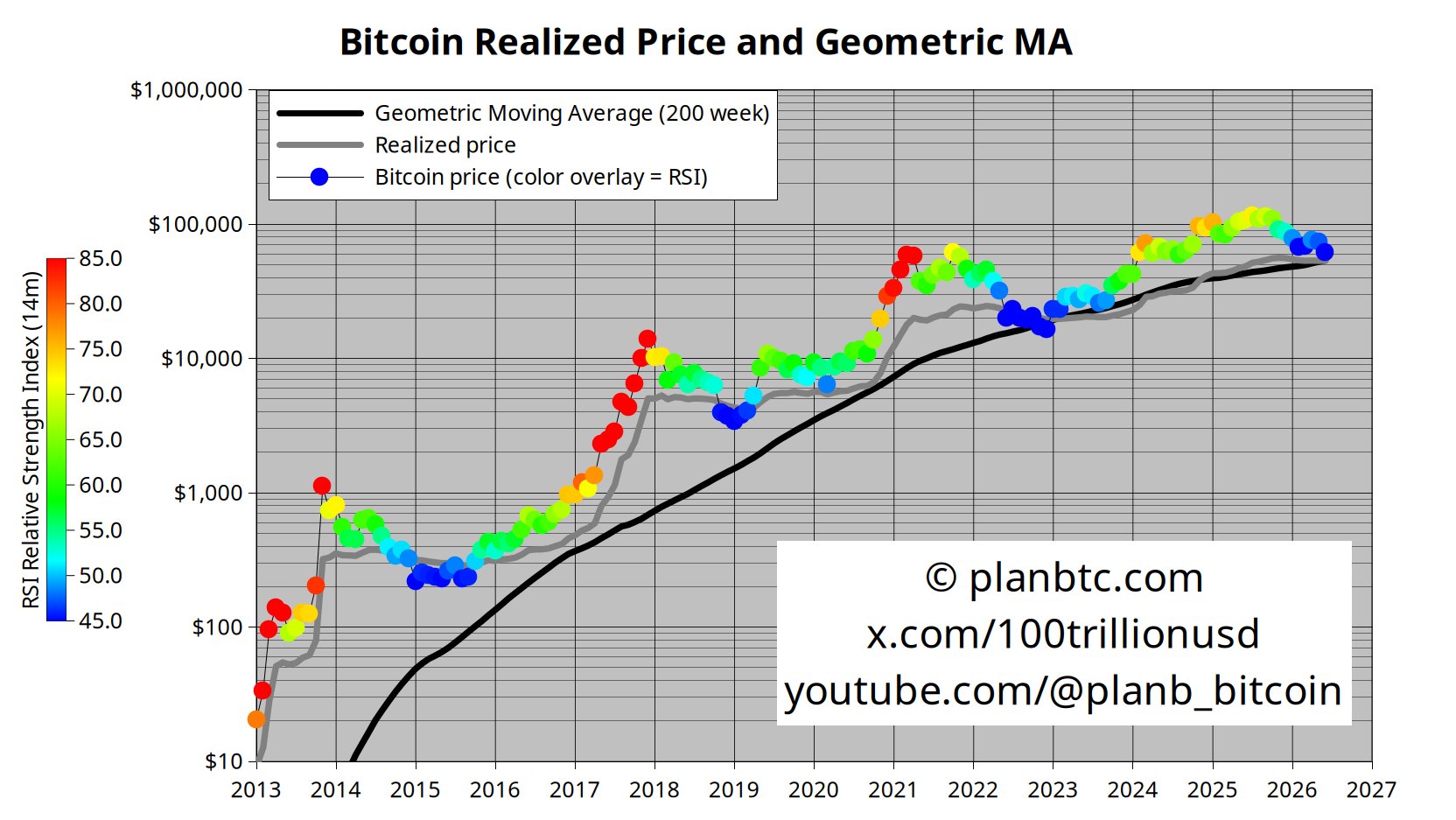
In recent months, PlanB, the pseudonymous creator of the Stock-to-Flow BTC price models, has listed a drop below the realized price as one of two key conditions that must be met to secure a trend reversal.
Related: Bitcoin price risks drop below $58K as US dollar hits 40-year high against yen
The other, closing candles below the 200-week moving average (WMA), began several weeks ago.
“Market is 50/50 on if February $60k was the bottom, or the bear will continue,” he wrote in an X post at the start of June.
“IMO data is telling us that we have not seen bottom formation yet, and that there is a >50% probablility that we go lower (below 200wma $61k or realized price $53k).”
Bitcoin realized price data. Source: PlanB/X
In a later post, PlanB added that Bitcoin would “likely bottom below” the realized price.
Continuing on realized price, commentator Aaron Bennett said that a drop to the key level was still possible despite the presence of institutional holders who were absent from previous bear markets.
“I’d be surprised if we don’t touch this, or go below it for a few weeks,” he told X followers last week.
Update, June 30, 6:13 pm UTC: This article has been updated to correct the availability of MetaMask Money Account. Consensys said the Money Account is unavailable in the United Kingdom and sanctioned jurisdictions, not the European Union.
MetaMask, a self-custodial wallet developed by Consensys, is launching a new product that it says lets users earn yield on its MetaMask USD (mUSD) stablecoin and spend it via a card exclusively on the Monad blockchain.
The company on Tuesday announced the launch of Money Account, a product it says offers up to 4% variable annual percentage yield (APY) on eligible stablecoin deposits in supported jurisdictions.
“Your balance earns the moment you add funds, and you can spend the moment you need to,” Consensys CEO Joe Lubin said in a statement seen by Cointelegraph.
The launch comes amid ongoing debate over yield-bearing stablecoin products in the US, where the CLARITY Act includes provisions restricting the payment of interest or yield on payment stablecoins when tied to holding.
Yield engine powered by DeFi vaults
Money Account generates yield through decentralized finance (DeFi) lending strategies rather than issuer-paid interest, MetaMask senior director of product Johann Bornman told Cointelegraph.
The system relies on two entirely separate mechanisms, separating how the stablecoin is backed from how yield is generated, Bornman said.
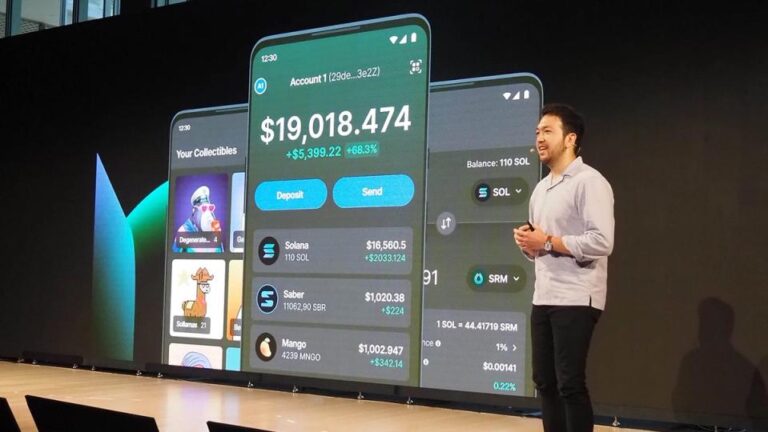
A preview of MetaMask’s Money Account. Source: ConsenSys
The first mechanism involves stablecoin backing. Bridge, a Stripe company, holds US dollar reserves and short-term Treasury bills that back mUSD on a 1:1 basis. Under this structure, the issuer does not pay any yield to holders.
The second mechanism is the DeFi yield layer. When users deposit into a Money Account, funds are routed through onchain vault provider Veda, which allocates capital into established lending protocols such as Aave and Morpho.
“Simply put, mUSD’s reserve backing and the yield users earn are structurally separate,” Bornman said, adding: “The yield doesn’t come from the issuer, it comes from DeFi protocol activity.”
KYC and availability: UK among restricted geos
The Money Account is rolling out globally on Tuesday, except in the United Kingdom and sanctioned jurisdictions, Bornman said.
As MetaMask operates a self-custodial wallet, the platform itself does not require Know Your Customer checks, but KYC is required for any features that interact with regulated services, including fiat on-ramps and the MetaMask Card.
Related: Trezor adds native USDt, USDC yield via Morpho integration
“Money Account itself does not require KYC, users can hold mUSD and earn yield with the click of a button,” Bornman said. “Where KYC is required, those checks are carried out by third-party providers that operate those regulated services, not by MetaMask,” he added.
The launch comes less than a year after MetaMask officially launched its wallet-native mUSD stablecoin in September 2025.
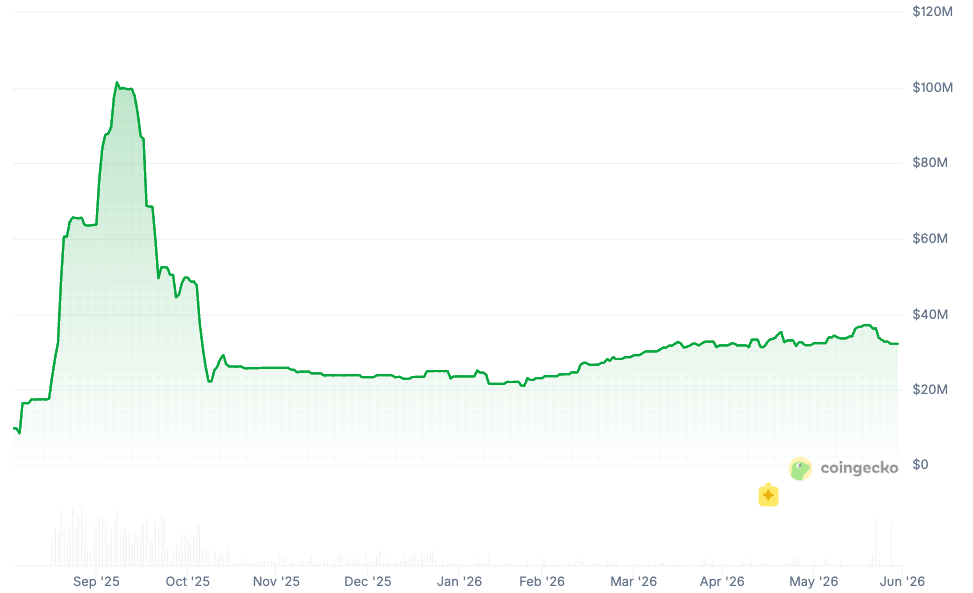
MetaMask USD (mUSD) market capitalization since launch. Source: CoinGecko
The stablecoin’s market capitalization briefly peaked above $100 million shortly after launch before slipping below $30 million, according to CoinGecko data.
At the time of writing, mUSD’s market cap stood at $32 million, placing it among smaller US dollar-pegged stablecoins by market size.
The race is also spreading beyond crypto. Last month, prediction market operator Kalshi launched its own perpetual futures business after regulatory approval, joining exchanges betting that always-on derivatives will become a larger part of financial markets.
For Phantom, the hires are part of a broader push into trading.
Best known as one of crypto’s largest self-custody wallets, Phantom has steadily expanded beyond asset storage into swaps, staking and derivatives as wallets increasingly compete to become full-service financial apps rather than simple interfaces for holding tokens.
The company said it has become the largest distribution partner in the Hyperliquid ecosystem and plans to deepen its focus on perpetual futures.
“Open markets have become a major focus for us,” Millman wrote. “We’ve gone deep on perps, and we intend to go deeper.”
Millman described Hyperliquid as “one of the best examples anywhere of what open markets make possible,” pointing to its global liquidity and transparent onchain infrastructure.
Bringing on the Ventuals team will help Phantom accelerate its efforts to build trading products around the ecosystem, he said.
The researchers caution that AI adopters are not representative of the broader economy. Companies adopting AI were already larger, faster-growing, more technical and more likely to be venture-backed before deploying the technology, making simple comparisons with non-adopters misleading. To account for that, the study compares early adopters with similar firms that had not yet adopted AI rather than firms that never adopted it.
The report also found AI adoption remains concentrated in knowledge-intensive industries. Information companies posted the highest adoption rates, followed by finance and professional services, while sectors such as hospitality, arts and healthcare lagged significantly behind.
Ramp said its research is among the first to combine observed corporate AI spending with firm-level workforce records, allowing researchers to measure AI adoption based on actual purchases rather than surveys or occupational exposure estimates. The company defines adoption as three consecutive months of at least $100 in AI vendor spending, with adoption intensity measured by AI spend per employee during the first three months after deployment.
The authors say the results should not be interpreted as proof that AI causes hiring, but rather as evidence that firms making substantial, sustained AI investments are currently growing faster than comparable companies. They argue the findings suggest AI’s early economic impact may be less about replacing workers and more about enabling expansion at companies able to integrate the technology effectively.
Cantor Equity Partners II shareholders voted Monday to approve a business combination with Securitize, expected to close July 1 and list on the NYSE July 2 under ticker SECZ as the first publicly traded tokenization company in the US.
Cantor Equity Partners II shareholders voted Monday to approve a merger with Securitize, clearing the final pre-close hurdle before the combined company lists on the New York Stock Exchange on July 2 as Securitize Corp., the first publicly traded tokenization company in the United States.
The vote passed with 12,432,037 shares in favor and 2,151,147 against, according to a Form 8-K filed with the SEC by Cantor Equity Partners II on Monday. The business combination is expected to close Tuesday, July 1, with shares trading under the ticker SECZ the following day. Gross proceeds from the transaction, including a $225 million private investment in public equity (PIPE), are expected to reach approximately $400 million.
Securitize operates as a regulated tokenization platform serving institutional asset managers. It holds SEC registrations as a broker-dealer, transfer agent, and fund administrator, and is the issuance platform for BlackRock’s BUIDL fund, one of the largest tokenized money-market products on-chain. The company also provides infrastructure to Apollo, Hamilton Lane, KKR, and VanEck, with more than $4 billion in assets under management as of April 2026, per company disclosures.
Securitize is also the only company licensed to operate regulated digital-securities infrastructure across both the United States and Europe, following authorization under the EU’s DLT Pilot Regime.
Public Markets Access
The NYSE listing gives asset managers and banks a publicly traded reference point for tokenization infrastructure. Until now, Securitize operated as a private company, with no public equity vehicle. The combined entity, Securitize Corp., will carry a balance sheet funded by the $400 million in merger proceeds, available for expanding infrastructure and product capacity.
The “first publicly traded tokenization company” framing rests on Securitize’s regulated infrastructure positioning, distinct from protocols or tokenized-asset issuers. Converge’s prior coverage noted the PIPE was oversubscribed and final redemptions came in below 30%, which CEO Carlos Domingo had attributed to strong institutional demand despite early skepticism about the SPAC vehicle.
Expanding the Stack
In the months leading up to the close, Securitize announced a collaboration with the NYSE to support tokenized securities infrastructure development, added secondary trading rails for tokenized equities through Jump Crypto and Jupiter on Solana, and issued Hamilton Lane’s HLSCOPE private-credit fund on TRON as its first multi-chain institutional product beyond Ethereum. Securitize also received FINRA approval to custody tokenized securities, completing what the company describes as a full on-chain issuance-to-custody infrastructure stack.
The NYSE listing adds a public equity layer to that stack. Asset managers that have used Securitize’s infrastructure privately can now buy shares in the entity operating that infrastructure alongside their institutional product access.
The launch adds another blue-chip asset manager to Wall Street’s tokenization push. Firms including BlackRock, Franklin Templeton, Apollo and Janus Henderson have embraced onchain versions of traditional funds, betting the technology can modernize how assets are issued, transferred and settled. Supporters argue the technology can shorten settlement times, improve operational efficiency and allow assets to move more easily across blockchain-based financial applications.
For Centrifuge, the partnership adds another large asset manager to its platform. The company already tokenizes funds from Apollo, Janus Henderson, with those assets increasingly integrated into decentralized finance protocols such as Aave and Morpho. It is also the preferred tokenization partner of Coinbase, which made a strategic investment in the firm.
The tokenized real-world asset market has grown to more than $30 billion excluding stablecoins, according to rwa.xyz. Citi projects tokenized assets could reach $5.5 trillion by 2030, while Standard Chartered estimates the market could expand to $2 trillion by 2028 as blockchain-based finance gains wider adoption.
While early institutional efforts centered on tokenized U.S. Treasury funds, firms are increasingly expanding into other asset classes such as private credit, equities and corporate bonds.