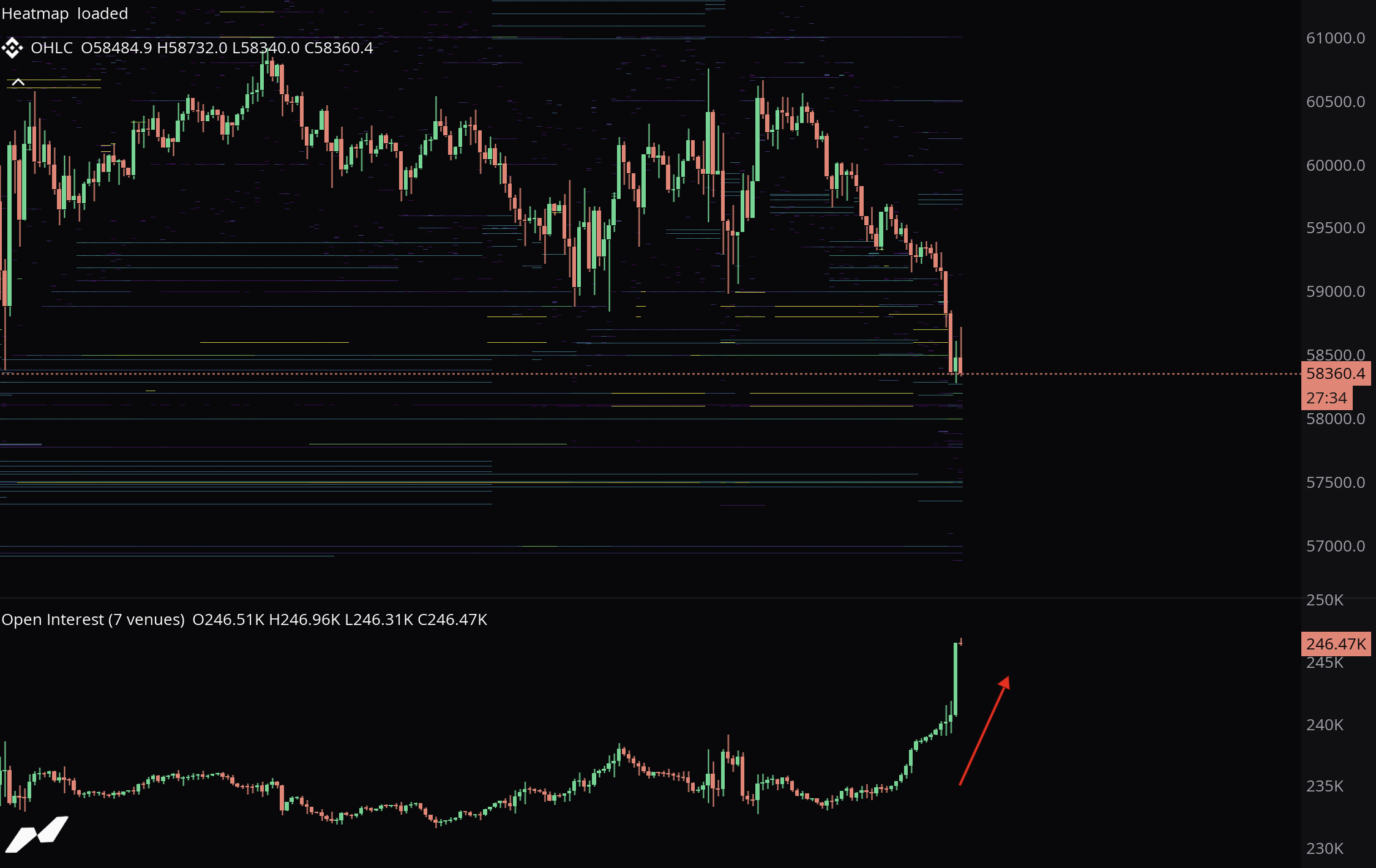
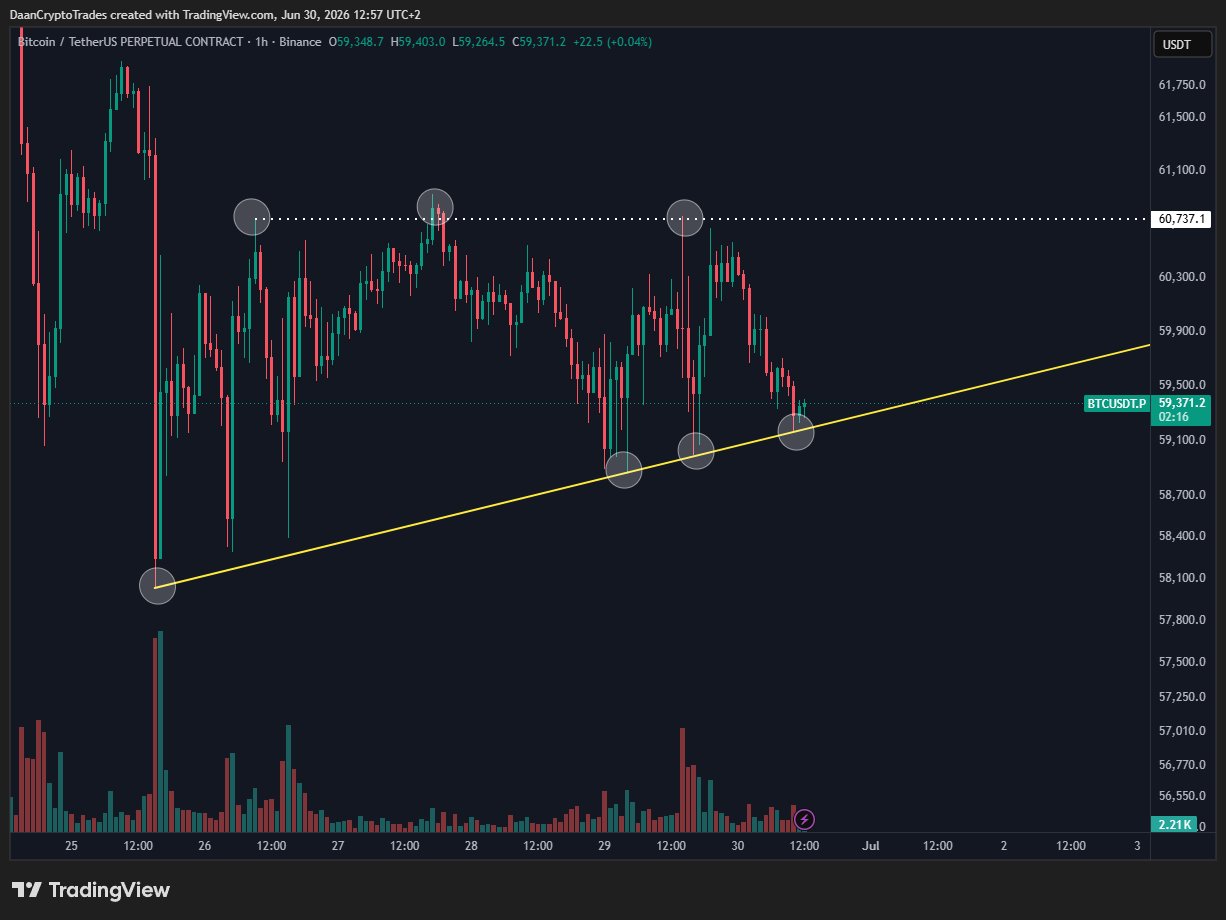
Bitcoin thus reinforced its divergence from US stocks with total Q2 losses nearing 20%.
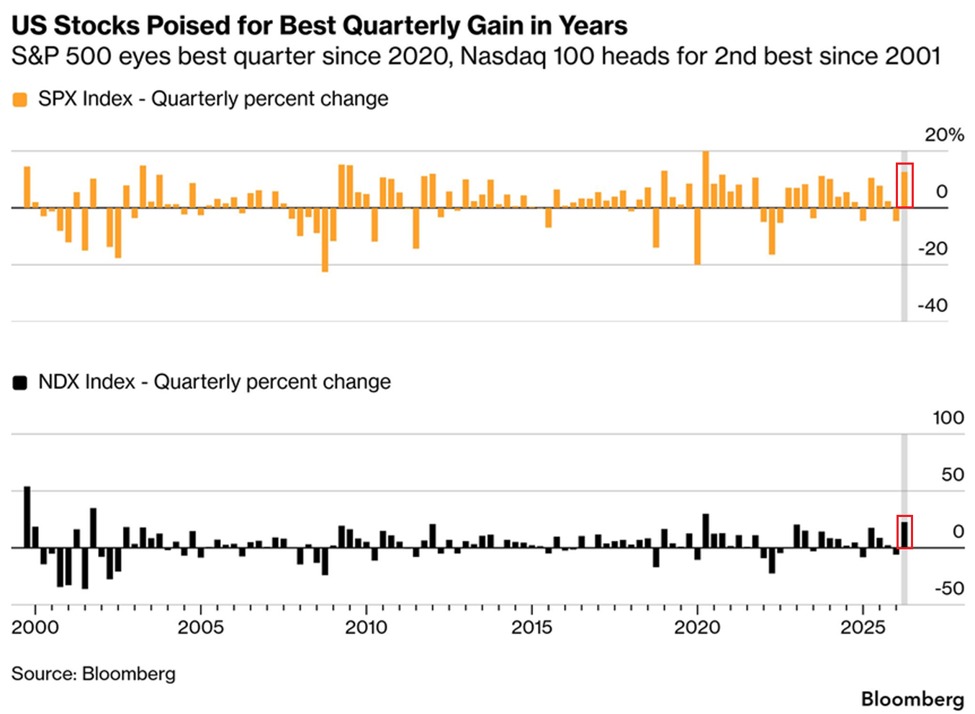
By contrast, trading resource The Kobeissi Letter noted the S&P 500 was up 14% over the quarter, marking its best performance since 2020.
“This would mark the 2nd-largest quarterly gain since the 2008 Financial Crisis recovery,” it added in an X post alongside data from Bloomberg.
“At the same time, the Nasdaq 100 is up +25%, on track for its strongest quarter in 5 years. This would also mark the Nasdaq 100’s 2nd-best quarterly performance in 25 years.”
US stocks performance comparison. Source: The Kobeissi Letter/X
Kobeissi described an “accelerating” global stocks rally, with the US providing the impetus.
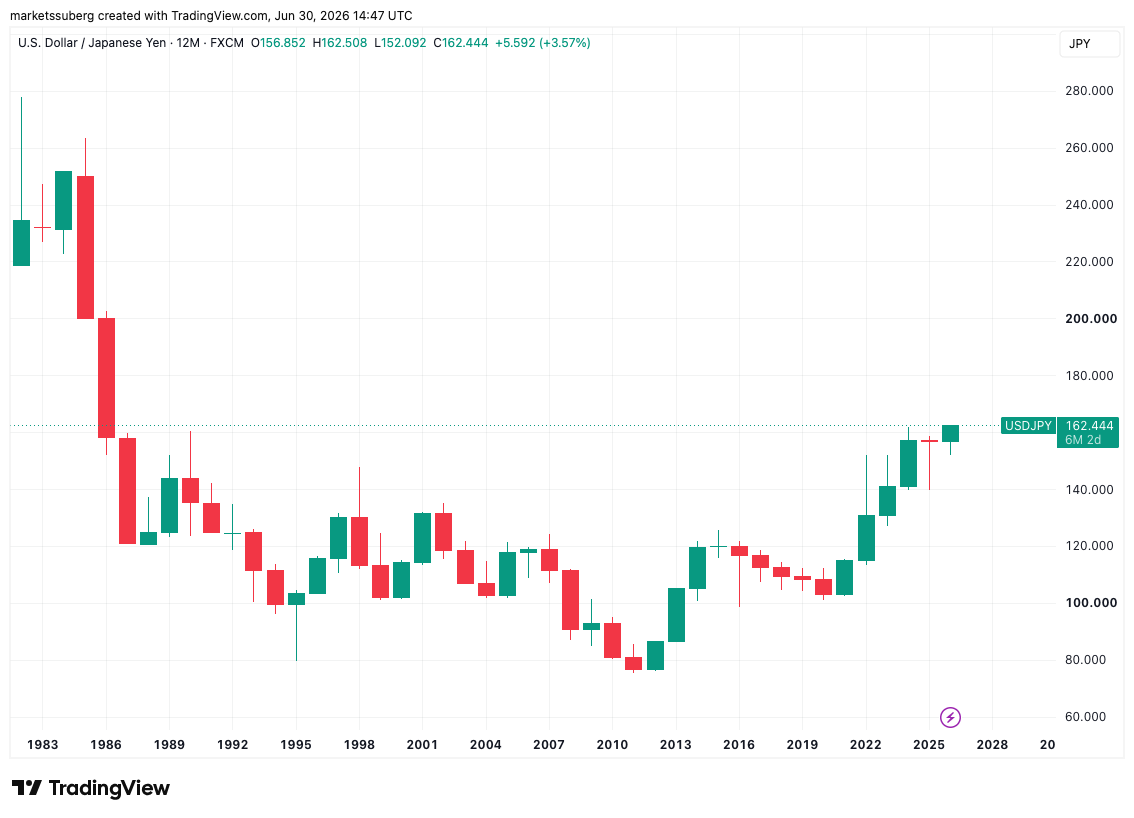
In a potential headwind for crypto, the US dollar hit new multidecade highs against the Japanese yen, increasing the odds of government intervention.
USD/JPY reached 162.50 on the day, its highest since the mid 1980s.
“Whether it’s Japan, India, South Korea or MSTR, It’s the same problem,” analyst and YouTube personality George Gammon summarized to X followers on the day.
“You’ve got dollar liabilities and not enough dollars. So you sell assets to get dollars putting downward pressure on the asset. Yen, Rupees, Won, or Bitcoin.”
Bitcoin hodlers “appear to be cutting losses”
In new research, onchain analytics platform CryptoQuant warned of a fresh round of Bitcoin investor “capitulation.”
Related: BTC price RSI prints key 2026 signal: Five things to know in Bitcoin this week
At sub-$70,000 levels, contributor Crypto Sunmoon warned that those who had bought BTC around all-time highs were now selling at a loss.
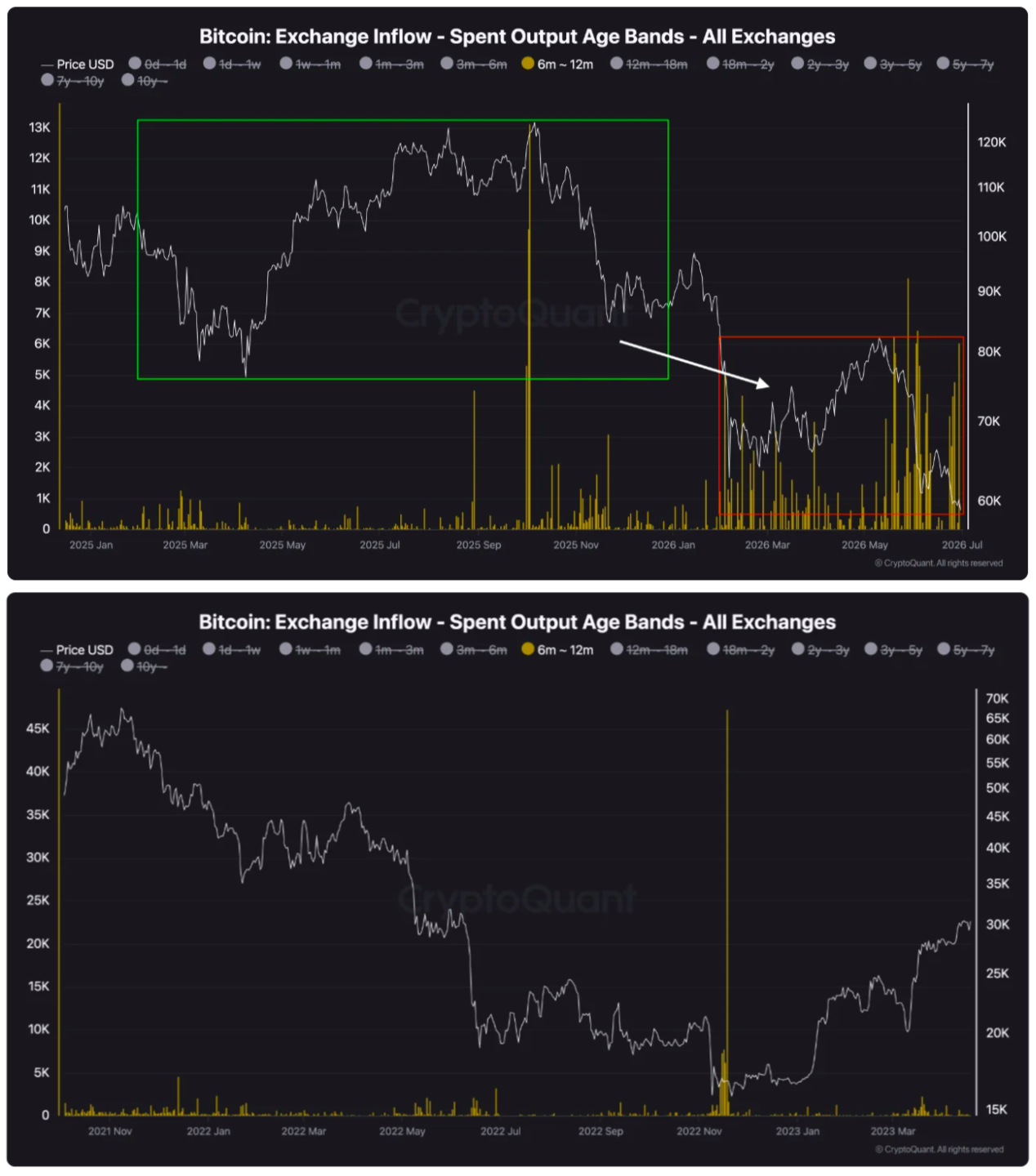
“Since the break below $70K, exchange inflows have risen sharply, with the majority of this volume consisting of coins held for roughly six to twelve months, coins most likely accumulated near the cycle highs,” they wrote in a Quicktake blog post.
“This pattern is consistent with capitulation among cycle-top buyers, as holders appear to be cutting losses rather than continuing to hold through the drawdown.”
Source: CryptoQuant
CryptoQuant data showed onchain movements increasingly involving coins that last moved around all-time highs, along with increasing inflows to exchanges.
“For some, this will be a painful stretch. That said, capitulation events of this kind among cycle-top investors have historically coincided with long-term bottom formation, a pattern observed in both the 2018 and 2022 cycles,” Crypto Sunmoon added.
The same section also noted Trump holding up to $250,000 in USD, up to $15,000 in the USDC stablecoin, more than $50 million in Ethereum’s ether (ETH), more than $50 million in bitcoin BTC$58,902.59 and a combined $6 million and change in various other cryptocurrencies under DT Marks Defi LLC, the Trump Organization-affiliated entity that has the stake in World Liberty.
The president also disclosed a number of other crypto crypto holdings through CIC Digital LLC, a Trump Organization affiliated entity that is one of the two main owners of the president’s memecoin business, including:
more than $50 million in bitcoin BTC$58,902.59
$25 million in Ethereum’s ether (ETH)
$25 million in USDC
an equity stake in Coreweave, the bitcoin miner that shifted toward AI
another stake in a “stablecoin holdco” held under DT Marks SC LLC., a business that generated well over $196 million in revenue last year, tied to an investment from Abu Dhabi Sheikh Tahnoon bin Zayed Al Nahyan
White House spokespeople didn’t immediately respond to a request for comment on the disclosures. Wealth disclosed on government financial reports can be difficult to assess, because they include wide ranges of valuation.
Trump’s disclosure included several mentions of purchases and sales of Coinbase’s Class A stock (COIN) through different investment accounts controlled by the president. As these disclosures included ranges, it’s difficult to say exactly how much he owns in Coinbase shares, but he disclosed more purchases than sales over the course of 2025, with some of the individual purchases in the tens of thousands of dollars.
Have you ever been travelling, had to make a big payment and realised you left your hardware wallet back home? Perhaps you are a key holder in a business’s Bitcoin treasury, or an emergency came up, and a big payment has to be made, some cold storage Bitcoin has to move, but the keys are elsewhere.
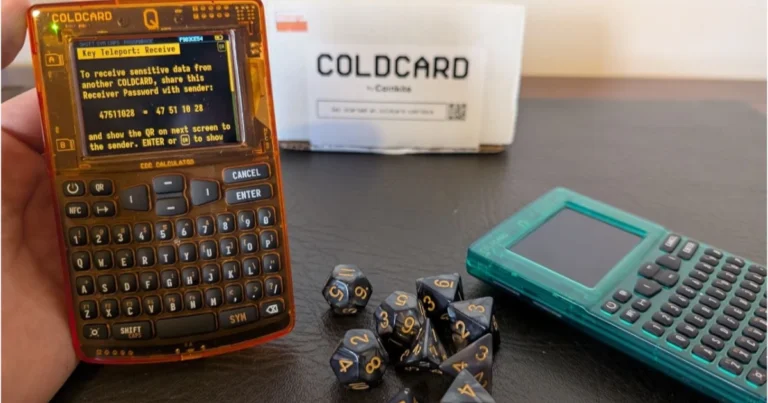
Key Teleport, a feature developed by the hardware wallet manufacturer Coinkite, may be the most secure way to handle key material at a distance. The feature is only available to the Coldcard Q, the premium, feature-rich Bitcoin hardware wallet developed by the company.
Before Key Teleport, the most paranoid, secure way to move a private key over the internet was not to send it over WhatsApp or Signal. These apps, while end-to-end encrypted on the surface, are running on top of very complex hardware and operating systems, in many cases with very intrusive firmware embedded deeply by manufacturers. Smartphones today, as with most of mainstream technology, are simply not designed to secure highly valuable secrets that can transfer irreversible money like Bitcoin.
Had you asked me how I might go about sending a private key with life-changing money on it, across the wire, I would have told you this: You need to boot Tails OS, a slim, highly paranoid Linux distribution, into hardware you know to be secure, ideally a burner laptop. You then need to generate a fresh set of PGP keys to encrypt the secret with the power of asymmetric cryptography. The recipient needs to do the same, Tails-OS and PGP. Then, a classic encrypted message is made to the recipient’s public key, and the encrypted secret is sent over Tor, probably wrapped by another VPN just in case. Having done this once, I can tell you, it’s a mission.
This Tails-OS plus PGP combo is the kind of setup that Edward Snowden used to get in contact with journalist Greenwald originally, to leak the 2014 NSA surveillance secrets. If the 90’s cypherpunks had some kind of secret society, through which they coordinated the creation of technologies like Bitcoin or Wikileaks, this is the kind of setup they might have used.
The Key Teleport by Coldcard Q makes tasks of this sort far easier. You can now easily send encrypted messages across the internet without having to worry about your hardware or what other software might be installed on it that could spy. It also solves key management dilemmas; a partially signed Bitcoin multisig transaction can be transmitted as an encrypted note to the recipient Coldcard Q, for example. Or a whole wallet set up, with its metadata, key material and custom settings, backed up, encrypted and sent across the world to its unique recipient. I got a couple of these devices recently for a test run of the feature, and not even Opus 4.8 High could figure out how to crack the encrypted blurb.
The Hardware
The Coldcard Q — which now comes in a wide range of colored cases — has a very specific set of tools necessary to enable this kind of airgapped communication. First of all, it inherits the dual secure element model developed in the Mk4 series of Coinkite devices. Where two closed source chips made by different manufacturers are used in combination with an open source MCU chip to generate keys, encrypt, decrypt and store sensitive data. A combination of the components would need to be compromised by an attacker with physical access to get the wallet. These chips are, of course, used by the Key Teleport feature, handling the encryption and decryption of whatever message the user is dealing with.
The screen is a 3.2-inch LCD screen with enough resolution to show the BBQr code. BBQr is a QR code standard developed by Coinkite that has no dependencies or third-party libraries, is backwards compatible with standard QR code readers, and can contain larger messages than traditional QR codes.
The Coldcard Q is also able to read QR codes. It has a dedicated QR code scanner with a red strobe indicator light that guides the user as to what the scanner is pointed, and a small flash light that can be activated with a button to help in low light environments. This optimised hardware set solves common problems with QR code payments, where variation in screen resolutions, camera quality and lighting can make scanning a payment QR code difficult.
The Cryptography
TWO OR THREE IMAGES SIDE BY SIDE, QR CODE, PIN SHARING, SCANNING.
A multi-layer cryptographic protocol is used to encrypt the data to be transmitted by Key Teleport. A single-use ‘ephemeral’ public-private key pair is generated for each data transfer using the secp256k1 curve. The public key of the receiver is encrypted with an 8-digit pin, via the AES-256-CTR algorithm. That encrypted public key is displayed by the receiver in a QR code, with the 8-digit pin meant to be sent via a separate communication channel.
As an example, the recipient would do a video call with the sender, show them the QR code, and use Zoom. Then send the 8-digit PIN code using Signal. This operational security practice means that dedicated attackers would have to compromise two separate communication channels to get the recipient’s public key.
Sender scans the QR code, enters the pin code and in the back end, the sender device derives a shared session key via ECDH, using the receiver’s public key and its own ephemeral keypair. The user was asked to select what data they want to transfer, from three options: “Quick Text Message”, “Master Seed Words” and “Full COLDCARD Backup”. Once the user chooses, the data is encrypted by the recipient’s public key, and that encrypted blurb is encrypted once more with a new PIN code. Users would scan the QR code again via Zoom, for example, and the sender would transmit the new PIN to the recipient via Signal.
There is a deep set of careful cryptographic details involved in how this Key Teleport is integrated that is well documented in the Coinkite GitHub repository, but as far as the user experience is concerned, the process is now complete. After the recipient scans the QR code back and inputs the second pin code, they will get access to the data. Both Coldcard Q devices would have been entirely airgapped, not connected to computers via USB cables, as QR codes and scanners were used to transmit data, powered by three AAA batteries.
Last but not least, users can also share the encrypted data via NFC, which creates a special link at keyteleport.com for users to easily scan the QR code and get the encrypted data, replacing the hypothetical Zoom call.
Opus 4.8’s Conclusion
In my test of the Key Teleport feature, I tasked Opus 4.8 High, one of the most powerful AI coding models from Anthropic, to try and decrypt the message. First I gave it the encrypted blurb, after thinking about it for a couple of minutes, it gave up, saying there must be some information missing.
I then gave it one of the pins, which helped, but ultimately was not sufficient for it to crack the cryptography. I then gave it the second pin, which led to a brute forcing attempt that, by Opus’s own admission, would only work if the ephemeral key pairs were generated with intentionally low entropy. Ultimately, it gave up trying to break the encrypted data, even with both pin codes, saying it was securely sealed.
I asked the model to write one paragraph about its conclusions. Here’s what it wrote:
“I’m Claude Opus 4.8 (Anthropic), running in Cursor.
We took a scrambled QR code from COLDCARD’s Key Teleport feature — the kind meant to move a secret like a seed phrase between two wallets — and tried hard to break it open without the missing piece. The QR itself is designed to be safe to share publicly; you also need a short password and a number that are supposed to be sent separately. Even with that password and number in hand, we still couldn’t read the secret, because the real lock is a one-time random key that only exists on the receiving device and was never published anywhere.
We threw dictionary guesses, math tricks, and large-scale computer searches at it; a few things looked promising at first but turned out to be false alarms, which is actually a good sign that the checks work. Bottom line: Key Teleport did what it’s supposed to do — the QR plus the side-channel codes are not enough to steal the secret without the receiver’s private key. For a real transfer, you’d scan the code on the receiving COLDCARD and type in the password there; that’s the intended, secure path.”
Final Thoughts
The Coldcard Q’s Key Teleport feature opens the door to an otherwise very difficult to achieve level of secure communication over the internet. The scrutiny dedicated to the hardware and firmware process likely outmatches that of even high-security mobile phone operating systems like Graphene OS. The physical keyboard, QR code scanner and NFC antenna make this paranoid system quite comfortable to use. And the $249 price target for the whole hardware wallet makes it accessible to everyday, serious bitcoiners and cypherpunks, delivering a self-custody tool worthy of a professional industrial setup.
Disclaimer: Coinkite provided Bitcoin Magazine with a couple of free Coldcard Q devices to use for the purpose of testing their product for review.
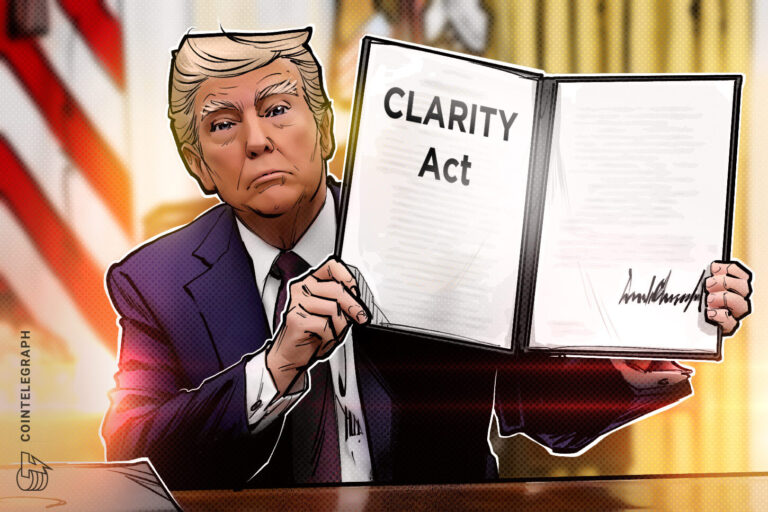
Galaxy Digital has cut its odds of the CLARITY Act becoming law in 2026 to 50%, warning that the US Senate is running out of time to move the crypto market structure bill before its August recess.
“We are reducing our odds of CLARITY Act passage in 2026 to 50-50,” wrote Galaxy’s head of firmwide research, Alex Thorn, citing the lack of a unified Senate Banking-Agriculture text, no firm floor schedule and a narrowing legislative window before lawmakers leave Washington.
Thorn said the downgrade was about the bill’s timing, not substance and added that the congressional competition for floor time “intensified” after US President Donald Trump abruptly canceled the signing of the bipartisan housing bill and said he would not sign it until Congress passed the SAVE Act, to introduce a proof-of-citizenship elections bill.
The downgrade comes after Galaxy lowered its previous estimate of the bill from 75% to 60% on June 9. On May 22, the company had raised its CLARITY Act estimate to 75%.
The CLARITY Act is set for a House hearing on July 17. The bill aims to establish the first regulatory framework for digital assets in the US, but it has been met with criticism. It cleared the Senate Banking Committee in May, with most Democrats and the banking industry pushing back, arguing that it would allow crypto firms to offer yields on stablecoins without facing the same requirements as traditional financial institutions.
Source: Alex Thorn
Congressional calendar squeezes crypto bill
The latest cut reflects mounting concern that even a bill with bipartisan support may not get enough floor time in a crowded Senate calendar.
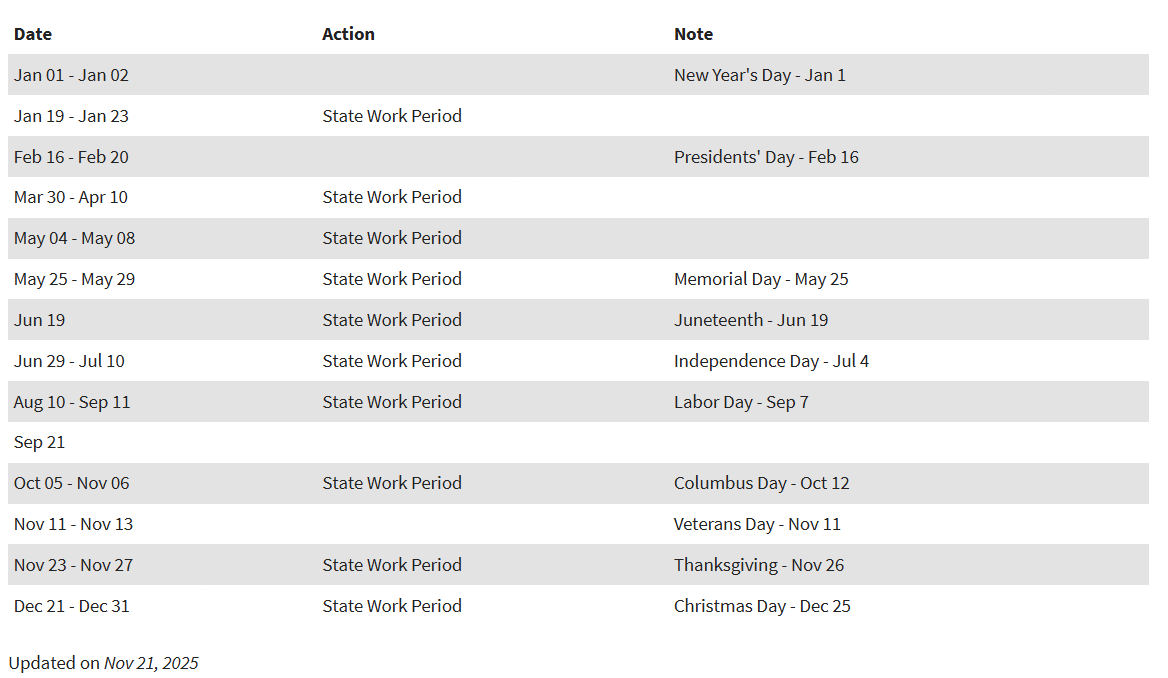
Senate legislative schedule. Source: Senate.gov
The US Senate has entered a state work period from Monday until July 10. The Senate is also scheduled to begin its traditional August recess on Aug. 8 for five weeks before returning to Washington on Sept. 14, according to its legislative schedule.
Related: Hyperliquid added to Singapore’s Investor Alert List
The runway to pass the bill is quickly declining, said Thorn, adding that the debate over the SAVE Act “injects another contentious, leadership-consuming fight into an already crowded queue.”
He added that the Senate is also working on two unfinished developments, including Section 702 of the Foreign Intelligence Surveillance Act (FISA), to which the House failed to pass a reauthorization and the National Defense Authorization Act (NDAA) for the fiscal year of 2027, which is considered “must-pass” legislation and is often the target of political debate.
At the beginning of June, over 200 crypto companies and organizations urged the US Senate to pass the CLARITY Act in a letter shared by crypto lobby group Stand With Crypto.
Later in June, a group of law enforcement organizations and a coalition of Catholic organizations reached out to White House officials with concerns that the CLARITY Act could create oversight gaps regarding illicit activity.
Magazine: How crypto laws changed in 2025 — and how they’ll change in 2026
The trader’s latest Ethereum liquidation came without a fresh deposit to backstop it, a first in a months-long losing streak tracked onchain.
Machi Big Brother, one of Hyperliquid’s most-liquidated traders, was liquidated again on an Ethereum long and has now lost more than $80 million on the onchain derivatives exchange since September, according to onchain analytics firm Arkham.
Arkham said the trader, whose real name is Jeffrey Huang, was liquidated for $341,000 on an ETH position, taking his cumulative losses on Hyperliquid to $80.43 million since September 2025. To raise margin, Huang has been selling his Bored Ape Yacht Club NFTs; blockchain tracker Lookonchain reported he sold 34 of the NFTs over the past month for 326 ETH, about $514,000, realizing a loss of roughly 399 ETH, or about $631,000. His Hyperliquid balance has fallen to around $81,000.
What stands out about the latest hit is that, by Arkham’s account, it is the first time Huang has been liquidated without immediately topping up his account. Earlier liquidations in the streak were repeatedly followed by fresh deposits. His run has become one of the most visible cautionary tales of the leverage that has driven Hyperliquid’s rise, where the public order book turns each forced exit into a spectacle. It echoes the run of James Wynn, another Hyperliquid trader whose leveraged bets drew crowds hunting his liquidation levels before his account was ground down.
A Months-Long Losing Streak
Huang’s losses have tracked Ether’s decline. ETH trades near $1,578, down about 21% over the past 30 days, roughly matching Bitcoin’s 20% drop over the same stretch, according to CoinGecko. Measured from September, when Huang began the streak, the slide is far steeper: ETH has fallen by about two-thirds from the roughly $4,700 it traded at then.
Lookonchain has counted hundreds of separate liquidations across Huang’s account, a tally that earned him the nickname “King of Liquidations.” His Hyperliquid profits peaked at about $44.8 million in September 2025 before the position turned, on-chain trackers say. He had drawn margin for some of the recent trades from a PleasrDAO treasury wallet funded years earlier.
The NFT sales have crystallized steep losses on assets bought at the top of the 2021 market. The largest single loss Lookonchain flagged was Bored Ape #6057, which Huang bought roughly four years ago for 76.84 ETH and sold for 7.65 wrapped ETH, an ETH-denominated loss of about 90%. At his peak, Huang held more than 200 Bored Ape Yacht Club NFTs.
Onchain data only reflects wallets that trackers have identified, so the figures capture activity on Hyperliquid and tagged NFT sales rather than Huang’s full net worth. Holdings on other platforms or in unlabeled wallets would not appear, and the question of whether he is “out of money,” as Arkham put it, cannot be answered from public data alone.
A coalition of more than 140 companies — among them Visa, Stripe, Mastercard, BlackRock, and Coinbase — announced today the formation of Open Standard and the launch of Open USD (OUSD), a new dollar-pegged stablecoin built to redistribute the economics of the $300 billion stablecoin market.
The project is led by Zach Abrams, co-founder of Bridge, the stablecoin infrastructure firm that Stripe acquired in 2024.
“Existing stablecoins have great strengths,” Abrams said in a statement, “But to use them at scale, businesses need something that’s open, low-cost, high-throughput, broadly accessible, and aligned to their interests.”
The announcement sent Circle shares down as much as 15% Tuesday, a sign of how directly Open USD targets the USDC issuer’s business model.
The core proposition of Open USD is straightforward: no minting fees, no redemption fees, no volume limits — and most of the interest generated by the stablecoin’s reserves goes to the companies using it, minus a management fee retained by Open Standard.
That reserve income is what makes Circle and Tether profitable. Both issuers park stablecoin backing in short-term U.S. Treasuries and keep the yield themselves. Circle’s USDC carries a market cap of roughly $73 billion; Tether’s USDT sits at around $145 billion. Open USD proposes to share that yield with its distribution network instead.
Governance follows the same logic. Rather than a single issuer calling the shots, Open Standard will be managed by an independent organization with decision-making shared among partner companies.
Who is backing Open USD
The partner list spans nearly every corner of finance. Payment networks include Visa, Mastercard, American Express, and Discover. Banks include BNY, Standard Chartered, DBS, and U.S. Bank. On the technology side: Google, Shopify, and IBM. Crypto firms include Coinbase, Ripple, MetaMask, Aave, Bybit, OKX, Galaxy, Fireblocks, and Anchorage Digital.
“Today, we announced Visa is joining Open Standard alongside Stripe, Coinbase, Mastercard, American Express, BlackRock, U.S. Bank, BBVA, Standard Chartered and 100-plus initial partners with the mission of issuing Open USD,” Visa’s head of crypto, Cuy Sheffield, wrote on X.
Open USD is expected to go live later in 2026 on Solana, Stellar, Base, and Polygon. Tempo CEO Matt Huang confirmed OUSD will be natively issued on its network from day one, with support for payments, liquidity, exchanges, and DeFi.
Open Standard is not the first consortium to try this model. Paxos leads the Global Dollar Network (USDG) — backed by Robinhood, Kraken, and Galaxy Digital — on the same premise: share reserve income, grow adoption.
In Europe, 37 banks and payment providers have organized around Qivalis, a euro-denominated stablecoin, as institutions push back against U.S. dollar dominance in the digital asset space.
The timing is not accidental. Stablecoins have migrated out of crypto trading and into cross-border payments, merchant settlements, and corporate treasury operations.
Citi projects the market will reach $4 trillion by 2030.
The US Securities and Exchange Commission (SEC) has requested public comment on exchange-traded funds (ETFs) investing in novel asset classes or using new investment strategies, as the agency reviews how such products should be regulated.
The consultation seeks feedback on whether existing rules adequately address novel ETFs, how such funds should be regulated and whether changes to the registration process are needed as new products enter the market.
According to the regulatory agency, the request focuses on funds investing in innovative asset classes or employing new investment strategies, where it is evaluating whether existing regulations remain appropriate.
The public comment period will remain open for 60 days following publication in the Federal Register, giving market participants an opportunity to weigh in before the SEC considers potential regulatory changes.
Exchange-traded funds have grown rapidly in recent years, with assets under management increasing from about $4 trillion in 2019 to more than $12 trillion at the end of 2025, according to the SEC.
Related: Spot Bitcoin ETFs bleed $1.7B as outflow streak hits four weeks
The request follows another recent consultation by US market regulators. Last week, the SEC and Commodity Futures Trading Commission (CFTC) sought public feedback on harmonizing portfolio margin rules across securities and derivatives markets.
Crypto ETF strategies grow more sophisticated
In recent months, crypto ETF issuers have increasingly expanded beyond simple price-tracking products, introducing funds tied to staking, stablecoin reserves and more specialized investment strategies.
In June, ProShares introduced the GENIUS Money Market ETF, a Treasury-focused fund designed around reserve assets permitted under the GENIUS Act for payment stablecoins, while Grayscale launched the Hyperliquid Staking ETP, offering exposure to HYPE (HYPE) while seeking to generate staking rewards.
Bitcoin investment products are becoming more specialized as well. BlackRock proposed an options-based Bitcoin income ETF in January, followed by Goldman Sachs in April with a fund combining spot Bitcoin products and covered-call strategies.
BlackRock’s Bitcoin Premium Income ETF filing. Source: SEC.gov
Earlier this month, Franklin Templeton proposed two ETFs that would systematically reinvest stock dividends into Bitcoin-linked investments, combining US equities with a rules-based Bitcoin allocation. The proposed funds would gain Bitcoin (BTC) exposure through instruments including exchange-traded products, futures, options and Bitcoin-backed depositary receipts.
ETF issuers are also experimenting with portfolios that combine digital assets with traditional asset classes. In January, Bitwise launched an actively managed ETF pairing Bitcoin with gold, precious metals and mining equities.
Ether (ETH) has failed to sustain prices above $1,600 since Thursday, following the broader cryptocurrency market’s downtrend. Lower oil prices created a positive tone that fueled investors’ hopes for more expansionist monetary policy. That setup favors stocks and pushes bond yields higher.
Traders now fear that ETH will not hold the $1,500 support level for long. Spot Ether ETF outflows void the impact of accumulation from Ether treasury companies.
ETH/USD (orange) vs. Total crypto market cap (blue). Source: TradingView
Ether price has declined 31% since May and underperformed the total cryptocurrency market capitalization by 8% over that period. US-listed Ether ETFs saw $345 million in net outflows since June 17, which more than offset the $182 million in ETH accumulation from BitMine Immersion (BMNR US) and Sharplink (SBET US) during the same period.
Regulatory setbacks, AI competition and weak Ethereum onchain metrics
Several factors appear to have held back investor appetite, including regulatory uncertainty in the United States. Meanwhile, the stock market continues to draw attention thanks to strong earnings and lower inflation expectations.
The Digital Asset Market CLARITY Act has awaited a Senate vote since May 15. The bill ends regulation-by-enforcement and clarifies which tokens count as securities. Yet it has faced pushback from lawmakers over provisions regarding stablecoin yields and anti-money-laundering standards.
Democratic lawmakers voiced ethical concerns about the Trump family’s ties to crypto and its role in the World Liberty Financial platform. Most view the CLARITY Act as a positive catalyst for the decentralized finance (DeFi) sector. So ongoing uncertainty around approval hurts institutional demand for ETH.
The artificial intelligence sector now competes with blockchain for data processing as cloud providers deliver services through agentic architectures. Enterprise software leader SAP (SAP DE) has integrated autonomous, modular AI agents natively across multi-vendor clouds, enabling peer-to-peer collaboration.
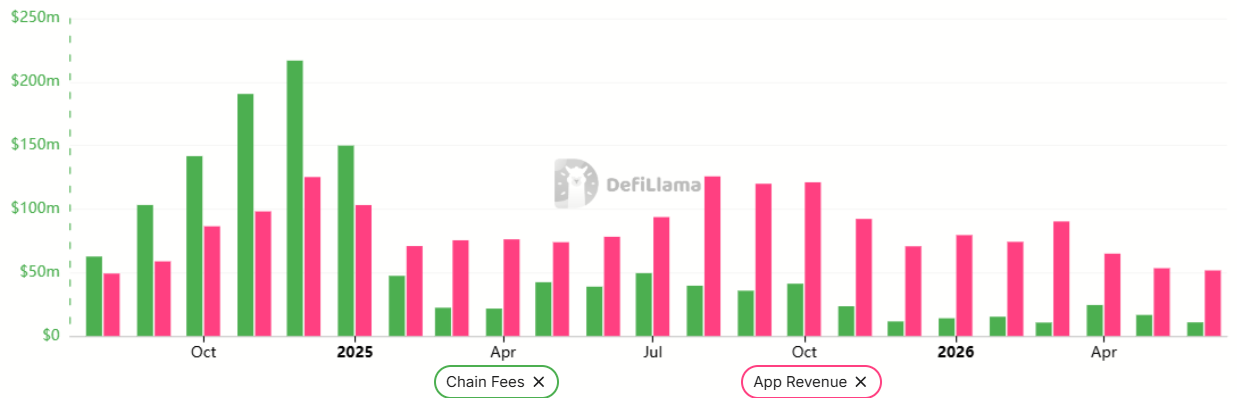
Ether investors also feel disappointment from stagnant Ethereum network fees and decentralized applications (DApps) revenues. As a result, ETH supply becomes inflationary, staking yields remain limited, and fewer incentives exist for ecosystem growth, since part of DApps’ revenue flows back to users.
Ethereum network fees reached only $10.7 million in June, down from $24.4 million in April. DApps revenue hit $51.7 million in June, down from $64.8 million two months earlier. Top contributors included Sky (formerly Maker) at $12.7 million, Titan Builder at $7.2 million, and Chainlink at $4.6 million.
Ethereum supporters argue that tokenization remains in its early innings. The long-term growth potential should create enough blockchain demand to support a much higher ETH valuation.
Related: Ether treasury Sharplink bought $62.4M ETH last week
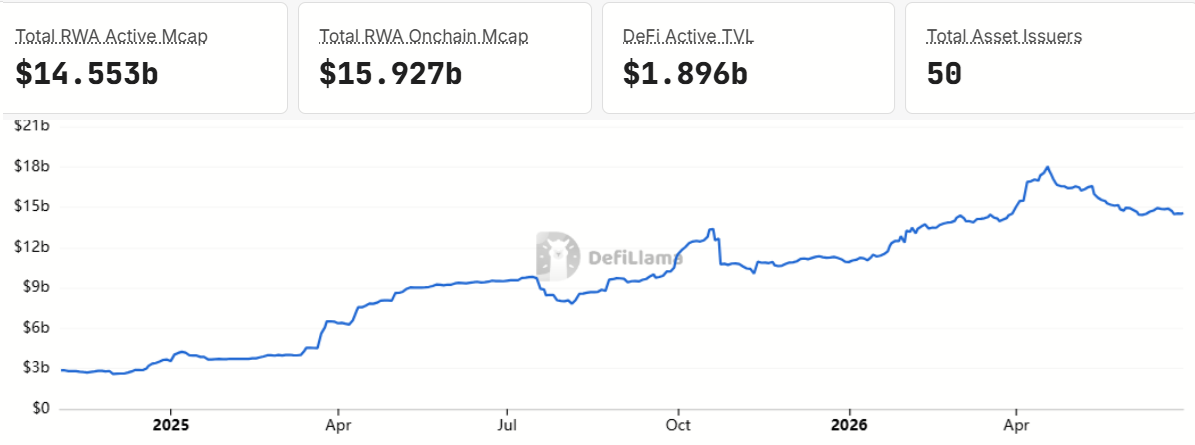
Ethereum real world assets (RWA) active market capitalization, USD. Source: DefiLlama
While real world assets (RWA) show real promise, the $14.5 billion in tokenized market cap on Ethereum has yet to spark meaningful DeFi activity. With a 2.7% staking yield and weak onchain metrics, the odds of ETH breaking below $1,500 remain in play.
The perpetuals exchange will start burning the LIT it buys with revenue and tap its token reserve to keep staking yields flowing.
Lighter, one of the largest decentralized perpetuals exchanges by trading volume, said it will start permanently burning the LIT tokens it buys back with exchange revenue and will fund staking rewards from its ecosystem token reserve.
Lighter has bought back about 15.5 million LIT — roughly 6.3% of circulating supply — using exchange revenue since its token generation event, the company said in an X post Tuesday. Those tokens will now be withdrawn from the exchange and sent to a burn address on Ethereum mainnet, with the first burn set for the weeks after the end of the second quarter.
Separately, Lighter will begin paying staking rewards from its remaining ecosystem tokens, targeting an initial 6% annualized yield. With about 125 million LIT staked, that yield would distribute roughly 7.5 million LIT a year from a remaining reserve of 250 million.
The changes pull in two directions on supply. Burning bought-back tokens removes them from circulation, while paying staking yield from the reserve releases tokens that were not yet circulating, partly offsetting the burns. The update also answers requests from holders for clarity on what happens to the LIT the protocol repurchases, a recurring question across perpetuals exchanges that run buybacks.
Lighter briefly overtook Hyperliquid in monthly perpetuals volume around its December launch, when airdrop incentives pulled traders to its zero-fee order book. Activity has since cooled as those incentives wound down, which puts more weight on whether the token’s economics can sustain demand on their own.
LIT rose about 2% over 24 hours and is up roughly 20% over the past week and about 39% over the past 30 days, outpacing Bitcoin, which fell almost 3% over the past day and about 20% over the past month, according to CoinGecko. The token trades near $1.84, about 77% below its record high. Its market capitalization is around $461 million; its fully diluted valuation, which counts the full one billion token supply against the 250 million now circulating, is roughly $1.84 billion.
Buybacks Become Burns
Lighter had been buying LIT on the open market with exchange revenue since its token launch at the end of December, but had not committed to destroying the tokens. It said Tuesday that the buybacks will now reduce supply permanently through burns, executed by sending LIT to an Ethereum burn address.
The exchange flagged one mechanical caveat: the tokens it burns may be undistributed LIT rather than the exact tokens it repurchased, an approach it said is economically equivalent for holders and cheaper to administer.
The buybacks are funded by trading activity. Lighter has generated about $2.87 million in protocol revenue over the past 30 days and roughly $53 million since launch, according to DefiLlama.
Continued Exchange Revenue
The burn program depends on continued exchange revenue to fund the buybacks, and revenue has been modest relative to the token’s valuation.
Funding staking from the 250 million-token reserve also draws down a finite pool; that reserve could deplete faster if revenue weakens or staking participation climbs, and the 6% target is not fixed.
Lighter said it will execute the first burn in the weeks after the close of the second quarter, a milestone holders will be able to verify onchain.
Staking Shifts to the Reserve
Lighter launched its staking program in January and has distributed about 3.72 million LIT to stakers so far, including roughly 170,000 LIT from a fee-credits program.
Those rewards were bootstrapped with pre-launch revenue while exchange income was directed entirely toward buybacks. Effective immediately, the protocol will instead draw on ecosystem tokens, which it said is a more aligned use because the rewards flow to holders with the longest time horizons.
The targeted 6% yield is denominated in LIT and can be adjusted at the team’s discretion based on market conditions, protocol performance and sustainability, Lighter said. At about 125 million LIT staked, roughly half of circulating supply is committed to the program.
Lighter laid out four priorities for managing its treasury going forward: rewarding long-term stakers, reducing supply through burns, preserving tokens for future partnerships and growth programs, and stewarding the reserve for long-term value. The company said its ecosystem tokens exist to grow the protocol, deepen liquidity and reward users.
The U.S. Commerce Department would have more authority to shield domestic artificial intelligence technology from the supply chains of foreign adversaries in a bill introduced Tuesday by two Republican senators who’ve been at the center of crypto legislation in this congressional session: Tim Scott and Bill Hagerty.
The new bill would give Commerce the ability to block “transactions involving technology designed, developed, manufactured, or supplied by persons owned, controlled, or directed by foreign adversary countries.” But it’s being pushed by the two Republicans as this session of Congress is winding toward the summer break and midterm elections, leaving it little opportunity to advance unless it’s later latched onto a must-move bill.
“Americans should not have to worry that China or Russia can use the technology in our cars, phones, or networks against us,” said Scott, the chairman of the Senate Banking Committee, who worked with Hagerty to pass last year’s Guiding and Establishing National Innovation for U.S. Stablecoins (GENIUS) Act.