Home Blog Page 1219

Bitcoin faces fresh test as Fed feud with Trump escalates – DL News

0

  • Jerome Powell described the criminal investigation as politically motivated.
  • Bitcoin jumped 1% on the news.
  • Analysts suggest it’s a terrific opportunity for Bitcoin to prove its non-sovereign status.

A version of this story appeared in The Guidance newsletter on January 12. Sign up here.

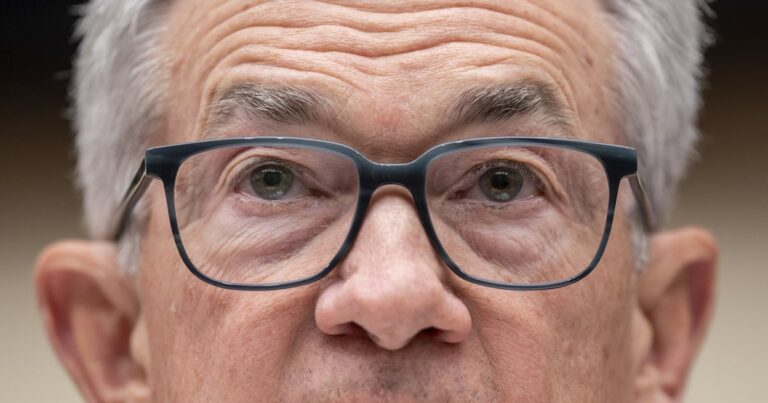
Jerome Powell, the chair of the Federal Reserve, announced on Sunday that the Department of Justice opened a criminal investigation into the central bank’s activities over renovations.

Powell added that the DOJ went as far as threatening him with a criminal indictment — and according to the 72-year-old, it’s got little to do with sprucing up the bank’s headquarters.

After all, he and US President Donald Trump have sparred throughout the year. Trump — who appointed Powell back in 2017 — has challenged Powell on several occasions over his assessment of the American economy and criticised him for failing to lower rates fast enough.

The subpoenas, however, are a serious escalation of the duel.

“The threat of criminal charges is a consequence of the Federal Reserve setting interest rates based on our best assessment of what will serve the public, rather than following the preferences of the president,” Powell said.

As for Trump, he apparently had no idea why the DOJ ramped up its investigation into the Fed and Powell.

“I don’t know anything about it,” Trump told NBC News on Monday. “He’s certainly not very good at the Fed, and he’s not good at building buildings.”

Initially, markets hardly budged.

In fact, Bitcoin, an asset that has historically traded more like a tech stock than digital gold, is up 1% today.

But experts forecast darker clouds should the Trump administration continue to encroach on the Federal Reserve’s independence.

“If things take a stronger turn for the worse, there could be a moment in which most assets get sold off,” Luke Nolan, senior research associate at CoinShares, told DL News.

There’s plenty of historical precedent for this sort of political interference.

Ahead of the 1972 election, Republican President Richard Nixon pressured the then-chair of the central bank, Arthur Burns, to print more dollars and keep interest rates low.

The result was rampant inflation during the 1970s, culminating in a recession in the early 1980s.

In Turkey, President Recep Tayyip Erdogan fired several central bank governors between 2018 and 2022 for keeping interest rates high even as inflation crept up.

The national currency, the Lira, was decimated, and inflation hit 80% in 2022.

But as a non-sovereign asset, or one that can’t be controlled by any state, Nolan also suggests that this moment is another great test for Bitcoin.

“Time will tell if this will hold true,” he said. “Should Bitcoin outperform through this narrative, it will certainly bolster the case that bitcoin can act as a flight to safety in light of geopolitical instability.”

Liam Kelly is DL News’ Berlin-based DeFi correspondent, and Eric Johansson is DL News‘ managing editor. Have a tip? Get in touch at liam@dlnews.com and eric@dlnews.com.

Federal judge temporarily halts Tennessee's bid to shut down Kalshi sports contracts

0

A new ruling freezes a state cease-and-desist order while the court considers whether Kalshi’s CFTC-regulated platform is shielded from state gambling laws.

Bitcoin stalls near $90,000 while traders buy altcoins: Asia Morning Briefing

0

Leverage has been flushed, and spot demand remains soft, keeping bitcoin range-bound while token unlocks and thin liquidity drive sharp, narrative-led moves in select altcoins.

BNY takes first steps in strategy to tokenize bank deposits

0

BNY is to tokenize institutional cash deposits for real-time on-chain settlement between industry participants.

Editorial

This content has been selected, created and edited by the Finextra editorial team based upon its relevance and interest to our community.

The US bank has taken the first step in its strategy to tokenize deposits by enabling the on‑chain mirrored representation of client deposit balances on its Digital Assets platform.

Beginning with collateral and margin workflow use cases, the launch extends BNY’s cash capabilities by creating on-chain digital book entries that represent participating clients’ existing demand deposit claims against the bank.

The capability operates on BNY’s private, permissioned blockchain and is governed by the company’s established risk, compliance, and control frameworks. Client balances continue to be recorded on BNY’s traditional systems to maintain regulatory and reporting integrity.

BNY describes tokenized deposits as as the ‘connective tissue’ supporting the merger of traditional banking infrastructure with emerging digital rails, including stablecoins and tokenized money market funds.

Carolyn Weinberg, chief product and innovation officer, BNY, comments: “As institutional markets move toward always on operating models, BNY is committed to innovating and helping define how cash moves across the modern financial system. Tokenized deposits provide us with the opportunity to extend our trusted bank deposits onto digital rails — enabling clients to operate with greater speed across collateral, margin, and payments, within a framework built for scale, resilience, and regulatory alignment.”

Early participants in the initiative include a wide range of prominent financial institutions and digital natives, including Anvchorage Digital, Circle, Digital Asset, Baillie Gifford, Citadel Securities, DRW Holdings, Galaxy, Paxos and Ripple Prime among others.

Coinbase Might Exit Support For CLARITY Act Over Conflicts

0

Coinbase, one of the largest U.S.-based crypto exchanges, may withdraw its support for the CLARITY Act if the bill imposes restrictions on stablecoin reward programs, according to a Bloomberg report. 

The warning comes as Congress prepares to mark up the legislation in the Senate this week, setting up a potential clash between regulators and one of crypto’s most prominent companies.

For Coinbase, stablecoin rewards are not a minor perk — they are a core part of its revenue model. The exchange shares in interest income generated from reserves backing USD Coin (USDC), the widely used stablecoin issued by Circle, in which Coinbase owns a minority stake. Part of that income is used to offer incentives to users, including roughly 3.5% rewards for Coinbase One customers. 

These programs encourage users to keep USDC on the platform, creating a predictable revenue stream even when trading activity slows. Bloomberg estimates that stablecoin-related revenue may have reached around $1.3 billion in 2025.

The heart of the debate is whether these rewards resemble traditional banking products, such as interest-bearing accounts, or whether they are consumer incentives that belong in a crypto-specific regulatory framework. 

Some banking groups argue that allowing yield on stablecoins could pull deposits away from traditional banks, potentially reducing lending to households and small businesses. 

The act is expected to be marked up this week on January 15. This ongoing issue could have broad effects on the bitcoin and crypto space. 

Coinbase: Stablecoin rewards are under threat

Coinbase and other crypto advocates counter that treating rewards like bank interest would stifle innovation, make U.S. platforms less competitive globally, and risk pushing users offshore.

Coinbase’s stance illustrates the broader tension between lawmakers seeking investor protection and companies trying to maintain viable business models in the emerging crypto sector. 

While the CLARITY Act aims to clarify market structure rules for digital assets — defining categories like digital commodities, investment contracts, and payment stablecoins— it also signals Congress’s growing interest in stablecoin oversight and decentralized finance.

The timing is significant. The Senate Banking Committee will soon review the bill, and its final provisions could shape the future of U.S. crypto policy. Coinbase’s potential withdrawal of support is somewhat of a negotiation tactic and it reflects how critical stablecoin yield programs have become for regulated exchanges. 

Limiting these incentives could reduce adoption of U.S.-based platforms and slow mainstream engagement with digital currencies.

The dispute also highlights the human element of regulation. Companies like Coinbase are balancing compliance, investor expectations, and global competitiveness, while lawmakers weigh the need for oversight against the risk of stifling innovation.

Coinbase has not made an official statement, but insiders speaking to Bloomberg suggest the exchange is carefully evaluating whether the final text will allow it to continue offering rewards while staying aligned with U.S. law.

‘Remains to be seen‘ Whether US will Seize Venezuela‘s Bitcoin

0

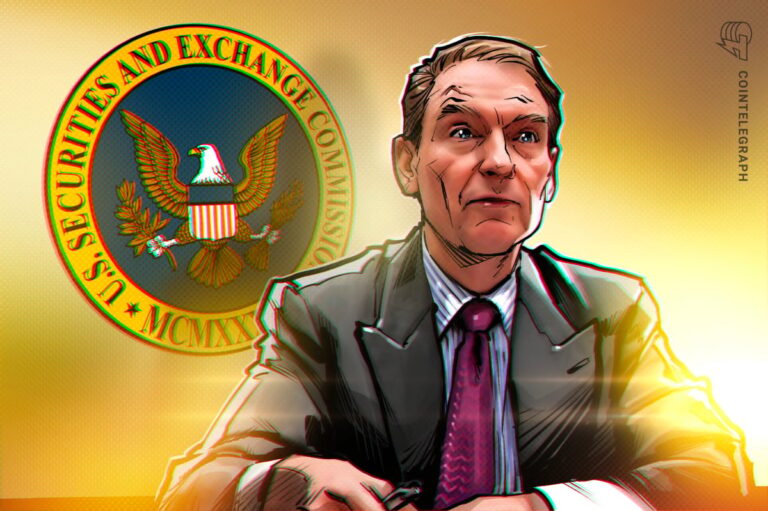
Paul Atkins, chair of the US Securities and Exchange Commission (SEC), didn’t rule out the possibility of authorities seizing Venezuela’s reported Bitcoin holdings after US forces unseated and captured the country’s president.

In a Monday interview with Fox Business’ Stuart Varney, Atkins responded to reports claiming that Venezuela holds up to $60 billion worth of Bitcoin (BTC), though several analysts said they were unable to verify these claims. The SEC chair said it “remains to be seen” what action, if any, the US would take if it had the opportunity to seize the reported 600,000 BTC. 

“I leave that to others in the administration to deal with — I’m not involved in that,” said Atkins in response to a question on whether the US would “take those Bitcoin off ‘em.”

Reports of Venezuela’s Bitcoin holdings surfaced after US forces, at the direction of President Donald Trump, captured then-President Nicolás Maduro last week and removed him to the United States to face criminal charges in New York. 

Related: US crypto stocks soar double-digits as major tokens rally

As of the time of publication, blockchain analysts and intelligence platforms had not confirmed the reported $60 billion in crypto, but the Maduro regime had previously been involved with aspects of the industry. For example, the country launched an oil-backed digital currency in 2018.

Senate to hold market structure markup on Thursday

Atkins’ remarks came a few days before the US Senate Banking Committee is scheduled to hold a markup on the Digital Asset Market Clarity Act, or CLARITY.

House of Representatives lawmakers passed the bill in July, and it has been under review in the Senate for months, likely slowed by a 43-day government shutdown in October and November.

Banks and some crypto companies have also expressed concerns about provisions dealing with stablecoin rewards within the draft bill, and many Democrats are reportedly calling for stronger ethics guardrails and clarification on decentralized finance.