

A major holder’s exit sent White Whale sharply lower on Monday, with the project calling the move a “liquidity event.”
Strong ETF Demand, High Transactions Fail to Lift Price
Spot XRP (XRP) exchange-traded funds (ETFs) have continued to attract investor interest, recording inflows every day of last week as transactions surged to a six-month high.
Unfortunately, these positive fundamentals didn’t help the bulls hold the price above the psychological $2 support level. How low can XRP price go?
Key takeaways:
-
XRP fell below $2 in a six-day correction as trade war fears from US President Donald Trump’s Greenland tariff threats triggered market-wide sell-offs.
-
Strong fundamentals, such as $1.28 billion cumulative ETF inflows and a surge in XRP Ledger transactions to a six-month high, failed to lift investor sentiment.
XRP’s drop below $2 wipes out $40 million in liquidations
XRP extended its correction on Monday, dropping below the $2 psychological level, marking six consecutive days of declines.
The sell-off extends across the crypto market, with Bitcoin (BTC) falling to $92,000 and Ether (ETH) pressing down on support at $3,000, triggered by Trump’s weekend threat of new tariffs on European countries (over buying Greenland), sparking fears of renewed trade wars.
Related: Ripple targets MiCA passporting in EU with Luxembourg e-money nod
More than $788.9 million in long positions were liquidated, with Bitcoin accounting for $224 million of that total. XRP saw $39.5 million in long liquidations, the highest since Nov. 22, 2025.
Across the board, a total of $875 million was wiped out of the market in short and long positions, affecting about 250,000 traders, as shown in the figure below.
Meanwhile, demand for XRP derivatives has remained weak, falling to $3.56 billion on Monday from its yearly high of $4.55 billion on Jan. 6, representing a 21.7% decline.
Further decline in OI could accompany prices lower, as seen in October 2025.

XRP price ignores ETF demand, onchain activity
The six-day price correction comes even as institutional sentiment remains relatively positive, as reflected in steady flows into US-based XRP spot ETFs.
According to data from SoSoValue, XRP ETFs added $1.12 million on Friday, bringing cumulative inflows to $1.28 billion and total assets to over $1.52 billion. The Franklin XRP ETF (XRPZ) was the only XRP ETF with inflows on Friday, bringing its net assets to $287.75 million.

As Cointelegraph reported, global XRP investment products also attracted $69.5 million in inflows during the week ending Friday, signaling steady demand from institutions.
XRP has also seen an increase in onchain demand, evidenced by the surge in transactions to a six-month high last week.
Data from XRPScan shows that the number of transactions executed on the XRP Ledger soared to 2,575,561 on Wednesday, levels last seen in July 2025.

Despite this robust network usage and persistent ETF demand, XRP price has underperformed, dropping 18.5% from its eight-week high of $2.41 reached on Jan. 6.
As Cointelegraph reported, stronger technical validation and high volumes across spot and derivatives markets would be needed to confirm a breakout to higher levels.
XRP price must hold $1.80
The XRP/USDT pair is currently testing a daily order block around $1.96, a level with strong support, according to data from Glassnode.
The cost basis distribution heatmap reveals that more than 1.78 billion XRP were bought at about this level over the last six months. The next significant support sits at $1.78 and $1.80, where investors acquired approximately 1.84 billion XRP.

Note that the XRP/USD pair has not closed a daily candlestick below this level since April 2025, and bulls must defend it to avoid a deeper correction.
If the price breaks below this level, it could drop toward the green zone shown below, supported by the $1.61 local low and the 200-week exponential moving average (EMA), which is about $1.41 and represents the last line of defense for the XRP price.

Unfortunately for the bulls, XRP’s downside momentum is increasing based on the relative strength index, or RSI, which has hit its lowest level in 2026.
As Cointelegraph reported, a break below the support line of a descending channel at $2 will see the XRP/USDT pair extend the decline to $1.75 and subsequently to the Oct. 10 low of $1.61.
This article does not contain investment advice or recommendations. Every investment and trading move involves risk, and readers should conduct their own research when making a decision. While we strive to provide accurate and timely information, Cointelegraph does not guarantee the accuracy, completeness, or reliability of any information in this article. This article may contain forward-looking statements that are subject to risks and uncertainties. Cointelegraph will not be liable for any loss or damage arising from your reliance on this information.
Bitcoin has a 30% chance of falling below $80,000 by late June, options data suggests

Data from decentralized trading venues points to potential for a deeper price crash in coming months.
Fraudsters jailed for laundering voice phishing ring’s $1m in USDT – DL News

- Illegal crypto exchange chief sentenced to five years in South Korea.
- An unspecified number of victims lost money to the fraud ring.
- Criminals moved too fast for banks to block withdrawals.
The 41-year-old head of an illegal crypto exchange will serve five years in jail after using Tether’s USDT, a dollar-pegged cryptocurrency, to launder $1 million for a voice phishing ring.
A branch of the Daegu District Court in South Korea also jailed one of the exchange’s employees, aged 35, for two years and eight months.
“The court has taken into account the fact that the defendants made no effort to restore the damage to the victims, who suffered extreme hardship,” said Presiding Judge Lee Young-cheol, South Korean newspaper Yeongnam Ilbo reported.
While adoption is on the rise in South Korea, criminals are also turning to crypto en masse, with regulators last year reporting a 54% year-on-year spike in suspicious crypto transactions.
A ‘heinous crime’
Prosecutors told the court the voice phishing ring was based overseas, but didn’t specify where. The gang communicated with the exchange chief via Telegram over the course of three months, prosecutors said.
The criminals posed variously as law enforcement officials and family members, attempting to dupe victims into wiring money to bank accounts controlled by the exchange.
When the victims sent money to these accounts, the exchange withdrew the funds from bank branches. Employees then swapped cash for USDT using prearranged private transfers.
The process was carried out so quickly that the money was gone within an hour, prosecutors told the court.
“There wasn’t even enough time for regulators or banks to freeze the victims’ accounts after they called the police to complain they had fallen victim to scams,” a prosecutor explained.
Lawmaker urges action
The presiding judge called the crimes “heinous,” adding that the defendants had acted to ensure “the recovery of the lost funds was virtually impossible.”
Prosecution officials said they were unable to discern how many victims had lost their funds to the voice phishing ring.
Ministers say the government must act fast to stop criminals from using USDT and other stablecoins.
“The potential for the misuse of stablecoins in foreign exchange crimes such as illegal currency exchange is growing,” the lawmaker Jin Sung-joon said in September.
“Regulators must develop systematic measures against new types of foreign exchange-related crime.”
Tim Alper is a News Correspondent at DL News. Got a tip? Email him at tdalper@dlnews.com.
Ethereum Address Poisoning Attacks Steal $740K After Fusaka

Recent record network activity on Ethereum could be linked to a wave of address poisoning attacks that are taking advantage of low gas fees since December, said security researcher Andrey Sergeenkov.
Cointelegraph reported on Friday that network activity retention nearly doubled to 8 million addresses in a month, while daily transactions hit an all-time high of almost 2.9 million.
The week starting Jan. 12 saw 2.7 million new addresses, 170% higher than typical values, while daily transactions surged to over 2.5 million, said Sergeenkov.
However, Sergeenkov said the uptick could be due to a type of mass spam attack known as “address poisoning,” which has become more economical after the December Fusaka Ethereum network upgrade cut transaction fees.
Network fees fell more than 60% in the weeks that followed the upgrade in early December.
“Address poisoning has become disproportionately attractive for attackers,” said the researcher, adding: “you can’t scale infrastructure without addressing user security first!”
$740,000 lost in address poisoning attacks
Address poisoning involves scammers sending small transactions from wallet addresses that resemble legitimate ones, duping users into copying the wrong address when making a transaction.
The scammers first send small amounts of money, usually stablecoins, to “dust distributor” addresses.
Sergeenkov said he was able to uncover likely dust distributor addresses by looking at the number of wallets that received less than a dollar as their first stablecoin transaction.
Related: Efforts to bulletproof Ethereum are paying off in user metrics
Then, to identify which of these are “dust distributor” addresses, he looked at only those that sent transactions out to more than 10,000 addresses.
“These poisoning addresses then distribute dust to millions of potential victims, creating false entries in transaction histories.”
Some of the top “dust distributors” sent to more than 400,000 recipients, and so far, more than $740,000 has been stolen this way from 116 victims, he said.
Magazine: Indians slam Pudgy Penguins, ex-digital yuan boss’s crypto scandal: Asia Express
Cointelegraph is committed to independent, transparent journalism. This news article is produced in accordance with Cointelegraph’s Editorial Policy and aims to provide accurate and timely information. Readers are encouraged to verify information independently. Read our Editorial Policy https://cointelegraph.com/editorial-policy
Bitcoin price briefly plunges to $0 on lesser-known Paradex exchange

Starknet-based DEX Paradex reversed its blockchain to an earlier block after a database migration error briefly crashed bitcoin’s price to zero.
Dormant Bitcoin whale wakes up after 13 years and moves 909 BTC
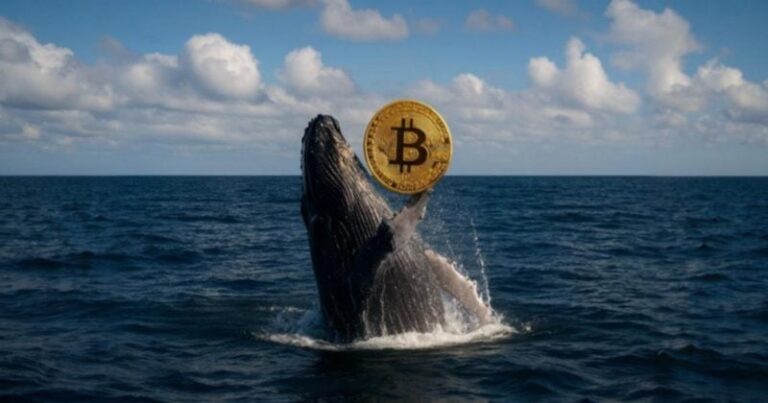
A long-dormant Bitcoin investor activated today and moved 909 BTC worth approximately $84 million to a new wallet, according to data tracked by Lookonchain. The whale stayed inactive for 13 years.
Bitcoin traded at below $7 when this investor originally received it. The digital asset is now valued at around $92,700, meaning that the whale’s Bitcoin stash has jumped roughly 13,900 times its original value.
Historically, when dormant Bitcoin whales resurface, their activity can trigger significant market movements. For example, in July 2025, Galaxy Digital confirmed it executed a historic 80,000 BTC sale for a Satoshi-era investor, which caused temporary price fluctuations.
By comparison, the recent 909 BTC transfer is far smaller, though analysts continue to monitor the market for any impacts.
The transfer follows Bitcoin’s retreat from above $97,000, as President Donald Trump’s tariff threats over Greenland dampened appetite for risk.
CryptoQuant analyst Mignolet noted that the selloff was influenced by US whales.
We’re seeing the strongest selling premium (CPG) in recent periods.
Since the ETF market was not open at the time,
this selling pressure is coming from U.S. whales operating outside of ETFs.
It’s one of the traditional selling patterns we’ve seen repeatedly in the past. pic.twitter.com/u3W5nAV0xL— mignolet (@mignoletkr) January 19, 2026
Pendle Introduces New Governance Token To Spur Broader Adoption

Decentralized Finance yield platform Pendle is set to replace its vePENDLE token as its primary governance and reward token, arguing the previous design held back broader adoption.
In an announcement via X on Monday, Pendle unveiled sPENDLE, its new “liquid staking token” that will soon replace vePENDLE as the primary governance token on the protocol.
“We’re excited to introduce sPENDLE, the next evolution of Pendle tokenomics. This upgrade is designed to address critical limitations of the vePENDLE system, while unlocking new opportunities for PENDLE holders and the protocol,” Pendle said.
sPENDLE is a liquid fee and governance token with a 14-day withdrawal period, the team added.
sPENDLE staking will go live on Tuesday, while vePENDLE locks will be paused on Jan. 29. A snapshot will then be taken of user vePENDLE balances to aid with the switchover.
On the same day, the new governance structure under sPENDLE will fully roll out.
According to data from DeFi Llama, Pendle is the 13th-largest decentralized finance (DeFi) platform in terms of total value locked at almost $3.5 billion.
Better tokenomics a possible boon for Pendle users
In the post, Pendle said that despite strong platform growth over the past couple of years, vePENDLE ultimately caused “significant barriers” that limited “broader adoption.”
One key factor was the long lock-up times for the asset, in which users could not get their funds back until the set time periods were over.
Pendle said it was designed to drive long-term commitment to the protocol, but failed to achieve its goal. To address this, sPENDLE can be locked up and withdrawn at any time following a 14-day unwinding period, or instantly for a 5% fee.
Other problems included the lack of interoperability of vePENDLE, as it was non-transferable, meaning that it couldn’t be utilized across other DeFi platforms.
To address this, sPENDLE will be integrated with a number of DeFi platforms, enabling the asset to be used for purposes such as restaking.
Related: Injective community passes governance vote to slash INJ token supply
Pendle also said the governance structure was too complicated for the majority of users, as it required active weekly engagement to earn rewards from governance contributions.
“The weekly vote-to-earn system required a deep understanding of DeFi and market dynamics to optimize rewards,” Pendle said.
“Despite generating over $37M in 2025, the complex voting mechanics meant that rewards concentrated among vePENDLE holders with enough expertise to navigate the system effectively — a tiny fraction of users,” Pendle added.
To resolve this, Pendle is introducing a new governance structure that makes it much easier for holders. Instead of weekly engagement, holders will only need to vote for “critical” Pendle Protocol Proposals (PPP) to remain eligible for governance rewards.
When there is no PPP to vote on, they will automatically remain eligible.
Under this structure, Pendle will also conduct PENDLE token buybacks using “up to 80% of protocol revenue” to distribute as governance rewards.
Magazine: How crypto laws changed in 2025 — and how they’ll change in 2026
Cointelegraph is committed to independent, transparent journalism. This news article is produced in accordance with Cointelegraph’s Editorial Policy and aims to provide accurate and timely information. Readers are encouraged to verify information independently. Read our Editorial Policy https://cointelegraph.com/editorial-policy
Bitcoin hashrate drops 15% from October high as miner capitulation drags into almost 60 days
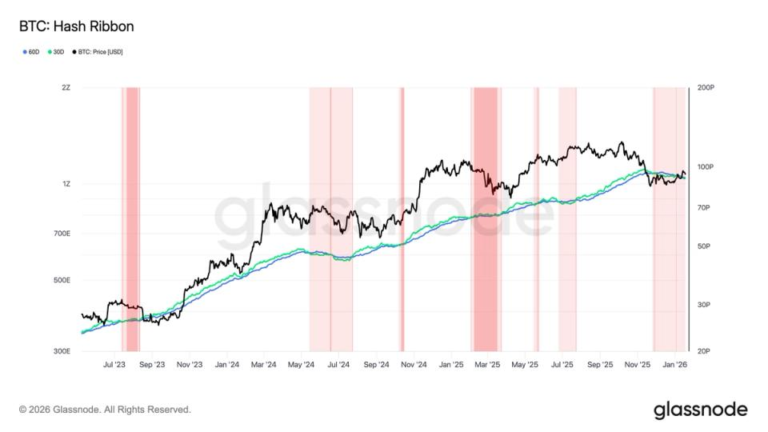
Bitcoin mining difficulty set for a 4% decline, the seventh negative adjustment in the past eight.
The New York Stock Exchange Develops Tokenized Securities Platform

NEW YORK–(BUSINESS WIRE)–The New York Stock Exchange, part of Intercontinental Exchange, Inc. (NYSE: ICE), a leading global provider of technology and data, today announced its development of a platform for trading and on-chain settlement of tokenized securities, for which it will seek regulatory approvals.
NYSE’s new digital platform will enable tokenized trading experiences, including 24/7 operations, instant settlement, orders sized in dollar amounts, and stablecoin-based funding. Its design combines the NYSE’s cutting-edge Pillar matching engine with blockchain-based post-trade systems, including the capability to support multiple chains for settlement and custody.
Subject to regulatory approvals, the platform will power a new NYSE venue that supports trading of tokenized shares fungible with traditionally issued securities as well as tokens natively issued as digital securities. Tokenized shareholders will participate in traditional shareholder dividends and governance rights. The venue is designed to align with established principles for market structure, with distribution via non-discriminatory access to all qualified broker-dealers.
The launch of the NYSE’s tokenized securities platform is one component of ICE’s broader digital strategy, which includes preparing its clearing infrastructure to support 24/7 trading and the potential integration of tokenized collateral. ICE is now working with banks including BNY (NYSE: BK) and Citi (NYSE: C) to support tokenized deposits across ICE’s clearinghouses to help clearing members transfer and manage money outside of traditional banking hours, meet margin obligations, and accommodate funding requirements over different jurisdictions and time zones.
“For more than two centuries, the NYSE has transformed the way markets operate,” said Lynn Martin, President, NYSE Group. “We are leading the industry toward fully on-chain solutions, grounded in the unmatched protections and high regulatory standards that position us to marry trust with state-of-the-art technology. Harnessing our expertise to reinvent market infrastructure is how we’ll meet and shape the demands of a digital future.”
ICE, parent company of the NYSE and operator of six clearing houses around the world including the world’s largest energy clearing house and the world’s largest clearing house for credit default swaps, has been at the forefront of market innovation for more than 25 years.
“Since its founding, ICE has propelled markets from analog to digital,” said Michael Blaugrund, Vice President of Strategic Initiatives, ICE. “Supporting tokenized securities is a pivotal step in ICE’s strategy to operate on-chain market infrastructure for trading, settlement, custody, and capital formation in the new era of global finance.”
About Intercontinental Exchange
Intercontinental Exchange, Inc.(NYSE: ICE) is a Fortune 500 company that designs, builds, and operates digital networks that connect people to opportunity. We provide financial technology and data services across major asset classes helping our customers access mission-critical workflow tools that increase transparency and efficiency. ICE’s futures, equity, and options exchanges — including the New York Stock Exchange — and clearing houses help people invest, raise capital and manage risk. We offer some of the world’s largest markets to trade and clear energy and environmental products. Our fixed income, data services and execution capabilities provide information, analytics and platforms that help our customers streamline processes and capitalize on opportunities. At ICE Mortgage Technology, we are transforming U.S. housing finance, from initial consumer engagement through loan production, closing, registration and the long-term servicing relationship. Together, ICE transforms, streamlines, and automates industries to connect our customers to opportunity.
Trademarks of ICE and/or its affiliates include Intercontinental Exchange, ICE, ICE block design, NYSE and New York Stock Exchange. Information regarding additional trademarks and intellectual property rights of Intercontinental Exchange, Inc. and/or its affiliates is located here. Key Information Documents for certain products covered by the EU Packaged Retail and Insurance-based Investment Products Regulation can be accessed on the relevant exchange website under the heading “Key Information Documents (KIDS).”
Safe Harbor Statement under the Private Securities Litigation Reform Act of 1995 — Statements in this press release regarding ICE’s business that are not historical facts are “forward-looking statements” that involve risks and uncertainties. For a discussion of additional risks and uncertainties, which could cause actual results to differ from those contained in the forward-looking statements, see ICE’s Securities and Exchange Commission (SEC) filings, including, but not limited to, the risk factors in ICE’s Annual Report on Form 10-K for the year ended December 31, 2024, as filed with the SEC on February 6, 2025.