
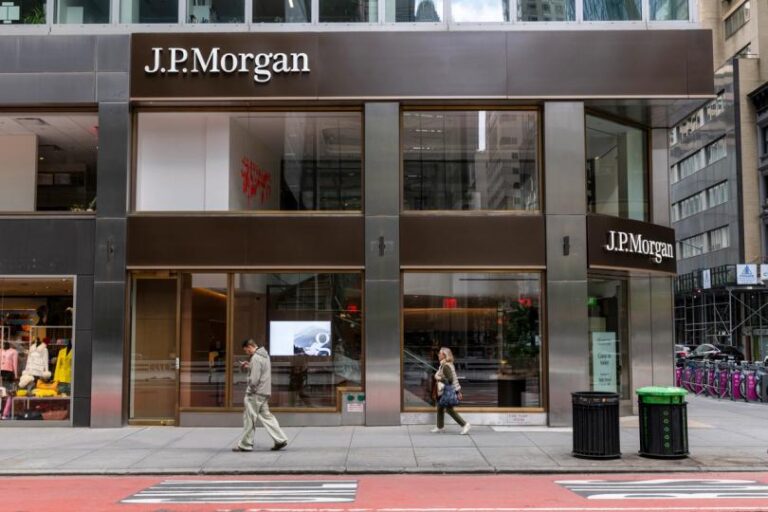
JPMorgan’s Jeremy Barnum said the bank would compete with crypto offerings but warned that stablecoin yield products look like banks without the same regulation.
Euler’s Founding CEO Steps Down as Protocol Refocuses on Institutions

The DeFi lending protocol staged a major comeback in 2025, rising to new TVL highs last year after it was hacked in 2023.
Michael Bentley, co-founder of Euler Labs, the team behind multi-chain lending protocol Euler Finance, said he will step back from the protocol’s day-to-day leadership after nearly six years at the helm.
In an X announcement on Monday, Jan. 12, Bentley said he planned to step down from his CEO role and move into more of an advisory and product-focused position, adding that he doesn’t want to “stand in the way” of the project’s current momentum.
Bentley described last year as a period of revival for the protocol. “We brought the project back to life and grew to over $4bn in total deposits in under a year,” he wrote, referring to a rebound from the protocol’s earlier struggles, including the 2023 hack that saw approximately $200 million lost due to a flash loan attack.
Euler’s Institutional Pivot
In his post yesterday, Bentley acknowledged limits to Euler’s earlier approach, writing that the “fully permissionless vision” he and co-founder Doug Hoyte pursued in 2020 didn’t find “strong product market fit.” He added, “That does not diminish the work or the ambition behind it, but it does point clearly to the need for a change in direction and a fresh vision.”
Now, as Bentley explained, Euler Finance is “exceptionally well suited to building bespoke credit markets for novel use cases,” elaborating that Euler’s next phase will involve pivoting toward meeting the demands of institutional players:
“Leveraging the protocol to support tailored markets that meet the needs of fintech and institutional participants is a natural next chapter, and one for which many aspects of Euler’s design are uniquely well suited.”
Jonathan Han, who previously served as senior vice president of business development and partnerships at crypto market intelligence firm The Tie, will take over as Euler’s CEO. In a separate X post, Han said he wants to focus on building the “best vault infrastructure for our existing community and for the next wave of institutional, fintech, and retail users coming on-chain.” He added “DeFi is no longer an experimental frontier; it is rapidly emerging as core financial infrastructure.”
After the leadership change was announced, EUL, Euler Finance’s native token, fell more than 7% to $2.64, and is down 2% on the day at press time.
The Big Comeback
Euler’s growth since the hack is broadly considered one of DeFi’s greatest comeback stories. After the March 2023 exploit, the protocol’s total value locked (TVL) plunged to the low-millions from its previous high of around $333 million. It took Euler Finance a few years to recover, but by October of last year, Euler Finance’s TVL topped $2 billion, marking a massive resurgence above its previous highs.
However, market contagion after Stream Finance’s collapse in early November 2025 contributed to volatility across lending markets, and Euler’s TVL has fallen to around $1 billion by press time.
Innovation with Resilience at its Core: Advancing Payments in 2026

In this Predict 2026 FinextraTV interview, Barry Rodrigues, Executive Vice President, Payments, Finastra, discussed the fundamental changes that need to happen in the payments industry in 2026 to keep pace with customer experience. Discussing persisting industry issues with legacy systems, Rodrigues explained that regulators expect banks to recover from failure in seconds and that their monolithic foundations offer little resiliency in such instances. He goes on to say that the days of batch payments are gone and consumers want increasing flexibility, using the example of immediate payment limits starting at £100 and now being closer to £100m. Rodrigues looks to the future, once again emphasising the importance of resiliency as a key factor, and splits the evolution of payment rails in 3 Horizons, describing them as 2 faster horses and now the era of the automotive.
Samourai Letter #2: Notes From The Inside

Hello Reader,
The shadow economy of FPC Morgantown runs on pouches of mackerel. Yes, the fish. Much like any fiat, or precious metal standard there is no intrinsic value to the currency, to the mackerel.
You might be a smart ass thinking to yourself that surely you can eat the mackerel if you wanted and there is some amount of protein that some prison economist has a model for deriving intrinsic value based on caloric density and protein richness. But alas, no.
Most of the mackerel in circulation is so old that eating it would most certainly result in a visit to the medical station or worse a nasty case of the runs. Trust me when I say the last place you want to have the runs is in a communal toilet block that 100 other guys make use of as well.
So no, the mackerel – also known as Macks – are certainly not for eating. But why mackerel? Why not chicken, salmon, tuna, or like other prisons, stamps? Stamps seem like a more logical choice, they have multiple face value denominations, they are a form of government tender, they have some value on the outside, they are hard to counterfeit, they do not go rancid after time, and in the words of the gentleman I met in the laundry room last night “doggon thangs smell like pussy that gon’ rotten”.
Before we can get into the reason for “The Mack Standard” at FPC Morgantown let us examine more deeply the grey market forces at play by first understanding what the white market looks like.
Each prisoner has two ways to earn dollars while incarcerated. A friend or family member on the outside can “add money to your books” – This means they deposit a sum of money into your prisoner trust fund account held by the BOP on your behalf.
The other way is by earning the dollars through your prison job. Each person in a Federal prison must have a job. The pay for these jobs range from $0.20 to $1.00 an hour, so needless to say if you’re relying on your prison job solely to earn money while inside there is going to need to be some creativity on your part.
What is money actually used for anyway? Where does one spend the money they earn or that friends and family send? Every week there is a designated day that you are allowed to “shop” at the commissary.
You fill out a sheet like you would have found in an old mail order catalog. You mark what item you want and then quantity you want. You then wait in line for over an hour while commissary employees gather the items to be distributed.

You can buy all sorts of items to make your stay in prison more comfortable. Your sentence goes much smoother with limited creature comforts on your side.
For example, you can buy what prisoners call “greys” which is a grey sweatshirt and grey sweatpants so that during off hours you can remove your stiff uncomfortable uniform you can change into something more comfortable.
They sell comfortable sneakers so that during recreation time you can wear something other than your heavy and mightily uncomfortable prison issued work boots. The commissary also sells shelf stable food items and snacks.
Of course, the most important shelf stable item they sell are pouches of mackerel. One pouch goes for $1.40 – They used to be a dollar, but that is inflation for you.
There are several other factors of the white market prison economy to be aware of. These factors really drive the grey market in a prison.
The first is each prisoner has a spending limit imposed on them of $360 per month. It isn’t too difficult to hit that limit.
A tablet for watching rented movies costs $148, a pair of sneakers $70, a pair of more comfortable work boots $100. A pouch of Chicken $4.00.
You have to be quite strategic about what you buy and when in order to make sure you do not run over your allocated spending amount too early in the month.
The second factor is the artificial limits placed on certain items. For example, you can only buy up to 10 pouches of tuna, or only 1 notebook at a time, or only 20 $0.78 stamps, or 10 $1.00 stamps.
Understanding these factors of artificial limits, inflated prices, and suppressed wages we can begin to discover why a grey market exists in every single prison institution, globally.
There exists two primary needs to prisoners participating in the economy. The ability to overcome the artificial limits imposed by the administration and the ability to earn more than is possible by their prison jobs alone.
Quite frankly, it is the same needs and motivations that were readily apparent and well studied by economists during the reign of the Soviet Union. It is the same factors and motivations that ensure a thriving black and grey market in communist Cuba today.
Whenever these types of limits and restrictions are imposed within the otherwise free and unencumbered market by top down administrators, market participants find a work-around.
That is why the black/grey market is the largest market on earth. It has nothing to do with criminality and everything to do with honest actors being pushed out of the permissioned system.
For the guys who don’t have help on the outside, they need to make money on the inside – to supplement the pittance they will earn from their prison job – as such, people run various hustles.

Some guys will do your laundry for you, running what essentially amounts to a wash, dry, and fold service with pickup and delivery. This usually runs for 1 mack per garment with some sort of volume discount for large orders.
Some guys are chefs and will prepare hot food to sell right from their cell like some sort of food stall in a third world bazaar.
You can often smell the (frankly delicious) scents radiating from the chefs makeshift kitchen (by the way, there is a sort of symbiotic relationship with the chef and the laundry man. The chef hoards the iron for use in cooking thereby limiting availability to iron your own clothes. The laundry man has the only other iron, so if you want pressed clothing you must engage his services).
The chef will often have runners that take the hot prepared food from cell to cell, collecting packets of mackerel as payment – a sort of prison equivalent of Uber Eats. I am sure they get some commission for this job they perform.
Of course some guys operate on the wrong side of the “law” and sell contraband items such as cell phones, cigarettes, and vapes though I haven’t seen this personally yet, I have heard of it within the prison.
Apparently the CO’s have heard about it too, as I have experienced two shakedowns (we all are required to leave our living area while a pair of CO’s search our cells and everywhere else in the room including air vents and lighting fixtures).
When sports games are on the TV there will be bookmakers and gamblers trying out their luck at a mackerel windfall. Just like on the outside people will do what they have to do to make a buck – or a mack.
For the guys who do have help on the outside and money flowing onto their books they have slightly different motivations.
Some just want to be able to purchase more than the artificial limits allow for. Some are required by their sentence to pay fines or restitution and if they place too much money on their books, the amount they will be required to repay each month will increase, so it makes financial sense for them to keep their books light on cash, and handle only mackerel. Sort of like the way on the outside a businessman will keep their taxable income as low as possible (think Jeff Bezos famously being paid a salary of $1.00).
And some just want to corner the Keebler Chocolate Cookie market (a very popular item, by the way) and become the go to market maker for that product.

Whatever the motivations or desires, humans make rational decisions in their own economic self interests, being institutionalized in a prison will not change that. In fact, it will amplify it.
Successful hustler will accrue a large amount of macks while in prison. What do they do with it? You may be wondering how they convert some of that to “real money”.
Like every other economy there are currency converters / money changers, and in a prison filled with highly educated white collar criminals, it appears to be a pretty sophisticated operation.
I really haven’t participated in the hustle and bustle. I have only been here long enough to shop at commissary once, and I was able to buy everything I needed without breaking the spending limits or item limits. So while I do not know exactly how this part works I have some inkling of an understanding.
From what I gather converting Macks to Dollars works by the buyer of the macks getting an associate on the outside to send the seller of the macks USD via Cash App or by depositing money onto their books directly using something like Western Union.
Like all economies there is some degree of barter that occurs in the prison system.
Some guys refuse to bother with Macks and instead will trade with higher value chicken, or soda, or flaming hot Cheetos, it all depends on who you are dealing with and what they want. Everything is always open to negotiation.
However, barter soon becomes ineffective at scale and currency must be utilized. Much like all economies, what is used as currency is generally worthless – be it paper, metal, or pukka shells – but there is a sort of shared acceptance (or delusion) that the thing we choose represents some sort of value that we all can agree on.
In FPC Morgantown, that is pouches of Mackerel, and they are worth roughly $1.00
As we close this letter let us return to our original question. Why Macks? Why not stamps?
The short answer is I don’t know. I have theories but I am not certain. My best theory so far is 1) Most people don’t actually want to eat the mackerel, so they stay in circulation longer than something desirable like chicken which more people want to eat; 2) There appears to be no limit on how many mackerel pouches you can buy from the commissary.
From what I gather, stamps are always limited – in fact, most things are – but not mackerel pouches. I think these two observations are what lead my forefather prisoners to found an entire shadow economy based on the Mackerel Standard.

As I write this it is December 26th, The day after Christmas. My 8th night as a prisoner. It hasn’t taken long to start seeing the way things really work, the way the real economy functions, the way humans will adapt to any situation we find ourselves in.
Just like on the outside there are winners and losers, moguls and paupers, blue collar and white collar.
But unlike the outside, there is a shared camaraderie between the classes and strata of prisoner, an “us versus them” undertone, prisoner versus cop.
Merry Christmas everyone. I wish I was there to celebrate with my family and with you.
Keonne Rodriguez
Write to Keonne:
Keonne Rodriguez
11404-511
FPC Morgantown
FEDERAL PRISON CAMP
P.O. BOX 1000
MORGANTOWN, WV 26507
Mailing Guidelines:
Please note: You can only send letters (no more than 3 pages long). No packages or other items are allowed. Books, magazines, and newspapers must be sent directly from the publisher or an online retailer like Amazon. All letters must include a full return address and sender name to be delivered.
This is a guest post by Keonne Rodriguez. Opinions expressed are entirely their own and do not necessarily reflect those of BTC Inc or Bitcoin Magazine.
Polygon to Buy Coinme, Sequence in $250M+ Payments Push

- Polygon Labs signs definitive agreements to acquire Coinme and Sequence for over $250 million
- The deals are positioned to add three capabilities: fiat on/off-ramps (including cash access), wallet infrastructure, and cross-chain orchestration via “intents.”
Polygon Labs has signed deals to buy U.S. crypto on-ramp provider Coinme and wallet infrastructure firm Sequence for over $250 million.
The acquisitions add three building blocks Polygon has been pitching as part of a forthcoming “Open Money Stack”: regulated cash and fiat on- and off-ramps in the U.S., wallet infrastructure, and cross-chain “intents” software that routes transactions across blockchains behind the scenes. Polygon has not provided the break out of the price paid for each company or specify whether consideration is cash, equity or a mix.
The move comes as stablecoins push deeper into the financial system, helped by a clearer U.S. rulebook. President Donald Trump signed the GENIUS Act into law in July 2025, creating a federal regulatory framework for payment stablecoins, including reserve requirements and public disclosures. In parallel, transaction volumes have been accelerating: total stablecoin transaction volume rose to $33 trillion in 2025, up 72%.
“Stablecoins are increasingly being used as a settlement layer for global payments, but the infrastructure around them remains fragmented,” Polygon Labs Chief Executive Officer Marc Boiron said in a statement, adding that the acquisitions would help Polygon build “an open payments business on top of onchain settlement.”
A regulated on-ramp, plus wallet rails
Coinme, founded in 2014, operates a cash-to-crypto distribution network and compliance infrastructure that Polygon says includes money-transmitter licenses enabling operations in 48 U.S. states, alongside a footprint spanning more than 50,000 retail locations.
Polygon said Coinme will operate as a wholly owned subsidiary after the transaction closes, subject to regulatory approvals.
The Coinme deal is expected to close in the second quarter of 2026. Sequence is expected to close this month, Polygon said.
CoinDesk reported earlier this month that Polygon was close to buying Coinme, citing sources who pegged the price at roughly $100 million to $125 million.
Sequence brings “smart wallet” tooling and an intents-based cross-chain orchestration engine that aims to make crypto payments feel more like standard card payments—abstracting away bridging, swaps and network gas fees. Sequence has also been building a product called Trails, which it describes as “universal rails” for one-click crypto transactions across chains and tokens; it has highlighted integrations that include Circle’s Cross-Chain Transfer Protocol (CCTP), which moves USDC between networks via native burn-and-mint.
Why Polygon is buying rather than building
Polygon’s pitch is that payments won’t move onchain at scale unless users and merchants can enter and exit seamlessly—using cash, debit rails or enterprise APIs—while staying inside compliant perimeters. That puts regulated on-ramps and wallet UX at the center of the strategy, not just blockspace.
In its announcement, Polygon said the combined businesses—alongside Polygon—have processed more than $1 billion in offchain sales and more than $2 trillion in onchain value transfers. Polygon also cited Dune data showing its onchain stablecoin supply ended 2025 at about $3.3 billion, a three-year high.
The acquisitions also reflect competitive pressure. Multiple blockchain ecosystems are racing to position themselves as the default settlement layer for stablecoin payments, a market that is increasingly being framed as infrastructure rather than speculation. Ledger Insights, which covered Polygon’s Open Money Stack push earlier this month, described the space as a “land grab” as rivals build payment-focused networks.
Regulation is (finally) a tailwind — but it raises the bar
Polygon and its acquisition targets are leaning into Washington’s shift from enforcement-heavy ambiguity to prescriptive rules. The White House fact sheet for the GENIUS Act said the law created the “first-ever Federal regulatory system for stablecoins,” including 100% reserve backing with liquid assets and monthly public reserve disclosures.
That same clarity is also forcing infrastructure providers to meet higher compliance and operational standards—especially around custody, disclosures, and the on- and off-ramps that interface with banks and retail distribution.
The policy shift is not without critics. Amundi, Europe’s largest asset manager, warned U.S. stablecoin policy could accelerate “dollarization” and destabilize parts of the global payments system by making access to dollar-like instruments easier outside the U.S.
What changes for developers and payment firms
Polygon is marketing the combined stack as a way for banks, fintechs, merchants, remittance providers and payout platforms to tap stablecoin settlement while avoiding the rough edges of crypto UX—like multiple wallets, chain fragmentation and unpredictable fees.
In effect, Coinme offers regulated distribution and conversion (cash, debit rails and enterprise integrations), while Sequence provides wallet-layer and cross-chain routing tools intended to smooth out the end-user experience. Polygon’s bet is that collapsing those components into a tighter, integrated stack will lower the cost and complexity of launching stablecoin payment products—and push more volume onto Polygon’s chain, where throughput and fees accrue to the network’s validators and stakers.
Whether that strategy works may come down to adoption by mainstream payment platforms and whether Polygon can keep the stack “open” while absorbing regulated infrastructure—an area where incumbents are wary of vendor lock-in.
For now, the timeline is clear: Sequence closes first, providing immediate wallet-and-orchestration tooling; Coinme follows later, pending regulatory approvals, bringing U.S.-focused compliant rails that Polygon sees as critical to scaling stablecoin payments beyond crypto-native users.
Read Also:
Disclaimer: The information provided on AlexaBlockchain is for informational purposes only and does not constitute financial advice. Read complete disclaimer here.
Bitcoin rises 2% to $93,500 after inflation data increased chances of further rate cuts
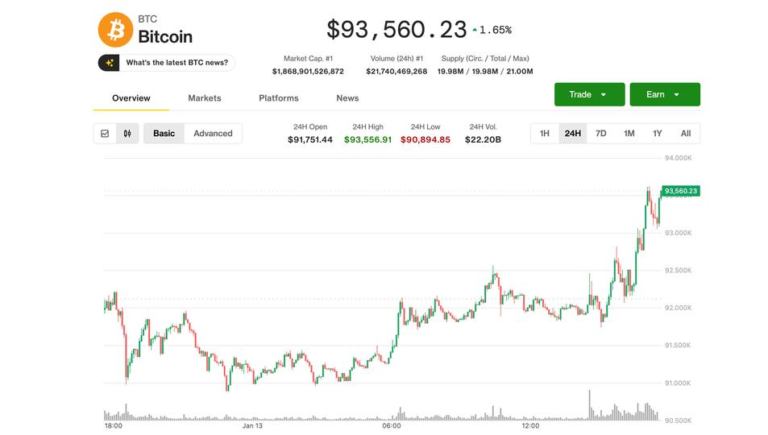
The largest cryptocurrency is now facing a key “resistance” zone at $93,500-$95,000, which has capped its price for nearly two months.
Eric Adams’ NYC Token Plunges 80%, Showing Bitcoin Stability

Former New York City Mayor Eric Adams is facing a lot of heat today after his high-profile launch of a new cryptocurrency, dubbed the NYC Token, crashed within hours of launching. Adams launched the token on Monday, but the coin lost 80% of its value within a couple hours.
Adams unveiled the Solana-based token at a Times Square event on Monday, promoting it as a tool to generate funding for social causes including the fight against antisemitism and “anti-Americanism,” as well as blockchain education and student scholarships.
Eric Adams told Fox Business that proceeds would support nonprofits like Combat Antisemitism and historically Black colleges and universities without raising taxes.
The announcement came less than two weeks after Eric Adams left office as mayor, where he had long championed crypto adoption — including converting his first mayoral paychecks into Bitcoin and other crypto and signing an executive order to promote digital assets.
A mayoral ‘pump and dump’ from Eric Adams
Investor interest was strong for the first couple of hours following the coin’s launch, briefly driving the NYC Token’s market capitalization into the hundreds of millions of dollars. But within hours of its debut, the token’s price collapsed — dropping more than 80% from its peak, according to market data.
On-chain analysts and traders quickly accused the project of a rug pull, a scenario in which insiders withdraw liquidity from a token to the detriment of ordinary investors.
The coin hit $580 million in market cap before crashing -80% in a matter of minutes. Nearly $500 million in market cap was lost, as of earlier January 13.
Social media and trading forums erupted with criticism. Many in the crypto space saw this dump coming.
Some retail traders accused the coin’s pattern as a classic pump-and-dump scheme, while others questioned the token’s sparse disclosures, limited technical details, and the absence of named partners or a working project roadmap.
The case for Bitcoin
Here we go again. This classic moment and rug pull shows the risks inherent in the broader memecoin and altcoin market and makes a strong argument for Bitcoin’s relative stability.
Projects like this are prone to large liquidity withdrawals, either immediately after a token’s launch or as it reaches new highs. Popularity alone can make it easy to attract buyers, giving insiders an opportunity to sell. When they do, it often triggers sharp price drops and significant investor losses — practices that are manipulative and, frankly, resemble a scam.
Bitcoin, in contrast, offers a longer track record, transparent issuance, and decentralized governance. Its fixed supply and consensus mechanisms are its key to resilience, setting it apart from short-lived tokens with concentrated control or opaque structures.
Eric Adam’s token exemplifies recurring pitfalls we see in speculative, celebrity- or politically branded coins: opaque tokenomics, centralized supply, and sudden collapses that leave retail investors exposed.
Bitcoin’s architecture is designed to mitigate these risks through decentralized proof-of-work security and a predictable issuance schedule. Bitcoin’s decades‑long resilience has stood the test of any speculative churn coming from memecoins.
Crypto pump-and-dump schemes like this one from Eric Adams really highlight why Bitcoin stands apart from the broader crypto market.
TD Bank Sees ‘Terrific Opportunities’ in Tokenized Deposits

With JPMorgan known as a pioneer, more big banks are leaning into tokenized deposits as a way to get blockchain’s benefits, without giving up control.
Big banks are increasingly experimenting with tokenized deposits as a way to plug legacy balance sheets into blockchain rails for more efficient settlement.
In a recent example, Raymond Chun, the CEO of TD Bank, one of Canada’s “Big Five” lenders, described the technology as real innovation with “terrific opportunities.” Speaking at the RBC conference earlier this month, Chun said tokenized deposits represent “the highest opportunity” for the bank and that TD is focused on them more than on crypto trading or stablecoins.
“I think there’s huge benefits. It’s regulated. The benefits to — from a P&L perspective, from a client perspective, it’s an on-us transaction. So I think tokenized deposits is certainly real and it has terrific opportunities,” Chun said.
Tokenized deposits, in plain terms, are digital book entries that mirror a client’s existing deposit claim while also existing as a token on a blockchain network, in most cases a permissioned or private one. And while for many in the crypto community that model may run counter to blockchain’s original decentralized ethos, banks see significant operational upside in this hybrid approach.
A Growing Trend
BNY Mellon, one of the world’s oldest financial institutions, is also experimenting with tokenized deposits. In early January, the bank extended its digital cash capabilities by launching tokenized deposit representations for institutional clients, initially targeting collateral and margin workflows using its permissioned blockchain technology.
JPMorgan was the first major U.S. bank to experiment with the product type, offering tokenized deposit accounts via its permissioned blockchain platform Kinexys, formerly known as Onyx, as early as 2019. The banking giant first piloted its “deposit token” JPM Coin (JPMD) on Coinbase’s Layer 2 Base last June — though it remains in a permissioned framework. More recently, the bank issued JPMD natively on the Canton Network, and extended its tokenized product offerings into money market funds.
Other large banks are exploring similar initiatives. In May last year, HSBC, one of Europe’s largest banking groups, launched tokenized deposit services for corporate cash management in Hong Kong, with Ant International as the first client to use the service for real-time HKD and USD payments.
More broadly, the growth of real-world asset tokenization is supported by a number of recent studies expecting rapid growth of the sector. McKinsey forecasts that total tokenized market capitalization across major financial asset classes could reach roughly $2 trillion by 2030 as a base case, with a potential upside to about $4 trillion in a bullish scenario.
Nigeria’s Fintech Regulatory Landscape: What Global Investors Should Know

As Nigeria continues to cement its position as a leading hub for financial technology in Africa, the legal frameworks governing the sector are undergoing significant evolution. A new analysis by Ejike Nwafor Esq, principal partner at Ejike Nwafor & Partners LLP, outlines how recent legislative reforms are reshaping the ease of doing business for fintechs and global investors entering the market.

From the digitization of corporate registration to the specific regulation of virtual assets, here is a breakdown of the key regulatory developments defining Nigeria’s fintech landscape.
A new legal bedrock for digital finance
The foundation of Nigeria’s business environment has been strengthened by the Companies and Allied Matters Act (CAMA) 2020 and the recently enacted Investments and Securities Act (ISA) 2025.
According to Nwafor, CAMA 2020 has been instrumental in simplifying company formation, crucial for agile fintech startups. It permits single-member private companies, introduces electronic filings, and removes mandatory audits for small companies, significantly reducing the “time and cost of formalization”.
Looking forward, the ISA 2025, signed into law in December 2025, represents a major overhaul of the 2007 Act. Nwafor notes that this new law specifically expands the Securities and Exchange Commission’s (SEC) powers over digital finance and redefines market conduct regimes to align with global standards.
Bringing digital assets into the fold
For investors eyeing the crypto and blockchain space, regulatory clarity has been a primary concern. The SEC has moved to address this by bringing crypto-assets under the purview of securities law.
- Digital Asset Rules: In 2022, the SEC rolled out comprehensive regulations covering digital asset issuance, offering platforms, custodians, and exchanges.
- Compliance & Safety: These frameworks impose strict compliance obligations, including Know Your Customer (KYC) and licensed participation, designed to protect investors and ensure market integrity.
- AML/CFT: Enhanced Anti-Money Laundering (AML) and Combating the Financing of Terrorism (CFT) regulations were introduced for all capital market operators, requiring internal policies to report suspicious transactions.
Foreign investment and capital repatriation
For global fintech investors, the ability to enter the market and repatriate funds is paramount. Nwafor highlights two key statutes that facilitate this:
- NIPC Act 2007: This act liberalizes foreign investment, allowing foreigners to own 100% of most Nigerian companies and guaranteeing unrestricted repatriation of dividends and interest.
- FEMPA: The Foreign Exchange (Monitoring and Miscellaneous Provisions) Act ensures that any foreign capital brought in through authorized dealers (issuing a Certificate of Capital Importation) can be repatriated without unreasonable restrictions.
While acknowledging that secondary forex controls exist, Nwafor emphasizes that these laws provide a statutory assurance that makes Nigeria attractive to international capital.To further spur the technology sector, the Nigeria Startup Act 2022 was enacted to remove “onerous legal, regulatory, tax and administrative bottlenecks”. This law creates a National Council for Digital Innovation and provides specific tax reliefs and easier visa processing for tech entrepreneurs, directly addressing talent and funding obstacles.
While the regulatory environment is becoming more robust, compliance remains high. Fintechs must navigate SEC rules, CBN prudential regulations, and data protection laws simultaneously. However, Nwafor concludes that these reforms are creating a clearer supervisory structure that aligns Nigeria with international banking standards, ultimately enhancing transparency and investor trust.
Bitcoin-Gold Correlation Signals 50% or More BTC Price Gains by March

Bitcoin’s (BTC) 52-week correlation with gold reached zero for the first time since mid-2022 and may turn negative by the end of January.
Key takeaways:
-
BTC–gold divergence has historically preceded strong Bitcoin rallies.
-
Liquidity trends and cycle fractals point to BTC leading the way with a $144,000–$150,000 price target.
Past fractals show Bitcoin rallying after gold
In the past four comparable instances, Bitcoin rallied by an average of 56% within roughly two months after its correlation with gold turned negative.
Bitcoin broke this pattern in May 2021, when it fell roughly 26% instead of rallying.
Back then, Tesla had suspended Bitcoin payments, while China had intensified its crackdown on mining and trading, triggering forced deleveraging across the market and overriding the historical correlation signal.
The current setup looks bullish due to several macro tailwinds, including rising global liquidity (as tracked by the global M2 supply) and the end of the Federal Reserve’s quantitative tightening.
“Historically, Bitcoin bull markets have aligned with periods of increased global liquidity,” said Matt Hougan, the global head of research at Bitwise Asset Management, in their latest report, adding:
“As a new monetary easing cycle has begun globally and with the Fed’s QT program ending, it is likely that we will see this growth rate continue to the upside throughout 2026, a positive catalyst for Bitcoin’s price.”

Under the same macro conditions, gold surged 65% in 2025, while Bitcoin’s returns were almost flat. But, according to Hougan, BTC will take the lead over gold in 2026.
“Although gold and Bitcoin occasionally move in tandem, their long-term correlation is only mildly positive, which we somewhat counterintuitively find attractive,” he wrote, adding:
“This suggests Bitcoin can potentially enhance a portfolio’s risk-adjusted returns without adding a ‘levered gold’ asset.”
Analyst Tuur Demeester echoed a similar sentiment, saying that “accelerated money printing remains a major tailwind for Bitcoin” in 2026.
Bitcoin mirroring 2020-2021 bull cycle
A 56% rally will push the BTC price into the $144,000-150,000 price range.
A similar bullish case emerged from a long-term fractal shared by crypto analyst Midas, who compared Bitcoin’s current structure with its 2020–2021 cycle.

The chart showed BTC completing a prolonged downtrend, followed by a multi-month accumulation phase and a steady pre-bull breakout, a sequence that previously preceded a parabolic advance toward $70,000.
Related: Bitcoin attempts $92K breakout as stocks hit new record on low US CPI data
In the current 2024–2026 setup, Bitcoin appears to be following the same course, with price already transitioning out of accumulation and into a pre-parabolic phase.
The next leg could resemble the prior bull expansion, placing $150,000 as a primary target if the fractal continues to play out.
This article does not contain investment advice or recommendations. Every investment and trading move involves risk, and readers should conduct their own research when making a decision. While we strive to provide accurate and timely information, Cointelegraph does not guarantee the accuracy, completeness, or reliability of any information in this article. This article may contain forward-looking statements that are subject to risks and uncertainties. Cointelegraph will not be liable for any loss or damage arising from your reliance on this information.