
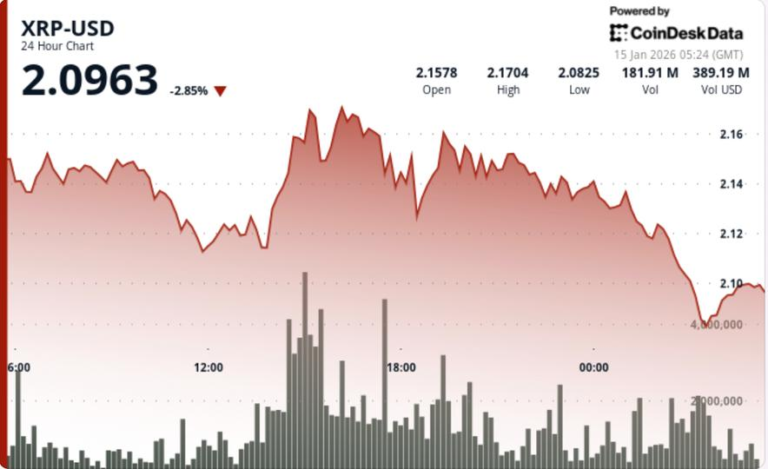
Ripple received preliminary authorization for an e-money license in Luxembourg, potentially expanding its regulated payment services in the EU.
Strategy ($MSTR) Stock Soars 10% As Bitcoin Nears $100,000

Shares of Strategy ($MSTR) surged more than 10% Wednesday morning, briefly climbing above $189 per share, as investors piled back into the bitcoin treasury trade.
The move caps a volatile stretch for the stock following sharp drawdowns earlier this month.
Strategy, which holds the largest bitcoin position of any public company, has seen its equity trade as a high-beta proxy for bitcoin, with gains and losses often magnified relative to spot price movements.
As bitcoin pushed toward the upper end of its recent range near $97,000, MSTR followed with a rapid upside move that outpaced the broader equity market.
The rally builds on momentum that began late last week after Strategy disclosed another large bitcoin purchase, adding more than 13,000 BTC to its balance sheet.
The acquisition lifted the company’s total holdings to roughly 687,000 bitcoin, reinforcing its long-stated approach of accumulating BTC through a mix of operating cash flow, equity issuance, and capital markets activity.
Executive Chairman Michael Saylor has framed the strategy as a long-term bet on bitcoin as a superior store of value and a treasury reserve asset.
Market participants say the size and consistency of Strategy’s purchases have helped re-anchor the bull case for the stock after weeks of pressure tied to bitcoin’s pullback and concerns around dilution.
While critics continue to point to leverage risk and accounting volatility, supporters argue that Strategy’s balance sheet has become one of the most direct institutional on-ramps to bitcoin exposure in public markets.
Sentiment also improved following signs of insider confidence. A recent open-market purchase by a company director marked the first such buy in several years, standing out in a period when insider activity had largely consisted of scheduled sales.
Strategy’s recent MSCI drama
Structural factors added to the rebound. Earlier this month, index provider MSCI opted not to remove bitcoin-focused treasury companies from certain benchmarks, easing fears of forced selling by passive funds.
That decision reduced near-term downside risk for Strategy, which has grown increasingly sensitive to index flows as its market capitalization expanded during bitcoin’s 2024 and 2025 rallies.
Still, Strategy’s model remains closely tied to bitcoin volatility. The company reported large unrealized losses in prior quarters as accounting rules required it to mark down bitcoin holdings during price declines.
Those losses reversed only when prices recovered, creating earnings swings that traditional equity investors often struggle to price.
Wednesday’s jump above $189 highlights the reflexive nature of the trade. As bitcoin strengthens, Strategy’s equity also strengthens and attracts momentum-driven capital seeking leveraged exposure.
$200M Tokenized Water Infrastructure Planned For Southeast Asia

Blockchain infrastructure firm Global Settlement Network has announced a pilot to tokenize water treatment sites in Jakarta, aiming to eventually scale it out to the rest of Southeast Asia over the next 12 months with $200 million in tokenized assets.
Real-world asset tokenization involves minting financial and other tangible assets on the blockchain to increase investor accessibility and trading opportunities.
The initial pilot targets eight government-contracted water treatment sites in Jakarta for tokenization, aiming to raise up to $35 million for upgrading the facilities and expanding the water network in the area, according to a statement on Wednesday.
As part of the initiatives’ phased rollout over the next 12 months, both firms plan to test rupiah-stablecoin settlement rails in controlled corridors and then scale up to additional foreign exchange corridors.
Following the pilot in Jakarta, the firms want to scale the project up to $200 million in tokenized assets across Southeast Asia.
Tokenization could help solve financing gaps
The chairman of Indonesia-based Globalasia Infrastructure Fund, Mas Witjaksono, said the project “offers significant opportunities for growth, as Indonesia has numerous major infrastructure developments and natural assets that can be accessed for tokenization.”
There is a widening water infrastructure financing gap across Southeast Asia, where more than $4 trillion in long-term water investment is required by 2040, outpacing current spending, according to the firms.
Some crypto execs have predicted the tokenized real-world asset (RWA) market will grow significantly in 2026, fueled by adoption in emerging economies facing issues with capital formation and attracting foreign investment.
Over $21 billion in RWA is estimated to be on-chain as of Thursday, across more than 629,528 holders, according to RWA.xyz.
Southeast Asia is a crypto hotbed already
Southeast Asia already has a high level of crypto adoption. In the Chainalysis crypto adoption index, released in September, the APAC region, which includes Southeast Asia, was identified as the fastest-growing region for on-chain crypto activity, with a 69% year-over-year increase in value received.
Related: Plume CEO tips RWA to grow 3-5x in 2026 as it grows past crypto natives
In a follow-up report, Chainalysis flagged Indonesia as the second-largest market for on-chain value in the 12 months leading up to June 2025, with 103% increase.
Magazine: Big questions: Would Bitcoin survive a 10-year power outage?
Cointelegraph is committed to independent, transparent journalism. This news article is produced in accordance with Cointelegraph’s Editorial Policy and aims to provide accurate and timely information. Readers are encouraged to verify information independently. Read our Editorial Policy https://cointelegraph.com/editorial-policy
Bitcoin at risk of dropping under $96,000 as U.S.-Iran rhetoric pressures risk assets

Total crypto market value jumped toward $3.25 trillion before gains cooled, with bitcoin steady above $96,000 and mixed performance across majors.
Apple to Overhaul AI Efforts, Siri With Google Gemini
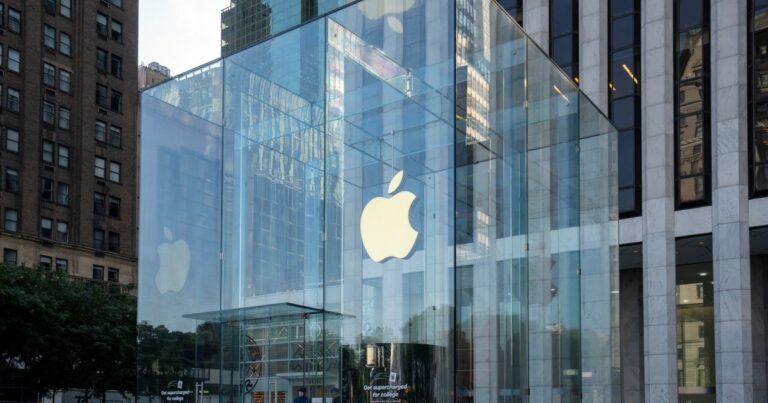
Following months of speculation, the iPhone maker picked Google’s Gemini generative AI technology to revamp its sluggish Apple Intelligence and Siri AI systems.
In a joint statement on Monday, the two tech giants said Gemini will be the foundational platform on which Apple AI models will be based and that a “more personalized” Siri voice assistant will arrive later this year.
The move appears to supersede Apple’s existing relationship with OpenAI, which currently handles outbound generative AI queries while most Apple Intelligence features and Siri work on-device. It also represents another blow to OpenAI’s GPT system, which seized an early lead in the AI race but has seen its dominance erode with the recent success of Gemini, both in terms of large language model (LLM) performance metrics and its inroads into the enterprise market.
The agreement builds on Apple’s long relationship with Google, maker of the ubiquitous Chrome that is the default browser on Apple devices. Plus, Apple largely does not compete with Google beyond a few consumer hardware device markets, noted Mark Beccue, analyst at Omdia, a division of Informa TechTarget.
“It also acknowledges Google as a leader in this space that’s trusted for the foundational model piece,” Beccue said. “And now Apple doesn’t have to reinvent the wheel. It realizes there’s no money to be made in building models itself.”
The arrangement also enables Apple to focus on its core product suite and avoid being distracted by AI “FOMO” (fear of missing out), said Johna Till Johnson, CEO of Nemertes.
“ChatGPT may be the best-known LLM, but it’s also the least effective based on numerous independent tests,” Johnson said.
Siri and Privacy
A longstanding limitation of Siri is that its voice recognition and other capabilities have been limited compared with those of competitors, such as Amazon’s Alexa and Google’s voice assistant. That is largely due to Apple’s commitment to privacy, which includes restricting Siri’s training to content on its own servers, while Google can mine huge amounts of data across its Search, e-commerce and cloud ecosystem to refine its assistant’s natural language recognition and generation abilities.
Since its founding in 1976, Apple has become the world’s most successful consumer technology vendor without being a pioneer in most areas, but rather refining existing technologies and designing better versions of them, Beccue said. Examples include the iPhone, which followed models from Palm, BlackBerry and Microsoft, and the Mac personal computer line, which followed the IBM PC.
“Apple didn’t invent the smartphone, but it makes the best smartphone,” he said. “Apple has always been a fast follower.”
While Google’s involvement with Apple’s AI systems is expected to improve and expand Siri’s capabilities, Apple emphasized that Apple Intelligence will continue to run on Apple devices and Apple’s private cloud, while maintaining Apple’s privacy standards.
The companies did not disclose financial details of the new relationship, but Bloomberg reported in November that Apple is expected to pay Google about $1 billion a year for Gemini technology.
Meanwhile, Google is a good fit for Apple because, as a long-term partner, it appears to be considerably more stable than OpenAI, where future revenue-generating potential and appeal to businesses remain uncertain, Johnson said.
“Google has a long track record of business acumen, and since AI is key to its strategy, there’s a reasonable probability that its AI efforts will remain leading edge for the next several years,” she said.
FTX estate sets next creditor payout date as Genesis Digital Assets fights $1 billion clawback suit

FTX’s bankruptcy wind-down is still running on two tracks: returning money to creditors while trying to take it back from others.
Russia Plans Bill to Open Crypto to Retail: Report

Russia will reportedly move to open up crypto to retail investors, with a new bill set to soon be introduced to the country’s legislature.
Anatoly Aksakov, chair of the State Duma’s Financial Market Committee, said legislation to deregulate crypto is ready to be introduced with the aim of normalizing the asset for everyday use, the state-owned news agency TASS reported on Tuesday.
“A lot of attention will be paid to the development of digital financial assets, and we will devote a lot of time to cryptocurrencies in the upcoming spring session,” Aksakov said.
“A bill has already been prepared that removes cryptocurrencies from special financial regulation, that is, they will be a common occurrence in our lives,” he added.
The bill would follow the Bank of Russia’s policy proposal put forward in December to allow non-qualified investors to buy certain cryptocurrencies — a reversal from an earlier position where it considered a full crypto ban.
Bill allows non-qualified investors limited access
Aksakov said the legislation would give so-called unqualified investors, such as retail traders, limited access to crypto, capped at 300,000 rubles ($3,800).
He added that “professional participants” who can pass income and knowledge or education criteria would be able to trade in crypto “without restrictions.”
“Cryptocurrencies can be actively used for international payments, including in order to further place them on the financial markets of other countries when issuing them here,” Aksakov added.
Crypto is currently recognized as property in Russia, and using it for payments is banned, but many Russians and companies turn to crypto to send money internationally, which has increased since 2022 amid sanctions on the country over its invasion of Ukraine.
Crypto exchanges could also see regulations
Crypto exchanges in Russia could also be set for a regulatory overhaul, with local news agency Interfax reporting on Wednesday that Anton Gorelkin, the State Duma’s Technologies Committee chair, is pushing for new rules.
Gorelkin said on a Telegram channel that scammers are using exchanges based in neighboring Belarus when targeting Russians, making it hard for authorities to track them.
Related: Russia targets unregistered crypto miners with new criminal penalties
“This in particular is why it is necessary to bring order to crypto exchanges, to create conditions for their legal activity on Russian territory,” Gorelkin said.
Exchanges are unregulated in Russia and many platforms left the country due to sanctions, pushing locals toward informal peer-to-peer services or exchanges outside the country.
The Bank of Russia relaxed crypto transaction rules for businesses in late 2024 and its proposal, shared in December, pitched rules for how exchanges, brokers and trusts could manage crypto.
Magazine: The one thing these 6 global crypto hubs all have in common…
Cointelegraph is committed to independent, transparent journalism. This news article is produced in accordance with Cointelegraph’s Editorial Policy and aims to provide accurate and timely information. Readers are encouraged to verify information independently. Read our Editorial Policy https://cointelegraph.com/editorial-policy
Bitcoin Price Ignores PPI Overshoot to Hit $97,000

Bitcoin price action headed to new eight-week highs, diverging from US stock markets after higher-than-expected November Producer Price Index data.
Bitcoin (BTC) spiked to $97,000 at Wednesday’s Wall Street open as crypto markets shrugged off resurgent US inflation.
Key points:
-
Bitcoin reaches fresh eight-week highs, shrugging off high US PPI inflation data for November.
-
The Supreme Court does not issue a ruling on international trade tariffs.
-
BTC price must close the week above $93,500 to repeat April 2025-style bull run.
Bitcoin hits new two-month high, shrugs off PPI
Data from TradingView showed BTC price action on the rebound after consolidating gains from the day prior.
With buying power back during US TradFi trading sessions, BTC/USD diverged from stocks after Producer Price Index (PPI) inflation data came in considerably above expectations.
As confirmed by the Bureau of Labor Statistics (BLS), PPI and core PPI for November 2025 came in at 3% against an anticipated 2.7%.
“The November increase in prices for final demand can be traced to a 0.9-percent advance in the index for final demand goods. Prices for final demand services were unchanged,” an official statement read.

Higher inflation implies stricter economic policy reactions from the Federal Reserve and less liquidity available for crypto and risk assets as a result.
Despite this, Bitcoin bulls showed little interest in slowing a rebound; markets had already priced in a pause in interest-rate changes at the Fed’s January meeting.
“PPI inflation is now up to its highest level since July 2025. The Fed will PAUSE rate cuts in 2 weeks,” trading resource The Kobeissi Letter wrote in an X reaction.

Earlier, Cointelegraph reported on broad market acceptance of potential macro risk factors, including a potential rejection of US trade tariffs by the Supreme Court.
While a decision was expected on the day, the court ultimately did not release any ruling on the matter. The schedule for rulings is not disclosed in advance.
BTC price: All eyes on $93,500 weekly close
Looking ahead, trader and analyst Rekt Capital said the weekly candle close would be of key importance.
Related: Bitcoin loses to gold as debasement trade with BTC at 2-year lows: Analysis
Successfully flipping the 2025 yearly open at $93,500 to support, he said on the day, would place BTC/USD in a similar situation to previous rebounds.
“Bitcoin is now hovering above $93500, on the cusp of positioning itself for a repeat of November 2024 and April 2025 history (green circles),” he told X followers alongside an explanatory chart.
“Bitcoin will need to simply hold above $93500 heading into the new Weekly Close. History suggests a retest of $93500 into new support could also be on the cards.”

In April 2025, BTC/USD briefly dipped below $75,000, again due to tariff-related news, before embarking on a 50% bull run over the following weeks.
This article does not contain investment advice or recommendations. Every investment and trading move involves risk, and readers should conduct their own research when making a decision. While we strive to provide accurate and timely information, Cointelegraph does not guarantee the accuracy, completeness, or reliability of any information in this article. This article may contain forward-looking statements that are subject to risks and uncertainties. Cointelegraph will not be liable for any loss or damage arising from your reliance on this information.
Peter Schiff: Silver Is Running Out — Buy Now Before There’s Nothing Left

Silver’s surge to record highs is flashing urgent warnings about collapsing supply, mispriced mining stocks, and eroding currency confidence, with mounting volatility risks as prices race toward triple digits, economist Peter Schiff says. Peter Schiff Warns: Silver Supply Is Collapsing and the Market Isn’t Ready Economist and gold advocate Peter Schiff shared on social media […]
US Senator Hints Crypto Market Structure Bill May Be Delayed

The debate over DeFi and stablecoin reward provisions in the CLARITY Act is at risk of holding the bill back as banking and crypto stakeholders push competing agendas.
US Senator Cynthia Lummis reportedly expects the US Senate Banking Committee to delay its hearing on crypto market structure legislation after Coinbase withdrew support for the bill.
There were already some murmurs of a CLARITY Act Senate markup delay on Wednesday, which were heightened following an X post from Bloomberg reporter Steven Dennis on Wednesday night. Dennis stated:
“Lummis tells me her recommendation and expectation is that the markup be pulled for now. It’s Banking Chair Tim Scott’s call.”
The Senate markup is scheduled for Thursday at 10:00 am Eastern Time.
Cointelegraph reached out to Scott’s office for comment, but didn’t receive an immediate response.
Lawmakers have been consulting with members of the banking and crypto industries over provisions of the CLARITY Act for several weeks.
Coinbase flags multiple issues with latest text
However, Coinbase publicly pulled its support for the bill on Wednesday, arguing the latest text was unfavorable to the industry.
In addition to killing stablecoin rewards, Coinbase CEO Brian Armstrong flagged concerns over restricting tokenized stocks, the government having unlimited access to financial records, and the US commodities regulator receiving less authority over the crypto markets than initially anticipated.
”This version would be materially worse than the current status quo. We’d rather have no bill than a bad bill. Hopefully we can all get to a better draft. “
Related: A16z raises $15B, says crypto a ‘key’ to America winning next 100 years
A lot is on the line for both crypto and the banks
Passing of the bill without favorable provisions could significantly impact Coinbase’s balance sheet, as the exchange made $247 million from stablecoin revenue in Q4 in addition to $154.8 million from blockchain rewards.
Banking industry advocates say allowing stablecoin rewards could hit them even harder, with the Treasury Department estimating last April that widespread stablecoin adoption could draw $6.6 trillion from the traditional banking system.
Magazine: Davinci Jeremie bought Bitcoin at $1… but $100K BTC doesn’t excite him
Cointelegraph is committed to independent, transparent journalism. This news article is produced in accordance with Cointelegraph’s Editorial Policy and aims to provide accurate and timely information. Readers are encouraged to verify information independently. Read our Editorial Policy https://cointelegraph.com/editorial-policy