
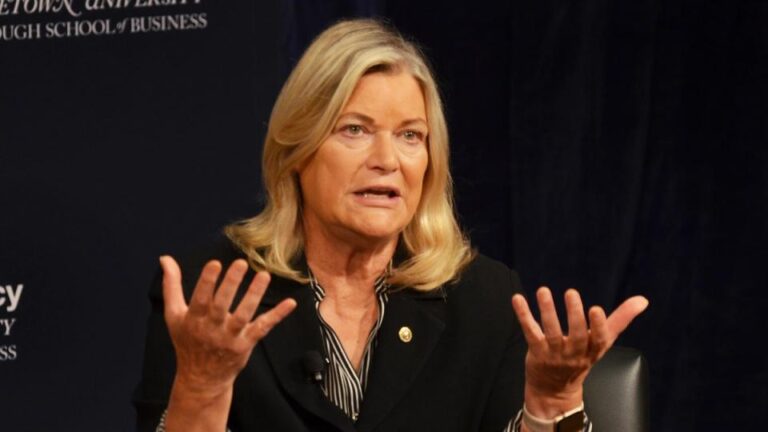
The Senate Banking Committee may delay its hearing on the crypto market structure bill, originally scheduled for Thursday, Senator Cynthia Lummis told Bloomberg.
DFSA Shifts to Firm-Led Assessment in Major Crypto Token Framework Update

The Dubai Financial Services Authority (DFSA) has enforced a significant update to its regulatory framework for Crypto Tokens within the Dubai International Financial Centre (DIFC), marking a strategic shift toward a firm-led assessment model.
Effective today, 12 January 2026, the updated regime places the responsibility directly on financial services firms to determine whether specific Crypto Tokens meet the regulator’s suitability criteria.
A shift in responsibility

Under the previous regime, the DFSA maintained a central list of “Recognised Crypto Tokens.” In a move designed to offer greater flexibility and responsiveness to market developments, the regulator will no longer publish this list.
Instead, firms providing services such as trading, custody, or asset management must now undertake their own reasoned and documented assessments to ensure the tokens they engage with meet regulatory standards. This change is intended to streamline operations for market participants while maintaining robust oversight.
Charlotte Robins, managing director, policy & legal of the DFSA, commented on the regulator’s progressive stance: “The DFSA’s enhancements to the Crypto Token regime reflect our progressive stance on innovation and proactive response to market developments and feedback. These updated rules provide firms with greater clarity and flexibility, and ensure that our regulatory crypto token regime remains aligned with international best practice.”
Evolution of the framework
The updates follow a consultation process initiated in October 2025 and represent the continued evolution of the regime since its initial launch in 2022. Over the past three years, the DFSA has monitored global market shifts to ensure the DIFC remains a competitive hub for digital assets.
Beyond the assessment shift, the reforms introduce enhanced investor safeguards, refined conduct requirements, and proportionate reporting obligations designed to reflect the current maturity of the global digital assets sector.
To assist market participants in navigating these changes, the DFSA will host a webinar on 27 January 2026. The session aims to provide an overview of the regulatory approach and highlight opportunities for firms looking to establish or expand digital asset activities in the DIFC.
Bitcoin Rally To $105K Unlikely Due To Global Socioeconomic Factors

Key takeaways:
-
Bitcoin’s move above $97,000 lacks confirmation in derivatives markets, with the options skew signaling caution toward any sustained rally.
-
Geopolitical risks, falling treasury yields and weakening equities reinforce a risk-off setting that continues to limit Bitcoin’s upside.
Bitcoin (BTC) price surged to its highest levels in more than 60 days after posting a 5.5% gain on Wednesday. The move followed $840 million in inflows into spot Bitcoin exchange-traded funds (ETFs) on Monday and Tuesday. With Bitcoin finding footing on the upside, are further gains toward $105,000 likely in the near term?
Bitcoin’s rally toward $97,000 contrasts with the continued weakness of the tech-heavy Nasdaq Index, which has repeatedly failed to reclaim the 26,000 level last seen in early November 2025. Investor sentiment remains mixed, as Bitcoin still trades 23% below its $126,219 all-time high, while gold and silver prices reached record highs in 2026, signaling a stronger bid for traditional safe-haven assets.

Professional traders have yet to turn bullish, according to the BTC options delta skew metric, as put (sell) options continue to trade at a premium. The BTC options delta skew currently stands at 4%, unchanged from one week earlier, indicating stable risk perception despite the rally above $96,000 on Wednesday. Traders remain skeptical about sustained gains above the $100,000 level.
Bitcoin’s upside capped by increased sociopolitical concerns
Typically, when whales and market makers grow optimistic, the skew turns negative, reflecting increased demand for neutral-to-bullish option strategies. Instead, Bitcoin bears were caught off guard, as the recent price advance triggered $370 million in liquidations of leveraged short (sell) positions over two days, the highest total since October 2025.

Part of the lack of optimism can be linked to geopolitical tensions after protests in Iran prompted military threats from US President Donald Trump, including a potential additional 25% import tariff on countries “doing business with the Islamic Republic of Iran.” Investors fear that US relations with China and India could deteriorate if the proposal moves forward.
Investor confidence has also been pressured by the Trump administration’s intention to gain control of Greenland. Trump has argued that the self-governing territory of Denmark is critical to US national security. German Defense Minister Boris Pistorius has reportedly offered assistance to Denmark in the event of a hostile takeover, according to Politico.

Yields on the US two-year Treasury fell to 3.51% on Wednesday, indicating that traders are accepting lower returns in exchange for the safety of government-backed bonds. This is especially telling since the latest US consumer price inflation index (CPI) stood at 2.7% year over year, above the US Federal Reserve’s target.I’d bet
Warren Buffett, chairman and former CEO of Berkshire Hathaway, reportedly warned that the lack of clarity surrounding the future direction of artificial intelligence is concerning. Reflecting this caution, Berkshire’s cash position climbed to a record $381.7 billion, up from $170 billion one year prior.
The Nasdaq Index declined 1.6%, while Oracle (ORCL US) shares dropped 5% after bondholders filed a class action lawsuit alleging the company failed to disclose the need for significant additional debt to expand its artificial intelligence infrastructure.
Related: Bitcoin ETFs on rollercoaster as traditional funds pull in $46B in 2026
As uncertainty builds, traders have reduced equity exposure, signaling a lower tolerance for risk that also limits appetite for cryptocurrencies.
It remains unclear whether Bitcoin has decisively ended its two-month bear market, but derivatives data show traders remain highly skeptical of a rapid rally toward $105,000. For now, investors’ focus remains on the broader sociopolitical risks and on whether the US Federal Reserve can support economic growth without reigniting inflation.
This article does not contain investment advice or recommendations. Every investment and trading move involves risk, and readers should conduct their own research when making a decision. While we strive to provide accurate and timely information, Cointelegraph does not guarantee the accuracy, completeness, or reliability of any information in this article. This article may contain forward-looking statements that are subject to risks and uncertainties. Cointelegraph will not be liable for any loss or damage arising from your reliance on this information.
Senate Banking Cancels Crypto Market Structure Bill Markup

Senate Banking Committee Chairman Tim Scott says further negotiations to garner bipartisan support for a key crypto-regulating bill are needed before it can advance.
The US Senate Banking Committee has cancelled its markup of a crypto market structure bill slated for Thursday, citing the need for further negotiation.
Committee Chairman Tim Scott said late on Wednesday local time in Washington, DC, that the committee is postponing its markup of the crypto bill to continue bipartisan negotiations to garner support.
“I’ve spoken with leaders across the crypto industry, the financial sector, and my Democratic and Republican colleagues, and everyone remains at the table working in good faith,” said Scott.
“This bill reflects months of serious bipartisan negotiations and real input from innovators, investors, and law enforcement,” he added. “The goal is to deliver clear rules of the road that protect consumers, strengthen our national security, and ensure the future of finance is built in the United States.”
Related: Coinbase pulls support for crypto bill: ‘no bill’ better than ‘bad bill’
The delay comes after the Senate Agriculture Committee on Monday punted its markup of the crypto bill, which was also slated for Thursday, to the end of the month.
Republican Senate Ag Chairman John Boozman said the committee needed to “finalize the remaining details and ensure the broad support this legislation requires.”
Magazine: How crypto laws changed in 2025 — and how they’ll change in 2026
Cointelegraph is committed to independent, transparent journalism. This news article is produced in accordance with Cointelegraph’s Editorial Policy and aims to provide accurate and timely information. Readers are encouraged to verify information independently. Read our Editorial Policy https://cointelegraph.com/editorial-policy
Coinbase pulls support for major crypto bill. Here's what it means for the industry

Coinbase’s withdrawal of its support potentially derails market structure legislation, says an analyst, noting that it’s bad for the crypto industry and good for the banks.
Senate Banking Committee cancels crypto market structure markup
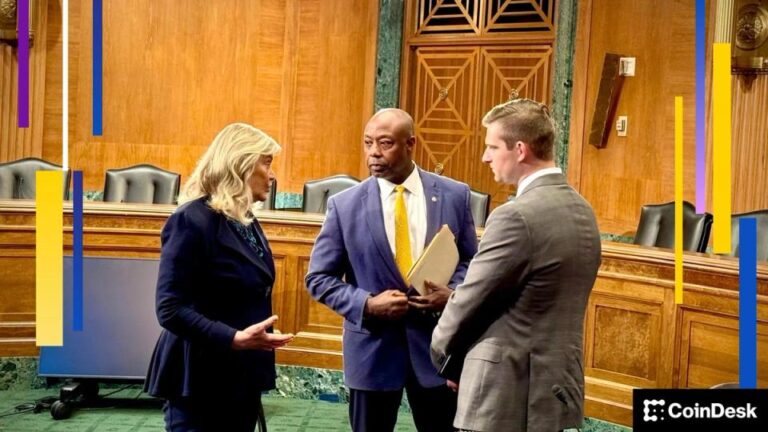
The committee’s Republican chairman, Tim Scott, had pushed for a quick process before it collapsed under the weigh of unfinished business.
Keye launces AI co-pilot for private equity due diligence

Private equity due diligence company Keye has launched Odin, an AI co-pilot built specifically for investment teams.
Editorial
This content has been selected, created and edited by the Finextra editorial team based upon its relevance and interest to our community.
Odin enables deal teams to ask questions in plain English and receive deterministic, audit-ready analysis instantly, claims Keye, adding that users can now eliminate the trade-off between speed and rigor.
The co-pilot is powered by Keye’s proprietary technology, Deterministic Creativity. Rather than acting as a thin wrapper around a large language model, Odin combines natural-language understanding with code-based execution.
In practice, that means Odin uses AI to understand investor intent, but performs all analysis deterministically through auditable logic and formulas. This means – according to the startup -zero hallucinations, complete transparency, and repeatable outputs.
Keye has also codified “investor intuition” directly into the platform. The heuristics, pattern recognition, and risk-assessment logic used by experienced deal professionals are embedded in the software.
Rohan Parikh, CEO, Keye, says: “Odin gives investors the freedom to explore complex diligence questions naturally, while guaranteeing audit-grade outputs every time. It doesn’t summarize data or guess. It reasons like an investor and executes like an analyst.”
Germany’s DZ Bank Prepares Nationwide Crypto Trading Rollout

Germany’s second-largest lender DZ Bank has received authorization under the European Union’s Markets in Crypto-Assets Regulation, clearing the way for the launch of a retail crypto trading platform across the country’s cooperative banking sector.
The German Federal Financial Supervisory Authority, BaFin, granted the MiCAR license at the end of December.
With the approval, DZ Bank will roll out “meinKrypto,” a digital asset trading platform designed for customers of Volksbanken and Raiffeisenbanken, Germany’s network of cooperative banks.
The platform allows local cooperative banks to offer retail clients access to cryptocurrency trading within an existing banking environment.
DZ Bank acts as the central institution, while each cooperative bank must submit its own MiCAR notification to BaFin before activating the service for customers.
Once approved and integrated into the VR Banking App, meinKrypto will function as a wallet and trading interface for self-directed investors. At launch, the platform will support Bitcoin and other crypto.
Germany’s crypto cooperative banks
DZ Bank said additional assets could be added later, subject to regulatory review.
The rollout will follow a decentralized model. Each cooperative bank will decide whether to offer crypto trading based on its own strategy and risk assessment.
Customers will be able to buy, sell, and hold digital assets without using external exchanges, keeping activity within the regulated banking system.
The technical infrastructure behind meinKrypto was developed by Atruvia, the IT provider for the cooperative financial group, in partnership with DZ Bank. Stuttgart Stock Exchange Digital will provide crypto custody services, ensuring asset safekeeping under German and EU regulatory standards.
The move reflects growing interest in digital assets across Germany’s cooperative banking sector.
A September 2025 survey by the German Cooperative Banking Association found that 71% of Volksbanken and Raiffeisenbanken were considering crypto services, up from 54% the previous year.
About one-third of banks exploring crypto said they planned to launch offerings within five months.
DZ Bank’s entry into retail crypto trading follows earlier efforts focused on institutional clients. The Frankfurt-based lender began offering digital asset services for institutions through partnerships with regulated market infrastructure providers. The new MiCAR license extends that strategy to private customers through the cooperative network.
In a separate development, DZ Bank announced this week that it has joined Qivalis, a European banking consortium working on a regulated euro-denominated stablecoin.
The group of 11 banks plans to launch the stablecoin next year through a new Dutch entity under the same name.
Qivalis is seeking approval from the Dutch central bank to operate as an e-money institution, with a target market entry in the second half of 2026. The consortium says the project aims to support payments and settlement for European businesses and consumers within a regulated framework.
Together, the meinKrypto rollout and the stablecoin initiative signal a broader push by Germany’s cooperative banking sector to integrate digital assets into mainstream financial services under MiCAR.
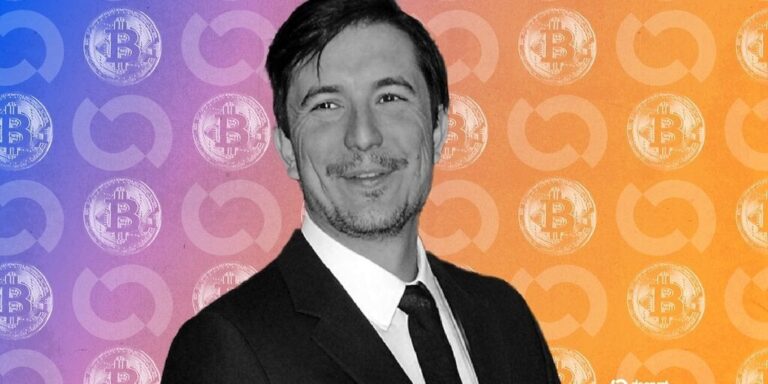
Robinhood CEO Says AI Could Spark a ‘Job Singularity’
In brief
AI sparks concerns
Daily Debrief Newsletter
Start every day with the top news stories right now, plus original features, a podcast, videos and more.
Ripple Expands 75-License Footprint After Securing Preliminary New EU Approval
Ripple moved closer to Europe’s regulated payments core after securing preliminary approval for a Luxembourg electronic money license, strengthening its ability to scale compliant, blockchain-powered cross-border payments across the EU’s financial system. Ripple Advances Toward EU Payments Core After Regulatory License Green Light A major step toward deeper regulatory integration unfolded in Europe’s financial sector. […]