

Eligible Interactive Brokers LLC clients can now deposit USDC around the clock, with funds converted to dollars and credited to brokerage accounts within minutes.
CME Group to offer cardano, chainlink, stellar futures as institutions seek regulated risk-management tools

The new futures contracts, available in micro and standard sizes, are set to launch on Feb. 9, pending regulatory approval.
XRP reclaims $2 as fund inflows diverge from broader crypto outflows

XRP trades above $2 as inflows into XRP-linked investment products and neutral volume metrics point to stabilization rather than a confirmed breakout.
US Homebuilder To Launch Crypto Rewards After Regulatory OK

US homebuilder Megatel Homes is set to launch a crypto rewards platform after receiving a Securities and Exchange Commission “no-action” letter.
Megatel said on Thursday that the platform, dubbed MegPrime, would give users rewards for using “MP Tokens,” such as using them to pay their rent to earn back tokens that can be used for “everyday purchases” or converted to US dollars.
It came after the SEC allowed MegPrime to go ahead with its plans in its letter on Thursday, recommending no enforcement action so long as the platform strictly follows its outlined plan.
MegPrime said in a post on X that the company “operated in stealth-mode to meet regulatory requirements.”
MegPrime makes bold promises for renters
Aaron Ipour, co-founder of Megatel Homes and MegPrime, added that “as the housing market continues to grapple with unsustainable interest rates and price inflation, MegPrime provides a real financial lifeline to renters, homeowners, and aspiring homebuyers.”
Crypto cashback, while promoted as a new idea in housing, has already been offered through credit cards for several years.
The platform has made bold promises for renters, however, claiming that renters who use the token to pay rent may be “eligible to receive 100% of their past 12 months of rent, up to $25,000, toward a future home purchase.”
Recent data shows that around 32% of people the US live in rental housing.
Related: Nexo to pay $500K fine to California regulator over ‘risky loans’
The platform also claims homeowners may be able to access mortgage rates up to 2% below the market average, potentially saving “thousands of dollars.”
The average 30-year fixed-rate mortgage in the US currently stands at 6.06%, according to Freddie Mac.
The SEC’s support for the program comes as SEC chairman Paul Atkins continues to voice pro-crypto views. Earlier this week, SEC chair Paul Atkins said he’s “bullish” on the chances of US President Donald Trump signing the bill this year.
Magazine: Here’s why crypto is moving to Dubai and Abu Dhabi
Cointelegraph is committed to independent, transparent journalism. This news article is produced in accordance with Cointelegraph’s Editorial Policy and aims to provide accurate and timely information. Readers are encouraged to verify information independently. Read our Editorial Policy https://cointelegraph.com/editorial-policy
Iranians stash bitcoin as protests rage and rial tanks

Amid protests and economic crisis, Iranians are increasingly withdrawing bitcoin from exchanges to personal wallets.
AI Startup That Builds a Brain for Robots Valued at $14 Billion
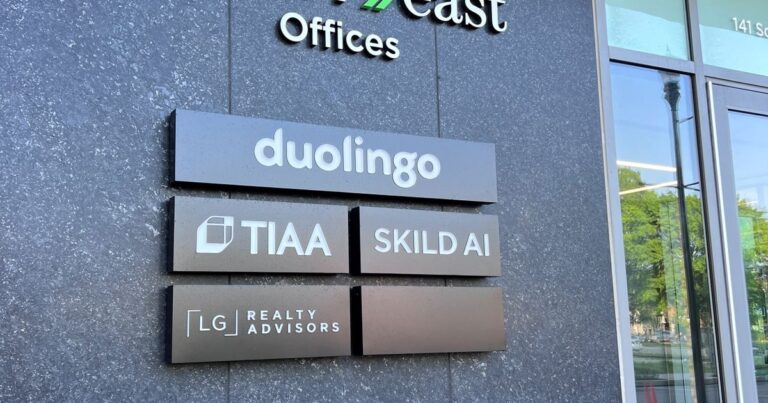
Skild AI, a startup developing AI software for robots, raised $1.4 billion in a funding round that features a number of big-name investors. The Pittsburgh company is now valued at $14 billion, a tripling of its valuation since last summer.
Japan’s SoftBank led the Series C funding round with participation from Nvidia’s venture capital arm NVentures, Bezos Expeditions, Macquarie Capital, Disruptive, and Florida’s 1789 Capital, of which Donald Trump Jr is a partner. New strategic investors include Samsung, LG, Schneider Electric and Salesforce Ventures.
Skild AI’s stated mission is to build a single, general-purpose artificial brain that can control any robot for any task.
The company said its unified robotics foundation model, Skild Brain, is at the heart of this effort. It described the model as an industry first.
“Unlike traditional models that are tailored to specific robot designs, the Skild Brain is omni-bodied and can control any robot without prior knowledge of their exact body form, including quadrupeds, humanoids, tabletop arms, and mobile manipulators,” according to a press release.
This enables the model to cope with a variety of tasks, ranging from basic household chores such as loading a dishwasher to more demanding physical challenges such as crossing slippery terrain, according to the company.
The Skild Brain has been trained by watching online videos of humans performing tasks and via physical simulations with thousands of form factors. In contrast to robots created for specific applications or restricted environments, this type of In-Context Learning, as the company calls it, enables robots to develop a diverse skill set and to be deployed in diverse scenarios, all the time collecting data, improving performance and increasing adaptability.
“The Skild Brain can control robots it has never trained on, adapting in real time to extreme changes in form or environments,” CEO Deepak Pathak said in a press release. “The model is forced to adapt rather than memorize — much like intelligence in nature. We believe that a unified, omni-bodied brain is the fastest way to establish a continuous data flywheel where the model gets better with every single deployment, no matter what the hardware or task.”
The company has grown rapidly over the past couple of years, and achieved $30 million in revenue in 2025. It said the latest capital injection will be used to scale its model training, with the ultimate goal of deploying robotics in the home. Initially, however, the focus is likely to be on enterprise usage.
Bitcoin Price Climbs To $97,000 As Billions Flow Into ETFs

The bitcoin price surged above $97,000 this week, marking its strongest level in more than two months, on a mix of economic news and renewed inflows into U.S. spot Bitcoin exchange-traded funds (ETFs.
Crypto investors appear to be kicking off 2026 with a familiar playbook: allocating heavily to Bitcoin ETFs.
On Tuesday, the dozen U.S.-listed spot Bitcoin funds recorded roughly $760 million in net inflows, the largest single-day total since October. Fidelity’s Wise Origin Bitcoin Fund (FBTC) led the pack, absorbing about $351 million, while Bitwise’s BITB and BlackRock’s iShares Bitcoin Trust (IBIT) also posted strong gains.
The momentum accelerated on Wednesday. Data from SoSoValue shows spot Bitcoin ETFs took in another $843.6 million, extending the positive streak to three consecutive days and bringing total inflows over that period to approximately $1.71 billion.
Eight of the 12 funds reported net inflows, with BlackRock’s IBIT alone drawing in $648 million, underscoring its dominance among institutional allocators.
Bitcoin’s price action reflected that renewed interest. After spending much of November and December trading below $92,000, BTC broke decisively higher this week, reclaiming the $94,000–$97,000 range and pushing toward $100,000.
The move triggered roughly $700 million in short liquidations, amplifying volatility and accelerating the rally, according to Bitcoin Magazine Data.
ETF flows have become a key barometer of institutional sentiment since spot products launched in early 2024. While cumulative inflows reached more than $56 billion by mid-January, flows turned negative in late December amid typical year-end caution.
The sharp reversal this week suggests investors are once again viewing Bitcoin as both a growth asset and a diversification tool. This reflects in a growing bitcoin price.
Economic conditions affecting the bitcoin price
Macro conditions have also played a role. A softer-than-expected U.S. Consumer Price Index (CPI) reading released on January 13 eased fears of further aggressive monetary tightening, lifting “risk-on” sentiment.
At the same time, escalating geopolitical tensions and political uncertainty in the U.S. have boosted interest in alternative stores of value, including the Bitcoin price.
Still, volatility risks remain. Markets are closely watching a potential U.S. Supreme Court ruling on President Donald Trump’s tariffs, which could inject fresh uncertainty into global trade and financial markets.
At the time of writing, Bitcoin price is trading at $97,046, up 2% over the past 24 hours, with roughly $67 billion in daily trading volume.
The asset is sitting about 1% below its seven-day high of $97,705 and 2% above its seven-day low of $95,318. Bitcoin’s circulating supply stands at 19.98 million BTC, giving it a total market capitalization of approximately $1.94 trillion, also up 2% on the day.
More people are using Ethereum for the first time, data shows

The rise in new wallets suggests broader interest in Ethereum, driven by decentralized finance, stablecoin transfers, NFTs, and new applications.
Interactive Brokers Allows Account Funding With USDC

Electronic brokerage giant Interactive Brokers has expanded its crypto offerings, allowing clients to fund their accounts using stablecoins.
Interactive Brokers said on Thursday that it inked a collaboration with stablecoin infrastructure provider zerohash to allow clients to fund their accounts with USDC (USDC) on the Ethereum, Solana, or Base blockchains.
It added that deposited stablecoins are automatically converted into US dollars and credited to the client’s brokerage account, and plans to add support for Ripple USD (RLUSD) and PayPal USD (PYUSD) next week.
The firm first allowed retail investors to fund individual brokerage accounts with USDC in December and the company had reportedly mulled launching its own stablecoin earlier in the year.
Stablecoins will address “critical pain point”
Interactive Brokers said stablecoins will address a “critical pain point” in accessing global capital markets as traditional cross-border funding through fiat wire transfers can be costly and slow.
In contrast, the company said stablecoin funding offers near instant settlement, with lower costs, and no business hours to follow.
“Stablecoin funding provides international investors with the speed and flexibility required in today’s markets,” said Interactive Brokers CEO Milan Galik. “Clients can transfer funds and begin trading within minutes, while also reducing transaction costs.”
Related: All currencies will be stablecoins by 2030: Tether co-founder
Interactive Brokers started offering crypto services in 2021 for its trading platform, which included Bitcoin (BTC) and Ether (ETH). Several other tokens, including Solana (SOL) and XRP (XRP), were added in 2025.
Throughout 2025, stablecoins experienced significant growth as countries and even banks explored the use of the tokens.
The stablecoin sector surpassed $300 billion in market capitalization for the first time in October, clocking a year to date growth of 46.8% at the time, mainly driven by Tether (USDT), USDC and Ethena Labs’ yield-bearing stablecoin USDe (USDE).
As of Friday, the entire stablecoin market cap is over $310 billion, according to DeFi data aggregator DefiLlama.
Magazine: How crypto laws changed in 2025 — and how they’ll change in 2026
Cointelegraph is committed to independent, transparent journalism. This news article is produced in accordance with Cointelegraph’s Editorial Policy and aims to provide accurate and timely information. Readers are encouraged to verify information independently. Read our Editorial Policy https://cointelegraph.com/editorial-policy
Galaxy Tokenizes First CLO on Avalanche With $50M Grove Allocation

Galaxy CLO 2025-1 totals $75 million and brings a private credit deal onchain.
Galaxy revealed on Jan. 15 that it has issued its first collateralized loan obligation (CLO) and tokenized the deal on Avalanche, a Layer 1 blockchain with a total value locked (TVL) of over $1.2 billion.
The instrument, dubbed Galaxy CLO 2025-1, totals $75 million and includes a $50 million allocation from Grove, an institutional credit protocol that operates as a Star, or SubDAO, within the Sky Ecosystem.
A CLO is a structured credit product that bundles corporate loans and sells them to investors across different risk tiers. Galaxy said the transaction will support its lending activities.
Avalanche said the CLO’s debt tranches were issued and tokenized on its network and are listed on INX for qualified investors. The network added that tokenization could enable lower-cost trading and faster settlement, while also improving transparency for investors.
“This transaction marks another meaningful step forward for onchain credit, demonstrating how familiar securitization structures can be brought onchain without compromising institutional standards,” said Sam Paderewski, co-founder at Grove Labs.
Paderewski added that Grove’s investment underscores its focus on supporting onchain tokenized credit products.
The allocation adds to Grove’s activity on Avalanche, according to the announcement. Grove previously deployed $250 million into tokenized real-world assets (RWAs) on the Avalanche network.
The announcement comes as more private credit products move onchain. Avalanche cited other institutional credit products already running on its network, including tokenized funds tied to Janus Henderson’s Anemoy Fund and Apollo’s ACRED.
Private credit remains the largest category in tokenized RWAs, with about $19.1 billion in onchain value, followed by tokenized securities, mainly Treasuries, at roughly $9 billion, according to a December report from RWAio.
AVAX, Avalanche’s native token, was trading around $13.74 on Thursday, down about 6.2% over 24 hours, according to CoinGecko. The token had roughly $388 million in daily trading volume.
Meanwhile, Galaxy (GLXY) shares were up about 13% on Thursday, trading around $31.90, according to Google Finance.