
Bitcoin Nears $100K, Ordinals Boom, RLUSD at LMAX, Institutional Crypto Shift, and more in this Week in Review. Week in Review Bitcoin pushed above $97,000 on Jan. 14 as a Supreme Court tariff delay and Fed–Trump tensions helped spark a rally, Bitcoin ordinals surpassed 100 million inscriptions even as inscription hype cools, Ripple locked RLUSD […]
Vitalik Buterin Calls for ‘Garbage Collection’ to Curb Ethereum Bloat
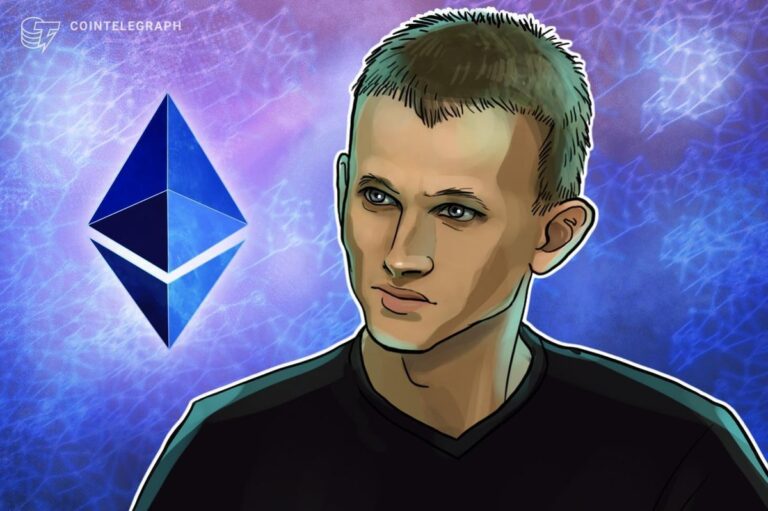
Ethereum co-founder Vitalik Buterin is urging developers to confront the protocol bloat driven by an endless push to add new features while rarely removing old ones.
In a Sunday post on X, Buterin argued that true trustlessness and self-sovereignty depend less on raw decentralization metrics and more on simplicity.
“Even if a protocol is super decentralized with hundreds of thousands of nodes, and it has 49% byzantine fault tolerance, and nodes fully verify everything with quantum-safe peerdas and starks, if the protocol is an unwieldy mess of hundreds of thousands of lines of code and five forms of PhD-level cryptography, ultimately that protocol fails,” he claimed
According to Buterin, this complexity undermines Ethereum (ETH) on three fronts. First, it weakens trustlessness by forcing users to rely on “high priests” to explain what the protocol actually does. Second, it fails the so-called walkaway test, because rebuilding high-quality clients becomes unrealistic if existing teams disappear. Third, it erodes self-sovereignty, as even highly technical users can no longer inspect or reason about the system on their own.
Related: Bull, base or bear? Three possible paths for crypto in 2026
Buterin urges “garbage collection”
Buterin warned that the issue is rooted in how protocol changes are evaluated. When upgrades are judged mainly by how disruptive they are to existing systems, backward compatibility tends to dominate decision-making. The result is a bias toward additions rather than subtractions, causing the protocol to grow heavier over time.
To counter this, he called for an explicit “simplification” or “garbage collection” function in Ethereum’s development process. The goal would be to reduce total lines of code, limit reliance on complex cryptographic primitives, and introduce more invariants — fixed rules that make client behavior easier to predict and implement.
The Ethereum mastermind pointed to past changes as examples of effective cleanup. The shift from proof-of-work (PoW) to proof-of-stake (PoS) was one large-scale reset, while more recent efforts, such as gas cost reforms, aim to replace arbitrary rules with clearer links to actual resource usage. Future cleanups could involve demoting rarely used features from the core protocol into smart contracts, reducing the burden on client developers.
Related: Bitwise’s exec says 2026 will be crypto’s real bull year, here’s why
Solana Labs CEO prefers a different approach
Meanwhile, Solana Labs CEO Anatoly Yakovenko says Solana (SOL) must remain in constant motion, arguing that a blockchain that stops evolving to meet developer and user needs risks becoming irrelevant. Responding to a recent post by Buterin, Yakovenko claimed that continuous iteration is essential for Solana’s survival, even if no single group is responsible for driving those changes.
In contrast, Buterin has argued that Ethereum should eventually pass the “walkaway test,” reaching a point where it can operate securely and predictably for decades without ongoing developer intervention.
Magazine: One metric shows crypto is now in a bear market: Carl ‘The Moon’
Cointelegraph is committed to independent, transparent journalism. This news article is produced in accordance with Cointelegraph’s Editorial Policy and aims to provide accurate and timely information. Readers are encouraged to verify information independently. Read our Editorial Policy https://cointelegraph.com/editorial-policy
Latam Insights: Venezuelan Link to Trump’s ‘Gasolina,’ Brazil Battles Stablecoin Taxation

Welcome to Latam Insights, a compilation of the most relevant crypto news from Latin America over the past week. In this week’s edition, discover how Venezuela might be linked to Trump’s viral “Gasolina” dance, Brazil’s crypto industry vows to battle stablecoin taxation, and Lemon launches the first bitcoin-backed card in Argentina. White House’s Oil Gambit […]
AI Accelerates North American Utility Modernization

STAMFORD, Conn.–(BUSINESS WIRE)–Power and utilities enterprises in North America are rapidly adopting AI-enabled and data-driven technologies to modernize grid operations, better manage assets and be more responsive to customers amid green energy mandates and cost pressures, according to a new research report published today by Information Services Group (ISG) (Nasdaq: III), a global AI-centered technology research and advisory firm.
North American utilities are balancing ambitious decarbonization goals with the need to maintain reliability and affordability. AI and advanced digital platforms are becoming essential for carrying out these complex initiatives at scale.Share
The 2025 ISG Provider Lens® Power and Utilities Industry — Services and Solutions report for North America finds that utilities across the region are shifting from reactive to predictive and proactive operating models as distributed energy resources (DERs), electric vehicles and customer expectations for digital services increase system complexity. Enterprises are engaged in decades-long technology transformations while navigating ever-evolving regulations, heightened cyber risk and long-term capital constraints.
“North American utilities are balancing ambitious decarbonization goals with the need to maintain reliability and affordability,” said Korey Barnard, partner, ISG Energy & Utility. “AI and advanced digital platforms are becoming essential for carrying out these complex initiatives at scale.”
Utilities in the region are increasingly using AI, generative AI and machine learning at the heart of their operations, improving grid and asset performance, the report says. They apply these technologies to outage and storm forecasting, predictive maintenance and field workforce optimization to reduce manual effort and operating costs.
Digital innovation is helping utilities better manage infrastructure amid change and economic pressures. Using advanced analytics, utilities are extending asset life by identifying equipment failures earlier, which has improved restoration times and service-level agreement compliance. Grid-edge intelligence is emerging as a high priority as utilities integrate growing numbers of distributed energy resources, ISG says. Enterprises are deploying DER management systems (DERMS), advanced distribution management platforms and virtual power plants to manage bidirectional power flows and defer major capital upgrades. These solutions allow utilities to increase network capacity and resilience using existing infrastructure while supporting rooftop solar, battery storage and flexible demand programs.
Customer engagement modernization is accelerating as North American utilities respond to rising demand for transparency, the report says. Enterprises are upgrading customer information systems to support time-based rates, flexible payment plans and personalized energy insights. AI-enabled contact centers, conversational self-service tools and automated quality management are improving first-contact resolution and reducing service costs while enabling more empathetic interactions during billing disputes, outages and extreme weather events.
“Utilities that align asset, grid and customer modernization efforts around shared data platforms see faster improvements in operations,” said Swadhin Pradhan, principal analyst at ISG Provider Lens Research and lead author of the report. “This integrated approach helps utilities manage reliability, affordability and customer trust simultaneously.”
The report also explores other technology trends in the North American power and utilities sector, including growing investment in cybersecurity and compliance technologies and the use of digital twins and IoT data for long-term infrastructure planning.
For more insights into the challenges facing North American utilities, plus ISG’s advice for addressing them, see the ISG Provider Lens® Focal Points briefing here.
The 2025 ISG Provider Lens® Power and Utilities Industry — Services and Solutions report for North America evaluates the capabilities of 35 providers across four quadrants: Enterprise Asset Management, Process and Customer Experience Management, Smart Metering and Grid Modernization and Technology, Transformation and Consulting.
The report names Accenture, Capgemini, Cognizant, Deloitte, HCLTech, IBM, Infosys, TCS and Wipro as Leaders in all four quadrants. It names Hitachi Digital Services and PwC as Leaders in three quadrants each. Tech Mahindra is named as a Leader in two quadrants, and CGI, Concentrix, Cyient, EY and LTIMindtree are named as Leaders in one quadrant each.
In addition, Kyndryl, Sutherland and Tech Mahindra are named as Rising Stars — companies with a “promising portfolio” and “high future potential” by ISG’s definition — in one quadrant each.
In the area of customer experience, Capgemini is named the global ISG CX Star Performer for 2025 among power and utilities service providers. Capgemini earned the highest customer satisfaction scores in ISG’s Voice of the Customer survey, part of the ISG Star of Excellence™ program, the premier quality recognition for the technology and business services industry.
The 2025 ISG Provider Lens® Power and Utilities Industry — Services and Solutions report for North America is available to subscribers or for one-time purchase on this webpage.
About ISG Provider Lens® Research
The ISG Provider Lens® Quadrant research series is the only service provider evaluation of its kind to combine empirical, data-driven research and market analysis with the real-world experience and observations of ISG’s global advisory team. Enterprises will find a wealth of detailed data and market analysis to help guide their selection of appropriate sourcing partners, while ISG advisors use the reports to validate their own market knowledge and make recommendations to ISG’s enterprise clients. The research currently covers providers offering their services globally, across Europe, as well as in the U.S., Canada, Mexico, Brazil, the U.K., France, Benelux, Germany, Switzerland, the Nordics, Australia and Singapore/Malaysia, with additional markets to be added in the future. For more information about ISG Provider Lens research, please visit this webpage.
About ISG
ISG (Nasdaq: III) is a global AI-centered technology research and advisory firm. A trusted partner to more than 900 clients, including 75 of the world’s top 100 enterprises, ISG is a long-time leader in technology and business services that is now at the forefront of leveraging AI to help organizations achieve operational excellence and faster growth. The firm, founded in 2006, is known for its proprietary market data, in-depth knowledge of provider ecosystems, and the expertise of its 1,600 professionals worldwide working together to help clients maximize the value of their technology investments.
Nasdaq Warns Bitcoin Hardware Maker Canaan About Delisting

In brief
Daily Debrief Newsletter
Start every day with the top news stories right now, plus original features, a podcast, videos and more.
Jefferies ‘Greed & Fear’ Strategist Drops Bitcoin on Quantum Risk
Investment bank Jefferies’ longtime “Greed & Fear” strategist Christopher Wood has reportedly eliminated Bitcoin from his flagship model portfolio, citing mounting concerns that advances in quantum computing may undermine the cryptocurrency’s long-term security.
According to a report by Bloomberg, Wood said in the latest edition of his Greed & Fear newsletter, that the 10% Bitcoin (BTC) allocation he first added in late 2020 has been replaced by a split position in physical gold and gold mining stocks.
He argued that quantum breakthroughs would weaken Bitcoin’s claim to be a dependable store of value for pension‑style investors.
Wood added that concern over quantum risk is rising among long-term, institutional investors, warning that some capital allocators now question Bitcoin’s store of value case if quantum timelines compress.
He said he feared that “cryptographically relevant” machines arriving sooner than expected could let attackers derive private keys from exposed public keys, weakening the cryptography underpinning Bitcoin balances and mining rewards and, in the extreme, challenging its role as “digital gold” for pension‑style portfolios.
Quantum risk enters mainstream portfolios
The quantum issue has been discussed for years among developers and commentators, but Wood’s move shows how it’s now influencing mainstream asset allocation decisions at major brokerage and research houses.
Related: Ethereum must pass ‘walkaway test’ to endure for 100 years: Buterin
Castle Island Ventures partner and Bitcoin advocate Nic Carter has discussed the quantum issue at length, warning in December that “capital is concerned and looking for a solution” on quantum risk, even though many developers, including Blockstream CEO Adam Back, remain skeptical that it is a near‑term problem.
Macro analyst Luke Gromen has also turned cautious on Bitcoin in recent months, citing macro and technological uncertainties, including quantum computing risk, as reasons to favor increasing gold exposure versus BTC on a multi‑cycle view.
Studies from firms such as EY and PwC similarly flag quantum computing as a significant emerging threat to traditional public key cryptography, warning that financial systems, including those supporting digital assets, need to prepare migration paths to quantum-resistant alternatives.
Magazine: Kevin O’Leary says quantum attacking Bitcoin would be a waste of time
Developers say Bitcoin has time to adapt
Bitcoin developers and core infrastructure builders push back on the idea that quantum progress is an immediate threat.
Blockstream CEO Adam Back has repeatedly argued that breaking Bitcoin’s current signature schemes is likely 20–40 years away and that the network would have ample time to migrate to post‑quantum signature algorithms and better key management practices well before any real‑world break becomes feasible.
Other analysts, including an a16z researcher, similarly conclude that the probability of a “cryptographically relevant” quantum computer capable of breaking today’s public key systems emerging this decade is low.
They say that the bigger near‑term risks come from implementation bugs, governance, and “harvest now, decrypt later” attacks on encrypted data rather than immediate attacks on live blockchain signatures.
Cointelegraph is committed to independent, transparent journalism. This news article is produced in accordance with Cointelegraph’s Editorial Policy and aims to provide accurate and timely information. Readers are encouraged to verify information independently. Read our Editorial Policy https://cointelegraph.com/editorial-policy
Privacy coins continue to rally — how long will the hype last? – DL News

- Privacy coins like Monero and Dash have boomed in price this week.
- Their surge comes despite Zcash cooling down.
- But how much further can they run?
Privacy coins have been on a tear, with some of the biggest assets in the category up double digits over the past month.
Monero, the biggest and oldest privacy coin, this week notched a new high of nearly $798. Though it has since fallen to just under $650, the asset has rocketed by 42% over the past seven days, according to CoinGecko.
Dash is up even more: it’s jumped over 135% to $89 over the same time frame and is currently the best performing digital asset this week, though it’s well short of its all-time high.
But how long will it last? And is it just hype — or a genuine concern over privacy?
Pump it, VC
Zcash challenged Monero for the title of biggest privacy coin by market capitalisation after Silicon Valley hotshots started promoting the coin last year.
Its rally started after investor and AngelList founder Naval Ravikant wrote on X that while “Bitcoin is insurance against fiat,” Zcash is “insurance against Bitcoin” — highlighting privacy concerns around the biggest public blockchain.
Crypto entrepreneur Arthur Hayes also began promoting Zcash. He instructed his followers on how to store it and made bold predictions for where the coin’s price was going, though none came to pass.
The Winklevoss Twins’ venture capital fund, Winklevoss Capital, even backed a Zcash treasury company, with Tyler Winklevoss claiming “Privacy’s become a rare, vanishing commodity.”
After lying flat for years — it’s still well below its 2016 record of $3,192 — Zcash started rallying. Over the past year, it’s up over 670%.
Regulatory concerns
A regulatory crackdown may also be fuelling the rise of these coins, Laurens Fraussen, an analyst at research firm Kaiko, said.
Last year, the Bank of England, European Central Bank, the Basel Committee, and other regulators imposed limits on how much digital asset exposure — particularly stablecoins — banks could have.
Fraussen said that this “reignited concerns about centralised control in crypto markets, ironically, the very thing cryptocurrency was designed to circumvent,” leading investors to consider privacy coins.
Unlike Bitcoin and most other cryptocurrencies, assets like Zcash and Monero enable users to send and receive money without exposing their wallet addresses. With regulators keeping a watchful eye over public blockchains, private alternatives have been seducing the crypto community more than before.
How long left?
Still, despite Monero continuing to surge this week, we may be seeing the end of the run, Fraussen added.
“The fact that ZEC’s open interest has been cut in half since its November 15 peak, even while still elevated, suggests we may already be in the exhaustion phase for the narrative as a whole,” he said, adding that narrative “could absolutely be another flash in the pan like we’ve seen before.”
Mathew Di Salvo is a news correspondent with DL News. Got a tip? Email at mdisalvo@dlnews.com.
TDK Ventures Invests in Ethereal Exploration Guild’s Series A to Help Pioneer Rocket Cargo and the Future of Reusable Medium-Lift Space Launches

SAN JOSE, Calif.–(BUSINESS WIRE)–TDK Corporation (TSE:6762) announced today that its corporate venture capital subsidiary, TDK Ventures, Inc., is investing up to $5 million in the Series A funding round of Bengaluru-based space technology company, Ethereal Exploration Guild. The investment backs the company’s mission to develop the world’s first fully reusable medium-lift launch vehicle, the Razor Crest Mk-1.
The Guild’s breakthrough approach is designed to disrupt the launch market by lowering orbital transport costs to a target range of $500–$1,000 per kilogram, a pricing point necessary to unlock economic viability for many next-generation space applications, enabling the introduction of rocket cargo as a service. The Guild differentiates itself from competitors through its reusable upper-stage, which utilizes a proprietary rocket engine feed cycle called the Full Flow Segregated Cooling Cycle (FFSCC). Additionally, the Guild uses in-house simulation tools and test infrastructure, which together contribute to better overall vehicle reusability and shorter development cycles.
The global space economy is poised for exponential growth over the next decade and is projected to reach $1.8 trillion by 2035. This expansion is driven by the increasing deployment of satellite constellations, which has created a critical supply/demand gap for dedicated, cost-effective launch services, particularly in the medium-lift class.
- The medium-lift segment (2,000–50,000 kg/approximately 900–22,700 lbs.) is expected to account for 95% of the launch vehicle market share and represents a total addressable market (TAM) of approximately $17.2 billion by 2030.
- India’s favorable regulatory landscape, talented labor pool, and cost-effective supply chain combine to position a startup such as Ethereal Exploration Guild to capitalize on this market opportunity.
- The Guild is pioneering full reusability by recovering both the booster and the upper stage, which is the only viable path to achieving the targeted ultra-low launch costs while maintaining a high launch cadence.
The investment aligns TDK Ventures with a strategically important segment of the new industrial revolution, which is highly reliant on specialized electronics. Moreover, the Guild is among the few global companies, and the only one in India, pursuing this challenge.
“TDK Ventures is thrilled to back the Guild in its goal to reshape the medium-lift space-launch industry,” said Nicolas Sauvage, President of TDK Ventures. “The company aligns seamlessly with our vision for transformative innovation, excelling in every critical metric for market leadership: slashing launch costs to $500 per kilogram to unlock vast market potential, pioneering novel technologies to streamline development, and harnessing India’s rich ISRO expertise and cost-efficient supply chain.”
The Guild is led by founders Manu J. Nair, Shubhayu Sardar, and Prashanth Sharma, each of whom brings exceptional technical expertise gained from their time spent at the Indian Space Research Organization (ISRO), satellite and auxiliary propulsion systems company Manastu Space, and the International Institute for Astronautical Sciences (IIAS). The entire team combines entrepreneurial spirit with space expertise, including scientists trained overseas and ISRO veterans.
“Securing the backing of a strategic partner like TDK Ventures validates our vision to rearchitect today’s unipolar access to space into a truly multipolar frontier, and to catalyze civilizational progress,” CEO Nair said. “Their leadership in precision sensing, high-reliability passive components, and advanced power-delivery technologies brings critical materials and systems expertise that will support our push toward rapid development and early validation milestones for the Razor Crest Mk-1 platform.”
The investment allows Ethereal Exploration Guild to tap into TDK Corporation’s strengths in advanced sensing, high-reliability passive components, magnetics, and power-delivery technologies—supporting the Guild in building more robust guidance systems, improving power integrity across avionics modules, and selecting commercially proven components that can be engineered for high-vibration and high-thermal environments. In turn, TDK gains insights into next-generation launch and avionics architectures, helping inform the development of mission-critical sensors, ruggedized components, and power-management solutions for the rapidly expanding space economy.
Ethereal Exploration Guild’s existing investors include YourNest VC, Bluehill Capital, BIG Capital, Campus Fund, and Golden Sparrow VC. The company has already manufactured its 80kN upper-stage reusable engine (Pegasus) and has signed collaboration agreements with the Indian National Space Promotion and Authorization Centre (IN-SPACe), ISRO, and other national space agencies, as well as commercial satellite operators, launch aggregators, and launch ports globally.
TDK Ventures is committed to finding and impacting scaling technologies on the frontiers of innovation, whose contributions have the potential to build a better, brighter future for all of humanity. To learn more about TDK Ventures, interested startups or investment partners should visit www.tdk-ventures.com or reach out at contact@tdk-ventures.com.
Crypto Regulation: Nigerian SEC Raises Capital Requirement For Exchanges To N2 Billion

Trusted Editorial content, reviewed by leading industry experts and seasoned editors. Ad Disclosure
Nigeria, Africa’s most populous nation, is paying vast attention to its rapidly developing cryptocurrency industry marked by a string of new regulations. In the latest development, the Nigerian Securities and Exchange Commission (SEC) has shared a revised minimum capital for all regulated market entities, including operators in the digital asset market.
Nigerian Regulator Hikes Minimum Capital For Crypto Exchanges By $1.05M
On January 16, 2026, the Nigerian SEC released a circular communicating changes in the minimum capital (MC) requirements for major financial entities, namely: core and non-core capital market operators, market infrastructure institutions, capital market consultants, financial technology (FinTech) operators, virtual asset service providers (VASPs), and commodity market intermediaries.
The securities regulator has explained that the revised MC framework is to boost operational resilience, align capital adequacy, promote market stability, and support innovation in nascent market segments such as the cryptocurrency industry.
In relation to VASPs, the minimum capital for digital asset exchanges (DAX) and digital asset custodians has been increased from N500 million ($352,000) to N2 billion ($1.4 million). Meanwhile, all digital assets offering platforms (DAOP) responsible for issuance and primary sale of digital assets to the public are expected to meet a capital threshold of N1 billion ($704,111).
Notably, the Nigerian SEC’s new circular expands its recognition of multiple VASPs that had been operating in a regulatory void. These include the ancillary virtual assets service providers (AVASPs) who provide auxiliary services such as blockchain analytics tools, etc who are now mandated to operate with a minimum capital of N300 million ($211,200).
Under the new regime, the base capital requirements for both digital assets intermediary (DAI) and digital assets platform operators (DAPO) have also been placed at N500 million ($352,000). In new additions, real-world assets tokenization and offering platforms (RATOP) now have a set minimum capital requirement of N1billion ($704,111).
According to the SEC, all concerned entities are advised to comply with the new regime on or before June 30, 2027, as failure to do so will result in penalties, including suspension or withdrawal of registration, as determined by the Commission.
Nigeria Government Increases Focus On Crypto Industry
Aside from the SEC’s recent circular, other developments indicate that the Nigerian government is increasing its participation in the cryptocurrency market.
Notably, the new Nigeria Tax Administration Act (2025) now requires all digital asset activity to be linked to Tax Identification Numbers (TIN) and National Identification Numbers (NIN), effectively capturing the nascent industry as a new tax base.
These recent measures follow a recent partnership by the SEC and the Nigerian Police Force (NPF) focused on cracking down on Ponzi scheme operators and other similar scams.
Featured image from Tech Cabal, chart from Tradingview

Editorial Process for bitcoinist is centered on delivering thoroughly researched, accurate, and unbiased content. We uphold strict sourcing standards, and each page undergoes diligent review by our team of top technology experts and seasoned editors. This process ensures the integrity, relevance, and value of our content for our readers.
OpenAI rolls out ChatGPT Go globally at $8 per month, plans ad testing on Go and free tiers
Key Takeaways
- ChatGPT Go rolls out globally at $8 per month, marking OpenAI’s lowest subscription tier.
- OpenAI plans to begin testing ads in the US on ChatGPT Go and free tiers soon.
Share this article
OpenAI has rolled out ChatGPT Go globally, expanding its lowest-priced subscription tier to all markets where ChatGPT is available. In the US, the plan is priced at $8 per month, with localized pricing offered in other regions.
ChatGPT Go was first introduced in India in August 2025 as a low-cost option aimed at broadening access to advanced AI features. Since launch, the plan has expanded to more than 170 countries. OpenAI said the early adoption supported its decision to make Go available worldwide.
With the global launch, ChatGPT now offers three consumer subscription tiers. ChatGPT Go provides expanded access to GPT 5.2 Instant, including higher message limits, more file uploads, increased image generation, and longer memory compared with the free tier.
ChatGPT Plus remains priced at $20 per month and targets deeper reasoning and productivity tasks, while ChatGPT Pro, priced at $200 per month, is designed for power users and advanced workflows.
OpenAI also plans to begin testing ads in the US on the free and Go tiers in the coming weeks. The company said ads will be clearly labeled and separated from responses, will not influence answers, and will not appear for users under 18 or near sensitive topics. Plus, Pro, Business, and Enterprise plans will remain ad free.