
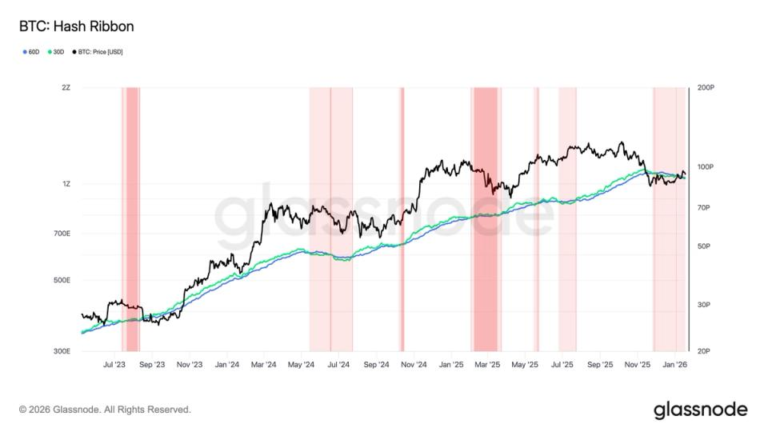
Bitcoin mining difficulty set for a 4% decline, the seventh negative adjustment in the past eight.
The New York Stock Exchange Develops Tokenized Securities Platform

NEW YORK–(BUSINESS WIRE)–The New York Stock Exchange, part of Intercontinental Exchange, Inc. (NYSE: ICE), a leading global provider of technology and data, today announced its development of a platform for trading and on-chain settlement of tokenized securities, for which it will seek regulatory approvals.
NYSE’s new digital platform will enable tokenized trading experiences, including 24/7 operations, instant settlement, orders sized in dollar amounts, and stablecoin-based funding. Its design combines the NYSE’s cutting-edge Pillar matching engine with blockchain-based post-trade systems, including the capability to support multiple chains for settlement and custody.
Subject to regulatory approvals, the platform will power a new NYSE venue that supports trading of tokenized shares fungible with traditionally issued securities as well as tokens natively issued as digital securities. Tokenized shareholders will participate in traditional shareholder dividends and governance rights. The venue is designed to align with established principles for market structure, with distribution via non-discriminatory access to all qualified broker-dealers.
The launch of the NYSE’s tokenized securities platform is one component of ICE’s broader digital strategy, which includes preparing its clearing infrastructure to support 24/7 trading and the potential integration of tokenized collateral. ICE is now working with banks including BNY (NYSE: BK) and Citi (NYSE: C) to support tokenized deposits across ICE’s clearinghouses to help clearing members transfer and manage money outside of traditional banking hours, meet margin obligations, and accommodate funding requirements over different jurisdictions and time zones.
“For more than two centuries, the NYSE has transformed the way markets operate,” said Lynn Martin, President, NYSE Group. “We are leading the industry toward fully on-chain solutions, grounded in the unmatched protections and high regulatory standards that position us to marry trust with state-of-the-art technology. Harnessing our expertise to reinvent market infrastructure is how we’ll meet and shape the demands of a digital future.”
ICE, parent company of the NYSE and operator of six clearing houses around the world including the world’s largest energy clearing house and the world’s largest clearing house for credit default swaps, has been at the forefront of market innovation for more than 25 years.
“Since its founding, ICE has propelled markets from analog to digital,” said Michael Blaugrund, Vice President of Strategic Initiatives, ICE. “Supporting tokenized securities is a pivotal step in ICE’s strategy to operate on-chain market infrastructure for trading, settlement, custody, and capital formation in the new era of global finance.”
About Intercontinental Exchange
Intercontinental Exchange, Inc.(NYSE: ICE) is a Fortune 500 company that designs, builds, and operates digital networks that connect people to opportunity. We provide financial technology and data services across major asset classes helping our customers access mission-critical workflow tools that increase transparency and efficiency. ICE’s futures, equity, and options exchanges — including the New York Stock Exchange — and clearing houses help people invest, raise capital and manage risk. We offer some of the world’s largest markets to trade and clear energy and environmental products. Our fixed income, data services and execution capabilities provide information, analytics and platforms that help our customers streamline processes and capitalize on opportunities. At ICE Mortgage Technology, we are transforming U.S. housing finance, from initial consumer engagement through loan production, closing, registration and the long-term servicing relationship. Together, ICE transforms, streamlines, and automates industries to connect our customers to opportunity.
Trademarks of ICE and/or its affiliates include Intercontinental Exchange, ICE, ICE block design, NYSE and New York Stock Exchange. Information regarding additional trademarks and intellectual property rights of Intercontinental Exchange, Inc. and/or its affiliates is located here. Key Information Documents for certain products covered by the EU Packaged Retail and Insurance-based Investment Products Regulation can be accessed on the relevant exchange website under the heading “Key Information Documents (KIDS).”
Safe Harbor Statement under the Private Securities Litigation Reform Act of 1995 — Statements in this press release regarding ICE’s business that are not historical facts are “forward-looking statements” that involve risks and uncertainties. For a discussion of additional risks and uncertainties, which could cause actual results to differ from those contained in the forward-looking statements, see ICE’s Securities and Exchange Commission (SEC) filings, including, but not limited to, the risk factors in ICE’s Annual Report on Form 10-K for the year ended December 31, 2024, as filed with the SEC on February 6, 2025.
XRP slips below $2 after failed breakout triggers sharp reversal
Once the breakout attempt stalled, sellers pressed the tape, triggering a sharp reversal that cleared out late longs and flipped short-term structure bearish.
Bitcoin whale wakes up after 12 years to move $84 million fortune

A long-dormant bitcoin wallet moved 909 BTC, now worth more than $84 million, to a new address after over 12 years of inactivity.
Charles Hoskinson criticizes Ripple CEO Brad Garlinghouse for backing flawed CLARITY Act

Key Takeaways
- Charles Hoskinson criticized Ripple’s Brad Garlinghouse for supporting the CLARITY Act, which he considers flawed.
- Hoskinson argued that passing compromised legislation could lead to long-term negative impacts on the crypto industry.
Share this article
Charles Hoskinson publicly challenged Ripple CEO Brad Garlinghouse over his support for the draft CLARITY Act, calling the bill a dangerous compromise rather than real regulatory clarity.
The Cardano founder argued during a recent livestream that the current bill version, which seeks to establish a comprehensive regulatory framework for digital assets while promoting innovation, would hand too much power to regulators and undermine crypto’s core principles.
Hoskinson claimed that the legislation, after 137 amendments, effectively hands “the entire keys to the cryptocurrency kingdom” to the SEC, requiring projects to seek exemptions rather than operating freely.
“You have to go beg and plead for them to make it not a security. All new projects are securities by default. How is that any better than what scary Gary gave us under Biden?” he said.
Hoskinson directly challenged Garlinghouse’s pragmatic stance on the bill.
“You still got people like Brad saying, well, it’s not perfect, but we just got to get something,” he stressed. “Hand it to the same people who sued us. That’s better?”
The Cardano founder questioned whether passing flawed legislation could ever be corrected, citing the Securities Exchange Act of 1933.
“93 years later, have we been able to change it? No. You pass it, you own it forever,” he said. “Sorry, Brad. It’s not better than chaos.”
Hoskinson framed his opposition in ideological terms, stating he “signed up for freedom” and “a revolution,” not a system where “everything is a custodial wallet” and “every transaction is KYC.”
He accused industry leaders of accepting compromised legislation in exchange for power, wealth, and elite status, abandoning the ideals of the crypto revolution.
“They’ve taken their silver so they can be part of a new oligarchy,” he said, emphasizing that crypto leaders mistakenly believe they will be treated better than ordinary users.
Hoskinson has become increasingly outspoken against the Trump administration’s approach to crypto.
He previously argued that the release of the Trump-backed meme coin in early 2025 undermined cross-party momentum, saying legislation such as the CLARITY Act had enjoyed strong support from both parties before the move.
More recently, he criticized David Sacks, saying that the White House AI and crypto czar failed the industry by allowing regulatory efforts to stall.
The Destruction of Fiat Has Begun — Peter Brandt Warns Altcoins Will Become More Worthless Than USDs

Fiat currencies and altcoins are entering a prolonged decline as expanding money supply revives gold’s dominance and pressures speculative assets, a trend veteran trader Peter Brandt says is accelerating across global markets. As Fiat Erodes, Altcoins Bleed Faster — Peter Brandt Signals Brutal Crypto Shakeout Fiat currencies and altcoins face accelerating erosion as monetary expansion […]
Bitcoin, Altcoins Gains Retrace After US, EU Trade War Resumes

Key points:
-
Bitcoin may remain under pressure as the US-EU trade war may create a risk-off environment in the short term.
-
Most major altcoins have turned down from their overhead resistance levels, signaling that the bears remain in command.
Bitcoin’s (BTC) pullback is attempting to find support near $92,000, but the bears have kept up the pressure. Several crypto analysts told Cointelegraph that a US-EU trade war may create a risk-off mood in the markets.
The uncertainty has boosted gold and silver to new all-time highs, while BTC languishes. However, network economist Timothy Peterson said BTC will eventually catch up with gold’s rally. He said in a post on X that both gold and BTC are headed to the same place but are just taking different paths.
While the long term looks bullish, the short term is sketchy. Trader CrypNuevo said in an X analysis thread that BTC may witness downside pressure due to uncertainty. The 2026 yearly open of about $87,000 and the range lows of $80,500 are the critical levels to watch out for.
Could BTC and the major altcoins bounce off their support levels? Let’s analyze the charts of the top 10 cryptocurrencies to find out.
S&P 500 Index price prediction
The S&P 500 Index (SPX) is facing selling near the 7,000 level, but a positive sign is that the bulls have not ceded much ground to the bears.

The first sign of weakness will be a break below the 20-day exponential moving average (EMA) (6,909). That suggests the bulls are booking profits. Buyers are expected to defend the 50-day simple moving average (SMA) (6,829), as a break below it may deepen the correction to 6,720.
Contrarily, if the price rebounds off the moving averages, the bulls will attempt to resume the uptrend. If buyers thrust the price above the 7,000 resistance, the index may soar to the 7,290 level.
US Dollar Index price prediction
The US Dollar Index (DXY) rose above the 50-day SMA (98.99) on Monday, but the higher levels are attracting sellers.

If the price skids below the moving averages, the index may remain inside the 97.74 to 100.54 range for some time.
Contrary to this assumption, if the price rebounds off the moving averages with strength, it signals buying on dips. The bulls will then again attempt to drive the price to the 100.54 overhead resistance. Sellers are expected to defend the 100.54 level with all their might, as a close above it signals the start of a new up move.
Bitcoin price prediction
BTC’s pullback has reached the 20-day EMA ($92,625), which is a critical near-term support to watch out for.

If the price rebounds off the 20-day EMA with strength, it suggests a positive sentiment. That increases the possibility of a break above the $97,924 level. The BTC/USDT pair may then rally to $100,000 and later to $107,500.
On the other hand, a break and close below the moving averages suggests that the bulls are losing their grip. The Bitcoin price may then oscillate inside the $84,000 to $97,924 range for a few days.
Ether price prediction
Ether (ETH) remains stuck inside the symmetrical triangle pattern, signaling uncertainty about the next directional move.

The slightly upsloping 20-day EMA ($3,190) and the and the relative strength index (RSI) near the midpoint do not indicate a clear advantage either to the bulls or the bears. If the price closes below the 20-day EMA, the ETH/USDT pair may extend its stay inside the triangle.
The advantage will tilt in favor of the bulls if the Ether price closes above the resistance line. The pair may march toward $3,569 and subsequently to $4,000. On the downside, a close below the support line may sink the pair to $2,623.
XRP price prediction
XRP’s (XRP) break below the 50-day SMA ($2) indicates that the bears are back in the game.

The bears will attempt to strengthen their position by pulling the price to the solid support zone between $1.61 and the support line. If the price rebounds off the support zone with strength, it indicates that the XRP/USDT pair may stay inside the channel for some more time.
The downside is likely to pick up momentum on a close below the support line. The par may then plummet to the Oct. 10 low of $1.25.
Buyers will have to kick the XRP price above the downtrend line to signal a potential trend change.
BNB price prediction
Sellers pulled the BNB (BNB) price below the 20-day EMA ($912) on Monday, but the long tail on the candlestick shows buying at lower levels.

The bulls will have to push the BNB price above the $960 level to signal the start of an up move toward the pattern target of $1,066.
Sellers are likely to have other plans. They will attempt to defend the overhead resistance and pull the BNB/USDT pair below the 50-day SMA ($884). If they do that, it suggests that the market rejected has the breakout above the $928 level. The pair may then slump to the uptrend line and eventually to $790.
Solana price prediction
Solana (SOL) turned down from the $147 resistance and has reached the 50-day SMA ($132), indicating that the bears are active at higher levels.

Both moving averages are flattening out, RSI is just below the midpoint, indicating that the SOL/USDT pair may continue to consolidate between $117 and $147 for some more time.
Buyers will have to drive the Solana price above the $147 level to signal the start of a new up move. The pair may then rally to $172. On the contrary, a break below $117 may sink the pair to $95.
Related: US Bitcoin traders flip bearish: Is BTC price at risk of losing $90K?
Dogecoin price prediction
Dogecoin (DOGE) fell below the moving averages on Sunday and reached the $0.12 support on Monday.

The long tail on the candlestick shows that the bulls are defending the $0.12 level. There is resistance at the moving averages, but if the bulls overcome it, the DOGE/USDT pair may continue to swing inside the $0.12 to $0.16 range for a few more days.
Instead, if the Dogecoin price continues lower or turns down from the moving averages and breaks below $0.12, it signals the resumption of the downtrend. The pair may then retest the Oct. 10 low of $0.10.
Cardano price prediction
Cardano (ADA) broke below the moving averages on Sunday and is heading toward the $0.33 support.

If the price rebounds off the $0.33 level with strength, the bulls will again attempt to propel the ADA/USDT pair above the downtrend line. If they succeed, the Cardano price may reach the breakdown level of $0.50.
Alternatively, if the price breaks the $0.33 support, the next stop is likely to be the support line of the descending channel pattern. Buyers are expected to protect the support line, which is near the Oct. 10 low of $0.27.
Bitcoin Cash price prediction
Bitcoin Cash (BCH) closed below the 50-day SMA ($594) on Saturday, indicating that the bears are attempting to take charge.

The 20-day EMA ($608) has started to turn down, and the RSI is in the negative territory, indicating that the bears have the upper hand. The bounce off the $563 level is expected to face selling at the 20-day EMA. If the Bitcoin Cash price turns down sharply from the 20-day EMA, the likelihood of a break below the $563 support increases. The BCH/USDT pair may then nosedive to $518.
The first sign of strength will be a break above the 20-day EMA. The pair may then rise to the $631 level, where the bears are expected to step in.
This article does not contain investment advice or recommendations. Every investment and trading move involves risk, and readers should conduct their own research when making a decision. While we strive to provide accurate and timely information, Cointelegraph does not guarantee the accuracy, completeness, or reliability of any information in this article. This article may contain forward-looking statements that are subject to risks and uncertainties. Cointelegraph will not be liable for any loss or damage arising from your reliance on this information.
A16z Crypto wants DeFi to ditch ‘code is law’ for ‘spec is law’ to combat $649m exploit problem – DL News

- DeFi protocols must adopt a more principled approach to security to mature.
- They could use standardised specifications that constrain what a protocol is allowed to do.
- Many protocols are already adopting so-called invariant checks.
DeFi protocols must move beyond “patch-after-the-hack” security and hard-code safety guarantees into their software if the $168 billion sector is to mature, according to a16z Crypto.
In a January 11 post, Daejun Park, a senior security researcher at the firm, argued that DeFi developers should adopt a more principled approach to security instead of relying on trial and error.
At the core of that shift, Park said, is the use of standardised specifications that constrain what a protocol is allowed to do, and automatically revert any transaction that violates those predefined assumptions about correct behaviour.
“Almost every exploit to date would have tripped one of these checks during execution, potentially halting the hack,” Park said. “So the once-popular idea of ‘code is law’ evolves into ‘spec is law.’”
Such an idea, sometimes referred to as runtime enforcement or invariant checks, isn’t new. But it’s getting a fresh look as DeFi protocols struggle to defend against hackers exploiting bugs in their code.
Last year, hackers swiped over $649 million through code exploits according to a report from Slowmist, a blockchain security firm.
Even battle-tested protocols like Balancer, whose code had been live on the Ethereum blockchain since 2021, were not immune. It lost $128 million in November after a hacker exploited a code bug.
In recent months, DeFi developers fear hackers are increasingly using artificial intelligence to find DeFi protocol vulnerabilities and exploit them.
‘Not the silver bullet’
Park’s suggestions, if widely adopted, could go a long way in preventing exploits. But they’re not without downsides.
DeFi protocols often gain an edge over their competitors by having the cheapest fees. Adding extra checks on transactions would increase gas costs, potentially losing them users, Gonçalo Magalhães, head of security at Immunefi, told DL News.
Magalhães said invariant checks are a great security strategy, but they can’t account for everything — especially exploits that a protocol’s developers can’t reasonably anticipate. “It’s not the silver bullet,” he said.
It’s also tricky to get the checks to work properly, Felix Wilhelm, co-founder of Asymmetric Research, a crypto security firm, told DL News.
“For many vulnerabilities and real-life hacks, it is difficult or even impossible to write an invariant that detects the hack without also triggering under normal circumstances,” he said.
Wilhelm said runtime enforcement is an important part of protocol security. But it is typically used to detect anomalies, like an unusual flow of funds in a short timeframe.
“While helpful, this often serves only to limit impact or alert the team, rather than stopping the attack outright,” he said.
Many protocols are already adopting invariant checks.
Kamino, a Solana-based lending protocol, began checking for critical invariants using Certora Prover in March last year.
The XRP Ledger, the blockchain behind the $120 billion XRP token, has also implemented invariant checking. The blockchain’s developers said the checks are necessary because XRP Ledger is complicated, and there is a high potential for code to execute incorrectly.
“Invariants should not trigger, but they ensure the XRP Ledger’s integrity from bugs yet to be discovered or even created,” XRP Ledger developers said.
Tim Craig is DL News’ Edinburgh-based DeFi Correspondent. Reach out with tips at tim@dlnews.com.
BingX Becomes Scuderia Ferrari HP’s First-Ever Crypto Exchange Partner

BingX, a leading crypto exchange and Web3-AI company, today announced a multi-year partnership with Scuderia Ferrari HP, marking BingX’s first motorsport collaboration and Scuderia Ferrari HP’s first-ever collaboration with a crypto exchange brand. This historic alliance brings together two global brands known for pushing the boundaries of performance and innovation.
Partnering with Scuderia Ferrari HP marks a defining milestone in BingX’s global expansion strategy. As one of the world’s most iconic motorsport teams, Scuderia Ferrari HP embodies precision, ambition, and continuous pursuit of excellence, values that mirror BingX’s vision as it continues to scale its platform and community. The collaboration solidifies BingX’s position as a top-of-mind brand in the crypto landscape and signals the company’s long-term commitment to world-class partnerships and innovation.
Daniel Lai, Chief Business Officer at BingX, commented: “This partnership is more than a landmark. Partnering with Scuderia Ferrari HP sets a new benchmark for BingX. Scuderia Ferrari HP’s discipline, precision, and relentless pursuit of excellence mirror the values we strive for as a global exchange. This partnership challenges us to elevate everything we build, every experience we deliver, and every user we serve around the world.”
Lorenzo Giorgetti, Chief Racing Revenue Officer of Scuderia Ferrari HP said: “We are pleased to welcome BingX as Scuderia Ferrari HP’s first crypto exchange partner. This collaboration reflects our willingness to embrace emerging technologies that align with our forward-looking philosophy. As we approach a new era in motorsport with the 2026 FIA regulations, this alliance demonstrates our readiness to explore cutting-edge innovation both on and off the track, while remaining true to our heritage of precision and pursuit of excellence. By selecting BingX as our first partner in the crypto exchange space, we recognize the transformative potential of this sector and the opportunity to connect with wider global audiences through new digital experiences.”
Over the coming years, fans can expect to engage with BingX across a variety of Scuderia Ferrari HP events, digital platforms, global content, and exclusive experiences as the partnership evolves. This multi-year collaboration sets the tone for a new period of global ambition for BingX: One defined by breakthrough partnerships, world-class brand alignment, and a commitment to shaping the future of the industry.
Bitcoin Spot Market Improves As Sell Pressure Eases

Spot market conditions for Bitcoin are showing early signs of improvement with increased trading volume and decreasing sell-side pressure, according to analysts from Glassnode.
There has been a “modest” lift in spot Bitcoin (BTC) trading volume, “while the net buy–sell imbalance has broken above its upper statistical band,” reported Glassnode on Monday.
This is signaling a “clear reduction in sell-side pressure,” but despite this, spot demand “remains fragile and uneven,” it added.
Bitcoin declined almost 3% from its weekend high of $95,450 to trade at around $92,550 at the time of writing as markets continue to digest the fallout from the latest escalation in the US/EU trade war.
The asset remains up 6% since the beginning of the year.
“Overall, Bitcoin remains in consolidation, but internal conditions are improving,” said Glassnode, adding that markets are gradually rebuilding.
“While defensive positioning persists, strengthening buy-side dynamics and renewed institutional interest suggest a gradual rebuild toward a more constructive market structure.”
Bitcoin treated as portfolio hedge
Gracie Lin, CEO at OKX Singapore, told Cointelegraph on Tuesday that the report suggests the market has absorbed much of the late-2025 profit-taking and that sell-side pressure is easing.
“Long-term holders appear less inclined to sell into every rally, while ETF flows continue to show institutions buying pullbacks,” she said.
“With fresh tariff headlines, softer growth signals across parts of APAC, and record gold prices in the background, that strengthens the case for Bitcoin being treated less as a short-term trade and more as a portfolio hedge — even as volatility remains a feature of the asset.”
Related: Bitcoin futures OI rebounds 13% as analysts see cautious return of risk appetite
Liquidity decline precursor for a rally
Analysts at Swissblock said the decline in Bitcoin network growth and a recent liquidity drain resemble conditions last seen in 2022.
Similar network levels back then “triggered a BTC consolidation phase as network growth began to recover, even while liquidity remained weak and bottomed out,” they added.
“History shows that the subsequent surge in both metrics fueled the major bull run,” said Swissblock.
Magazine: Wintermute on crypto recovery, BTC allocation cut on quantum risk: Hodler’s Digest
Cointelegraph is committed to independent, transparent journalism. This news article is produced in accordance with Cointelegraph’s Editorial Policy and aims to provide accurate and timely information. Readers are encouraged to verify information independently. Read our Editorial Policy https://cointelegraph.com/editorial-policy