
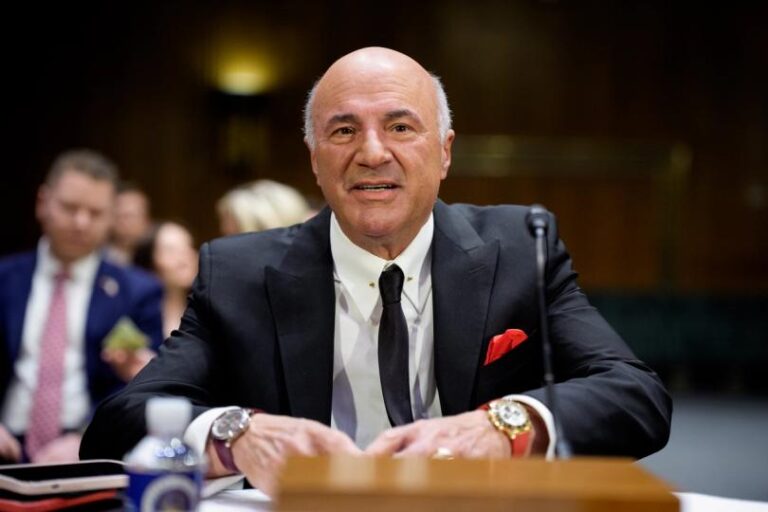
The Shark Tank investor is preparing shovel-ready sites for bitcoin miners and data centers, betting that infrastructure — not tokens — will drive the next wave of value.
Mal Breaks MEA Records with $230m Seed Round to Build ‘World’s First’ AI-Native Islamic Digital Bank

Mal, an Abu Dhabi-based fintech founded by serial entrepreneur and former Botim CEO Abdallah Abu-Sheikh, has closed a record-breaking $230million seed funding round.
Led by global investment platform BlueFive Capital, alongside strategic investors and family offices, the raise is reportedly the largest seed round in the history of the Middle East and Africa (MEA) region.
Bridging a $7trillion gap
The capital will be used to build what Mal describes as the “world’s first AI-native Islamic digital bank.” The platform aims to target the global Muslim population of roughly 2 billion, as well as other underbanked communities, by combining ethical financial principles with advanced AI infrastructure.
Abu-Sheikh, who previously led the ultra-popular communication platform Botim, identifies a significant void in the current market landscape.
“Islamic finance is a $7trillion space with no single global banking leader. With Mal, we aim to bridge that gap and bring cutting-edge fintech solutions to every underserved community globally,” said Abdallah Abu-Sheikh, Founder of Mal. “This raise is a vote of confidence in our mission to deliver a next-generation digital experience that puts intelligence, values, and accessibility at its core.”
Veteran leadership
To achieve this ambitious global scale, Mal has assembled a leadership team featuring former executives from Revolut and Nubank—two of the world’s most successful digital banking challengers.
The platform is designed to be mobile-first and “AI-native,” utilising intelligent infrastructure to lower costs and improve access across emerging markets. While Islamic finance provides the ethical foundation, the company stated that its ambition extends beyond religious demographics to serve populations historically excluded from traditional banking.
Currently in the pre-launch phase, Mal is targeting an official launch in 2026. The company is headquartered in Abu Dhabi and plans to roll out in phases, starting with the UAE before expanding into high-growth markets across the Middle East and Asia.
The press release noted that while the company is actively pursuing relevant regulatory approvals across multiple markets, it does not yet hold a banking or financial services license. The substantial funding will accelerate product development, licensing efforts, and its go-to-market strategy.
Bitcoin Price Surges To $90,000 After Trump Delays Tariffs

The bitcoin price experienced several intraday spikes on Wednesday, swinging by several thousand dollars as traders reacted to shifting geopolitical headlines and fresh comments from U.S. President Donald Trump.
The world’s largest cryptocurrency started the day near $88,000 before surging above $90,000 in early trading. The rally proved short-lived, however, with bitcoin sliding back into the upper $87,000 range after markets opened and dipped. Prices then roared higher once again, rebounding toward $90,000 after Trump announced a delay to planned trade tariffs.
Bitcoin price was last trading around $90,000 at the time of writing, having briefly reclaimed the level for the second time in the same session.
Trump comments spark bitcoin price rally
The latest move followed comments from Trump at the World Economic Forum in Davos, Switzerland, and a subsequent post on his Truth Social platform.
Trump said he would delay tariffs that were scheduled to take effect on February 1 after what he described as a “very productive meeting” with NATO Secretary General Mark Rutte.
In the post, Trump outlined a preliminary framework for a broader agreement involving Greenland and the Arctic region, calling the potential deal “a great one for the United States of America, and all NATO nations.” He added that, based on the discussions, the planned tariffs would not move forward.
Markets responded positively to the news. U.S. equities bounced sharply, with the S&P 500, Nasdaq and Dow Jones Industrial Average all rising roughly 1.5% on the day.
Risk assets across the board followed suit, lifting the bitcoin price and other major cryptocurrencies back toward recent highs.
During his Davos remarks, Trump also reiterated his support for digital assets, saying he hopes to sign comprehensive crypto market structure legislation “very soon.”
“Now, Congress is working very hard on crypto market structure legislation — Bitcoin, all of them — which I hope to sign very soon, unlocking new pathways for Americans to reach financial freedom,” Trump said.
Bitcoin price analysis as macro risks linger
Despite the relief rally, macroeconomic concerns remain in the background. Analysts have pointed to renewed stress in Japan’s bond market as a potential headwind for global risk assets.
Japan’s 10-year government bond yield has climbed to around 2.29%, a level not seen since 1999. QCP Capital highlighted in a note that Japan’s government debt exceeds 240% of GDP, with debt servicing costs projected to consume roughly a quarter of fiscal spending by 2026.
According to Bitcoin Magazine analysis, the bitcoin price held its bullish structure above $90,000 last week, rallying to $98,000 and closing around $93,600, keeping a mildly bullish bias.
Bulls will want the bitcoin price to reclaim $94,000 and retest $98,000 this week, with a sustained break potentially reaching $103,500 and the $106,000–$109,000 resistance zone.
Key support is at $91,400, with a loss possibly leading to a deeper pullback toward $87,000 or $84,000.
While momentum has improved, the $103,500–$109,000 area is expected to be strong resistance, where rejection could decide whether the rally continues or drops toward sub-$80,000 levels.
Wednesday’s dramatic price action proved costly for leveraged crypto traders. According to CoinGlass data, more than $1 billion in crypto positions were liquidated over the past 24 hours as prices whipsawed higher and lower and then higher.
Long positions bore the brunt of the damage, accounting for approximately $672 million in liquidations, while short positions made up about $335 million.
Bitcoin led the losses with roughly $426 million in liquidations, followed by Ethereum at around $366 million.
Currently, the bitcoin price is trading at $90,019 with a 24-hour volume of $67 B, holding steady over the past day. Its market cap stands at $1.798 T, just below its 7-day high of $90,296 and above the 7-day low of $87,304.
Strive ($ASST) Plans $150M Follow-On Offering To Buy Bitcoin

Strive announced today that it intends to raise up to $150 million through a follow-on offering of its Variable Rate Series A Perpetual Preferred Stock, known as SATA Stock, subject to market conditions.
The offering is registered under the Securities Act of 1933 and marks Strive’s latest move to expand its bitcoin holdings while addressing outstanding debt.
Strive plans to use the proceeds from the offering, along with cash on hand and potentially funds from terminating certain derivative contracts tied to convertible debt, to repurchase or redeem all or a portion of the 4.25% Convertible Senior Notes due 2030 issued by its subsidiary Semler Scientific, Inc.
These Semler Convertible Notes, guaranteed by Strive, were originally issued under an indenture with U.S. Bank Trust Company, National Association acting as trustee.
Strive wants to buy more bitcoin
The company may also use funds to pay down Semler Scientific’s borrowings under its loan agreements with Coinbase Credit Inc., acquire additional bitcoin and related products, and support general corporate needs.
In addition, Strive is negotiating with some holders of the Semler Convertible Notes to potentially exchange their notes for shares of SATA Stock.
SATA Stock is structured as a variable-rate, cumulative dividend security with a stated value of $100 per share. Dividends are currently set at an annualized rate of 12.25%, payable monthly, though Strive reserves the right to adjust the rate within certain limits.
If a dividend is missed, it accrues additional compounded interest, which can rise up to 20% per year. The company intends to manage the dividend rate to help the stock trade within a target range of $95 to $105 per share.
Strive also retains the right to redeem SATA Stock at $110 per share (or higher at its discretion), plus accrued dividends. Redemption can occur at any time, but the company generally cannot redeem less than $50 million of SATA Stock unless a clean-up or tax-related redemption applies.
The liquidation preference for SATA Stock is $100 per share, adjusted daily to the greater of the stated value, the previous trading day’s closing price, or the 10-day average price.
Strive said that Barclays and Cantor are joint book-running managers for the offering, with Clear Street acting as co-manager.
After SATA briefly hit $100 today, the company’s approach to set a follow-on offering price based on current market conditions is seen as a cleaner alternative to an “at-the-market” (ATM) offering, avoiding dilution and allowing Strive to capitalize on favorable pricing.
The raised funds will help the company retire legacy convertible debt and expand its Bitcoin holdings, signaling continued commitment to its crypto-focused growth strategy.
Bitcoin dips after Trump’s Davos speech but Greenland threats risk pushing price down to $75,000 – DL News
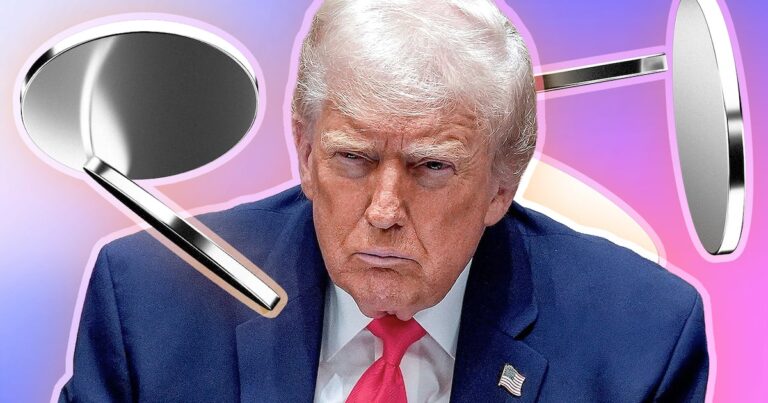
- Bitcoin dropped on Trump’s Davos speech.
- It still has room to plunge further, according to market observers.
- So how low can it go?
Bitcoin’s price dropped 3% to $87,649 after US Donald Trump reiterated the US’ claim on Greenland on Wednesday, but experts warn the uncertainty could push the price down to $75,000.
Speaking at the World Economic Forum in Davos, Switzerland, the Republican leader continued his campaign to annex the Danish autonomous territory.
“All the United States is asking for is a place called Greenland,” Trump said.
His speech rounds up months of the White House straining its relationship with the US’ closest allies, which market watchers say is causing uncertainty and could drive Bitcoin’s price down to levels not since 2024.
“We could see it go down to $75,000 to $80,000,” Simran Singh, Monaco Research CEO, told DL News.
Tariff threats
The largest digital asset dropping over 10% over the past seven days highlights the impact Trump’s rhetoric is having on markets.
The so-called “Sell America” trade has been reignited in response to the White House policies, with investors selling off US stocks, bonds and treasuries. Bitcoin dipped alongside riskier assets like tech stocks.
Yet, Trump’s threats to slam some of the US’ closest trading partners with tariffs unless they give in to his demands on Greenland as well as the EU potentially retaliating risks pushing the price of Bitcoin down lower.
“Bitcoin has given back nearly all of the gains from this year, and any further escalation in the tariff threats could see us go lower still,” Matt Howells-Barby, VP of growth at crypto exchange Kraken, told DL News.
He added that there was a lot of support at price levels between $88,000 to $85,000, but the worst case scenario is a drop to $80,000.
‘Won’t use force’
Some traders are hedging their bets, hoping that Trump will soften his rhetoric, like he did last year after the so-called “Liberation Day“ tariff announcements, when the price of the leading digital asset plunged fast only to recover when the White House backed down.
“There’s always the TACO — Trump Always Chickens Out — trade, that some folks are pricing in,” Singh said.
Indeed, there seems to be a slight softening already in Trump’s Davos speech. While the 79-year-old has refused to rule out taking Greenland with military force in the past, he seemed to do so on Wednesday.
“I don’t have to use force,” Trump said. “I don’t want to use force. I won’t use force.”
Bitcoin, Ethereum, and other major digital coins and tokens have struggled to regain ground following a massive October sell-off. Bitcoin broke a new record that month of over $126,000 per coin but is now nearly 30% below that level.
To be sure, other market watchers like BitMEX co-founder Arthur Hayes still seem confident in Bitcoin’s ability to rally. In mid-January, he predicted that a massive liquidity injection from the Federal Reserve will catapult the price to $110,000 and beyond.
Mathew Di Salvo is a news correspondent with DL News. Got a tip? Email at mdisalvo@dlnews.com.
US Senate Agriculture Committee to Release Updated Market Structure Bill

The US Senate Agriculture Committee, one of two committees in the chamber considering legislation to establish digital asset market structure, is expected to release its text of the bill by the close of business on Wednesday.
Chair John Boozman said last week that the committee would release its version of the Digital Asset Markets Clarity (CLARITY) Act on Wednesday, with a markup hearing scheduled for the following Tuesday. However, the committee had not announced any updates since Coinbase effectively derailed a scheduled markup in the Senate Banking Committee last week by pulling its support for the bill.
Some Senate Democrats have reportedly been pushing for additional restrictions on decentralized finance within the market structure bill. Coupled with Coinbase pulling its support for the banking committee’s bill and concerns over the wording of the text regarding potential conflicts of interest and stablecoin rewards, it’s unclear whether either piece of legislation has enough political momentum to make it out of committee.
“There *will* be a crypto market structure bill — it’s a question of when, not if,” said White House crypto adviser Patrick Witt in a Tuesday X post. “Assuming a multi-trillion dollar industry will continue to operate indefinitely without a comprehensive regulatory framework is pure fantasy.”
At the time of publication, Boozman had not publicly stated whether the postponement of the banking committee’s markup would affect efforts to pass market structure in the agriculture committee. Both bodies, largely focused on securities and commodities regulation, respectively, would likely need to sign off on their versions of the bill to pave the way for a floor vote in the Senate.
Related: Trump: US has to ‘make it so that China doesn’t get the hold‘ of crypto
US President Donald Trump said at the World Economic Forum in Switzerland on Wednesday that he planned to sign the market structure bill into law “very soon.” Although some reports signaled that the White House was clashing with Coinbase, CEO Brian Armstrong said the exchange was continuing to discuss the matter with officials.
Will the US midterm elections interfere with market structure?
The United States will hold midterm elections in November, which have the potential to restore Democrats to majority control in the House of Representatives and Senate. Although the elections are still about nine months away, some lawmakers and industry advocates have speculated that campaigns could interfere with efforts to pass a market structure bill.
In October, North Carolina Senator Thom Tillis, who also sits on the banking committee, reportedly said that lawmakers had until “the first part of January, February” to pass crypto legislation due to potential complications with the midterms. Senate Republicans will likely need at least some Democrats on board for the bill to pass.
Magazine: How crypto laws changed in 2025 — and how they’ll change in 2026
Cointelegraph is committed to independent, transparent journalism. This news article is produced in accordance with Cointelegraph’s Editorial Policy and aims to provide accurate and timely information. Readers are encouraged to verify information independently. Read our Editorial Policy https://cointelegraph.com/editorial-policy
Shielded Labs Receives Major ZEC Grant From Winklevoss Twins

Tyler and Cameron Winklevoss have quietly written another check for privacy tech, sending 3,221 ZEC—worth about $1.2 million—to bolster independent development of the Zcash protocol. Winklevoss Twins Fund Zcash Protocol Work Outside Block Reward The donation, made in ZEC rather than fiat, was directed to Shielded Labs, a Switzerland-based team operating independently of the Zcash […]
What’s The Beef Between Cardano And XRP? Here’s Why The Communities Are Clashing

Trusted Editorial content, reviewed by leading industry experts and seasoned editors. Ad Disclosure
A disagreement over US crypto regulation has spilled into public view, drawing the Cardano and XRP communities into an unexpected clash. The reason is the Digital Asset Market Clarity Act, a proposed bill intended to define how digital assets are regulated in the United States.
The disagreement started after Charles Hoskinson openly criticized Brad Garlinghouse over his stance on the legislation, which led to pushback from prominent XRP community members. This comes just after reports have suggested growing frustration among lawmakers toward Coinbase over disagreements tied to the Clarity Act.
Hoskinson’s Criticism And Garlinghouse’s Position In Full Context
The tension came to the surface during a livestream in January 2026, where Hoskinson criticized Garlinghouse’s apparent support for advancing the Clarity Act despite its shortcomings. In the video, Hoskinson expressed skepticism about the bill’s direction and origins, remarking sarcastically, “And what we got is Elizabeth Warren wrote the bill, that’s leadership we can believe in.”
He went on to challenge the idea that passing an imperfect bill is preferable to continued uncertainty, pointing directly to the position of Ripple CEO Brad Garlinghouse. Hoskinson questioned whether handing regulatory power to the same institutions that previously sued, subpoenaed, or shut down crypto businesses could truly be considered progress.
Hoskinson’s remarks did not go unanswered. Vet, a notable XRP community member and XRP Ledger dUNL validator, reposted the video on X and criticized Hoskinson’s approach. Vet questioned why Hoskinson chose to publicly attack Garlinghouse instead of contributing constructively to the legislative process, writing, “How about focusing on helping shape the Clarity Bill instead of crashing out on Brad for no reason, Charles?”
Why The Clarity Act Matters To Both Communities
The Clarity Act is one of a few bills introduced during the current crypto-positive Trump administration that aims to bring structure to a regulatory environment that has been uncertain for years. The Clarity Act, in particular, was introduced to bring clarity around whether digital assets should be treated as securities or commodities and which agencies should oversee them.
The bill represents a necessary step toward legal certainty and institutional participation. Supporters of XRP tend to see engagement with lawmakers as a practical route forward after years of legal battles. However, others like Charles Hoskinson are of a different notion.
The Clarity Act is not without its issues. Sources close to the White House say the administration is considering pulling its support for the Clarity Act if Coinbase does not return to negotiations over stablecoin yield provisions. However, Coinbase CEO Brian Armstrong noted that Coinbase is actively working to find common ground with banks on yield-related issues.
A similar Act, called the Guiding and Establishing National Innovation for US Stablecoins Act, or the “GENIUS Act,” was signed into law in 2025 by President Donald Trump as part of efforts to create better regulatory clarity towards stablecoins in the United States.
Interestingly, Ripple CEO Brad Garlinghouse was part of the crypto industry leaders that expressed support for the Genius Act after it was signed into law.
Featured image from Adobe Stock, chart from Tradingview.com

Editorial Process for bitcoinist is centered on delivering thoroughly researched, accurate, and unbiased content. We uphold strict sourcing standards, and each page undergoes diligent review by our team of top technology experts and seasoned editors. This process ensures the integrity, relevance, and value of our content for our readers.
Sacks Says Banks and Crypto Will Merge Into One Digital Asset Industry

White House crypto czar David Sacks said banks and crypto companies will ultimately merge into “one digital asset industry” once Congress passes the long-delayed market structure bill.
The comments came during an interview on CNBC’s Squawk Box on Wednesday at the World Economic Forum (WEF) in Davos, Switzerland, where Sacks was asked about the negotiations around the proposed CLARITY Act, a market structure bill that has stalled amid debate over whether stablecoin issuers should be permitted to offer yield.
Sacks said the yield debate has become the primary obstacle to advancing the legislation, but noted that lawmakers, banks and crypto companies must compromise to get a market structure bill to US President Donald Trump to sign into law.
He pointed to the GENIUS Act as an example, noting that the bill failed multiple times before ultimately becoming law, adding that banks should recognize that yield is already a feature within the legislation.
Sacks also urged the crypto industry to “see the bigger picture,” saying that he understands “yield is philosophically important to them, but so is getting an overall market structure bill,” Sacks said, adding:
After the bill passes, the Banks are going to get fully into the crypto industry. So we’re not going to have a separate banking industry and crypto, it’s going to be one digital asset industry. Over time, the banks like the idea of paying yield because they’re going to be in the stablecoin business.
Related: Central banks vs Bitcoin: Who deserves the public’s trust?
The ongoing debate over the CLARITY Act
The dispute between traditional banks and crypto companies over whether stablecoins should be allowed to pay yield has simmered for months, but intensified last week when Coinbase publicly withdrew its support for the CLARITY Act.
Coinbase CEO Brian Armstrong said on X that there were “too many issues” with the current draft of the bill to support it, including eliminating stablecoin yields while insulating banks from competition.

Banks argue that allowing stablecoins to offer high yields could prompt a deposit flight from traditional bank accounts, potentially pulling trillions of dollars out of low-interest savings accounts.
While the US GENIUS Act, which became law in July 2025, prevented stablecoin yields from being offered by token issuers, third-parties such as Coinbase are still legally able to offer rewards.
On Tuesday, Armstrong told CNBC’s Squawk Box that since the bill has stalled in the Senate, “there’s an opportunity for us to come back and chat with the bank CEOs, and see what would create a win-win outcome here.”
Magazine: ‘If you want to be great, make enemies’: Solana economist Max Resnick
Cointelegraph is committed to independent, transparent journalism. This news article is produced in accordance with Cointelegraph’s Editorial Policy and aims to provide accurate and timely information. Readers are encouraged to verify information independently. Read our Editorial Policy https://cointelegraph.com/editorial-policy
Aave Transfers Lens Protocol Stewardship to Mask Network

Decentralized finance (DeFi) protocol Aave transferred stewardship of the social infrastructure protocol Lens to Mask Network, shifting responsibility for advancing consumer-facing social applications while retaining Lens as open-source infrastructure.
Statements from both Lens and Aave founder Stani Kulechov confirmed the transition. On Tuesday, Kulechov said in an X post that Aave’s role will narrow to technical advisory support as it refocuses on DeFi.
He added that Mask Network, a Web3 company focused on integrating blockchain features into social and messaging platforms, will be leading the next phase of development for Lens, particularly at the application and product layer.
While the announcement framed the move as a change in “stewardship,” neither Lens nor Aave characterized it as an acquisition or exit from social infrastructure.
Cointelegraph reached out to Lens for more information, but had not received a response by publication.
How responsibilities shift under the Lens transition
Under the new setup, Mask Network assumes responsibility for consumer-facing execution, including product roadmap decisions, user experience design and day-to-day operational leadership for social applications built on Lens.
This includes advancing apps such as Orb and shaping how Lens-based products are positioned and distributed to end users.
Lens and Aave said the protocol’s underlying components, including its onchain social graph, profiles, follows and smart contracts, will remain open-source and permissionless.
There was no indication of a transfer in protocol ownership, intellectual property, treasuries or governance control as part of the transition.
Aave said it will continue to act as a technical adviser, offering input on protocol-level decisions without leading product development. The move narrows Aave’s role from building and operating social products to maintaining its social infrastructure.
Lens’ infrastructure-first vision predates the handover
From its earliest days, Lens Protocol was framed as infrastructure. In 2022, Aave launched Lens as a Web3-native social protocol designed to give users ownership over their social identities and content through onchain profiles and non-fungible tokens (NFTs).
That positioning was reinforced in later updates. In 2023, Kulechov said Lens Protocol was not intended to function as a front-end platform but as a shared social layer that allows applications, both Web3 and Web2, to connect to a common social graph and user base.
At the time, Kulechov told Cointelegraph that Lens’ shared audience could help developers overcome the “cold start” problem faced by new social platforms, while allowing multiple apps to coexist without competing for locked-in users.
Related: After bitter vote, Aave founder pitches bigger future for DeFi lending giant
Vitalik Buterin backs decentralized social amid Lens transition
Following the Lens stewardship transition, Ethereum co-founder Vitalik Buterin praised Lens’ evolution, saying the Aave team “has done a great job stewarding Lens up to this point” and that he is “excited about what will happen to Lens over the next year.”
Buterin also commented on decentralized social platforms, arguing that competition enabled by shared data layers is critical to improving online discourse.
In a post published on Wednesday, Buterin said that “if we want a better society, we need better mass communication tools.” He added that decentralization enables this by allowing “a shared data layer, with anyone being able to build their own client on top.”
Buterin said he has already returned to decentralized social platforms in 2026, noting that every post he has made or read this year has been through Firefly, a multi-client that supports Lens, Farcaster, X and Bluesky.
Magazine: How crypto laws changed in 2025 — and how they’ll change in 2026
Cointelegraph is committed to independent, transparent journalism. This news article is produced in accordance with Cointelegraph’s Editorial Policy and aims to provide accurate and timely information. Readers are encouraged to verify information independently. Read our Editorial Policy https://cointelegraph.com/editorial-policy