
Home Blog Page 1145

How a Strong Mobile App Can Turn Casual Users into Loyal Customers

0

A casual user is easy to win and even easier to lose. They download your app, poke around for a minute, and then disappear into the endless scroll. The difference between a nice try and real loyalty often comes down to whether the app delivers value quickly and reliably.

We got in touch with our friends at https://www.bolderapps.com/ and asked them to help us answer one of the biggest questions in modern app development: what makes people stick?

The answer is not a single feature. A strong app reduces friction, builds trust, and creates small reasons to return until returning becomes the default.

The Path From Download to Default

Whether they know it or not, new users ask three questions:

  •   What is this for?
  •   How quickly can it help me?
  •   Can I trust it with my time, data, and attention?

A loyalty-focused app is designed for a completed task and smooth experience, and then reinforces that win with consistency. The more predictable the experience, the more comfortable users feel investing attention and data, and that investment is what makes switching less likely later.

It also helps to remember the fact that smartphones are the primary way many people interact with the internet. Pew Research Center reports that 91% of U.S. adults own a smartphone, and this long-term chart shows how sharply smartphone adoption has grown over time.

The Habit Loop

A loyalty-building app often follows a simple loop of prompt > action > reward > repeat.

The prompt might be a notification, a widget, an email, or a moment of need. The catch with the action is that it must be quick, and the reward must feel immediate, whether it’s time saved, reduced stress, a helpful result, a pleasant experience, or whatever fits your particular niche.

Then the loop repeats with less effort the next time.

This is where instrumentation matters, since you cannot improve what you do not measure. Track onboarding completion, time-to-first-value, feature adoption, cohort retention, and the points where users abandon a flow. The fewer blind spots, the better.

The Right Partner

Some teams can build and iterate in-house, while others need a partner to move faster or avoid costly missteps. A good mobile app development agency will help connect your business goals to product decisions, then ship and improve based on evidence.

This is also where mobile app development services vary more than many buyers expect. Two vendors may offer the same scope, but the results can be substantially different depending on how they manage discovery, UX, QA, release engineering, analytics, and post-launch iteration.

You may want to look at an AI mobile app development agency or a broader AI development agency if your roadmap involves personalization, automation, predictive features, or improved support processes. The key is to treat AI as a product capability, rather than a marketing label. Define the user problem first, then choose the model, data, and safeguards that fit it.

Loyalty and Revenue Move Together

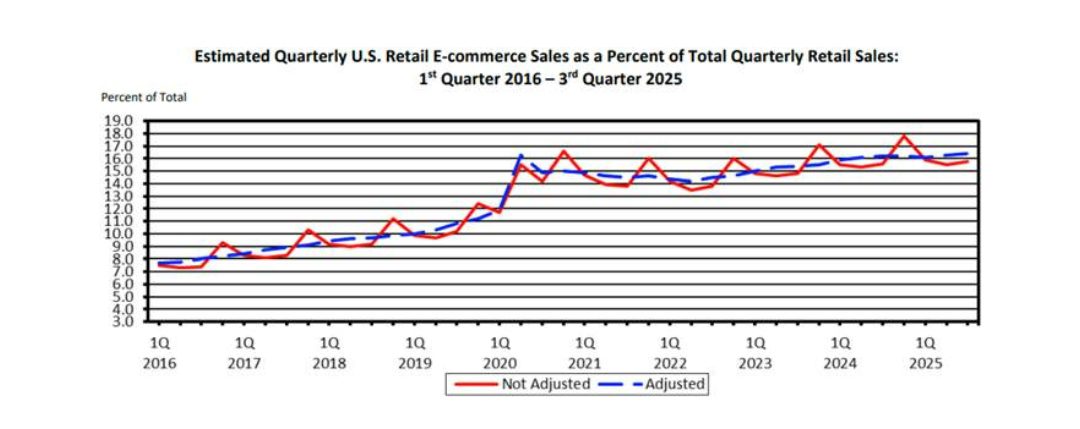
For many businesses, the app is where everything happens, from discovery to service and transactions. The U.S. Census Bureau’s Quarterly Retail E-Commerce Sales report shows e-commerce at 16.4% of total retail sales in Q3 2025.
Strong Mobile App Can Turn Casual Users

Even if you are not in retail, this trend shows users are comfortable doing more high-intent actions on small screens, which raises the stakes for smooth flows and trust signals.

Keeping Loyalty Strong with Modern Tech

Loyal users still churn if the app stagnates. People’s needs change fast, and rivals quickly imitate whatever’s obviously giving you a leg-up. The answer to this is not to keep redesigning things, but to keep coming up with technology innovations that improve areas users already care about, like speed, dependability, discovery, and new features that fit with how they already operate.

The best teams ship in small increments, test changes with real users, and avoid “big bang” updates that force everyone to relearn the product overnight.

When used correctly, artificial intelligence can make things easier by making searches better, suggestions smarter, and customer service quicker, while sounding alarms that stop issues before they happen. Used poorly, it creates confusion, privacy concerns, and unpredictable behavior.

If you build AI-powered features, let consumers choose whether or not to utilize them and keep an eye on quality over time. Trust is based on confidence, and confidence comes from consistency.

Bottom Line

A good app transforms casual users into regular customers by giving them value instantly, making whatever they want to do easier, developing confidence via dependability, and giving them reasons to come back. The system is more important than the features.

If you treat loyalty as an outcome of great fundamentals plus steady iteration, retention turns into a predictable result.







Bitcoin moves back to $90,000 as Trump pulls tariff threat after 'productive meeting' with NATO chief

0

“The solution, if consummated, will be a great one for the U.S. and all NATO nations,” said President Trump in a Truth Social post.

Private credit may be the breakout use case for tokenization: Maple's Sidney Powell

0

Maple Finance CEO Sidney Powell said blockchain’s biggest opportunity isn’t tokenized Treasury bills or funds — instead, it’s bringing opaque, illiquid private credit markets onchain.

Venezuelan stablecoin fever cools as ‘economic path forward becomes clearer,’ says economist – DL News

0

  • USDT prices rose 140% above official US dollar after US intervention this month.
  • The stablecoin’s price has since dropped 40%.
  • Experts say much of the volatility was driven by speculation.

Venezuela’s US dollar stablecoin rush has come to an end, data sources indicate, with USDT prices on peer-to-peer sales platforms returning to levels last seen in December, before the US’ arrest of President Nicolás Maduro.

USDT prices rose by 140% above official US dollar prices on January 7, data from P2P Army reveals.

On January 7, Investing.com data shows the US dollar price stood at 320 bolivars, while P2P traders were paying 769 bolivars per USDT token.

USDT is issued by Tether and is the world’s largest stablecoin. It is primarily backed by US Treasuries.

US special forces took Maduro into custody on January 3, sparking worries about forthcoming military intervention. But as global attention has since shifted to Greenland, feverish USDT buying in Venezuela has subsided.

“As the days go by and the economic path forward becomes clearer, the overreaction of the exchange rate is subsiding,” the economist Asdrúbal Oliveros told the Venezuelan newspaper El Nacional.

While crypto adoption is gaining momentum in Venezuela, citizens no longer appear prepared to pay a premium for stablecoins tied to the US dollar as political tensions in the region subside.

Speculative forces

On peer-to-peer exchanges, USDT prices against the Venezuelan bolivar have tumbled by 40% since the days after Maduro’s capture, P2P Army’s data shows.

Experts say speculation, rather than panic buying, was a key factor driving prices upward in the wake of the US intervention.

Speculative and mostly low-volume trades on exchanges like Binance “pushed the value of the US dollar-pegged stablecoins” to sky-high levels, the economist Jesús Palacios told El Nacional.

“All the political events that occurred generated volatility,” Palacios said. “Trading on Binance has speculative characteristics. During that week, a shallow market emerged that moved very quickly. Particularly during those days, we observed small trades of $20 or $30, which triggered very high sell rates that are inconsistent with market logic.”

Binance appears to have understood this and acted accordingly.

“We understand that market volatility can cause confusion and concern. Short-term price fluctuations can reflect geopolitical events that increase uncertainty,” Binance wrote on its Spanish-language Telegram channel on January 8.

“To protect our users and the platform, Binance is implementing temporary price limits in P2P markets as a risk control measure during times of extreme market movements.”

Some vendors, however, are still looking to capitalise on recent volatility, experts say.

“We see that some retailers are resisting the downward price movement and are sticking to their high prices,” Aarón Olmos, a Venezuelan economist and university professor, told the Spanish-language media outlet CriptoNoticias. “Some vendors are even brave enough to raise them.”

At the time of writing, USDT is still trading above the USD dollar in Venezuela, but the steep discrepancy has fallen. The official US dollar rate versus the bolivar stands at around 1 to 345. P2P Army says USDT is currently trading at 460 bolivars on Binance’s P2P markets.

Tim Alper is a news correspondent at DL News. Got a tip? Email at tdalper@dlnews.com.

Vitalik Backs Decentralized Social Media as Mask Network Takes Over Lens

0

The Ethereum co-founder said he plans to post more on Lens this year and warned that many crypto social projects rely too heavily on tokens and hype.

Ethereum co-founder Vitalik Buterin said he plans to focus more on decentralized social media in 2026, arguing that better communication tools are needed and that decentralization can help create more competition online.

Buterin revealed in a post on X on Wednesday, Jan. 21, that he has already been using decentralized social tools this year through Firefly, a multi-client that supports reading and posting across platforms like X, Lens, Farcaster, and Bluesky.

In his post, Buterin linked to an announcement from Lens Labs, which said Mask Network will become the new steward of Lens as the project shifts toward building more consumer-friendly social applications.

“If we want a better society, we need better mass communication tools,” Buterin wrote. “We need mass communication tools that surface the best information and arguments and help people find points of agreement.”

Buterin said decentralization can make social platforms more competitive by using a shared data layer, allowing different teams to build their own apps on the same network. He also warned that many crypto social projects have focused too heavily on tokens and hype.

“Too often, we in crypto think that if you insert a speculative coin into something, that counts as ‘innovating’, and moves the world forward,” Buterin wrote. He cited Substack as an example of a model that can support high-quality content by letting users subscribe to creators.

Lens Labs emphasized in its announcement that “what the ecosystem needs now is not more protocols, but great consumer experiences.” It added that Mask Network will lead the next phase of Lens and focus on building products meant for everyday users, while Lens Labs shifts into an advisory role.

“In that role, we remain fully aligned with the mission to make open, scalable, user-owned social networks a core pillar of the future internet,” the announcement reads.

Buterin concluded his post by encouraging users to spend more time on Lens, Farcaster, and the broader decentralized social ecosystem. “We need to move beyond everyone constantly tweeting inside a single global info warzone, and into a reopened frontier, where new and better forms of interaction become possible,” he added.

MASK, the native token of the Mask Network, was trading around $0.60 on Wednesday, flat over the past 24 hours. Its market capitalization is about $60 million, according to CoinGecko.

BlackRock’s IBIT powers new bitcoin annuity for U.S. retirees via Delaware Life

0

The first-of-its-kind FIA, according to the companies, offers crypto exposure with principal protection, aiming to attract cautious investors near retirement.

Steak ‘n Shake Announces A Bitcoin Bonus For Employees

0

Fast-food chain Steak ‘n Shake is rolling out a bitcoin bonus program for hourly workers, deepening its embrace of bitcoin just days after disclosing a $10 million bitcoin purchase for its corporate treasury.

Starting March 1, hourly employees at company-operated Steak ’n Shake locations will earn a bitcoin bonus worth $0.21 for every hour worked. The rewards will vest after two years, meaning workers must remain employed for that period before they can access the accumulated bitcoin.

The bonus is roughly equivalent to about 1% of the U.S. federal minimum wage and will be administered in partnership with Fold, a bitcoin rewards application.

Employees will continue to receive their regular wages in dollars, with the bitcoin component treated as an additional incentive rather than a replacement for cash pay.

The move builds on Steak ‘n Shake’s broader crypto strategy, which began in 2025 when the burger chain started accepting bitcoin payments via the Lightning Network at all U.S. locations. 

At the time, company executives said the integration reduced card processing fees by roughly half and helped attract younger customers. Same-store sales rose more than 10% in the second quarter of 2025, according to company comments.

Steak ‘n Shake loves bitcoin 

Last week, Steak ‘n Shake disclosed that it had added $10 million worth of bitcoin to its balance sheet, marking one of the more significant treasury allocations to the asset by a consumer-facing restaurant brand. 

The company has also leaned into bitcoin-themed marketing, including the launch of a limited-time “Bitcoin Meal” in October that includes a small donation to open-source bitcoin development.

The hourly bonus rate references bitcoin’s fixed supply cap of 21 million coins, a symbolic nod frequently used in crypto culture. 

At current prices, a worker putting in 30 hours a week would earn roughly $327 worth of bitcoin per year under the program, assuming a stable bitcoin price.

Last year, a company executive said that Bitcoin transactions were already outperforming expectations.

“The day we launched Bitcoin, 1 out of every 500 bitcoin transactions in the world happened at Steak ‘n Shake,” Executive Dan Edwards said at the Bitcoin Conference. 

“Bitcoin is faster than credit cards, and when customers choose to pay in Bitcoin, we’re saving 50% in processing fees,” said Edwards. “That makes Bitcoin a win for the customer, a win for us, and a win for the Bitcoin community.” 

Delaware Life Launches Index Annuity With Bitcoin Exposure

0

Delaware Life Insurance Company has become the first U.S. insurance carrier to offer a fixed index annuity (FIA) linked to a cryptocurrency-focused index, the BlackRock U.S. Equity Bitcoin Balanced Risk 12% Index. 

The move allows retirement investors to gain indirect exposure to Bitcoin while retaining principal protection, a hallmark of traditional annuity products.

The newly launched index blends 74% exposure to the iShares Core S&P 500 ETF with 25% exposure to the iShares Bitcoin Trust ETF (IBIT) and a 1% cash allocation. It is designed with a 12% target volatility, using dynamic cash adjustments to moderate BTC’s price swings.

“This launch builds around the tremendous success and client demand we have seen for IBIT, enabling insurance clients to now add Bitcoin exposure as part of a broader indexed annuity strategy,” said Robert Mitchnick, Global Head of Digital Assets at BlackRock.

“The BlackRock U.S. Equity Bitcoin Balanced Risk 12% Index offers a measured approach, allowing policyholders to participate in digital assets while maintaining the downside protection they expect from annuity products.”

Delaware Life’s CEO of Marketing, Colin Lake, touched on the company’s focus on innovation. 

“We’re proud to partner with BlackRock as the first insurance carrier to offer cryptocurrency exposure through a fixed index annuity,” Lake said. “As the retirement-planning landscape evolves, we’re continuously and thoughtfully innovating to meet the needs of financial professionals and their clients. Our fixed index annuities deliver what today’s investors want and need: opportunity for growth with protection.”

Bitcoin’s high returns balanced with equity growth

The index’s mixed allocation is designed to balance traditional equity growth with BTC’s high return potential, all while managing volatility.

As of December 31, 2024, the index delivered a six-month return of 1.88%, though BTC’s recent three-month decline contributed to a 3.16% drop over that period.

The BlackRock U.S. Equity Bitcoin Balanced Risk 12% Index is available on three Delaware Life FIA products: Momentum Growth™, Momentum Growth Plus™, and DualTrack Income™, giving clients multiple avenues to integrate BTC exposure into retirement portfolios.

The inclusion of IBIT, the largest and most liquid Bitcoin exchange-traded product, provides professional management without requiring direct cryptocurrency ownership.

This is the first time a life insurance company has allowed policy holders to select a product which includes Bitcoin.

The price of BTC today is $87,774, down 2% in the last 24 hours, with a 24-hour trading volume of $64 billion.

Prediction Markets Hit New TVL High as Polymarket Tops $330 Million

0

The total value locked across crypto prediction markets broke above its previous U.S. presidential election-fueled ATH.

The total value locked (TVL) across crypto-focused prediction markets hit a new high this week, reaching above $550 million, according to data from DefiLlama. The latest milestone surpasses the sector’s previous all-time high, which was driven by on-chain prediction marketplace Polymarket and set during the 2024 U.S. presidential elections.

TVL across prediction markets. Source: DefiLlama

Polymarket remained the largest platform by TVL, with about $330 million at press time, followed by OPINION with roughly $155 million, and Predict Fun at $21.7 million, the data shows.

Kalshi Leads Volumes

Kalshi, which mainly functions as an off-chain platform despite its continuous push to integrate blockchain, led the sector in trading volumes, posting $2.2 billion in weekly notional volume and hitting a daily record of more than $535.5 million on Jan. 18. Polymarket is currently ranked third by weekly trading volume with about $786 million.

the-defiant
Polymarket’s revenue in 2026. Source: DefiLlama

Polymarket, which had long operated as a fee-free marketplace, recently rolled out taker-only fees on certain markets. On Jan. 12, the platform recorded its highest daily revenue so far at just over $109,300. Daily revenue has since fallen and remained below $75,000 as of Jan. 21.

Even with the decline, Polymarket is now the second-largest prediction market by weekly revenue, generating around $550,000 over the past seven days, trailing only OPINION, which made $1.5 million over the same period.

DefiLlama doesn’t report revenue for Kalshi, but estimates suggest the platform earned over $263 million in fees in 2025, with the majority coming from its popular sports markets.

BTC-To-Gold Ratio Hits New Lows As Gold Rally Continues

0

Gold’s record-breaking rally inadvertently put pressure on Bitcoin’s allure, but analysts say historical data shows BTC eventually starts a catch-up rally.

Bitcoin’s (BTC) relative performance against gold has weakened sharply, but several analysts argue that this setup remains a long-term investment opportunity for BTC.

Key takeaways:

  • The Bitcoin-to-gold ratio fell to 18.5 ounces per BTC, its lowest since November 2023.

  • Analysts say these rare “asymmetric setups” often precede capital rotations back into Bitcoin.

BTC/Gold one-day chart. Source: Cointelegraph/TradingView

The Bitcoin-to-gold ratio measures how many ounces of gold are required to buy one Bitcoin. The ratio slid to around 18.5 on Wednesday, dropping to its lowest value since November 2023. The move reflects gold pushing to new all-time highs of $4,888 while Bitcoin struggles to hold above $90,000.

Cryptocurrencies, Gold, Bitcoin Price, Markets, United States, Cryptocurrency Exchange, Price Analysis, Market Analysis
Gold price projections based on 100-years of market. Source: Charles Edwards/X

Capriole Investments founder Charles Edwards highlighted the scale of gold’s move, noting that 100-years of gold bull markets have averaged more than 150% gains. If that pattern repeats, gold prices could move well above current levels to around $12,000 in 3 to 10 years, extending the near-term pressure on the BTC/gold ratio.

However, crypto analyst Decode suggested the BTC/gold pair may be showing signs of trend exhaustion. With the help of Elliott wave theory, Decode described the ratio as entering the fifth wave of a corrective C-wave, a structure that typically marks the final stage of a downtrend.

In simple terms, it implies that bearish momentum may be closer to completion than continuation, even as investor sentiment turns a bit more negative.

Cryptocurrencies, Gold, Bitcoin Price, Markets, United States, Cryptocurrency Exchange, Price Analysis, Market Analysis
BTC/GOLD weekly chart analysis via Elliot Wave Theory. Source: Decode/X

Related: The Bitcoin-to-gold ratio fell 50% in 2025: Here’s why

“The ultimate trade here is Bitcoin,” says Bitwise analyst

Bitwise European head of research André Dragosch framed the move as a macroeconomic contrarian signal. Earlier this week, the analyst said that Bitcoin was trading at a steep discount to gold on a relative basis, calling such conditions “very rare” and suggesting that a shift in capital flows could emerge in Q1 2026.

Cryptocurrencies, Gold, Bitcoin Price, Markets, United States, Cryptocurrency Exchange, Price Analysis, Market Analysis
BTC/Gold liquidity relative value based on global money supply. Source: Bitwise

In an X post on Wednesday, Dragosch emphasized that gold’s surge is tied to a bigger structural change in the global monetary system, echoing concerns raised by Ray Dalio. As countries reduce reliance on sovereign bonds and increase exposure to hard assets, gold has benefited first.

Dragosch argued that capital tends to rotate sequentially. Gold has attracted capital flows first, while Bitcoin “hasn’t caught a serious bid due to its perceived higher risk.” In that context, gold’s strength may ultimately act as a tailwind rather than a headwind for Bitcoin’s next phase of price expansion.

Related: Bitcoin sharks scoop up BTC like it’s 2013 despite ‘perfect bull trap’