Tokenization specialist Dinari and broker-dealer tZERO are working together to offer broker-dealers a turnkey platform for tokenized U.S. equities, as competition intensifies over how public stocks should move onto blockchain networks.
The companies said Wednesday they will combine Dinari’s tokenized stock platform with tZERO’s brokerage, custody, clearing and settlement infrastructure, allowing financial firms to launch blockchain-based equity offerings without assembling the underlying market infrastructure themselves.
“Tokenized equities won’t reach mainstream adoption until broker-dealers can offer them as naturally as they offer traditional securities,” Dinari CEO Gabriel Otte said in a statement.
The move comes as tokenized equities emerge as the next battleground in real-world assets. After U.S. Treasury funds became the first institutional trend for tokenization, firms are increasingly turning to public stocks, betting blockchain can modernize trading, settlement and shareholder recordkeeping.
Some firms, such as Robinhood and Kraken’s xStocks initiative, focus on creating blockchain-based representations of publicly traded shares via offshore structures, often called synthetic tokens, offered to non-U.S. investors.
Bitcoin (BTC) is seeing a “textbook” bear-market bottom as speculators take profits on the trip toward $65,000.
Key points:
Bitcoin is repeating previous macro bottom behavior in a “textbook” manner, analysis argues.
Short-term holders are taking profits on minor recoveries — something “characteristic of a bull market.”
Doubts remain about speculators avoiding future capitulation.
Analysis: Bitcoin bottom will “be very obvious in hindsight”
In their latest analysis on X, the Bitcoin quant account known as Frank, named for the famous economist Frank A. Fetter, doubled down on conviction that the worst of the BTC price downtrend is over.
“This is a textbook bitcoin bottom; I mean every bottom signal has flashed or is flashing, it’ll be very obvious in hindsight,” one post stated.
An accompanying chart showed the 200-week simple moving average (SMA) for BTC/USD, along with various quantiles.
The ninth quantile is of particular interest, having marked reversals at the pit of the 2022 bear market and March 2020 COVID-19 crash. Price is now back in that reversal zone.
BTC/USD chart with 200-week SMA data. Source: Frank/X
Turning to short-term holders (STHs) — wallets holding BTC for up to six months without selling — another encouraging sign emerges.
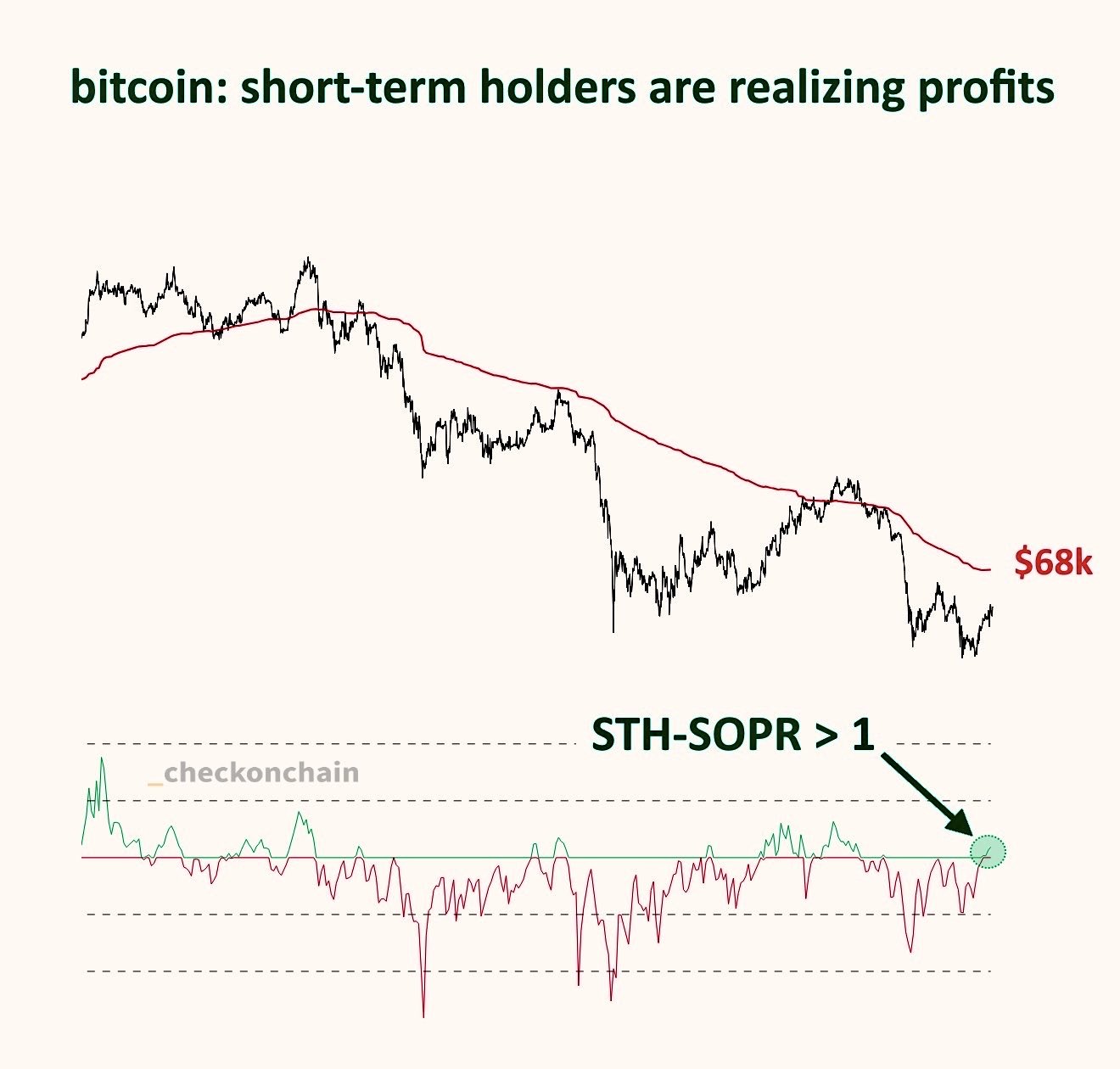
For Frank, positive readings from the cohort’s spent output profit ratio (SOPR), which measures the proportion of STH coins moving onchain in profit or loss, are conspicuous.
“A key bitcoin metric might be signaling that a market shift is underway. Sth-sopr just flipped green as short-term holders are realizing profits,” they wrote.
“The market treating short-term holders well is a characteristic of a bull market.”
Bitcoin STH-SOPR data. Source: Frank/X
Short-term holders may still see “capitulation”
The findings add to a growing consensus among market participants that the 2026 bear market has little time left to run.
Related: $60.4K Becomes ‘most important area’: Five things to know in Bitcoin this week
As Cointelegraph reported, various onchain indicators and related price yardsticks are hitting levels not seen since 2022.
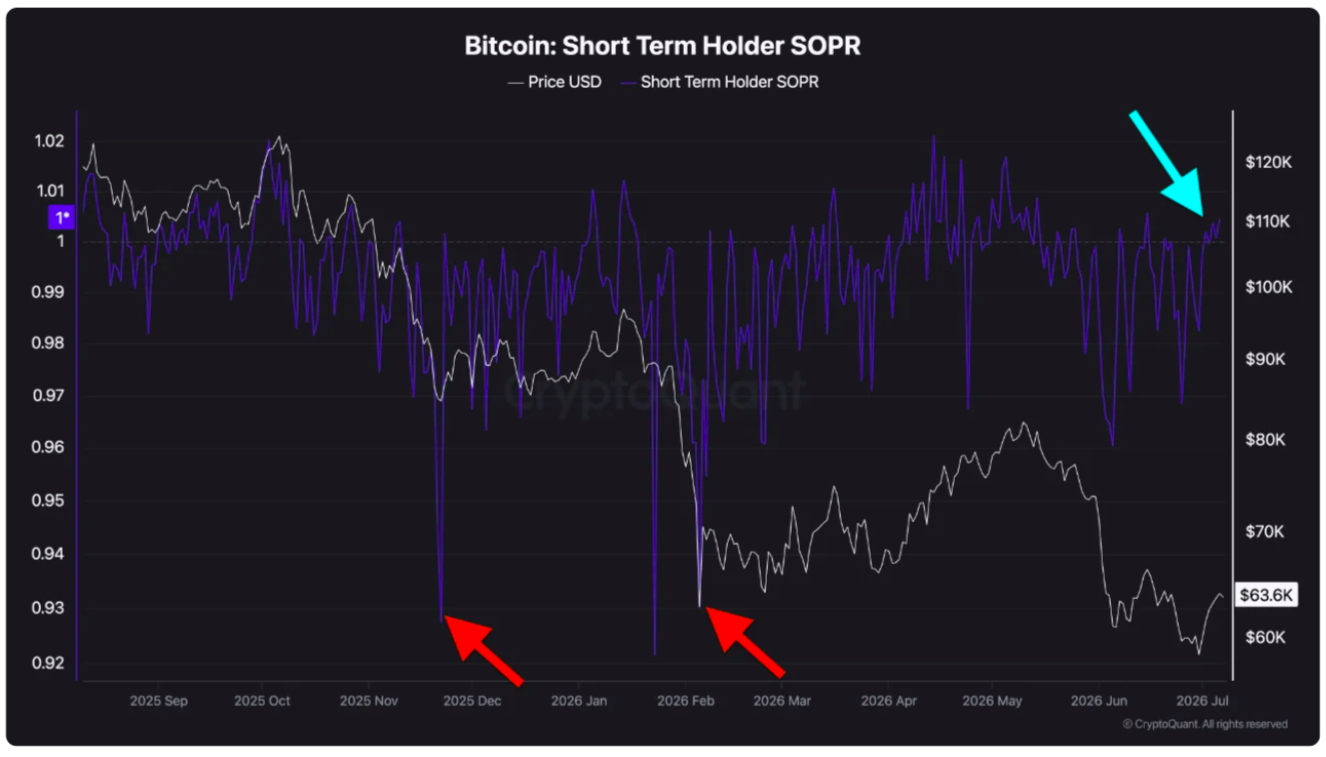
Adopting a more cautious view of STH-SOPR, meanwhile, onchain analytics platform CryptoQuant warns that new lows in the metric could be needed first.
“In stronger bottoming zones, STH SOPR often drops much deeper as short-term holders capitulate and sell at large losses. However, the current level is not near the deeper capitulation area seen around 0.93 in previous local bottom zones,” contributor Trader Germini commented in a blog post on Wednesday.
“This means the market has cooled down, but it has not yet shown a strong short-term holder capitulation signal.”
Bitcoin STH-SOPR data (screenshot). Source: CryptoQuant
Tether has invested $20 million in a strategic growth financing round for Mercado Bitcoin, Brazil’s largest crypto exchange, the stablecoin issuer announced Tuesday. The deal backs Mercado Bitcoin’s push into tokenization, payments, credit and capital markets across Latin America. Mercado Bitcoin,…
Tether has invested $20 million in a strategic growth financing round for Mercado Bitcoin, Brazil’s largest crypto exchange, the stablecoin issuer announced Tuesday. The deal backs Mercado Bitcoin’s push into tokenization, payments, credit and capital markets across Latin America.
Mercado Bitcoin, founded in 2013, has grown from a digital asset exchange into a full-stack regulated platform, according to Tether’s release. It now serves 4.5 million users, has issued more than R$2 billion ($370 million) in tokenized assets, and holds more than 10 licenses across Brazil and Europe, including a Payment Institution license from Banco Central do Brasil, plus broker-dealer, securitization and asset management capabilities.
“Mercado Bitcoin has built exactly that, a regulated, full-stack on-chain financial platform serving millions of users across one of the world’s most dynamic financial markets,” Tether CEO Paolo Ardoino said in the release. He called its regulatory licensing and tokenization infrastructure “unmatched in Latin America.”
Where the Money Goes
Mercado Bitcoin plans to use the capital to expand payments infrastructure, scale tokenized investment products for retail and institutional investors, grow lending and credit, advance on-chain capital markets, and continue international expansion, per the release.
Mercado Bitcoin Chairman and CEO Roberto Dagnoni said the company has spent “more than a decade building the regulated foundation” for on-chain finance and that the investment “strengthens our ability to accelerate the next generation of on-chain financial services in Brazil and across global markets.”
The deal extends Tether’s pattern of strategic stakes in regional financial infrastructure, following its $200 million investment in payments platform Whop in February and its backing of Ark Labs to bring stablecoins to Bitcoin in March.
New Hampshire’s plan to issue what backers call the world’s first Bitcoin-backed municipal bond goes before the state’s Executive Council on Wednesday, the last approval the $100 million project needs before it can move forward, The Boston Globe reported today.
Governor Kelly Ayotte, who has called the effort “historic,” and the five-member council will hold a public hearing Wednesday morning at the request of James Key-Wallace, executive director of the New Hampshire Business Finance Authority.
Key-Wallace asked the council to find the proposal feasible and beneficial to the public and to authorize the quasi-governmental agency to proceed. He has said the model would position the state as “a global leader in responsible crypto finance.”
The structure differs from a conventional municipal bond in a key respect: no public money is at stake. Rather than the government repaying investors, a private borrower does. The borrower is CleanSpark, a Bitcoin mining company that posts Bitcoin as collateral.
Bond payments are funded from proceeds tied to that collateral, and investors gain upside exposure through additional payments linked to Bitcoin price appreciation. If the price falls below a set threshold, a trust holding the collateral can be liquidated to repay bondholders in full.
JUST IN: 🇺🇸 New Hampshire Governor & Executive Council to hold a hearing tomorrow on establishing a Bitcoin-backed $100 million municipal bond 👀 pic.twitter.com/OcUnL1NQVv
— Bitcoin Magazine (@BitcoinMagazine) July 7, 2026
Digital asset firm Wave Digital Assets is set to administer the transaction, while BitGo would serve as custodian, holding the Bitcoin in regulated cold storage.
Moody’s has noted that “no public funds of the State of New Hampshire or any political subdivision thereof may be used to pay amounts under the rated bonds.”
New Hampshire’s push for bitcoin
The idea is part of a broader push to draw blockchain business to New Hampshire, a state that in 2025 became the first to pass a strategic Bitcoin reserve law. Supporters argue the bond gives the Business Finance Authority a revenue stream to fund its investment programs without exposing taxpayers to Bitcoin’s price swings.
That volatility remains the central concern. Because the three-year bond relies on a fluctuating asset as collateral, a downturn could trigger an automatic liquidation before the term ends.
Documents Key-Wallace submitted to the council argue the state is shielded because the loan agreement creates a conduit between private investors and a private borrower, with the cryptocurrency serving as collateral rather than any government guarantee.
Ratings reflect the risk. Moody’s assigned the bonds a provisional “Ba2” rating — two notches below investment grade — labeling them speculative with substantial credit risk, a tier often described as “junk.” Keith Ammon, a Republican state representative active in the state’s crypto policy, told the Granite State News Collaborative that the rating “makes sense” as a cautious starting point given the novelty involved.
Outside analysts have raised further questions. David Krause, an emeritus finance professor at Marquette University, examined the plan and found that recent Bitcoin price movements would be “highly likely” to trigger the liquidation provision, according to The Boston Globe.
While the state would be “legally insulated from direct financial liability,” Krause wrote, introducing so volatile a form of collateral challenges the transparency, predictability, and stability that municipal finance has historically emphasized, and shielding the state from liability does not remove reputational risk.
“While the bond may serve as a proof of concept for integrating digital assets into structured finance, it is not well suited as a general-purpose public finance tool,” he concluded.
A vote in favor Wednesday would clear the Business Finance Authority to issue the bond.
Crypto markets fell Wednesday after fresh airstrikes in Iran spurred a risk-off mood among investors. The CoinDesk 20 Index dropped 2.9% since midnight UTC, with all but one token declining.
Addressing NATO leaders, U.S. President Donald Trump declared the ceasefire “over” and said negotiating with Iran is a “waste of time,” though talks continue, according to news reports.
The U.S. Central Command said it hit more than 60 Islamic Revolutionary Guard Corps small boats to prevent them disrupting international shipping and Iran retaliated with attacks on Kuwait and Bahrain.
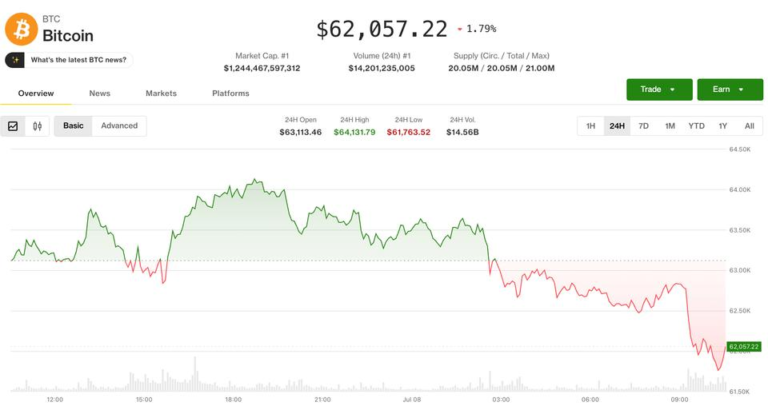
The Dollar Index (DXY) rose as the reignited tensions are likely to stoke inflation concerns. Bitcoin BTC$62,258.25 and ether (ETH), the two largest cryptocurrencies, fell more than 2%.
There were sharper losses across the more illiquid altcoin sector as JUP, ETHFI and PUMP all losing more than 5%.
U.S. equities also took a hit. Nasdaq 100 index futures and S&P 500 index futures tumbled as much as 1.5%.
Derivatives positioning
Despite bitcoin’s slide to $62,000, it’s still up 6% this month and there is some good news on the derivatives front: Traders don’t look to be shorting the rally. Open interest (OI) in futures has dropped to 730K BTC from over 740K BTC a day ago.
Ether is not faring so well. Open interest has held steady at around 13.95 million tokens despite the spot-price drop triggering liquidations of bets worth $90 million. BTC 24-hour liquidations tally just over $100 million.
The sell-off in Canton Network’s CC token has accelerated, with the token’s price slipping to its lowest level since January just as futures open interest rises to a two-week high. This combination points to the possibility of traders shorting the decline, especially since funding rates remain deeply negative, close to -20%.
Broadly speaking, the bear grip has tightened across major cryptocurrencies, including BTC and ETH, as indicated by their negative 24-hour OI-adjusted cumulative volume delta. A negative reading indicates that price action is being driven by traders placing market orders rather than passive limit orders.
The latest decline in BTC and ETH seems to have spurred hedging demand for options, as their respective 30-day implied volatility indexes, BVIV and EVIV, are up for the second straight day.
Options skew on Deribit confirms that. The one-week skew has jumped to nearly 20% in favor of puts from 16% a day ago. Puts offer protection against a price slide in the underlying asset, in this case, BTC. The same is true for ether.
However, 24-hour volume figures show the highest activity in BTC call options at the $80,000 strike price.
Token talk
The altcoin market is reeling, with $350 million worth of the $450 million in liquidations being attributed to altcoin trading pairs, according to CoinGlass.
Solana (SOL) has now completely retraced a rally that began on July 2, trading back at $77 after challenging $84 on Monday.
One token bucking the bearish sentiment is MORPHO. The DeFi token is up by 4% since midnight as total value locked (TVL) on the protocol hit a record high 4 million ETH this week, according to DefiLlama.
A beacon of hope for the altcoin market is that several tokens are now dipping back into “oversold” territory, with the average relative strength index (RSI) dropping to 40/100 from 47/100 on Tuesday.
Will the Fed focus on the breakevens, which are already at or below 2% at the short end, or on rising consumer concerns?
The Fed itself tends to trust breakevens because they reflect institutional capital allocation, while consumer surveys frequently lag behind and can be heavily influenced by volatile everyday costs like energy and food. Hence, the argument that falling breakevens are bullish for bitcoin still holds.
But the central bank may not entirely ignore Main Street sentiment, which can become self-reinforcing, especially if catalysts like energy prices remain volatile.
And guess what? The U.S.-Iran ceasefire has collapsed. The two sides exchanged airstrikes early today, triggering a roughly 5% jump in oil benchmarks. Bitcoin has fallen back to $62,000 and may drop further if the panic spreads to Wall Street later today.
Analysts are also watching the minutes from the Fed’s June meeting, due later today.
“Wednesday’s Fed minutes are the pin. With longs this crowded and funding this rich, a hawkish read is exactly the spark that flushes leverage, and the Strategy authorization hangs over every rally. We respect the bounce, we do not trust it, and we keep size honest into the minutes,” analysts at Marex said in an email.
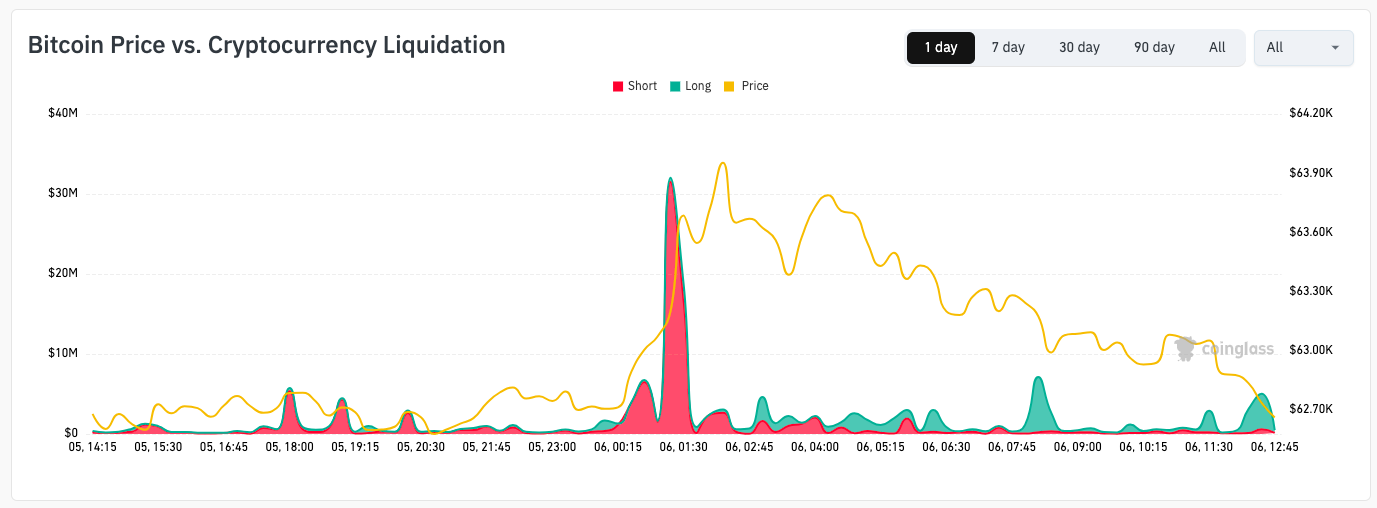
Total crypto short liquidations for the 24 hours to the time of writing were just over $100 million, CoinGlass reports.
BTC/USD vs. crypto liquidation history (screenshot). Source: CoinGlass
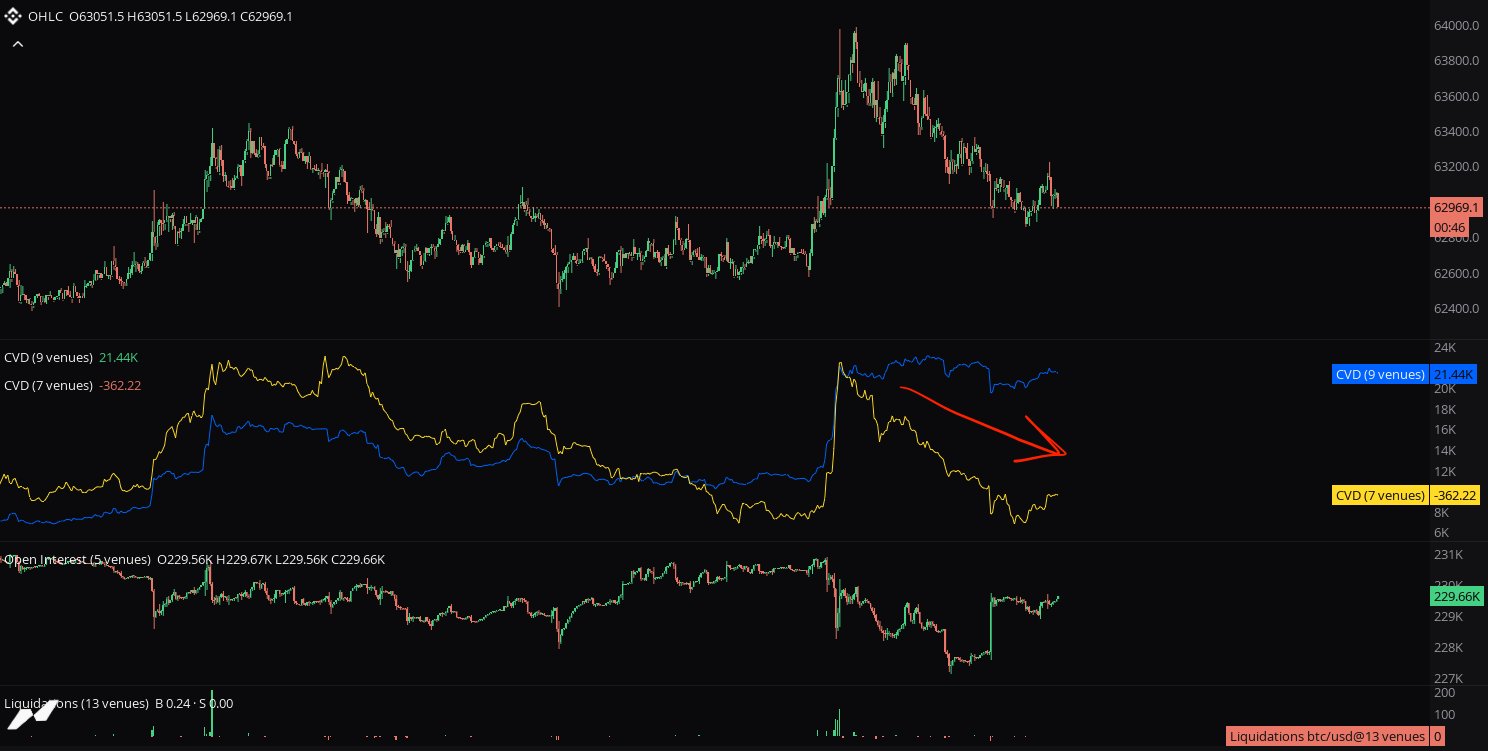
Commenting on low time frames, X account Exitpump was among those attributing the moves to liquidity hunts.
“Seeing aggressive selling from spot markets, spot CVD (yellow) trending down while perps CVD (blue) is flat,” they reported on Monday, referring to cumulative volume delta on exchange order books.
BTC/USD chart with order-book data. Source: Exitpump/X
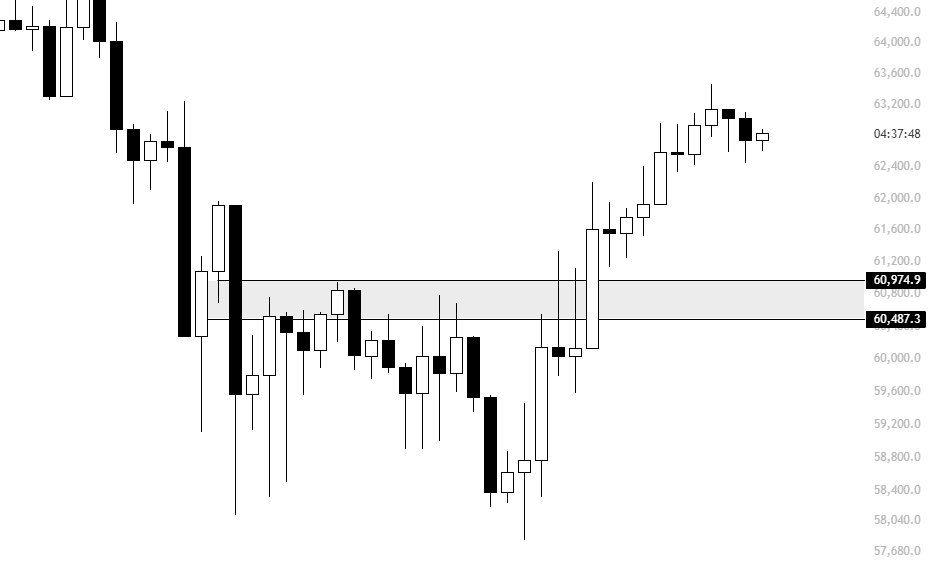
In the event of a reversal downward, trader Killa called the zone between $60,400 and $60,900 Bitcoin’s “most important.”
“If we cannot hold this price region on a revisit, I’m afraid we are going to trend directly to the lows again. Something to watch out for next week,” the analyst told X followers.
BTC/USD chart. Source: Killa/X
As Cointelegraph continues to report, market participants still see Bitcoin’s bear-market low as yet to come — despite a growing number of bullish trend reversal signals.
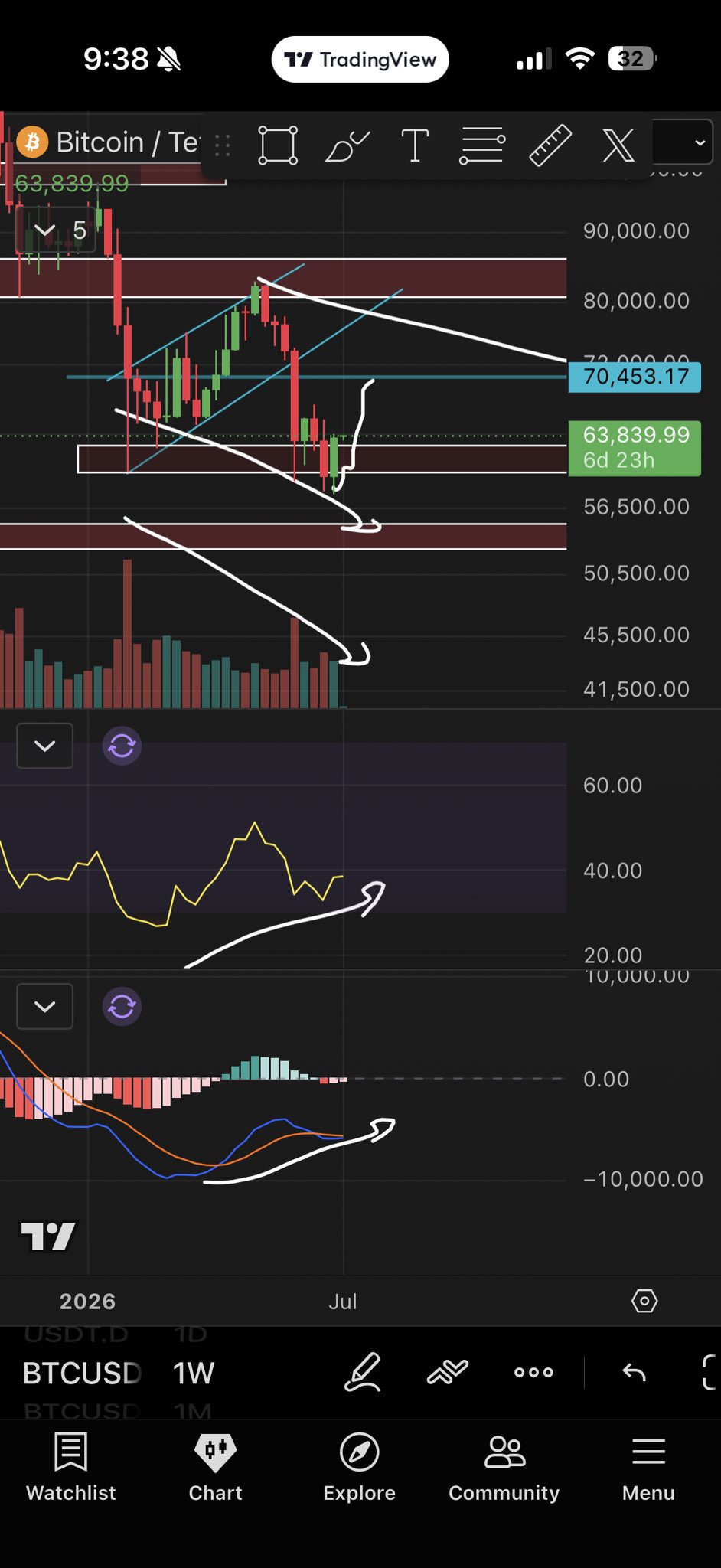
Trader Roman, who was long bearish on BTC/USD, stayed optimistic on longer time frames this week.
“Still looking excellent to continue our reversal to see higher prices in the interim,” an X post read.
“I still have a feeling we put in one more macro low before the bottom is officially in, but there are dozens of macro reversal signs all over HTF.”
BTC/USDT one-week chart. Source: Roman/X
Retail risk appetite hits record levels
Bitcoin’s waning ability to copy equities is under the microscope this week as US stock futures start higher after the holiday weekend.
While BTC/USD managed a trip to near two-week highs, Nasdaq 100 futures added 1% as analysts remain bullish on the broader US outlook.
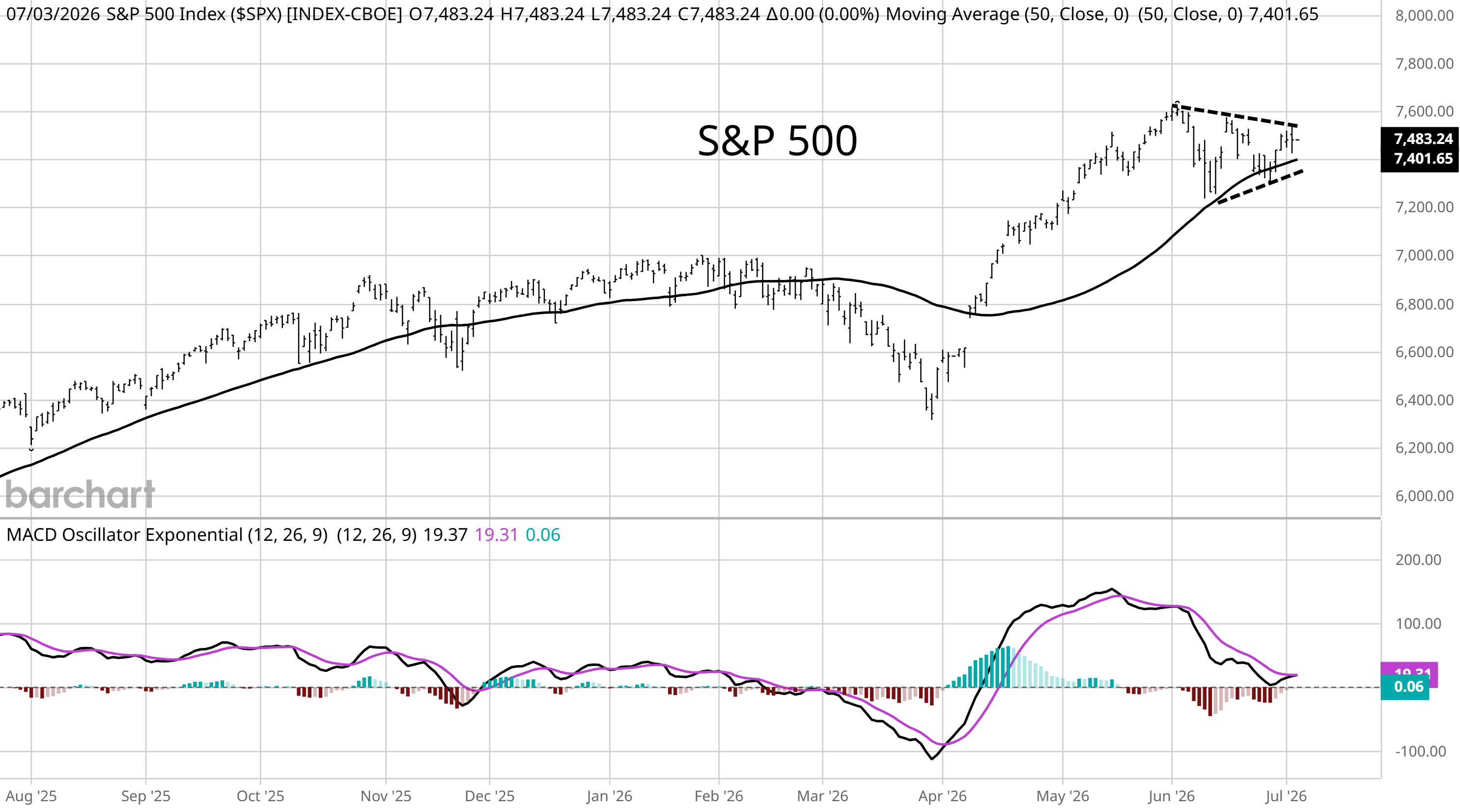
“Although the S&P 500 is coming off a hot second quarter with a 15% gain, the index topped in early June and has yet to make a new high,” trading resource Mosaic Asset Company wrote in the latest edition of its regular newsletter, The Market Mosaic.
“But the S&P 500 trading within a bullish continuation pattern and has been finding support at a key level.”
S&P 500 market data. Source: Mosaic Asset Company
Mosaic added that the average stock “has been rallying to new record highs.”
“That includes the equal-weight S&P 500, small-cap stocks with the Russell 2000 Index, and the NYSE advance/decline line. New highs minus new lows across major exchanges are jumping higher as well,” it noted.
As Cointelegraph reported, recent US inflation and labor-market data helped soften markets’ hawkish expectations for Federal Reserve policy last week.
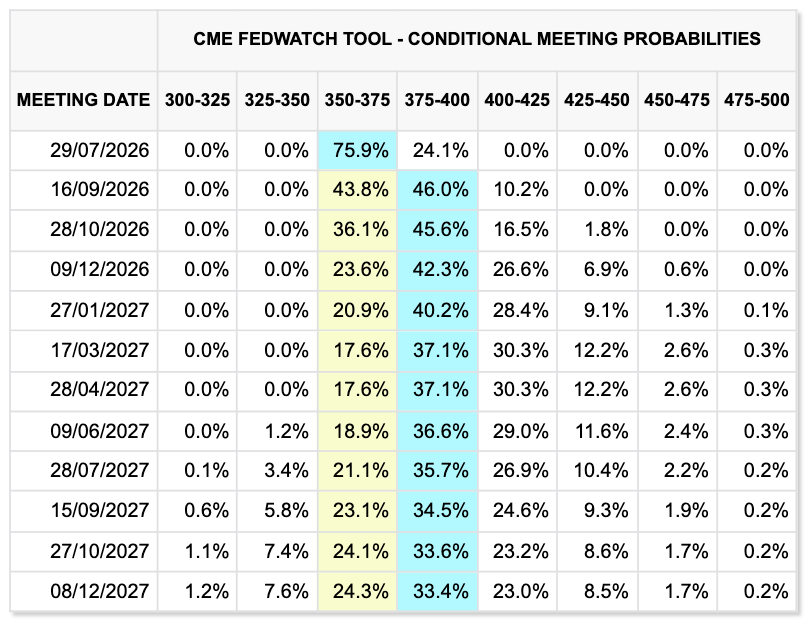
The latest data from CME Group’s FedWatch Tool sees the Fed holding interest rates at current levels in both July and September.
Fed target rate probabilities (screenshot). Source: CME Group
Another potential macro tailwind for Bitcoin comes in the form of retail investor demand for risk — despite the cohort’s crypto exodus this year. Analyzing options data, trading resource The Kobeissi Letter described retail risk appetite as being “at record levels.”
“Retail demand for short-term options has never been higher,” it reported on X.
This week, the Fed will release the minutes of its June meeting, where it likewise kept rates steady. Markets will also react to Purchasing Managers Index (PMI) numbers, along with more employment data releases.
“We expect another volatile week ahead as markets brace for earnings season,” Kobeissi added.
Warning over pre-midterm stock market correction
Looking ahead, not all market participants are convinced that the persistent stocks bull market will last. Among them is Andre Dragosch, European head of research at crypto asset manager Bitwise.
“What if there is a bigger stock market correction right before the Midterms?” he queried in X posts on Monday, referring to upcoming US elections.
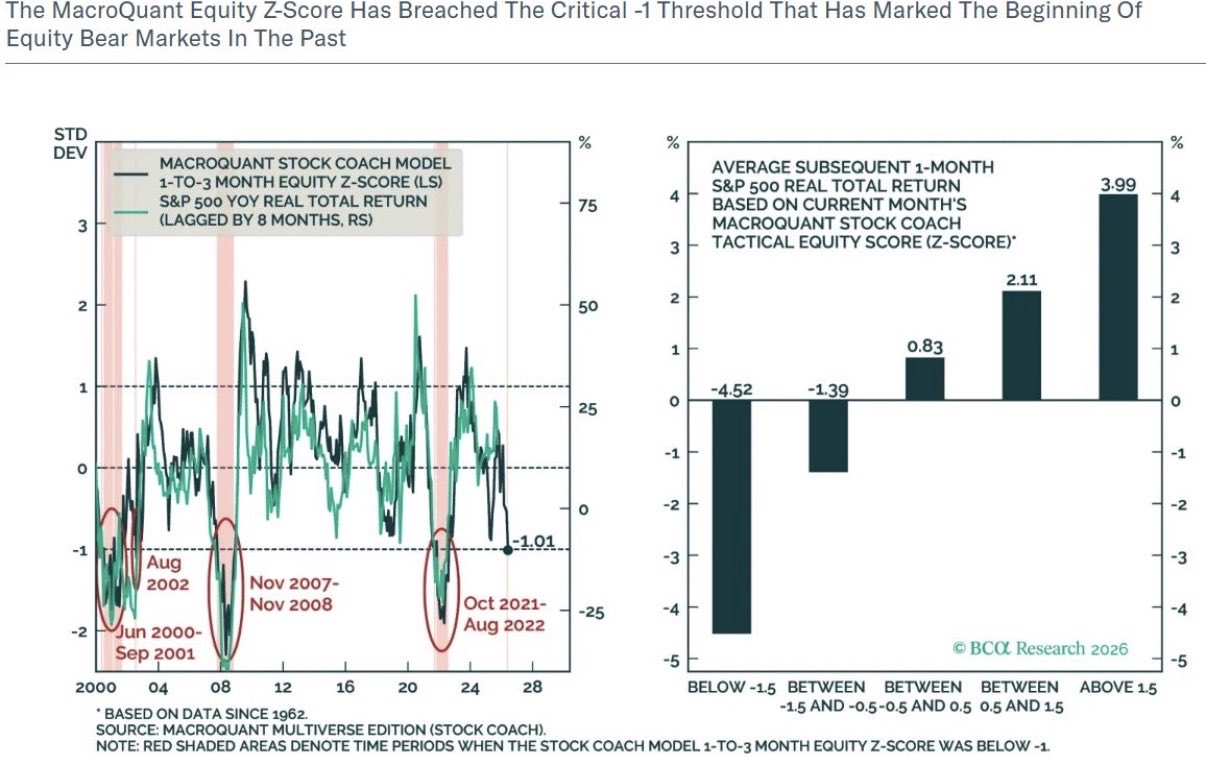
Dragosch flagged the latest data from the MacroQuant Equity Risk Model by macro analytics company BCA Research. This, he warned, was “flashing a bear market warning signal.”
An accompanying chart likened current readings to those last seen in late 2021, when Bitcoin saw the top of its previous bull market.
Source: Andre Dragosch/X
In an extended X post last week, Dragosch nonetheless reasoned that crypto markets had already priced in much of the worst-case scenario that could hit macro in the future: a stock market comedown and a US recession.
“In other words, even if a AI crash and a subsequent US recession materialized, much of that pain appears to be already reflected in Bitcoin prices, which points to reduced downside from here,” he summarized.
Dragosch gave Bitcoin a “decent chance” of outperforming the Nasdaq “on a relative basis over the coming months.”
Whales lead exchange inflow drop
New data reveals that Bitcoin investors cooled selling significantly in the second half of June — even as price set new multi-year lows.
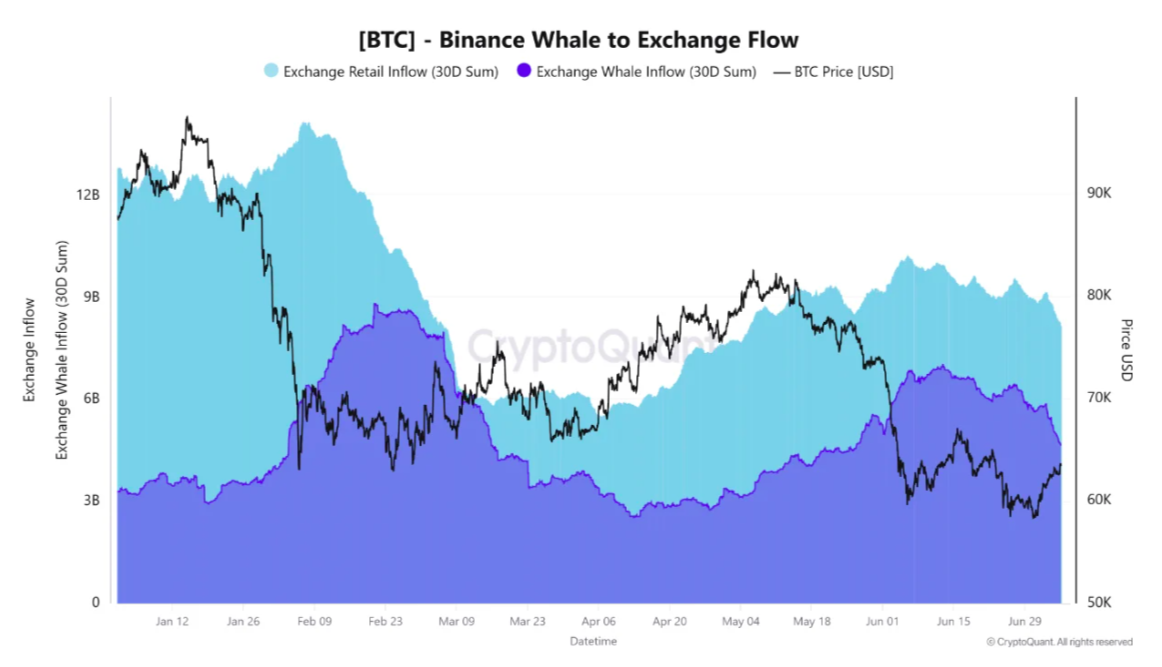
In a QuickTake blog post, onchain analytics platform CryptoQuant confirmed that inflows to exchanges had decreased from both retail and whale investors alike.
“Bitcoin whale activity on Binance has cooled sharply since mid-June, with the rolling 30-day value of whale inflows falling by nearly $2.4 billion,” contributor Amr Taha confirmed.
Retail investor inflows displayed a shallower rate of decline, falling from $10.02 billion on June 12 to $8.2 billion on July 6.
“Whale inflows fell at nearly twice the rate of retail inflows, reducing the relative role of large holders in exchange-bound Bitcoin supply. Meanwhile, the gap between retail and whale inflows widened from about $2.98 billion to $3.55 billion,” Taha continued.
Bitcoin whale exchange flows to Binance (screenshot). Source: CryptoQuant
Earlier, Cointelegraph reported on whales’ overall market conviction improving around the lows.
CryptoQuant notes that exchange inflows are not an infallible signal of investors’ intent to sell.
“The key question now is whether Binance whale inflows stabilize around the current $4.65 billion level or continue moving lower,” Taha concluded.
“A further decline would reinforce the view that large Bitcoin holders are becoming less active on the exchange compared with the retail cohort.”
Crypto market fear “easing, not gone”
Bitcoin’s modest recovery was enough to boost crypto market sentiment considerably this week.
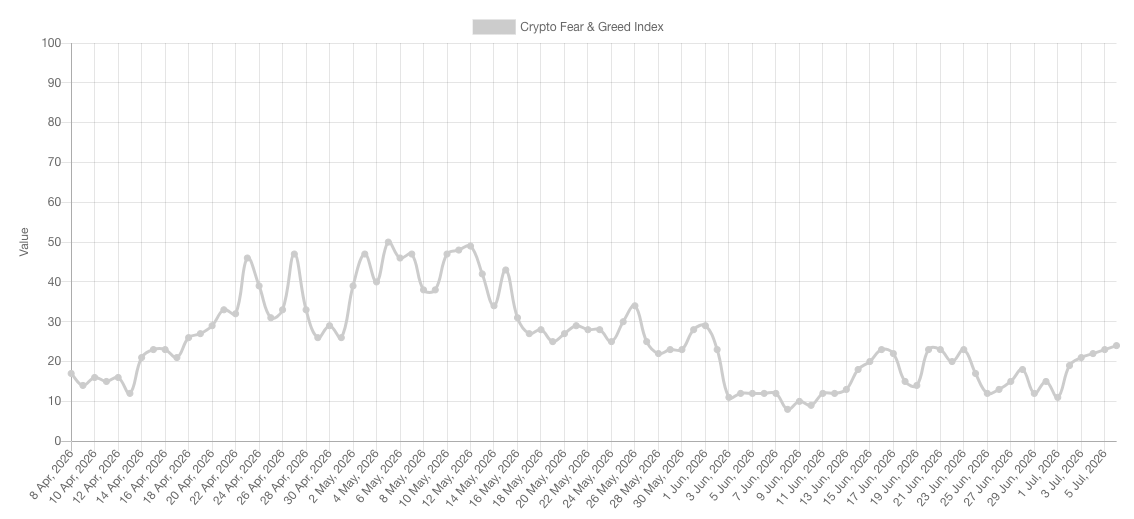
The latest readings from the Crypto Fear & Greed Index show that aggregate sentiment is on the verge of exiting “extreme fear” for the first time in over a month.
Fear & Greed measured 24/100 on Monday, more than double its score at the start of July.
“That’s a clear improvement from recent lows. But the market is still in Extreme Fear,” trader Master of Crypto responded on X.
“Fear is easing, not gone.”
Crypto Fear & Greed Index (screenshot). Source: Alternative.me
As a lagging indicator, Fear & Greed tends to mirror existing shifts in market behavior post factum. While the Index is calculated based on a basket of factors, it lacks the ability to predict future trend continuation.
In his latest analysis published this week, commentator and blockchain advisor Anndy Lian argued that Bitcoin bulls needed to back up their optimism with tangible price moves.
“A successful breakout above that US$65,000 threshold would open the door to a broader test of the 100-day moving average, which currently hovers near US$69,500,” he wrote.
“Conversely, failing to sustain the current momentum carries severe downside risks.”
Vanguard, one of the world’s largest asset managers and a longtime skeptic of cryptocurrency, has opened a search for a head of digital assets, a senior role that would shape the firm’s strategy across crypto and blockchain-based finance.
The job, posted this week within Vanguard Personal Wealth and based in Dallas, calls for an executive to develop the firm’s digital asset vision, identify business opportunities, and lead execution across product, technology, operations, legal, and compliance teams.
According to the posting, the hire would serve as Vanguard’s “senior subject matter expert,” advise senior leadership on market developments, and represent the firm in discussions with regulators and industry groups.
Vanguard also wants the executive to help shape “market standards” and build a scalable, end-to-end strategy for personal wealth clients.
The listing extends beyond crypto trading. It names tokenization, stablecoins, digital wallets, custody, and blockchain-based settlement as areas the new leader would evaluate, along with deciding whether Vanguard should build capabilities in-house, partner with outside firms, or hold off on entering parts of the market.
The role would involve constructing a multi-year roadmap and designing governance and risk frameworks.
Vanguard’s journey into bitcoin
Vanguard reported $12 trillion in assets under management at the end of 2025, a scale that places it second only to BlackRock.
The move appears to mark the first time the firm has sought to hire someone dedicated to cryptocurrency strategy, and it comes after years in which the bank stood apart from rivals. BlackRock, Fidelity, and Franklin Templeton rolled out spot Bitcoin exchange-traded funds and other blockchain products while Vanguard declined to follow.
The firm’s public posture has been pointed. Vanguard has described Bitcoin as an “immature asset class” ill-suited to long-term investors.
Chief Executive Salim Ramji, who joined the company from BlackRock in July 2024 after leading its iShares business — the unit behind the large iShares Bitcoin ETF — has said the decision not to launch a Bitcoin ETF was “entirely consistent” with the firm’s investment philosophy, stressing the value of consistency in the products a firm offers.
Even so, Vanguard has not stayed on the sidelines entirely. In December, the firm began allowing brokerage clients to trade cryptocurrency ETFs and mutual funds on its platform, a shift that opened access to funds holding Bitcoin and some other crypto.
At one point last year, the bank also became the largest shareholder in Strategy, the company that holds the world’s biggest corporate Bitcoin treasury — a position that flowed from its index funds rather than an active bet on the asset.
The new search does not signal an imminent product launch, and Vanguard has maintained that it has no plans to issue its own crypto investment vehicles.
What the posting does suggest is a broadening of focus beyond simply granting access to third-party funds, toward assessing how digital assets might fit within its wealth management business over the long term.
The US Commodity Futures Trading Commission has sued a North Carolina man, accusing him of operating a commodity pool featuring crypto that defrauded investors of more than $14 million.
The CFTC’s lawsuit, filed in federal court on Tuesday, alleged that Trevor Vernon and his company, Argent Capital Management, operated a commodity pool featuring equity index futures, options on equity index futures and crypto.
The agency alleged that from March 2022 to February 2026, Vernon solicited $14.8 million from at least 60 investors and falsely claimed he was a successful trader, even though his trading actually “resulted in consistent and catastrophic losses” for the pool’s investors.
The lawsuit is a rare crypto-related enforcement action from the CFTC, which is angling to oversee the crypto industry while facing questions from some lawmakers about whether it has the resources to police the complicated and rapidly growing sector.
The agency alleged that as part of the scheme, Vernon traded crypto, including Bitcoin (BTC) and Ether (ETH), which the CFTC asserted were commodities.
CFTC alleges Vernon ran pool “akin to a Ponzi scheme”
The CFTC alleged in its complaint that Vernon made false statements to existing and potential investors, including in quarterly account updates and monthly performance emails.
The agency claimed Vernon’s trading of crypto, as well as futures and options on stock indices, resulted in losses of more than $8.6 million.
Related: CME Group sues CFTC over crypto perpetual futures
The CFTC said Vernon never disclosed the losses to investors and alleged he misappropriated $3 million to pay investors “in a manner akin to a Ponzi scheme” to hide his losses. He also allegedly misappropriated $136,000 for private air travel, according to the lawsuit.
The CFTC accused Argent Capital Management of failing to register with the agency as required by federal commodities law, and claimed Vernon made false statements to the regulator in January about the issues alleged in its complaint.
The CFTC charged Vernon with seven counts related to fraud, failure to register and making false statements.
It asked the court to permanently ban Vernon from registration and trading, along with disgorgement, penalties and restitution.
Features: From Bitcoin critics to blockchain believers: The 5 biggest crypto backflips
The XRP Ledger’s newest server software, v3.2.0, designed to make the network cheaper to run, more stable, and more attractive for institutional use, is gaining adoption. However, it has yet to overtake the previous version (3.1.3) across the wider network, and the key security fixes that come with it remain in the voting process.
Of the approximately 833 active nodes on the XRP Ledger, the machines that store and relay the ledger, about 43% are running v3.2.0 and 51% are still on v3.1.3, XRPSCAN data shows.
While overall node adoption appears relatively slow, validators, or entities that matter most to the network, have largely already upgraded.
The XRP Ledger runs on a trusted set of validators known as the Unique Node List (UNL). For a new software version or amendment to activate, it needs sustained support from more than 80% of validators on that list for two straight weeks.
On the default UNL of 35 validators, 31 are running v3.2.0, about 89%, clearing the threshold the network treats as sufficiently updated. That figure, not the raw node or all-validator percentages, is what determines whether the upgrade completes.
The amendment lagging behind
Bundled with the software is a separate matter that sits well behind it.