Home Blog Page 112

GoMining challenges Jack Dorsey’s Square with a pure BTC payment rail

0

Bitcoin mining company GoMining said it is making it easier for companies to accept bitcoin payments, bringing it into competition with companies including Block’s (XYZ) Square.

Where GoMining says it differs from incumbents is that the entire transaction is completed in bitcoin. Many competitors, including Square, allow customers to pay in bitcoin while delivering fiat currency to the retailer. GoMining retailers who want fiat will need to handle the conversion themselves.

“Our idea isn’t to squeeze bitcoin into the old fiat experience and lose what makes it bitcoin along the way,” CEO Mark Zalan said in an interview over Telegram. “It’s to solve the real problems with BTC payments the high and variable fees, the slow and unpredictable settlement, while preserving non-custody and onchain finality.”

GoMining’s software development kit (SDK) and application programming interfaces (API) for its BTC payment protocol GoBTC Pay, unveiled Friday, enable retailers to access its GoBTC Pay system. The company plans to recruit an initial 10 merchants as part of the rollout, it said.

Franklin Templeton proposes new funds that turn dividends into BTC: Crypto Daily

0

If approved, the ETFs could begin trading as early as September. While regulatory approval is not guaranteed, the filing signals growing institutional comfort with marrying traditional equities and cryptocurrency in regulated wrappers.

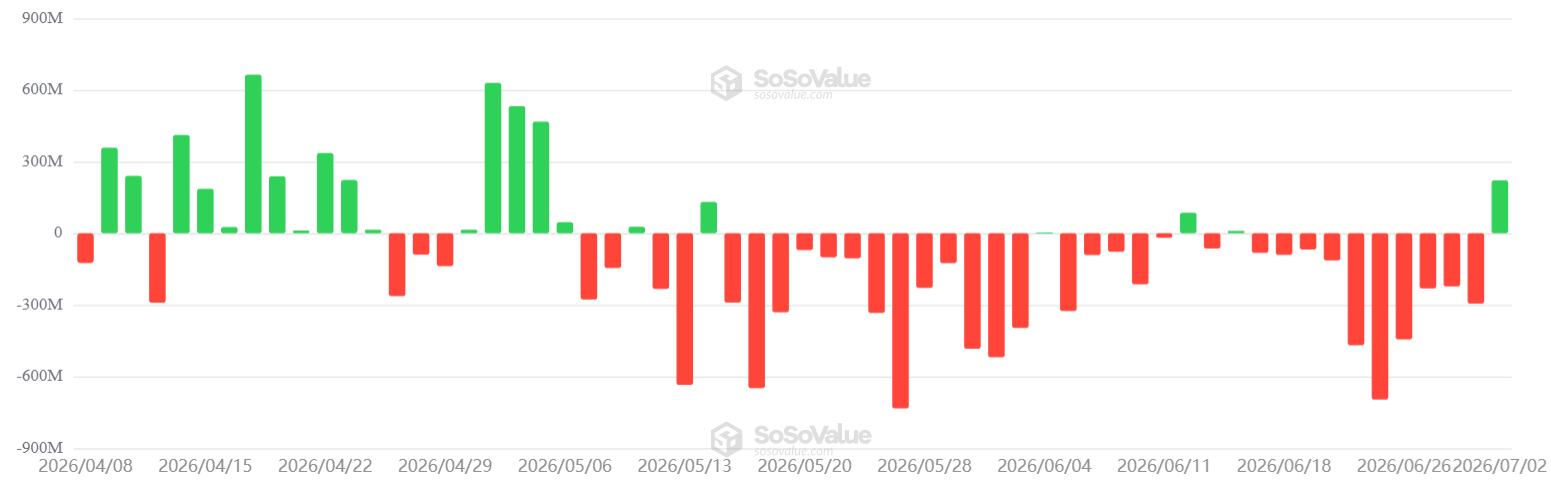
These filings follow the recent debut of BlackRock’s Income ETF, which allows institutions to monetize cryptocurrency’s volatility. The 11 spot bitcoin ETFs in the U.S. have pulled in more than $53 billion in investor capital since their inception in 2024, according to SoSoValue data.

Taken together, these developments point to continued institutional appetite for bitcoin despite the bear market. The BTC price peaked at $126,000 in October last year and was recently trading below $62,500.

The price has dropped by over 2% in the past 24 hours.

“The bulls still have some hope, as a formal break of the trend would require the price to settle below previous lows near $61.5K. Even in this scenario, the price decline could stall in the $59–60K range, which represents this year’s most critical support level,” Alex Kuptsikevich, chief market analyst at the FxPPro said in an email.

A market holiday in the U.S. on Friday for Juneteenth may lead to thin liquidity and erratic price moves. Stay alert!

Read more: For analysis of today’s activity in altcoins and derivatives, see Crypto Markets Today . For a comprehensive list of events this week, see CoinDesk’s “Crypto Week Ahead.”

Bitcoin Q3 Bottom Could Spark ‘Complete Disbelief’ Above $50,000

0

Bitcoin (BTC) could reach its new “macro bottom” by September, as price action continues to surprise traders.

Key points:

  • Bitcoin may “front run” exchange order-book liquidity to produce a bear-market low between $50,000 and $60,000.
  • A trader sees “complete disbelief” if price reverses with only a partial liquidity grab.
  • “Aggressive” shorting from Binance traders returns on low time frames.

BTC price bottom could spark “complete disbelief”

New analysis from pseudonymous trader Killa on Friday focuses on a sub-$60,000 liquidity grab next quarter.

Crypto exchange order-book liquidity is key to short-term price moves, as large-volume traders coerce the market into wiping nearby positions, causing volatility.

Killa, however, is looking at the longer-term picture — many expect BTC/USD to drop as low as $50,000 to take liquidity before bouncing, data shows.

“At some point, $BTC is going to front run major HTF liquidity,” he told followers in a post on X. 

“Just like the market front ran the 140K liquidity above, it can do the exact same thing on the downside, leaving many in complete disbelief.”

Bitcoin order-book liquidity data. Source: Killa/X

An accompanying chart from CoinGlass shows the main area of interest between $50,000 and $60,000. If it gets taken, Killa argues, it would lay the foundation for the end of the bear market.

“I’m not saying we won’t sweep below 60K, but it’s something worth considering. Markets have a habit of front running the levels everyone is focused on,” they continued. 

“Because if this particular liquidity below 60K gets grabbed, there’s a very good chance the next major pool that forms between July and September never gets filled, marking the macro bottom.”

Binance BTC shorts become “aggressive”

As Cointelegraph reported, others have questioned the staying power of current support around the $60,000 mark.

Related: Bitcoin market cap rebound to take ‘5-10 years’ after dropping 10 places since mid-2025

Traders are poised for a snap collapse, with Daan Crypto Trades warning that the situation could “get ugly” if nearby trend lines fail to hold.

“Bulls need to hold that $61K-$62K region otherwise things get ugly real quick I think. But for now, still at support,” he summarized on X.

BTC/USD perpetual swap contract four-hour chart. Source: Daan Crypto Trades/X

On Thursday, commentator Exitpump flagged “aggressive” short positioning by traders on Binance, saying that the short-term price outlooks “looks bearish” as a result.

BTC/USD 10-minute chart with order-book data (Binance). Source: Exitpump/X

Federal Reserve Moves To Close Stablecoin Loopholes With New Customer ID Rules

0

The Federal Reserve proposed Thursday that payment stablecoin issuers maintain written customer identification programs, a move that signals Washington’s determination to bring digital asset markets under the same anti-money laundering discipline long applied to traditional banks — even as regulators race to finalize rules before a statutory deadline this coming January.

The proposal would require so-called permitted payment stablecoin issuers, or PPSIs, to collect from each new customer a legal name, date of birth or formation, physical address, and a government-issued identification number before opening an account. 

The Federal Reserve framework mirrors CIP obligations that banks, broker-dealers, mutual funds, and futures commission merchants have operated under for more than two decades. Regulators will take public feedback on the proposal for 60 days.

The Federal Reserve’s action follows a wave of rulemaking set in motion by the Genius Act — formally, the Guiding and Establishing National Innovation for U.S. Stablecoins Act — which President Trump signed into law in July 2025.

That landmark legislation created the first federal regulatory system for stablecoins, mandating 100% reserve backing with liquid assets and subjecting issuers to the Bank Secrecy Act for the first time. 

The statute requires stablecoin issuers to establish effective anti-money laundering, sanctions compliance, and customer identification programs. The Genius Act becomes effective on the earlier of January 18, 2027, or 120 days after primary federal regulators issue their final implementing rules.

Federal Reserve Governor cautions towards stablecoins

Federal Reserve Governor Michael Barr has emerged as the most vocal voice of caution within the regulatory apparatus, even as his colleagues have embraced digital assets with new openness. Speaking in March at a Federalist Society conference in Washington, Barr warned that stablecoins face material risks around reserve asset quality, regulatory arbitrage, anti-money laundering gaps, and financial stability — concerns he argued the Genius Act’s primary text does not resolve on its own. 

“While some digital asset service providers are subject to anti-money laundering and anti-terrorist financing requirements in their home jurisdiction, it is far too easy for bad actors to evade these restrictions and operate without detection when transacting in digital assets,” Barr said in a statement Thursday. 

Barr, who previously served as the Federal Reserve’s top bank cop, contends that detailed rulemaking remains the critical instrument for translating the statute’s intent into enforceable protections.

Thursday’s proposal is the latest in a dense sequence of rulemakings from multiple agencies. In April 2026, the Treasury Department’s Financial Crimes Enforcement Network and the Office of Foreign Assets Control issued a joint proposed rule requiring PPSIs to adopt written AML and countering-the-financing-of-terrorism programs and a full sanctions compliance framework. 

That rule would carve PPSIs out of the existing money services business category and treat them as a distinct class of BSA-covered financial institutions — a significant structural change, given FinCEN’s finding that roughly half of known stablecoin issuers have not registered as MSBs at all. 

The FDIC and OCC each issued their own notices of proposed rulemaking in parallel, covering licensing, reserves, capital requirements, and redemption standards. The CIP proposal announced Thursday is a separate, complementary rulemaking to those AML and sanctions rules.

Stablecoin rules and nuance

The proposed customer identification requirements carry technical nuance tailored to stablecoin markets. Unlike banks, a PPSI can face demands for direct redemption from token holders who acquired coins on the secondary market rather than through a direct issuance relationship. 

The proposal addresses this by defining an “account” to include that redemption event, meaning an individual who acquires a stablecoin on an exchange and later redeems it directly with the issuer would trigger CIP obligations at the moment of that interaction. 

Purely secondary market transactions in which the PPSI is not a direct counterparty — including transfers conducted via smart contract — would not constitute an account relationship under the proposed framework.

The timeline for finalization is tight. With the Genius Act’s effective date potentially arriving as early as 120 days after the agencies publish their final rules, the window for comment, revision, and adoption is compressed. Final CIP rules are not expected before 2027, which means the statute could take effect before its customer identification architecture is fully in place. 

Digital credit market hit by record selloff as Strive CEO blames leverage liquidations

0

The digital credit market suffered one of its sharpest selloffs to date on Thursday,
with Strive Asset Management CEO Matt Cole describing the move as a leverage-driven liquidation rather than a sign of weakening credit fundamentals.

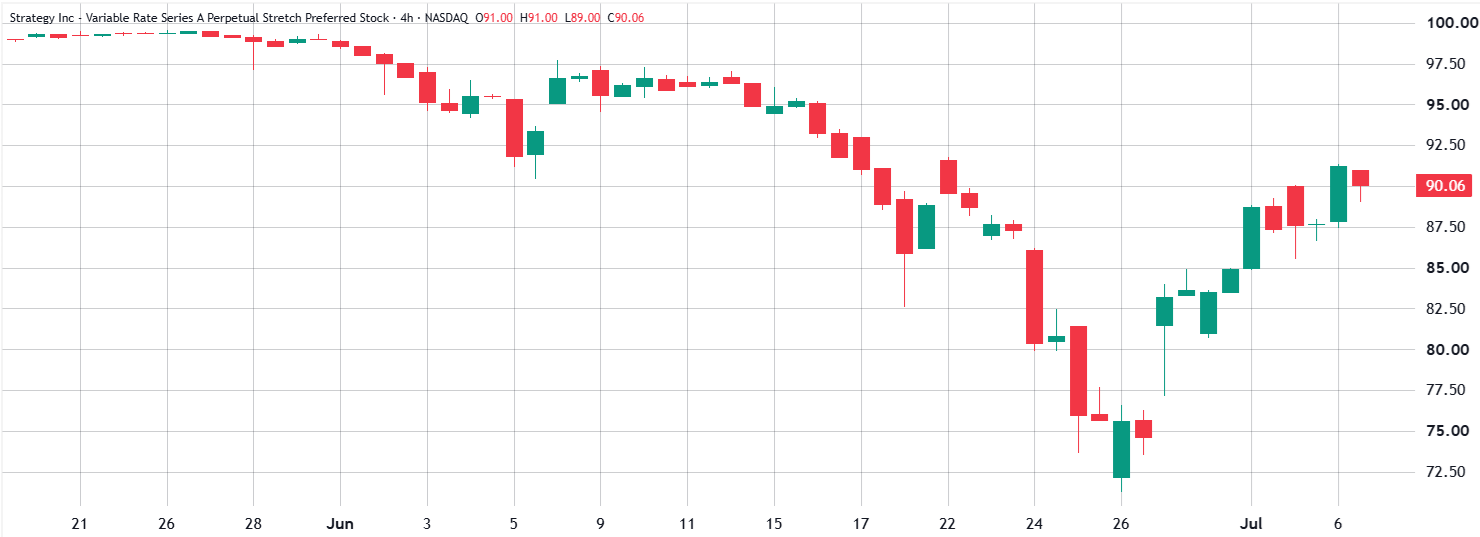
Cole said it was “the most difficult day in the history of Digital Credit,” in a post on X, as Strategy’s preferred equity STRC fell as low as $82.50 before recovering to $89, while Strive’s SATA dropped from its par value fell below $93 before rebounding to $97. Both products are designed to trade close to their $100 par value

“What happened today was a leverage liquidation event, not a deterioration in underlying credit quality,” Cole wrote.

Investors attracted by the sector’s relatively high yields (both products offer over double digit yields) increasingly used leverage to enhance returns, according to Cole. When prices began falling, margin calls triggered forced selling, creating a self-reinforcing decline detached from the underlying creditworthiness of issuers.

“There is an old saying in income markets that the road to hell is paved with carry,” he said.

Coinbase Teases 1:1-Backed Tokenized U.S. Stocks With On-Chain Dividends

0

Coinbase announced plans for what it calls the first tokenized U.S. stocks backed 1:1 by actual shares, with automatic on-chain dividend distribution. The exchange described the product as ‘no derivatives, no IOUs,’ a direct contrast to the synthetic equity structures currently dominating on-chain equity trading.

Coinbase said Tuesday it will launch tokenized stocks backed one-for-one by shares of U.S. companies.

The exchange announced the product on its official X account, writing that “the first real, 1:1 backed tokenized stocks are coming” and that customers will be able to own, trade, hold and redeem the tokenized shares onchain while receiving dividends automatically.

In fine print, the post said tokenized stocks “will only be available in eligible jurisdictions outside the United States,” with no date attached. No custody partner, token issuer, or list of supported equities was disclosed.

The move targets a market led by xStocks, which holds about $516 million in total value locked, almost entirely on Solana, according to DefiLlama..

The launch would make Coinbase the latest U.S.-based exchange to tokenize American equities while keeping the product away from American users. Robinhood, Gemini and Kraken have already opened tokenized-stock trading to customers outside the U.S. Coinbase’s “not a derivative, not an IOU” framing also raises the bar in a category where most existing offerings give holders price exposure rather than a direct claim on shares.

“For the first time, these are real 1:1 backed tokenized stocks you can trust. You own an actual chunk of the company onchain,” Coinbase CEO Brian Armstrong said in a post on X. He added that the product would deliver “all the benefits of true ownership, with all the benefits of tokenized assets,” calling it “a great step towards unlocking global access to U.S. markets.”

‘Not a Derivative, Not an IOU’

The framing is aimed at the current generation of tokenized-equity products. The onchain market leader is xStocks, whose tokens are issued by Backed Assets (JE) Limited, a Jersey-based firm that holds shares in custody and issues tokens against them. Those tokens are redeemable only for qualified investors under EU rules, and U.S. persons are blocked from participating.

Binance’s bStocks product tokenizes holdings that users already hold on the exchange, creating an onchain representation of an exchange-side position rather than a direct claim on externally custodied shares. Kraken offers xStocks-bundled products through Backed Assets’ issuance infrastructure. Securitize, which won FINRA approval to custody tokenized securities and partnered with Computershare to tokenize U.S.-listed equities, represents a third path: tokenization through a registered broker-dealer.

Coinbase’s description — a U.S. exchange holding shares directly, with onchain tokens that constitute a redeemable claim and automatic dividend pass-through — implies a structure closer to the registered-custody approach than to the Jersey-issuer or exchange-re-tokenization models. Coinbase has not said which legal entity will issue the tokens or who will hold the underlying shares.

Starting Outside the US

The decision to launch abroad first tracks the regulatory split between the two products Coinbase already runs. The CFTC oversees derivatives, and Coinbase holds a CFTC-regulated derivatives clearing organization designation that lets it offer equity-linked derivatives to U.S. retail customers. Actual equity ownership, which is what the tokenized-stock product describes, falls under SEC jurisdiction.

The SEC’s Division of Trading and Markets has outlined a framework to list and trade tokenized securities on existing market infrastructure, alongside a parallel effort to harmonize rules with the CFTC. Until that work is complete, a 1:1 custody model with automatic dividend pass-through for U.S. retail customers would have to be classified as a security requiring broker-dealer registration or a specific exemption, or structured through a transfer-agent arrangement. Launching in eligible jurisdictions outside the U.S. sidesteps that requirement at launch.

A Delivery Gap to Close

The tokenized-equity model ran into a high-profile failure this month, when Bybit, Binance and Bitget Wallet canceled tokenized SpaceX allocations after xStocks did not deliver actual shares ahead of SpaceX’s public listing. The episode illustrated the gap between tokenized exposure and share ownership that Coinbase’s announcement is explicitly designed to address.

Not New

“1:1 backed” is not itself a new claim. Kraken already markets its tokenized Coinbase stock as backed one-for-one by real Class A shares held with a third-party custodian, yet holders of that product receive no shareholder rights.

What Coinbase says distinguishes its product is direct ownership, automatic dividends and onchain redemption. Those claims rest on a legal and custody structure the company has not yet disclosed, and the announcement is a teaser rather than a live product. Tokenized stocks also remain small next to traditional equity markets; xStocks’ roughly $516 million in TVL is a fraction of daily volume on a single large-cap U.S. stock.

Coinbase said it will share more at a product event at 3 p.m. ET Tuesday, which it billed as covering additional launches.

Bitcoin falls below $63,000 as risk assets sell off

0

The pressure came from a wider retreat in markets. Global equities slipped in holiday-thinned trading, with US, Chinese, Hong Kong and Taiwanese markets closed, and a gauge of Asian shares falling 0.6% after a five-day run to record highs. Brent crude traded around $79 a barrel, down about 9% on the week, as shipping through the Strait of Hormuz returned to normal under the signed US-Iran deal and eased what had been a historic supply shock.

Attention now turns to talks over Iran’s nuclear program, with Vice President JD Vance saying a 60-day clock to settle the deal’s details has started.

The bigger question hanging over the market is where this cycle goes, and whether the altcoins that usually rally late in a bull run get their turn at all. Michael Egorov, founder of Curve Finance, told CoinDesk he thinks bitcoin is behaving differently this cycle because spot ETFs were approved just before the 2024 halving, the roughly four-yearly event that cuts the rate of new bitcoin issuance, pulling in institutional demand that did not exist before and breaking the old pattern.

The speculative energy that once flowed into altcoins, he said, went instead into “useless memecoins” right after the ETFs launched.

Matter Labs Cuts Staff, Pivots Fully to Institutional Privacy Platform Prividium

0

Matter Labs CEO Alex Gluchowski announced layoffs and a full strategic pivot on Tuesday, committing the company behind zkSync entirely to Prividium, its institutional on-chain privacy infrastructure platform.

Matter Labs, the company behind the zkSync Ethereum layer-2 network, cut staff on Tuesday and said it is committing the entire organization to Prividium, an institutional on-chain privacy infrastructure platform it began building in 2024.

Matter Labs co-founder and chief executive Alex Gluchowski confirmed the reductions in a post on X Tuesday afternoon, framing the move as a skills realignment rather than a cost cut.

“In 2024 we began building for regulated financial institutions,” Gluchowski wrote. “That work became Prividium, and the entire company is now committed to one goal: building the infrastructure that brings enterprises and regulated financial institutions onchain, with privacy at its core.”

Gluchowski said departing employees had been offered financial support and that the company is coordinating job placement through an opt-in talent list shared with outside employers. He did not disclose the number of positions eliminated.

The zkSync token, which has a market cap of $115 million, is up 4.3% in the past 24 hours, according to CoinGecko.

What Prividium Is

Prividium is Matter Labs’ institutional-grade stack for on-chain privacy and compliance, built on top of the ZK cryptography that underpins zkSync. Where zkSync was designed as a general-purpose Ethereum rollup for DeFi and consumer apps, Prividium targets banks, asset managers, and other regulated entities that require transaction confidentiality alongside audit-trail access for compliance purposes.

Gluchowski described the pivot as a response to specific product feedback from institutional customers, saying the company has “learned a great deal about where our customers need it to go.”

L2 Specialization Pressure

The pivot follows a broader wave of layer-2 and ZK-project consolidations. Hyli wound down its ZK blockchain project earlier this year, citing weak market traction for general-purpose ZK infrastructure. Botanix shut down its Bitcoin L2 Spiderchain after a year of mainnet operation.

The pattern points to a maturing layer-2 market where broad horizontal platforms face pressure to find defensible verticals or exit.

For Matter Labs, the institutional privacy vertical carries a clearer revenue thesis: regulated entities pay for compliance tooling, and ZK proofs offer a technically credible path to selective disclosure, the property that lets a counterparty prove a transaction is lawful without revealing its full details.

As of publication, Gluchowski’s post and the Matter Labs X account have made no statements about the future of the zkSync network or its ZK token as a separate product line.

Bitcoin traders load up on bearish bets all the way down to $52,000

0

A hawkish Federal Reserve is bolstering the U.S. dollar, bitcoin ETFs have seen persistent outflows, and Strategy, the largest publicly listed bitcoin holder, faces mounting pressure.

Strategy’s preferred stock, STRC, has plunged to record lows well below its $100 par value, complicating the company’s aggressive bitcoin accumulation strategy.

Arca CIO Jeff Dorman highlighted the precarious situation:”Either sell an enormous amount of BTC and MSTR to help bring $STRC back up near par, and at least buy yourself some time, or continue to watch every part of your cap structure melt because of the uncertainty you’ve created,” he said on X.

As of writing, BTC changed hands near $62,400, down 0.8% since midnight UTC hours, according to CoinDesk data. Prices hit highs near $67,000 early this week.

Bitcoin’s ‘Deep Value’ Discount Faces Hawkish Fed Test: Bitwise

0

Bitcoin’s (BTC) valuation metrics continue to highlight a deep discount even as markets brace for a potentially hawkish Federal Reserve under new chair Kevin Warsh. Analysis from Bitwise Investments said BTC remains in a “deep value” zone after a valuation metric fell below 1.0, a level associated with long-term accumulation periods.

However, investor participation remains subdued, with CryptoQuant’s realized cap growth metric remaining in a bear phase since late October 2025. This points to a steady slowdown in fresh capital entering the BTC network.

At the same time, a growing list of key companies going public raises increased competition for liquidity across the investment market, so the focus shifts to whether BTC attracts new capital amid tighter liquidity conditions.

Deep-value or liquidity squeeze, which is most important?

The Federal Reserve kept interest rates unchanged at 3.5%-3.75% on Wednesday, a decision that largely matched Bitwise’s market expectations and avoided the hawkish surprise the market had feared. 

While BTC dropped back below $64,000 on Thursday following the Fed’s interest rate announcement, Bitwise described its price as a “deep value” opportunity based on its Mayer Multiple, which compares price to its 200-day moving average. The firm noted the metric had remained below 1.0, a level that has historically aligned with accumulation periods. 

Bitcoin’s Mayer multiple vs Nvidia. Source: Bitwise

Bitwise argued that Bitcoin’s valuation stood out compared with AI-linked equities like NVIDIA, which were trading at significant premiums to long-term trend levels. The firm also flagged a growing pipeline of major capital raises, including potential offerings tied to SpaceX, Anthropic, and OpenAI. Collectively, those deals could attract more than $200 billion in investor demand.

Large listings often coincide with strong investor appetite. They also absorb liquidity that might otherwise flow into equities and cryptocurrencies. Bitwise said that elevated rates continue to limit the availability of capital for speculative assets despite Bitcoin’s attractive valuation profile.

The subdued participation is also reflected in Bitcoin’s capital flow trends. CryptoQuant’s realized cap growth metric has remained in a bear-phase regime since Oct. 30, 2025, even as Bitcoin’s valuation indicators moved into historically attractive territory.

Bitcoin’s realized cap growth analysis. Source: CryptoQuant

Since entering the bear phase, the metric’s seven-day and 59-day moving averages have declined to 13.9 and 19.1 on June 17 from roughly 70 in Q4 2025. The slowdown suggests the pace of new capital entering the Bitcoin network has continued to weaken, highlighting investor caution.

Bitcoin researcher Axel Adler Jr. pointed to a separate concern following the Fed’s decision. While rates remained unchanged, the updated dot plot showed nine officials expecting at least one rate hike this year and six projecting two or more.

Bitcoin reacted negatively to the update, with selling volume expanded during the decline on Wednesday, marking the heaviest trading activity at the point of rejection at $66,200. For gold, an initial rebound above $4,300 faded, leaving the metal trading near $4,244 on Thursday.

The reaction aligns with Adler’s view that markets are pricing in a higher-for-longer rate path rather than a near-term policy easing. 

Related: Capital B shareholders approve up to $120B in financing capacity for Bitcoin strategy

BTC traders split on the next move

Market data shows that BTC traders are interpreting the Fed’s outcome in different directions.

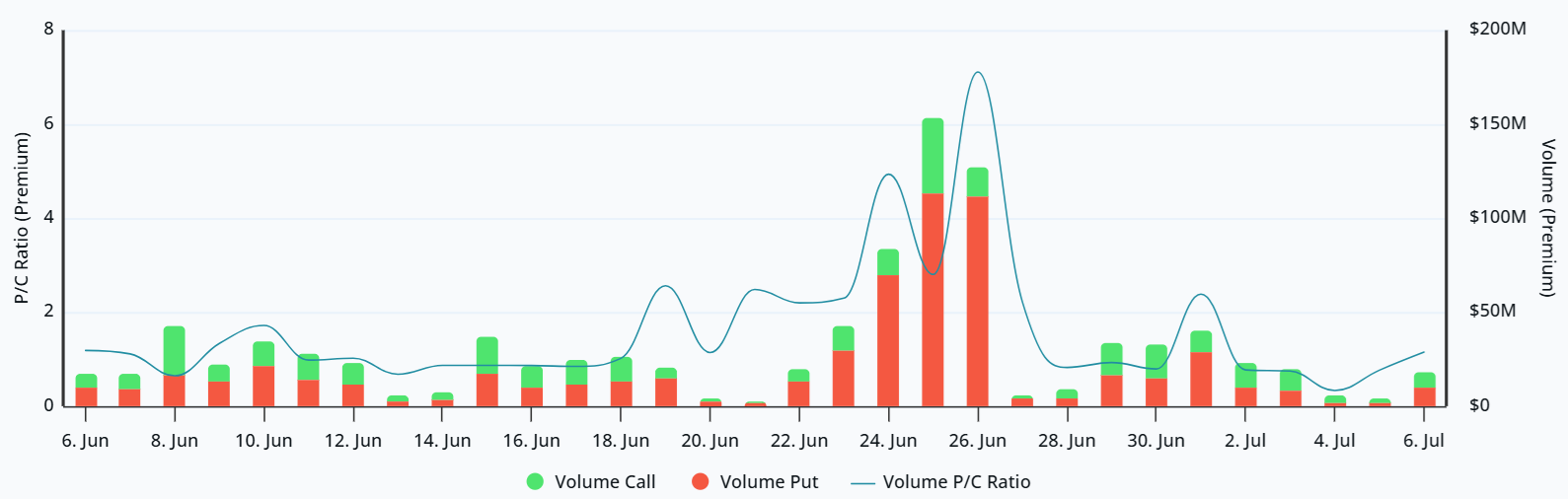
Market commentator Crypto Rover highlighted a newly opened $38.5 million Bitcoin short position using 30x leverage shortly after the FOMC meeting. The trader was reportedly sitting on roughly $750,000 in unrealized profit as Bitcoin moved lower.

Meanwhile, Bitcoin investor Jelle viewed the pullback below $64,000 from the weekly high of $67,255 as a routine retest of support. The analyst identified the $64,000 threshold as a key price point for buyers, adding, 

“Hold here, and we likely see extended relief into $70k in the coming weeks. Big day ahead.”

BTC/USD, one-day analysis by Jelle. Source: X

Related: Bitcoin capitulation ‘twice as weak’ after spot liquidity turns supportive: Glassnode